The Martyrdom of Saint Tarcisius (1908) by Antony Troncet - Public Domain Catholic Painting
Tarcisius was a twelve-year-old acolyte during one of the fierce Roman persecutions of the third century, probably during that of Valerian.

Public domain paintings of Catholic male saints.
Tarcisius was a twelve-year-old acolyte during one of the fierce Roman persecutions of the third century, probably during that of Valerian.
This is an image of an unknown Saint Mary and an unknown male saint painted by Yumeji Takehisa. Takehisa was a Japanese poet and painter.
Saint Andrew is said to have been martyred by crucifixion at the city of Patras (Patræ) in Achaea, in AD 60.
Saint Andrew is said to have been martyred by crucifixion at the city of Patras (Patræ) in Achaea, in AD 60.
Paul of Thebes, commonly known as Paul, the First Hermit or Paul the Anchorite (c. 227 – c. 341), was an Egyptian saint regarded as the first Christian hermit, who was claimed to have lived alone in the desert of Egypt from the age of sixteen to the age of one hundred and thirteen years old.
St. Sebastian is the subject of three paintings by the Italian Early Renaissance master Andrea Mantegna.
Paul of Thebes is known to posterity because around the year 342, Anthony the Great was told in a dream about the older hermit's existence, and went to find him. Jerome related that Anthony the Great and Paul met when the latter was aged 113.
Longinus (/ˌlɒnˈdʒaɪnəs/) is the name given to the unnamed Roman soldier who pierced the side of Jesus with a lance and who in medieval and some modern Christian traditions is described as a convert to Christianity. His name first appeared in the apocryphal Gospel of Nicodemus.
Hubertus or Hubert was a Christian saint who became the first bishop of Liège in 708 A.D. He is the patron saint of hunters, mathematicians, opticians, and metalworkers.
The Calling of Saints Peter and Andrew is a painting by the Italian Baroque master Caravaggio. It takes its theme from a passage in the Gospel of Matthew describing the moment when Christ called the two brothers Simon – later known as Peter – and Andrew, to be his disciples: As Jesus walked by the…
A saint, holding an abbot or bishop’s crozier, blesses a kneeling figure, probably the donor who commissioned the window. It forms a pair with another panel showing Saint Fiacre, also owned by the Museum.
This is an important Ethiopian Orthodox icon that was once owned by a parsonage. On the proper right panel it depicts the gruesome scene of St. George being chopped into pieces below the twelve apostles and the saint himself killing a dragon.
In the spring of 1890 Berthe Morisot and her husband, Eugène Manet, rented a house with a garden overlooking the Seine River in the rural French town of Mézy. Morisot worked in the attic studio while the pair was there.
Lorenzo was born in Manila of a Chinese father and a Filipino mother, both Christians. Thus he learned Chinese and Tagalog from them, and Spanish from the Dominicans whom he served as altar boy and sacristan. Lorenzo's life took an abrupt turn when he was accused of murder.
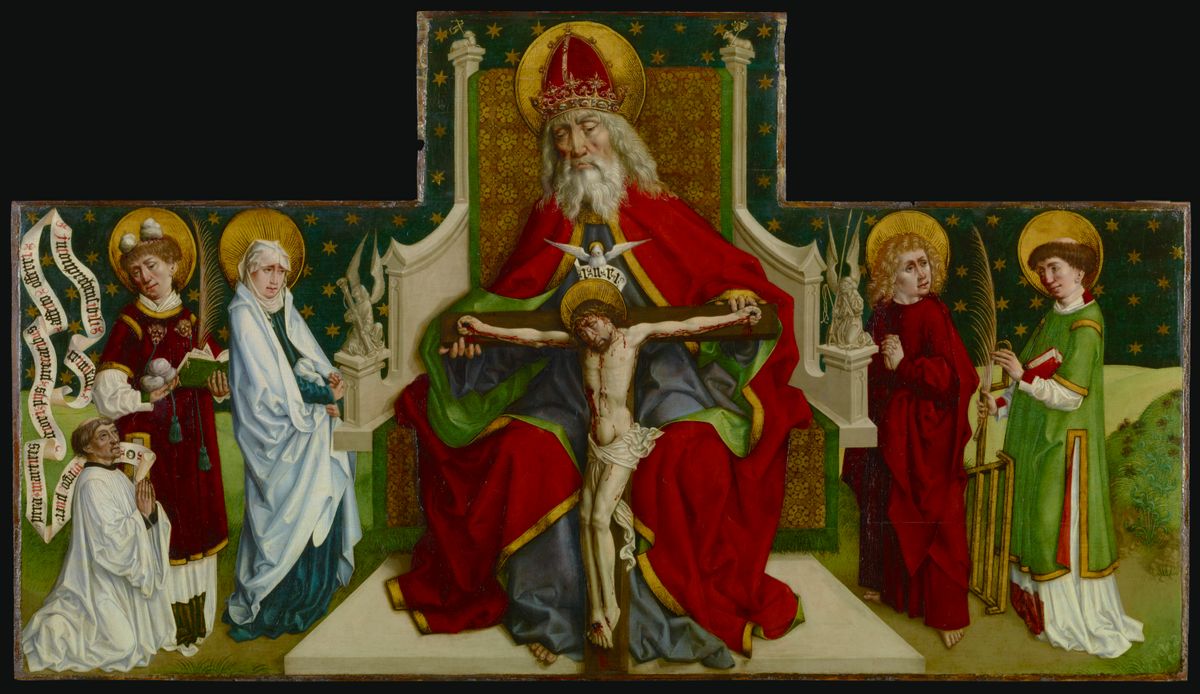
God the Father sits enthroned, holding the crucified Christ with the Holy Spirit between them, all three dominating the composition. Together they represent the Trinity, the central doctrine of the Christian faith, in which all three are united as one.
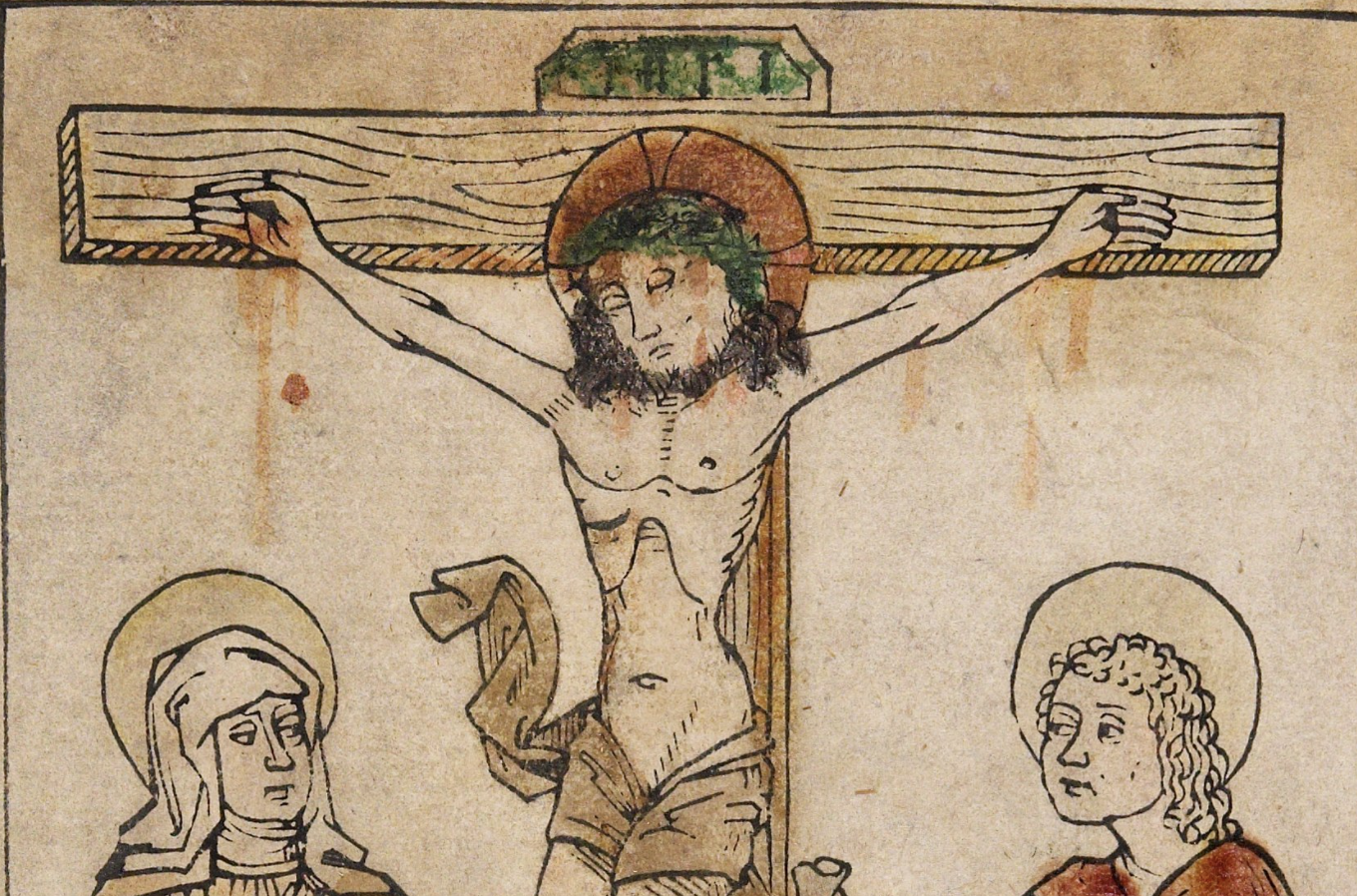
For the medieval viewer, this Crucifixion instantly recalled wrenching extra-biblical details, like the fact that Christ could not rest his head to the side lest his shoulders be pierced with thorns.
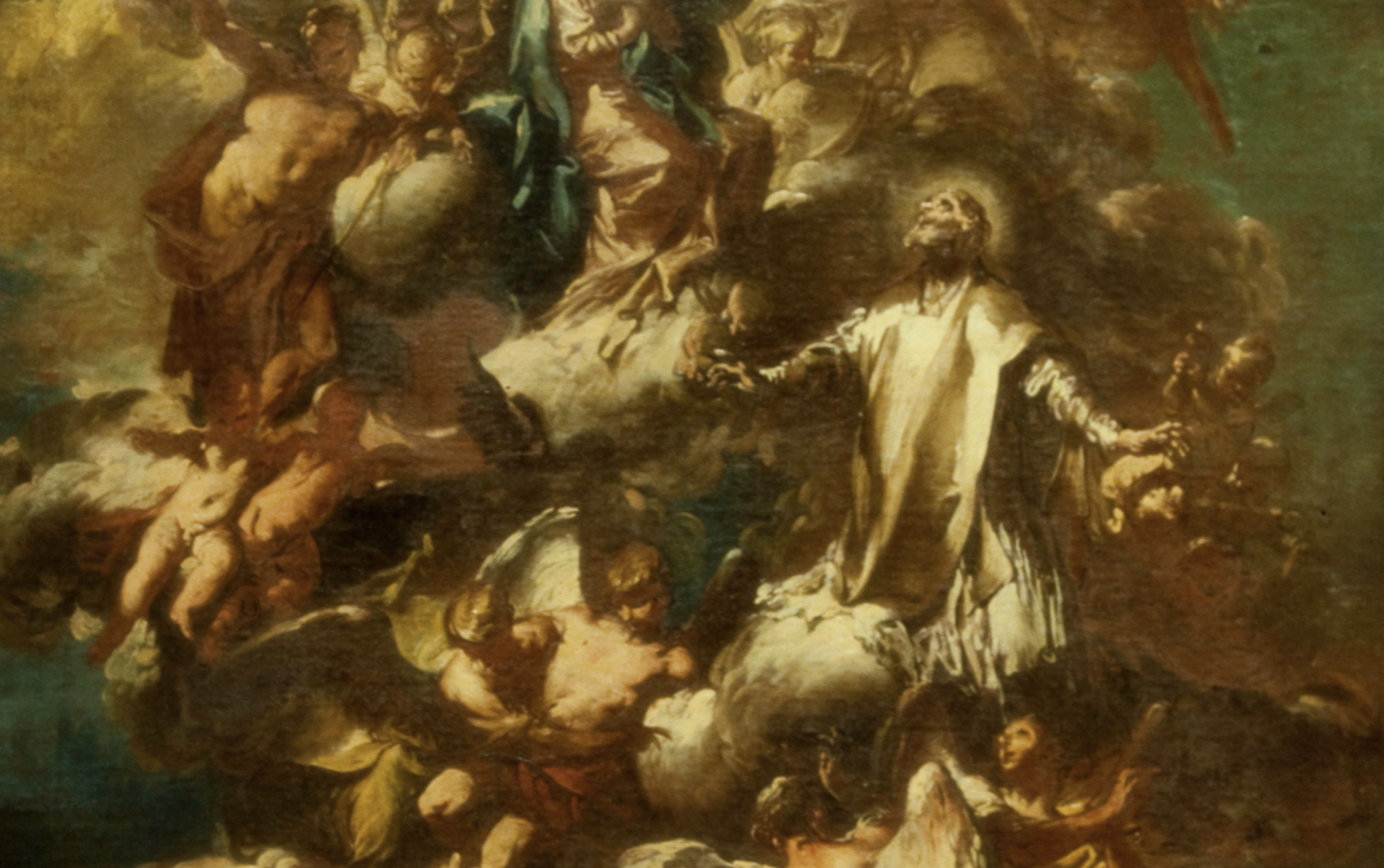
St. Philip Neri was a Christian missionary and founder of the Congregation of the Oratory, a community of Catholic priests and lay brothers. Giovanni Domenico Ferretti (Giandomenico), also called Giandomenico d'Imola (15 June 1692 – 18 August 1768) was an Italian Rococo style painter from Florence.
Jerome (c. AD 347–420) studied Greek and Latin literature in Rome, but eventually pursued theology, perceiving his conduct as corrupt and sinful. Around AD 374, Jerome had a vision of the Last Judgment in which an angel called him to task for his transgressions.
According to tradition, John the Baptist wears a hair shirt under a white cloth, associated with newly baptized Christians. The flag bearing a red cross symbolizes resurrection. In marked contrast, the background features a lavish gold-patterned silk.
This scene takes place entirely in the celestial sphere, with a background of defined and golden clouds. Saint Joseph appears in profile, kneeling, and of advanced age, holding a hand to his chest and a flowery rod.
In his right hand, the Christ child grasps a stem of roses. The beauty and fragrance of roses symbolize heaven, while their thorny stems allude to the crown of thorns and Christ's suffering. The bird he holds in his left hand symbolizes the human soul.
Sir Thomas More (7 February 1478 – 6 July 1535), venerated in the Catholic Church as Saint Thomas More, was an English lawyer, judge, social philosopher, author, statesman, and noted Renaissance humanist. He also served Henry VIII as Lord High Chancellor of England from October 1529 to May 1532.
Saint Catherine (1347–1380) was the daughter of a prosperous Sienese cloth dyer. At the age of six, she saw a vision of Christ and thereafter dedicated herself to chastity, penance, and good works.
In the central panel the Glorification of the cross by the Saints, the prophets and the angels is shown. On the right, are the 4 the patriarchs including Moses, Abraham and King David.