
Artworks Depicting Christ Pantocrator
Christ Pantocrator in Byzantine mosaics, icons and church art, all free to download.
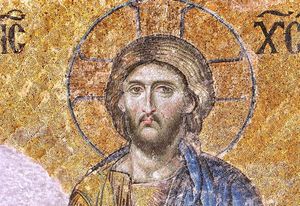
Christ Pantocrator in Byzantine mosaics, icons and church art, all free to download.
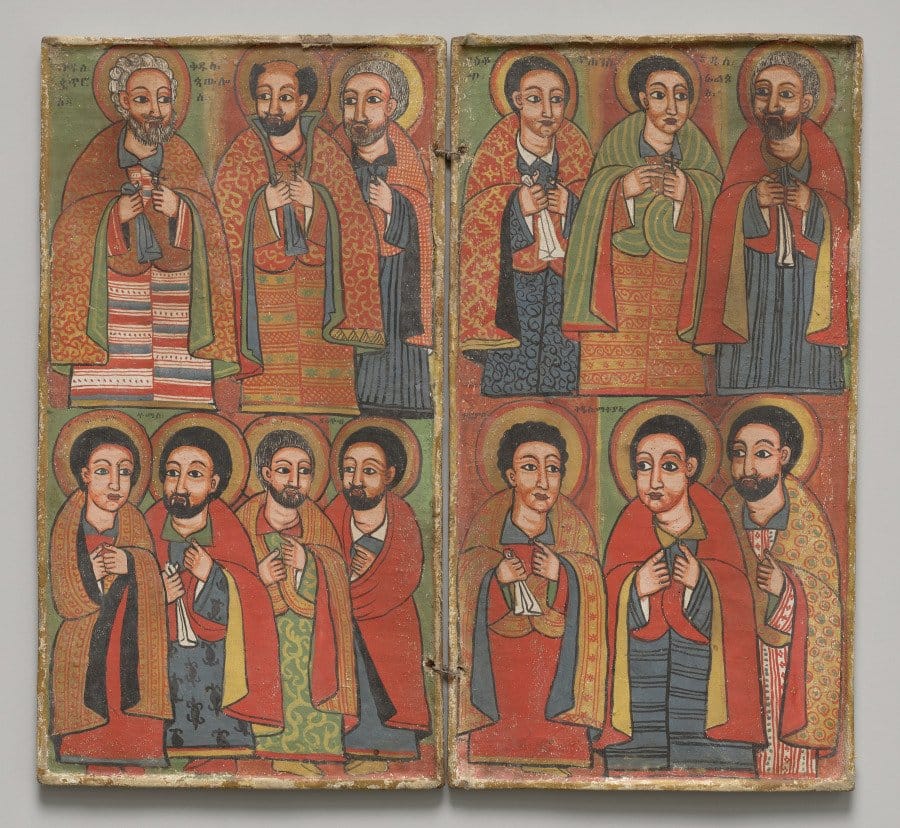
Depicting 13 holy men, this diptych (two-panel painting) is sized for an Ethiopian Orthodox Christian church or elite home. It is painted in the bold, colorful style associated with royal court workshops from the early 1600s to the mid-1700s. Painter Wäldä Maryam (or someone he trained) set this sce
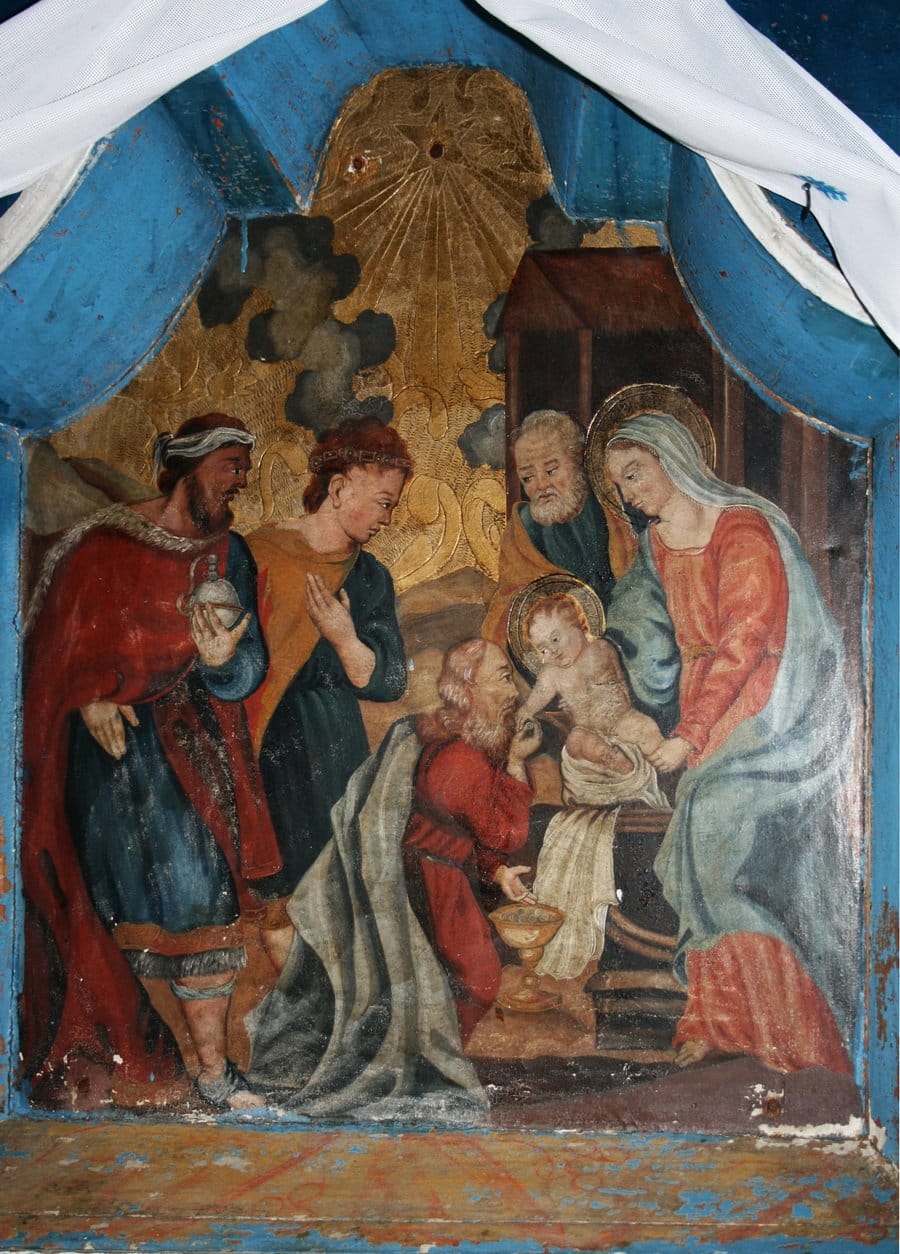
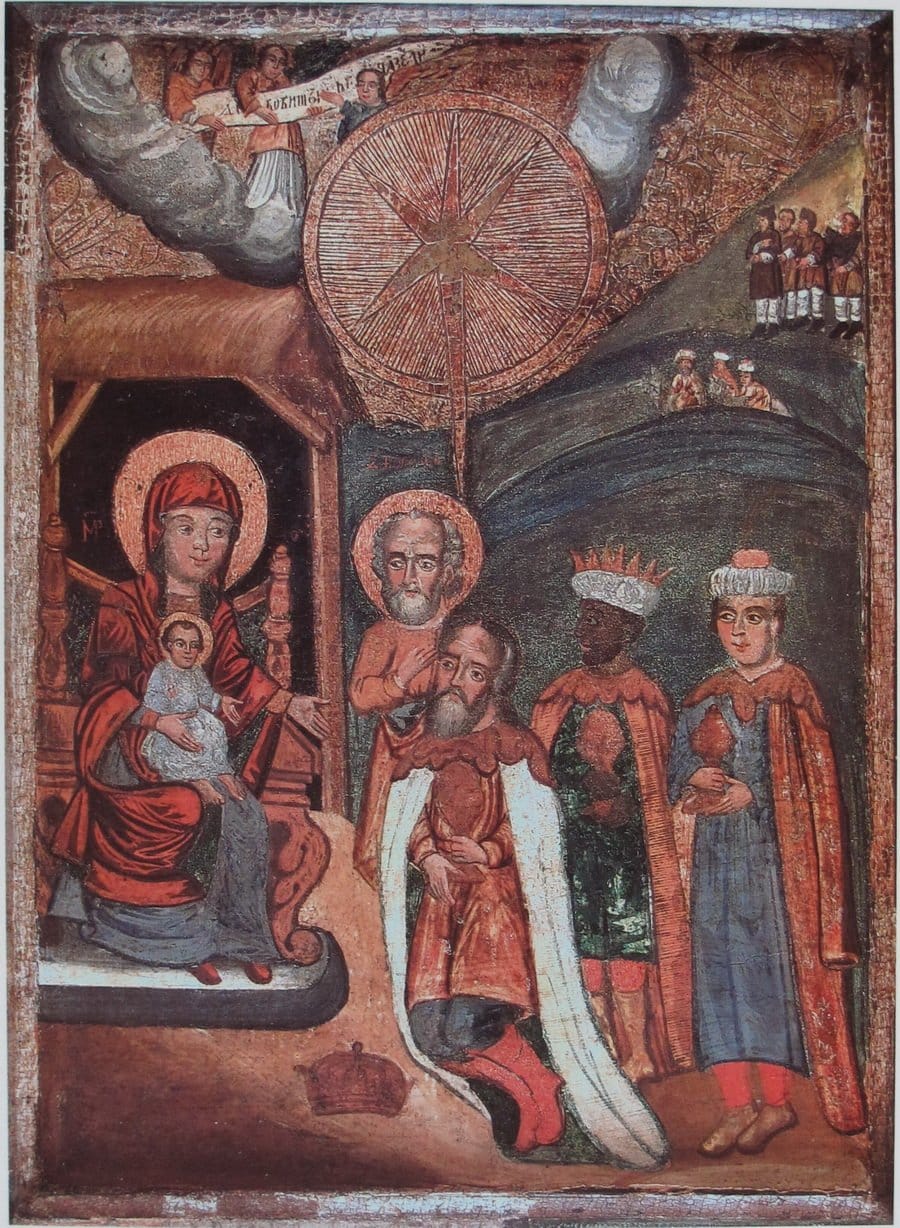
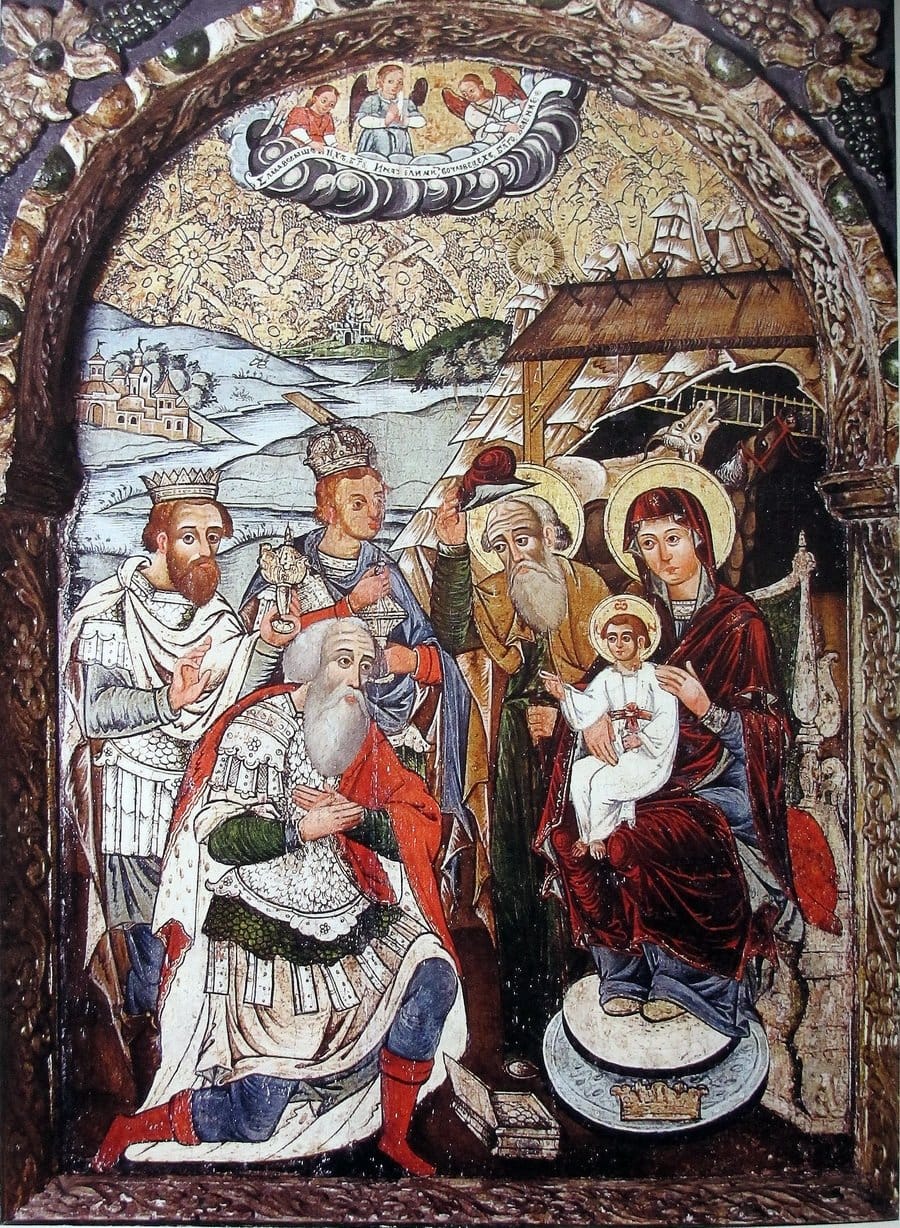
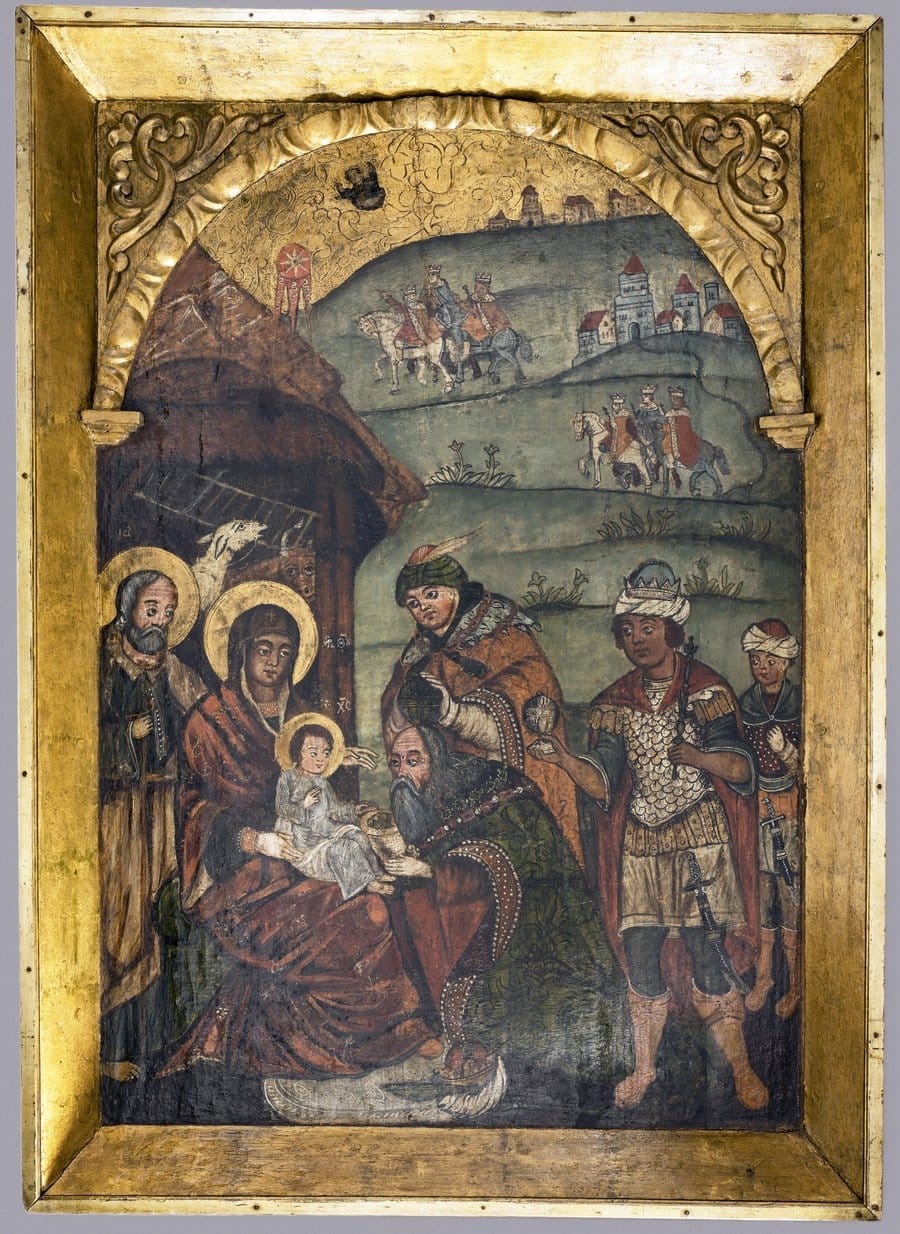
This icon depicts the Adoration of the Magi, with the three wise men kneeling before the infant Christ and the Virgin Mary beneath a radiant star. It dates to the second half of the 18th century, photographed by L. Skop, and is part of the icon.org.ua collection of Ukrainian sacred art.
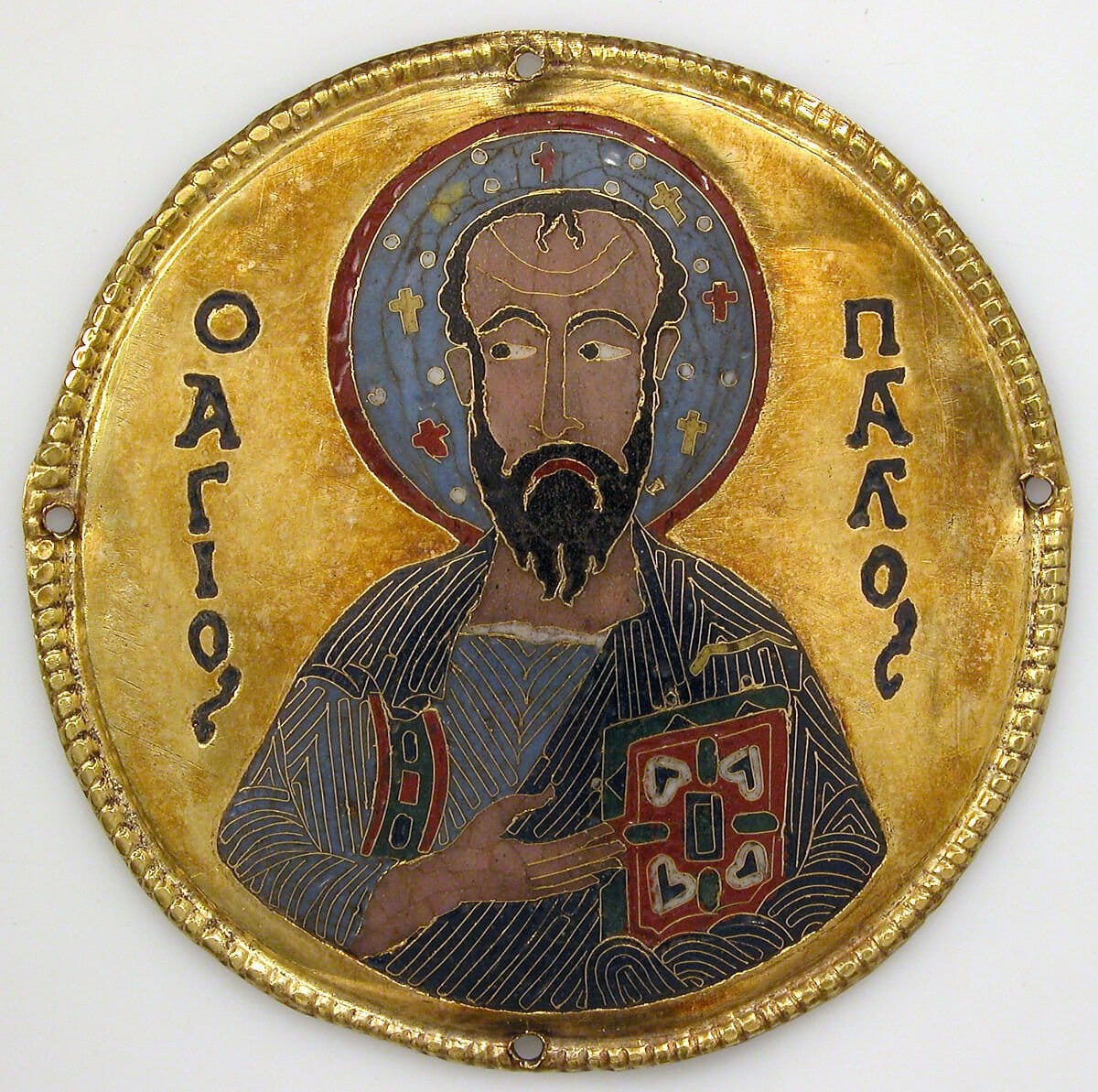
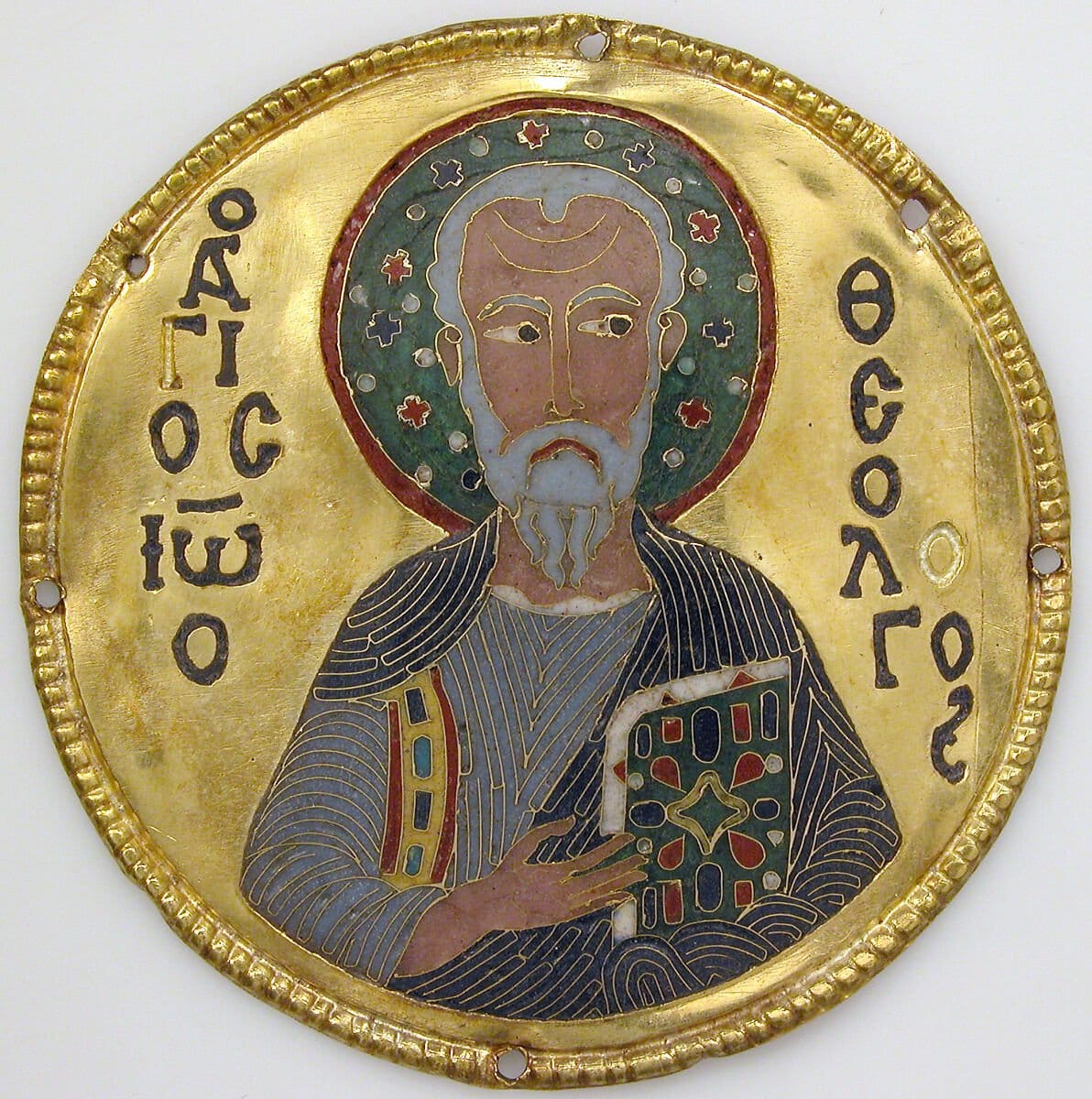
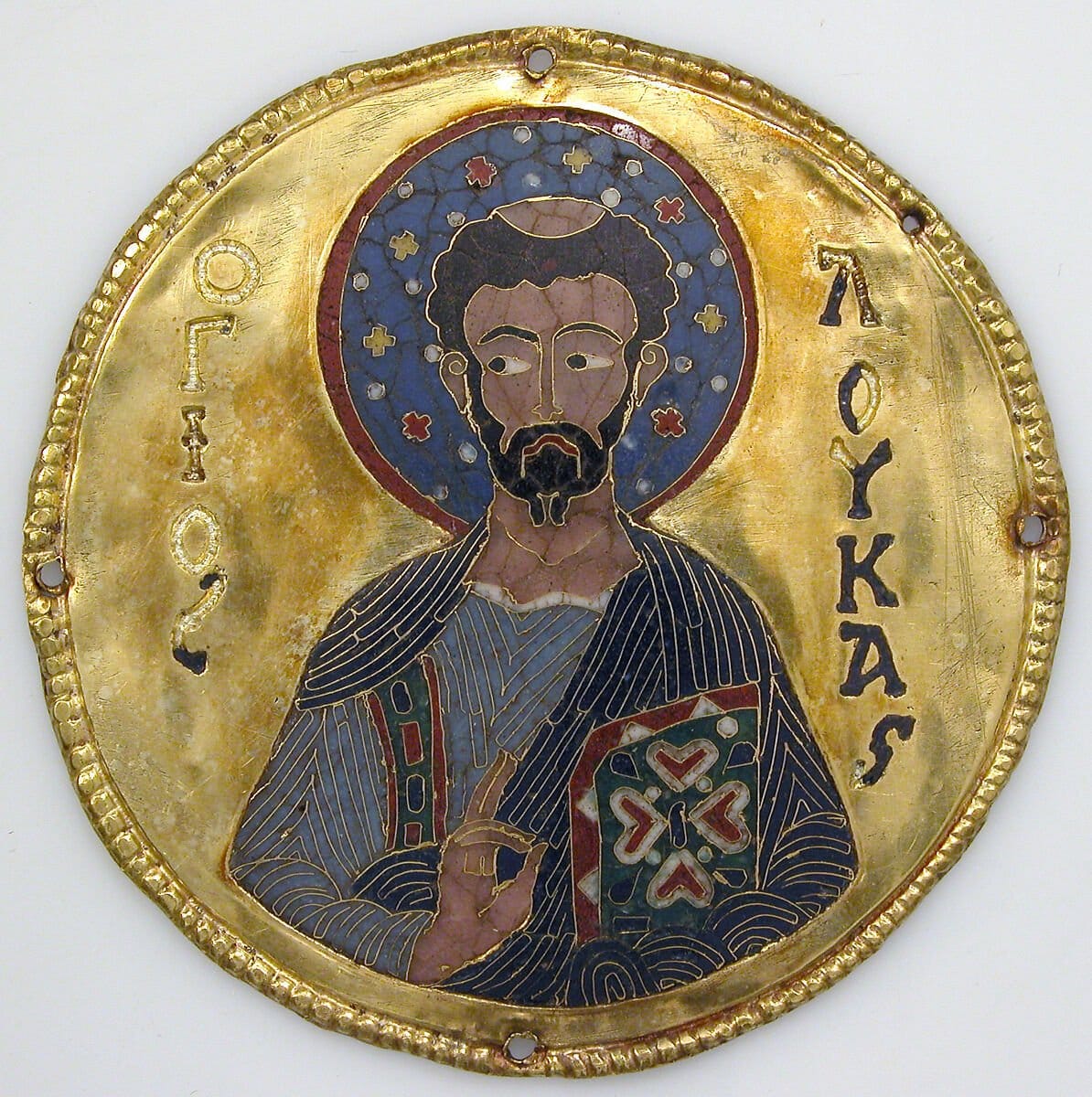
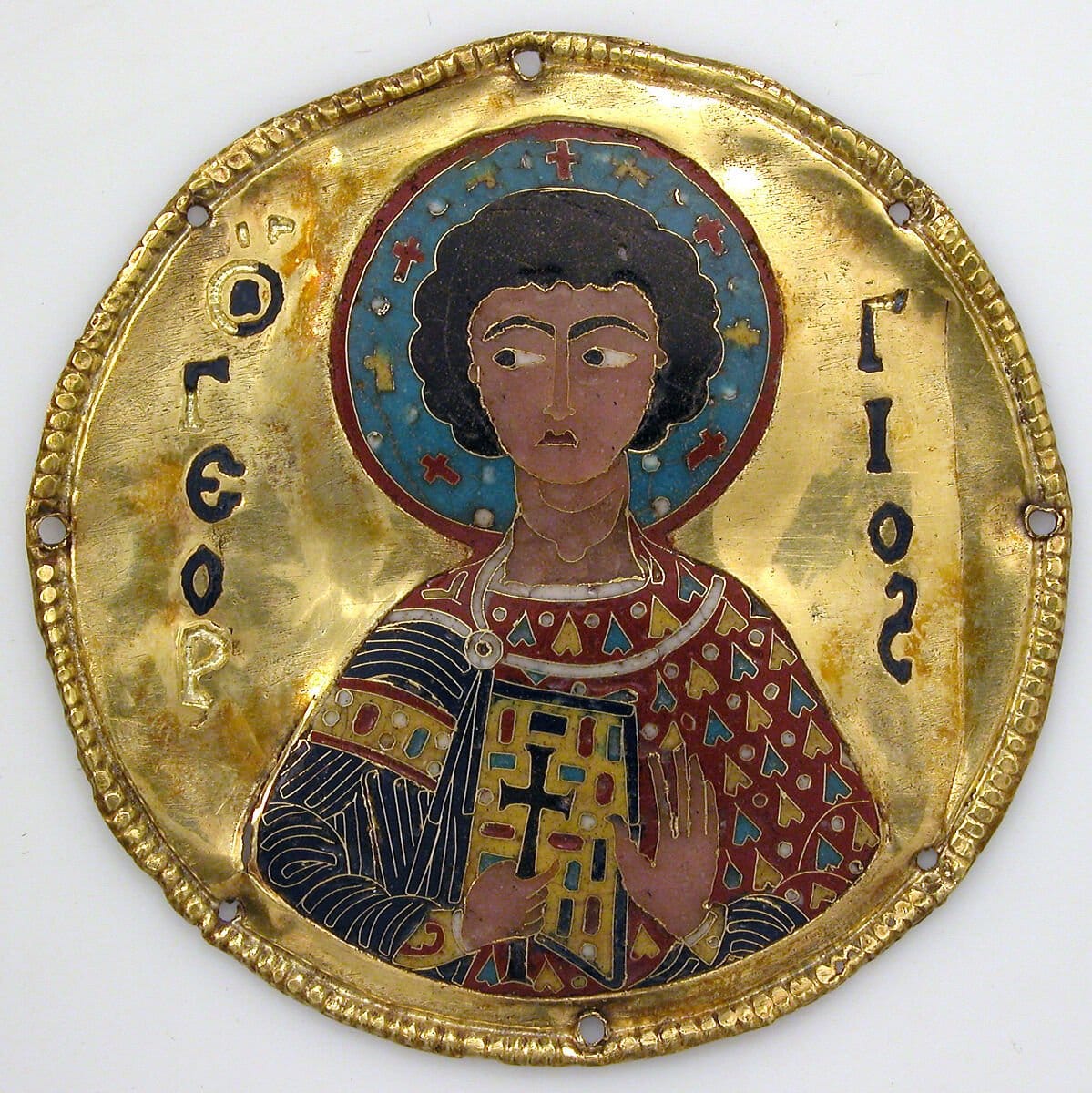
This medallion is one of a group of nine, from an original twelve, that once surrounded an icon of the Archangel Gabriel; the set may have been sent as a gift from the Byzantine court to the neighboring Christian state of Georgia. The medallions depict a hierarchy of the Church, including apostles,
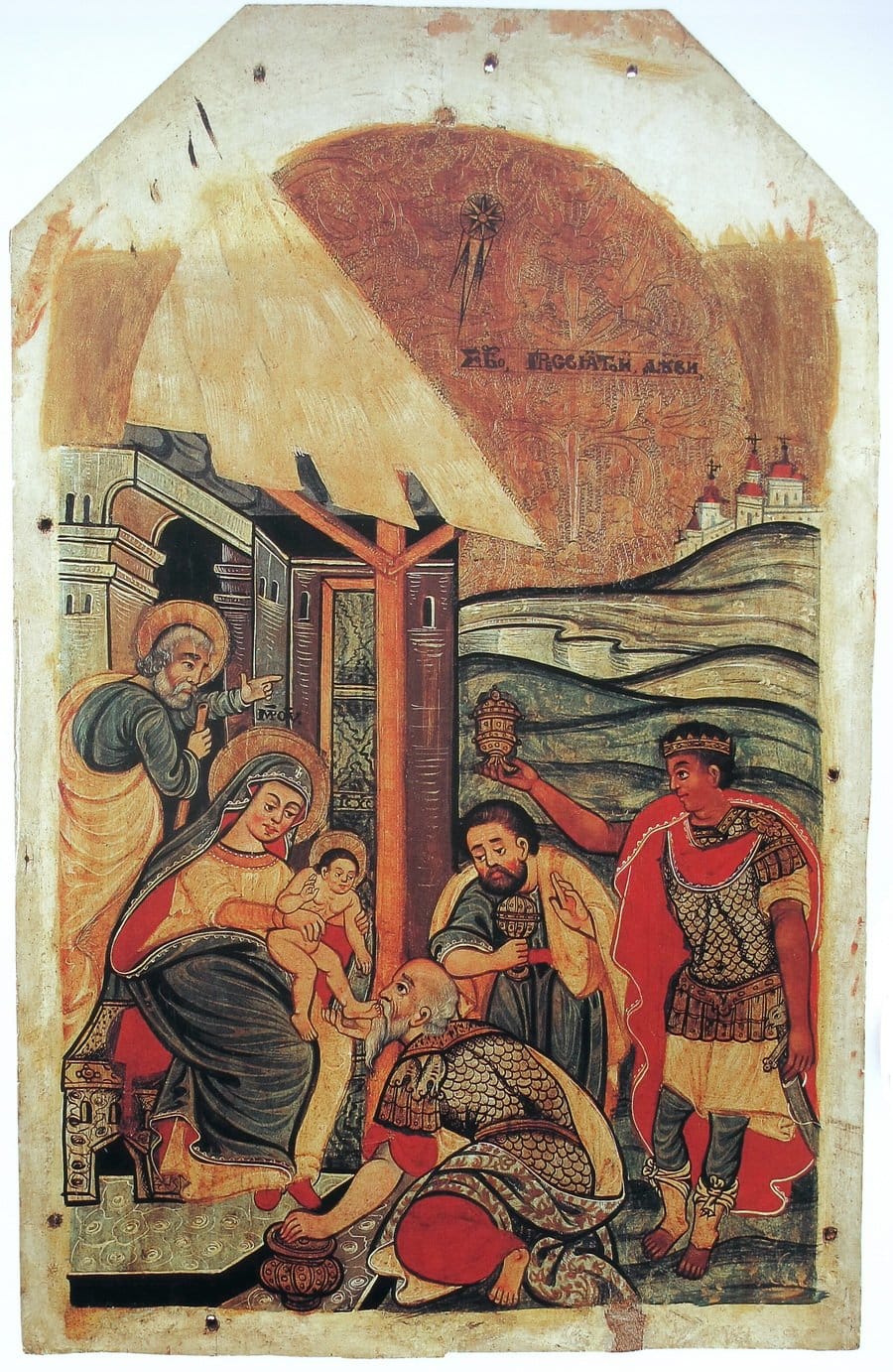
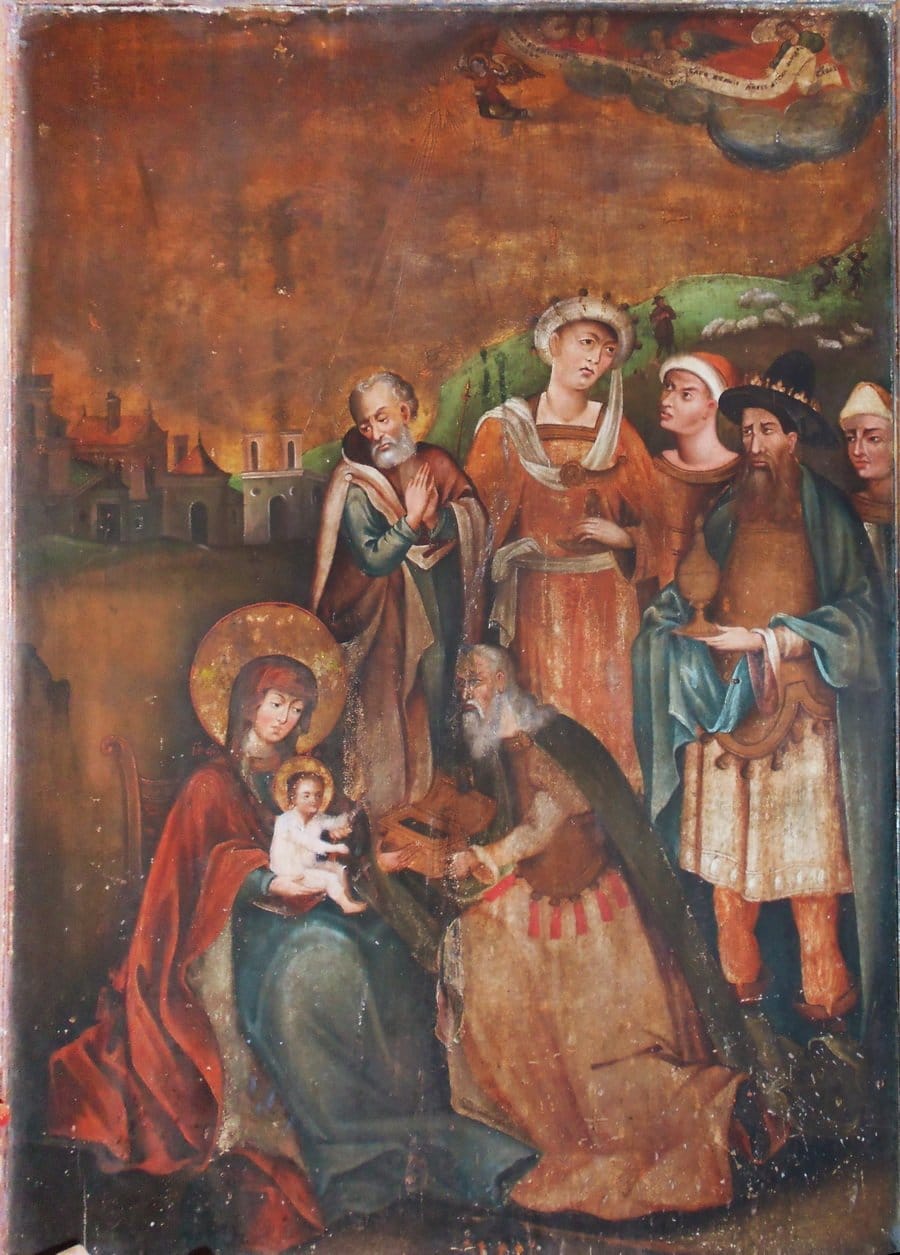
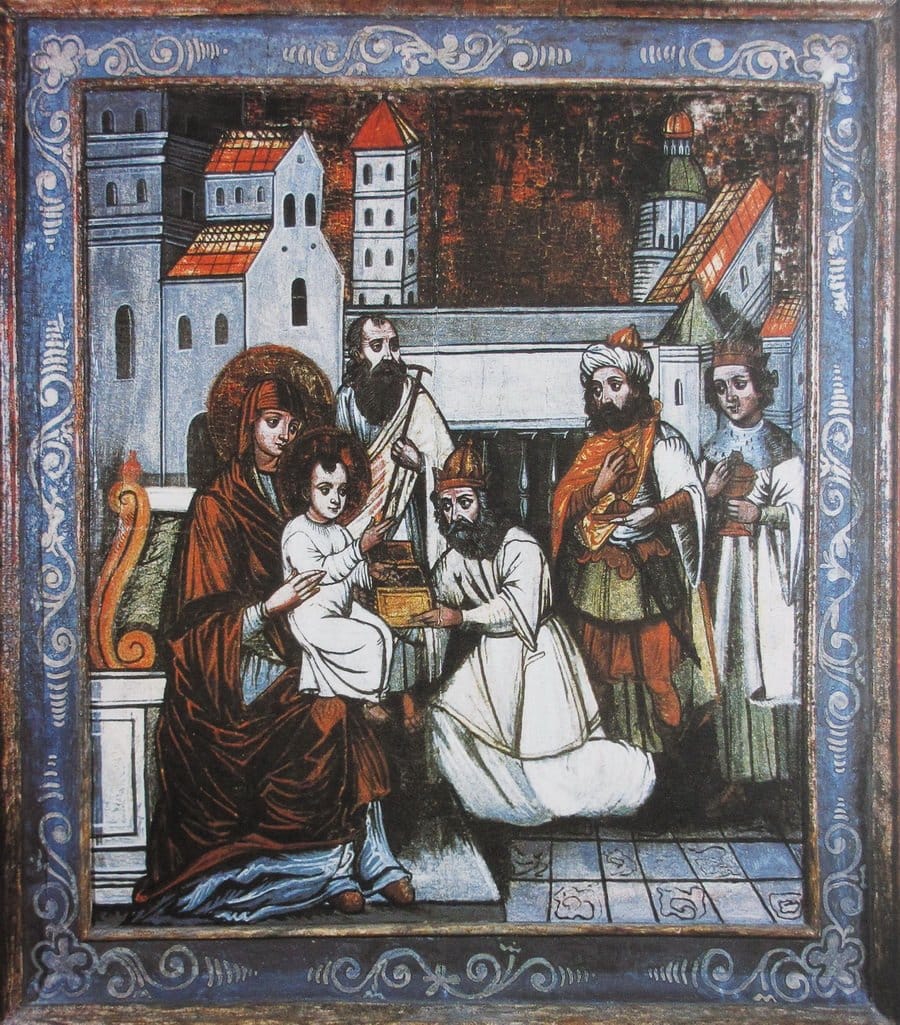
This icon depicts the Adoration of the Magi, showing the three wise men presenting their gifts to the infant Christ and the Virgin Mary. It was painted by the Rybotychi School in the early 18th century, originally from the village of Uhertsi, and is now held in the Historical Museum in Sanok, Poland
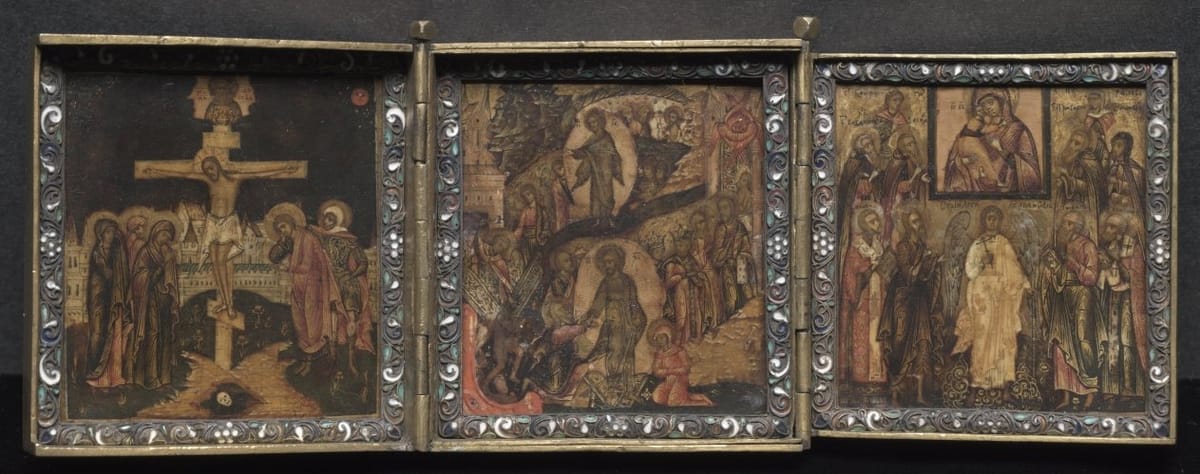
This triptych icon was probably commissioned by a lay person for private prayer and meditation, and could be folded shut when not in use. The scenes shown, from left to right, are the Crucifixion, the Resurrection and Anastasis, and the Adoration of the Miracle-Working Icon of the Vladimir Mother of
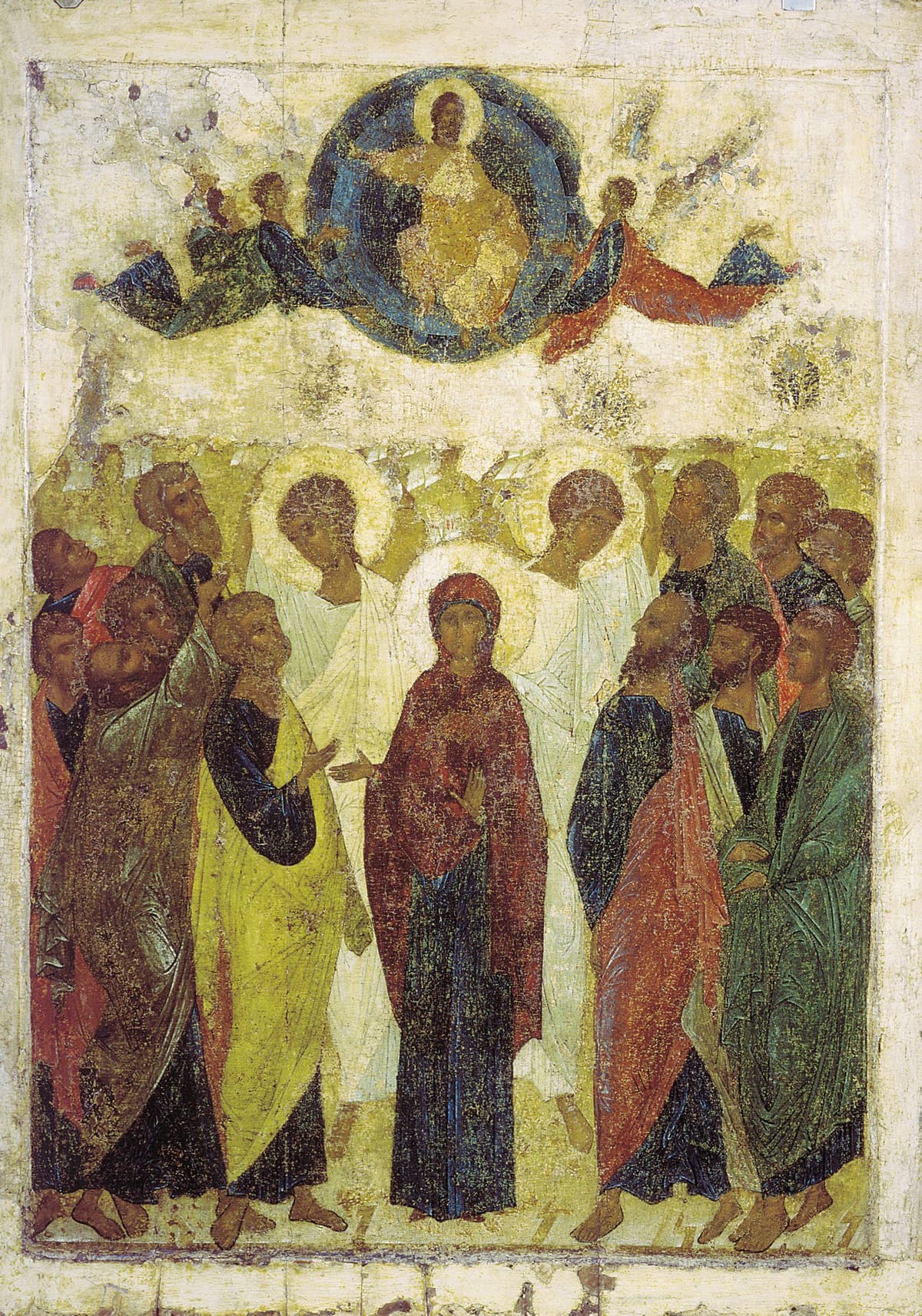
This tempera-on-wood icon depicts the Ascension of Christ on the Mount of Olives, with two angels in white appearing to the apostles to announce his promised return, following the accounts in the Gospels of Mark and Luke and the Acts of the Apostles. It was originally part of the Feast Tier of the i
This icon of the Adoration of the Magi dates from the beginning of the 18th century, painted in the Ukrainian icon tradition.
This icon of the Adoration of the Magi dates from the end of the 17th century and comes from the village of Trudovach. It is now held in a private collection.
This icon of the Adoration of the Magi was painted by the Rybotychi school of icon painting in the third quarter of the 17th century, for the Church of the Synaxis of the Virgin Mary in Hlomcha. It is now held in the Historical Museum in Sanok, Poland.
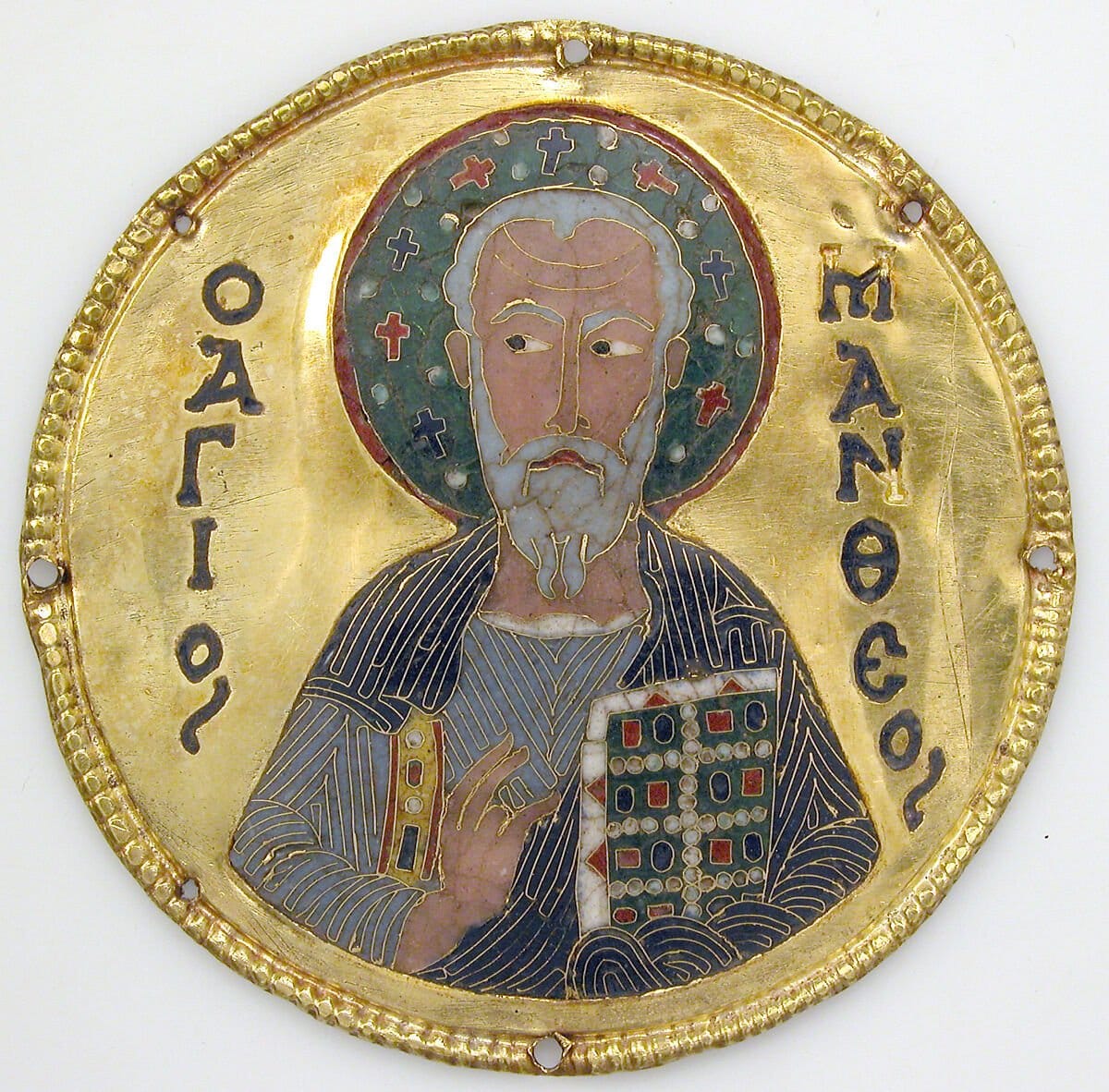
This Byzantine medallion, made of gold, silver and enamel worked in cloisonne around 1100, once formed part of the frame surrounding an icon and depicts the Evangelist Saint Matthew. It is about 3 1/4 inches in diameter and is held in the Metropolitan Museum of Art.
Icon of the Adoration of the Magi from the middle of the 17th century, from the Sambir region of Ukraine. It is in a private collection.
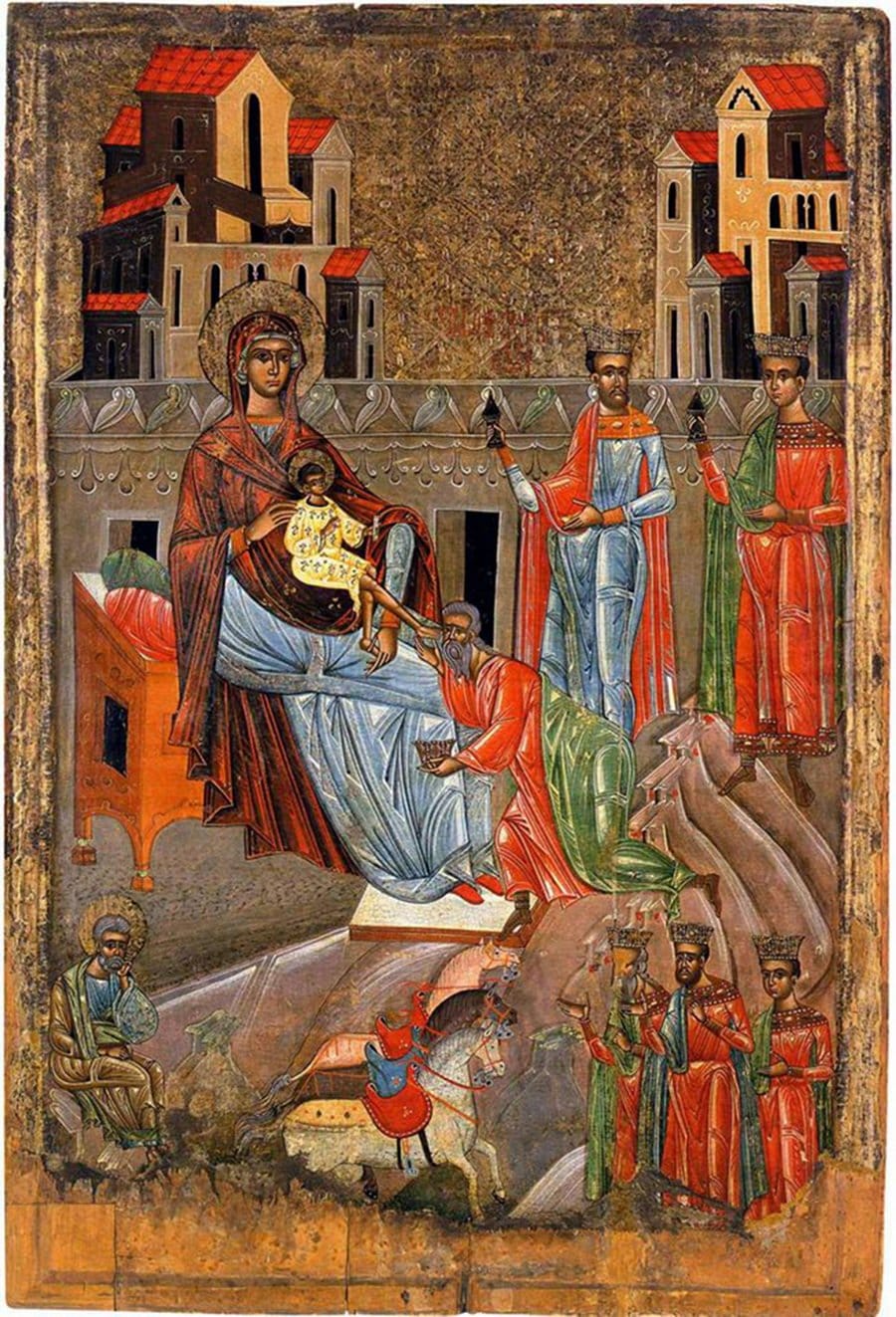
Icon of the Adoration of the Magi from the middle of the 16th century, from the village of Busovysko. It is held in the Andrey Sheptytsky National Museum in Lviv, Ukraine.
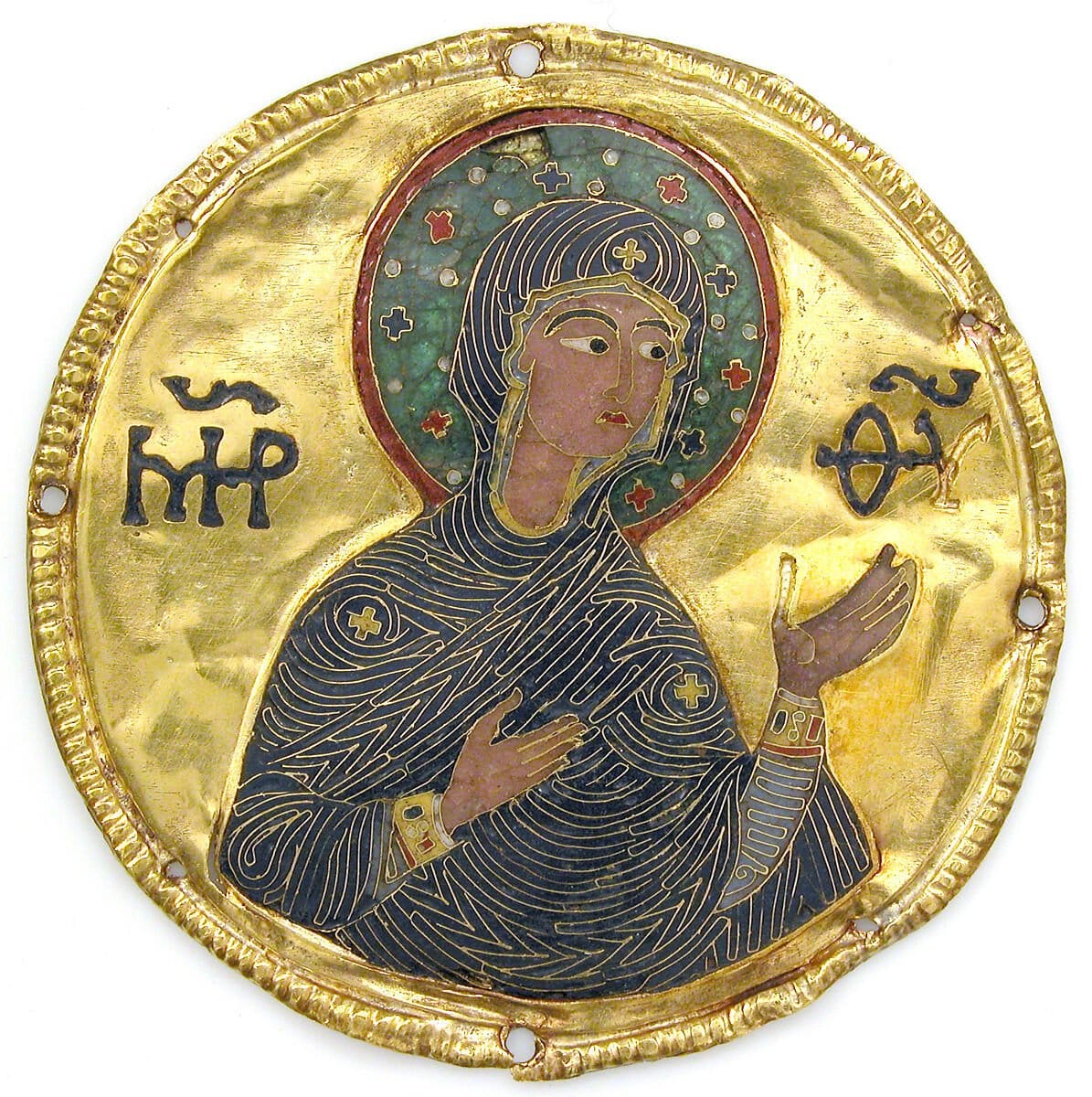
This medallion is one of a group of twelve that once surrounded an icon of the archangel Gabriel. The medallions may have been sent as a gift from the Byzantine court to the neighboring Christian state of Georgia. Byzantine gold, silver, and cloisonné enamel, made in Constantinople, diameter 8.3 cm.
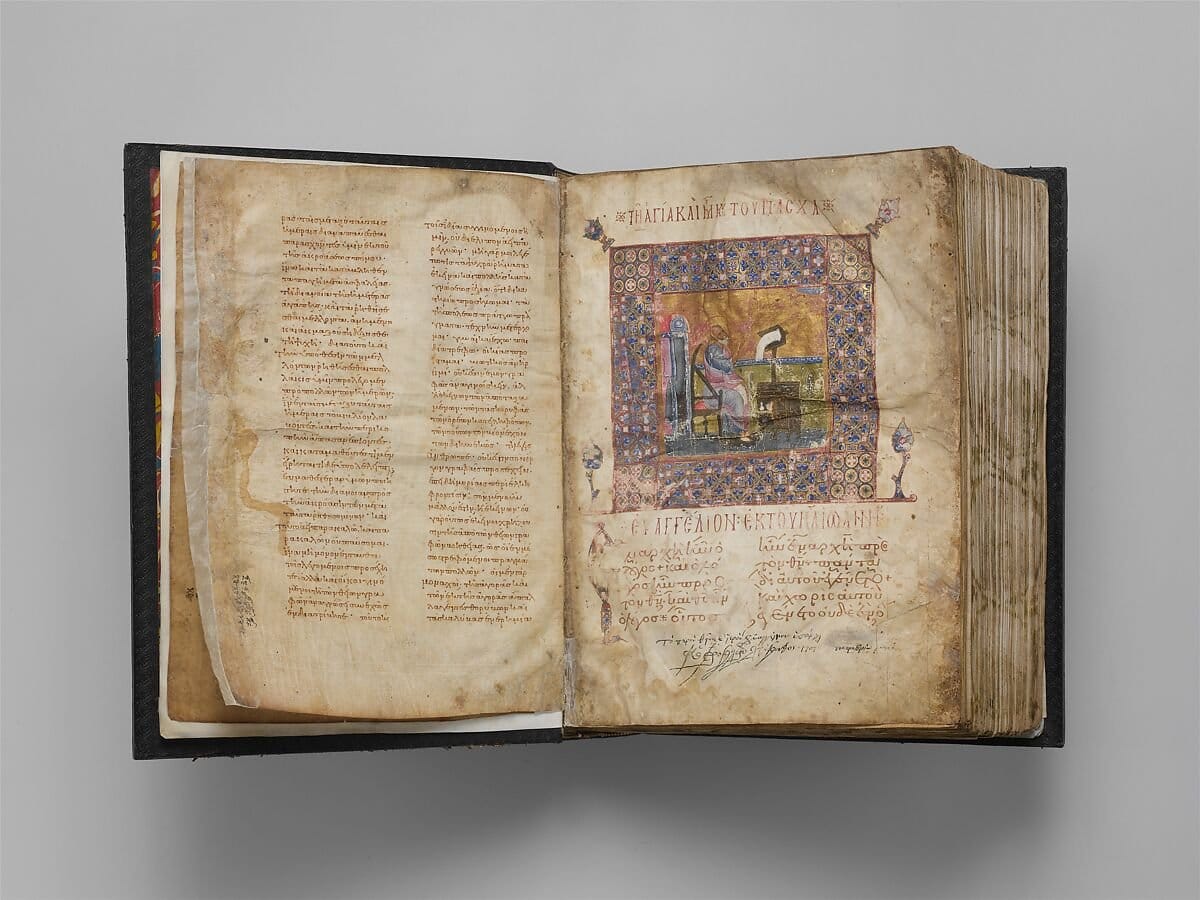
Illuminated manuscripts written in Greek were considered one of the greatest art forms by the highly literate and sophisticated clerical and secular elite of Byzantium. Over the centuries many works were commissioned for use in important churches. The calendar in this lectionary and the quality of t
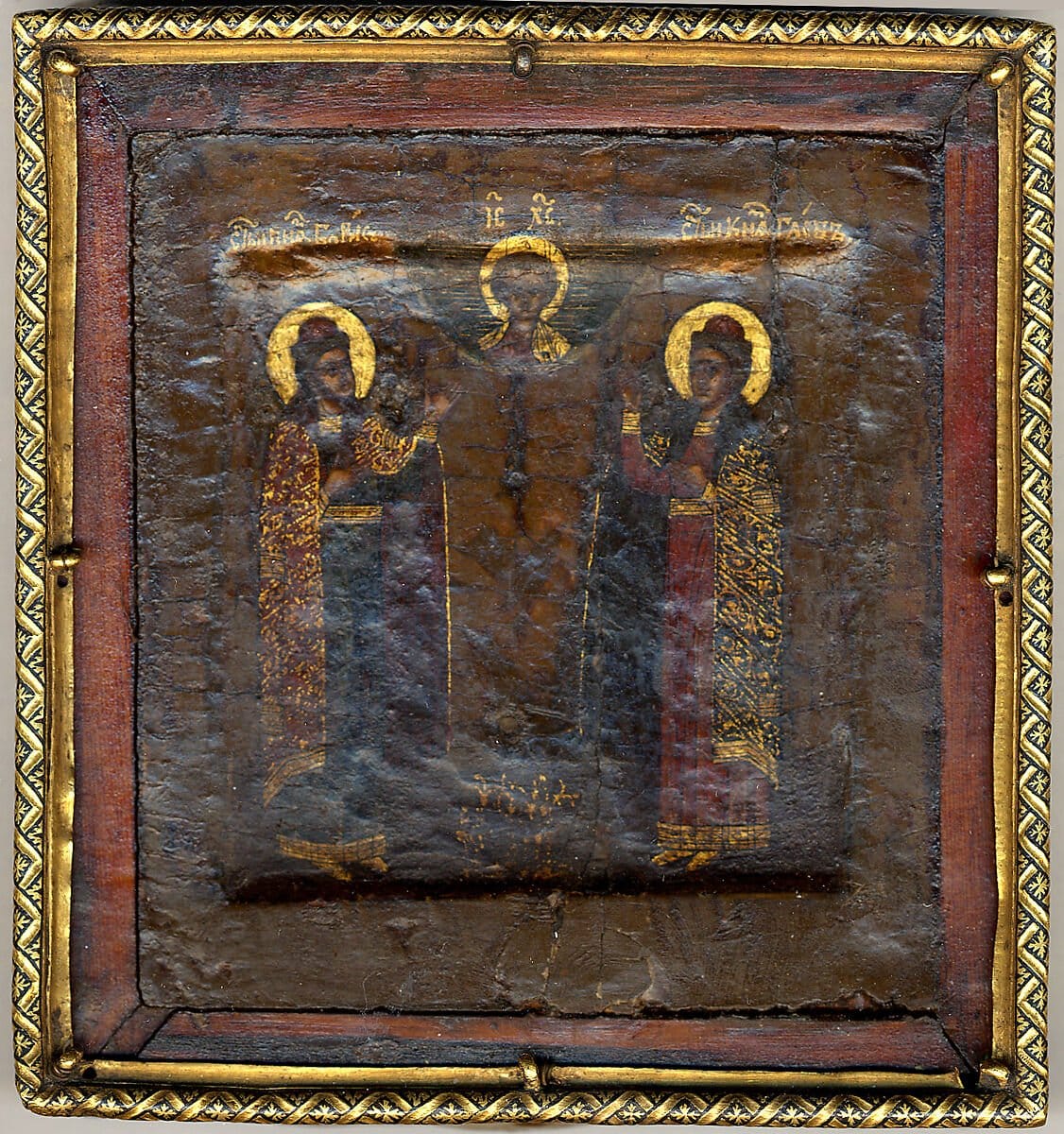
Small Russian icon of the Christ Child with Saints Boris and Gleb. Tempera and gold on wood in a gold and enamel frame studded with jewels; the icon with its frame measures 11.1 x 10.2 cm.
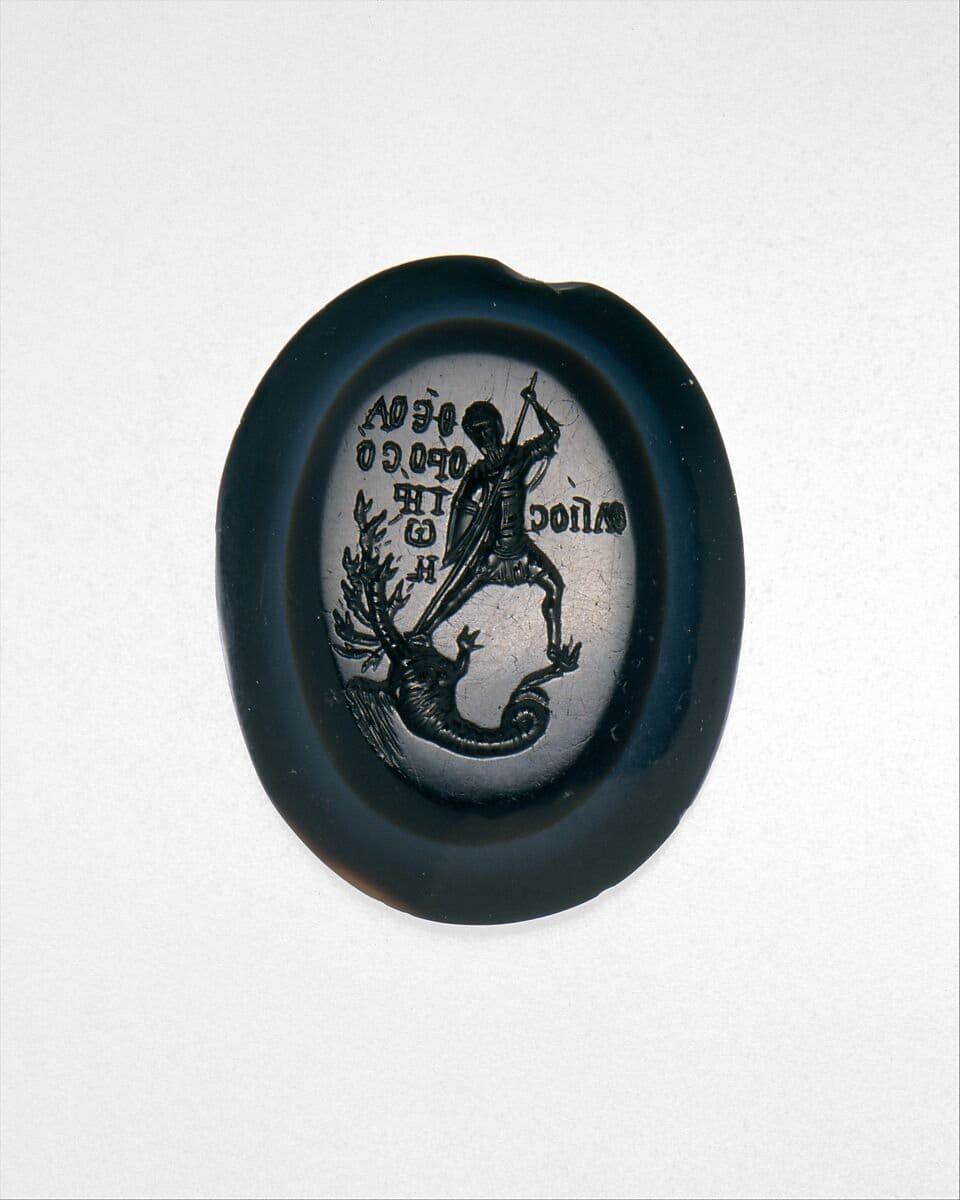
Theodore Teron (the recruit) was one of several soldier-martyrs whose cults were enormously popular in the later centuries of the Byzantine Empire. This intaglio illustrates Theodore’s miraculous slaying of a dragon. The image reflects the revival of classical culture that took place in Byzantium in
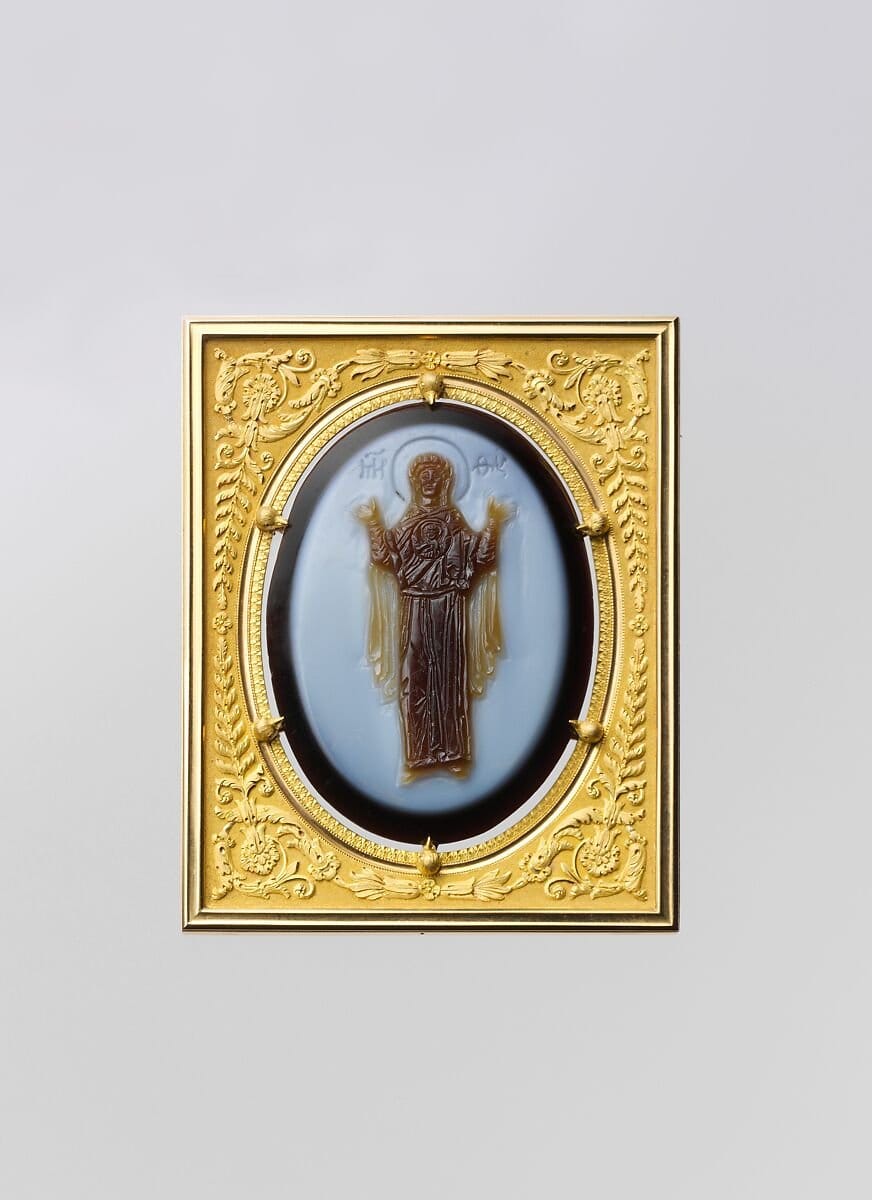
This delicately carved cameo shows the Virgin in an orant pose, with her arms upraised, and a medallion of the Christ Child over her chest. This icon type is often called the Blachernitissa after a famous icon at the Blachernai Monastery in Constantinople. Byzantine agate cameo, probably made in Con
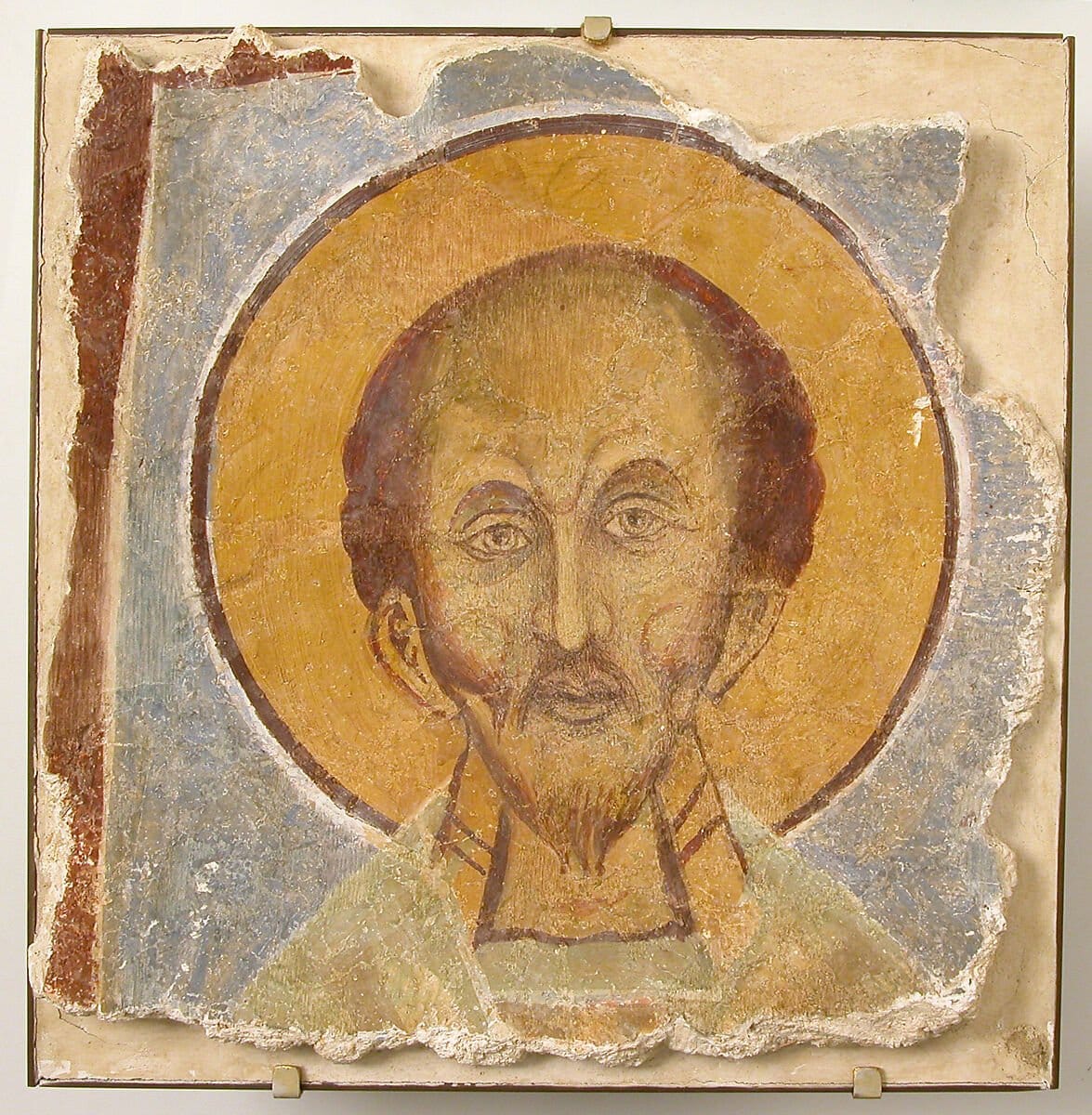
The largest of these fresco fragments may represent the late fourth-century saint John Chrysostom, who is usually depicted with a pointed beard, sunken cheeks, and a high forehead. Byzantine fresco with modern restoration, 24 x 23.7 cm.
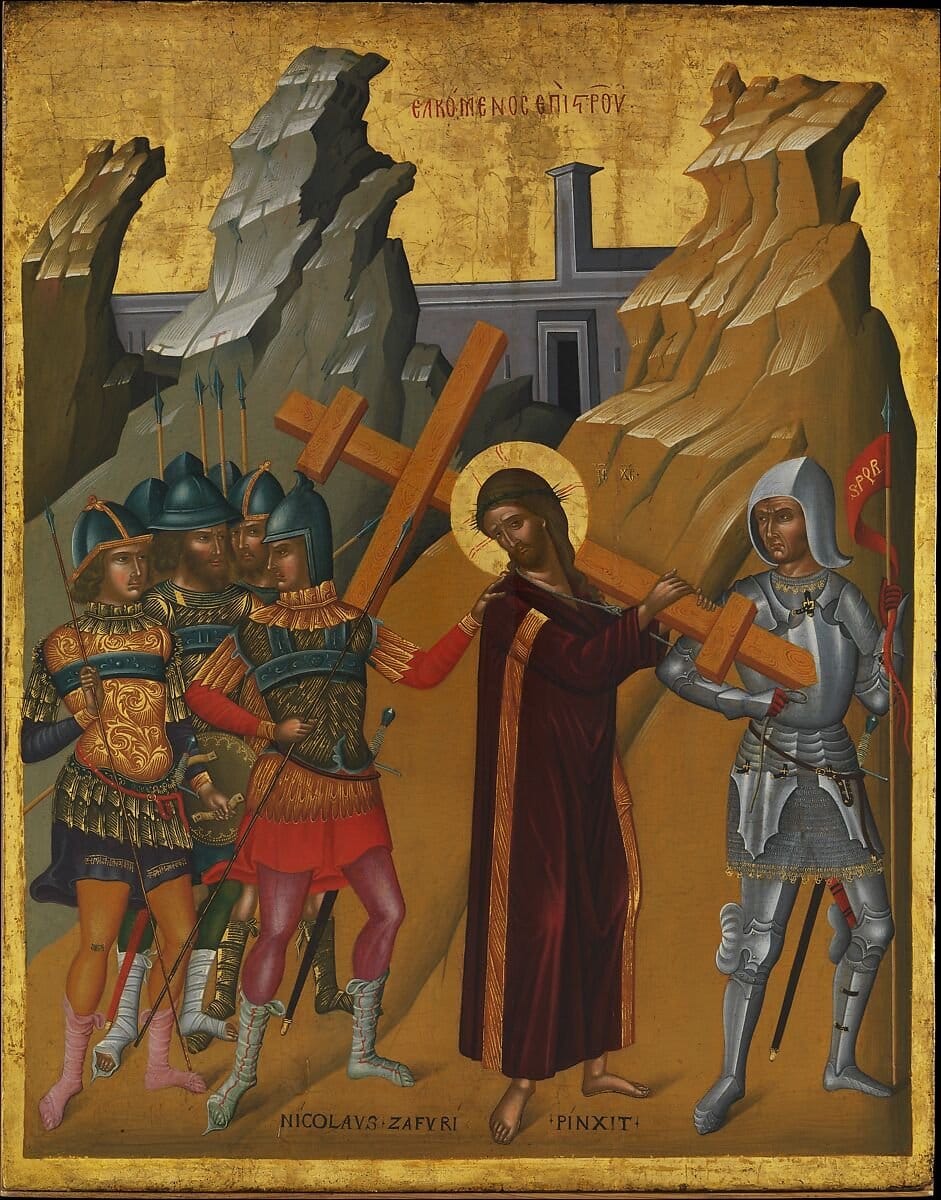
Nicholaos Tzafouris was one of the many icon painters working in the city of Candia (now Iraklion) in Crete at the time when Crete was under the control of Venice. The combination of Byzantine and Latin elements seen in many Cretan icons was well received locally and in Italy. The Greek inscription
This medallion is one of a group of twelve that once surrounded an icon of the archangel Gabriel. The medallions may have been sent as a gift from the Byzantine court to the neighboring Christian state of Georgia. Byzantine gold, silver, and cloisonné enamel, diameter 8.3 cm.
Icon of the Adoration of the Magi by the Rybotychi school, made in the 1680s. It is held in the National Museum in Warsaw, Poland.
This medallion is one of a group of twelve that once surrounded an icon of the archangel Gabriel. The medallions may have been sent as a gift from the Byzantine court to the neighboring Christian state of Georgia. Byzantine gold, silver, and cloisonné enamel, diameter 8.3 cm.
This medallion is one of a group of twelve that once surrounded an icon of the archangel Gabriel. The medallions may have been sent as a gift from the Byzantine court to the neighboring Christian state of Georgia. Byzantine gold, silver, and cloisonné enamel, diameter 8.3 cm.