
Medieval and Renaissance Sculptures of the Virgin and Child
Twelve public-domain medieval and Renaissance statues of the Virgin Mary and the Christ Child, free to download.
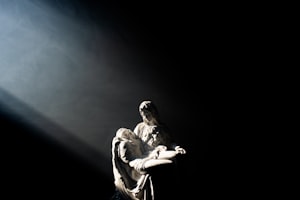
Twelve public-domain medieval and Renaissance statues of the Virgin Mary and the Christ Child, free to download.
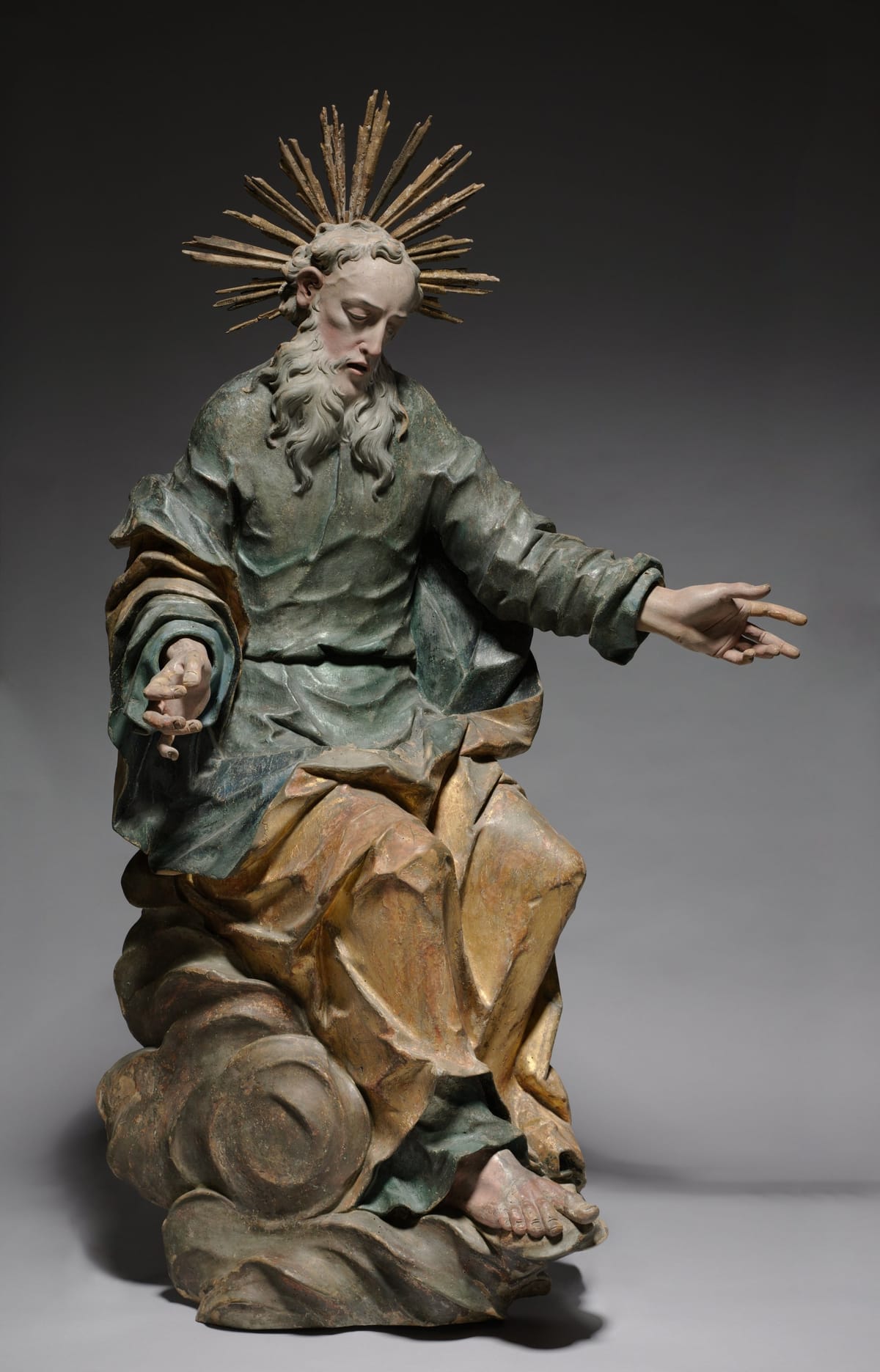
Johann Peter Schwanthaler belonged to a renowned family of sculptors that produced works for religious and domestic settings throughout Bavaria, Austria, and southern Germany for more than 250 years. This imposing image of God the Father would have formed part of a larger group, probably at the top
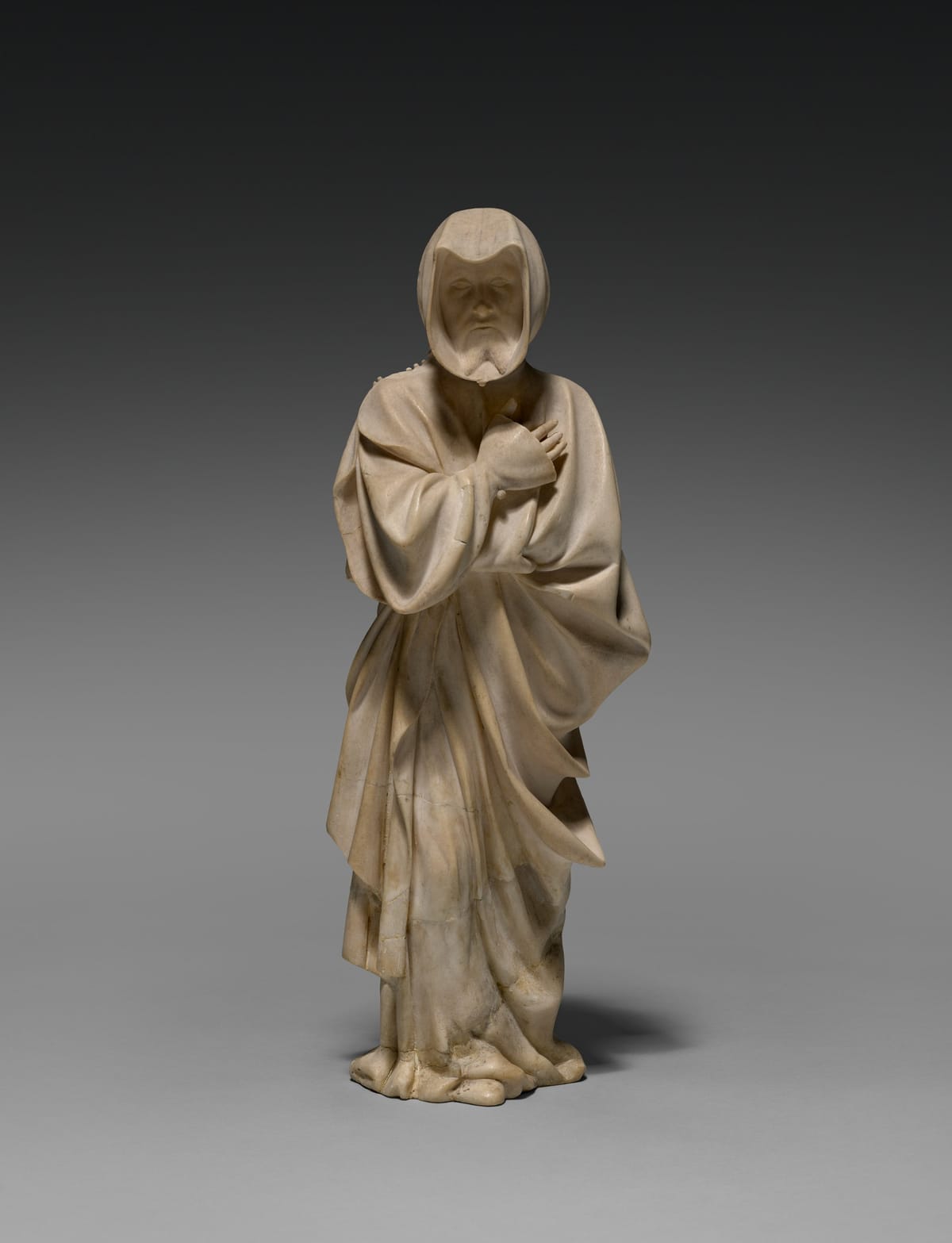
This figure comes from the tomb of Duke Philip the Bold from the church of Champmol near Dijon (Burgundy, France). Philip, who founded the monastery and designated it as his burial place, hired the best artists, many of whom came from the Netherlands. While the commission was given in 1381, the work
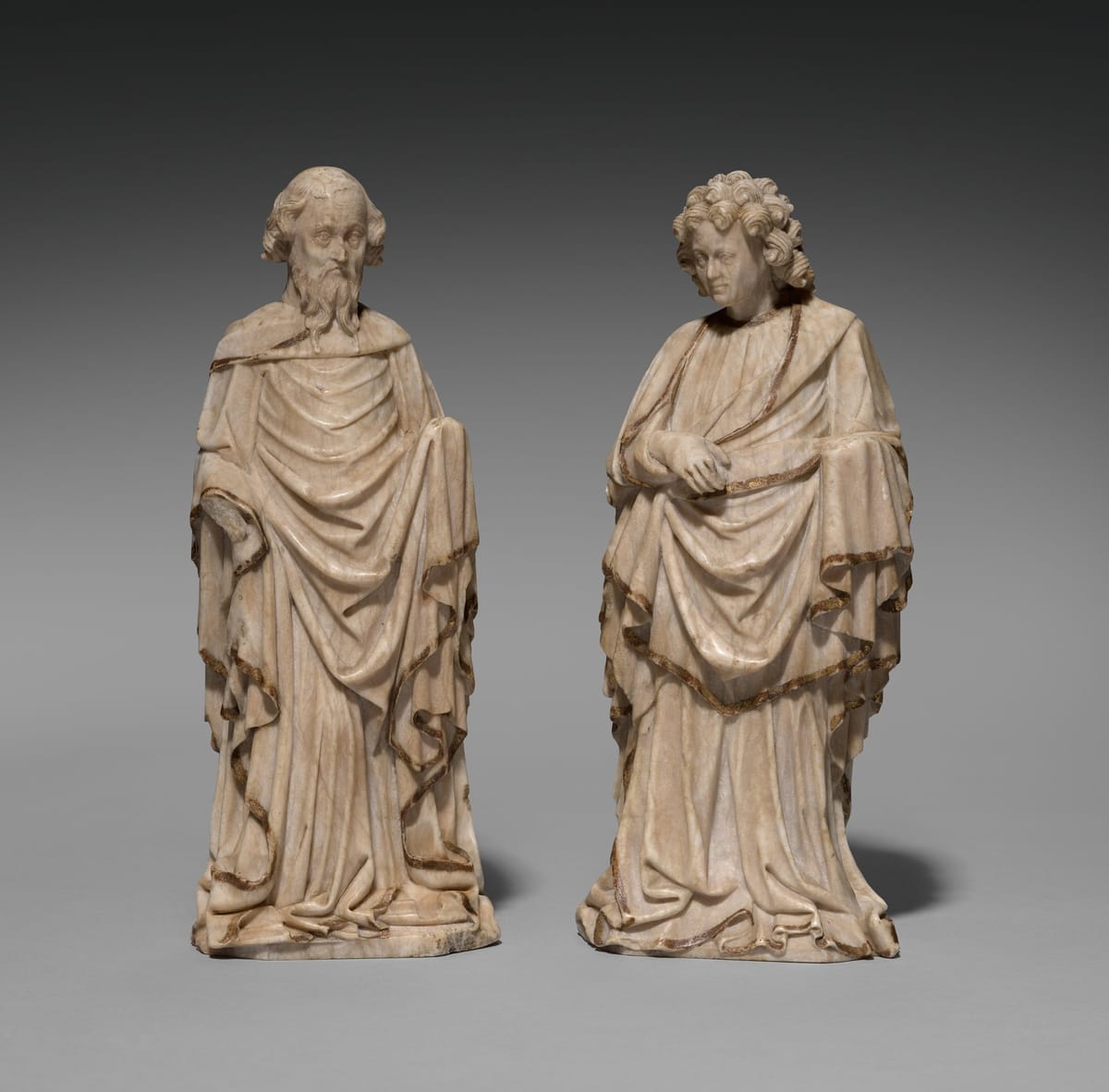
The two sculptures come from an altarpiece in the cathedral of Saint Omer in northern France. Four other figures have been preserved there, and possibly one at the Metropolitan Museum in New York. The workshop was probably located in Bruges, in what is now Belgium. Sculpture was the leading art genr
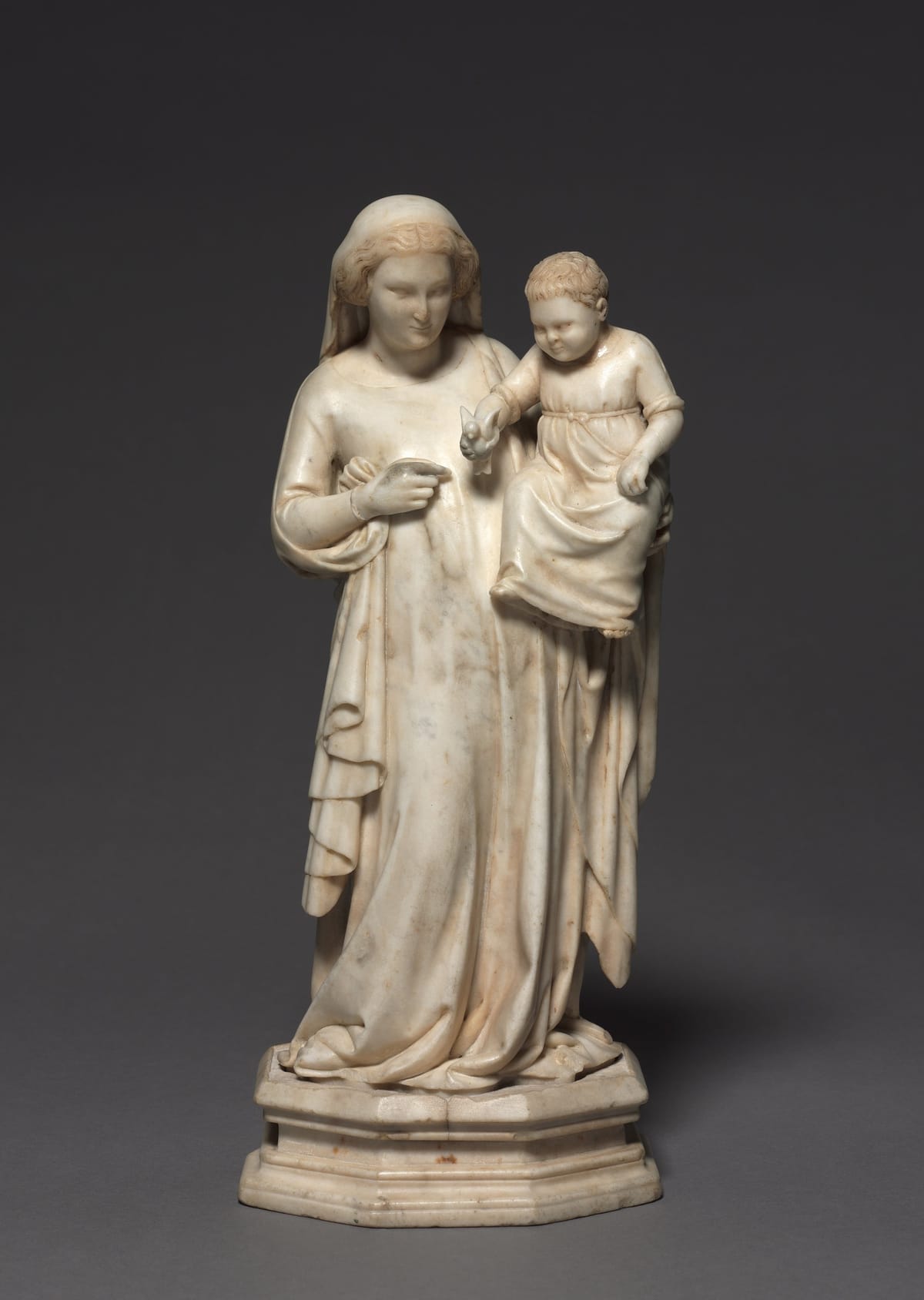
One of the most important and beautiful sculptures that still exist by this artist, this work is believed to be the only sculpture by Andrea Pisano in the US. The attribution to Pisano is based upon a comparison with his bronze reliefs for the Baptistry doors in Florence, fully documented examples o
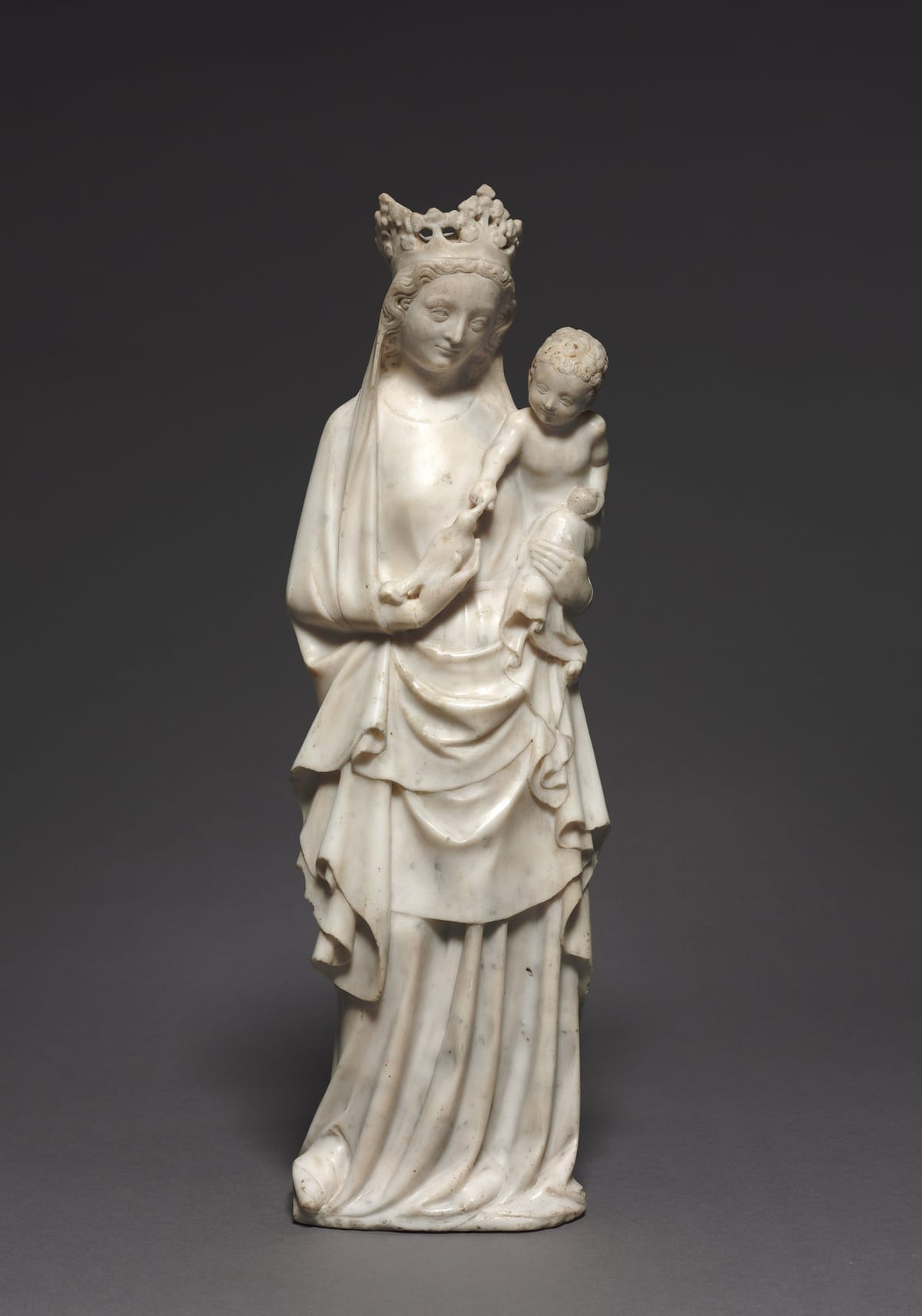
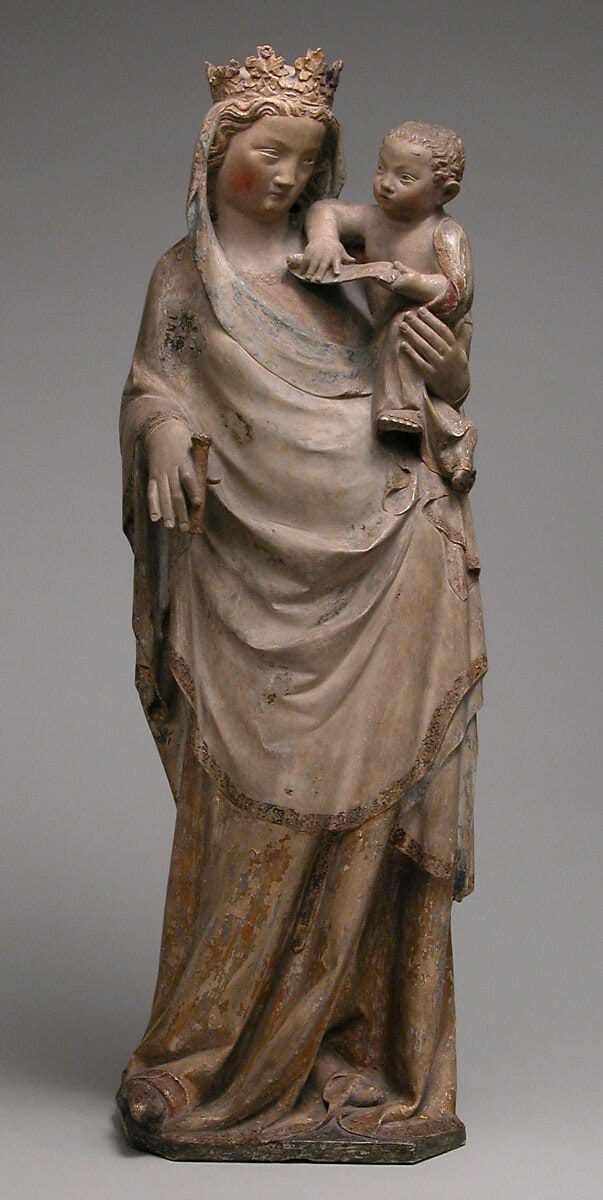
The Virgin and Child represents one of the most frequent subjects for free-standing sculpture in 14th-century France, motivated by the developing cult of the Virgin and increasing veneration of Mary. Such sculptures were not restricted to churches, but were also found in roadside shrines, entrances
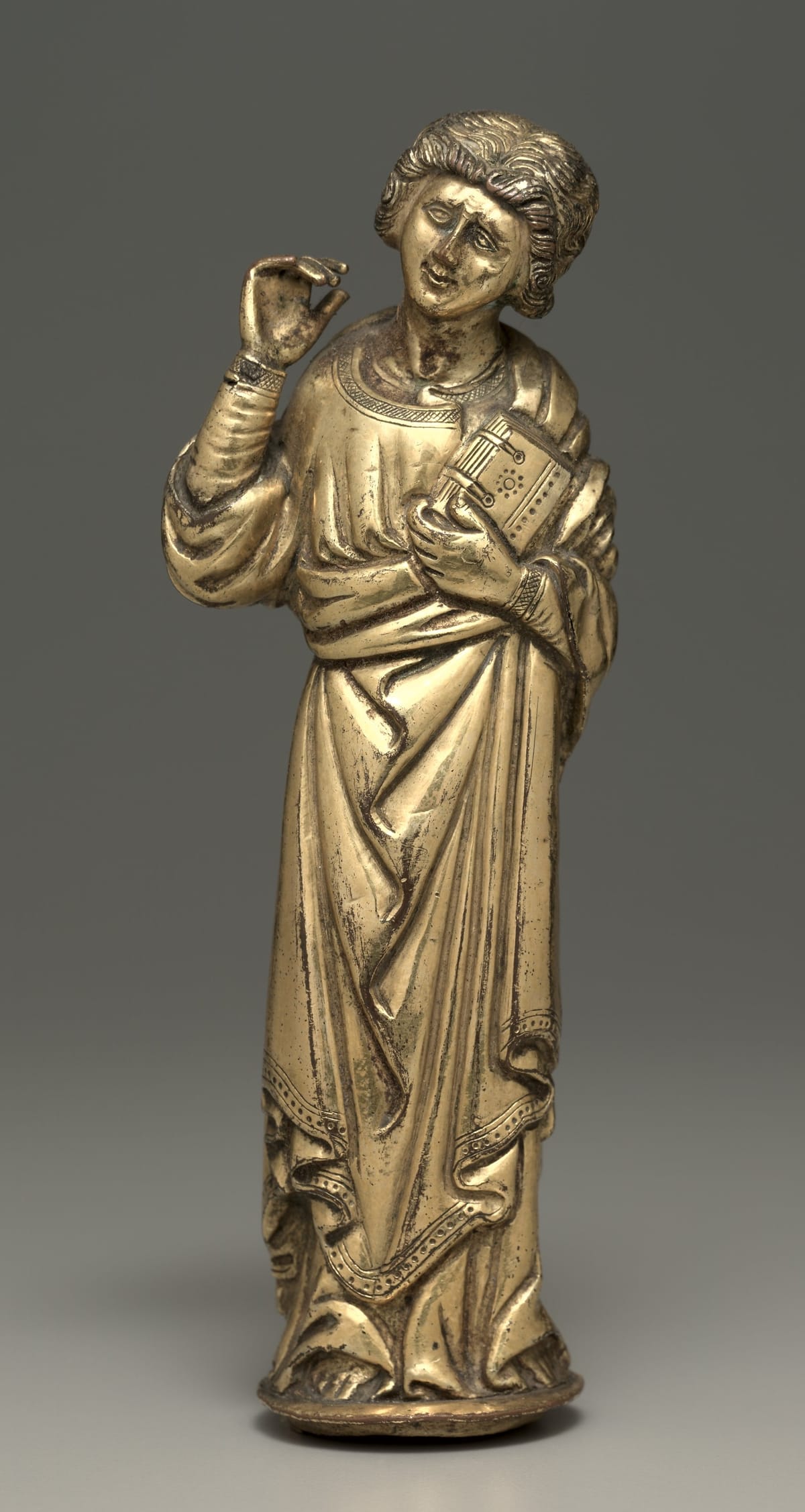
These small statuettes would have originally flanked a crucifix as suggested by this arrangement. According to the Gospels, the Virgin and Saint John were present on Golgotha at Christ’s death. Medieval artists frequently depicted them standing next to the cross. Medium: Gilt copper. Measurements:
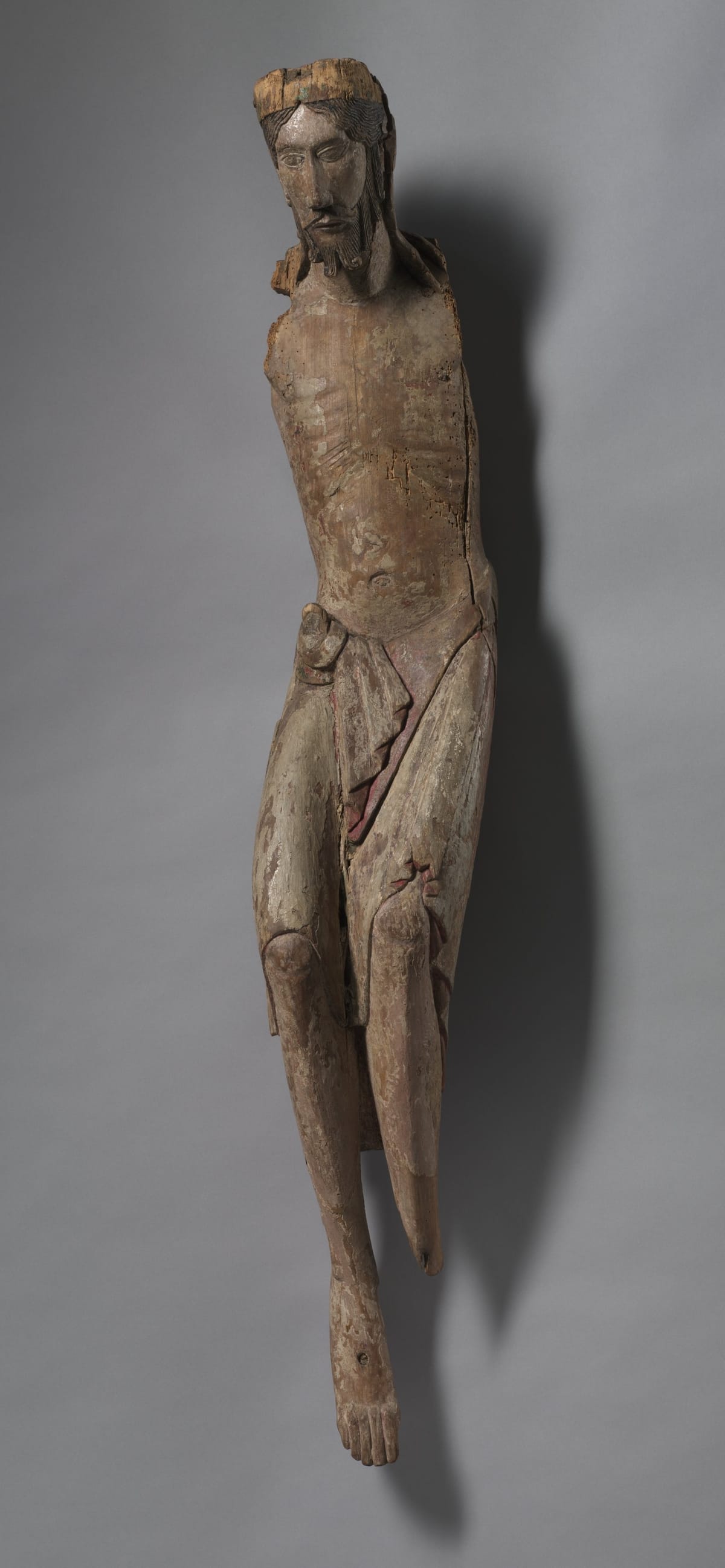
By the 11th century, monumental crucifixes carved from wood and painted were a common feature of church interiors. Placed on or suspended above the main altar, they reminded viewers of Christ’s sacrifice on behalf of mankind at the Crucifixion, an event reenacted every time Mass was celebrated on th
This sculpture comes from an altarpiece in the cathedral of Saint Omer in northern France. Four other figures have been preserved there, and possibly one at the Metropolitan Museum in New York. The workshop was probably located in Bruges, in what is now Belgium. Sculpture was the leading art genre a
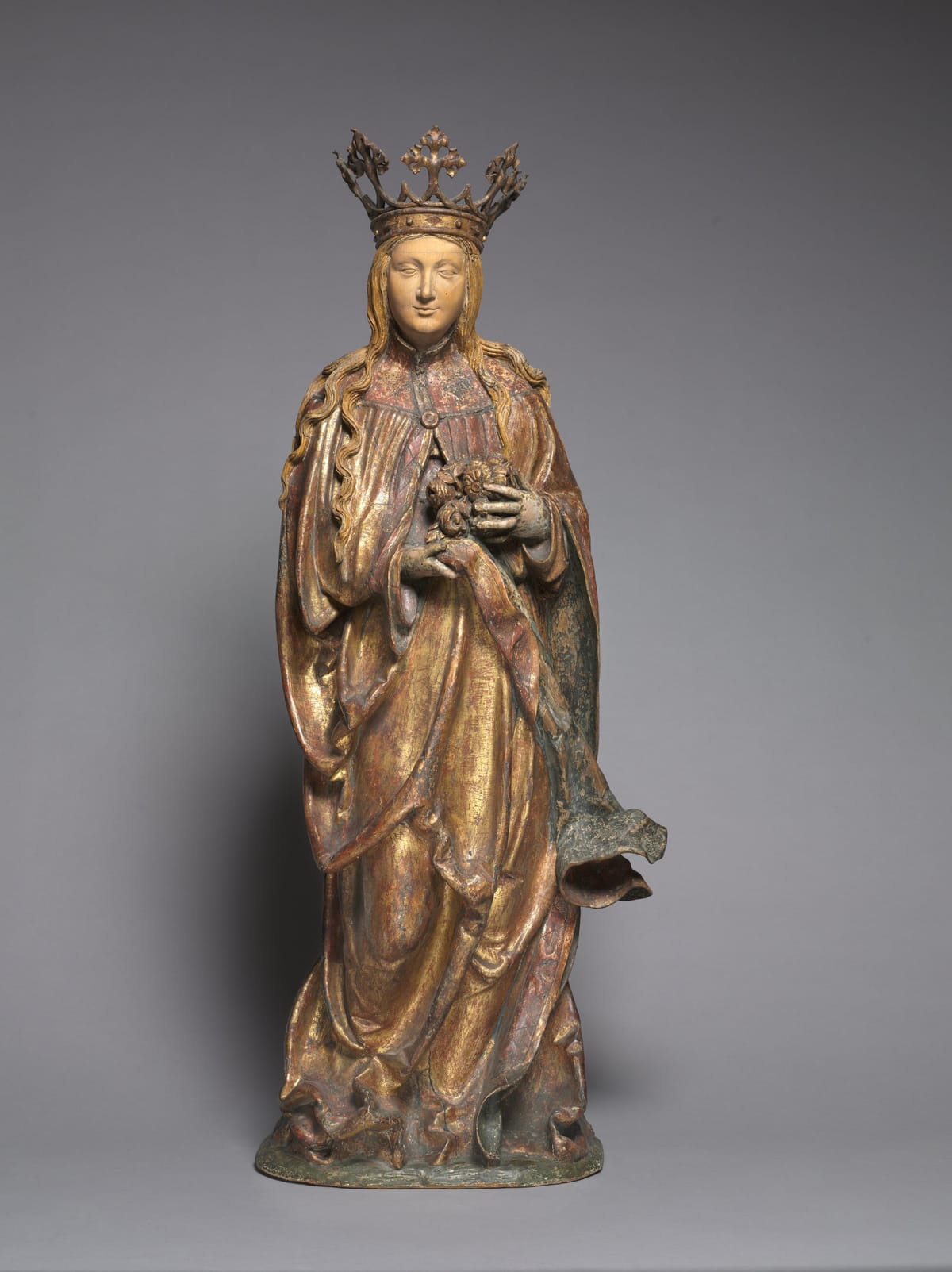
Saint Elizabeth was born in 1207, the daughter of Andreas II, King of Hungary; her crown alludes to her royal birth. Many legends about her generosity and work on behalf of the poor were circulated in the Middle Ages, among them the subject of this sculpture: food she was carrying to the poor was mi
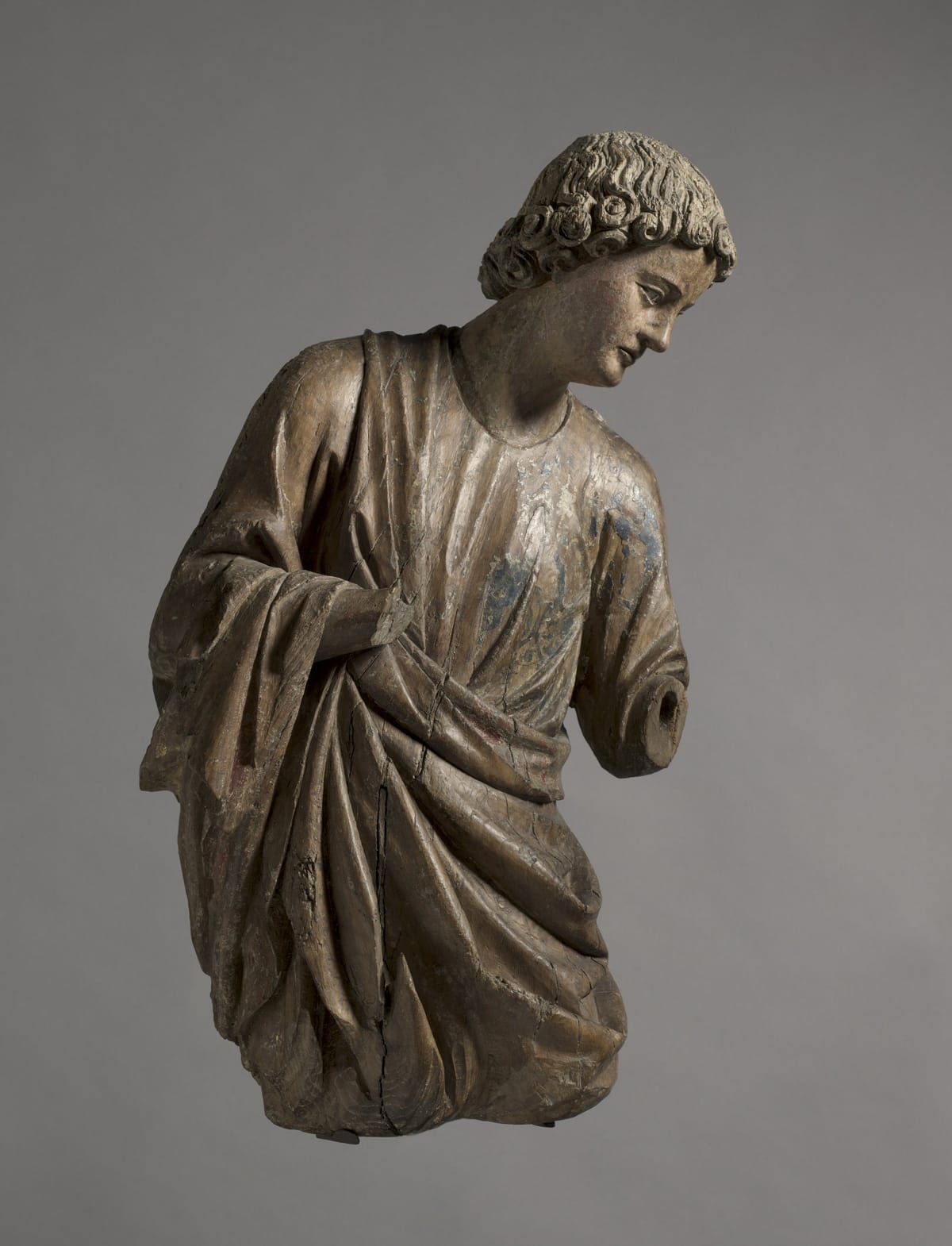
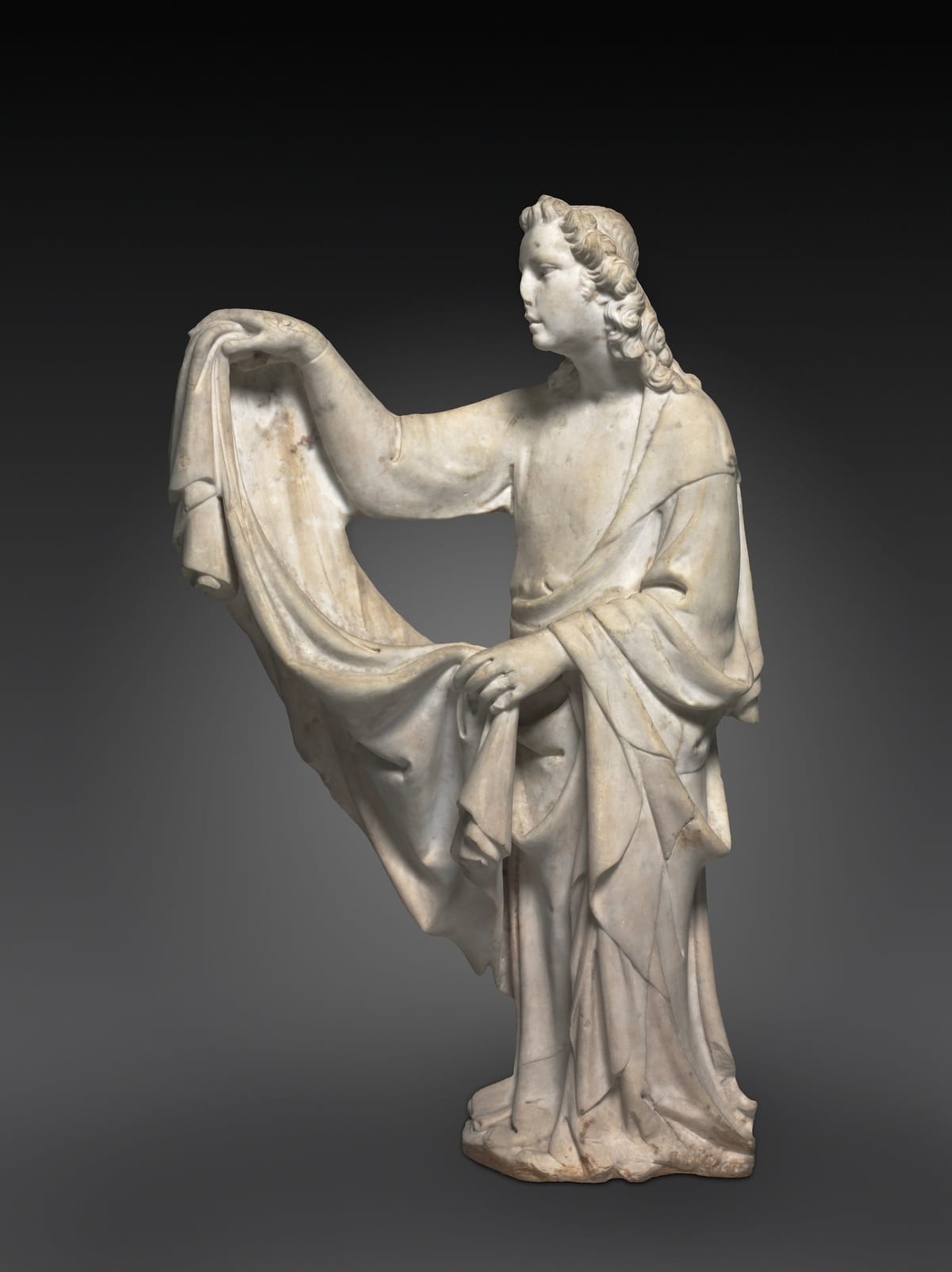
Surviving in fragmentary condition, this pair of angels lacks lower arms, hands, wings, and attributes. Their original paint and gilding, now almost entirely lost, once rendered their garments a rich brocade and their hair a luxuriant gold. Nonetheless, in their graceful poses and sublime faces—whic
Tino da Camaino was active in Siena, Pisa, and Florence after 1311 where he established his reputation as an important and gifted sculptor. In 1323 he was summoned to the Angevin court at Naples, probably by King Robert of Anjou to work on the sepulchral monument of the king's daughter-in-law, Cathe
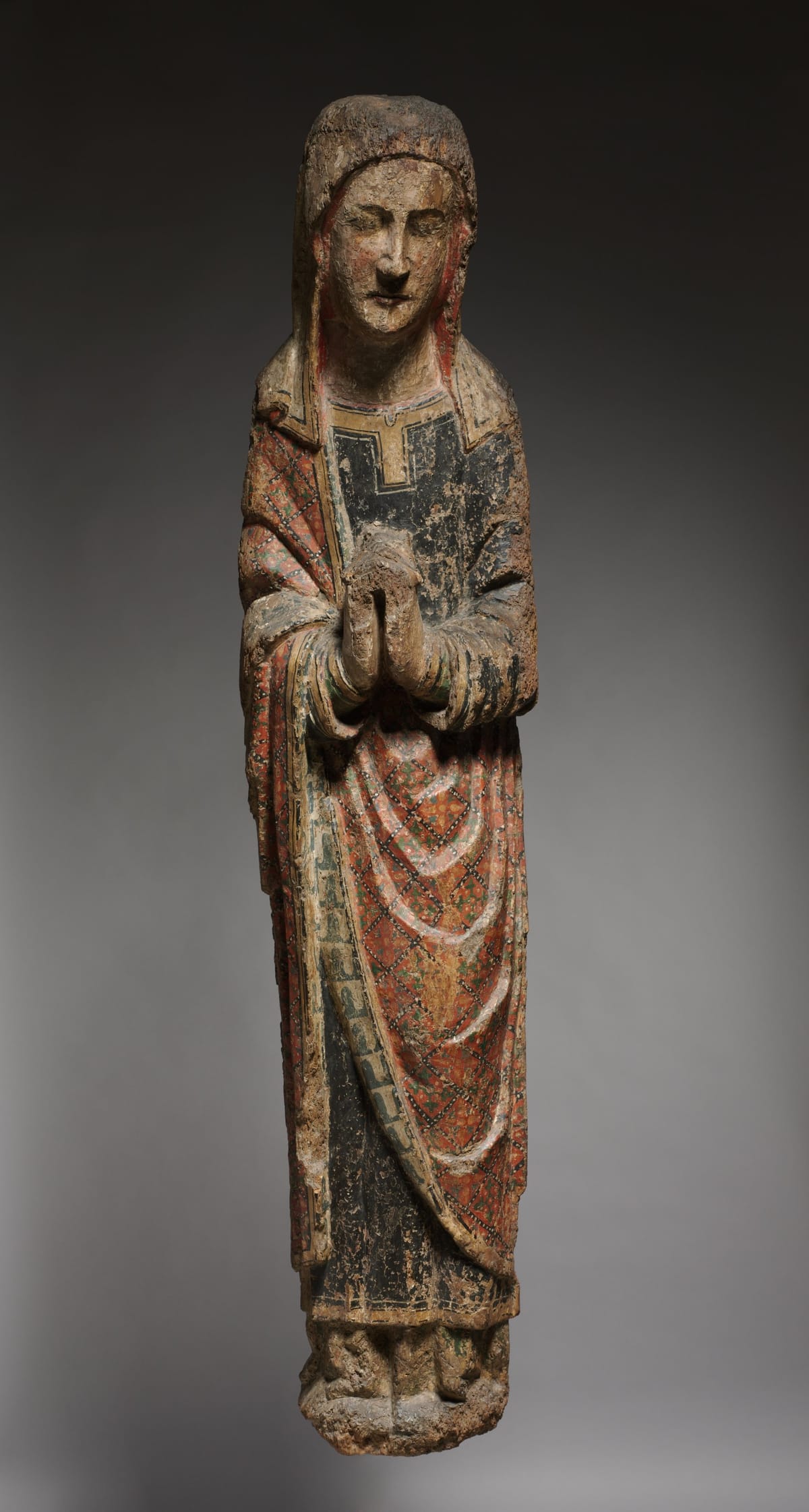
These figures of the Virgin and Saint John once formed part of a Crucifixion group that would have originally included a figure of Christ on the cross shown at center. Fortunately the original polychromy of the two figures has been preserved, affording the viewer a rare opportunity to appreciate a r
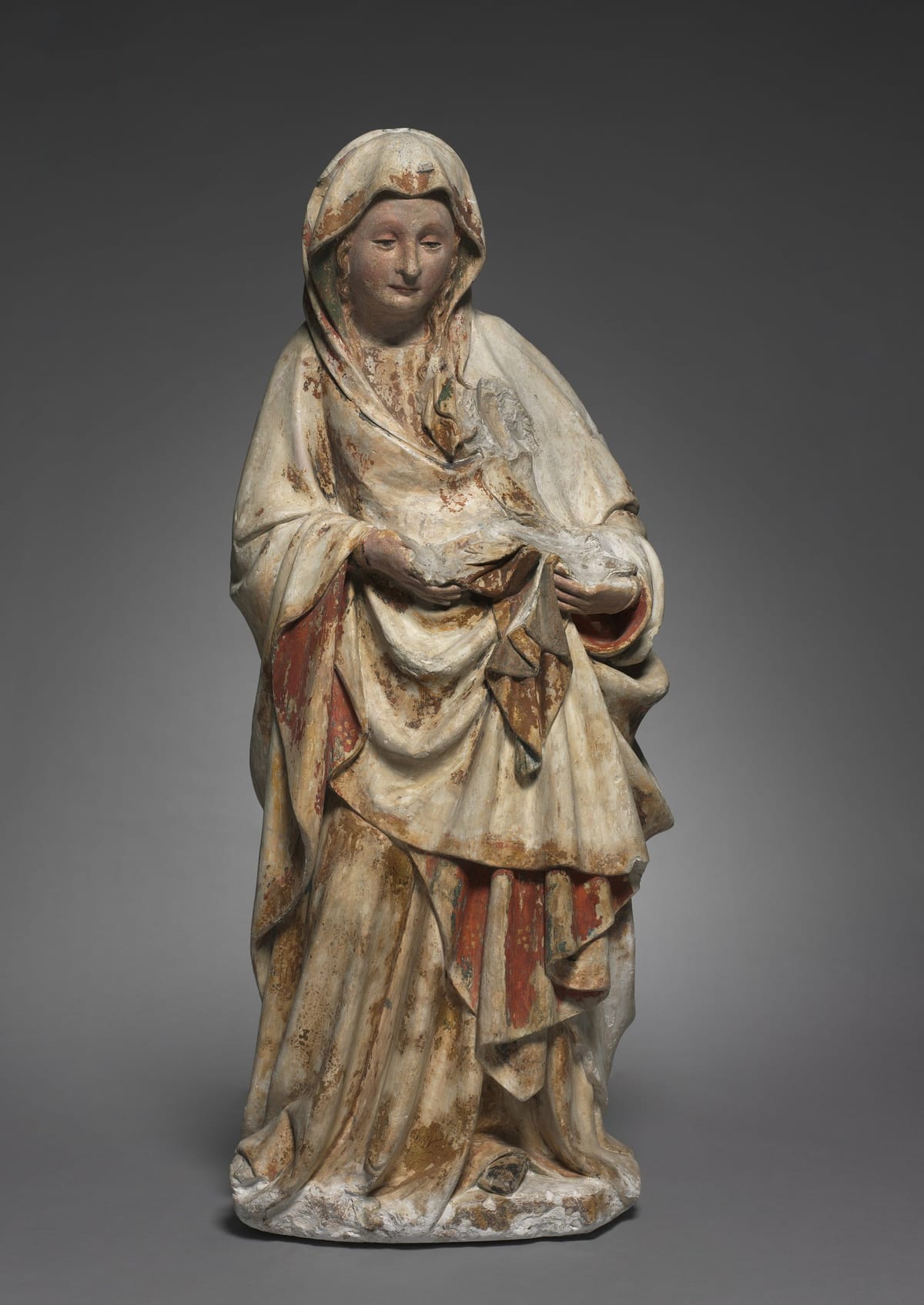
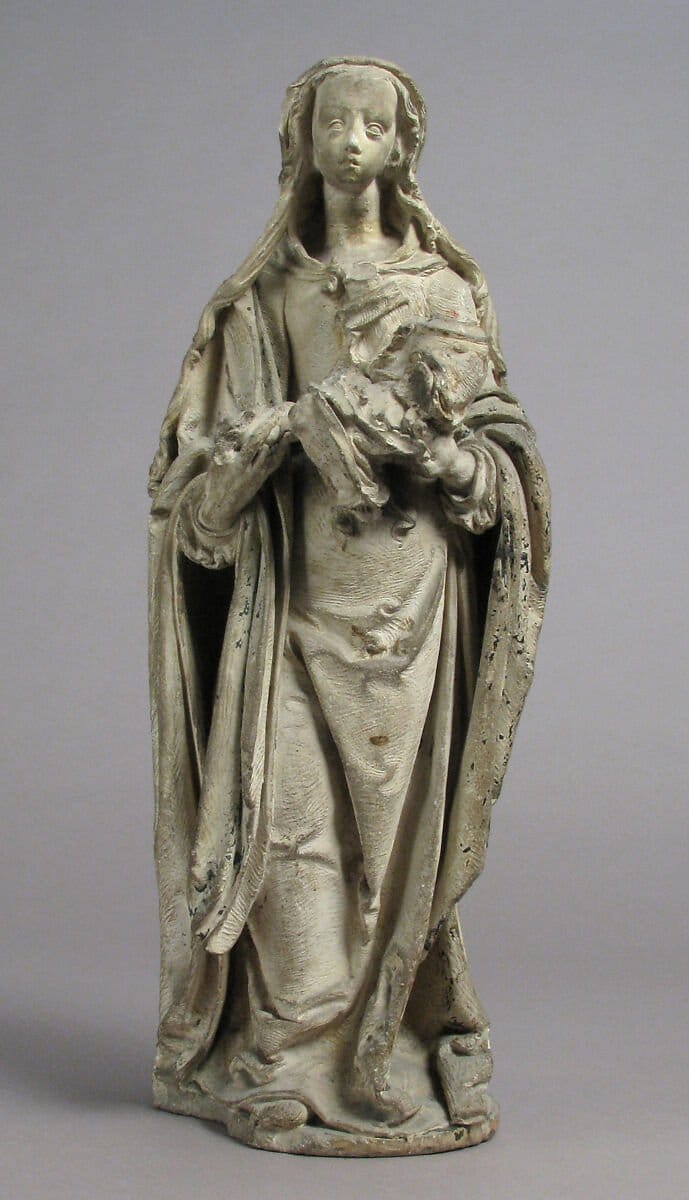
This standing Virgin now lacks the child she once cradled in her left arm. The sculpture may have been damaged in the French Revolution by falling onto its face. It was carved from soft white limestone of a type known to be quarried at Asnières-lès-Dijon, near Champmol. The figure recalls many of th
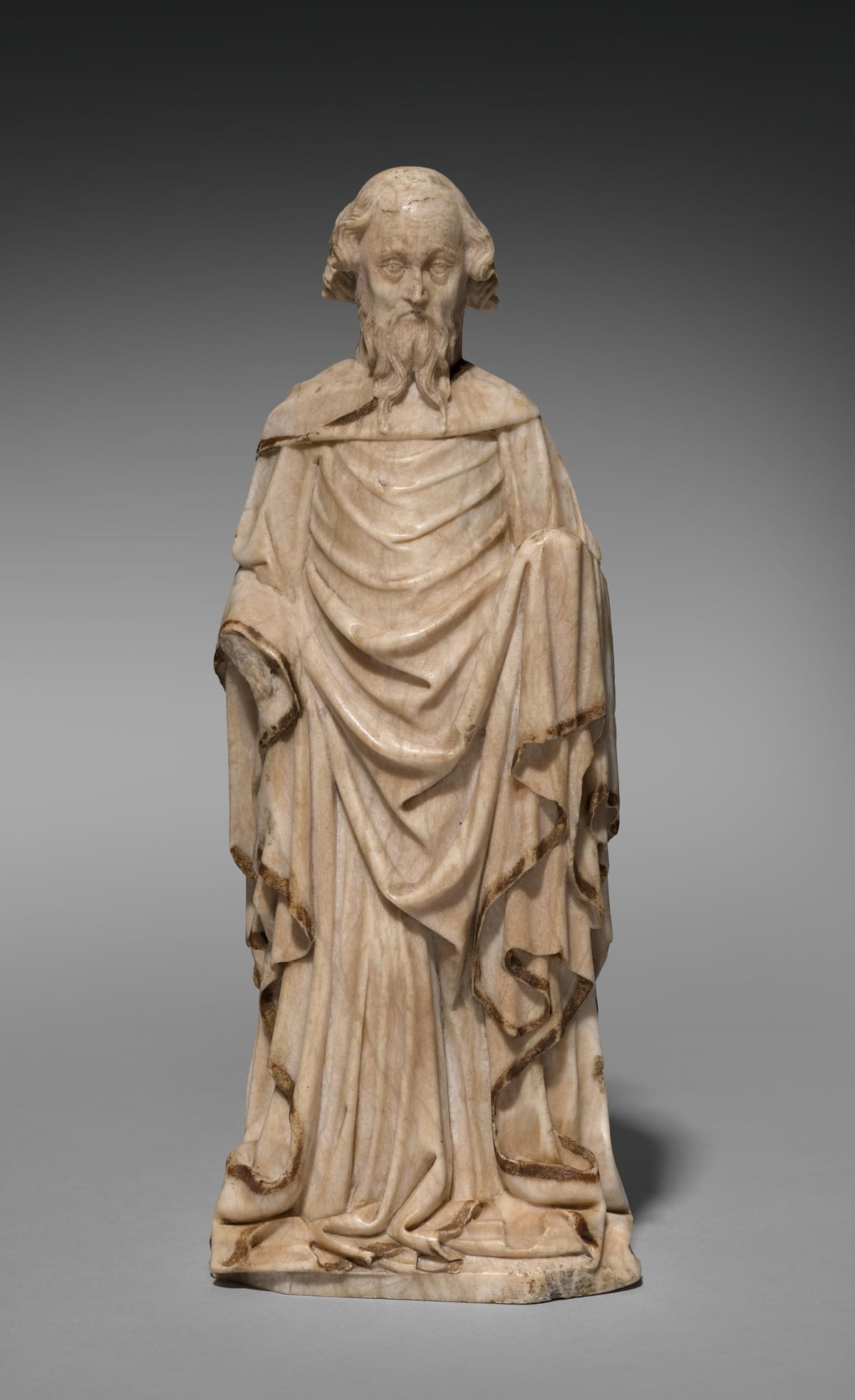
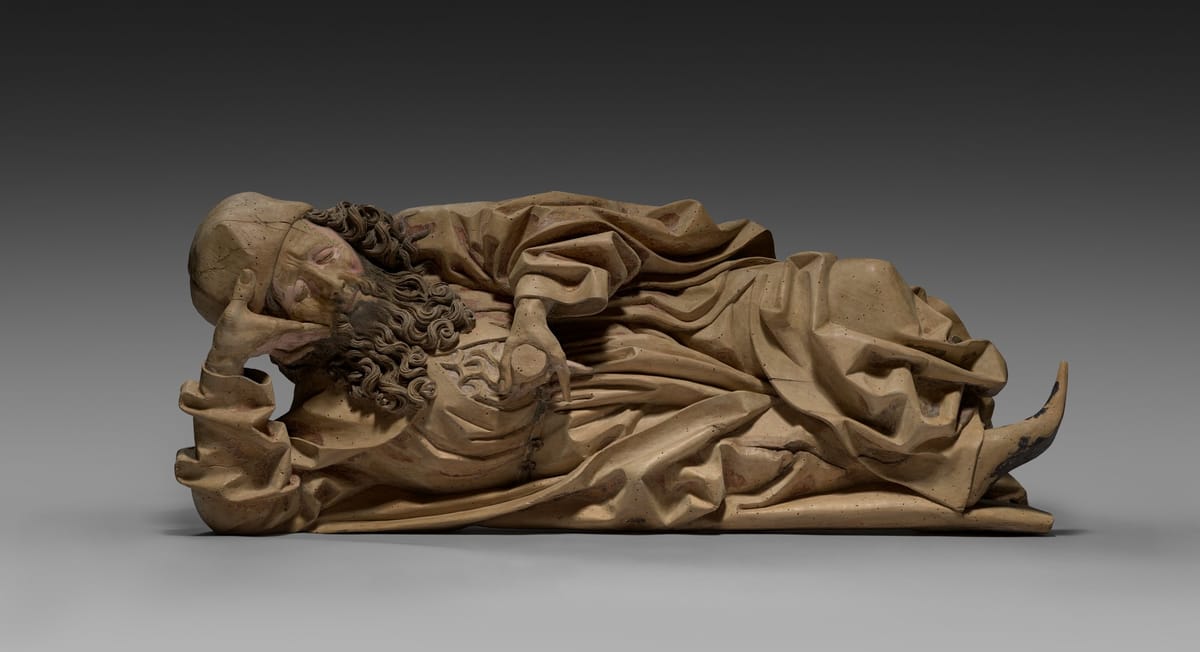
The figure shows the sleeping Jesse, the father of David from the Old Testament. As the ancestor of the family tree of Christ, he was depicted in the Middle Ages sleeping as the starting point of the tree, on whose branches the ancestors of Christ are depicted. Mary with the Christ child is always s
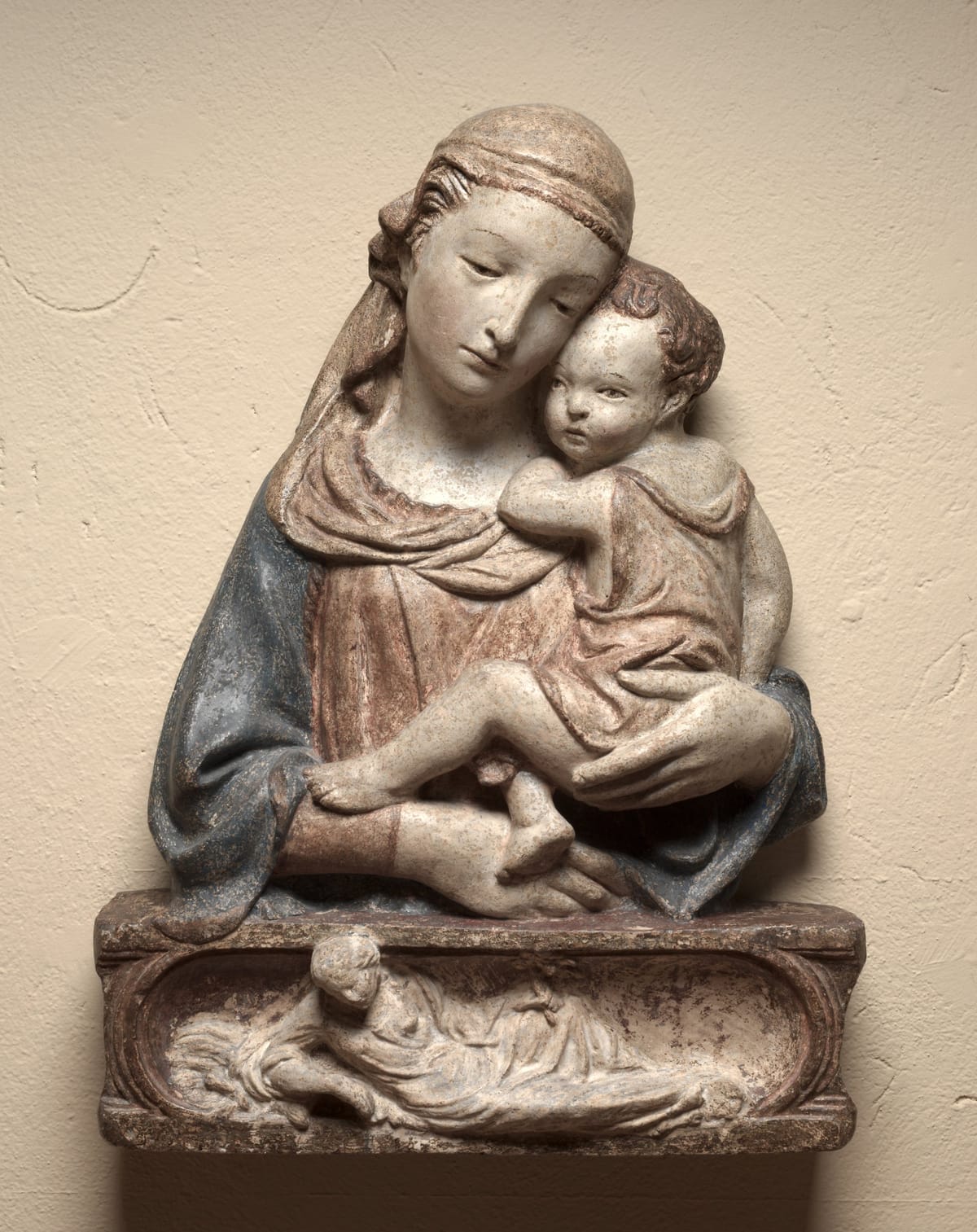
This half-length Madonna represents one of the finest of about 40 surviving variants, all of which display many characteristics of the Florentine bronze sculptor Lorenzo Ghiberti. These features include serene facial types with narrow eyes and thin eyebrows, the careful arrangement of the Madonna an
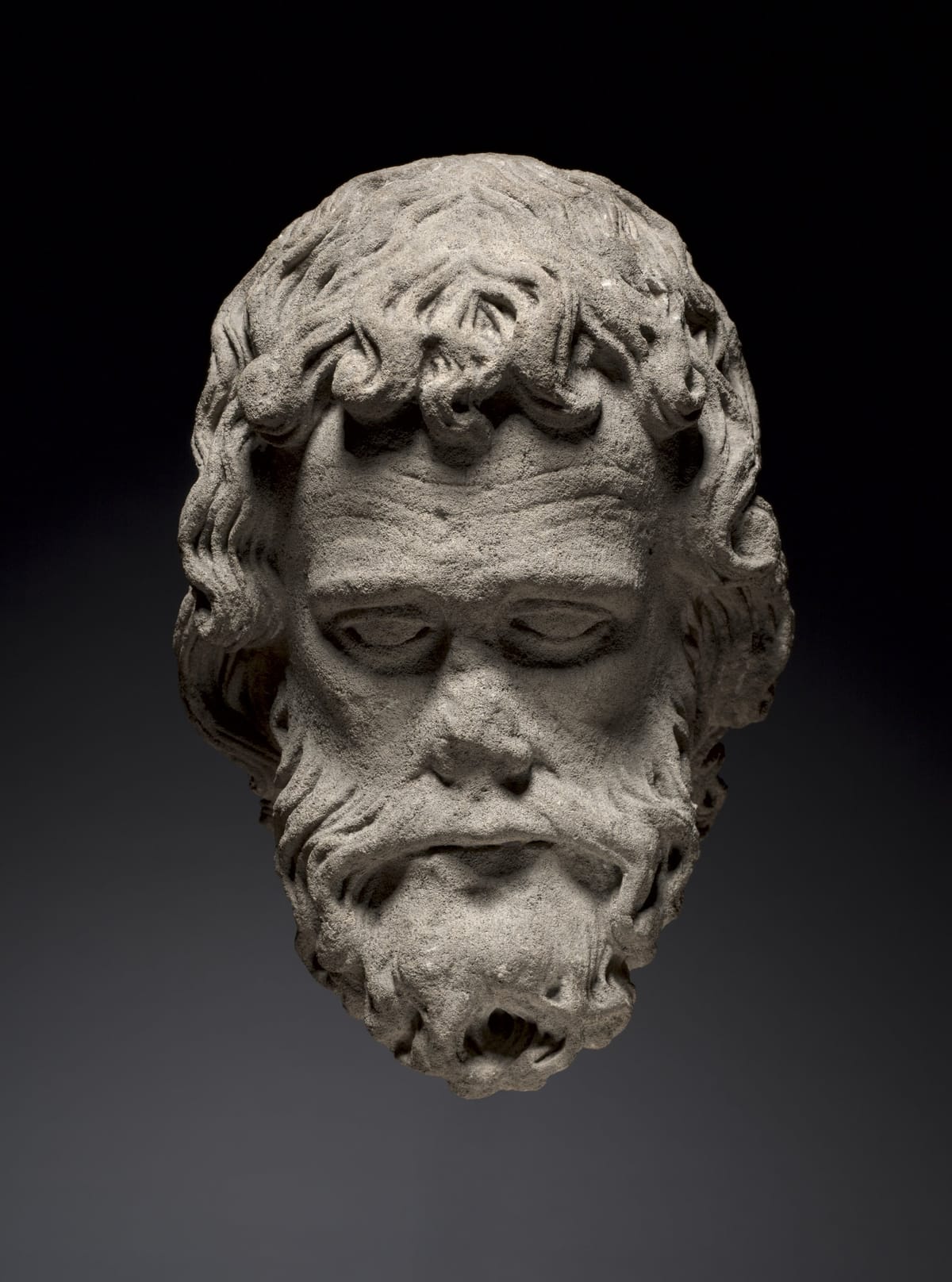
These monumental stone heads are among the substantial known remains of the sculptural program of Thérouanne’s cathedral, which was razed by Emperor Charles V of Spain in June 1553. These heads were found in a wall of rue Ste. Croix in the town of Saint Omer (a short distance to the north) in Januar
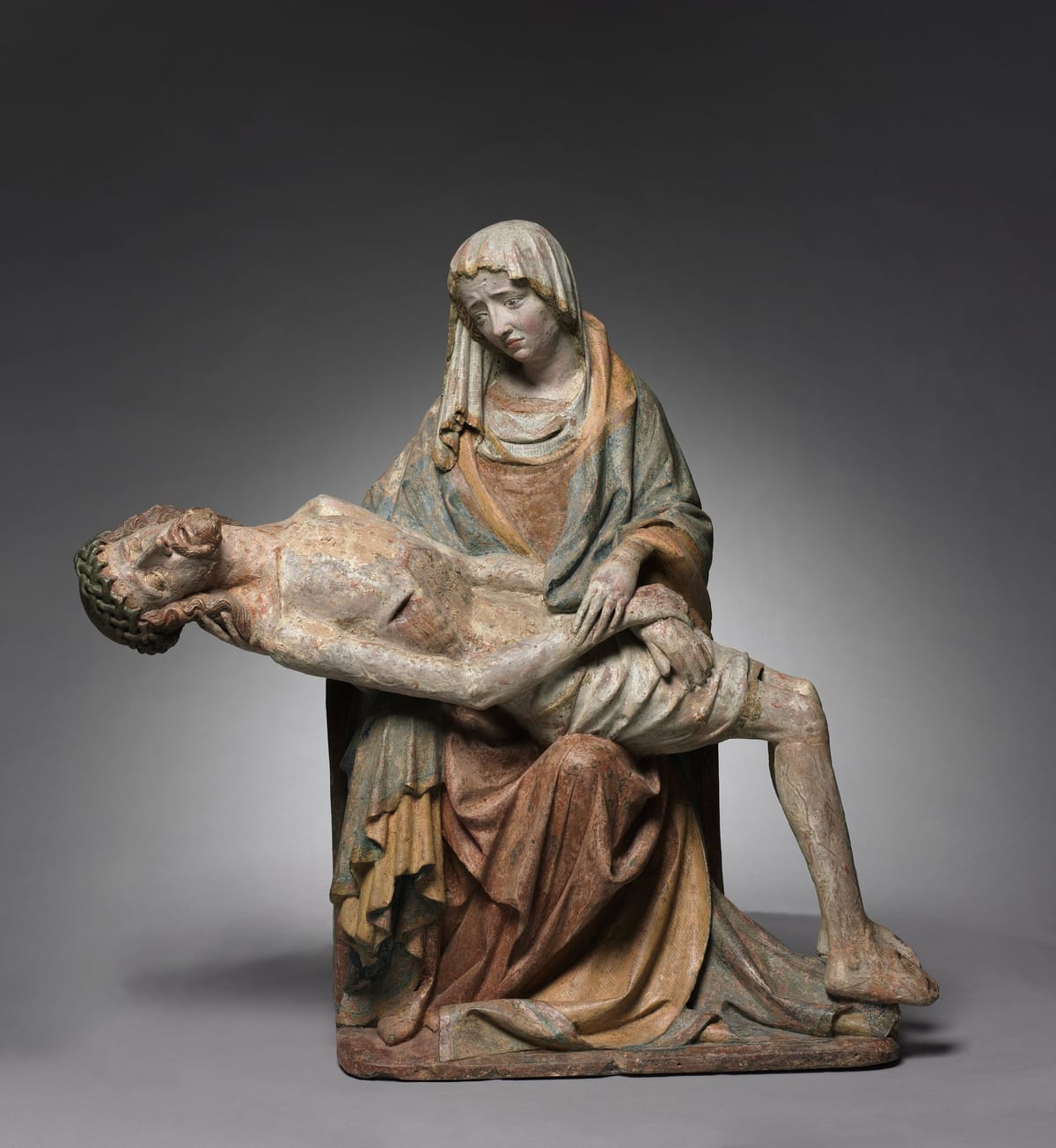
The word vesperbild is the German word for pietà, the image of the Virgin Mary cradling her dead son on her lap. The theme has no literary source; it originated in Germany during the early 1300s and was more widespread in central Europe than in Italy. These devotional sculptures were used within the
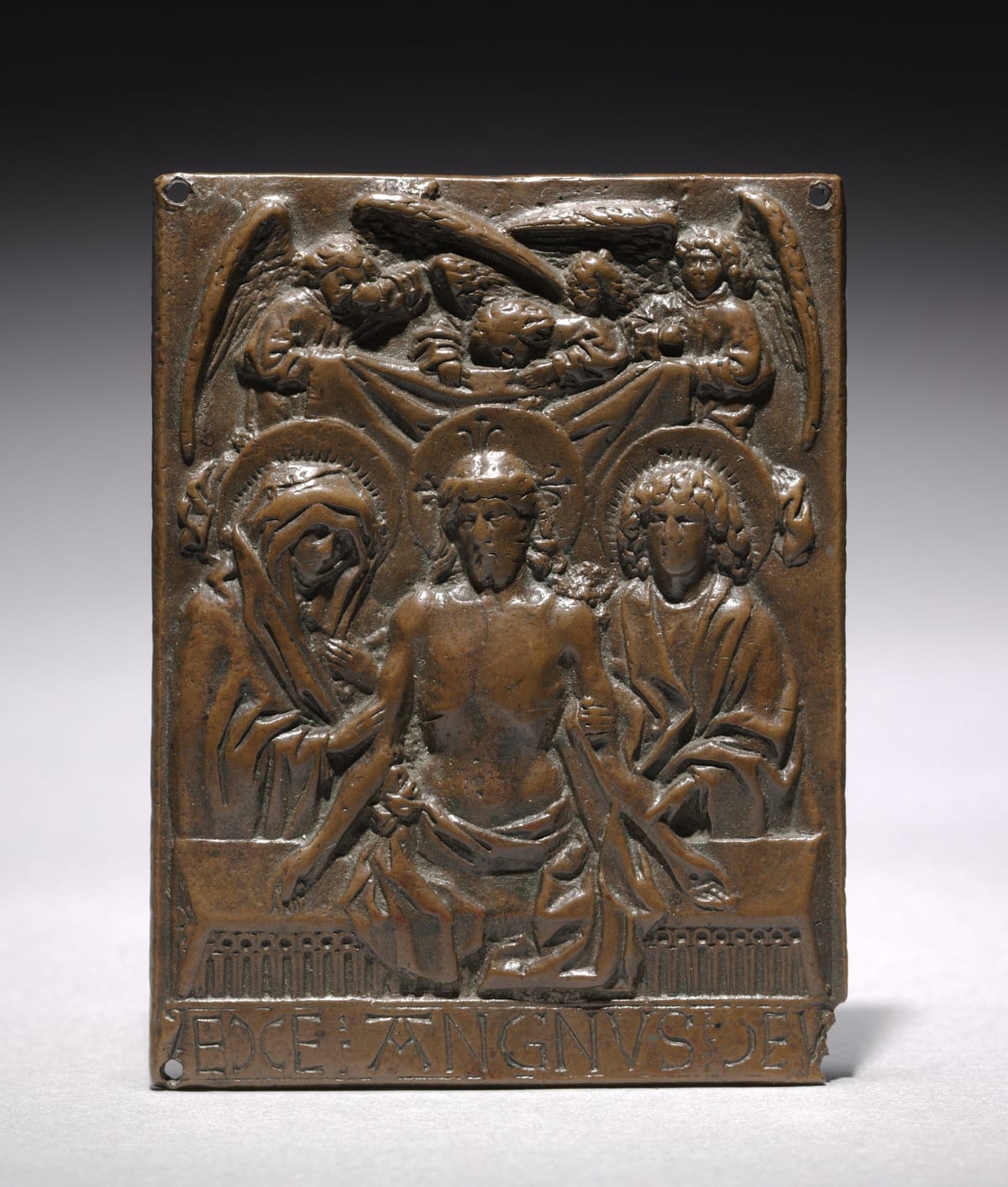
Inscribed on the base are the words ECCE AGNUS DEI (Behold the Lamb of God). Multscher was a prominent and successful sculptor from the Bavaria region who operated a large and prolific workshop with as many as 16 assistants. He worked in many materials and his work reflects a deep knowledge of Flemi
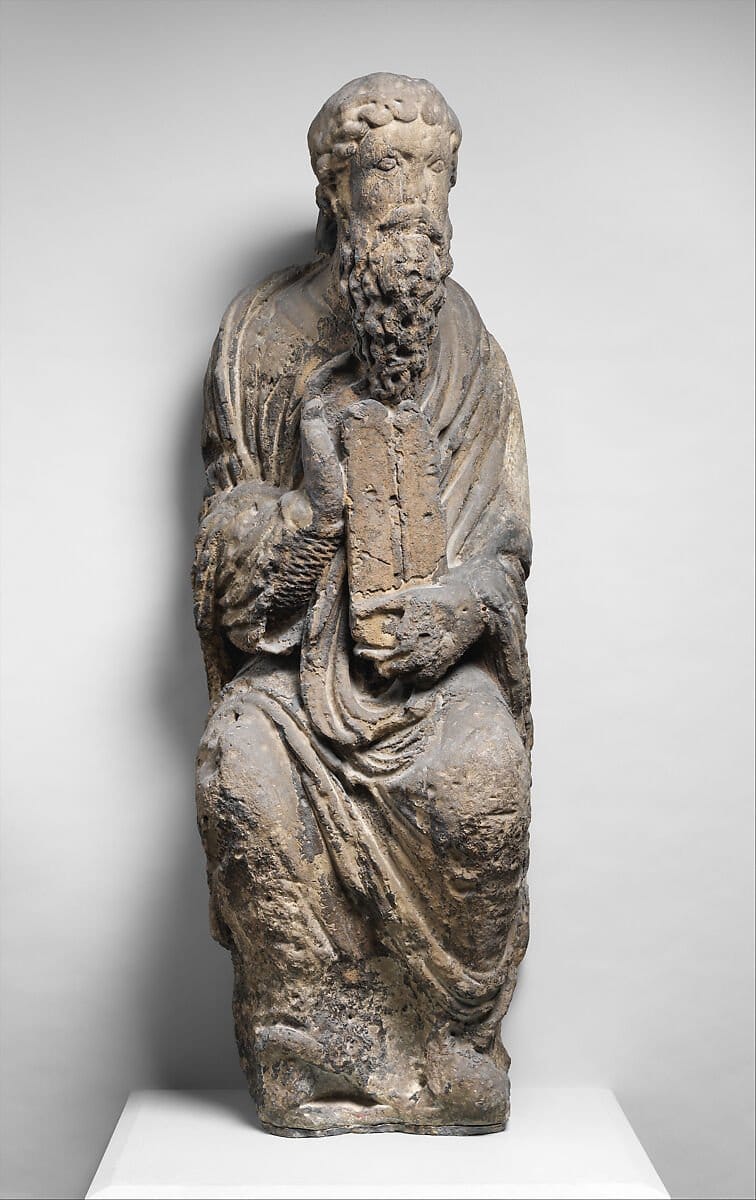
This sculpture of Moses, holding the tablets with the Ten Commandments, and the opposite figure, his brother Aaron, form part of a rare ensemble of key figures from the Hebrew Bible. Often shown together on Gothic portals as forerunners of Jesus, they and other statues originally flanked an enthrone
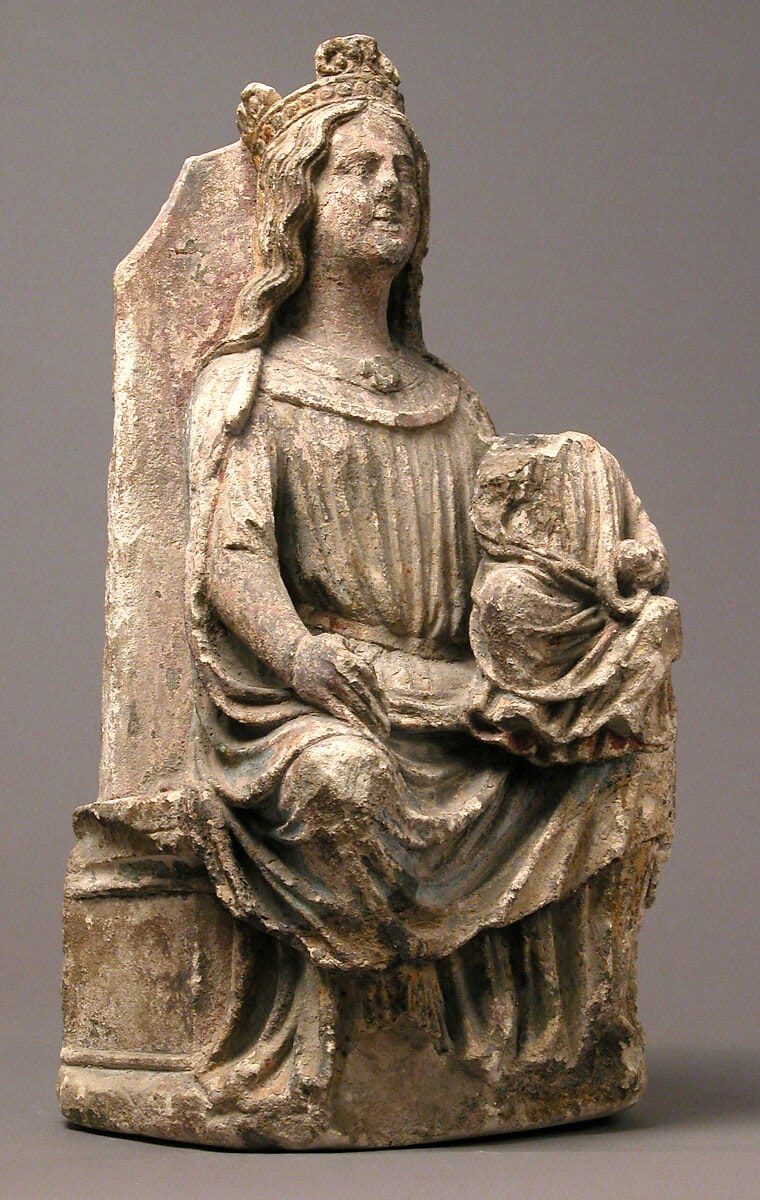
Limestone statue of the Virgin and Child with traces of polychromy, French or German. The sculpture is 51 cm high.
Limestone statue of the Virgin and Child with traces of polychromy, made in France by the Atelier of the Juliots. The sculpture is 39.2 cm high.
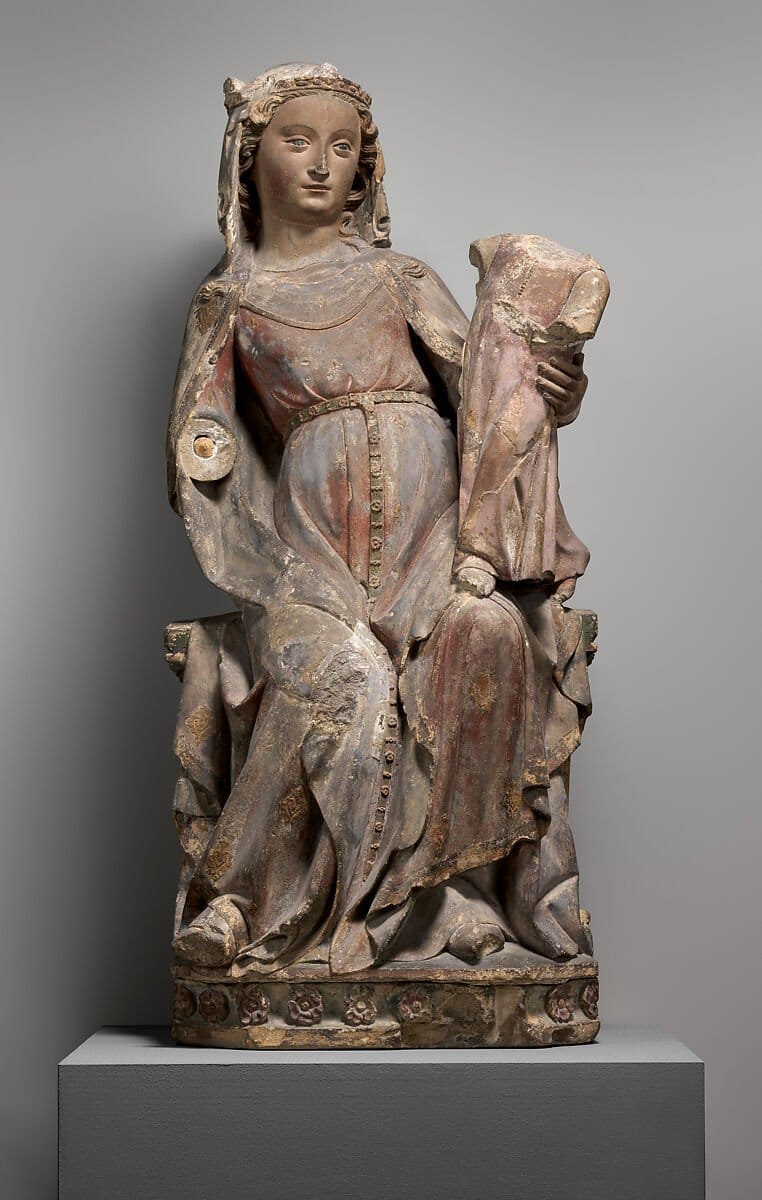
This sculpture and another example of the same subject preserved in the church at Saint Die are among the finest representatives of the regional style found in Lorraine in the early fourteenth century. It is a statue in polychromed and gilded Paris limestone that measures about 87 x 30.2 x 21.9 cm.
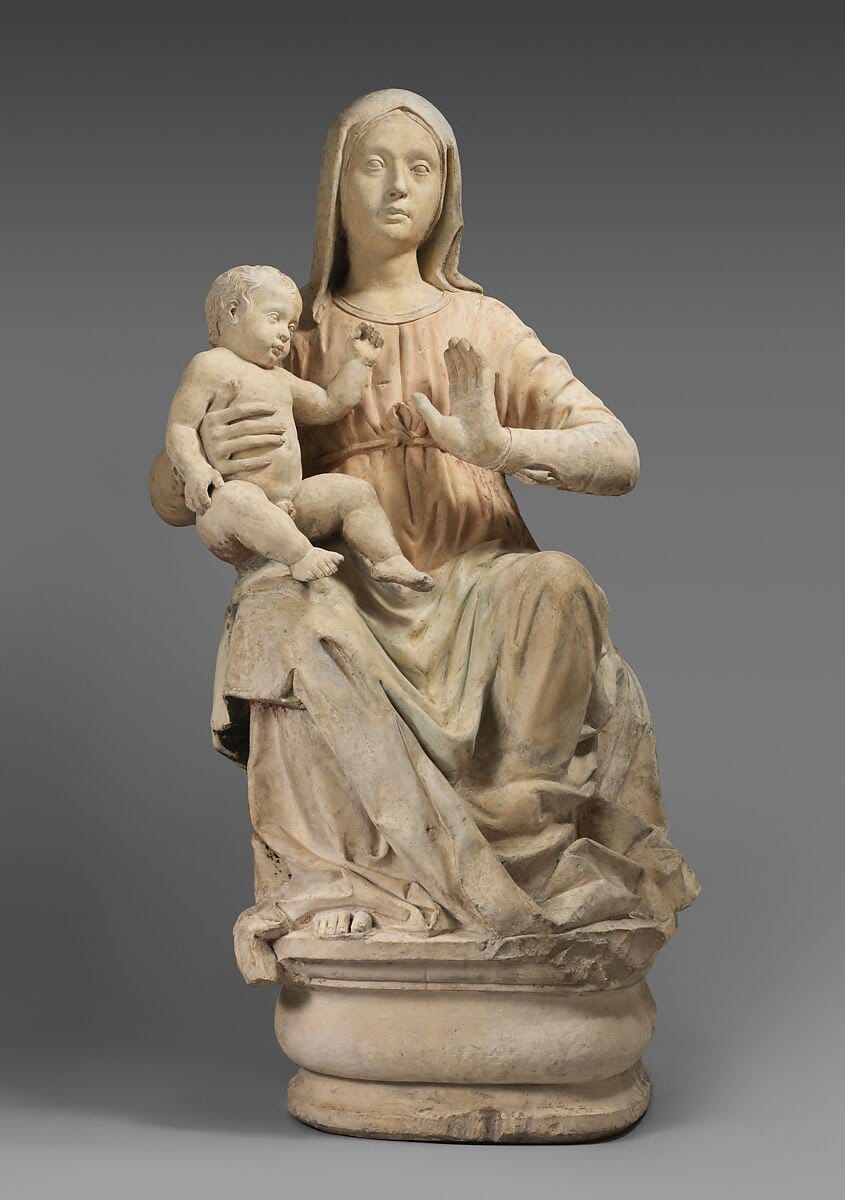
This sculpture reflects the influence of Bon and may have been carved by a follower of his in the third quarter of the century. It is a fine example of Italian Renaissance sculpture that would have held a commanding position in an architectural context.