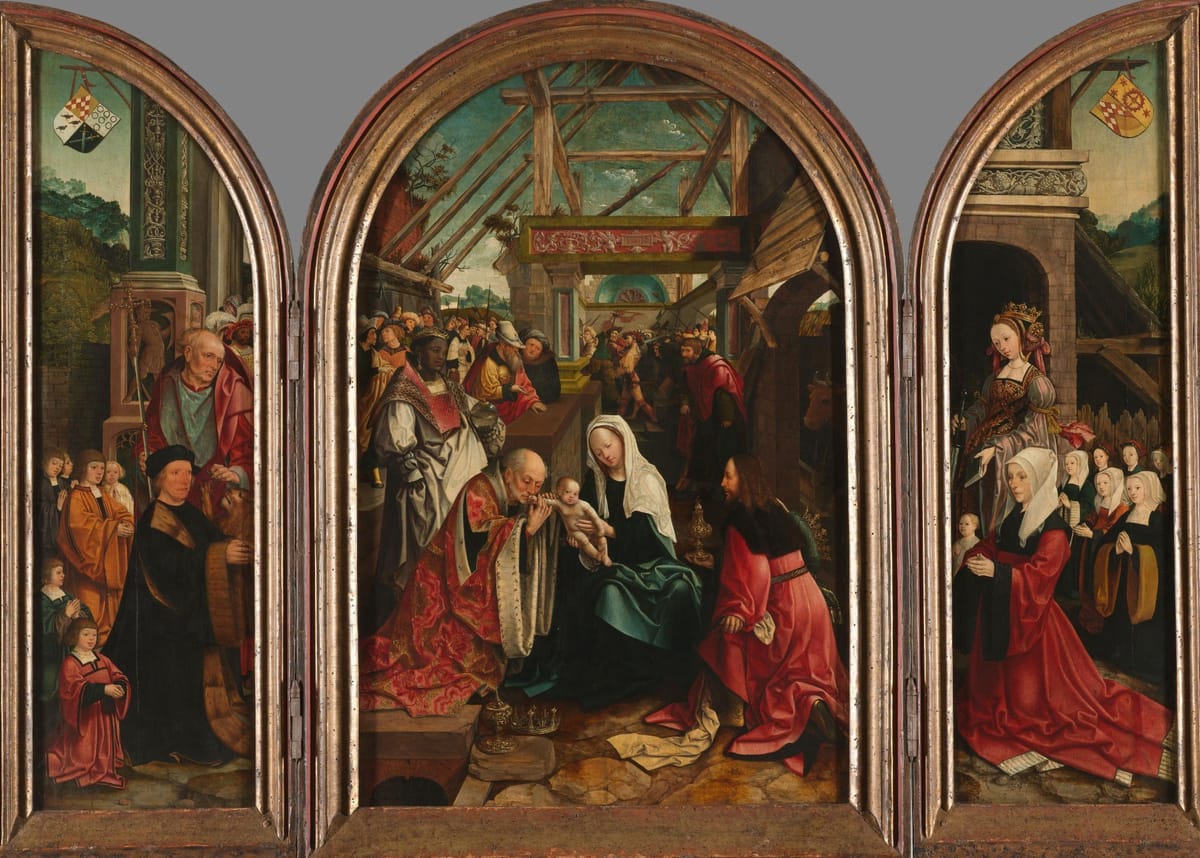

Adoration of the Magi (1680-1689) by Rybotychi School - Public Domain Orthodox Icon
Icon of the Adoration of the Magi by the Rybotychi school, made in the 1680s. It is held in the National Museum in Warsaw, Poland.
The ivory figures are mounted on a sheet of whalebone. This plaque is part of a series of Passion carvings that are now dispersed among Antwerp, Oslo, Paris, London, and New York. French, elephant ivory with traces of paint and gilding, 23.2 x 18.3 cm.
In his left hand the Christ Child holds a swallow. Swallows were thought to hibernate during winter in nests of mud. Their re-emergence in spring symbolized the Resurrection of Christ.
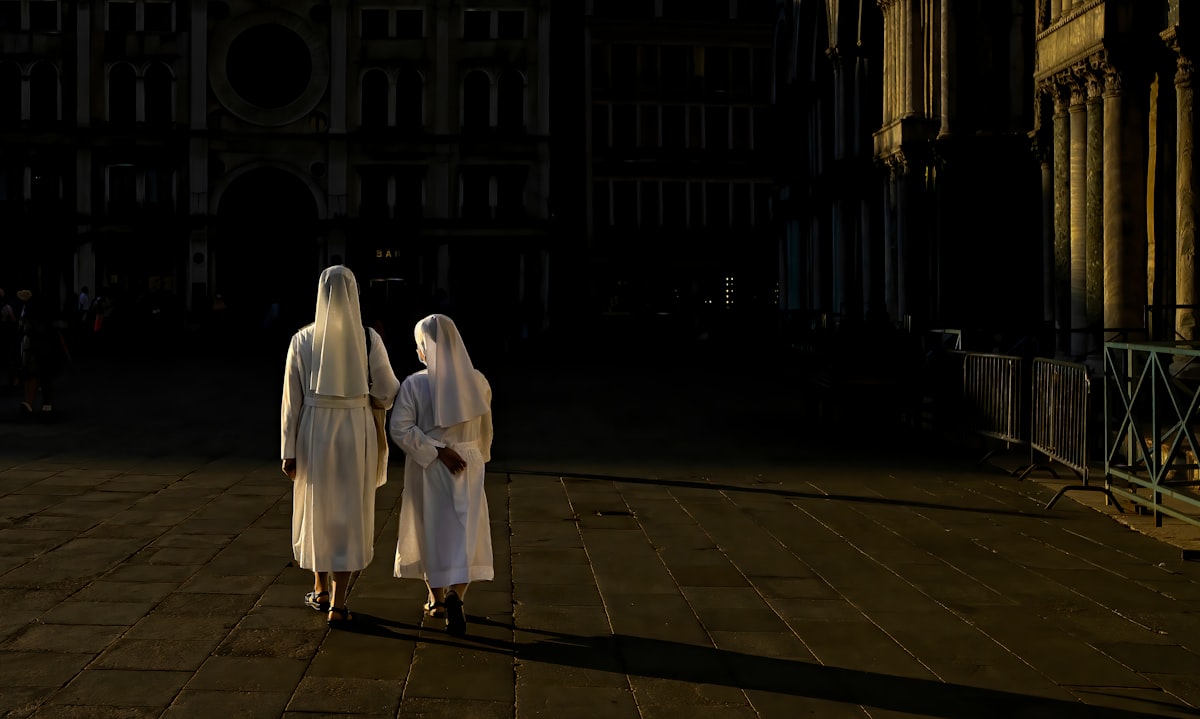
This is a list of my favorite 12 orders of Catholic nuns and sisters in no particular order. This list includes their history, and images of their habits. What is a Catholic Nun or Sister? In the Roman Catholic tradition, there are many religious institutes of nuns and sisters (the...
Learn the purpose of The Free Catholic Gallery with this short blog.
Top selling books published by Shalone Cason.
Icon of the Adoration of the Magi from the middle of the 17th century, from the Sambir region of Ukraine. It is in a private collection.
Icon of the Adoration of the Magi from the middle of the 16th century, from the village of Busovysko. It is held in the Andrey Sheptytsky National Museum in Lviv, Ukraine.
This volume is one of three containing the complete Spanish translation from the Latin of Saint Augustine’s City of God (De Civitate Dei), written in the early fifth century, after the sack of Rome by the Visigoths. Augustine, bishop of Hippo in North Africa, developed the concept of the Church as a
North French illuminated leaf from a Book of Hours showing the Descent from the Cross, made in the late 15th century. Tempera, ink, and shell gold on parchment, 8.7 x 6.9 cm.
This medallion is one of a group of twelve that once surrounded an icon of the archangel Gabriel. The medallions may have been sent as a gift from the Byzantine court to the neighboring Christian state of Georgia. Byzantine gold, silver, and cloisonné enamel, made in Constantinople, diameter 8.3 cm.
Illuminated manuscripts written in Greek were considered one of the greatest art forms by the highly literate and sophisticated clerical and secular elite of Byzantium. Over the centuries many works were commissioned for use in important churches. The calendar in this lectionary and the quality of t
Small Russian icon of the Christ Child with Saints Boris and Gleb. Tempera and gold on wood in a gold and enamel frame studded with jewels; the icon with its frame measures 11.1 x 10.2 cm.
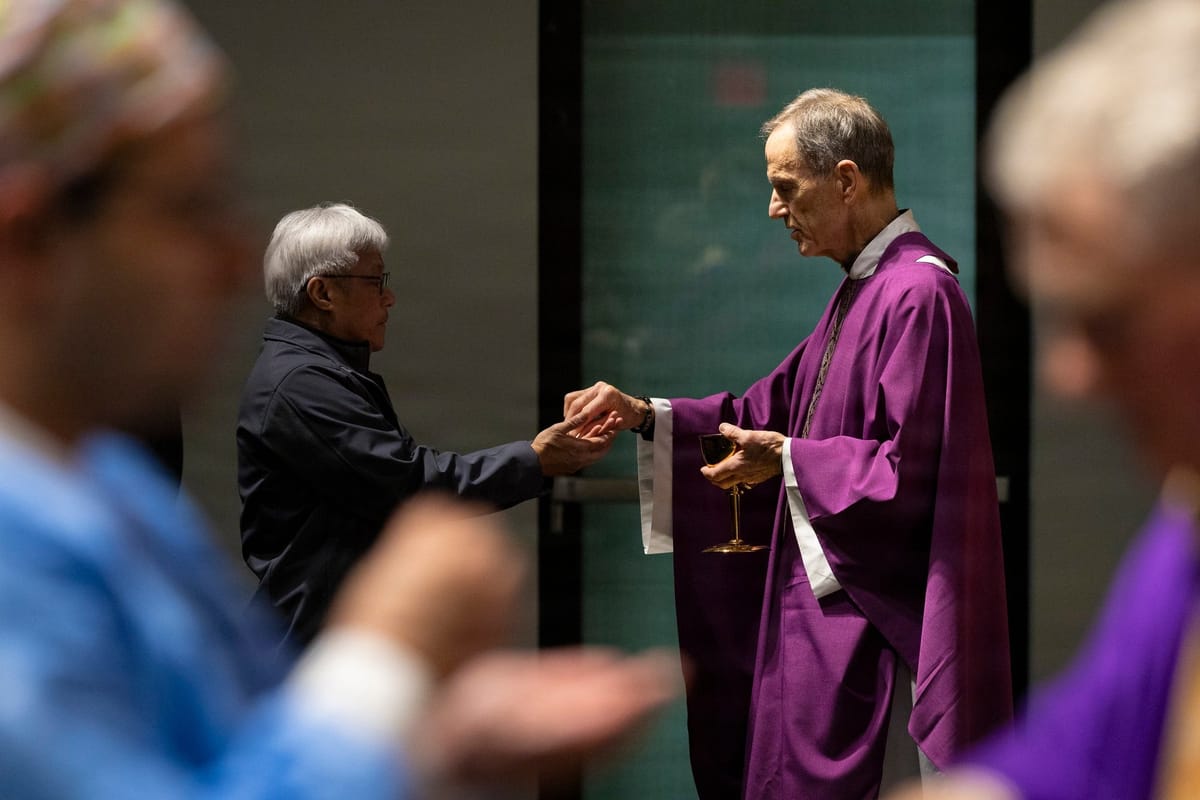
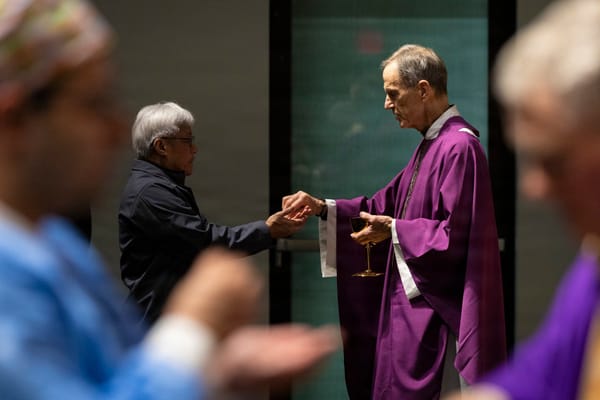
The rubric at the top tells us that the prayers that follow are to be said before and after Communion. Therefore, the artist portrayed a priest administering the sacrament to a man in a fur-trimmed cloak, presumably the owner of the manuscript. The man, whose family arms appear on the adjacent leaf,
Theodore Teron (the recruit) was one of several soldier-martyrs whose cults were enormously popular in the later centuries of the Byzantine Empire. This intaglio illustrates Theodore’s miraculous slaying of a dragon. The image reflects the revival of classical culture that took place in Byzantium in
This delicately carved cameo shows the Virgin in an orant pose, with her arms upraised, and a medallion of the Christ Child over her chest. This icon type is often called the Blachernitissa after a famous icon at the Blachernai Monastery in Constantinople. Byzantine agate cameo, probably made in Con
This sculpture of Moses, holding the tablets with the Ten Commandments, and the opposite figure, his brother Aaron, form part of a rare ensemble of key figures from the Hebrew Bible. Often shown together on Gothic portals as forerunners of Jesus, they and other statues originally flanked an enthrone
This painting and another depicting an unidentified male saint, which also belongs to the Lehman Collection, formed part of a group of eighteen panels depicting saints (now in the Courtauld Institute Gallery, London; Worcester Art Museum, Massachusetts; Fogg Art Museum, Cambridge, Massachusetts; Hon
Until 1950 this panel lined the Great Hall of Highcliffe Castle in southern England. Constructed in the 1830s for Lord Stuart de Rothesay, the castle was furnished in part with stonework acquired form the ruined royal abbey at Jumièges in Normandy, where the panels might also have originated. In all
Four key events in the final hours of Jesus’ life are dramatically shown here (from left to right): Peter sheathing his sword after severing the ear of Malchus (seated), the high priest’s servant; Jesus miraculously restoring the ear; Judas betraying Jesus with a kiss; and Roman soldiers arresting J
The largest of these fresco fragments may represent the late fourth-century saint John Chrysostom, who is usually depicted with a pointed beard, sunken cheeks, and a high forehead. Byzantine fresco with modern restoration, 24 x 23.7 cm.
These panels were among thirty scenes of an extensive narrative cycle that formed part of a large altarpiece from the Neustädter Marienkirche in Bielefeld, Westphalia. They were created two decades before panel painting underwent a revolution through the art of Jan van Eyck, Robert Campin, and Rogie
Sassetta worked for a wealthy clientele, executing a limited number of paintings that focus on material splendor and refined detail. The glittering effect created by his technique of scratching into the painted surface to reveal the gold layer beneath—seen in passages like the angels’ wings and garm
The moody, unfiltered emotions of Saints Matthew and Francis showcase Giovanni’s interest in depicting strongly expressive figures. The artist found inspiration for his implacable saints in the sculpture of his great compatriot Jacopo della Quercia. These two figures are from a major altarpiece. A s
Italian tempera and gold on wood painting of the Annunciation, attributed to Maestro Esiguo (possibly Alesso di Benozzo). The painted surface measures 40.6 x 36 cm.
Nicholaos Tzafouris was one of the many icon painters working in the city of Candia (now Iraklion) in Crete at the time when Crete was under the control of Venice. The combination of Byzantine and Latin elements seen in many Cretan icons was well received locally and in Italy. The Greek inscription
Illustration of five Benedictine saints (Saint Benedict, Saint Scholastica, Saint Justina, Saint Maurus, and Saint Placidus) by Anna Jameson, from the Wellcome Collection.
Jacques Callot’s etching series The Small Passion exemplifies the artist’s penchant for intimate detail. These prints highlight the ways he depicted space throughout a complete narrative. He framed each stage of the Passion of Christ with a different type of architectural or natural element. The por
This altarpiece is said to have come from the convent of the Ursulines in Amiens, France. North French or South Netherlandish, polychromed and gilded limestone, 48.3 x 48.3 cm.
The Assumption of the Virgin, celebrated on August 15, is an especially important holiday in Siena. Niccolò di ser Sozzo, one of the city's renowned fourteenth-century illuminators, painted it on numerous occasions. Tempera, ink, and gold on parchment, 57.5 x 40.4 cm.