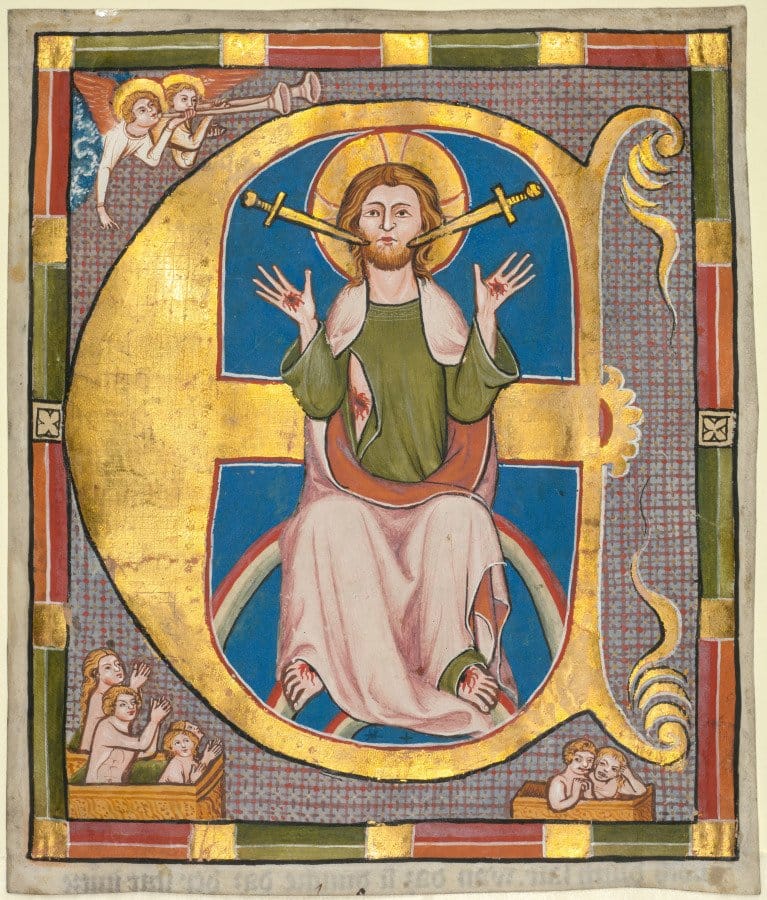

Initial E from a Municipal Law Book: The Last Judgment (1330) - Public Domain Catholic Painting
This initial E serves as a frame for the figure of Christ, shown here as the judge of the world with the swords of justice emanating from his mouth.

Public domain Catholic paintings of Jesus Christ.
This initial E serves as a frame for the figure of Christ, shown here as the judge of the world with the swords of justice emanating from his mouth.
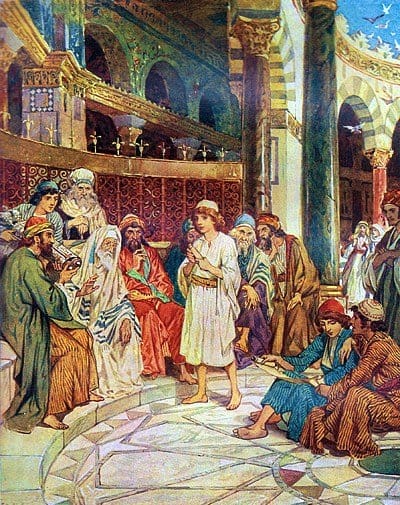
from William Hole's series of THE LIFE OF CHRIST, which was published in the UK and in the USA both (in various books and publications) before 1923.
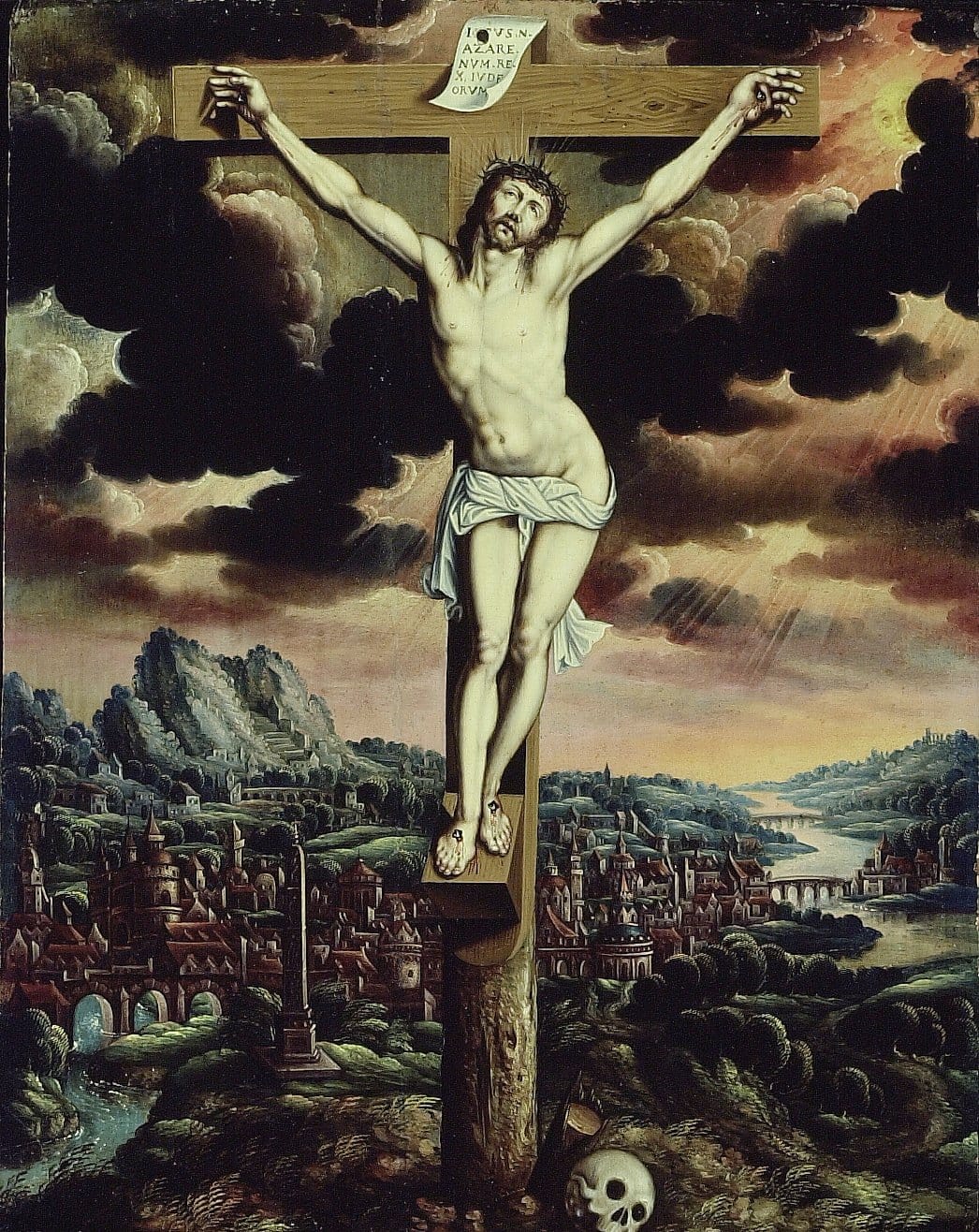
Flemish oil on panel painting of Christ on the Cross, made in Flanders about 1575-1605. The panel measures 40.1 x 32.3 cm.
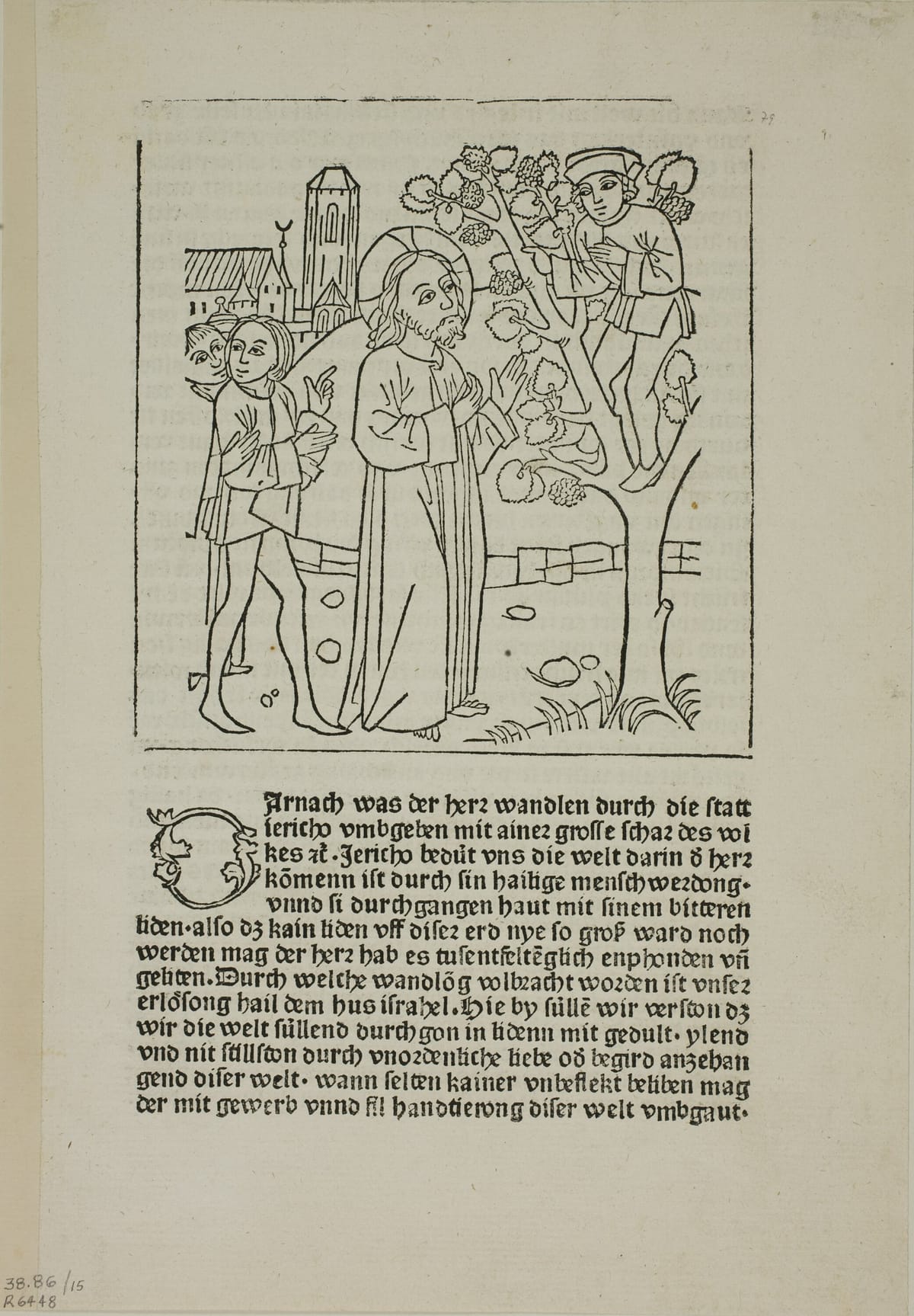
In this scene (Luke 19: 1-10), Jesus Christ passes through Jericho and notices a wealthy, but diminutive, devotee who has climbed a sycamore tree (drawn here with recognizable seed pods) in order to see him better.
Germany, early 16th Century. Medium: Woodcut
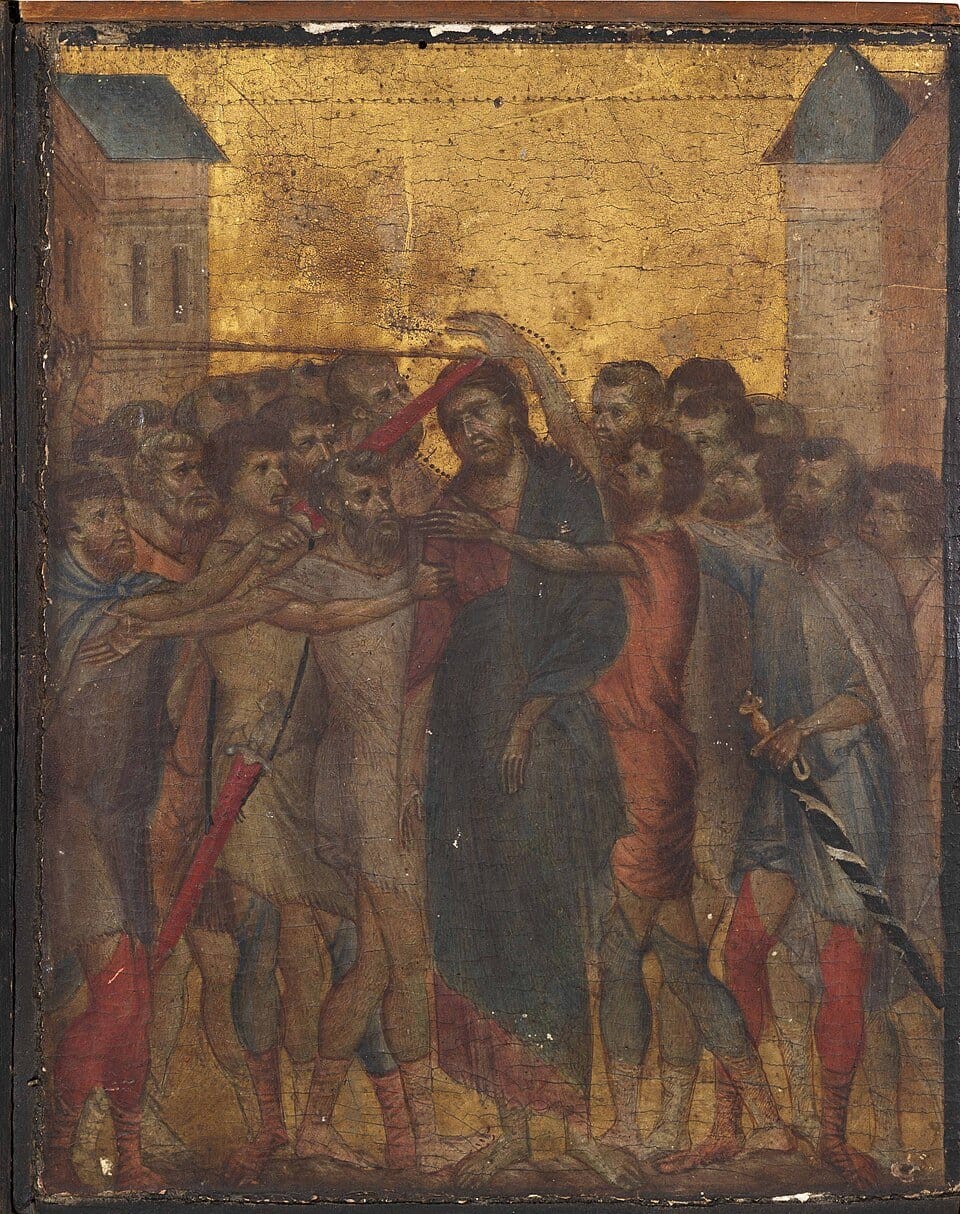
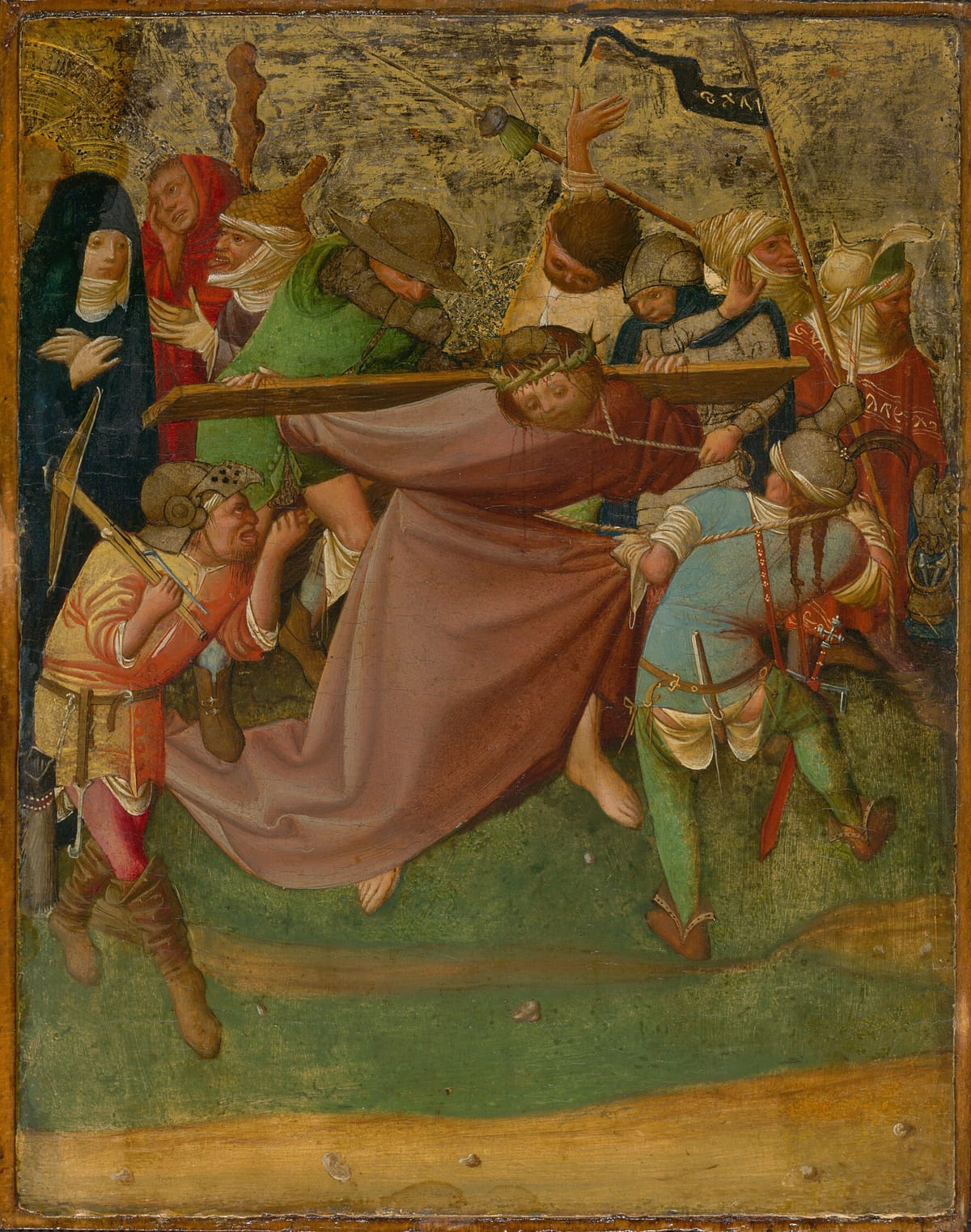
Medium: paint, gold and poplar wood. Dimensions: height: 25.8 cm (10.1 in); width: 20.3 cm (7.9 in).
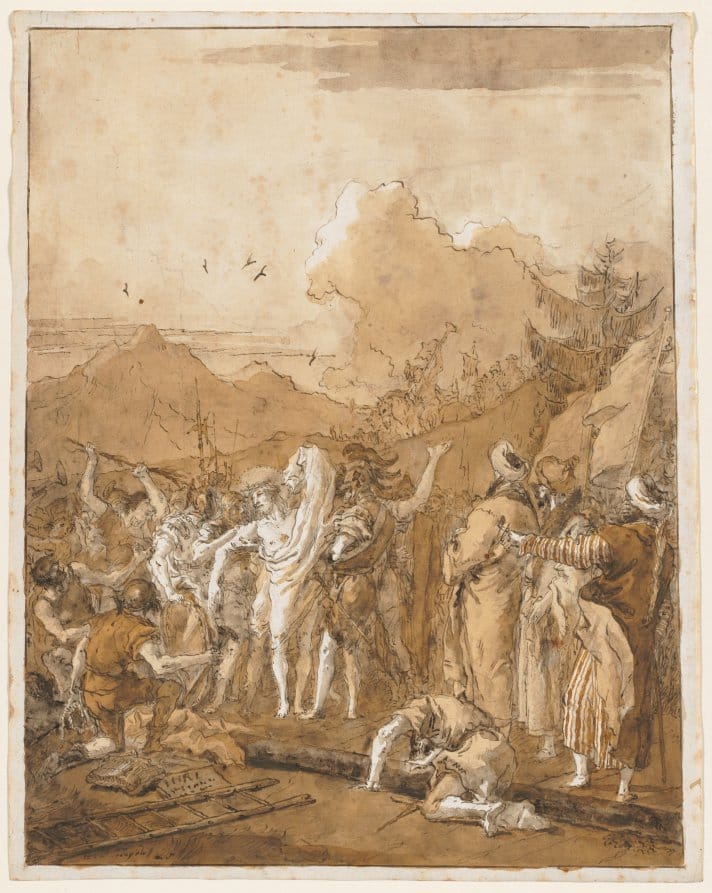
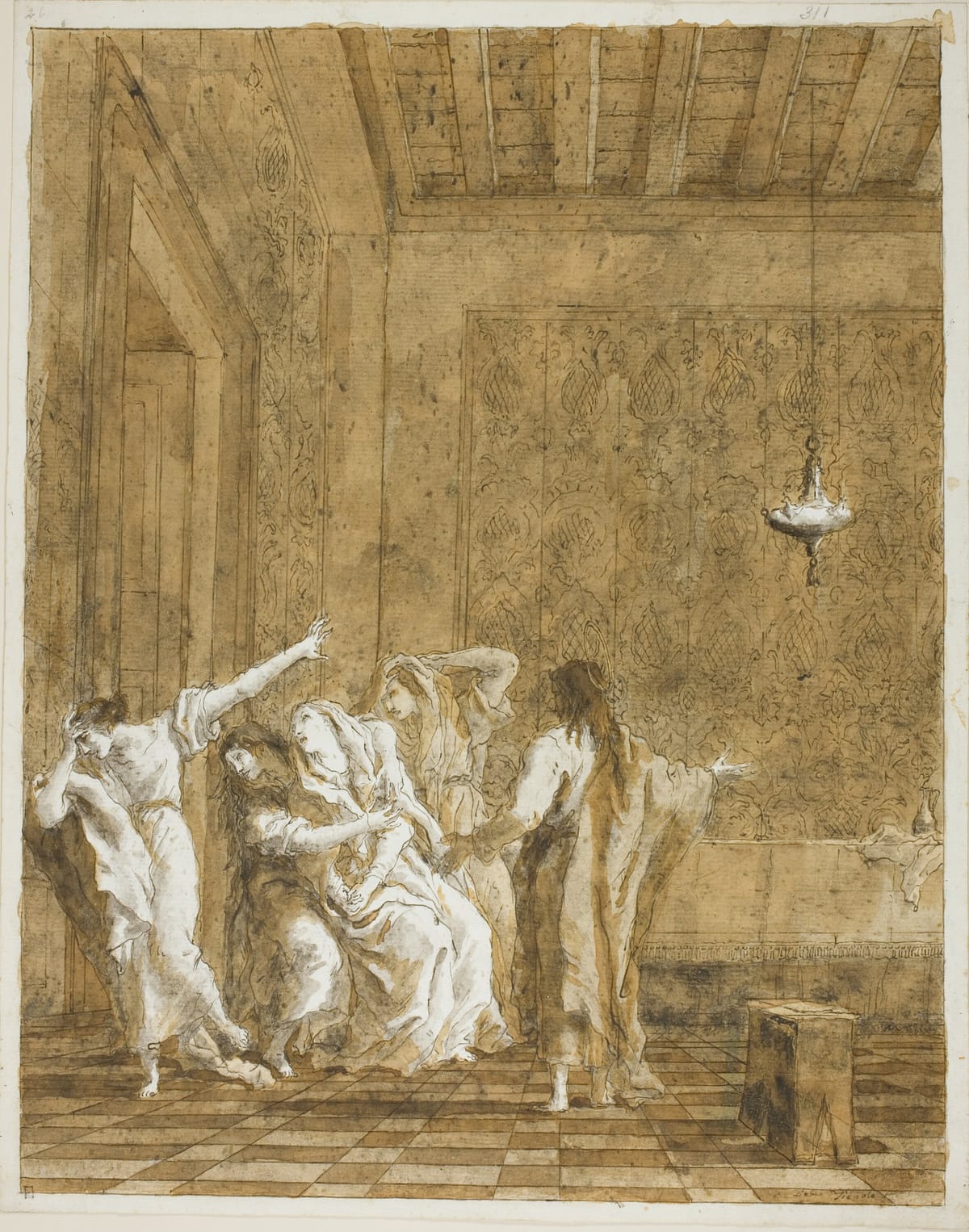
Pen and brown and black ink, brush and black, brown, and red-brown wash, over black chalk; framing lines in pen and brown ink.
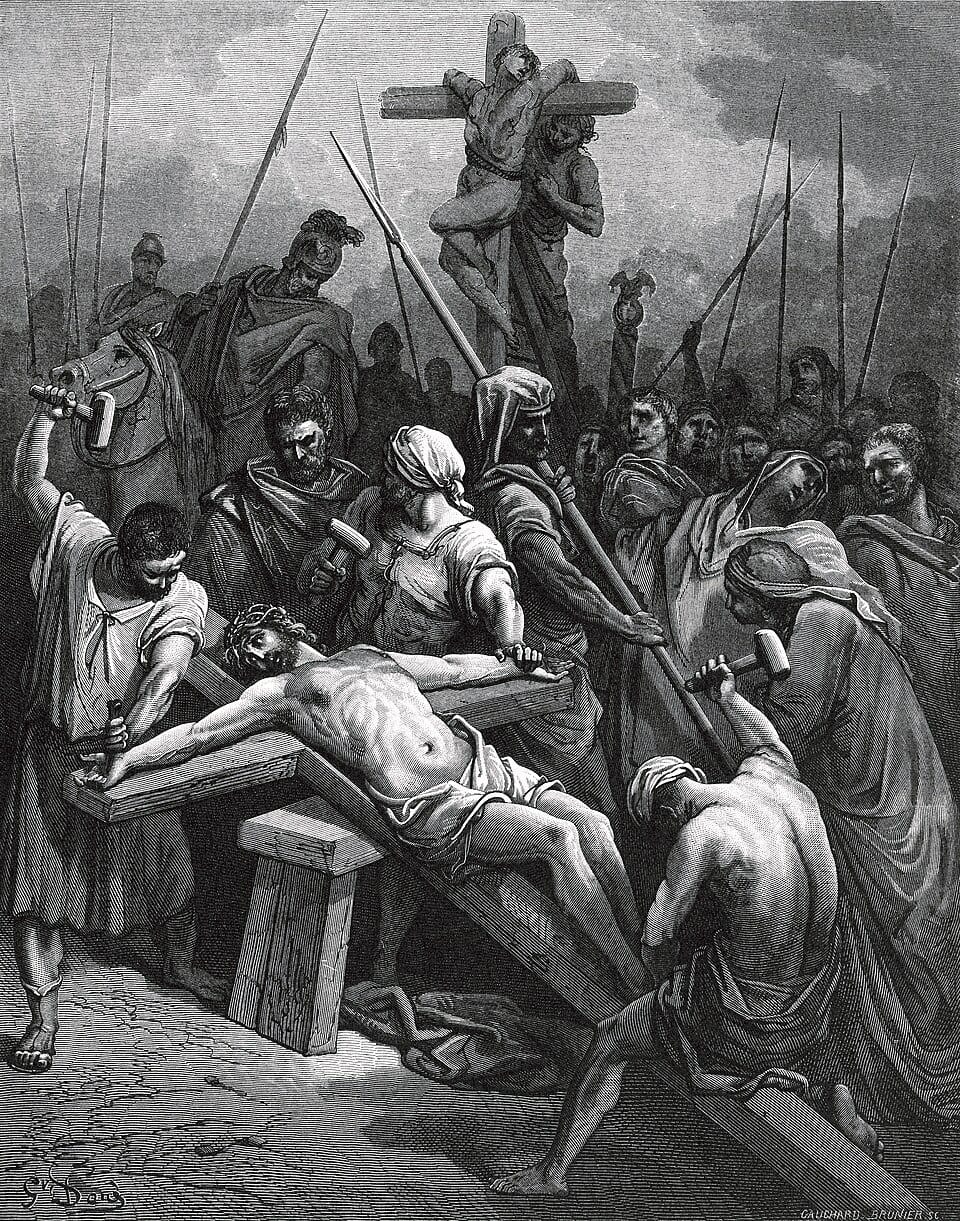
Wood engraving drawn by Gustave Doré, engraved by J. Gauchard Brunier. Printed in: Heilige Schrift 1867 by Stuttgarter Druck- und Verlagshaus Eduard Hallberger.
This painting was once part of the Saint Anne Altarpiece, a series of 10 panels set within an architectural frame that hung behind a church’s altar. Gerard David and his workshop produced this large-scale project for export to Spain.
Brutal tormentors surround the suffering figure of Jesus as he carries his cross to Calvary, the site of his crucifixion. In the upper-left corner, his mother, Mary, and her companion are also reviled by the crowd.
Pen and brown ink and brush and brown and black and gray wash, over black chalk, on ivory laid paper
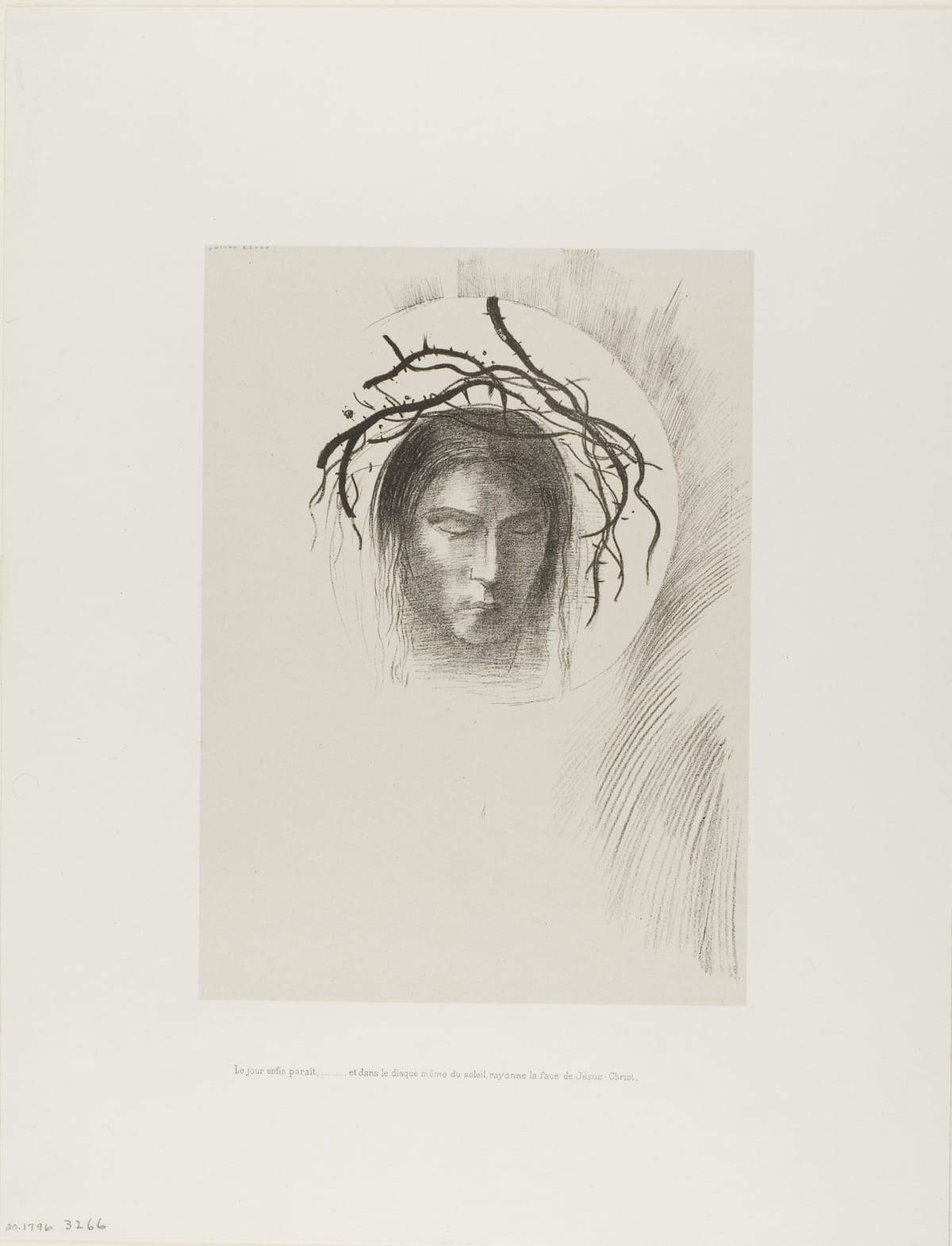
Lithograph in black on light gray China paper laid down on ivory wove paper.
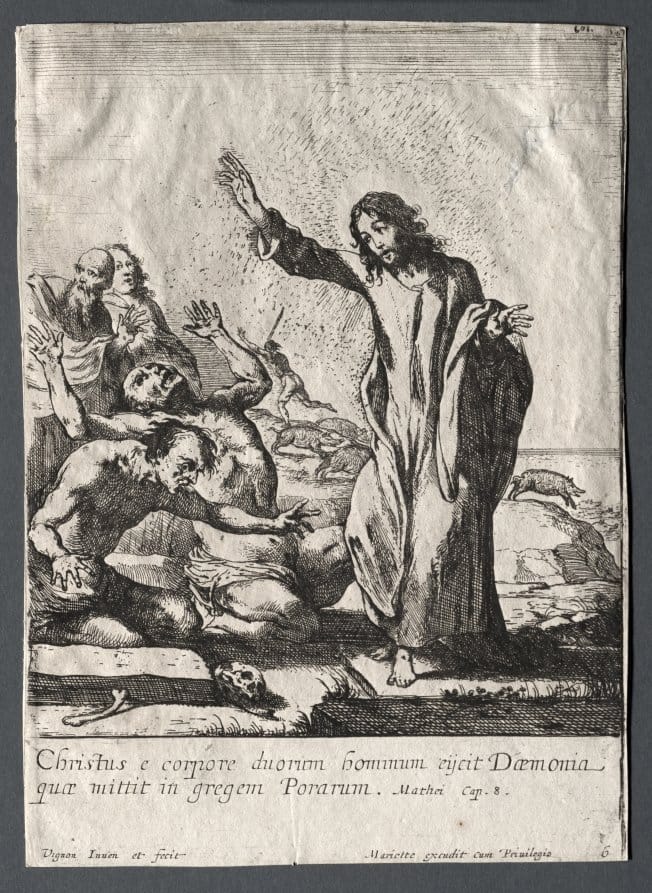
Etching by Claude Vignon from the series The Miracles of Jesus Christ, made in France about 1638-1643, showing Christ delivering the possessed.
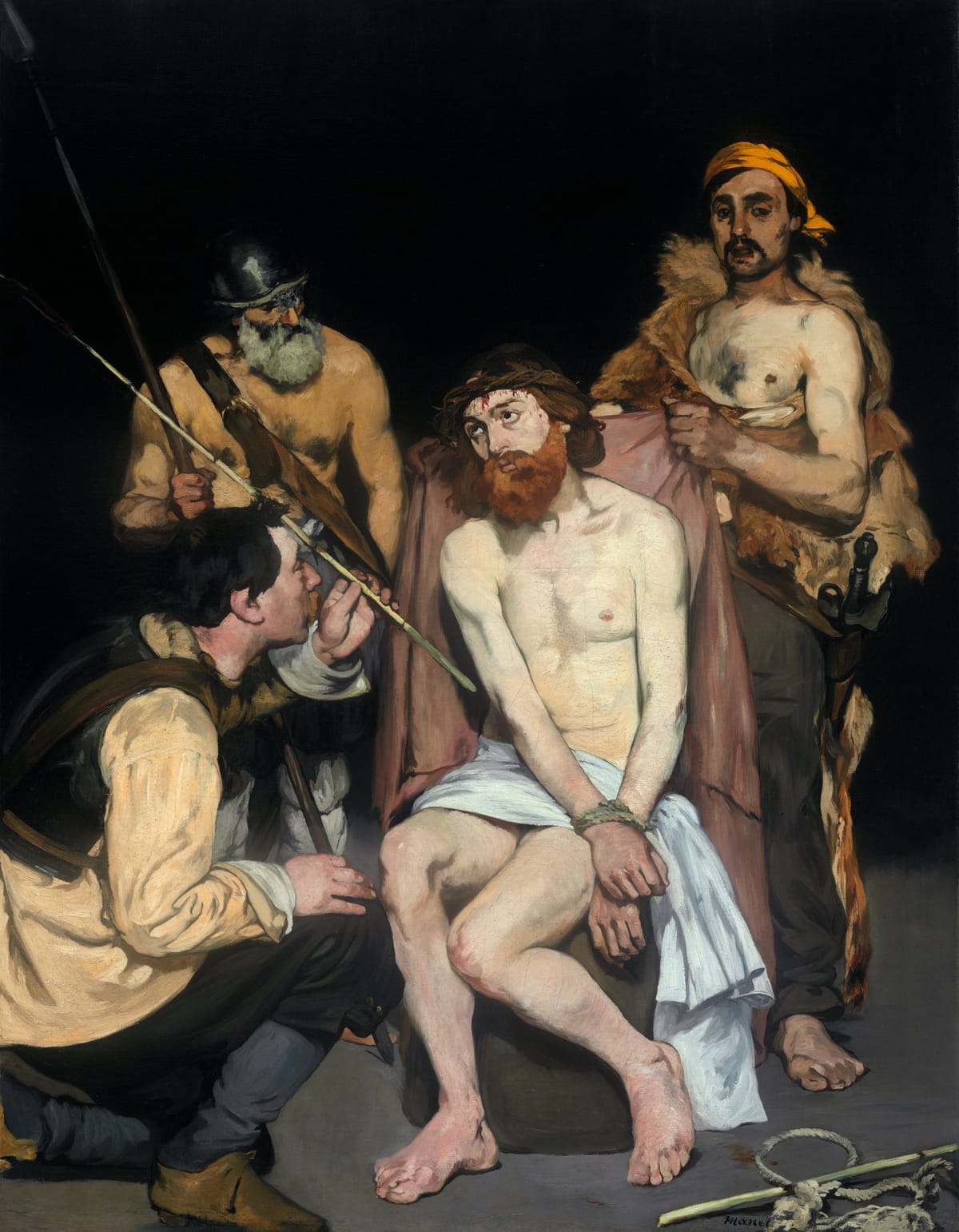
Throughout his career Édouard Manet managed to shock and confound the public with his bold technique and unorthodox approach to subject matter. The most startling feature of this painting is that he painted it at all.
The images depict Saints Athanasius and Nicholas (top left); Saint George (bottom left); The King of Kings and Great [High Priest] Jesus Christ, sided by the Mother of God and Saint John (center panel); Saints Paraskevi and Marina (top right); Saint Demetrius (bottom right).
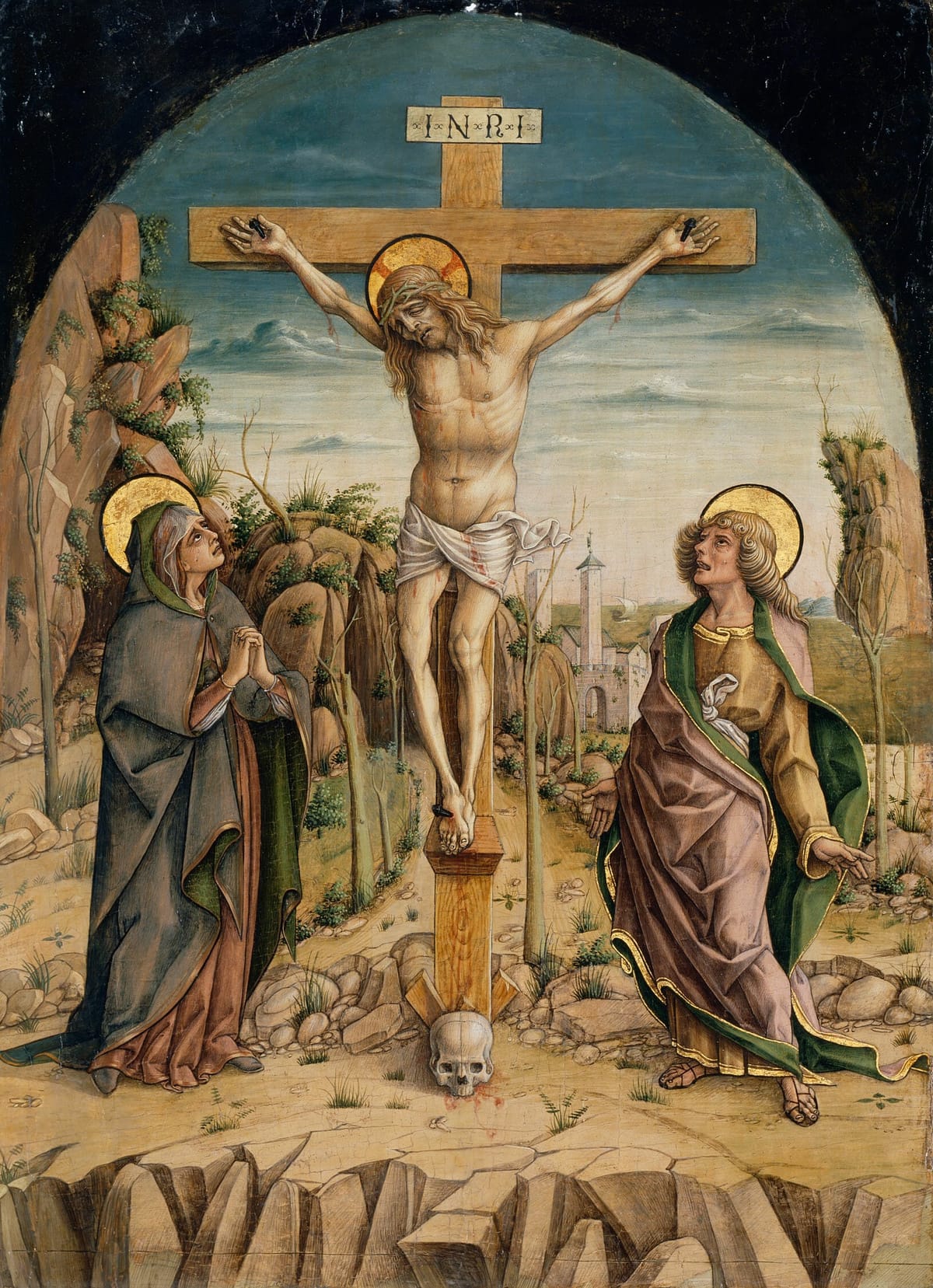
Carlo Crivelli’s vivid style married the beautiful with the grotesque. Here, the Virgin Mary and Saint John the Evangelist gaze in anguish at Jesus on the cross.
Miniature of Christ in Majesty from the Godescalc Evangelistary, an illuminated Gospel book made in 781-783 and now in the Bibliothèque nationale de France.
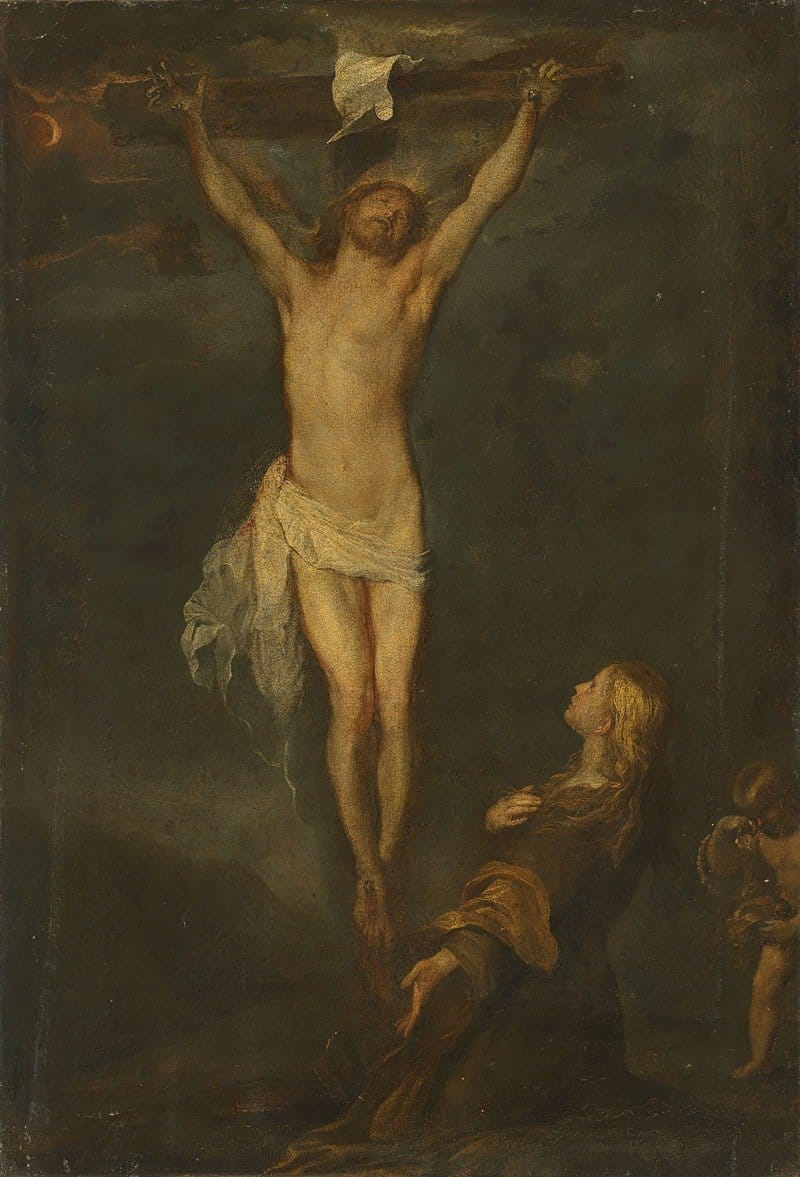
Paintings of the crucifixion in this style are often created as private devotional art for viewing and meditation on Christ's passion.
Hans Thoma was a German painter. He was born on 2 October 1839 in Bernau, Grand Duchy of Baden, in the Black Forest, Germany. He was the son of a miller and was trained in the basics of painting by a painter of clock faces.
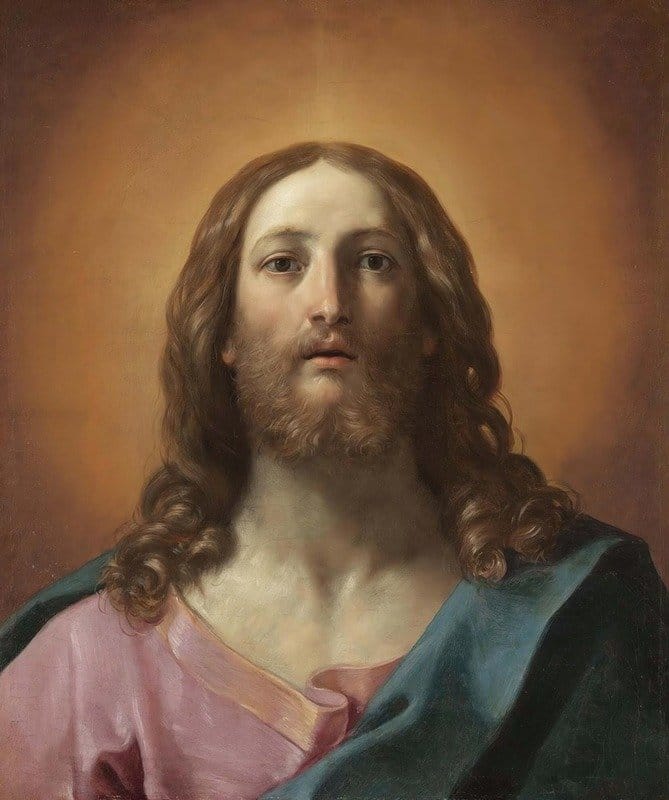
Guido Reni was an Italian painter of the Baroque period, although his works showed a classical manner, similar to Simon Vouet, Nicholas Poussin and Philippe de Champaigne. He painted primarily religious works, but also mythological and allegorical subjects.
Depiction of Christ's appearance to Mary Magdalene after the Resurrection, by Alexander Andreyev, 1835.
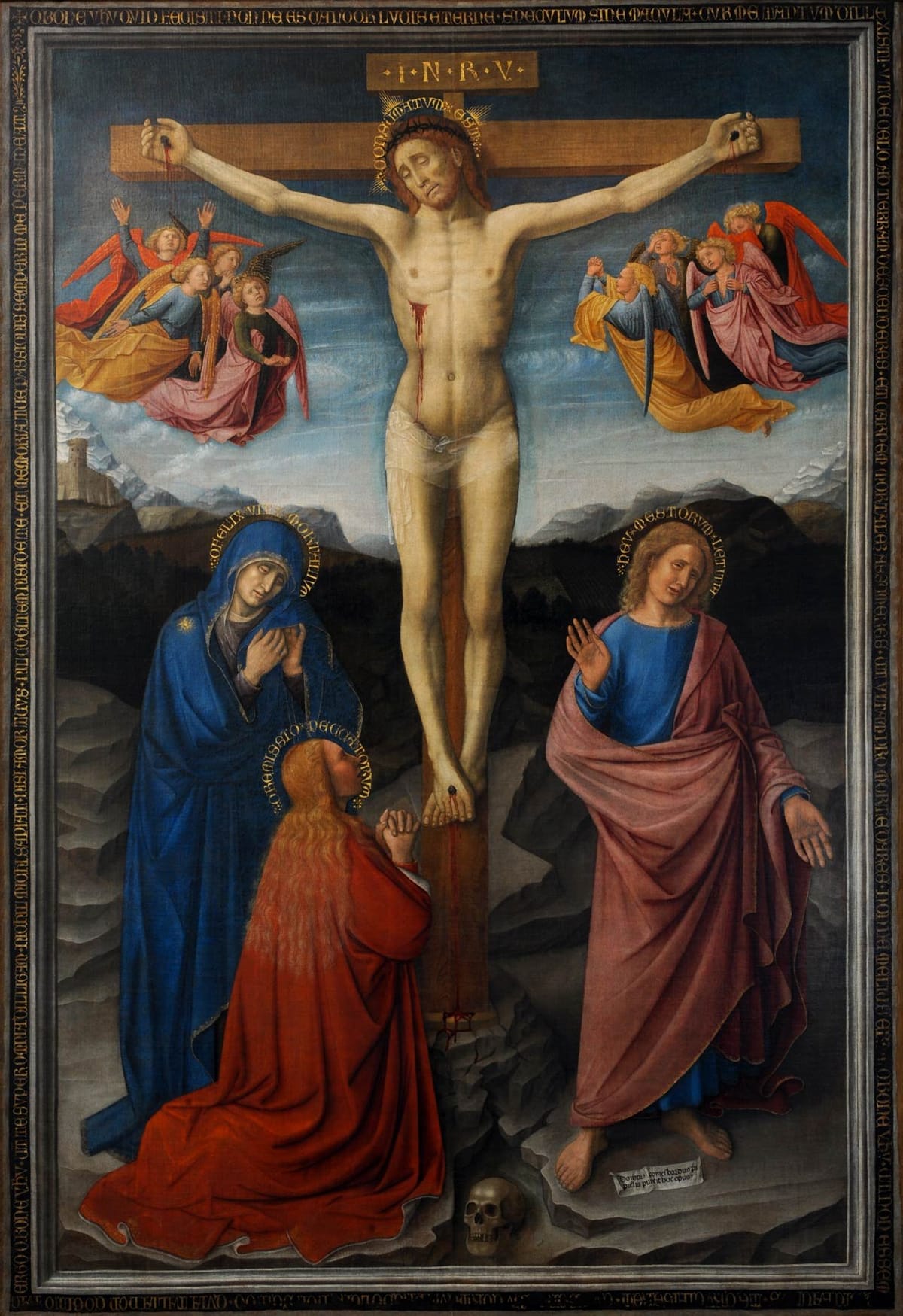
Donato de’ Bardi’s style blends Netherlandish and French influences, emphasizing refined detail and careful study of light. Free DownloadThis image is in the public domain.crucifixion.jpg376 KBdownload-circle Please SUBSCRIBE or DONATE to help keep this site free!...
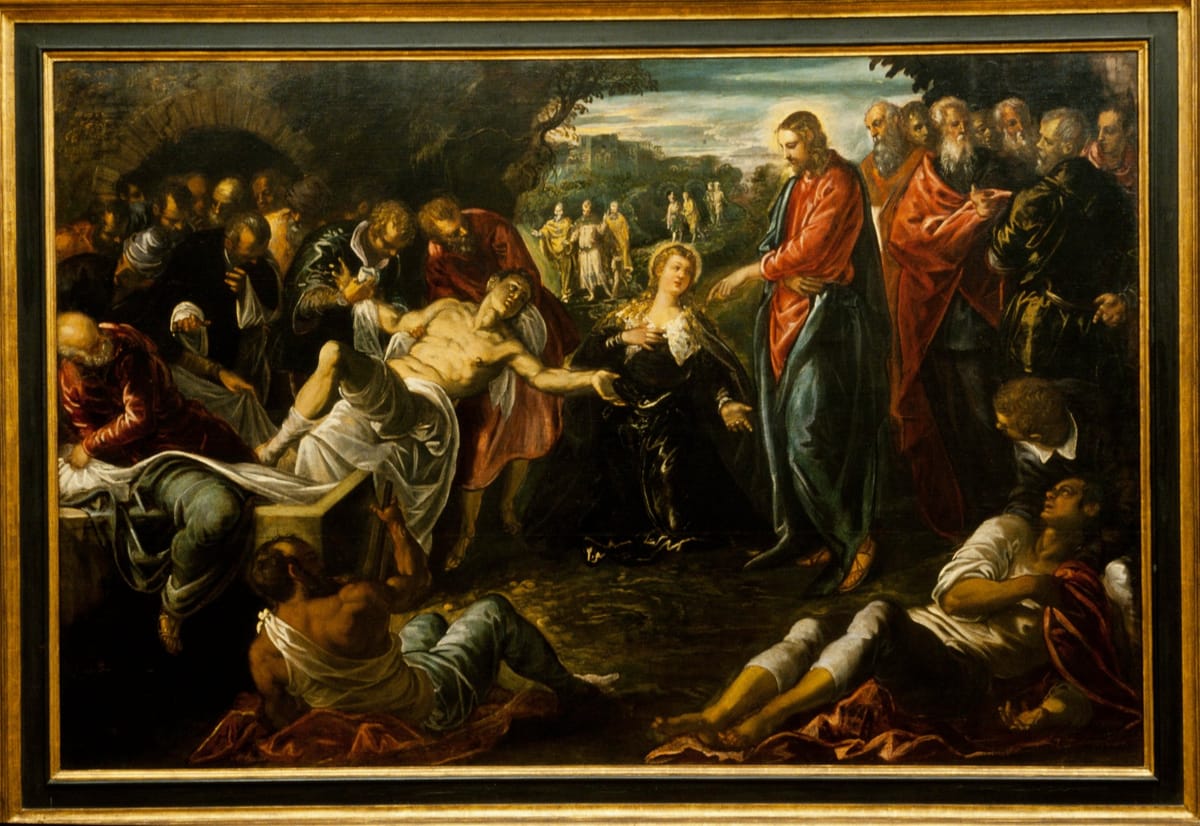
Jacopo Tintoretto ran a busy workshop in Venice, specializing in dramatic, complex religious paintings, which he produced at incredible speed. This crowded composition, with its daring foreshortening and elongated figures, is consistent with Tintoretto’s style. However, the overall quality of the execution suggests the work is by studio assistants...
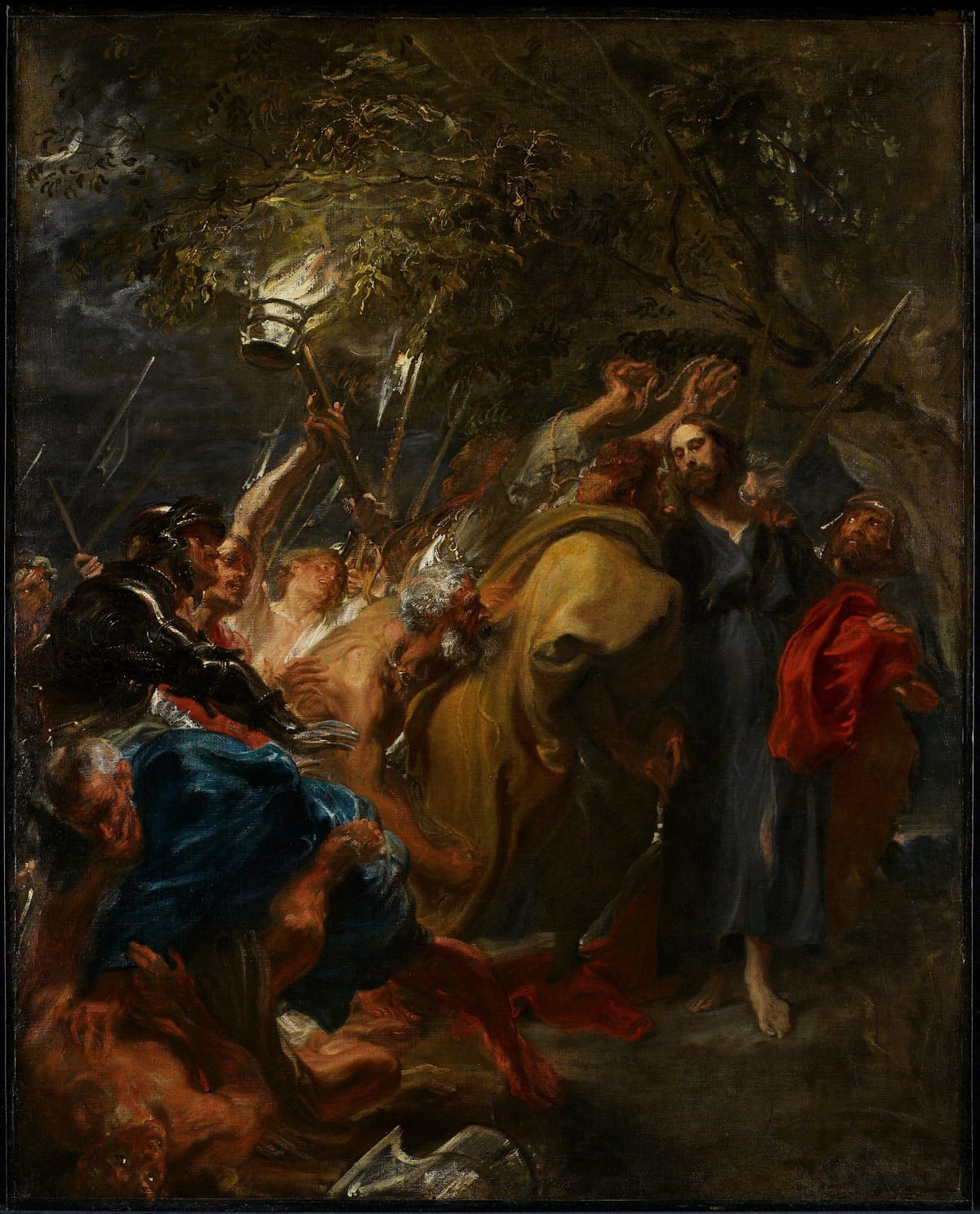
Looser and less formal than the portraits that made him famous, this work was completed shortly before Van Dyck began a six-year stint in Italy. It follows the biblical description of Jesus Christ’s betrayal in the Garden of Gethsemane. Judas, one of Jesus’ disciples, brings a band of...