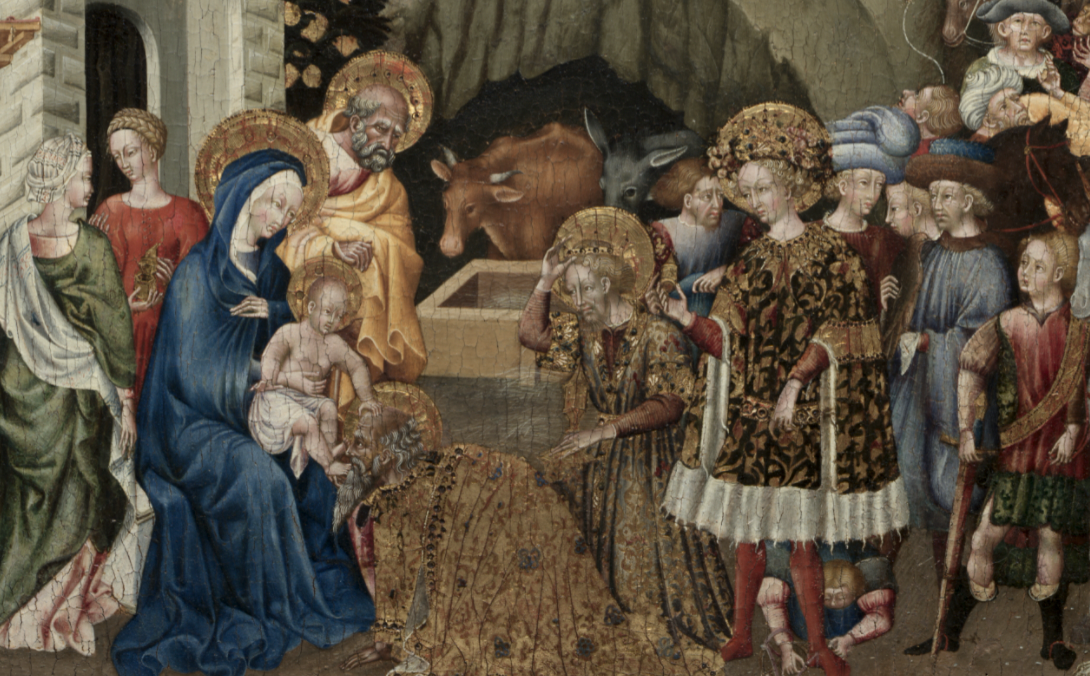

The Adoration of the Magi (1440–1445) by Giovanni di Paolo - Public Domain Catholic Painting
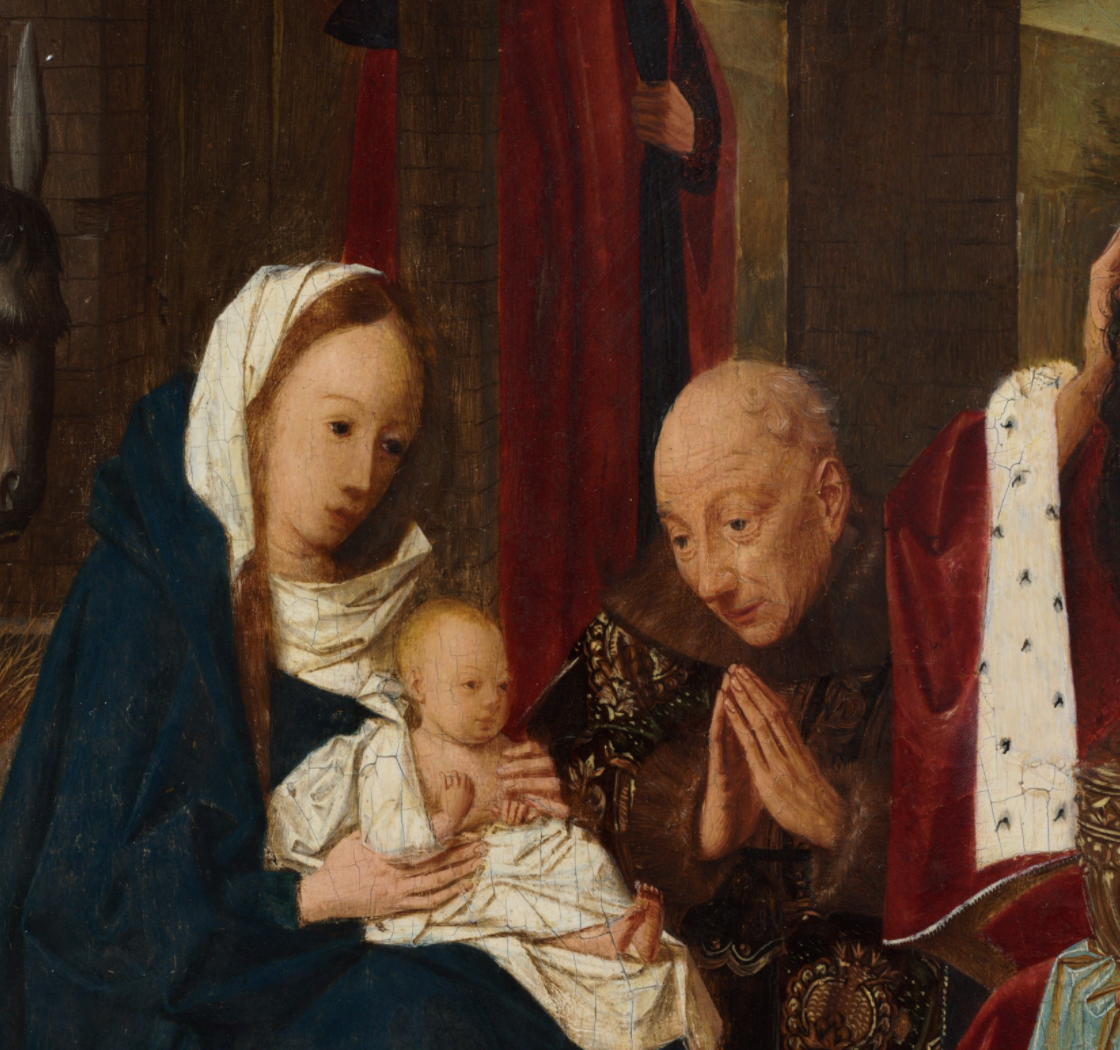
According to the Gospel of Matthew, three Magi, guided by a star, found the newborn Christ and laid gifts before him.
According to the Gospel of Matthew, three Magi, guided by a star, found the newborn Christ and laid gifts before him.
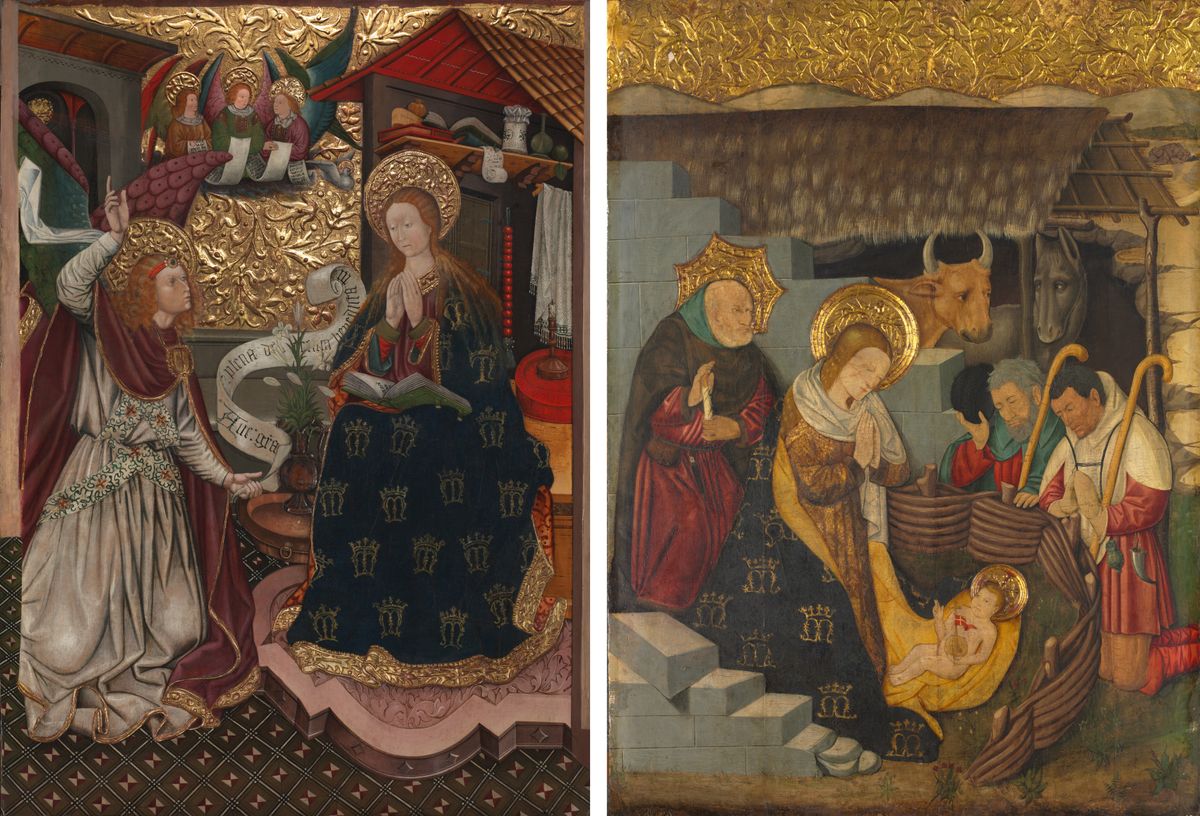
In this painting, the Archangel Gabriel proclaims the Virgin’s destiny as the mother of Christ. The setting is an ordinary house, but simple objects have symbolic meaning.
This central panel from an altarpiece shows the Madonna seated on a throne with the infant Christ, surrounded by kneeling angels and six-winged seraphim. Below is an image of the dead Christ flanked by the Virgin Mary and Saint John.
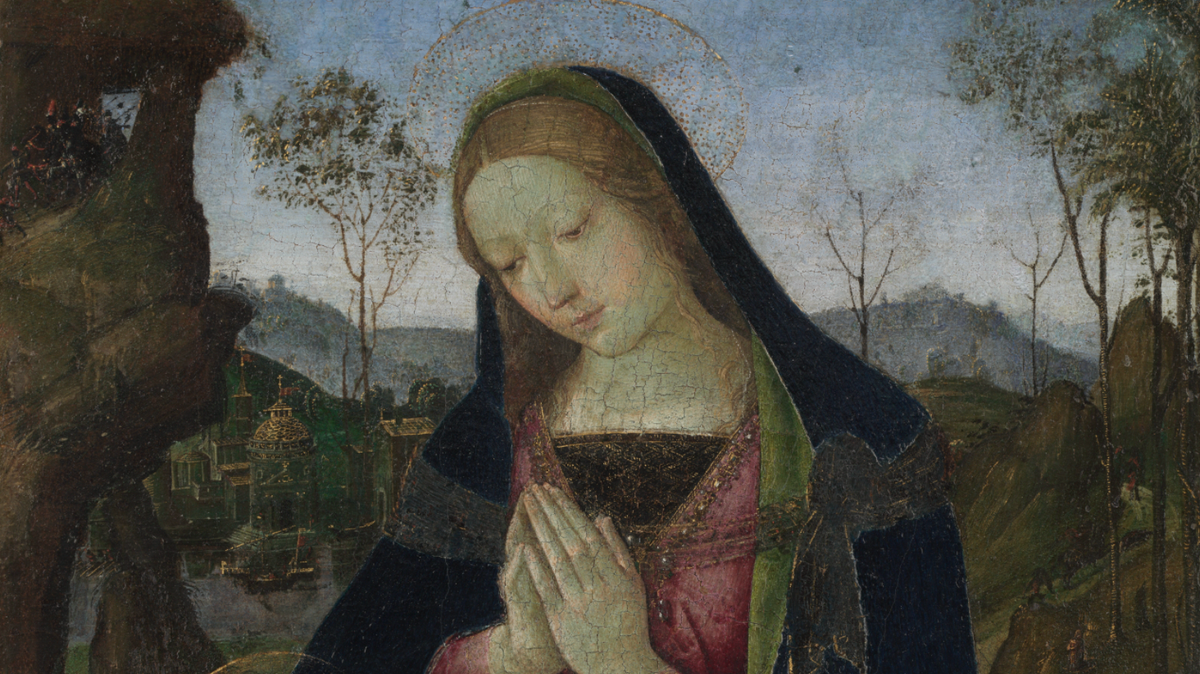
Bernardino di Betto, called Pinturicchio, is said to have acquired his nickname ("little painter") because of his small stature, and used it to sign some of his paintings.
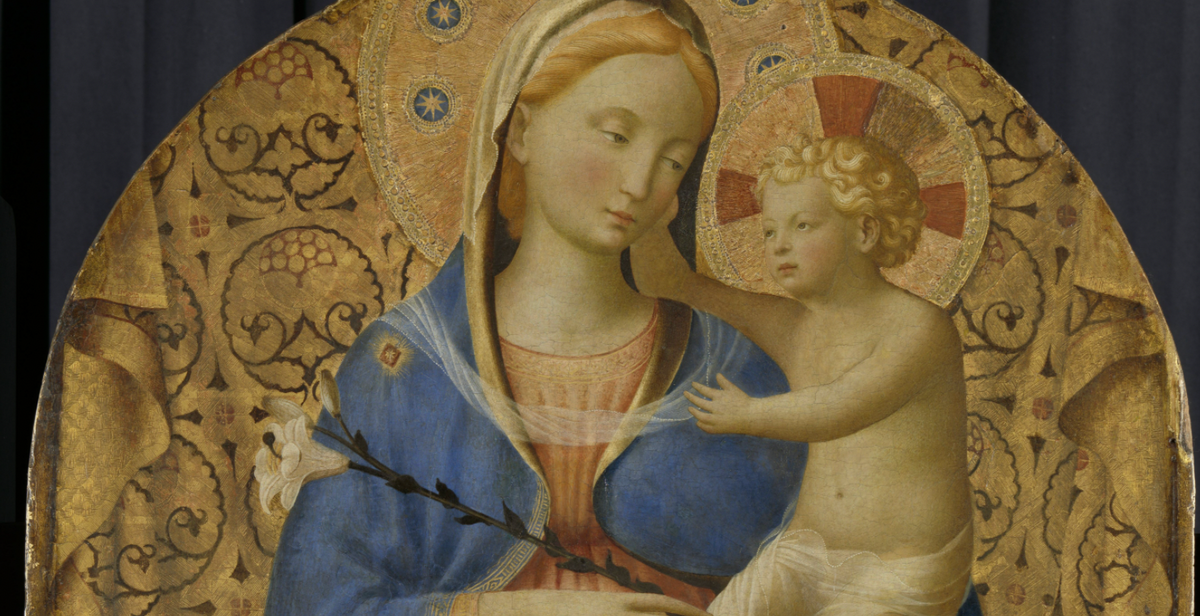
As a Dominican monk, Fra Angelico was not subject to the strict rules of the Florentine painters’ guild. He was thus free to develop a more personal style. This combined strong realism and solid forms with a certain sweetness partly derived from earlier Sienese and Florentine examples.
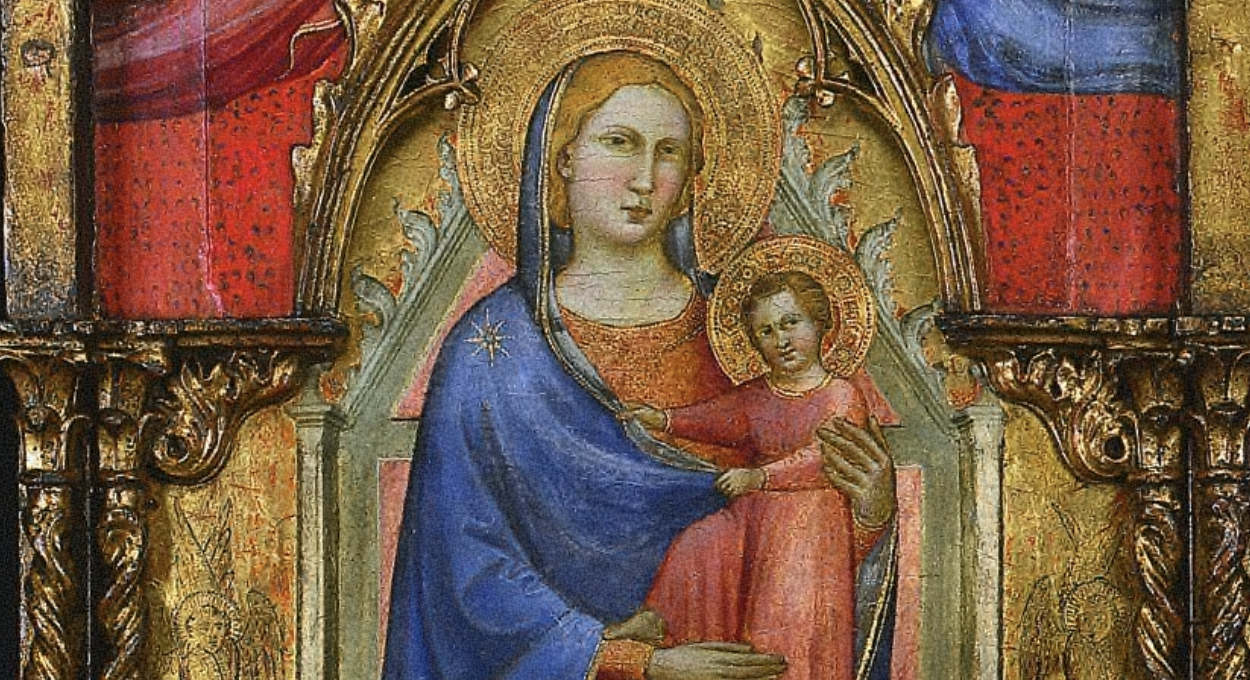
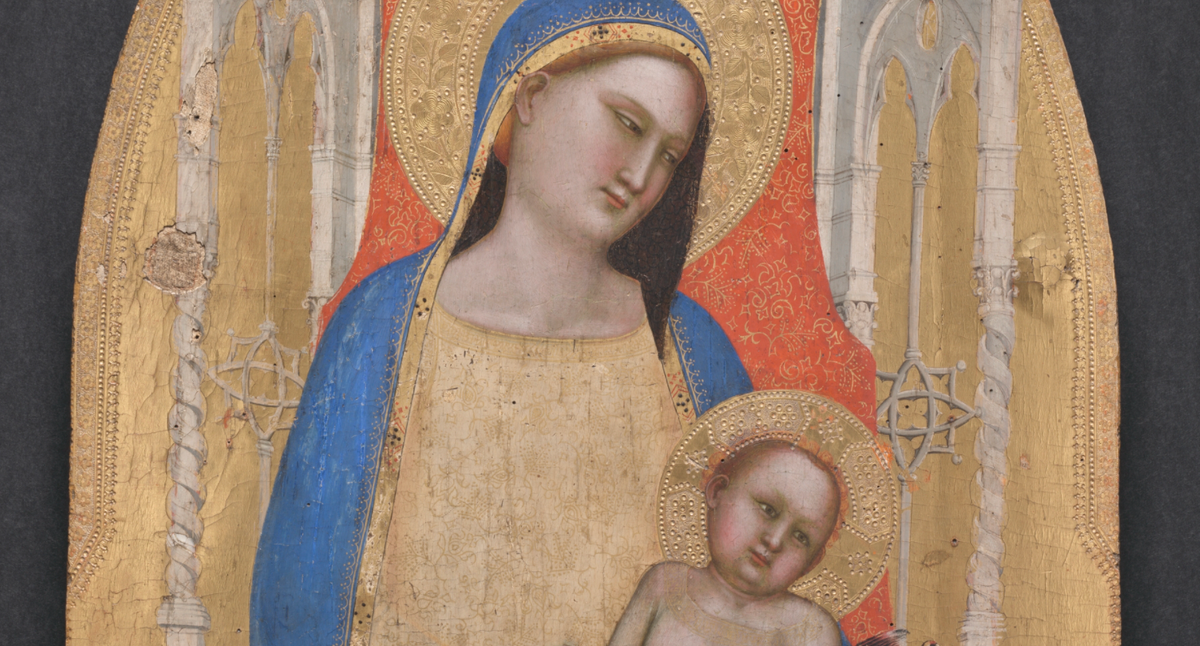
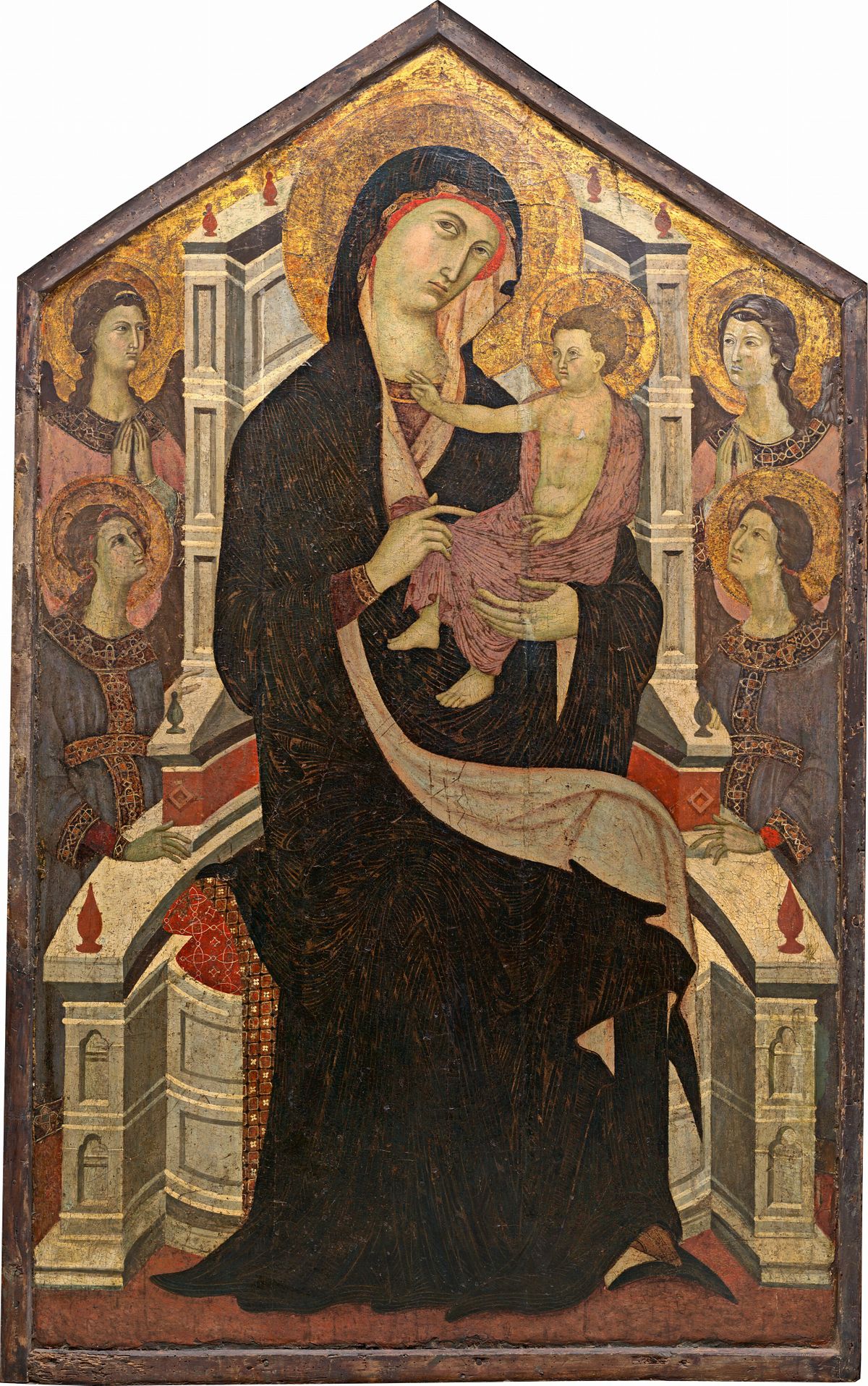
Seated on an elaborate throne, the Madonna’s weighty majesty emphasizes her role as the Queen of Heaven as she gazes at her infant son. The child, in turn, stares at the viewer.
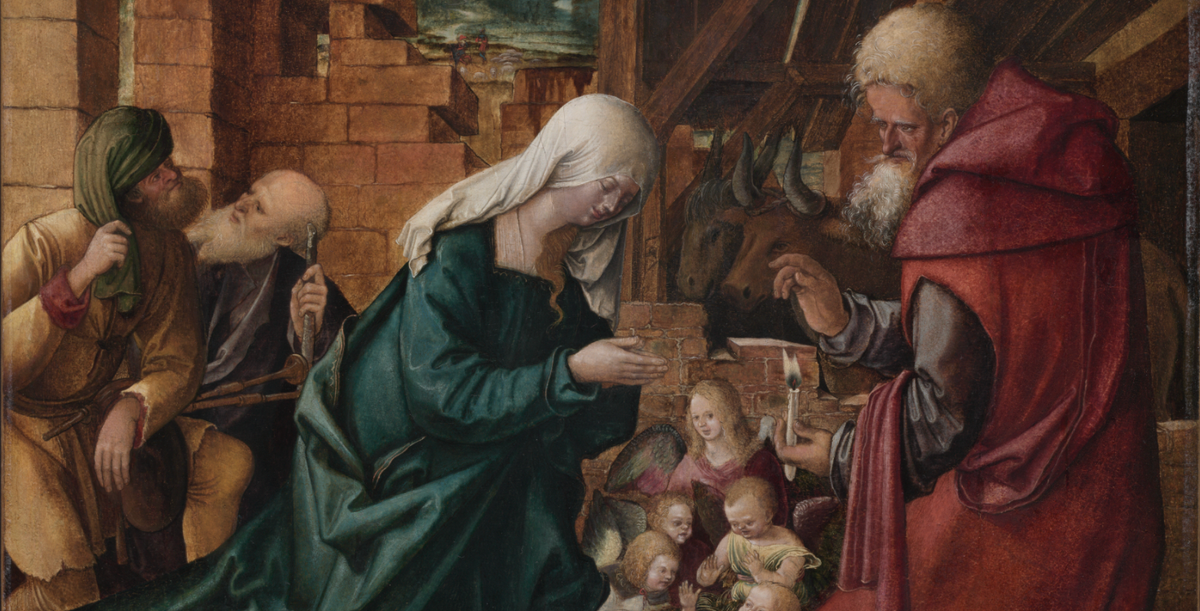
The artist has set Christ's birth in a ruined stable, witnessed by shepherds and angels. The candle Joseph holds symbolizes the supremacy of Christ's divine radiance over earthly light.
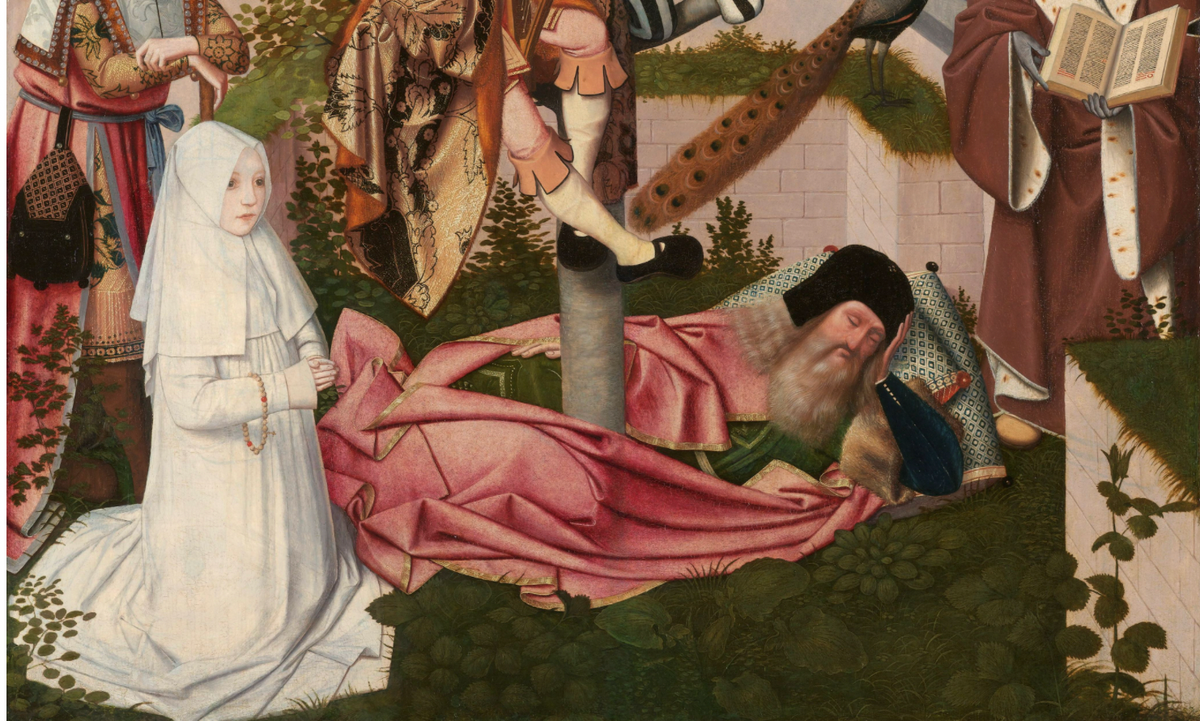
The symbolic family tree of Jesus is depicted here. The tree grows from the body of the sleeping Jesse. He was the ancestor of a family of kings that, according to tradition, included Solomon, David, and Jesus. The tree is filled with the kings of Israel, including King David with his harp.
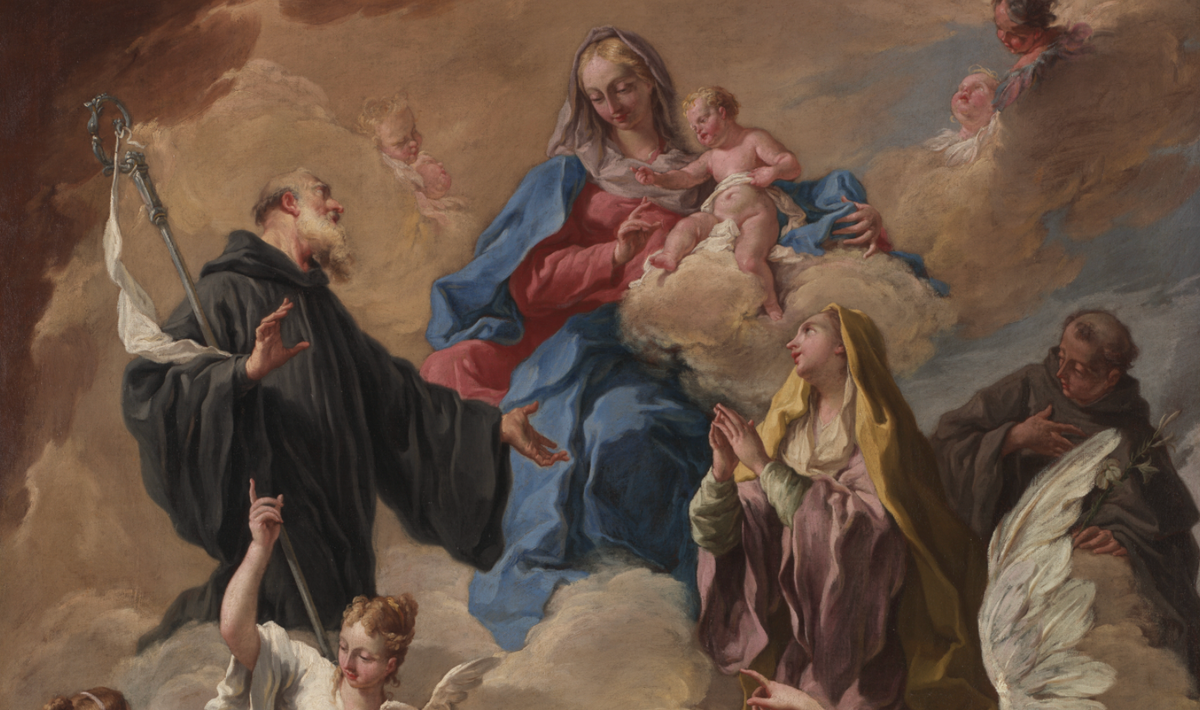
A devout woman, shown at lower right, is presented by saints and an angel to the central Virgin and Child. In clockwise order from her is Saint Lucy, identified by the cauldron and sword at her feet; Saint Agnes, by the lamb; Saint Scholastica, by the dove she holds; and...
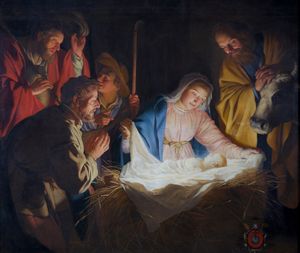
The Virgin wears a bright red dress—likely representing the Holy Spirit or presence of God. She also wears a light blue veil and dark blue shawl—representing heavenly grace. She is bathed in light which emanates from her holy infant, Jesus Christ.
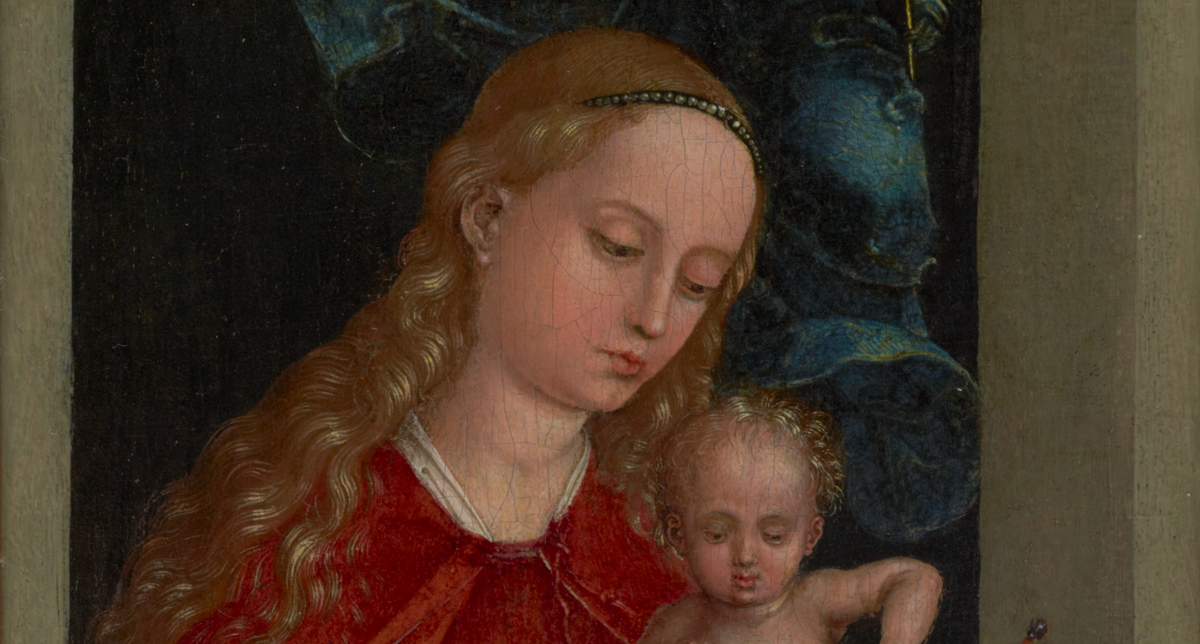
Although he was reportedly a prolific painter, this panel is one of only seven paintings by Martin Schongauer in existence today. It belongs to a group of four Andachtsbilder, or devotional paintings, created near the end of his life. In his engravings Schongauer already had explored the theme of the...
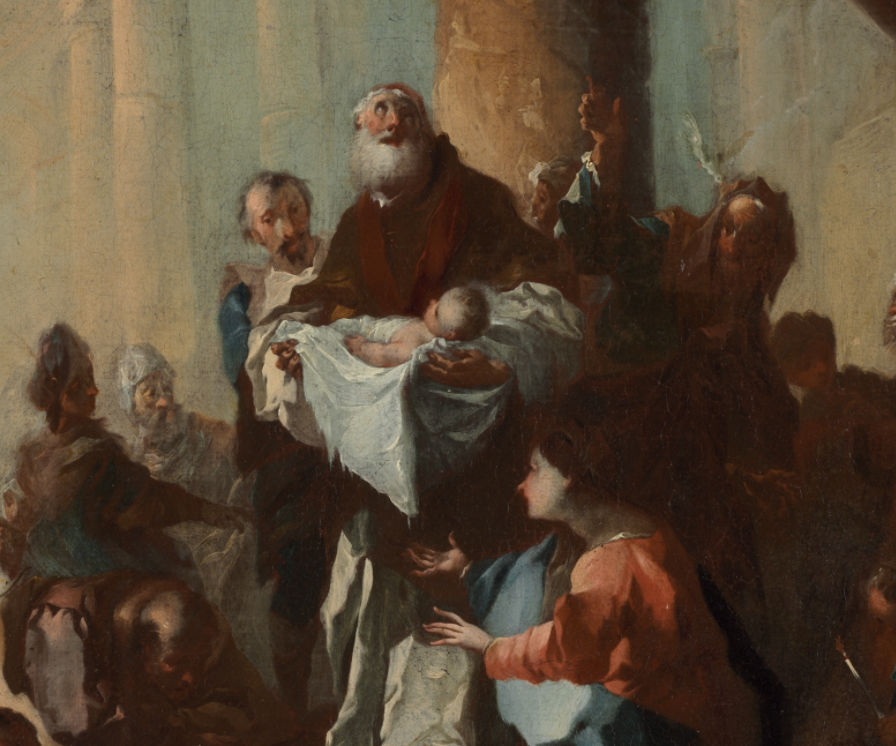
This loosely painted sketch is the preliminary design for an altarpiece in the Church of Saint Ulrich, Vienna. Mary and Joseph have brought the infant Jesus to the temple to be inducted into the Jewish faith; the aged priest Simeon cradles the infant in his arms, turning his gaze to...
Little is known about the life and career of Sint Jans. He seems to have been born in Haarlem in Holland in the northern Low Countries where he may have been attached to the Knights of Saint John as a lay brother, and likely produced an altarpiece for that order....
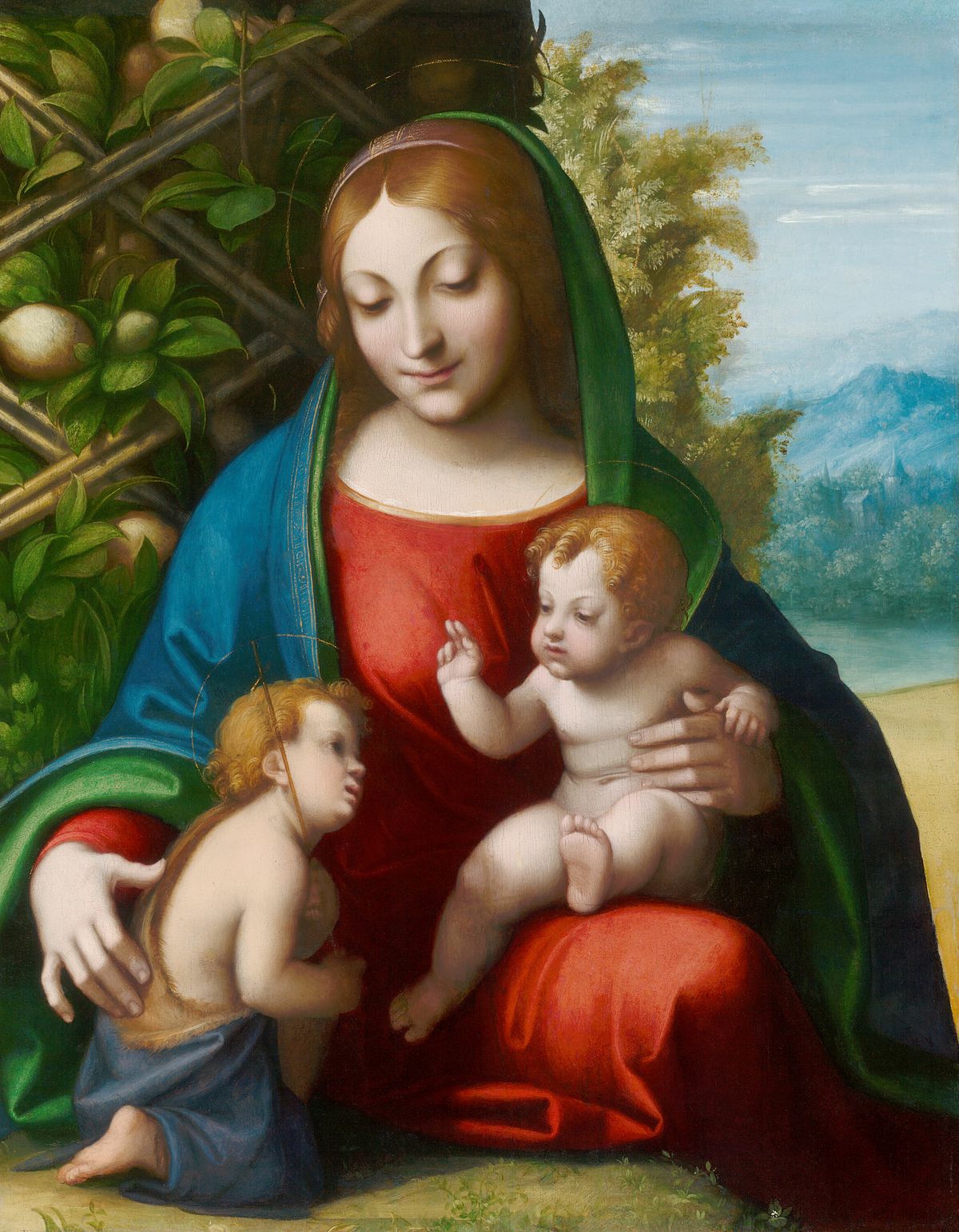
Correggio spent most of his brief career in the northern Italian city of Parma. Removed from the great centers of Renaissance art, he was able to create a remarkably innovative body of work. This intimate devotional panel is a product of the artist’s youth. Here Correggio revealed his own...
A Madonna is a representation of Mary, either alone or with her child Jesus. These images are central icons for both the Catholic and Orthodox churches. The word is from Italian ma donna 'my lady'. Wikipedia [https://en.wikipedia.org/wiki/Madonna_(art)#:~:text=A%20Madonna%20(Italian%...
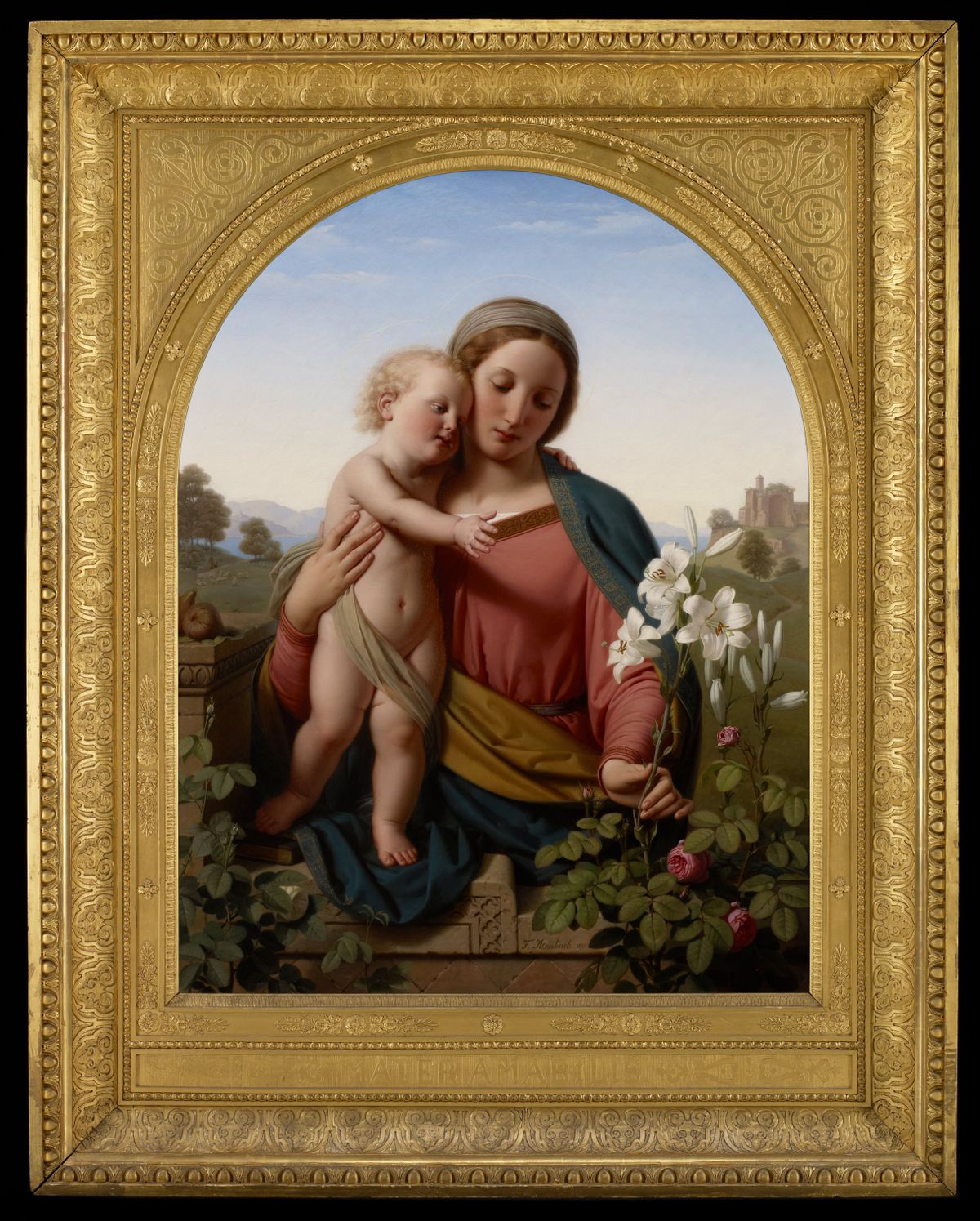
Ittenbach is considered one of the leading religious painters in 19th century Germany. A devout Roman Catholic, he traveled throughout Germany, painting altarpieces and artworks intended for church decoration. Popular among the German Catholic nobility, Ittenbach painted in a precise, realistic style influenced by Netherlandish and Italian Renaissance art, continuing...
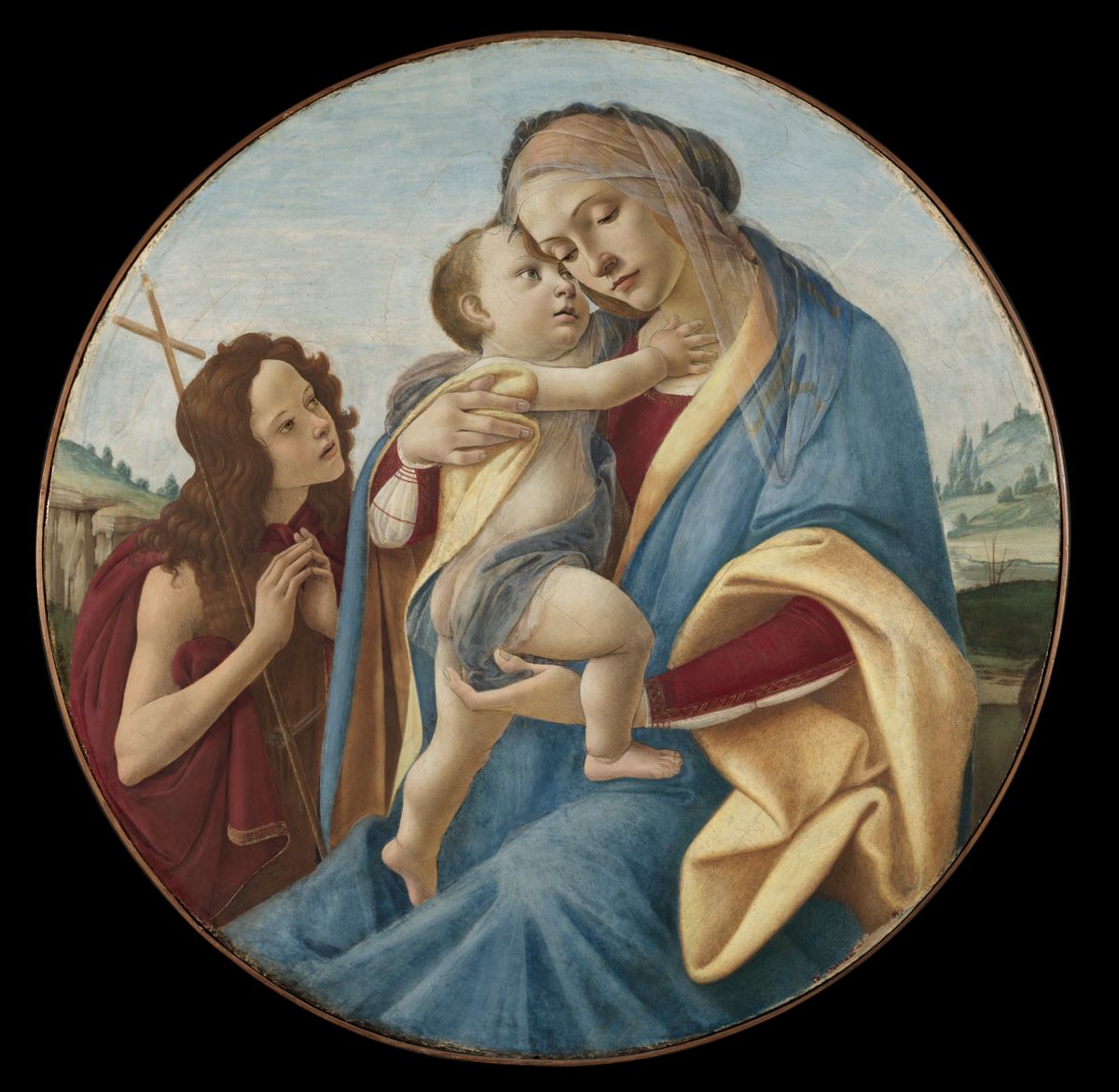
The perfectly round form, called a tondo, became popular during the 1440s. Made for domestic settings instead of churches, the circular format challenged the artist to create a harmonious, balanced composition within this more difficult shape. The attribution has been a matter of debate. Botticelli often collaborated with students, including...
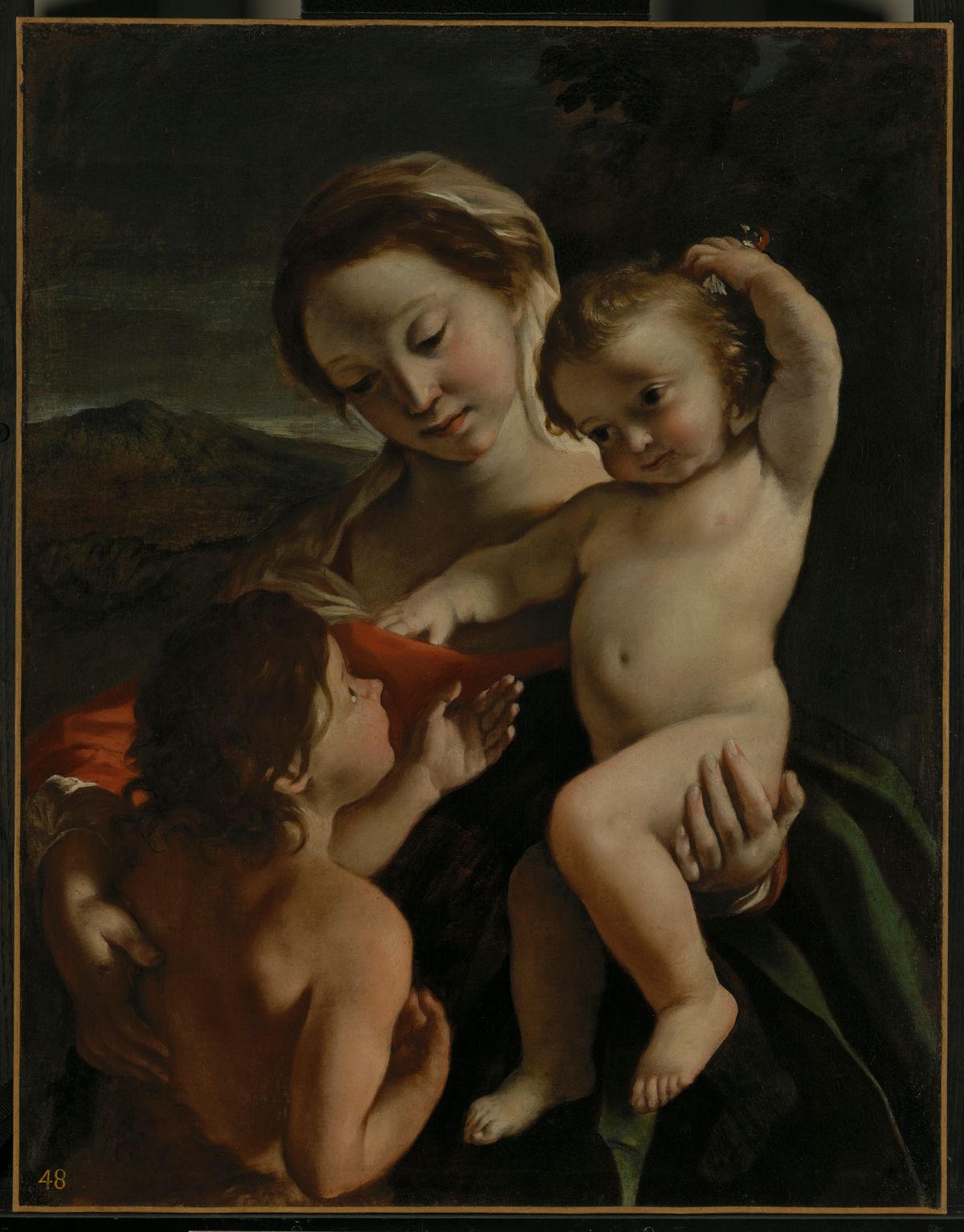
Better known for grand, monumental compositions and illusionistic decorations, here Lanfranco painted on a smaller scale, successfully portraying an intimate moment between the Madonna, her son, and her nephew. While the Madonna tenderly caresses her son, the two children extend their arms toward each other, expressing both familial and divine...
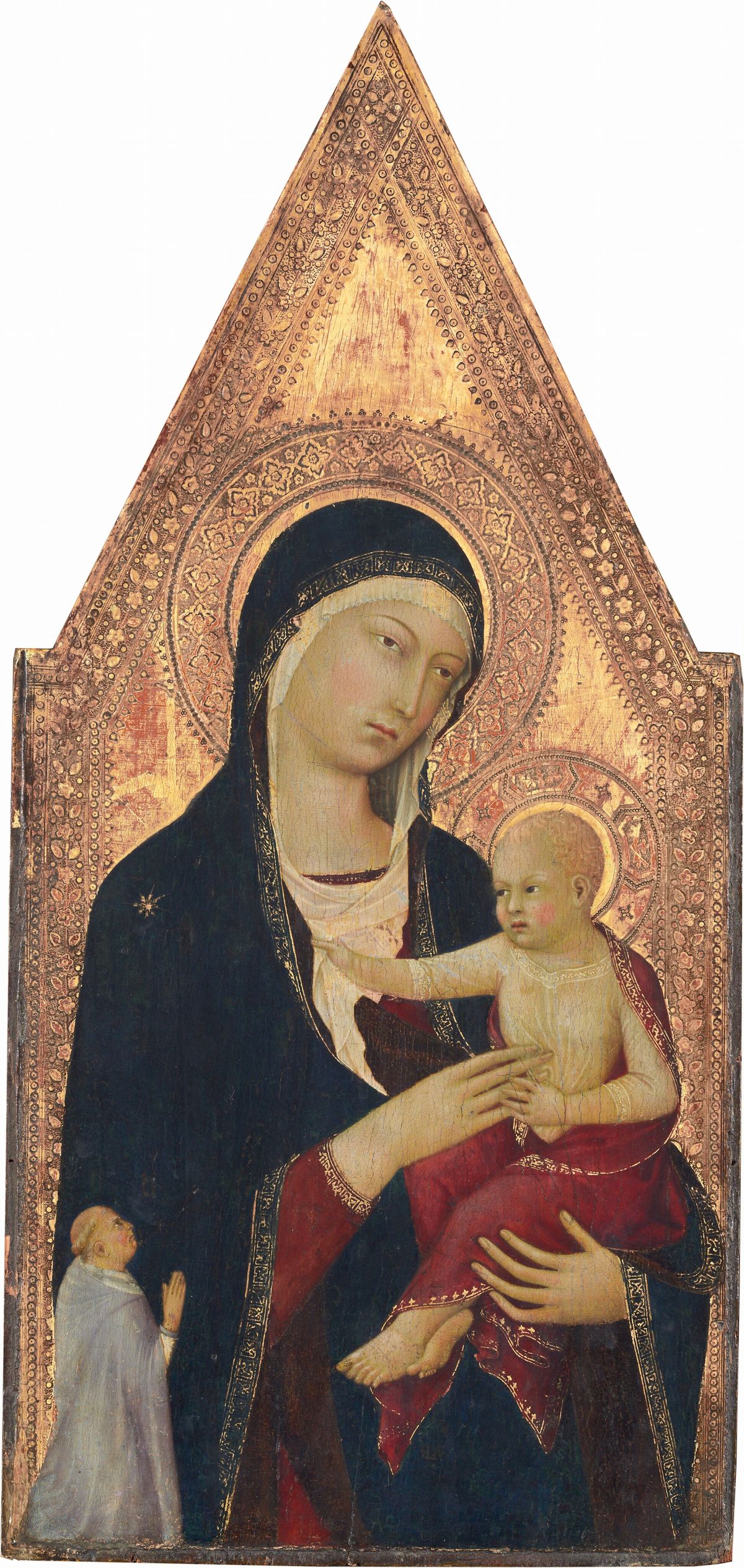
This work was the left side of a diptych that probably depicted the Crucifixion on the opposite panel. At the lower left, looking up at a looming vision of the Virgin and Child, is a small, kneeling figure in rapt devotion. Lippo Memmi (Sienese, active 1317/1347) has given us...
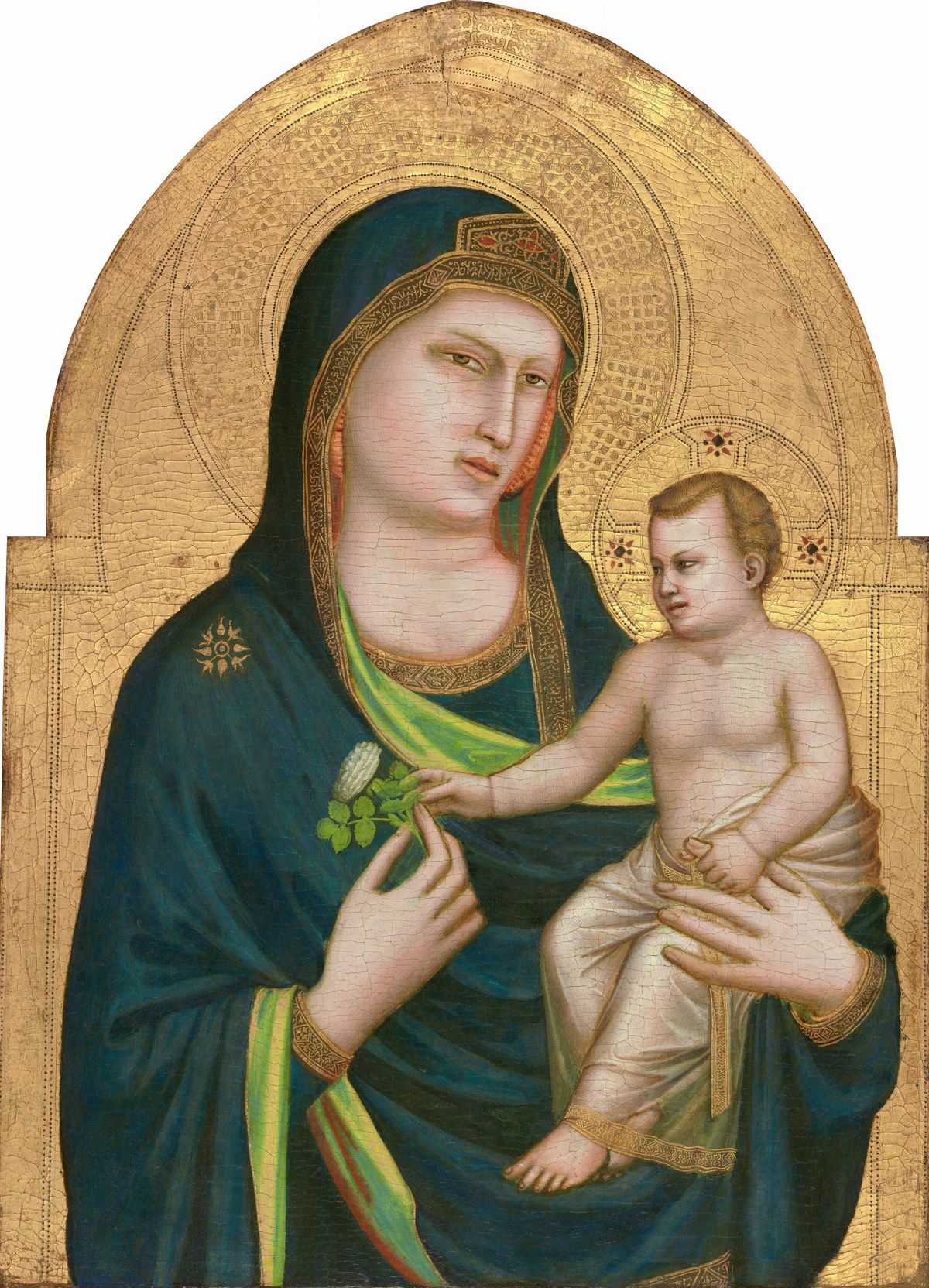
Giotto's explorations and innovations in art during the early 14th century developed, a full century later, into the Italian Renaissance. Besides making panel paintings, he executed many fresco cycles—the most famous at the Arena Chapel, Padua—and he also worked as an architect and sculptor. Transformed by...
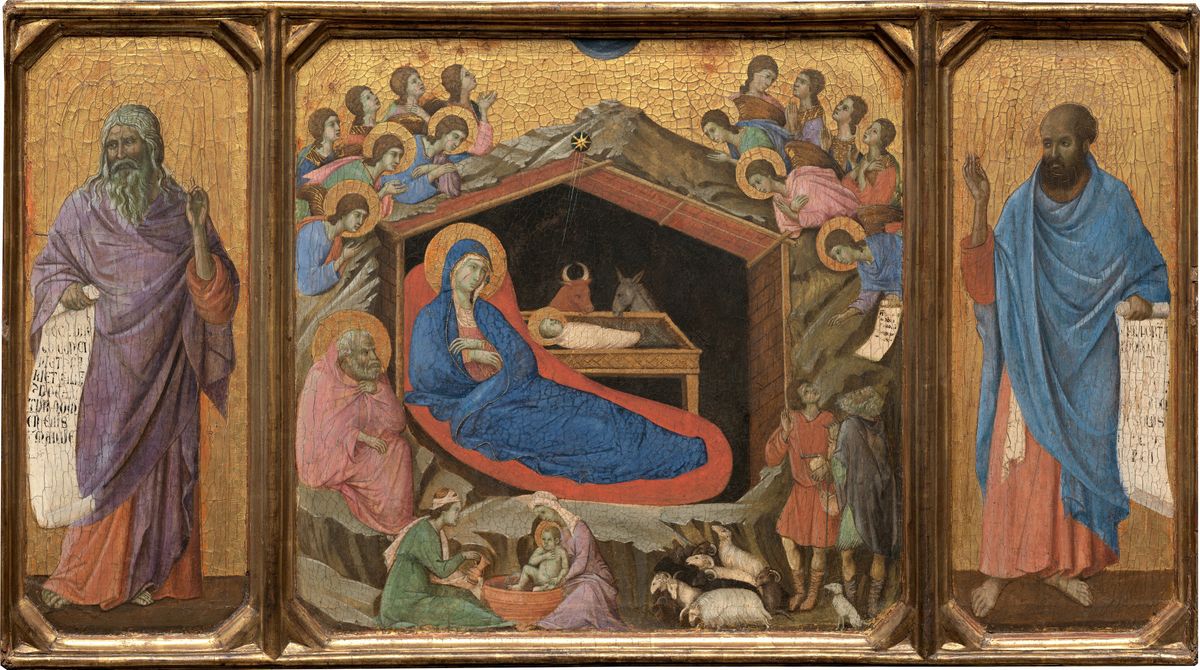
Standing on either side of this Nativity are two Hebrew prophets, whose writings—quoted on the scrolls they hold—are thought by Christians to foretell Jesus’s birth. The Gallery's Nativity joined other scenes from Jesus’s childhood (and other prophets) that unfolded along the front horizontal base...
The Sienese artist who made this panel is named for the town—Città di Castello— where another of his paintings, bearing another image of the Virgin and Child in “majesty” (maestà in Italian), remains today. The Maestà--especially in this tall format--was frequently commissioned for the meeting places of...
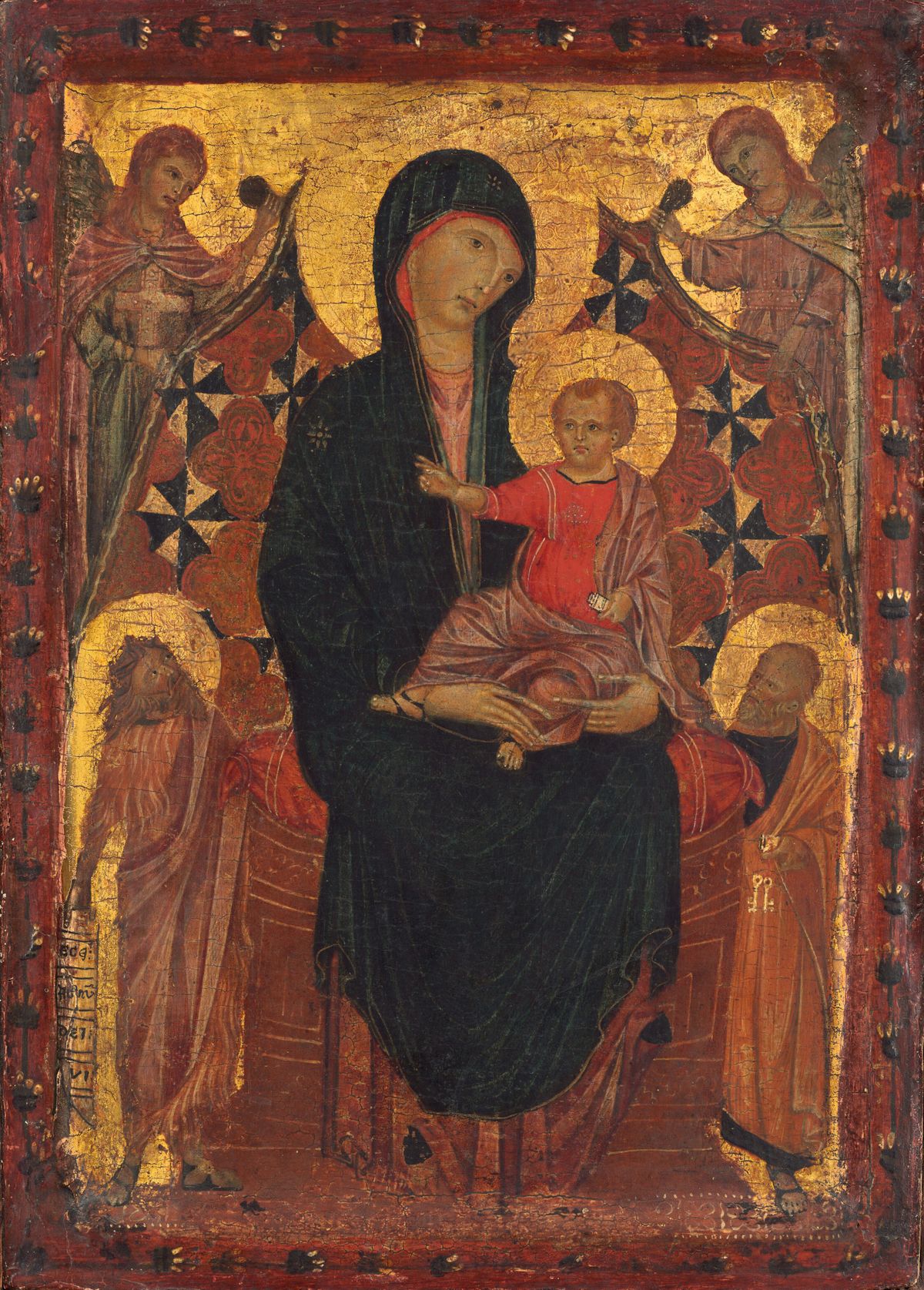
This small painting is less than 10 inches across, and it was surely made for the private devotions of the person who owned it. That the owner was of modest means is suggested not only by the painting’s size but also by the limited use of gilding. The area...
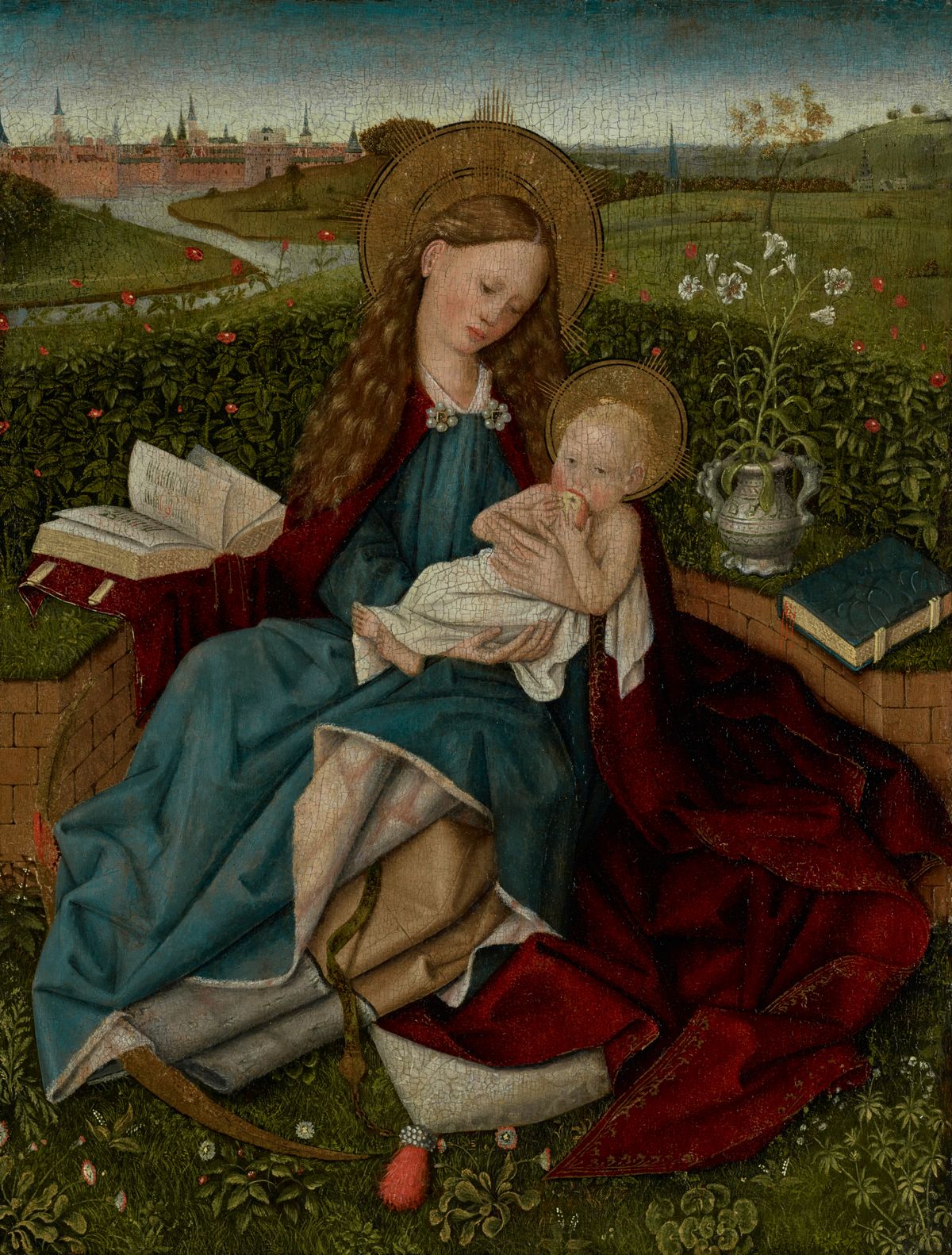
The Madonna of Humility, an extremely popular subject in Flanders, sits on the ground on a cushion, presenting the haloed Christ Child in her arms. A crescent visible below her skirts at the left symbolizes the moon on which the Virgin stands in representations of the Immaculate Conception. The open...