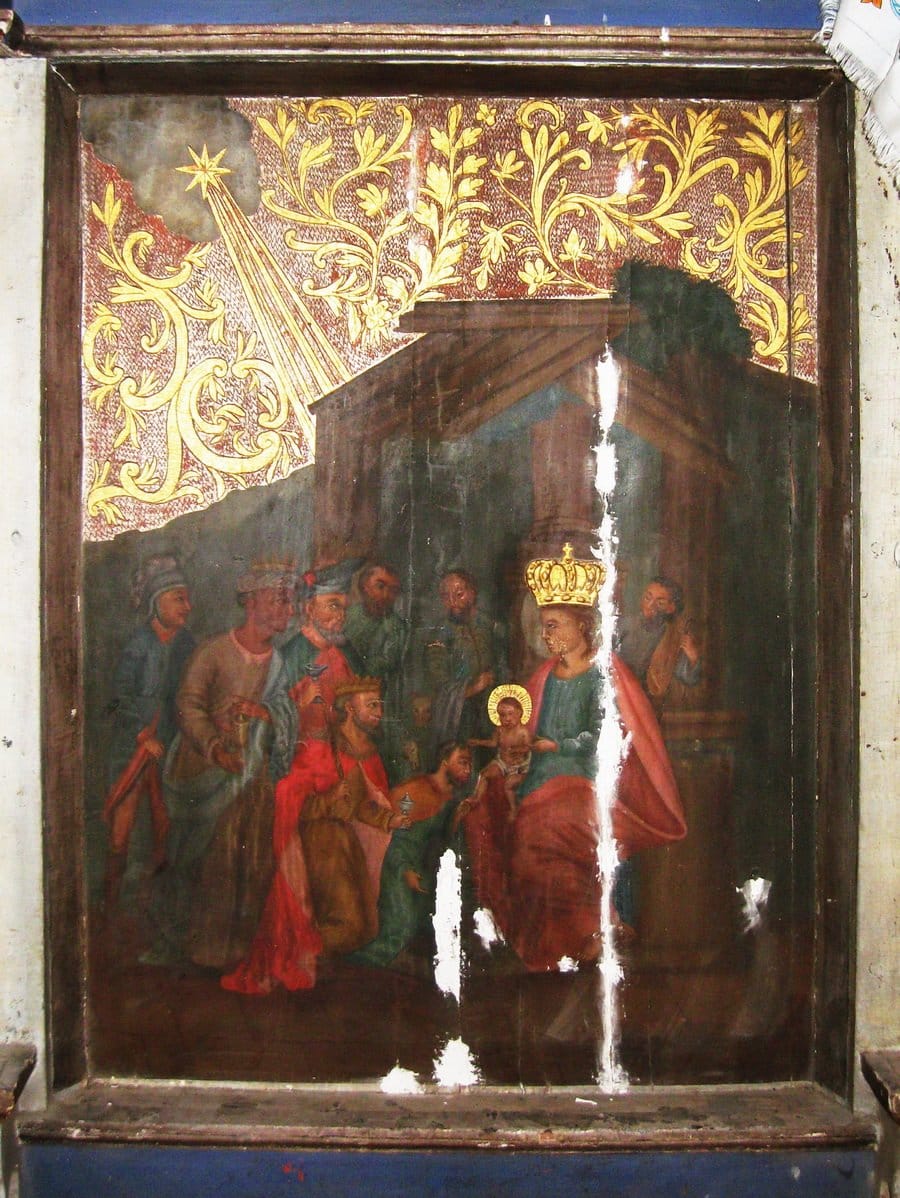

Adoration of the Magi (18th century) - Public Domain Orthodox Icon
Free Download— This image is in the public domain. —adoration-of-the-magi-via-sdcason-com.jpg274 KBdownload-circle Please SUBSCRIBE or DONATE to help keep this site free!...
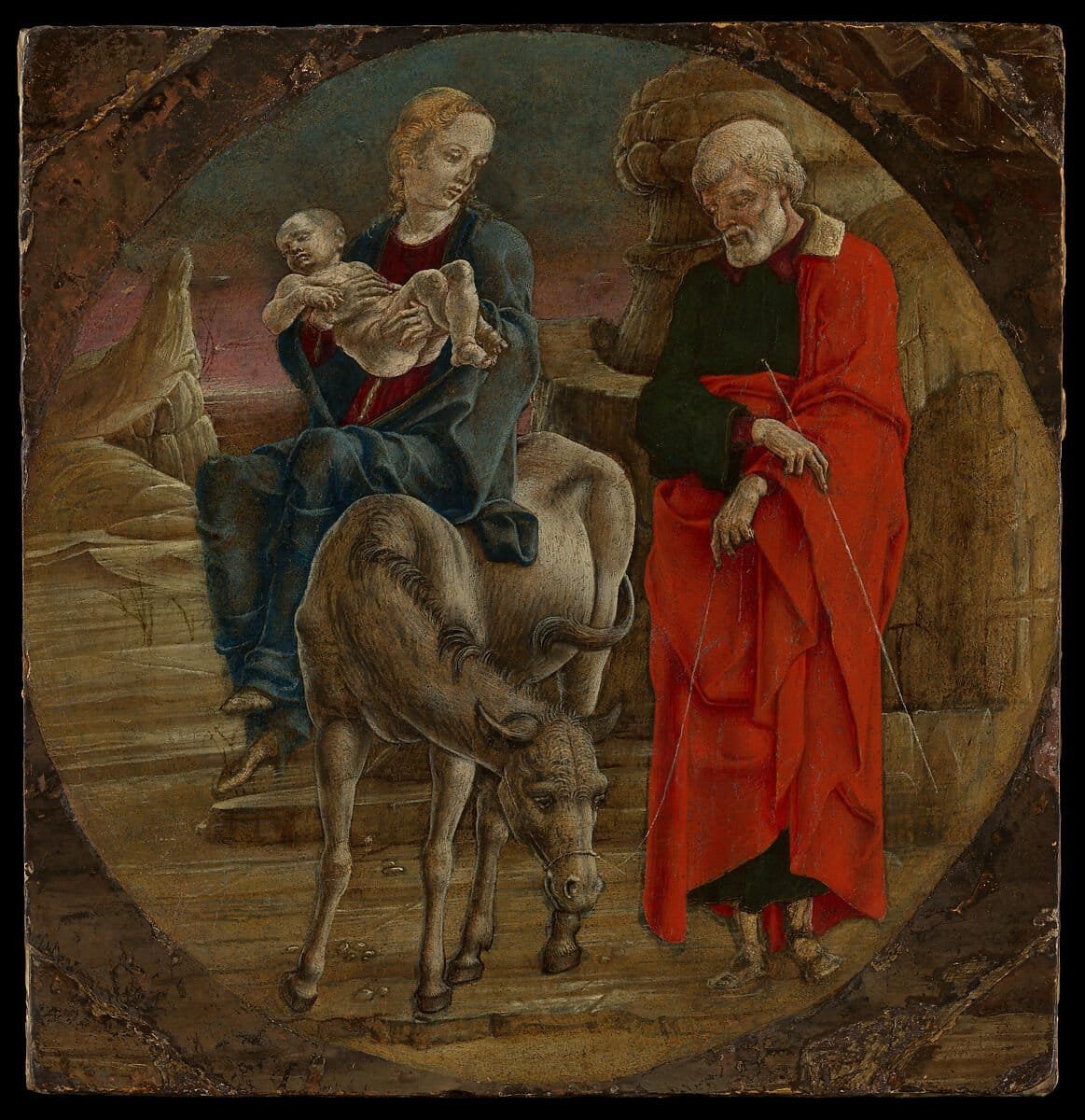
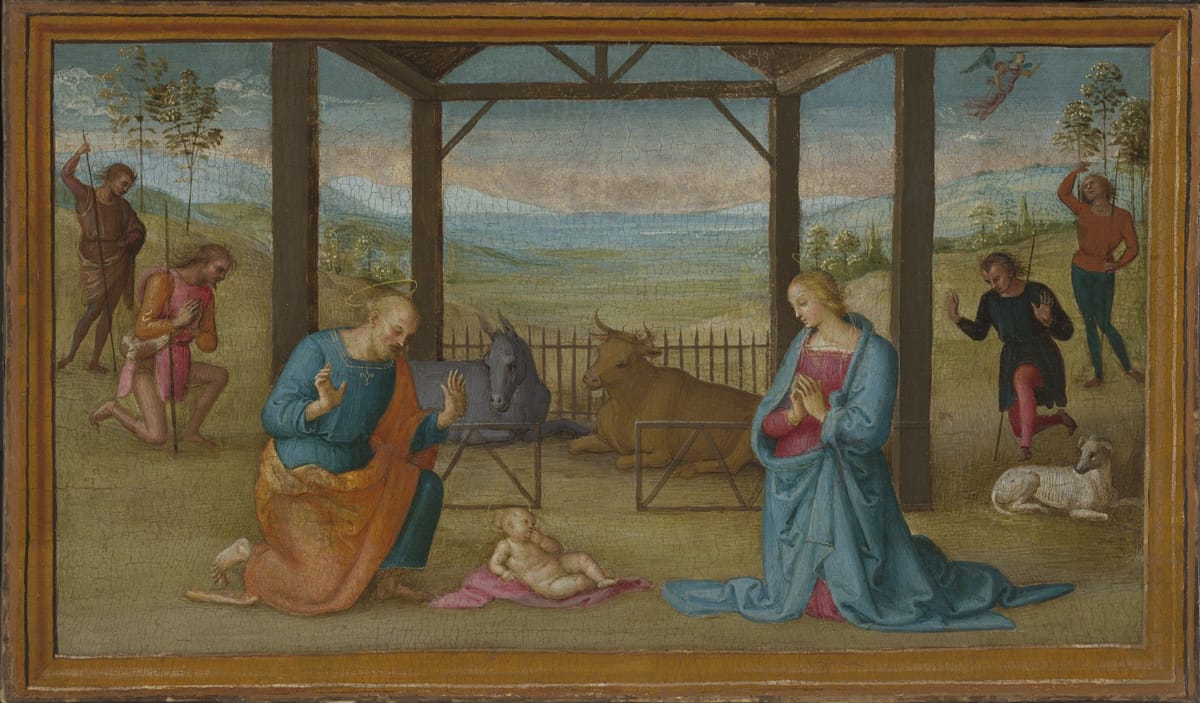
These four panels, together with another one depicting the Resurrection (Metropolitan Museum of Art, New York), once constituted a predella—a series of small pictures, often narrative scenes, forming the base of an altarpiece. These predella scenes depict moments when Jesus’s divine nature was revealed: at his birth, at...
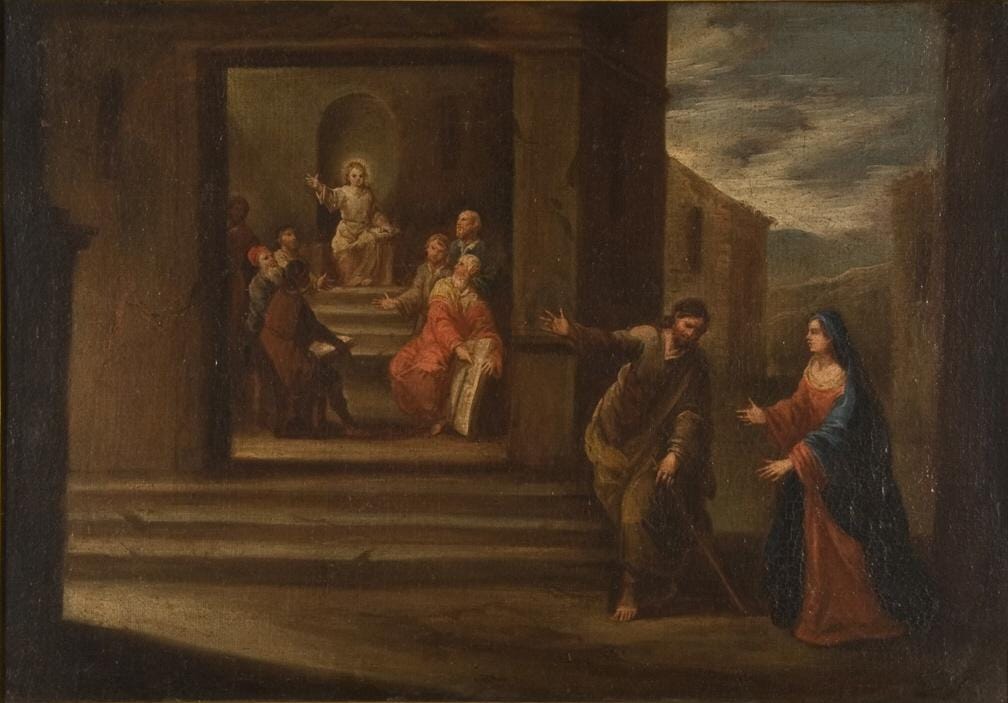
This painting, by Francisco Antolínez, was painted between 1645 and 1700 and depicts the story from the Bible in which Jesus is found in the Temple after three days of searching. Antolínez was a historical and landscape painter. He was born in Seville, and was a nephew of José Antolínez.
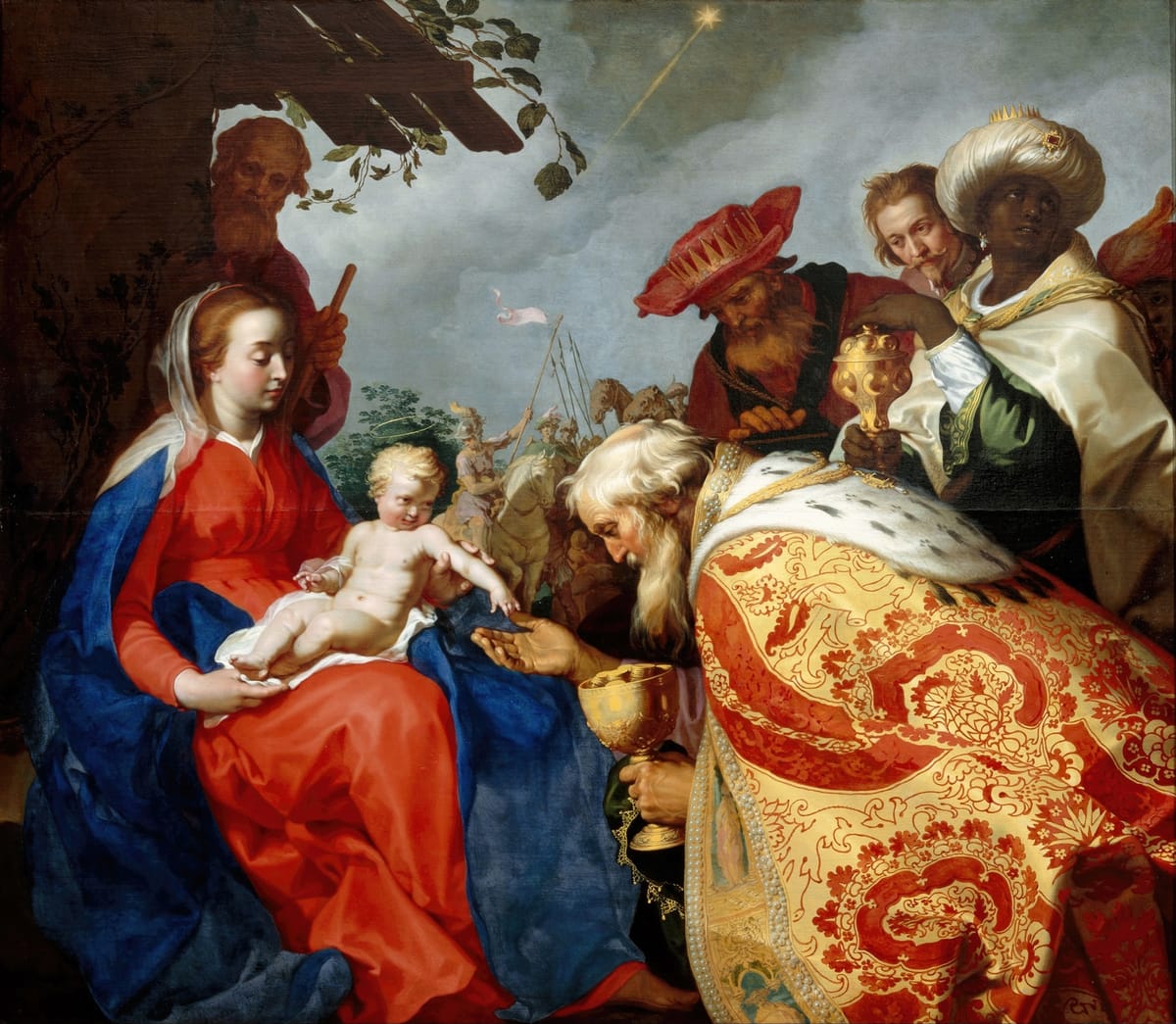
"Adoration of the Magi" from 1624 by Abraham Bloemaert, a Dutch artist from the Baroque period. Bloemaert is noted for his detailed religious and mythological compositions, rich use of color, and dramatic lighting. This work depicts the biblical scene where the three Magi, or Wise Men, visit the...
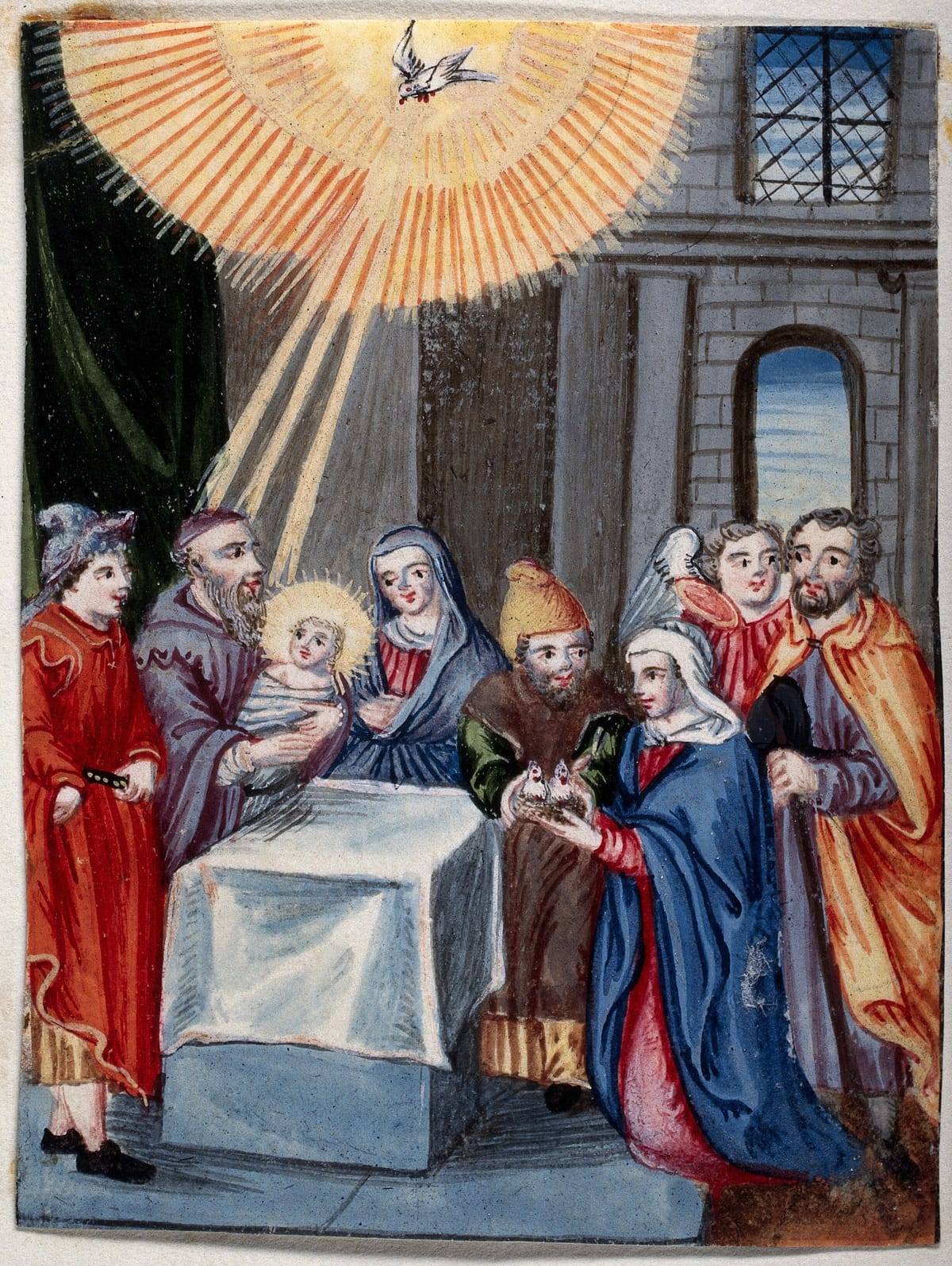
Bible. N.T. Luke 2.25-38. The light of the Holy Spirit, emanating from the form of a dove, shines on Simeon's head. Mary and Joseph present the two turtledoves as a gift to the Temple on the double occasion of Mary's purification and Jesus&...
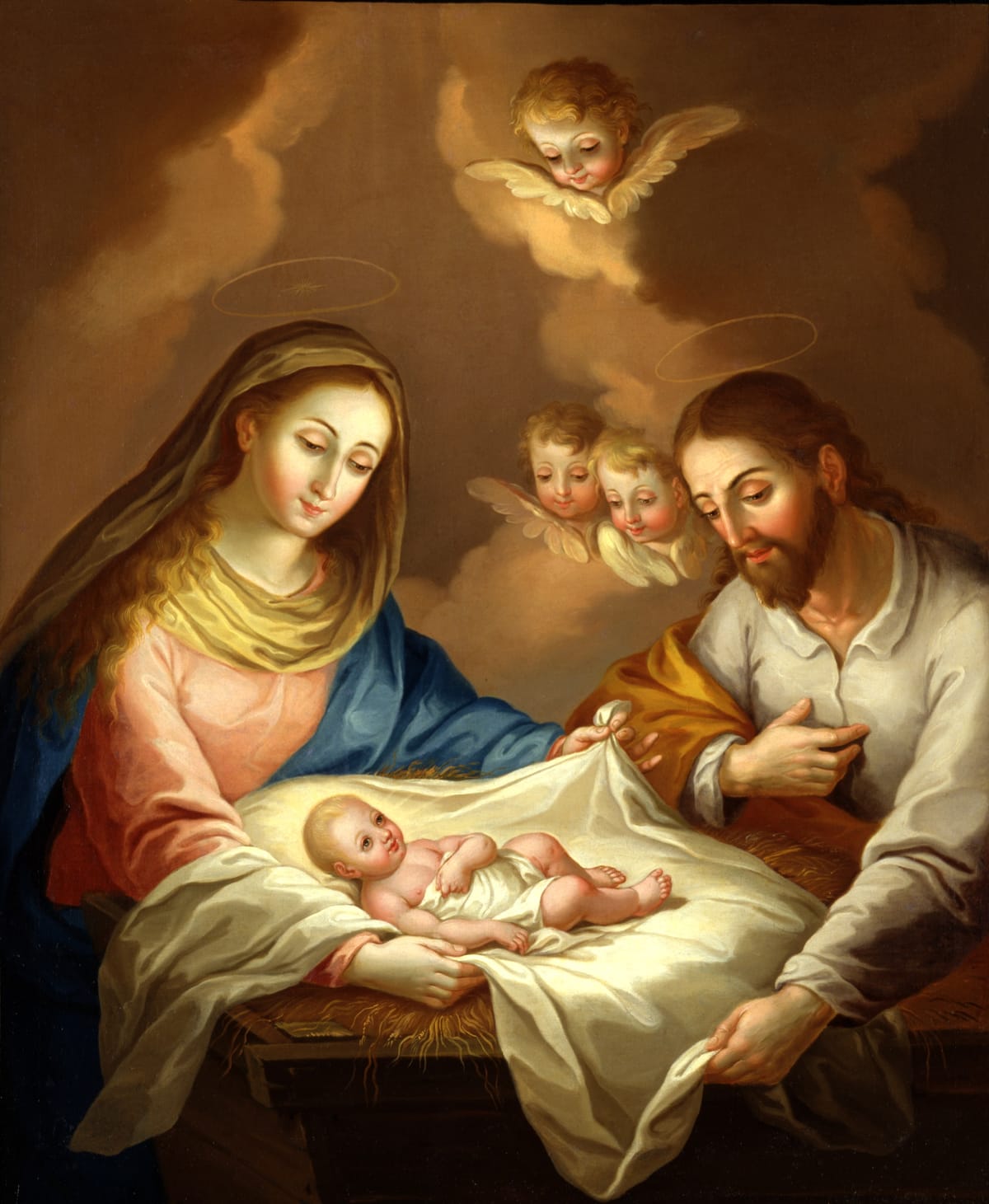
La Natividad (1799) by José Campeche y Jordán is a significant work of art that exemplifies the mastery and artistic vision of the renowned Puerto Rican painter. In this masterpiece, Campeche y Jordán skillfully captures the essence of the nativity scene, a timeless subject in Christian art, with a unique...
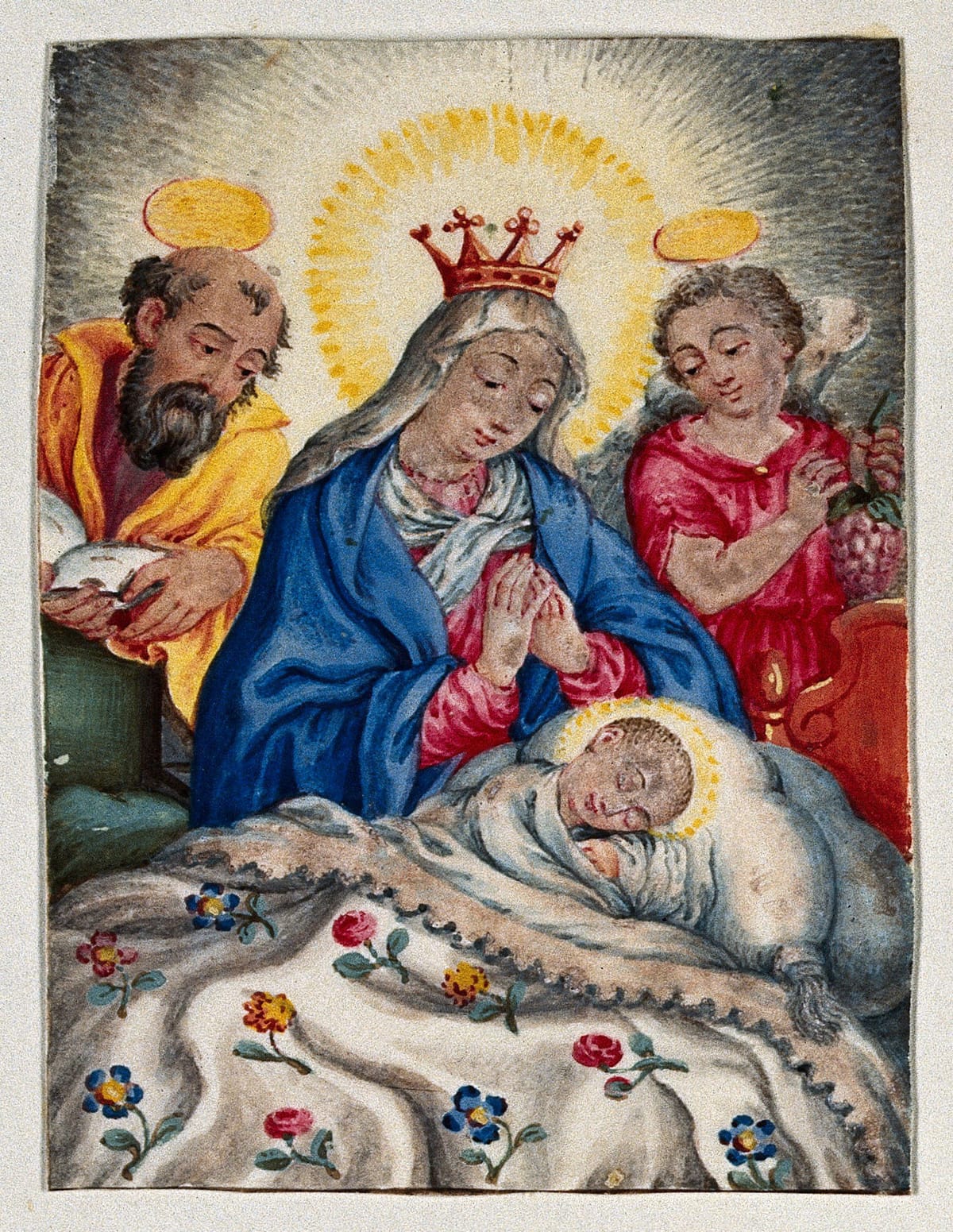
The image in question portrays the Nativity – the birth of Jesus Christ, commonly found in Christian art. The artwork features central figures such as the Virgin Mary and the infant Jesus, with Joseph and an angel. The detailed and colorful depiction, along with traditional iconography like halos and intricate patterns,...
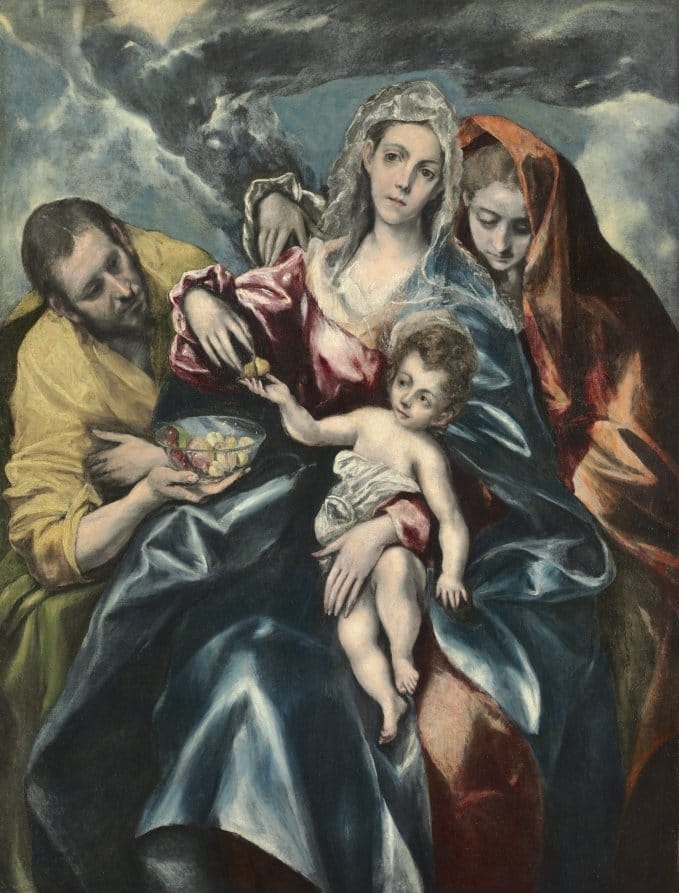
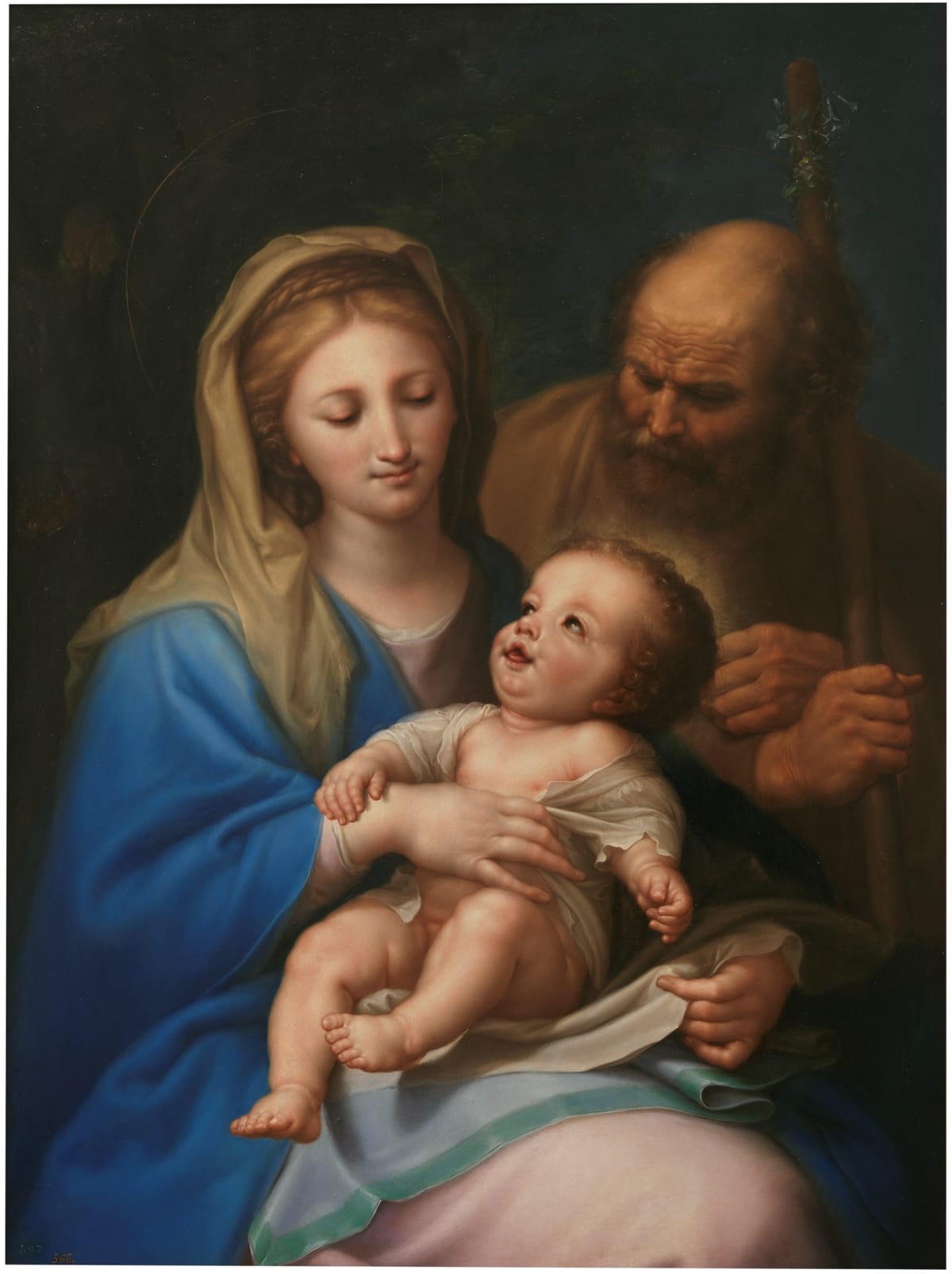
The painting depicts the Virgin Mary with the Christ child in the foreground, while Saint Joseph stands behind them with a flowered staff. It is an example of cabinet painting, small works created by Bayeu alongside his fresco sketches. The painting reflects his embrace of neoclassical principles of moderation and...
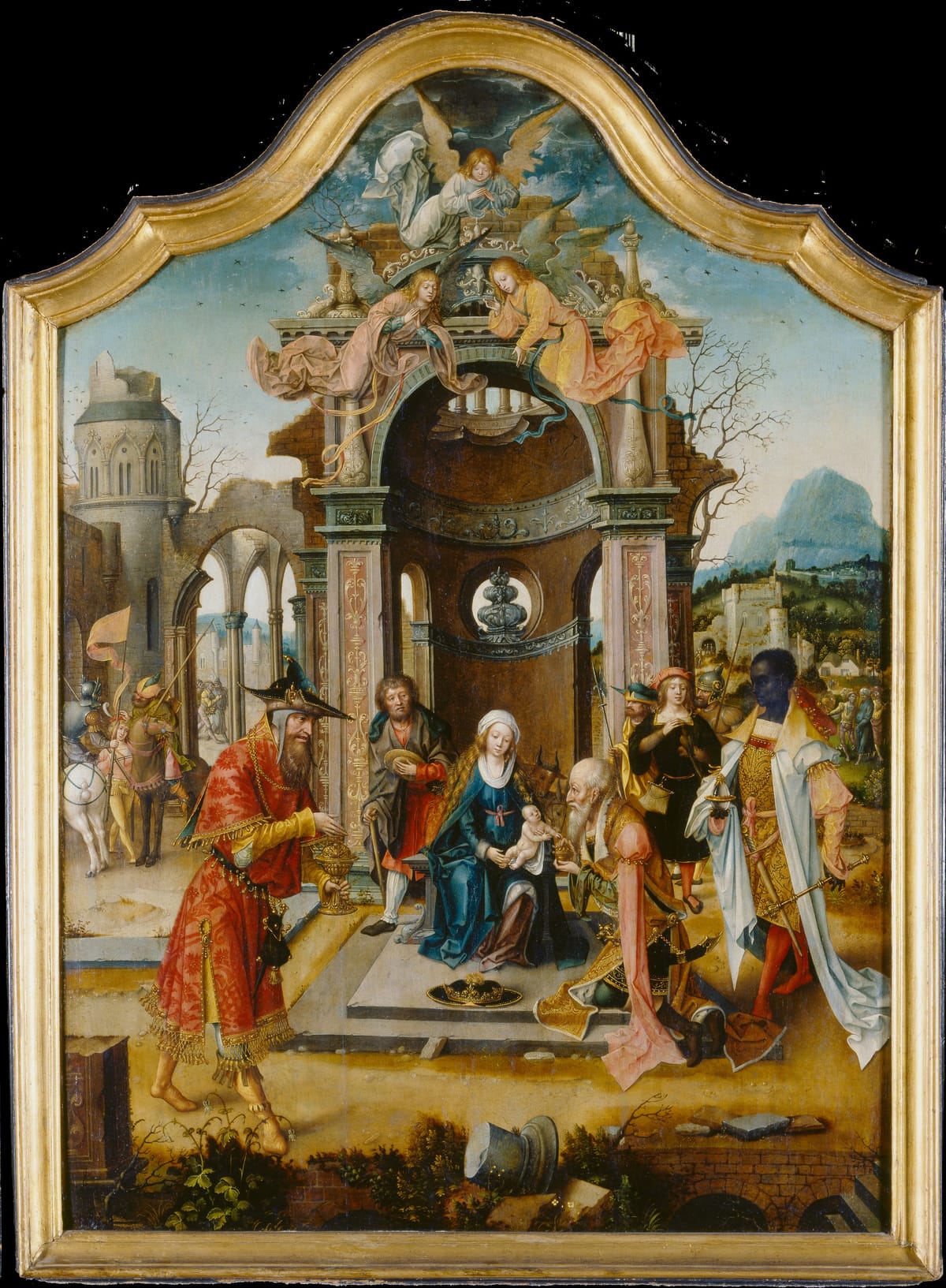
About the Image: In the sixteenth century Antwerp, a major trade metropolis, became one of north-western Europe’s leading art centres. Among its many painters’ workshops were a number of studios that worked closely with one another. For want of a better name, the respective artists are collectively known...
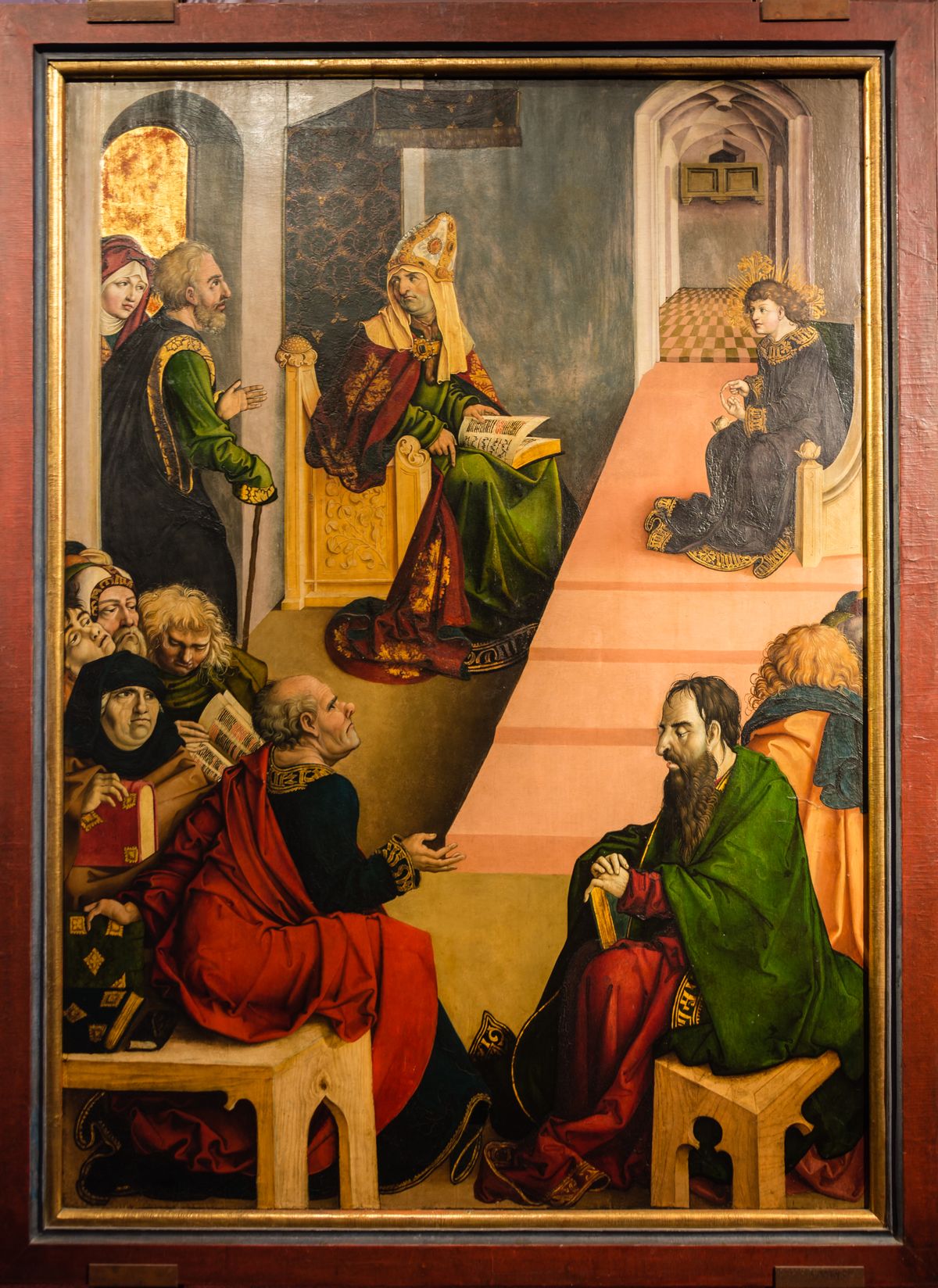
About the Image: "Jesus among the Doctors" by Jörg Breu the Elder, painted in 1502, is a remarkable representation of a significant moment in the New Testament. Let's delve into the artwork's narrative, symbolism, and style. Narrative: The painting is inspired by the biblical...
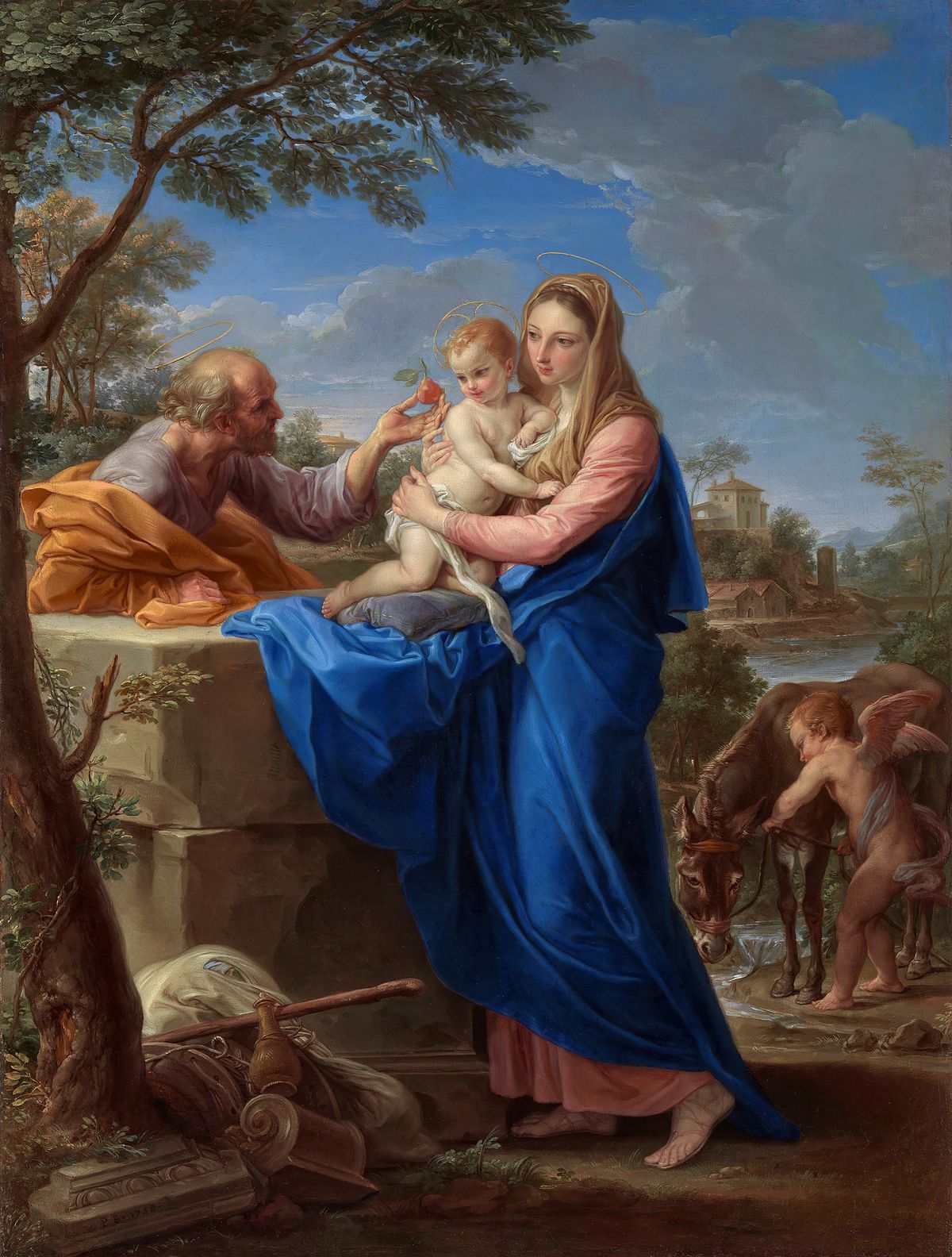
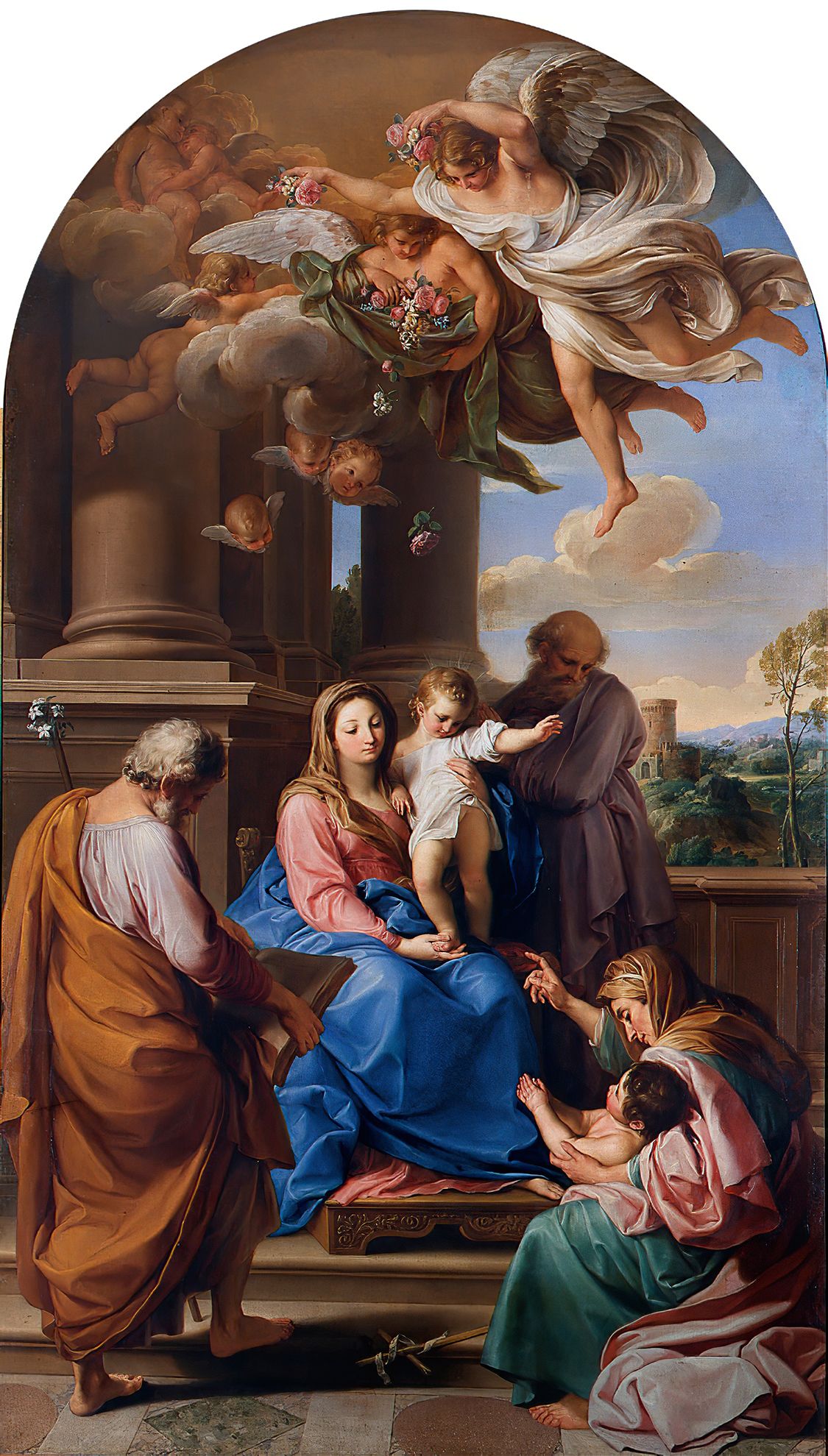
About the Artist: Pompeo Girolamo Batoni was an Italian painter who displayed a solid technical knowledge in his portrait work and in his numerous allegorical and mythological pictures. The high number of foreign visitors travelling throughout Italy and reaching Rome during their "Grand Tour" led the artist to...
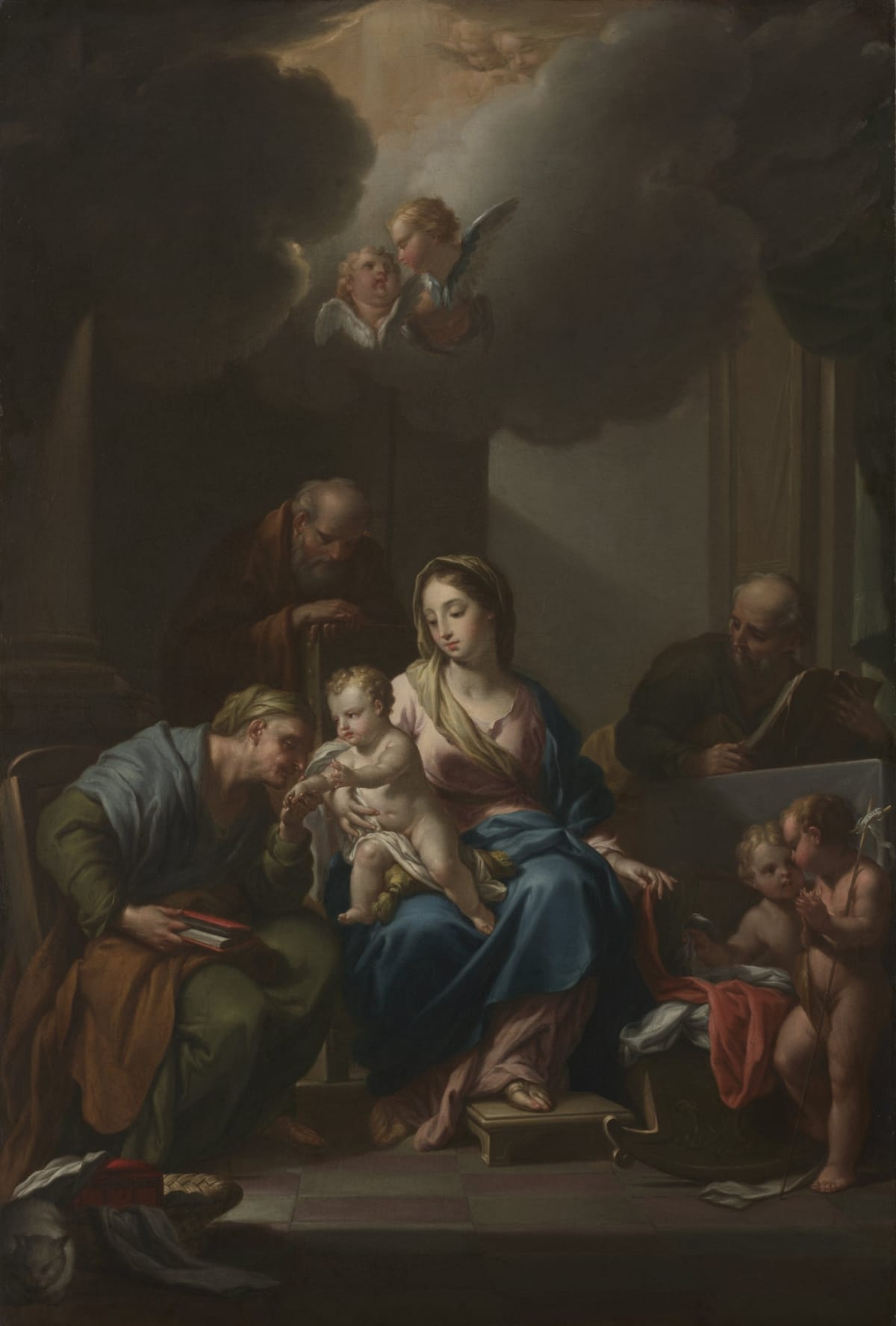
About the Image: The Madonna and Child with Saints Joseph, Zacharias and Elisabeth and the Infant Saint John is a painting by Pompeo Batoni, created between 1738 and 17401. The painting depicts the Madonna holding the infant Jesus, with Saints Joseph, Zacharias, and Elisabeth, and the infant Saint John the...
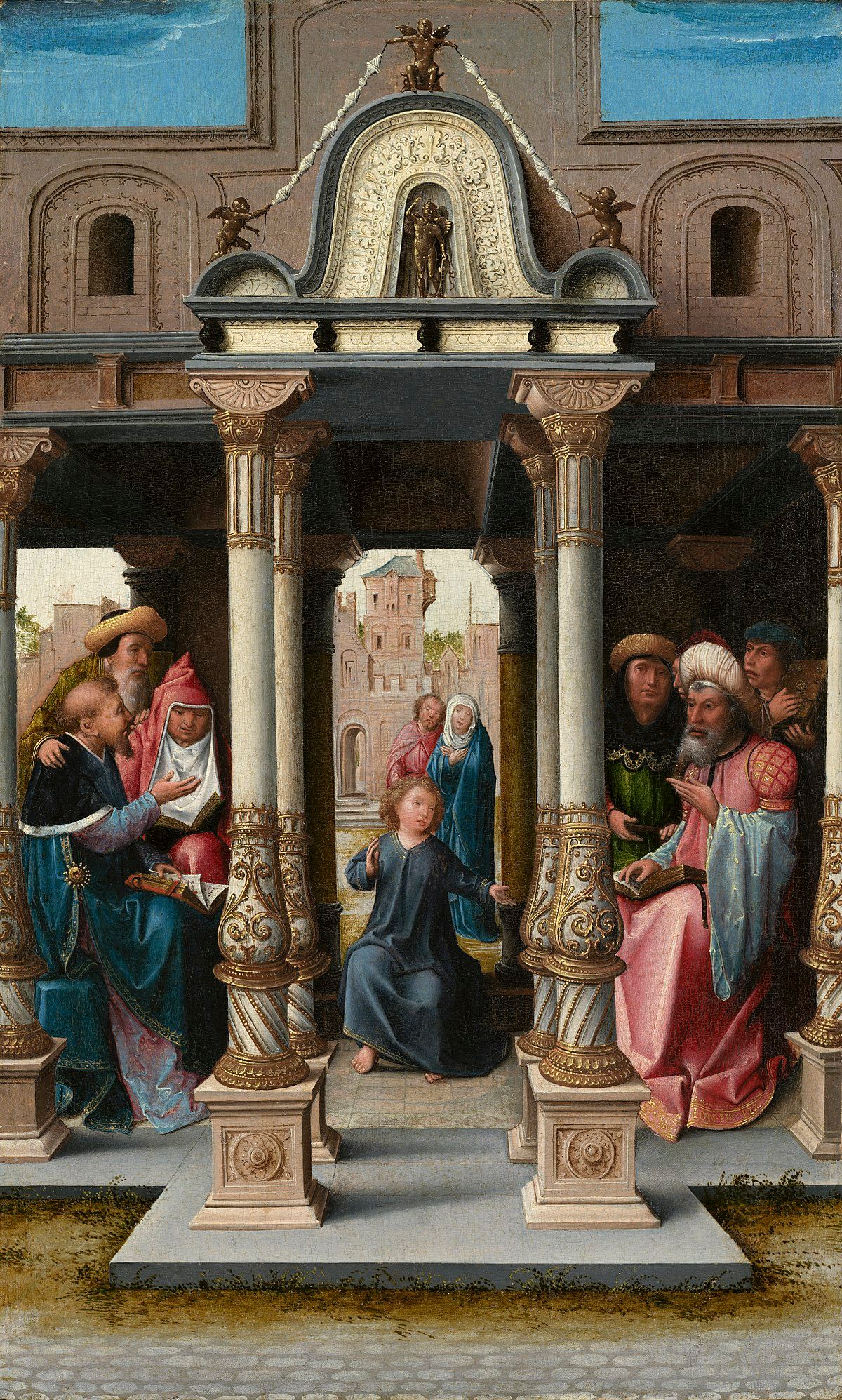
About the Image: In the Bible, there is a story about Jesus as a child, where he is seen debating with the doctors (Luke 2:41-51). This image depicts that scene, using perspective to create a visually stunning piece of art. The temple's four pillars are prominently...
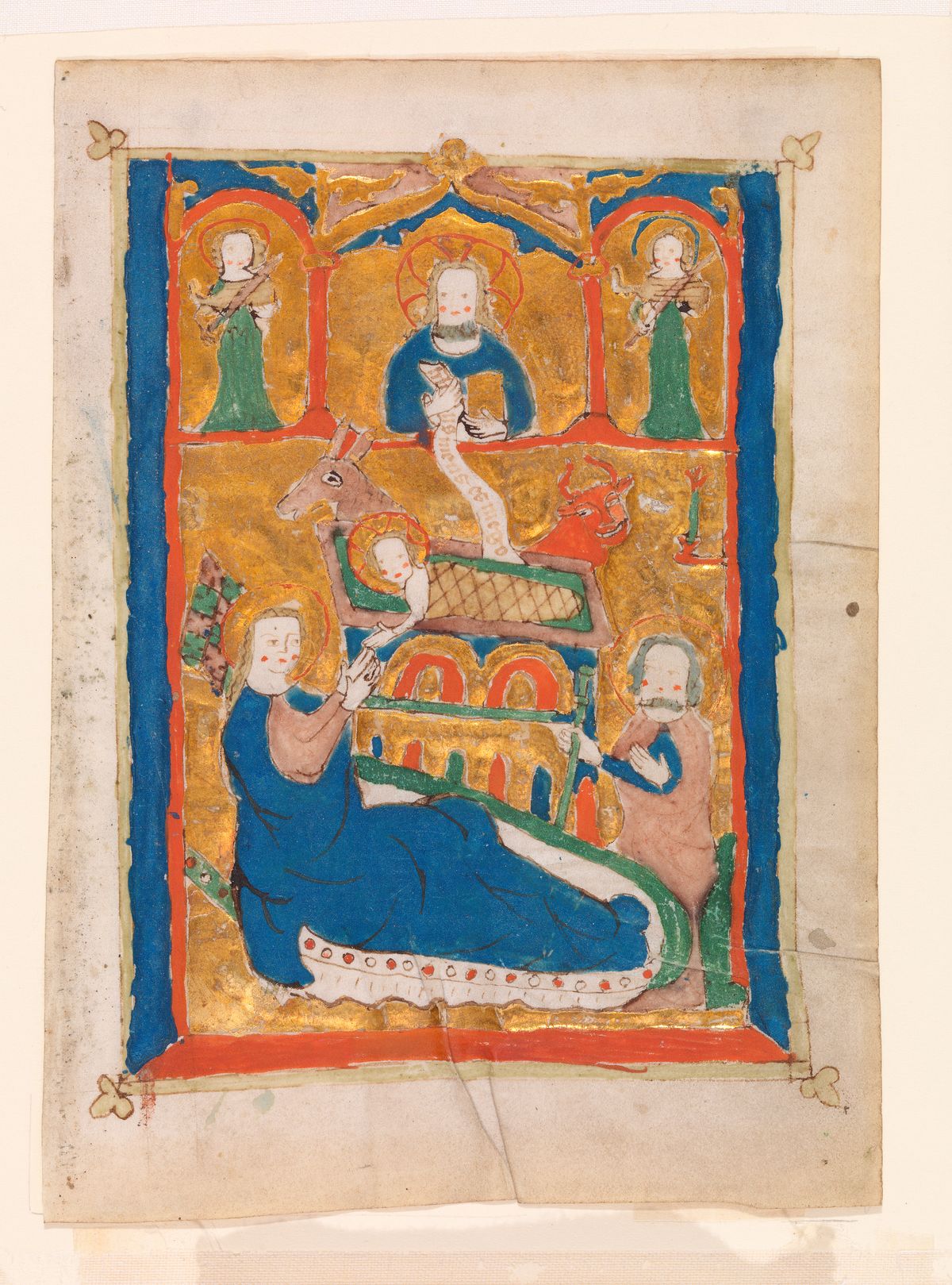
Details: The newborn Christ lies swaddled in a manger and reaches toward his mother, the Virgin Mary, while Joseph sits nearby. The resemblance of Christ's manger to a Gothic tomb poignantly signals his eventual sacrifice. Above, God the Father extends a banderole reading, "You are my son,...
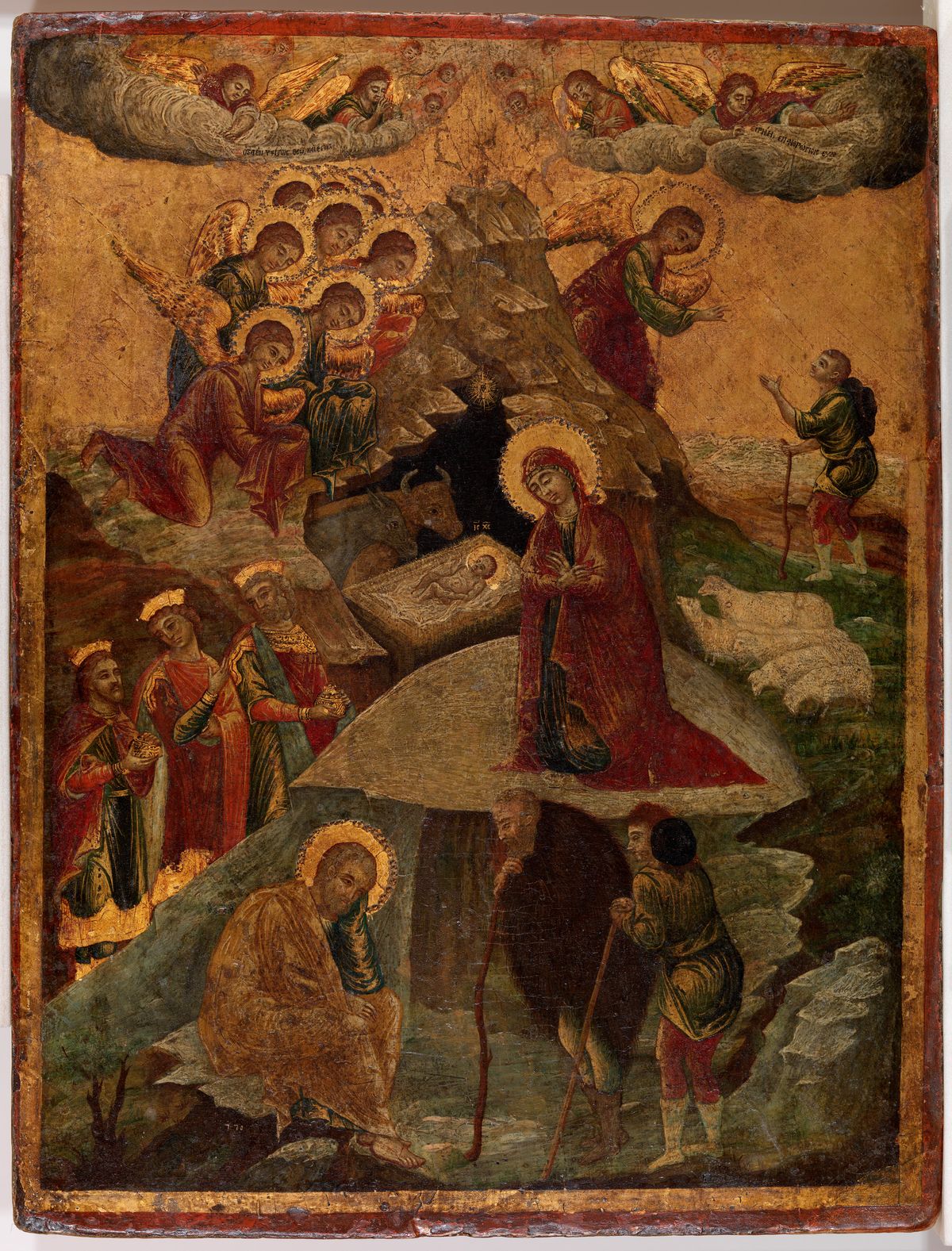
Details: This panel was painted on the Greek island of Crete, once part of the Byzantine Empire, and reflects the Post-Byzantine style that prevailed among the island's artists during the 15th century. The Christ Child lies in a manger while the Virgin Mary kneels in veneration. Joseph...
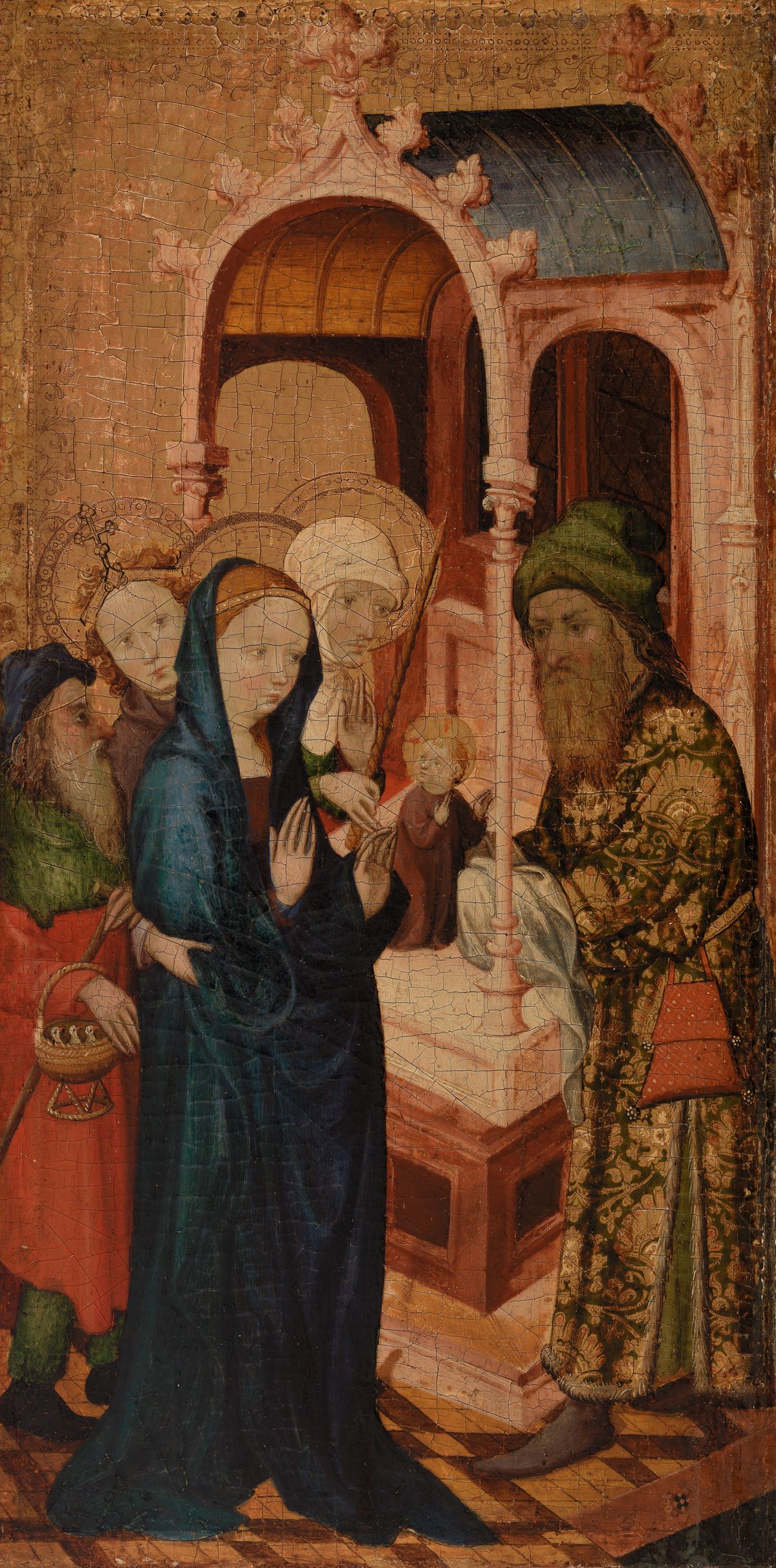
Details: The Virgin Mary and Saint Joseph consecrated the baby Christ to God in the Temple of Jerusalem 40 days after his birth, in accordance with Jewish laws concerning purity and firstborn sons. Joseph brings a sacrifice of doves, the priest Simeon receives Christ on an altar, and the prophetess...
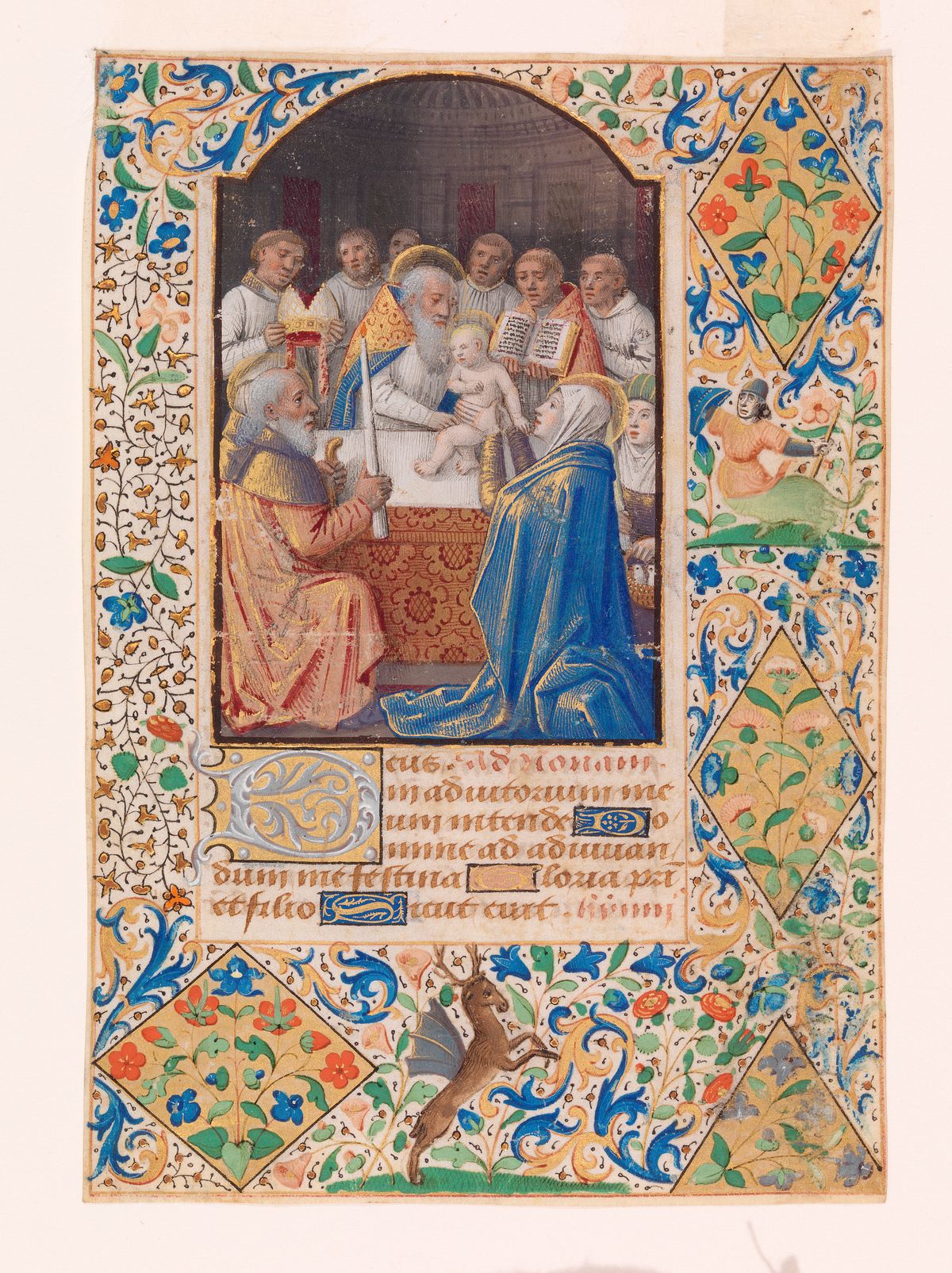
Details: This manuscript leaf comes from a Book of Hours illuminated by the French court painter Jean Bourdichon. It depicts the Presentation of Christ in the Temple of Jerusalem, an event celebrated in the liturgical calendar as Candlemas. Forty days after Jesus's birth, the Virgin Mary kneels before...
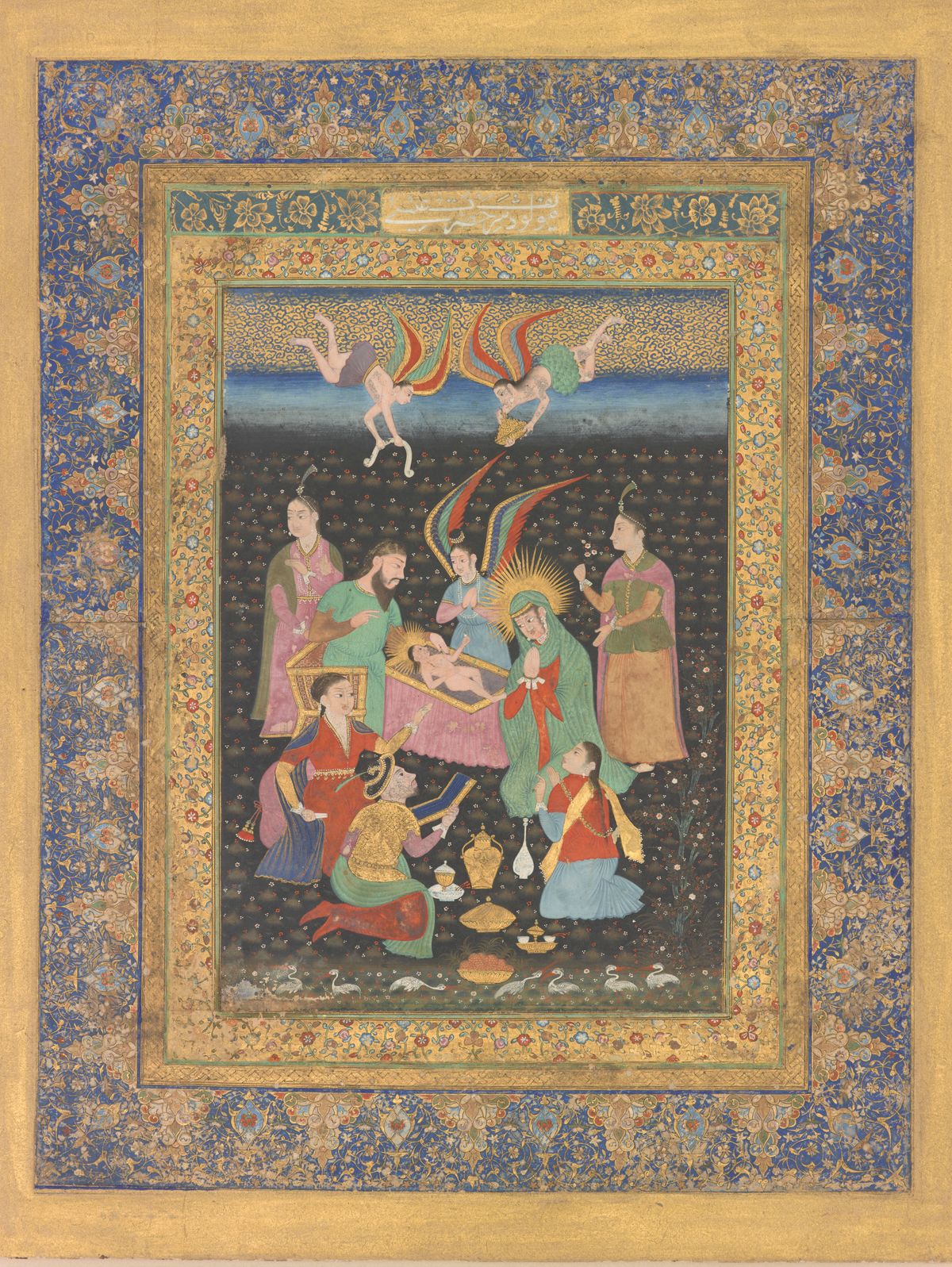
Details: The Deccani School of Painting is an Indian miniature painting style that originated in the Deccan region of Central India during the late 16th century[1]. It was nourished and thrived under several Sultans of the Deccan[2] and had a certain amount of influence from Mughal schools of...
Details: Adoration of the Magi by Fra Angelico is a tondo, or circular painting, dating from the mid-15th century[3]. It is believed to have been a collaboration between Fra Angelico and his colleague Filippo Lippi[1], with contributions from a number of hands[3]. It has sometimes been...
Details: The Adoration of the Shepherds is a scene in which shepherds are near witnesses to the birth of Jesus in Bethlehem[1]. It is often combined with the Adoration of the Magi in Christian art and is sometimes included in a Nativity scene as a peripheral feature[1]. The...
Details: The Adoration of the Shepherds is a scene in which shepherds are near witnesses to the birth of Jesus in Bethlehem[1]. It is described in Luke 2:15[2]. An angel appears to them and tells them not to be afraid, bringing news of great joy[3]. It...
Details: The Flight Into Egypt by Domenico Piola is an artwork created by the Genoese painter of the Baroque period, Domenico Piola[1]. It is a pen, ink and watercolor over chalk painting[2] that measures 29 x 41.6 cm[2]. The painting depicts the biblical story of the...
Details: The Adoration of the Magi (c. 1633) by Peter Paul Rubens is an oil painting on canvas measuring 4.2 m × 3.2 m (13 ft 9 in × 10 ft 6 in)[2]. It was painted as an altarpiece for a convent in Louvain, Belgium[2], and is now...
Details: The Adoration of the Magi (c. 1624) is an oil on canvas painting by Peter Paul Rubens, measuring 218 cm by 280 cm[1]. It was commissioned by Matthæus Yrsselius, abbot of St. Michael's Abbey, Antwerp, and paid for in two installments of 750 guilders each in...