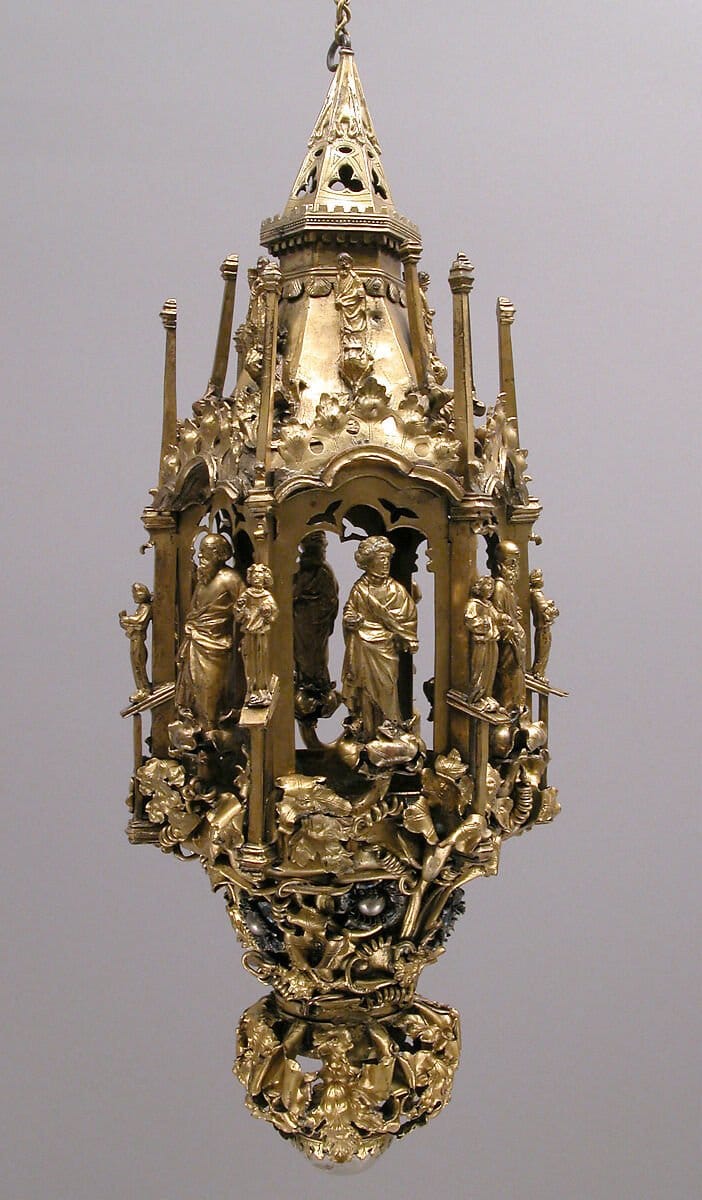
Lamp or Censer (14th century) - Public Domain Catholic Stock Photo
This spectacular example of goldsmith's work has been attributed to Giovannino de Grassi, an artist active in northern Italy.

This site's editor-in-chief is a Catholic husband, father, and author. He loves sharing the Catholic faith through art and graphic design. Check out his prayer books and coloring books on Amazon.com
This spectacular example of goldsmith's work has been attributed to Giovannino de Grassi, an artist active in northern Italy.
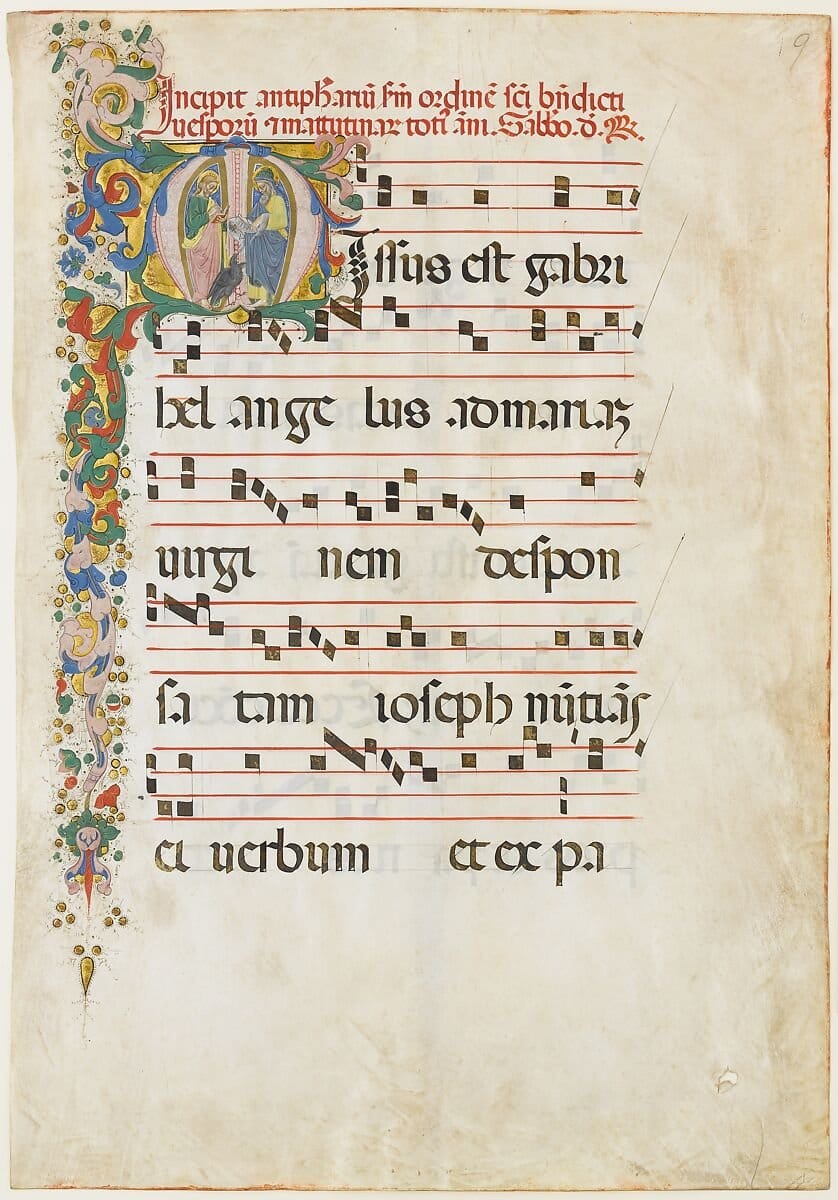
Italian antiphonary leaf with Saint John the Evangelist and Saint John the Baptist in an historiated initial M, in tempera, ink and gold on parchment. The leaf measures about 56.7 x 39.6 cm.
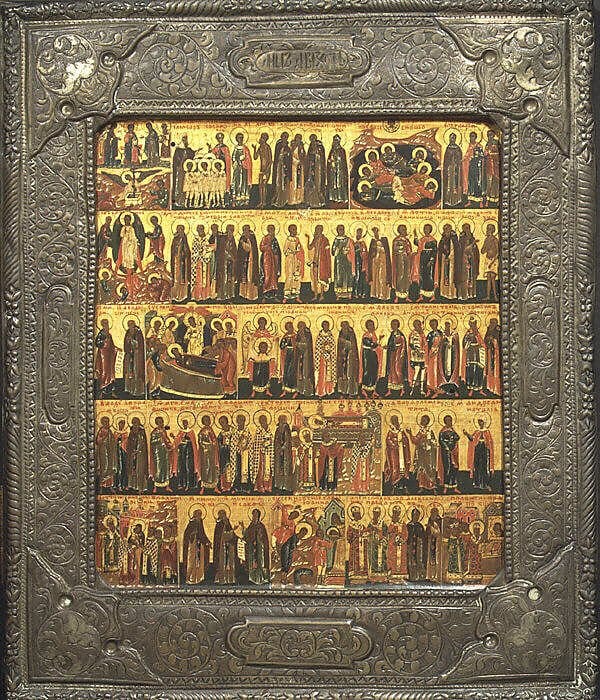
Russian icon panels of a calendar of saints and festivals, painted in tempera on wood with a gold ground. Each panel measures about 31.4 x 26 cm.
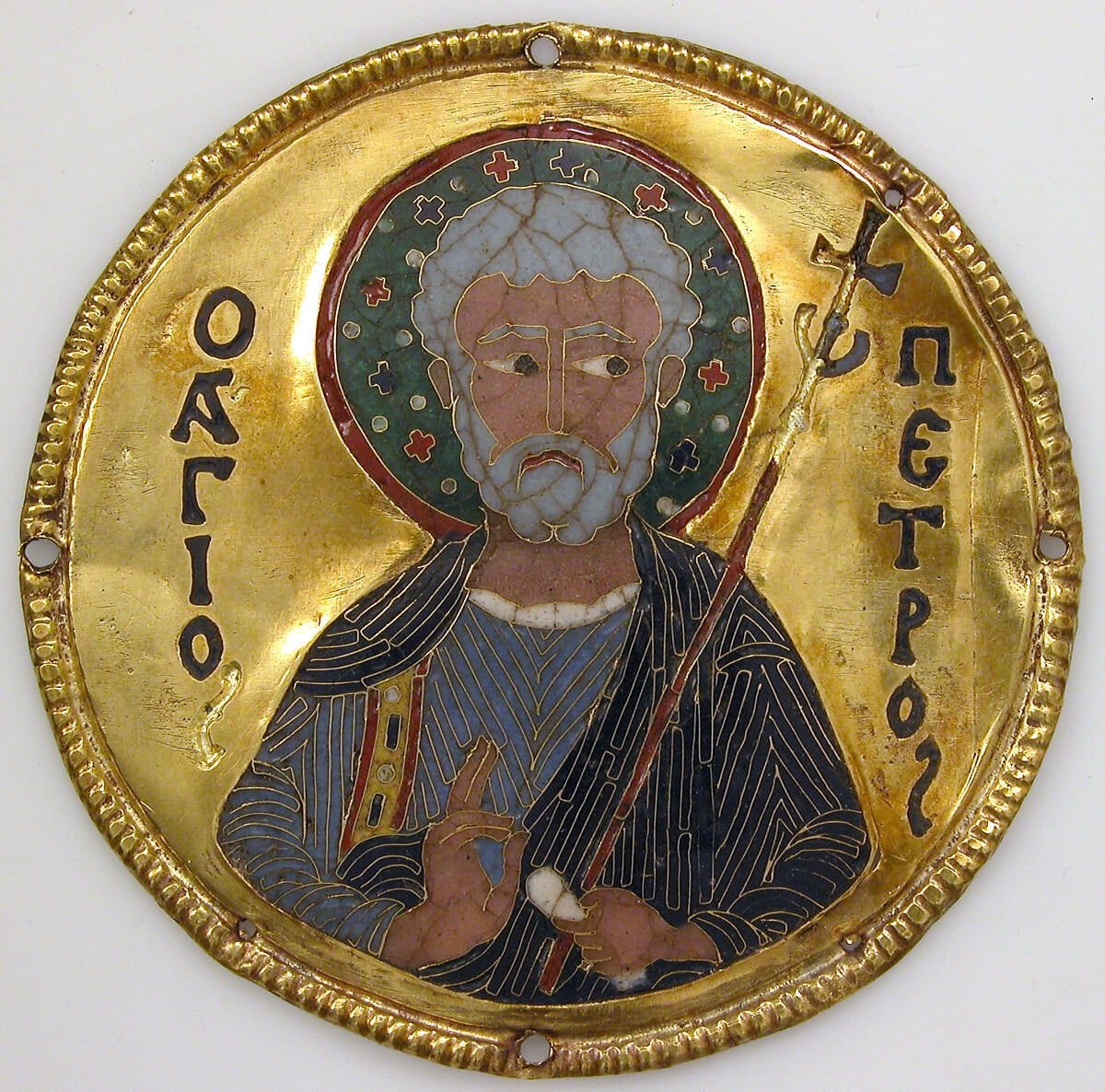
These nine medallions are from a group of twelve that once surrounded an icon of the archangel Gabriel. The medallions may have been sent as a gift from the Byzantine court to the neighboring Christian state of Georgia.
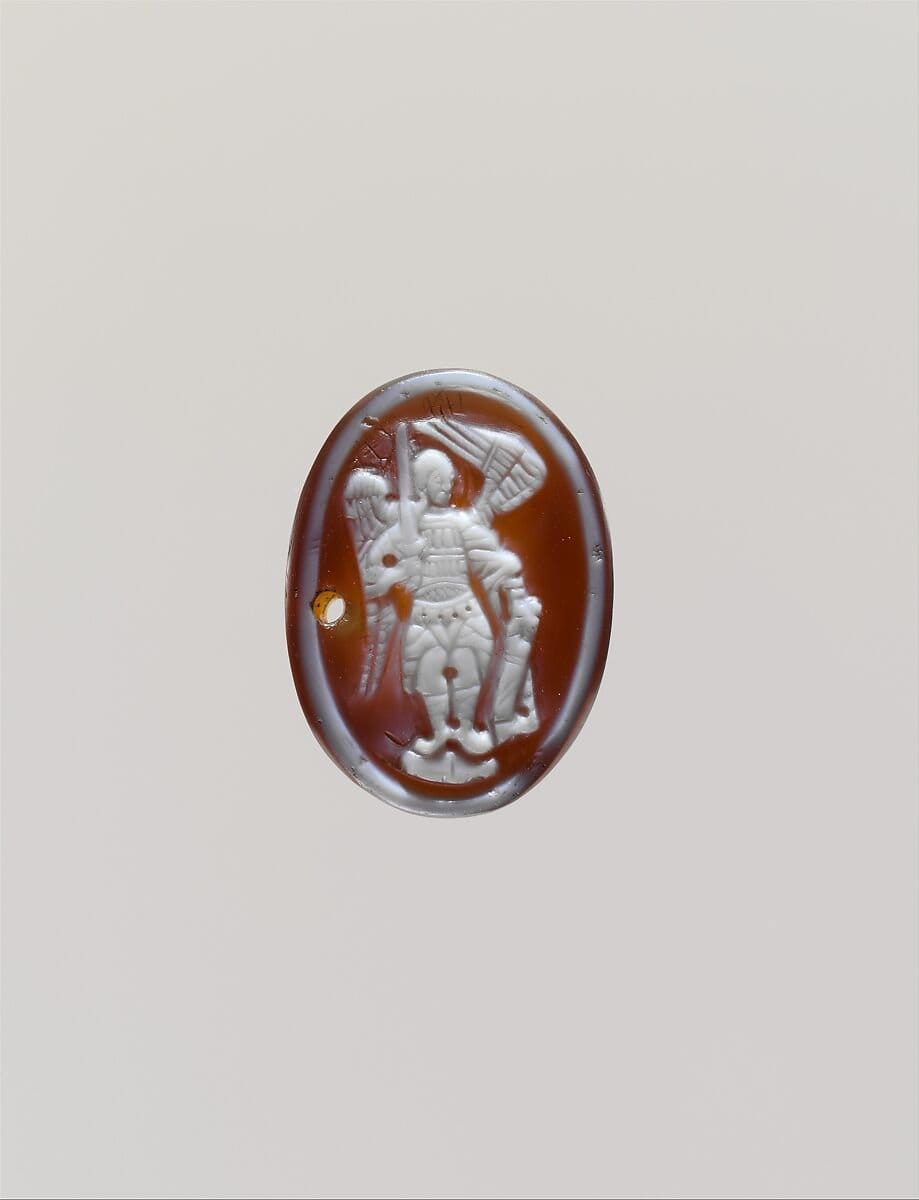
The archangel Michael, commander of the heavenly host, became one of the most popular saints during Byzantium's last centuries. Depictions usually show him in the robes worn by the Byzantine emperor or dressed in armor.
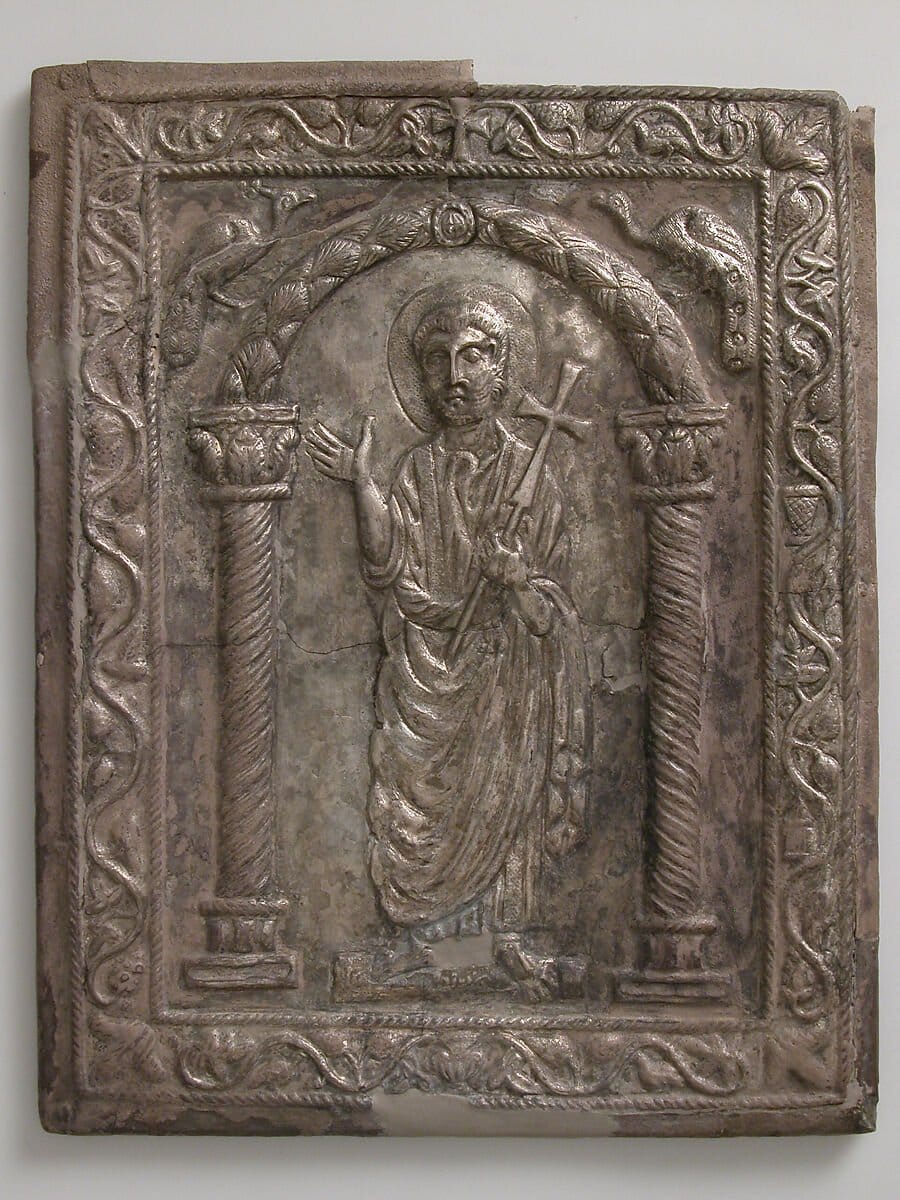
The typical image of Saint Peter—with a round face, short hair, and a beard—was established during the first centuries of the Christian church. Here Peter stands holding a cross and gesturing as if preaching. At his waist are the keys to the kingdom of heaven, given to him by Christ (Matthew 16:19).
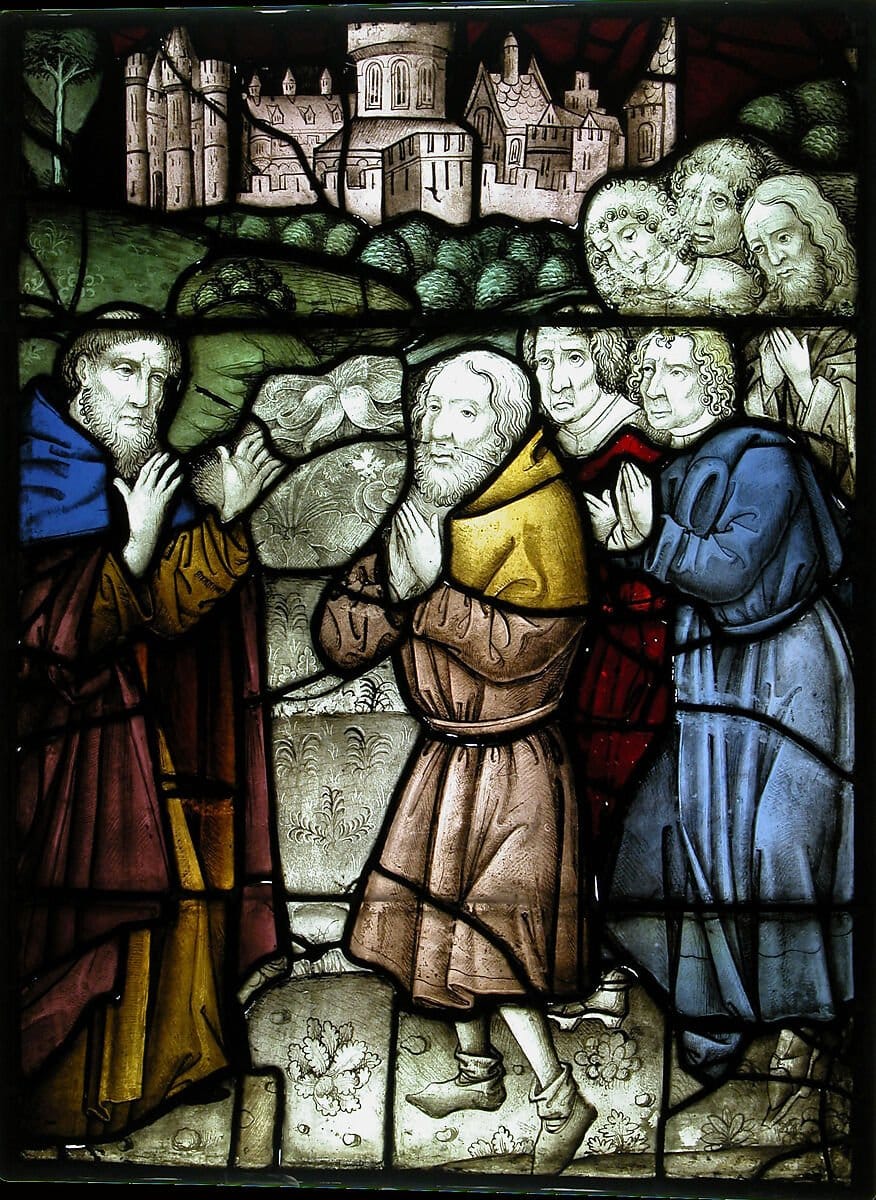
South Netherlandish stained glass panel of a holy man with six suppliants, made of pot metal, white glass, vitreous paint and silver stain. It measures about 77.6 x 57.9 cm.
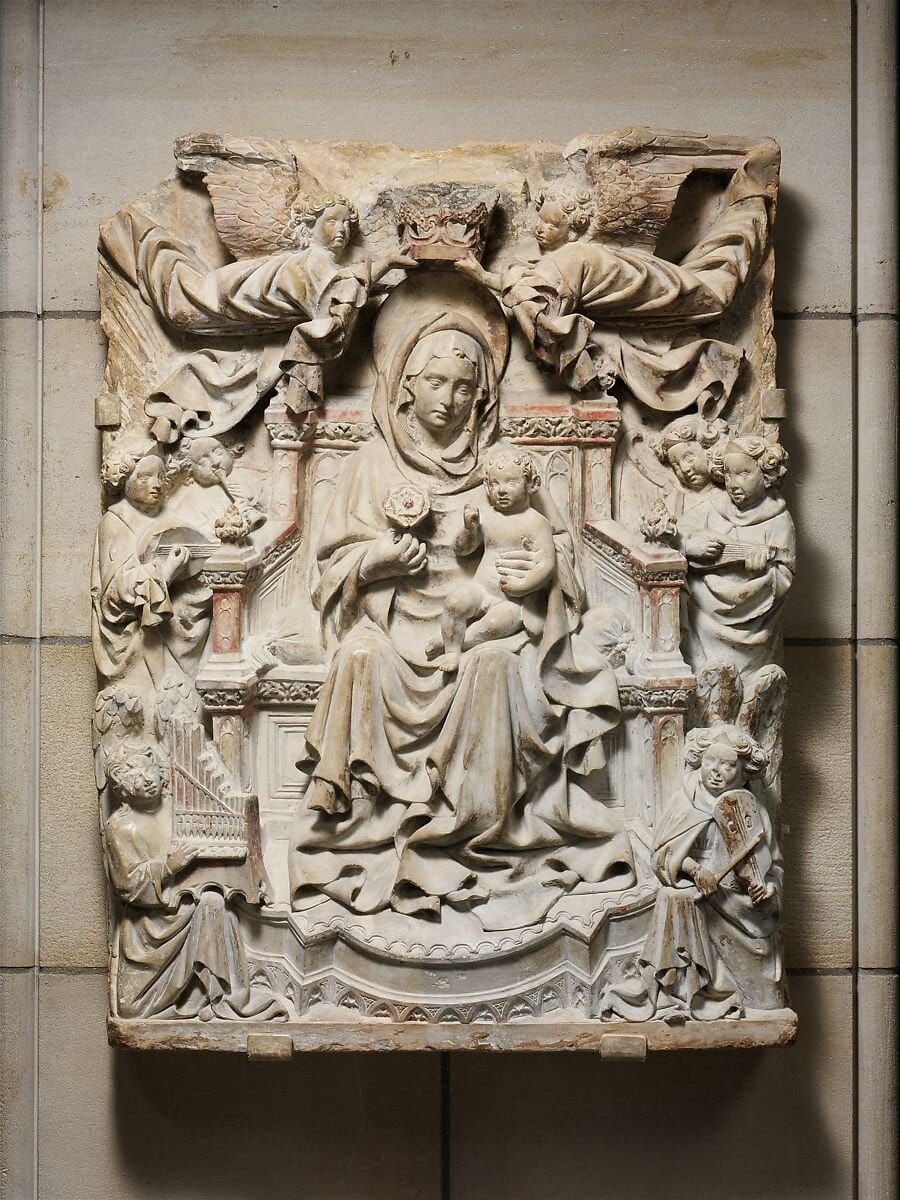
Musical angels herald the heavenly coronation of the Virgin in this elegant and refined carving. Its original context is uncertain, but it was possibly made as an independent devotional image or as part of an altar decoration.
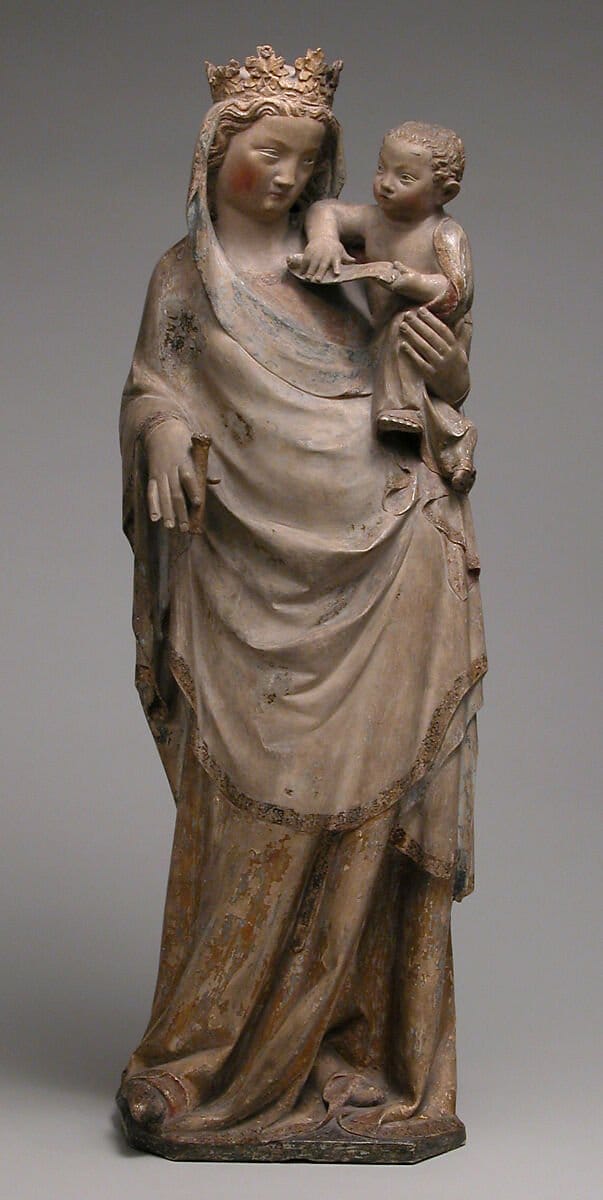
This sculpture and another example of the same subject preserved in the church at Saint Die are among the finest representatives of the regional style found in Lorraine in the early fourteenth century. It is a statue in polychromed and gilded Paris limestone that measures about 87 x 30.2 x 21.9 cm.
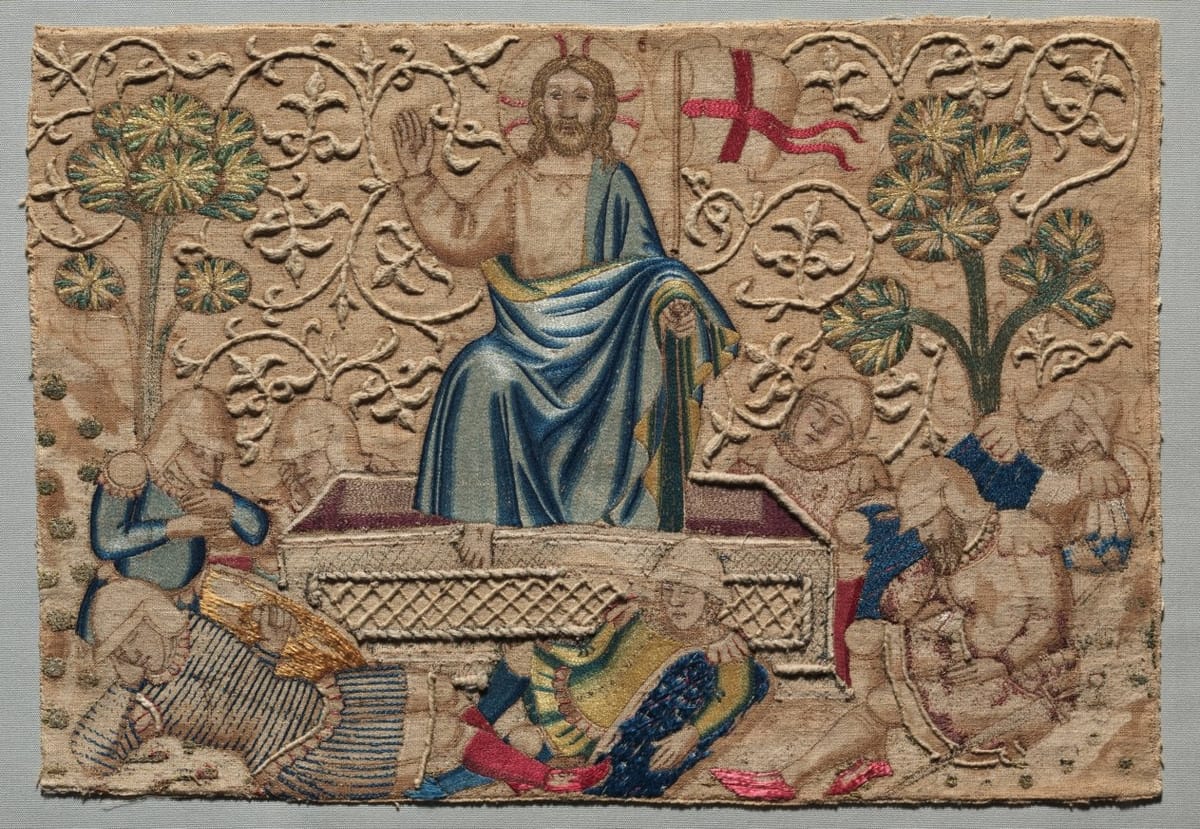
This scene of the Resurrection, along with 11 additional embroideries of the life of Christ, may have formed an altar frontal, a hanging decorating the front of an altar. Originally, expensive gold thread covered the background, but it was removed and probably melted down for its monetary value.
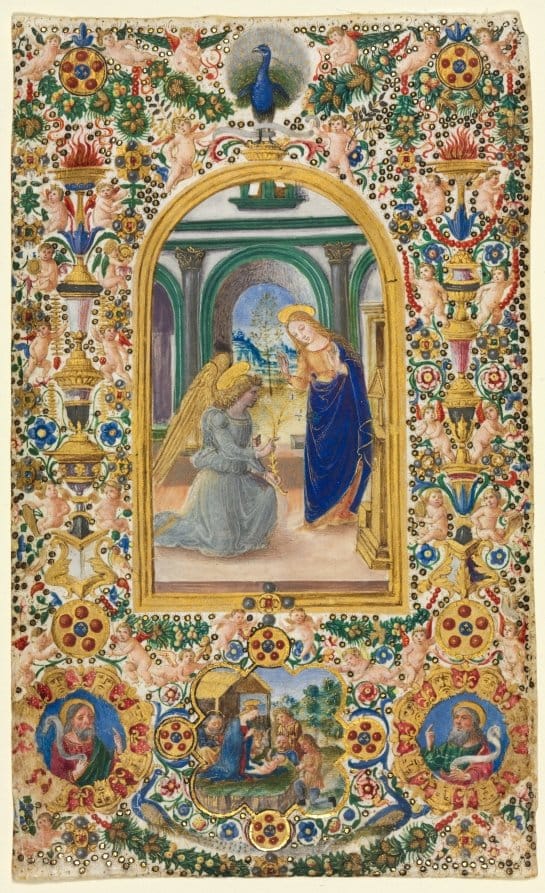
This leaf came from a book of hours, a devotional book popular in the Middle Ages. They contained prayers that a devoted individual would use throughout the day.
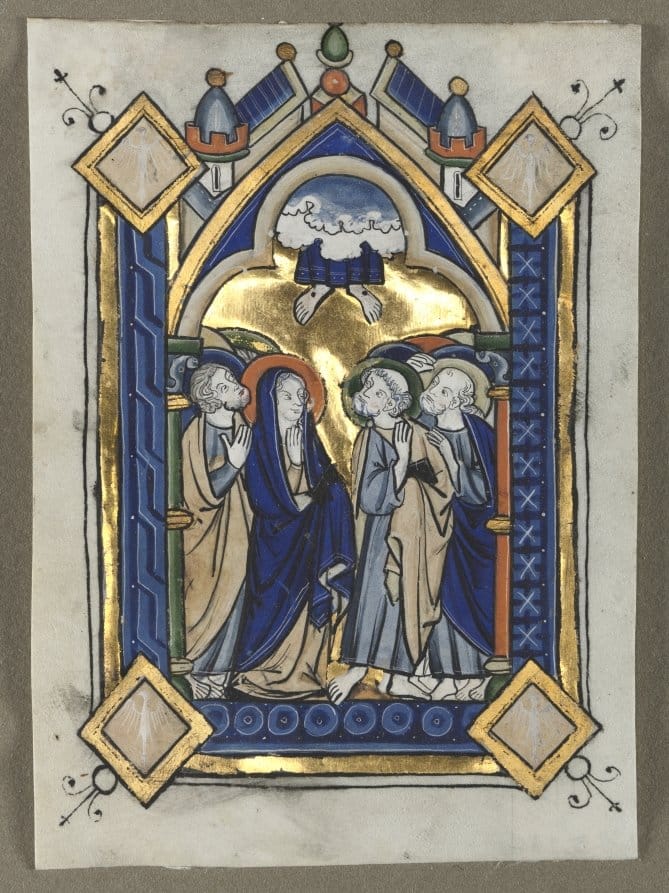
Traditional locations within manuscript psalters were designated by decorated initials or, as is the case here, full-page miniatures. The extraordinary quality of these miniatures suggests they once decorated a deluxe psalter made for a wealthy or aristocratic patron, possibly a cleric.
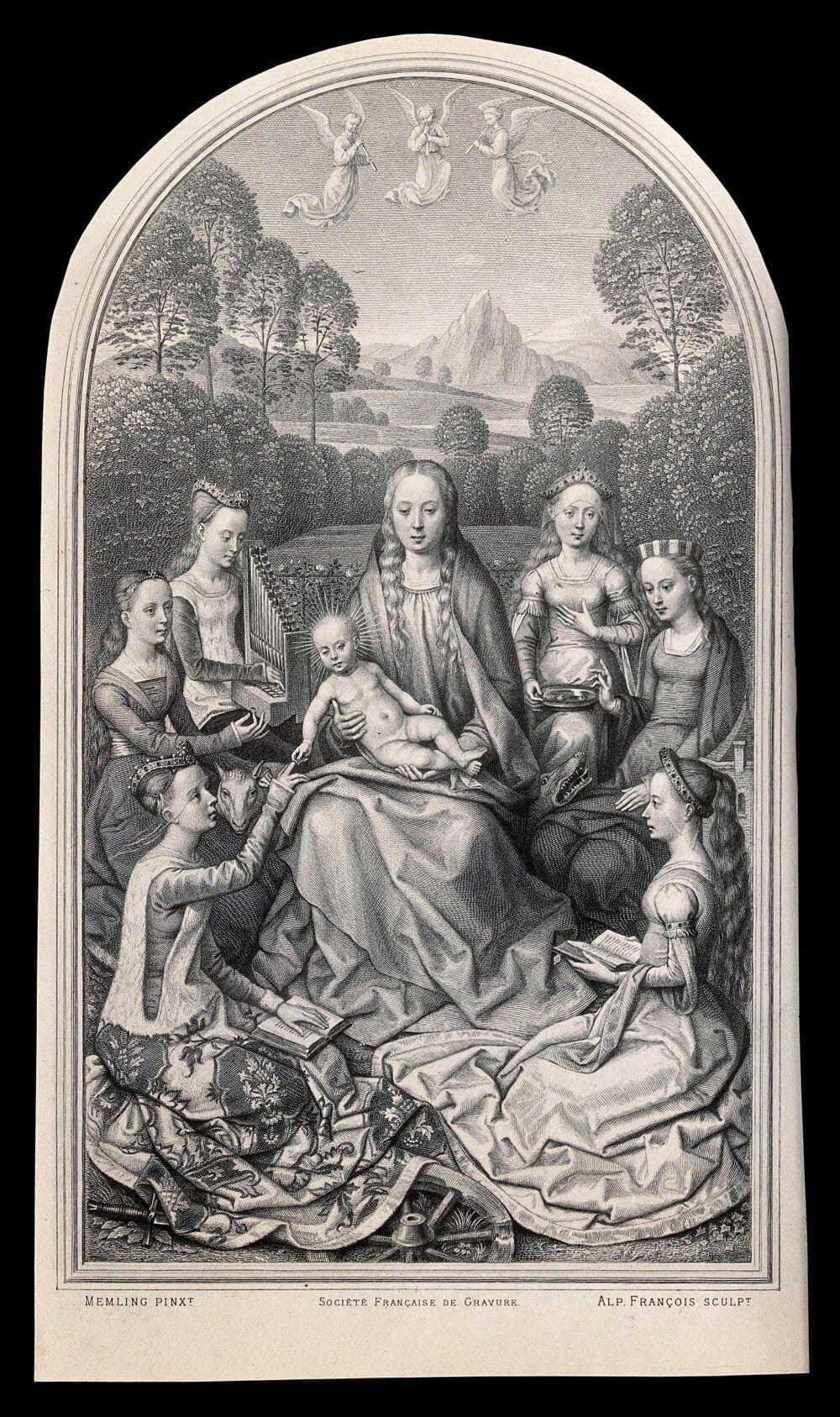
Engraving made in France by Alphonse François after a painting by Hans Memling. The Virgin Mary holds the Christ Child, surrounded by Saints Catherine of Alexandria, Agnes, Cecilia, Lucy, Margaret of Antioch and Barbara.
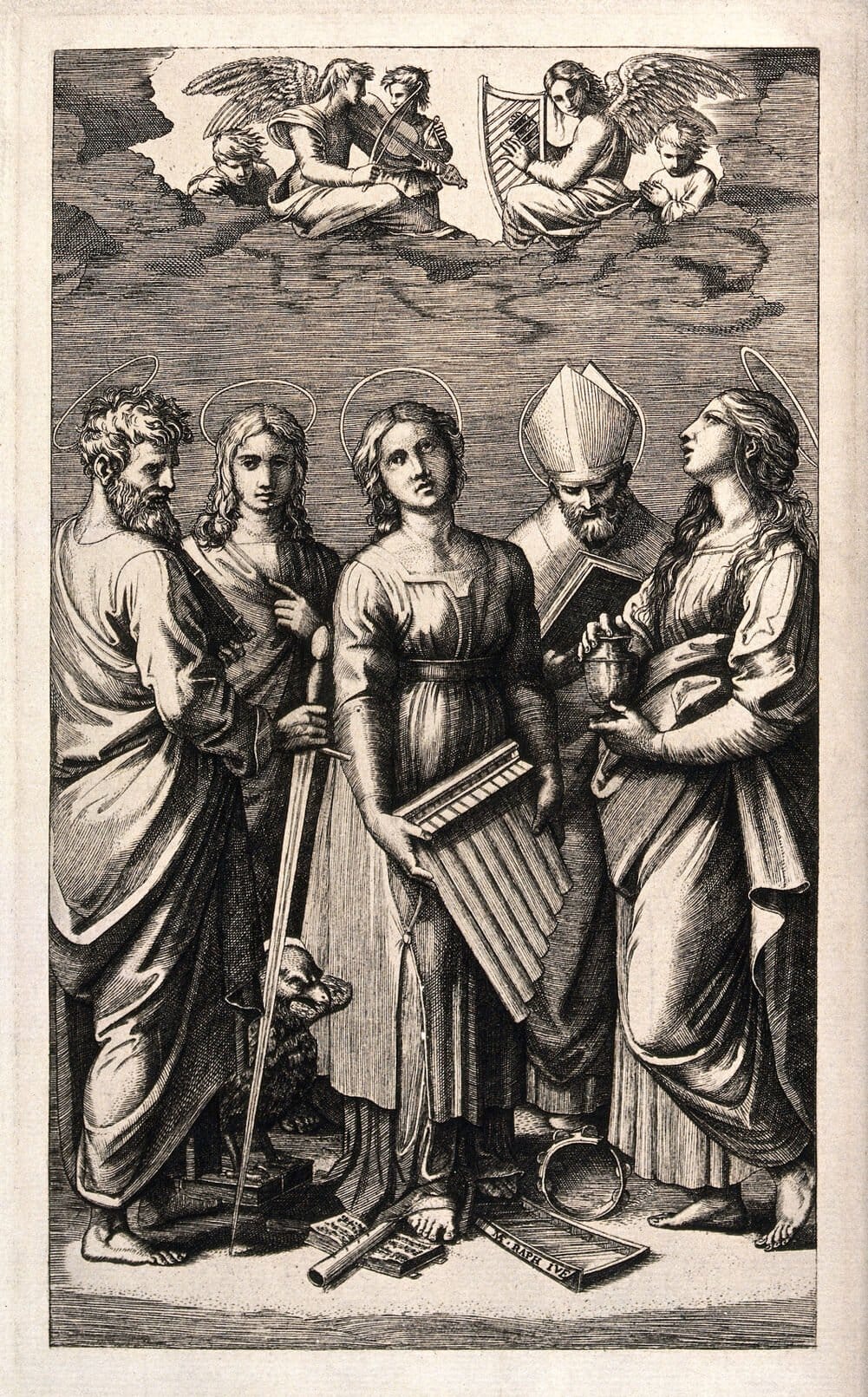
Engraving after Raphael showing Saint Paul the Apostle, Saint John the Evangelist, Saint Cecilia, Saint Augustine of Hippo and Saint Mary Magdalen. A print on paper from the Wellcome Collection.
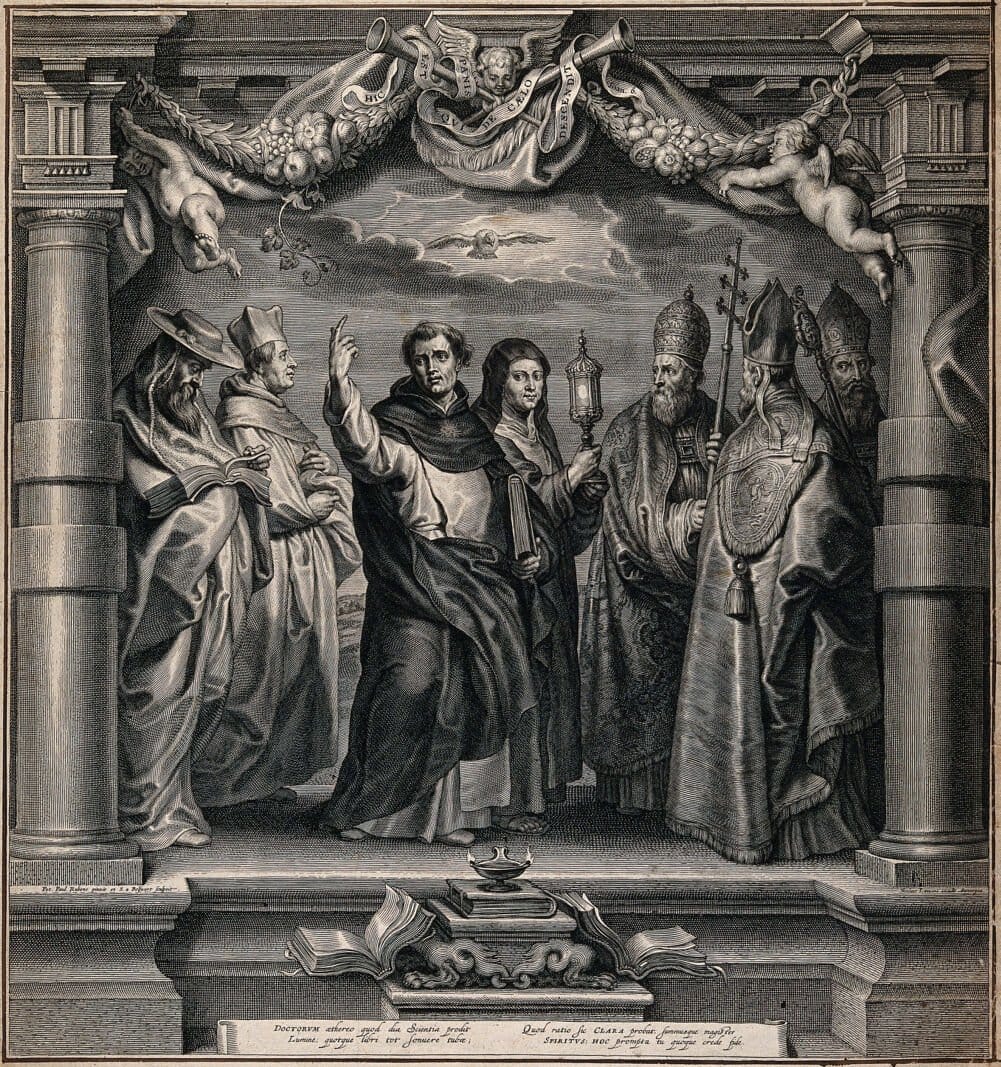
Engraving by Schelte a Bolswert after a composition by Peter Paul Rubens, showing seven Church Fathers and saints: Jerome, Bernard of Clairvaux (?), Dominic, Clare, Gregory the Great, Ambrose and Augustine of Hippo. Printed on paper from the Wellcome Collection.
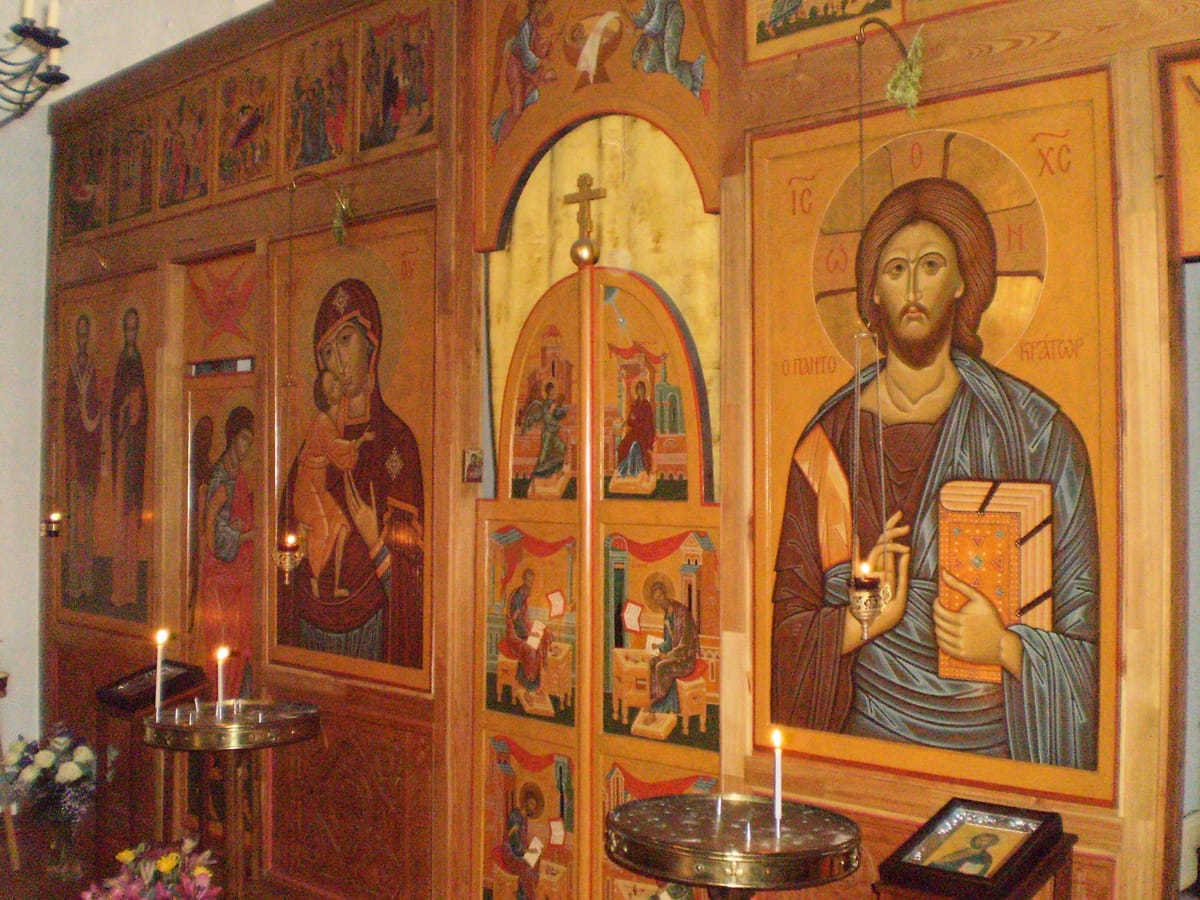
Iconostasis in the Russian Orthodox Church in Deventer, the Netherlands. An iconostasis is the screen of icons that separates the nave from the sanctuary in an Orthodox church.
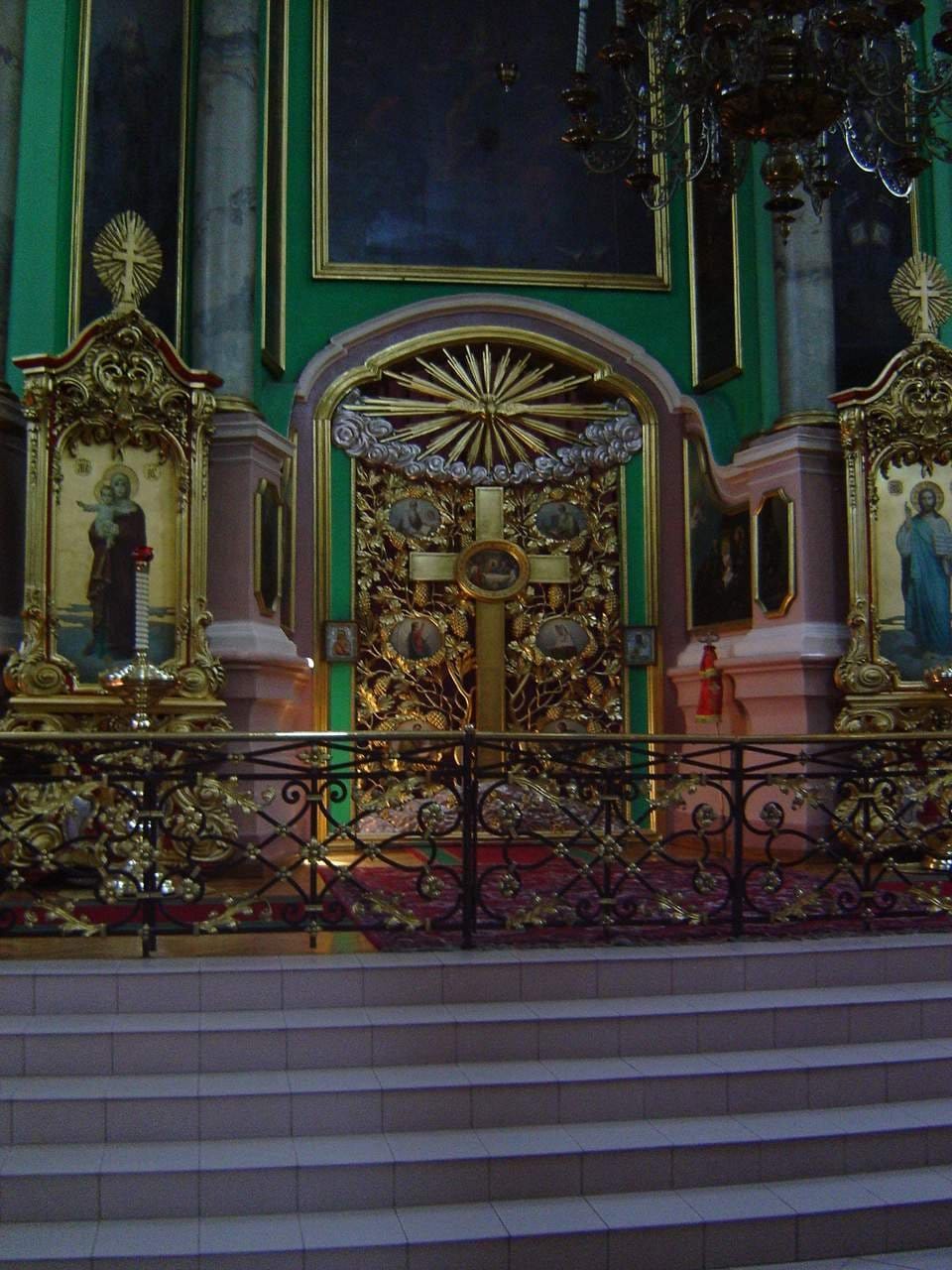
Photograph of the iconostasis in the Orthodox Church of the Holy Spirit in Vilnius, Lithuania. An iconostasis is the screen of icons that separates the nave from the sanctuary in an Orthodox church.
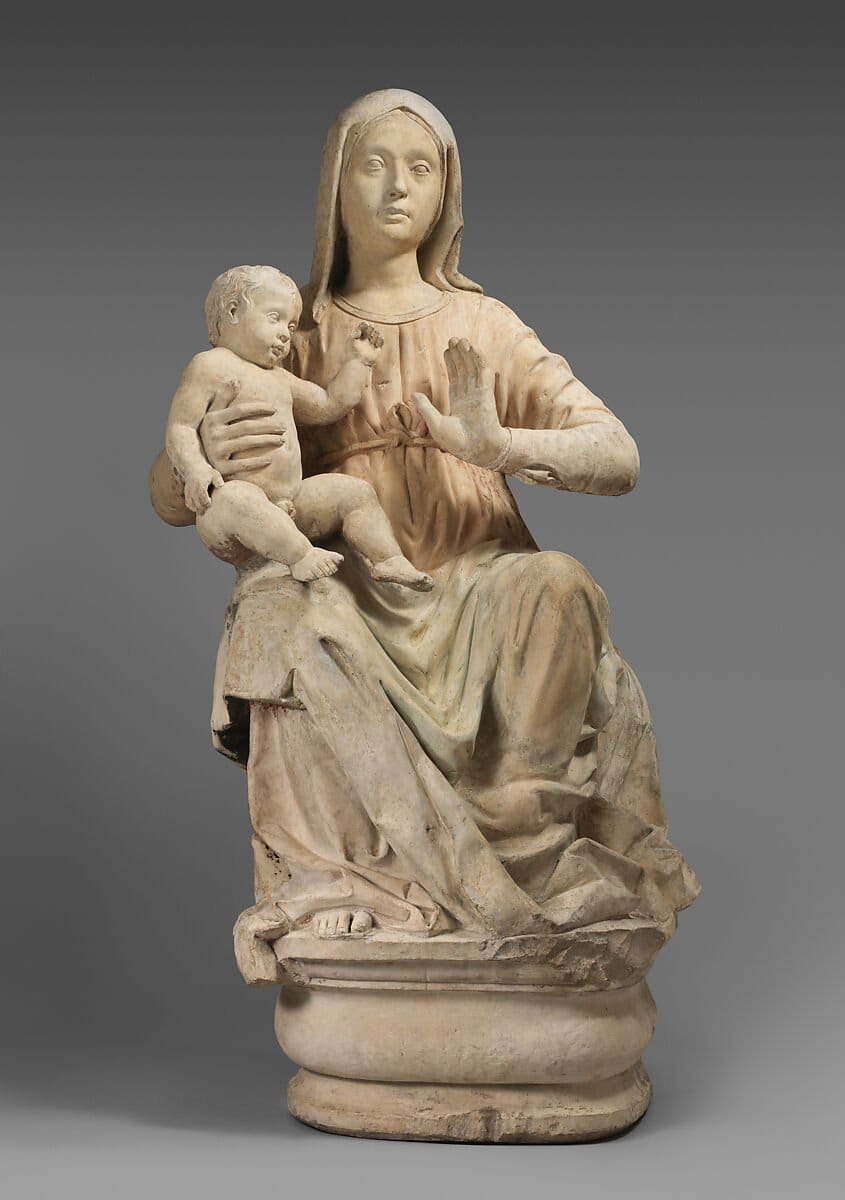
This sculpture reflects the influence of Bon and may have been carved by a follower of his in the third quarter of the century. It is a fine example of Italian Renaissance sculpture that would have held a commanding position in an architectural context.
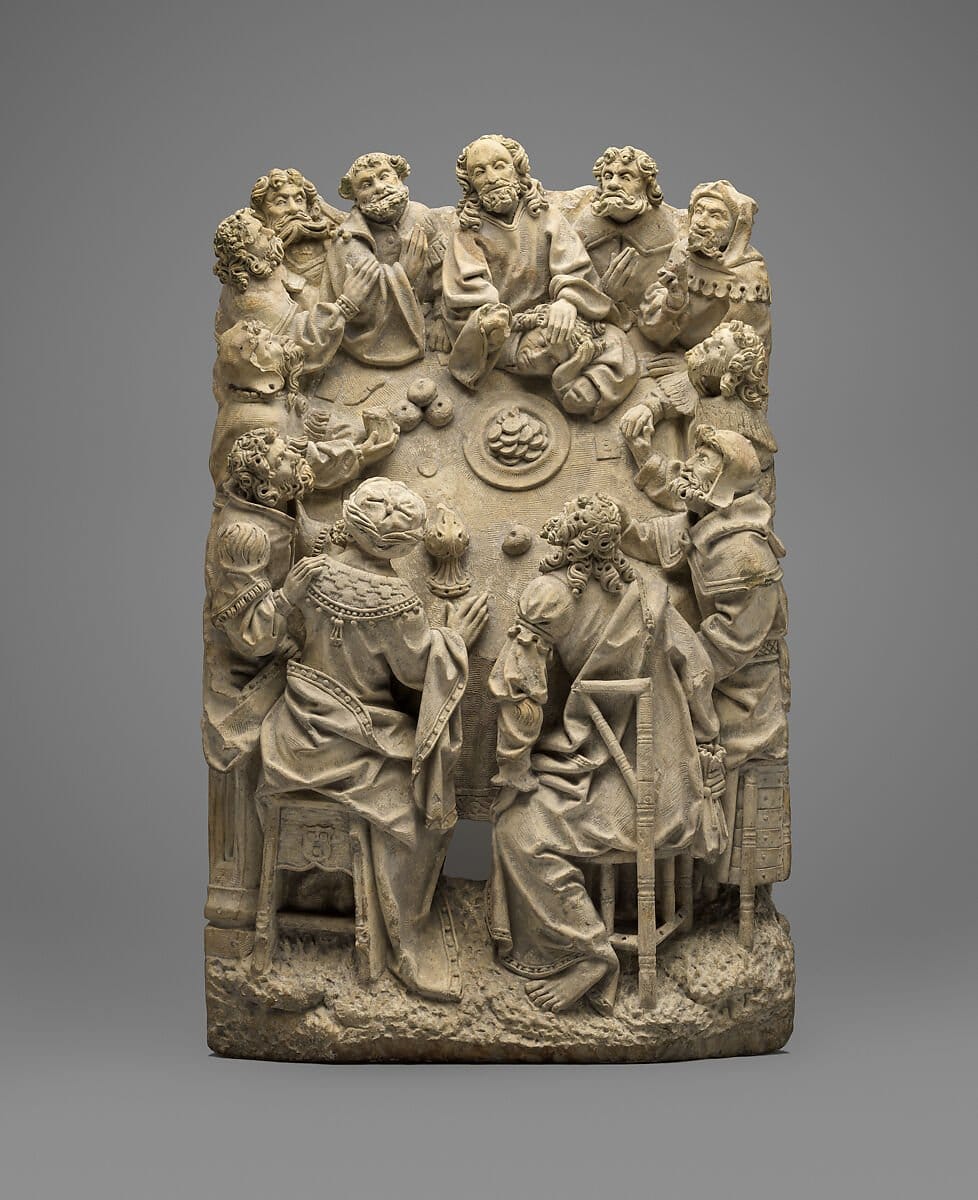
This scene of the Last Supper clearly shows each disciple, including Judas, who is seen at the lower right clutching his bag of money, a reference to his future betrayal.
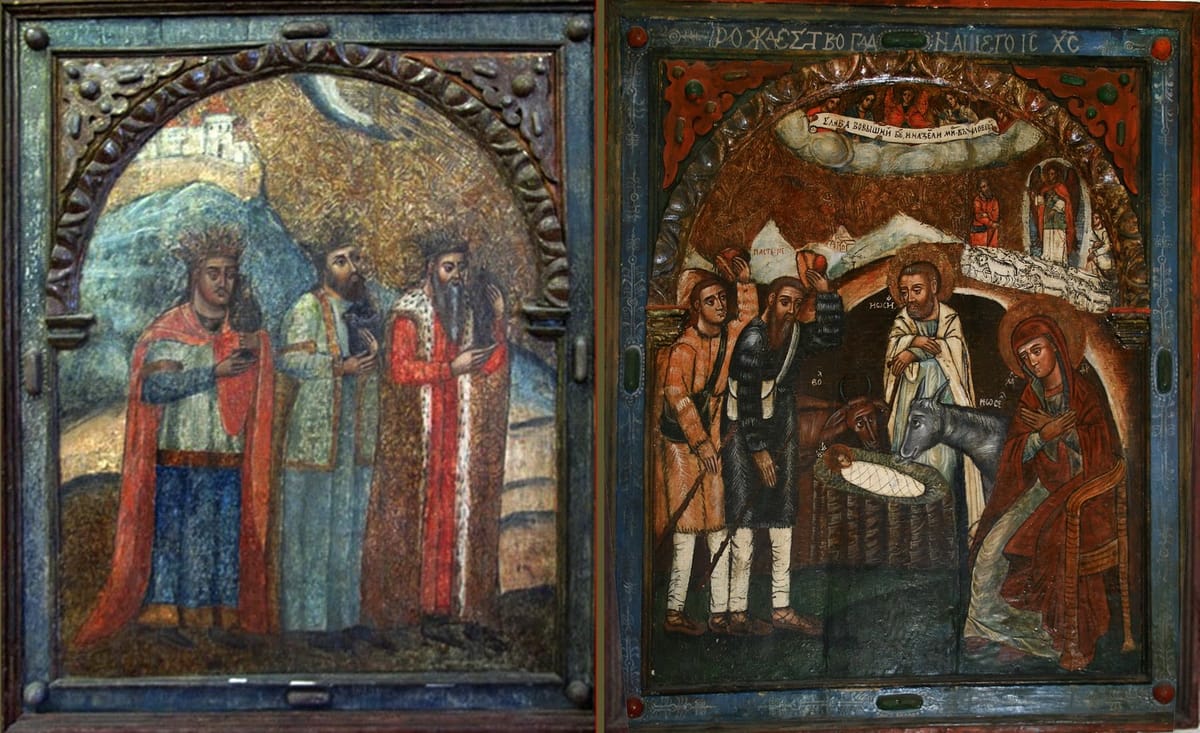
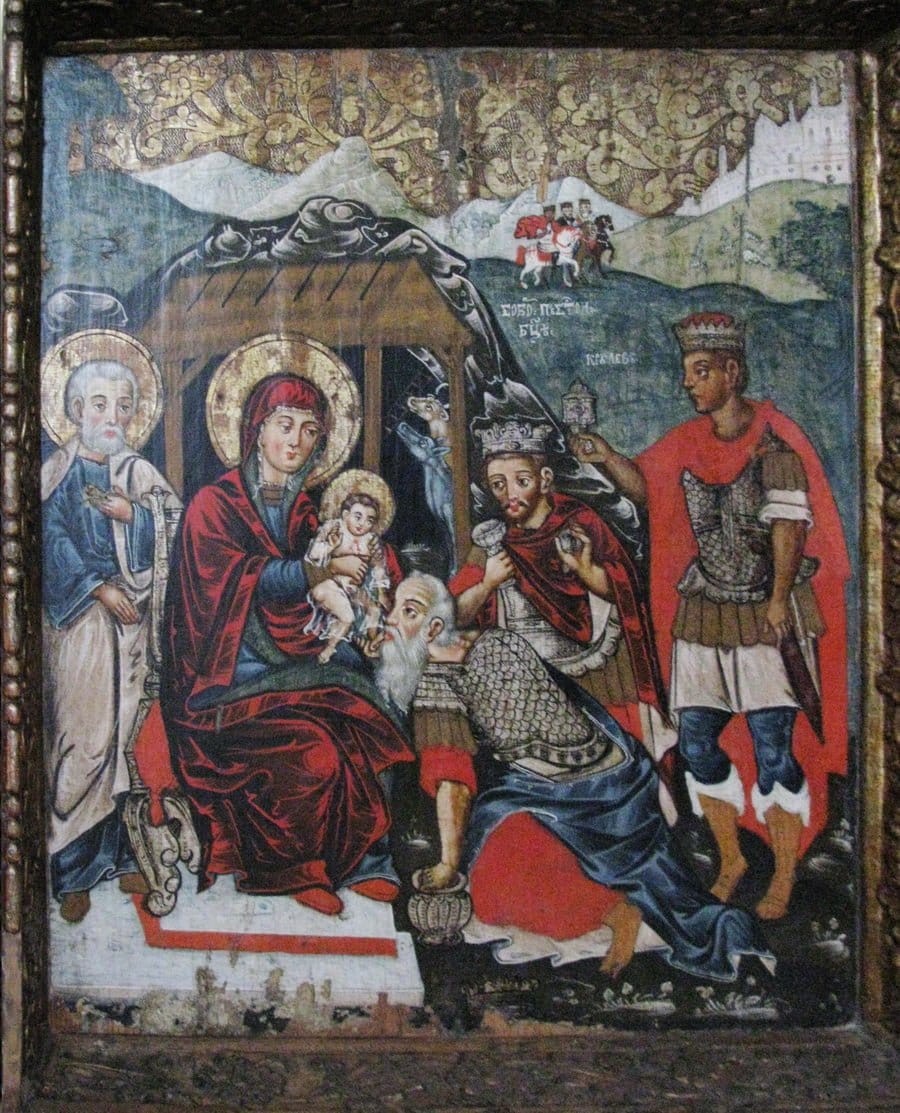
Icon showing the Adoration of the Magi together with the Nativity of Christ. It is held in the Spiritual Treasures of Ukraine museum of Ukrainian icons in Kyiv.
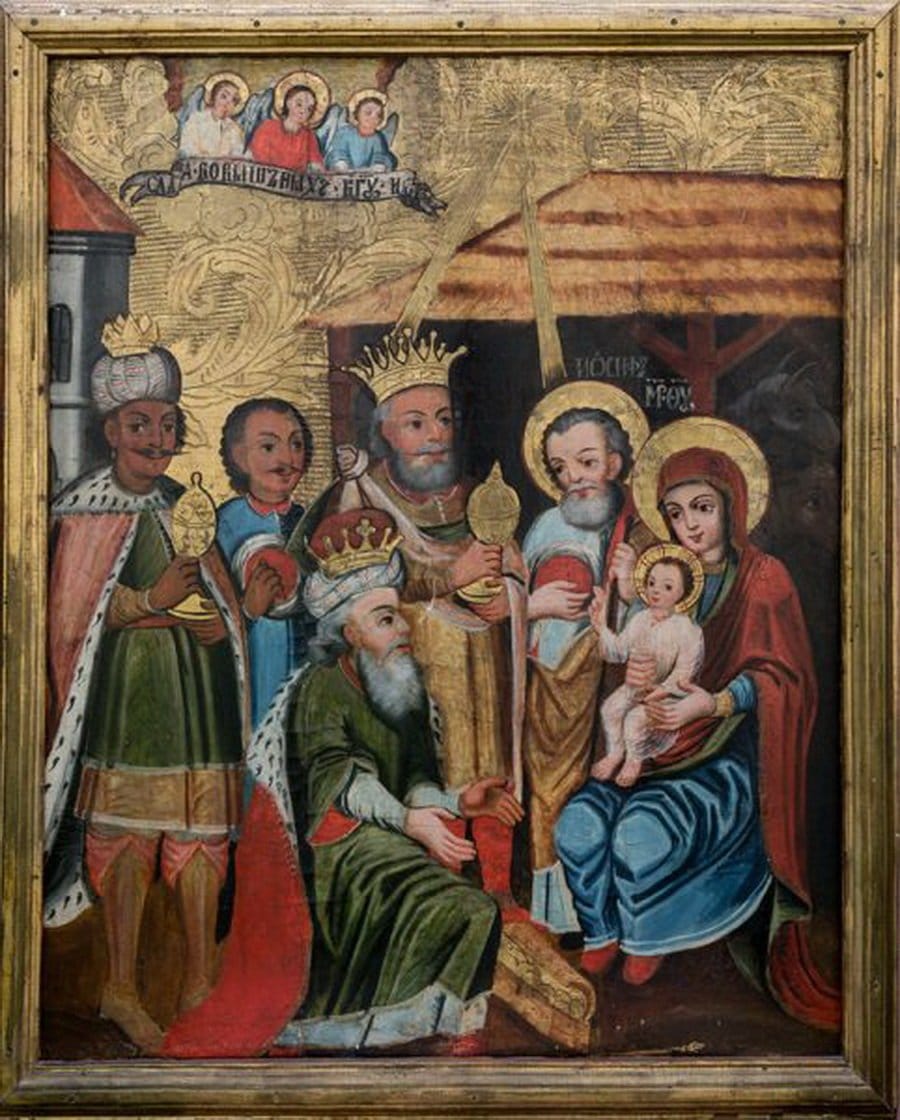
Icon of the Adoration of the Magi by a master of the Ostroh school. It is held in the Ostroh State Historical and Cultural Reserve in Ukraine.
Icon of the Adoration of the Magi by the Rybotychi school, from the Church of the Synaxis of the Virgin Mary in Trushevychi. It is held in the Andrey Sheptytsky National Museum in Lviv, Ukraine.
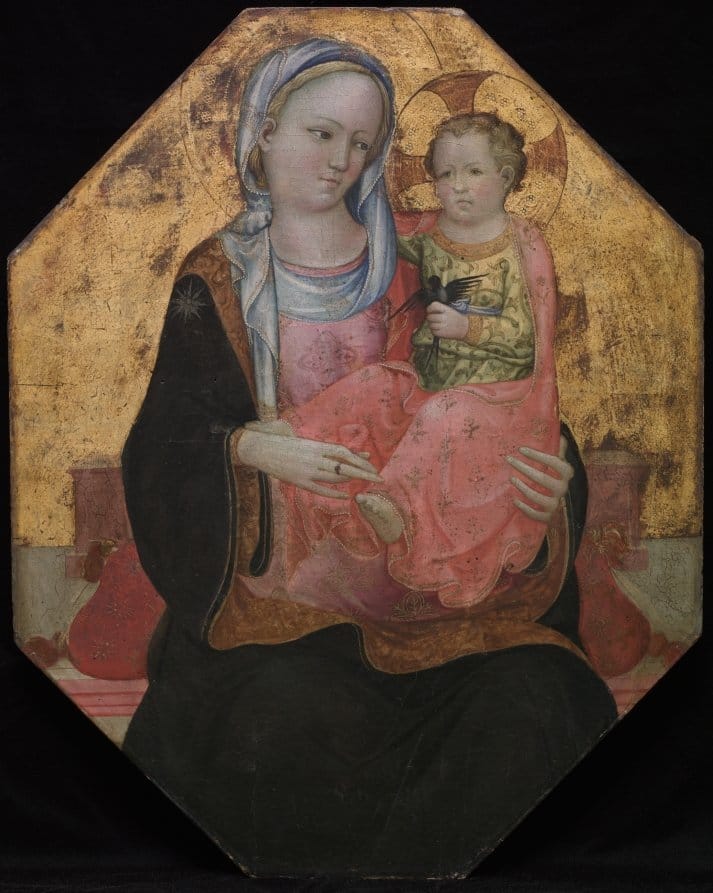
In his left hand the Christ Child holds a swallow. Swallows were thought to hibernate during winter in nests of mud. Their re-emergence in spring symbolized the Resurrection of Christ.
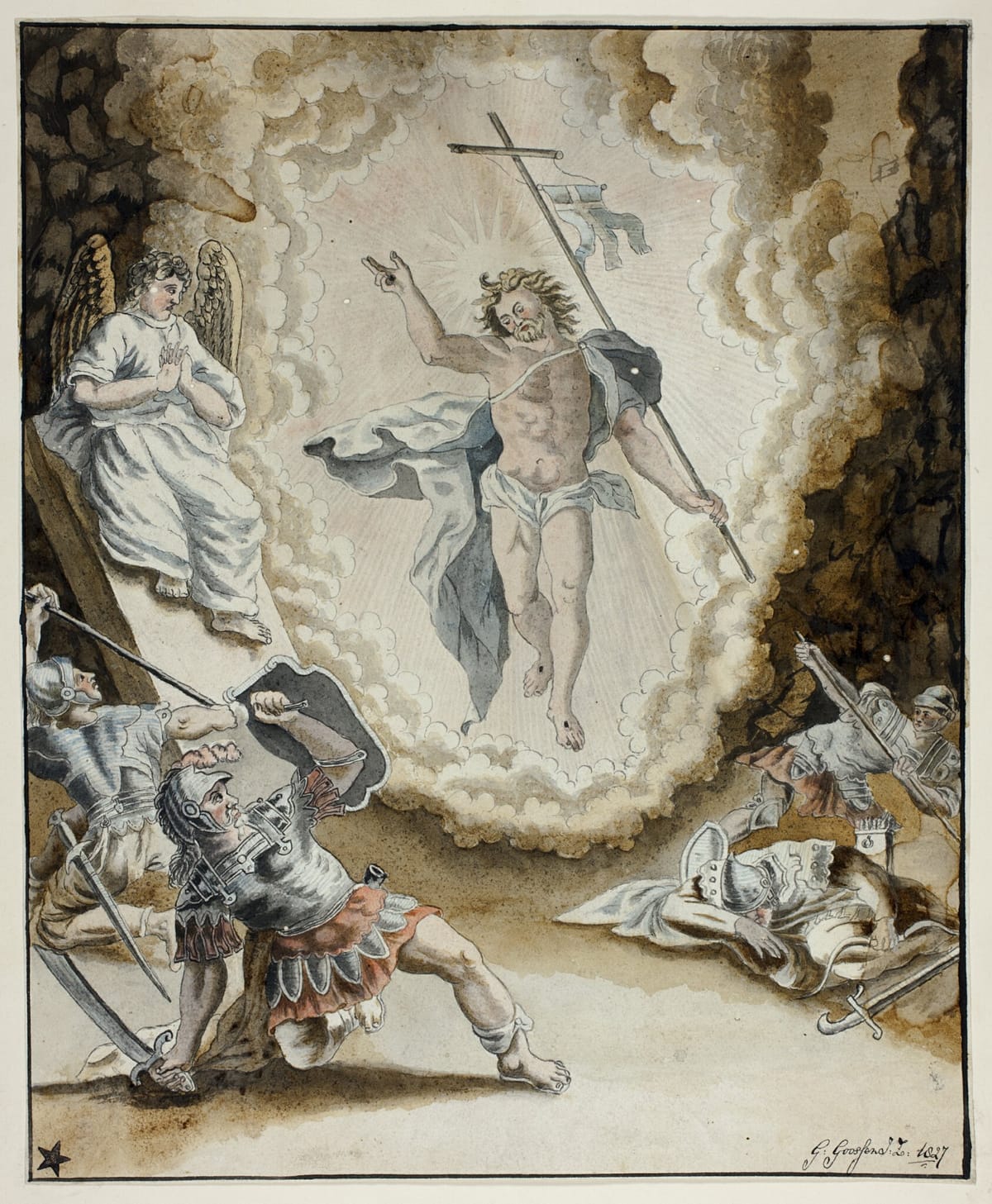
Pen and gray ink drawing with watercolor by Gerardus Gossen, after a work by Jacopo Negretti, called Palma il Giovane. It measures 32.1 x 26.4 cm (12 11/16 x 10 7/16 in.).