Calendar of Saints and Festivals (No date) - Public Domain Orthodox Icon
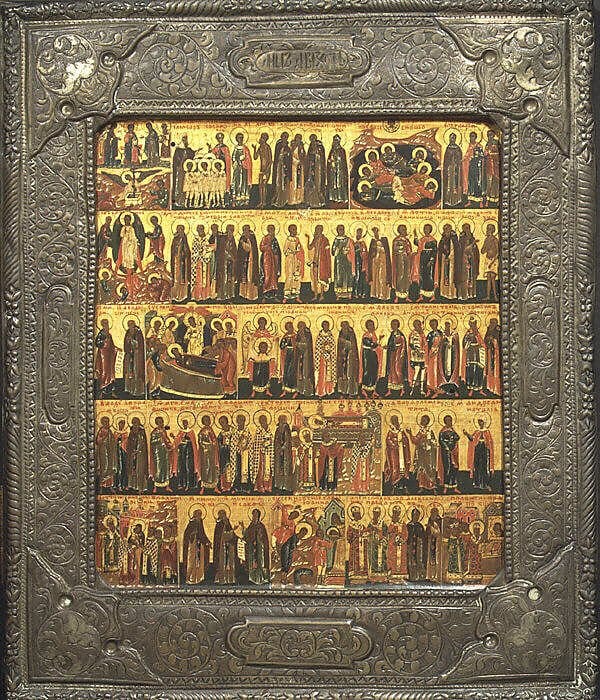
Russian icon panels of a calendar of saints and festivals, painted in tempera on wood with a gold ground. Each panel measures about 31.4 x 26 cm.
Russian icon panels of a calendar of saints and festivals, painted in tempera on wood with a gold ground. Each panel measures about 31.4 x 26 cm.
These nine medallions are from a group of twelve that once surrounded an icon of the archangel Gabriel. The medallions may have been sent as a gift from the Byzantine court to the neighboring Christian state of Georgia.
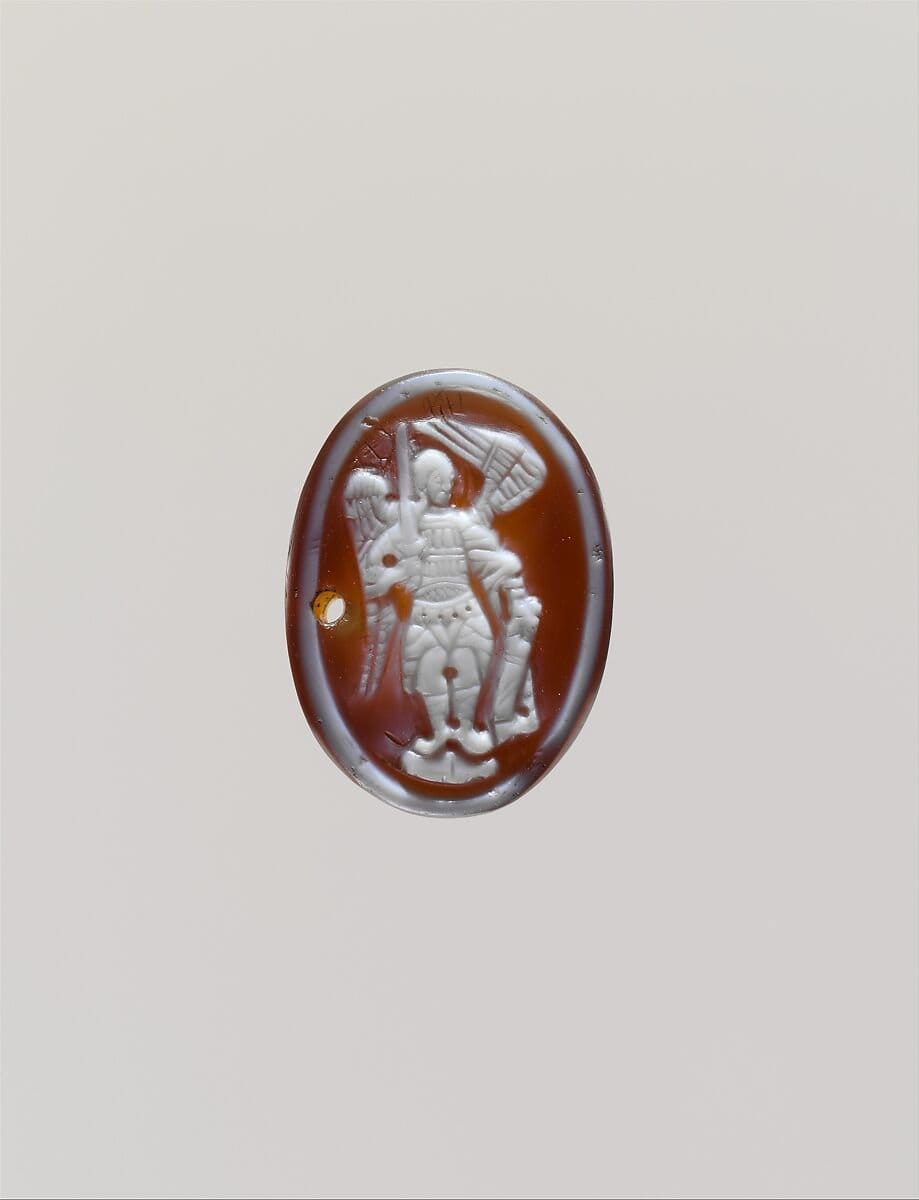
The archangel Michael, commander of the heavenly host, became one of the most popular saints during Byzantium's last centuries. Depictions usually show him in the robes worn by the Byzantine emperor or dressed in armor.
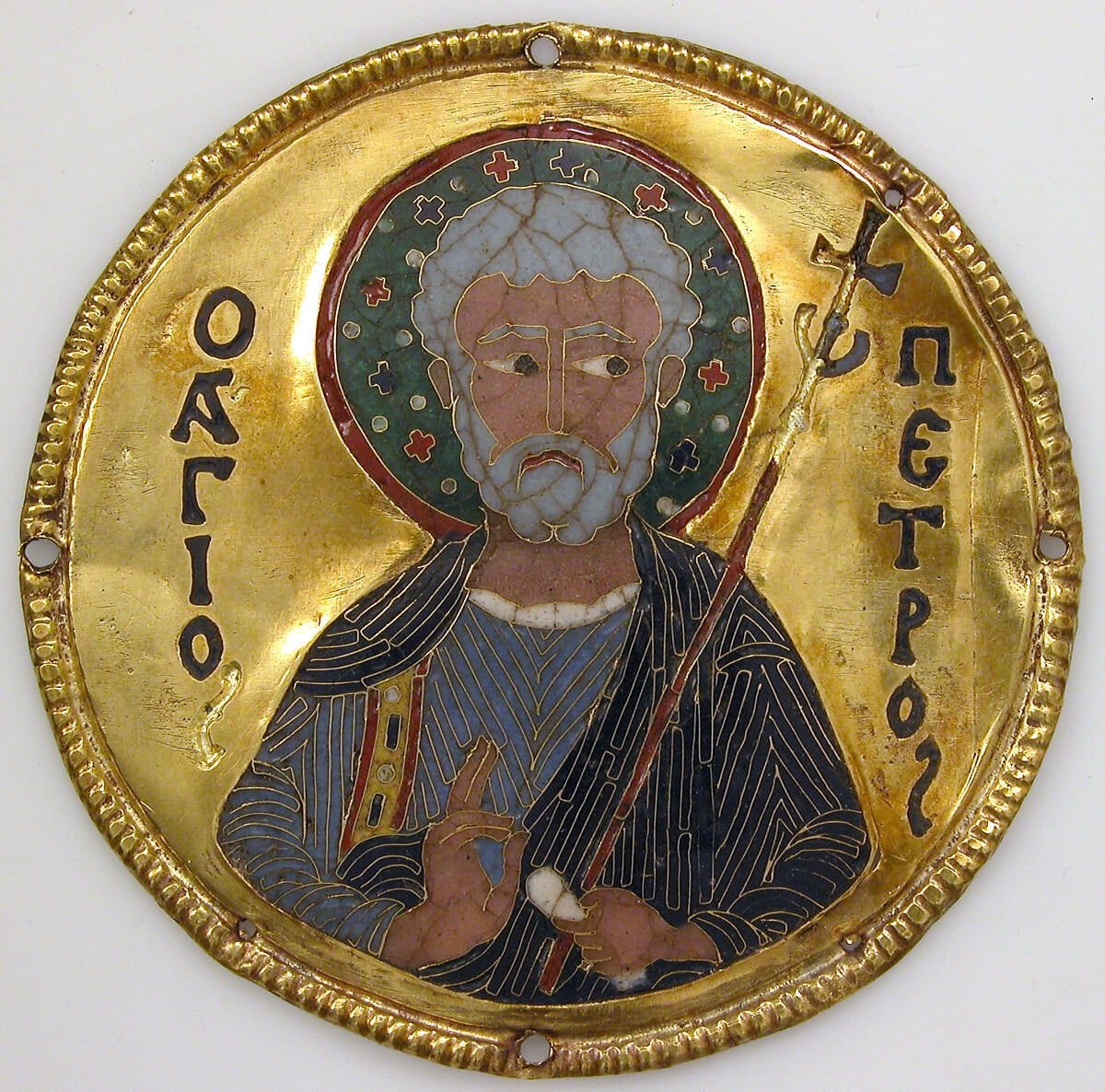
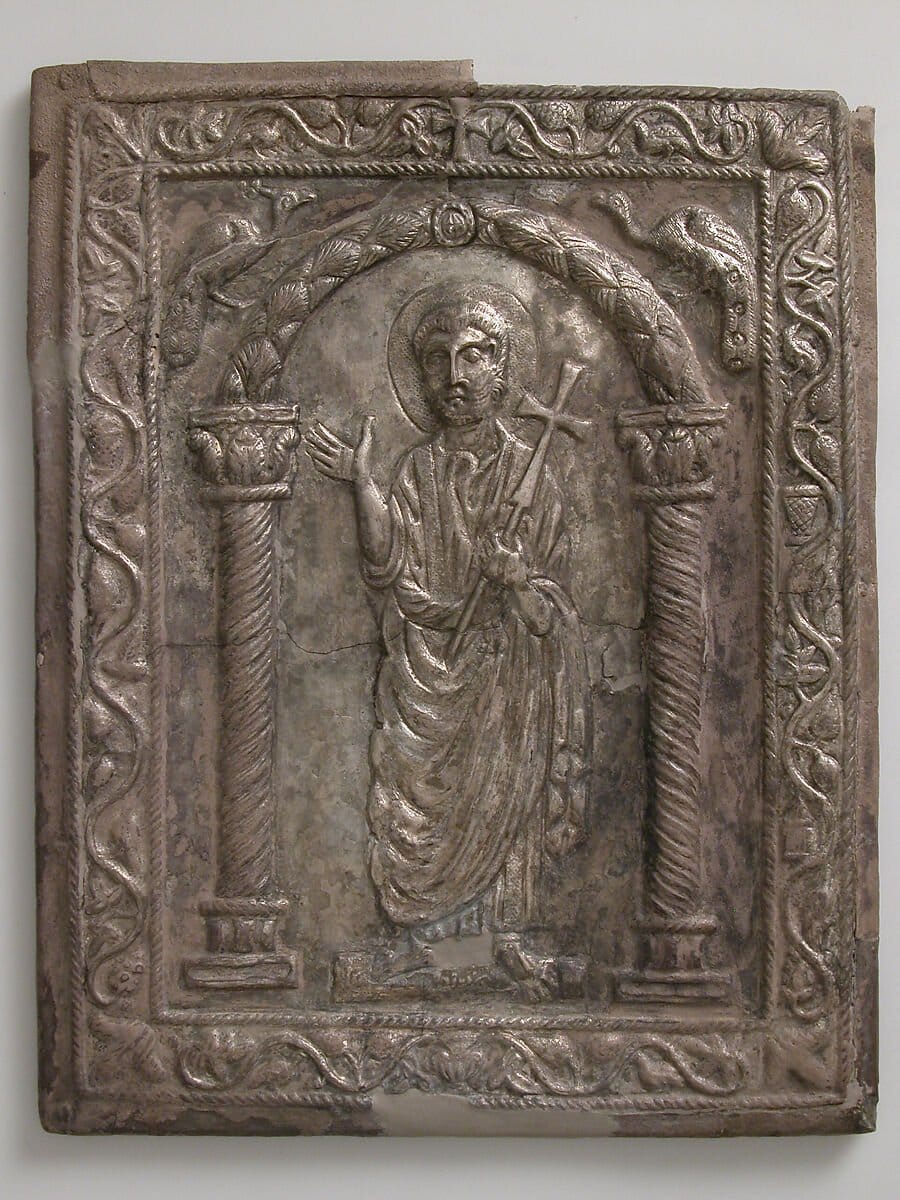
The typical image of Saint Peter—with a round face, short hair, and a beard—was established during the first centuries of the Christian church. Here Peter stands holding a cross and gesturing as if preaching. At his waist are the keys to the kingdom of heaven, given to him by Christ (Matthew 16:19).
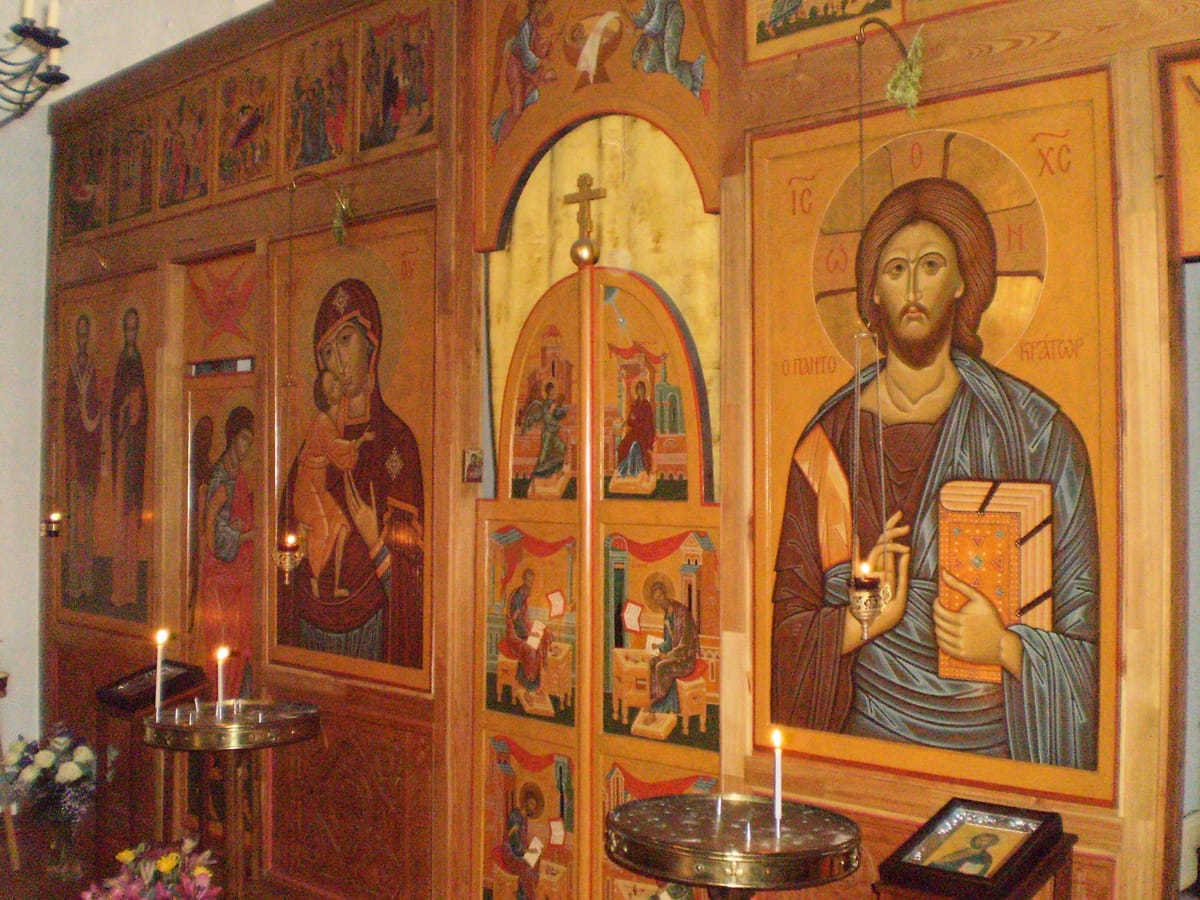
Iconostasis in the Russian Orthodox Church in Deventer, the Netherlands. An iconostasis is the screen of icons that separates the nave from the sanctuary in an Orthodox church.
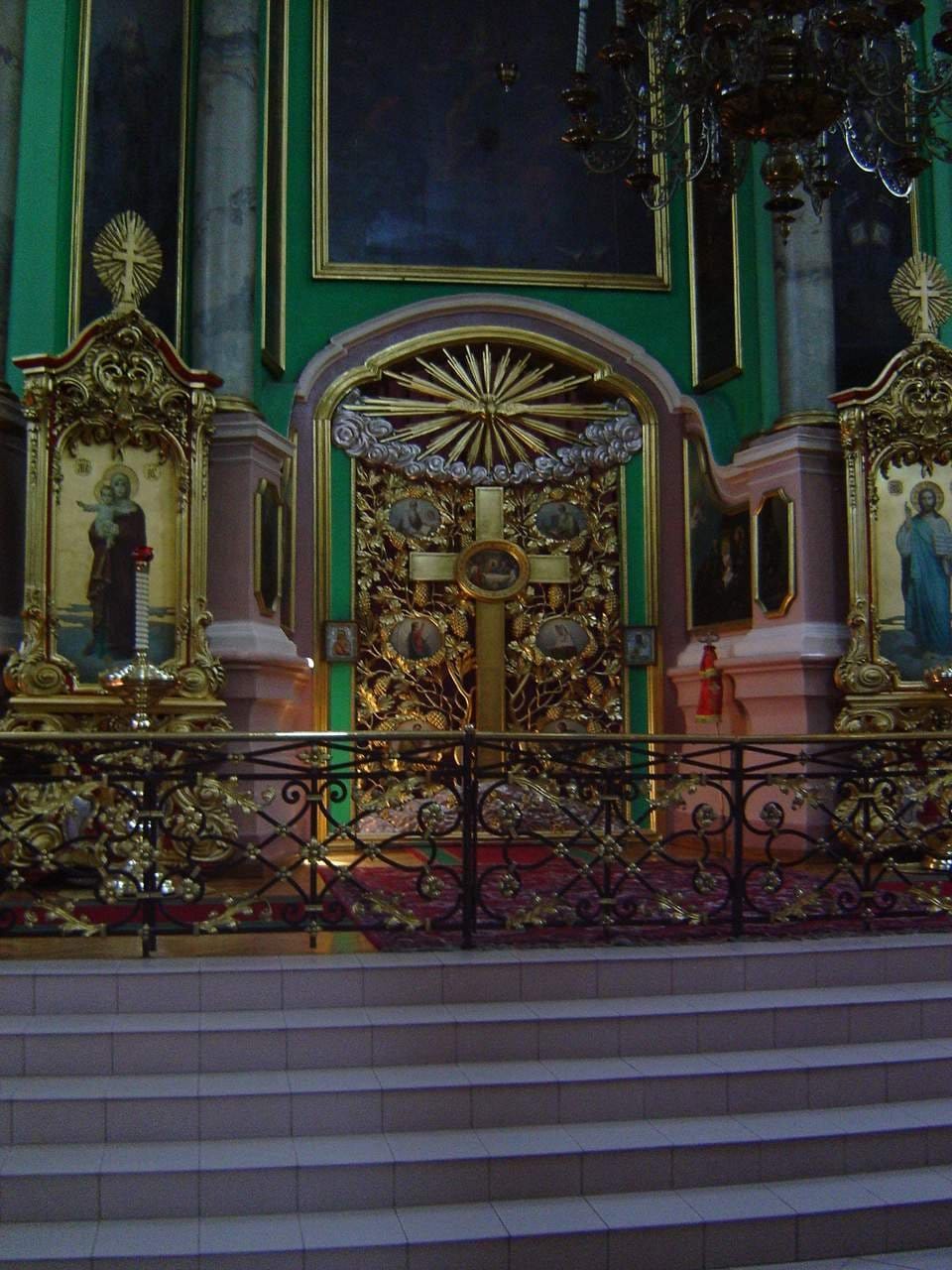
Photograph of the iconostasis in the Orthodox Church of the Holy Spirit in Vilnius, Lithuania. An iconostasis is the screen of icons that separates the nave from the sanctuary in an Orthodox church.
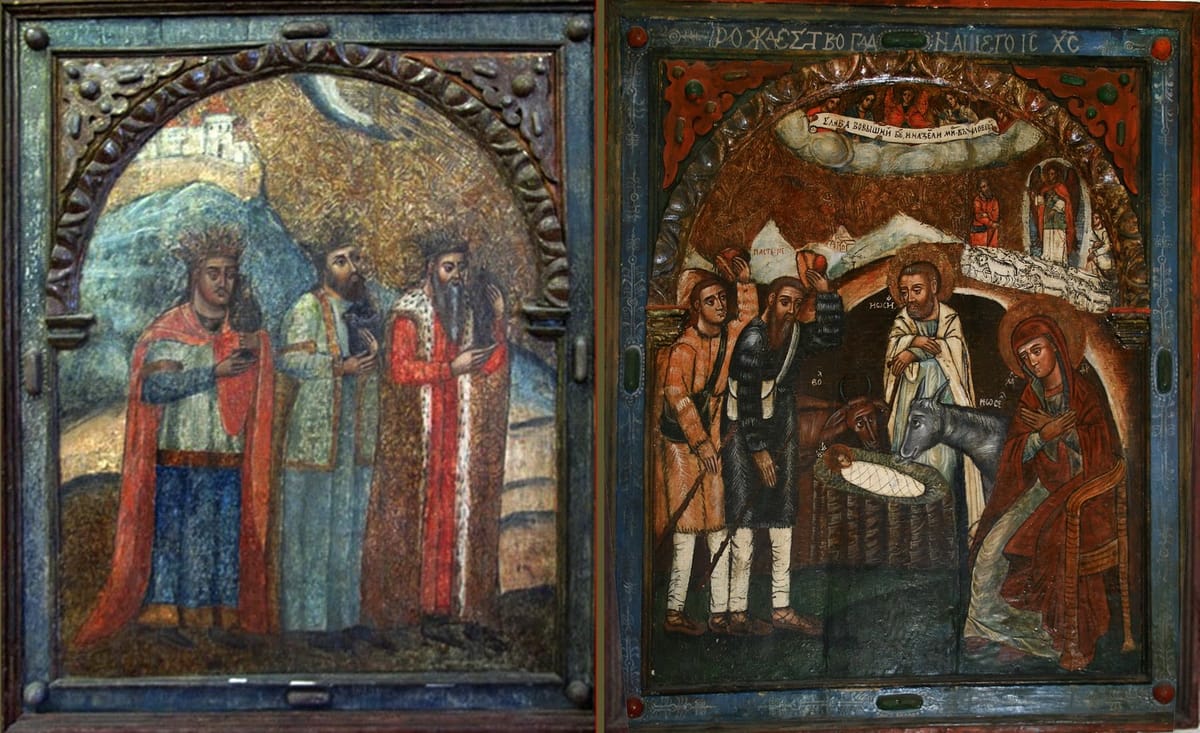
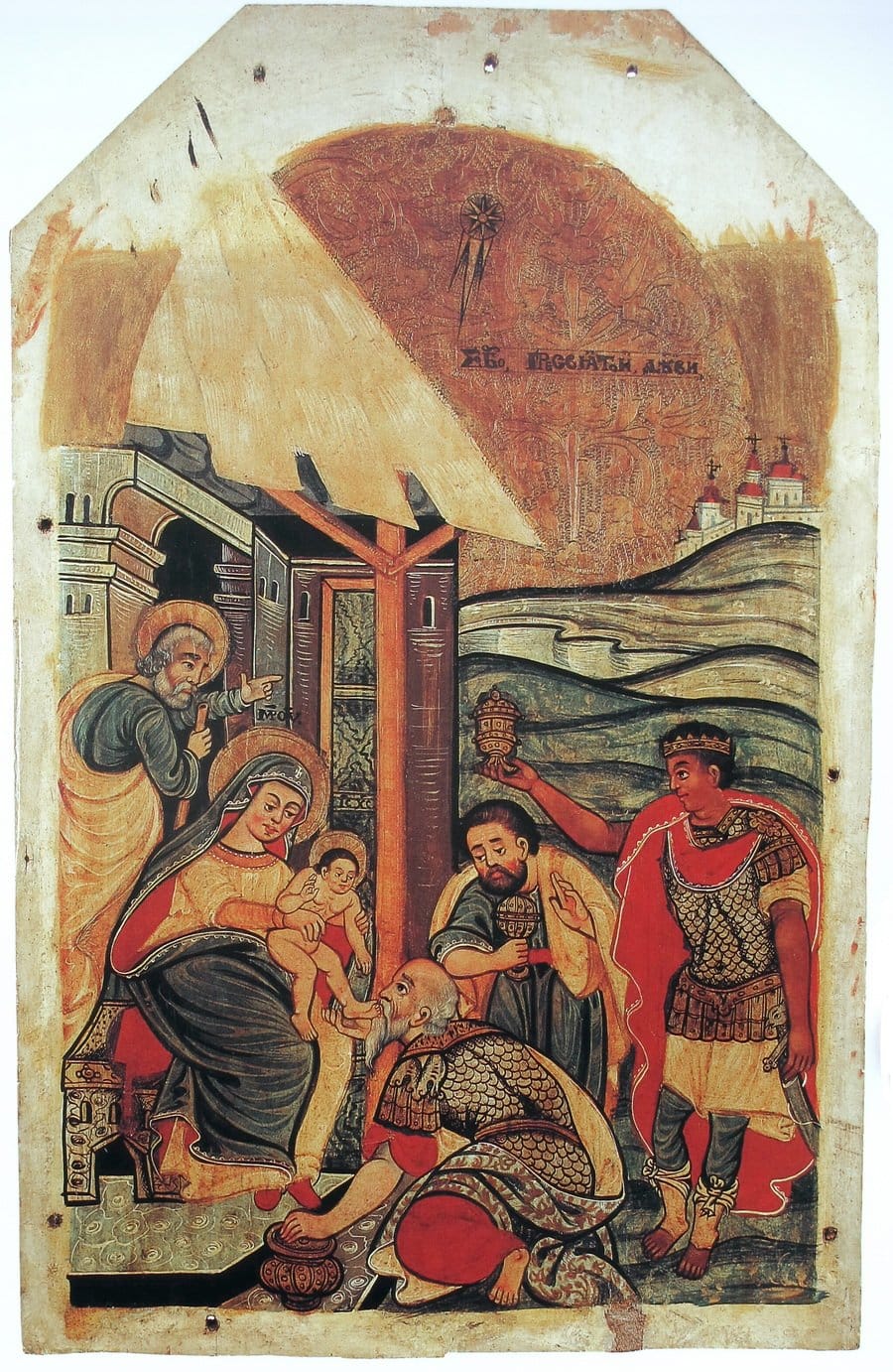
Icon showing the Adoration of the Magi together with the Nativity of Christ. It is held in the Spiritual Treasures of Ukraine museum of Ukrainian icons in Kyiv.
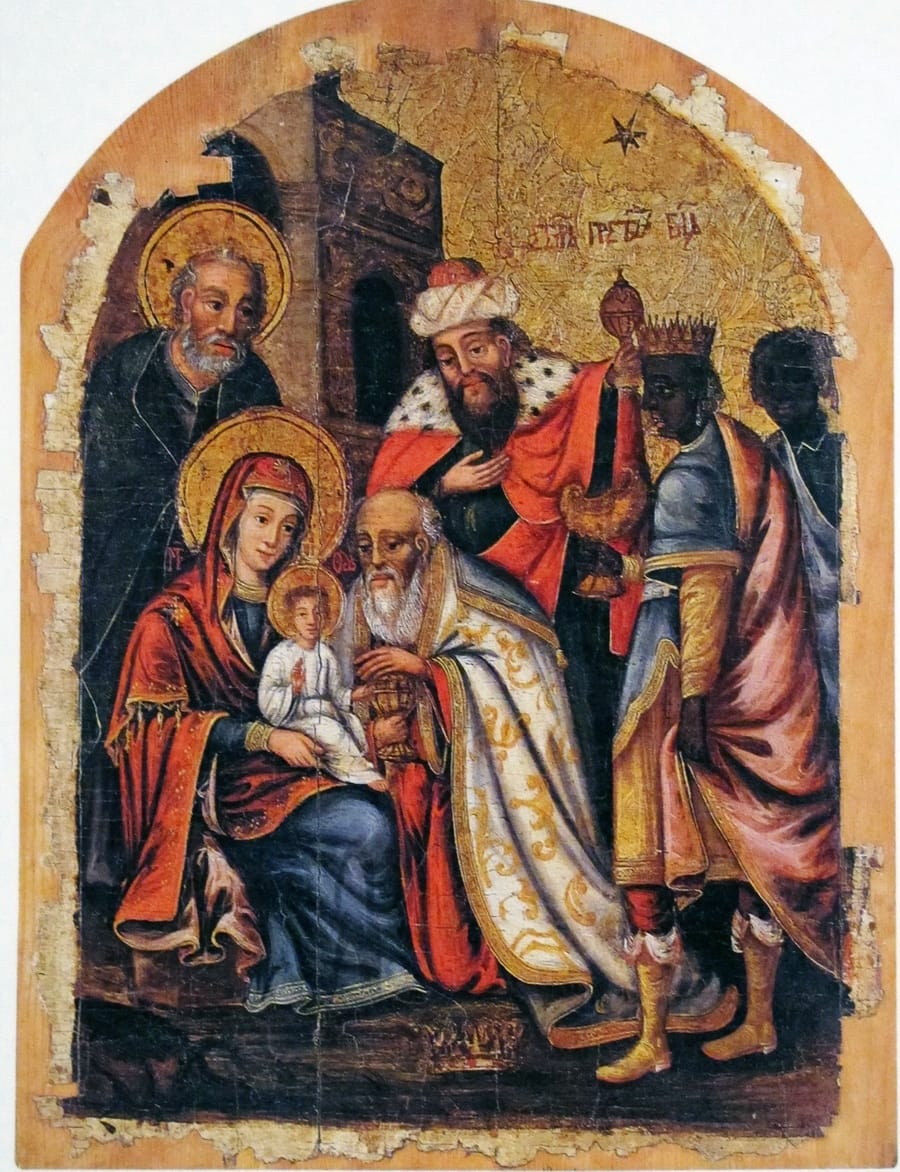
Icon of the Adoration of the Magi by a master of the Ostroh school. It is held in the Ostroh State Historical and Cultural Reserve in Ukraine.
Icon of the Adoration of the Magi by the Rybotychi school, from the Church of the Synaxis of the Virgin Mary in Trushevychi. It is held in the Andrey Sheptytsky National Museum in Lviv, Ukraine.
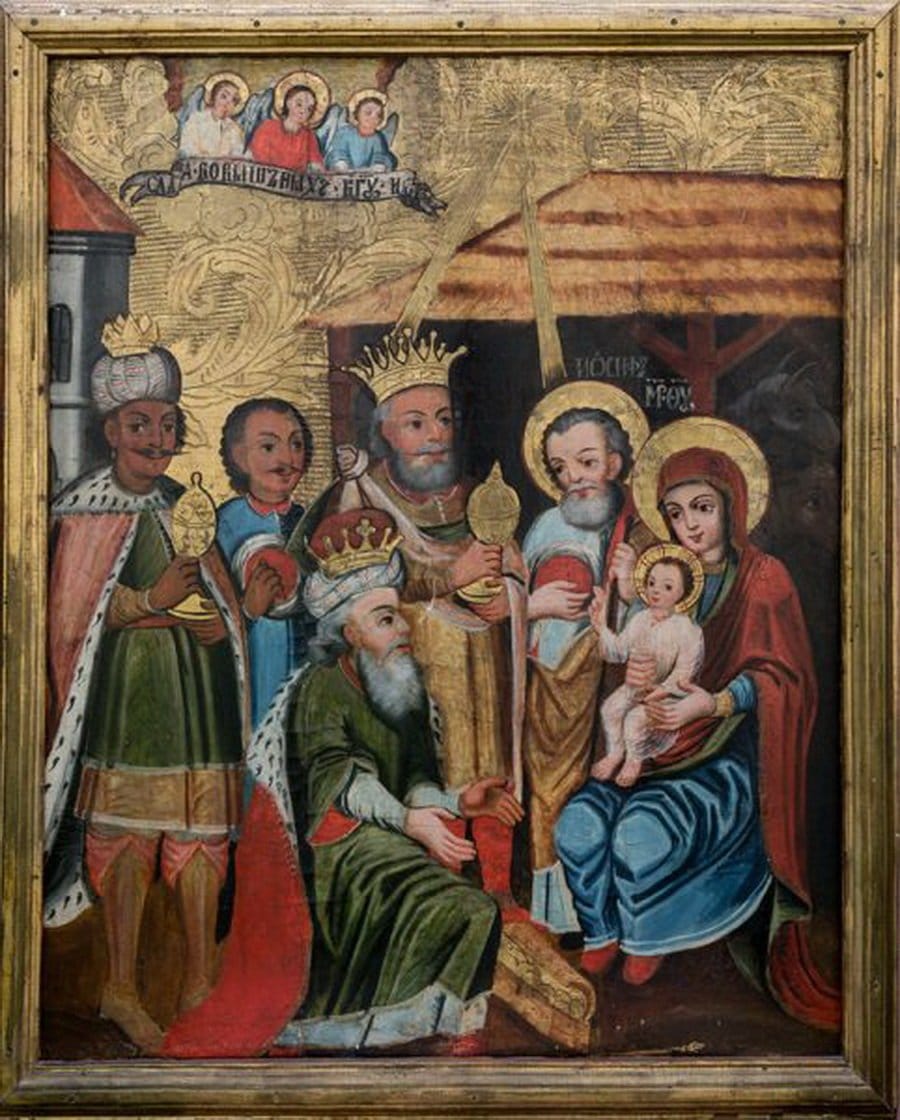
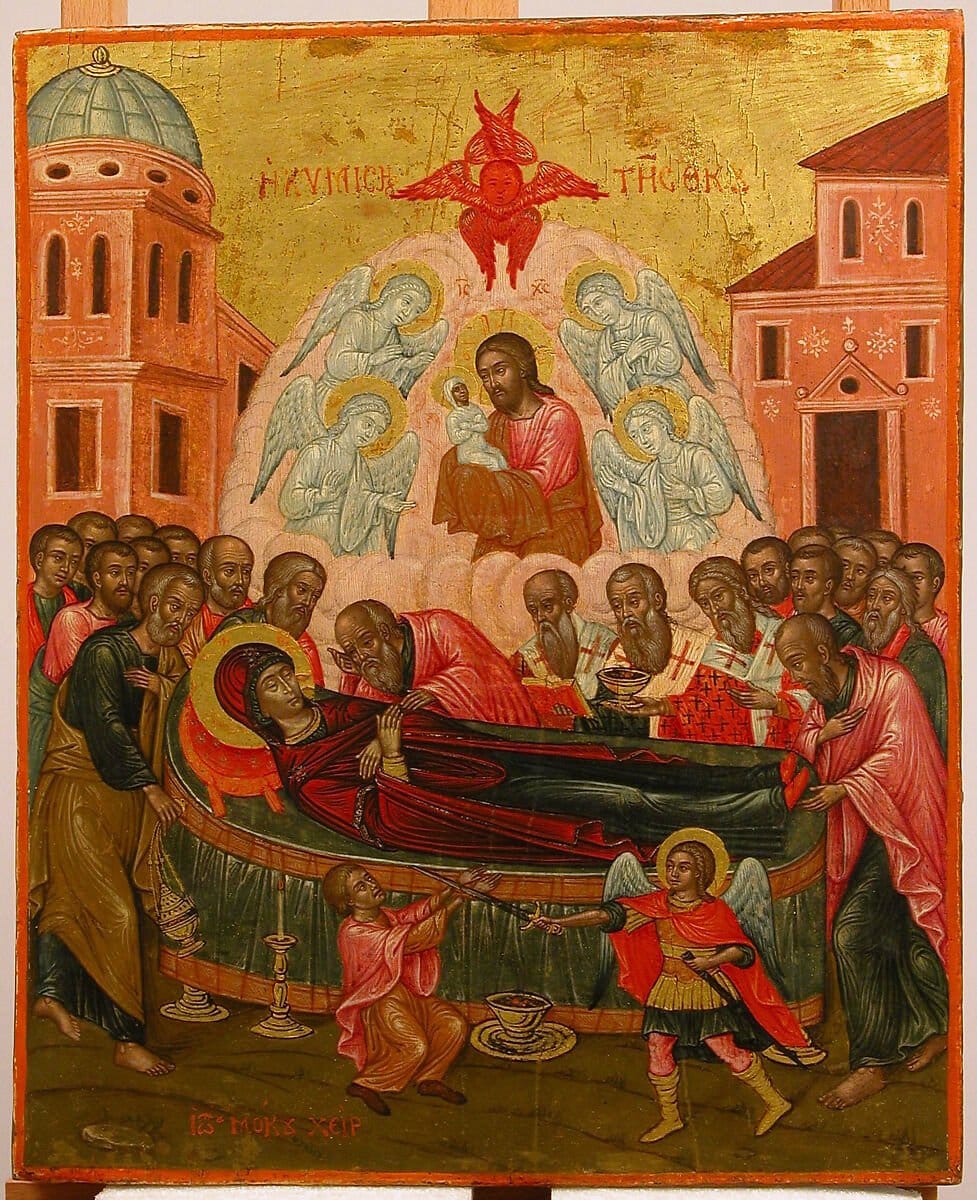
Tempera and oil on wood icon with a gold ground, by the Greek painter Ioannes Mokos. It measures 34.3 x 28.6 cm (13 1/2 x 11 1/4 in.).
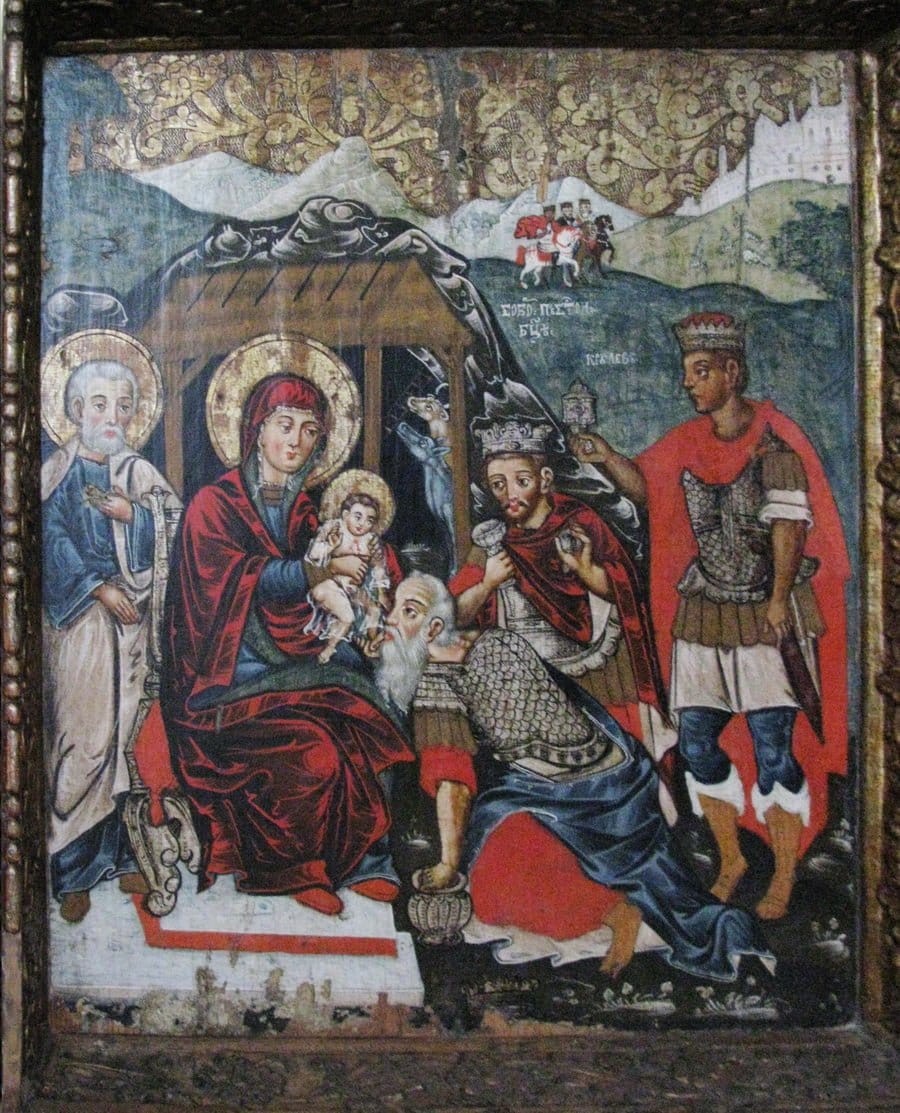
Icon of the Adoration of the Magi by the Rybotychi school, from the village of Uherci. Held in the Historical Museum in Sanok, Poland.
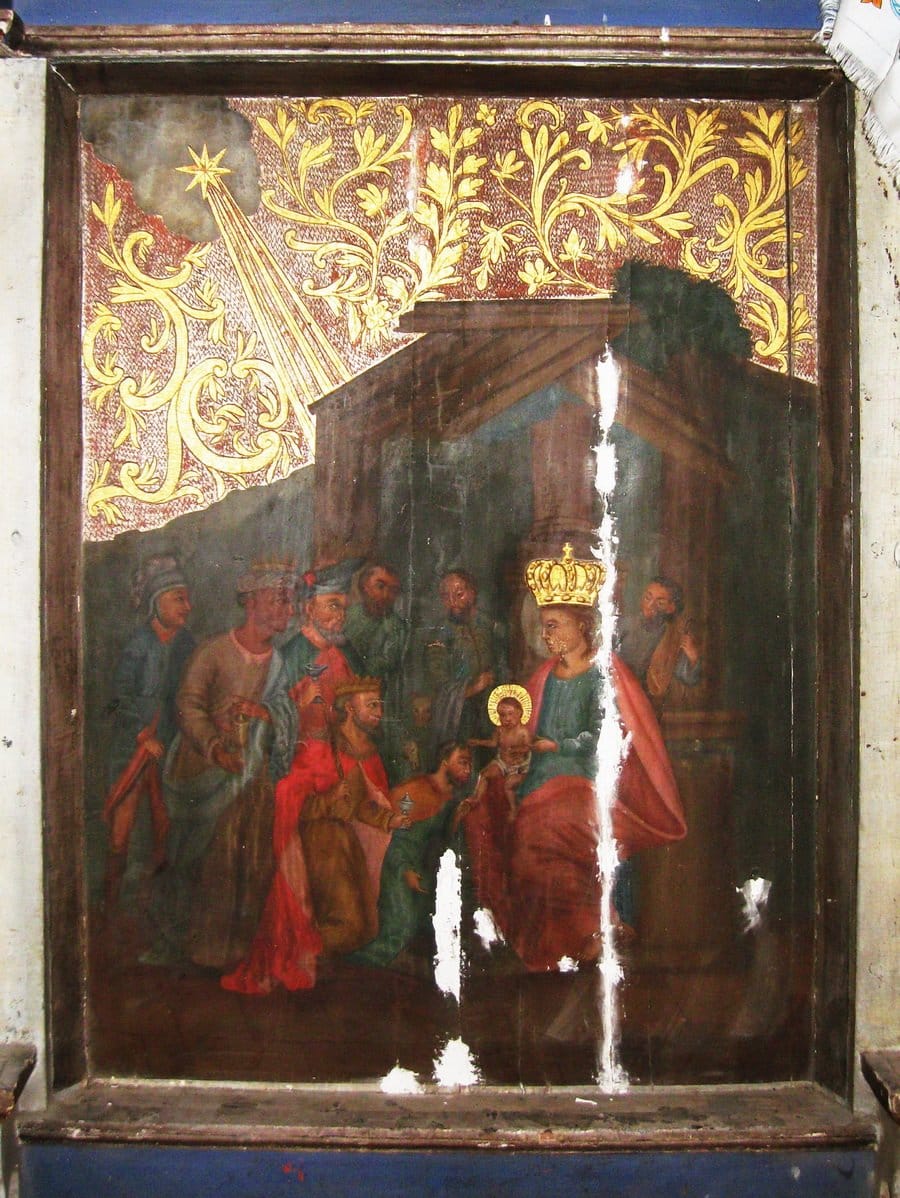
Icon of the Adoration of the Magi from the early 18th century, from the village of Rodatychi in the Lviv region of Ukraine.
Ukrainian icon of the Adoration of the Magi, made in the second half of the 18th century.
These nine medallions are from a group of twelve that once surrounded an icon of the archangel Gabriel. The medallions may have been sent as a gift from the Byzantine court to the neighboring Christian state of Georgia.
The images depict Saints Athanasius and Nicholas (top left); Saint George (bottom left); The King of Kings and Great [High Priest] Jesus Christ, sided by the Mother of God and Saint John (center panel); Saints Paraskevi and Marina (top right); Saint Demetrius (bottom right).
Orthodox icon of the Mother of God Trenousa (Virgin and Child) from the 17th-18th century.
An early Byzantine icon of Virgin Mary with the infant Jesus, 6th century AD in the collection of the Khanenko Museum, Kyiv, Ukraine.
from the Castle-Museum in Łańcut, Poland Free DownloadThis image is in the public domain18-1-ц.-Михаїла.-Лодина-Замок-Ланцута.jpg395 KBdownload-circle Please SUBSCRIBE or DONATE to help keep this site free!...
From the church of Archangel Michael, village of Krowitsia-Sama. Castle-Museum in Łańcut, Poland Free DownloadThis image is in the public domain18-3-Ланцут-З-церкви-архангела-Михаїла-у-Кровиці-Самій.jpg361 KBdownload-circle Please SUBSCRIBE or DONATE to help keep this site free!...
From the church of Cosmas and Damian in the village of Kotan, Castle-Museum in Łańcut, Poland Free DownloadThis image is in the public domain17-1-Матвій-із-с.-Котань.-Ланьцут.jpg266 KBdownload-circle Please SUBSCRIBE or DONATE to help keep this site free!...
Leaves from a Coptic manuscript dating from the 6th to the 14th century.
Exquisitely painted, these icons represent the height of icon painting during the last decades of Byzantine rule from Constantinople. Detailed representations of the Baptism of Christ and the Anastasis, the Easter image of the Orthodox Church, animate the major events with related narratives. Saint John dictates to his scribe, Prochoros,...
The Hypapante is one of the Great Feasts of the Orthodox church. According to the Gospel of Luke (2:22–38), when Joseph (far left) and the Virgin (center) presented Christ in the temple for the rite of purification forty days after his birth, his divinity was immediately recognized by...
The Hypapante is one of the Great Feasts of the Orthodox church. According to the Gospel of Luke (2:22–38), when Joseph (far left) and the Virgin (center) presented Christ in the temple for the rite of purification forty days after his birth, his divinity was immediately recognized by...