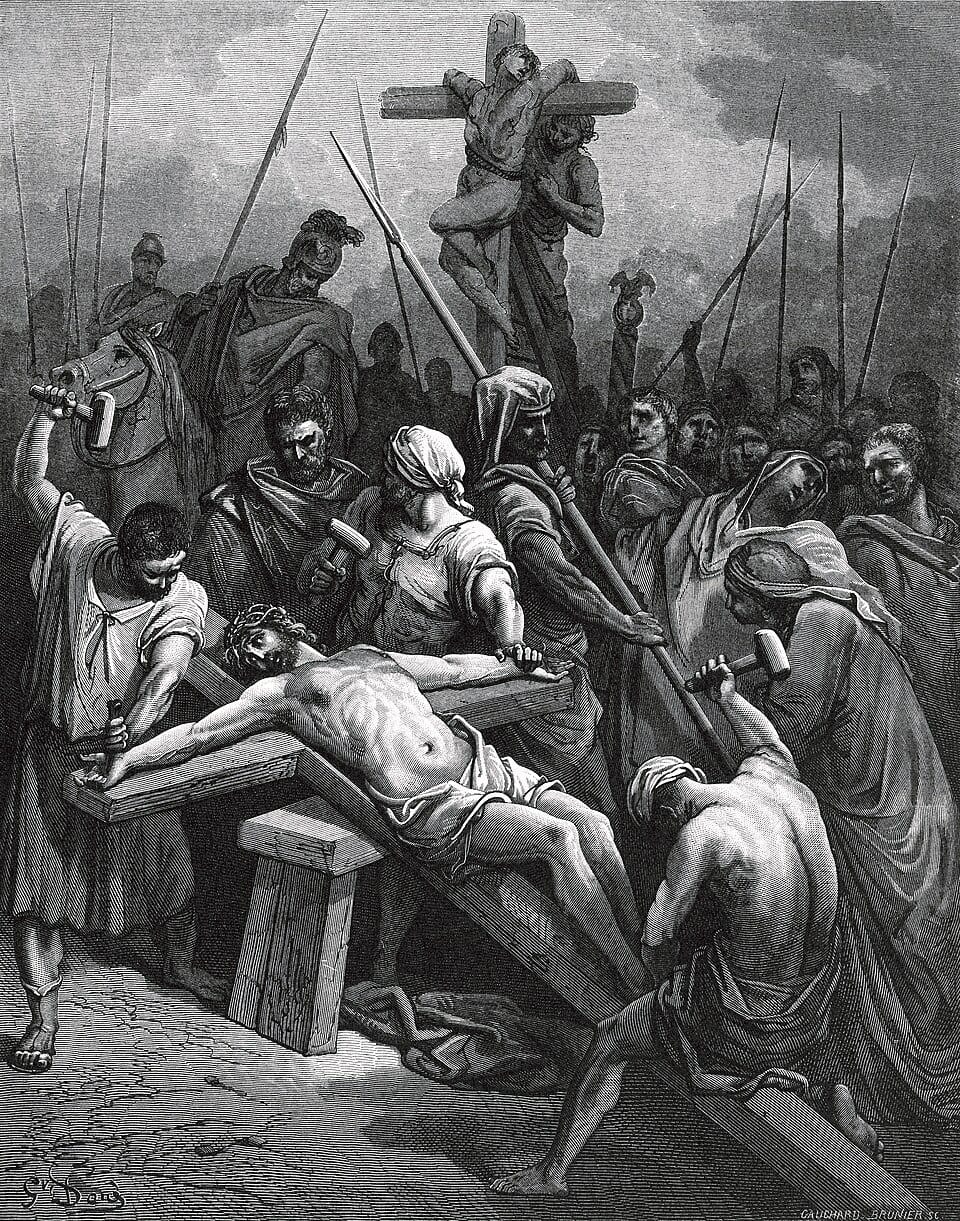
Crucifixion of Jesus (1866) by Gustave Doré - Public Domain Catholic Painting
Wood engraving drawn by Gustave Doré, engraved by J. Gauchard Brunier. Printed in: Heilige Schrift 1867 by Stuttgarter Druck- und Verlagshaus Eduard Hallberger.
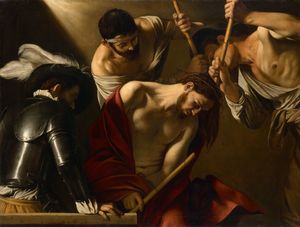
Public domain paintings of the Passion of Jesus Christ.
Wood engraving drawn by Gustave Doré, engraved by J. Gauchard Brunier. Printed in: Heilige Schrift 1867 by Stuttgarter Druck- und Verlagshaus Eduard Hallberger.
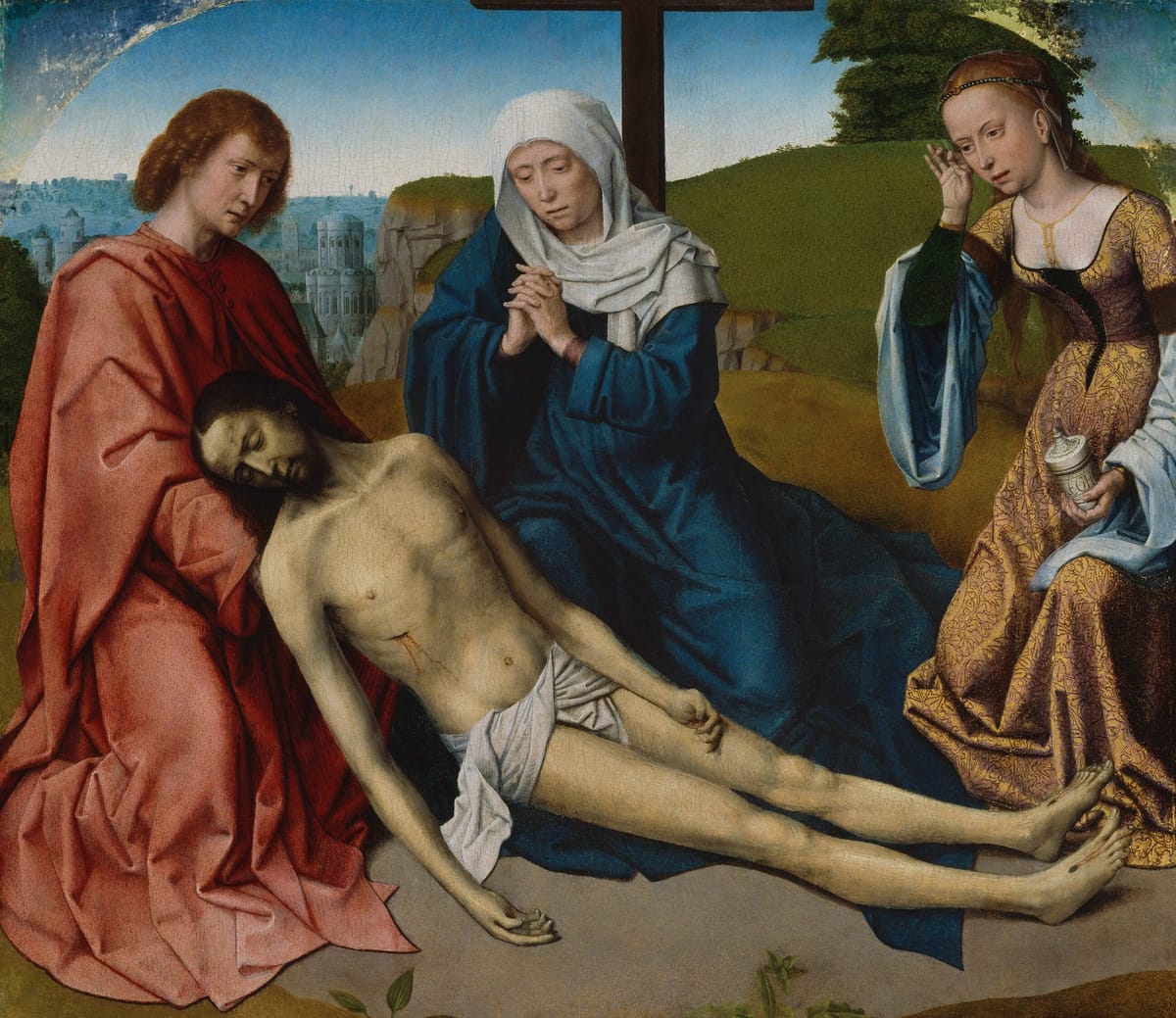
This painting was once part of the Saint Anne Altarpiece, a series of 10 panels set within an architectural frame that hung behind a church’s altar. Gerard David and his workshop produced this large-scale project for export to Spain.
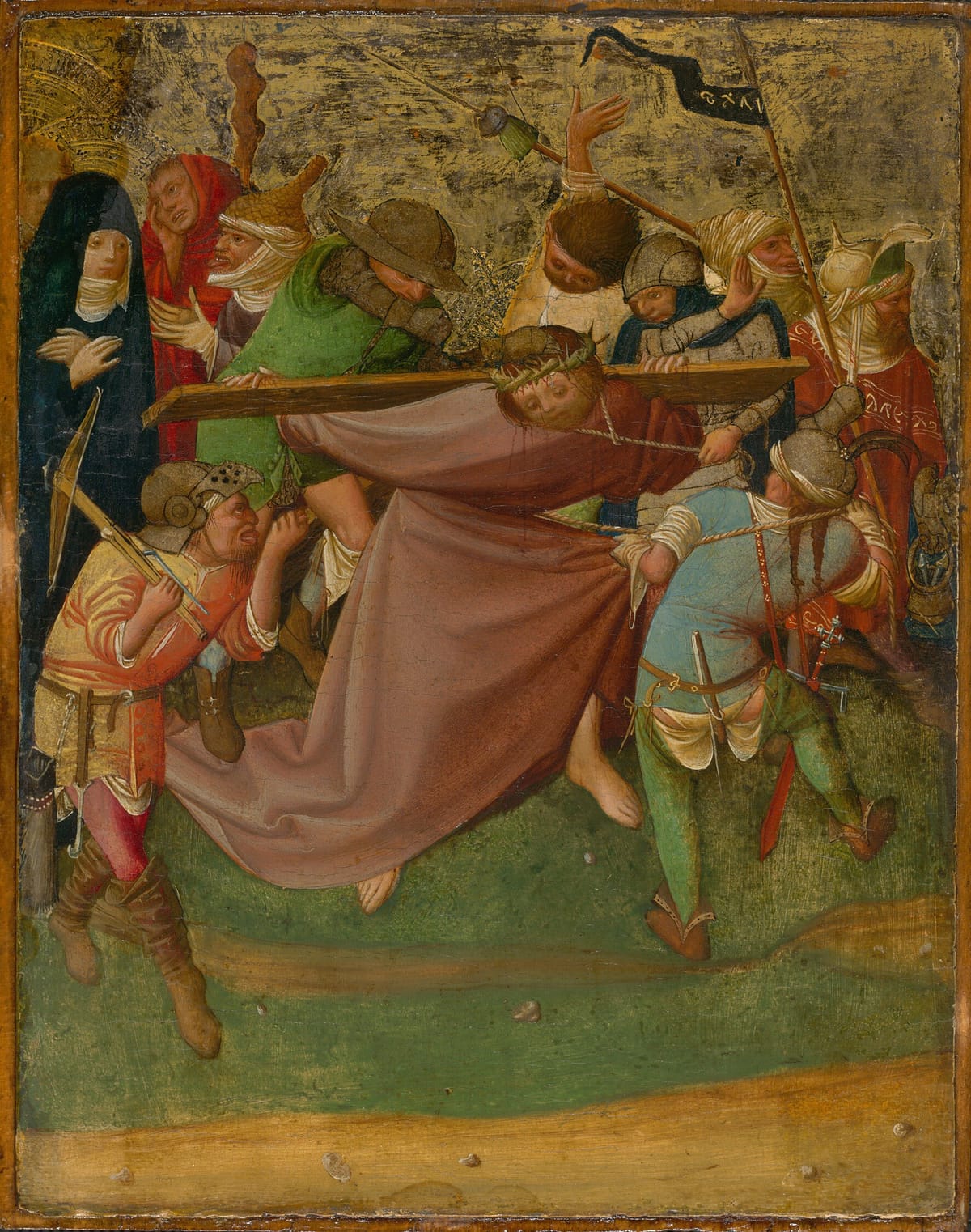
Brutal tormentors surround the suffering figure of Jesus as he carries his cross to Calvary, the site of his crucifixion. In the upper-left corner, his mother, Mary, and her companion are also reviled by the crowd.
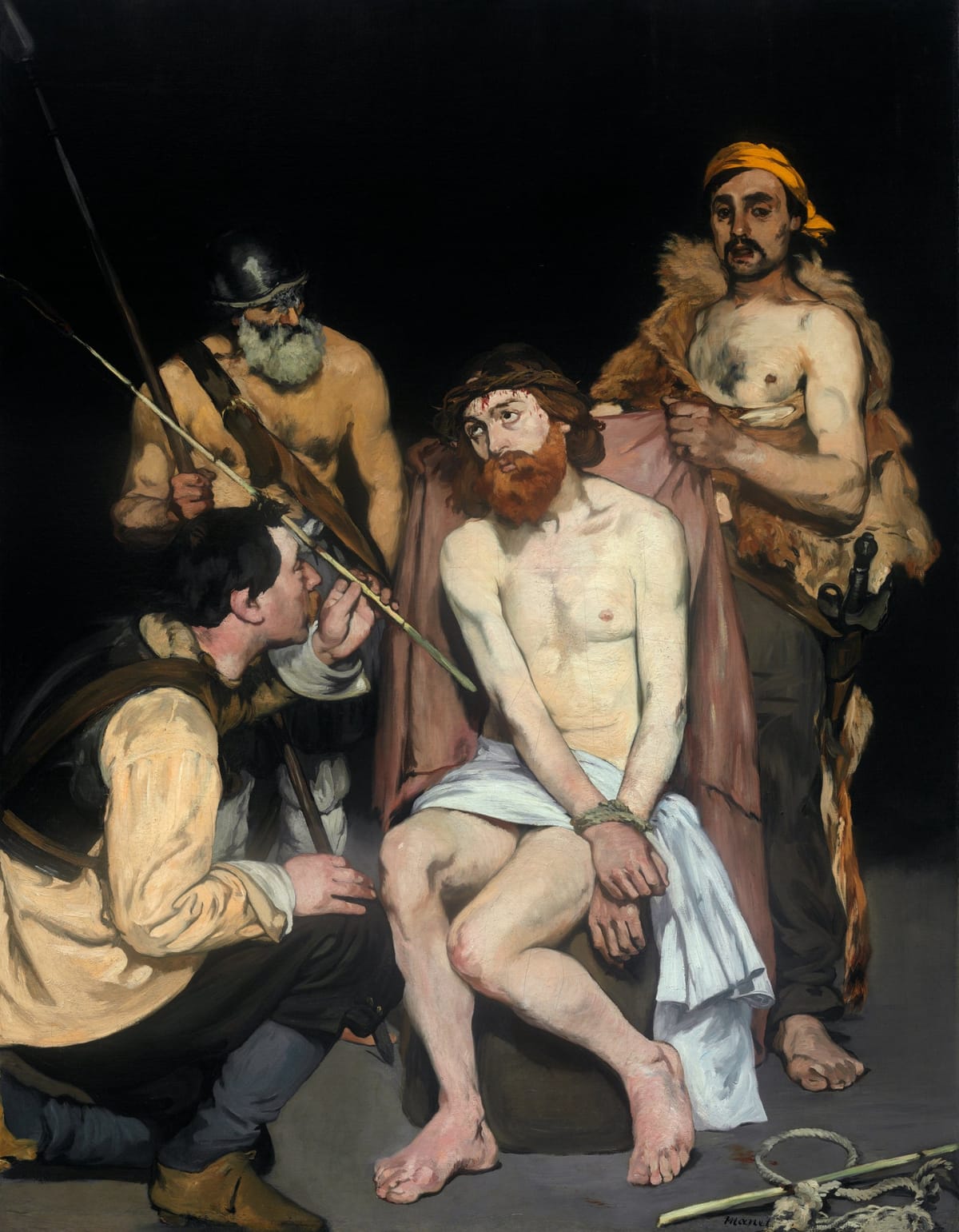
Throughout his career Édouard Manet managed to shock and confound the public with his bold technique and unorthodox approach to subject matter. The most startling feature of this painting is that he painted it at all.
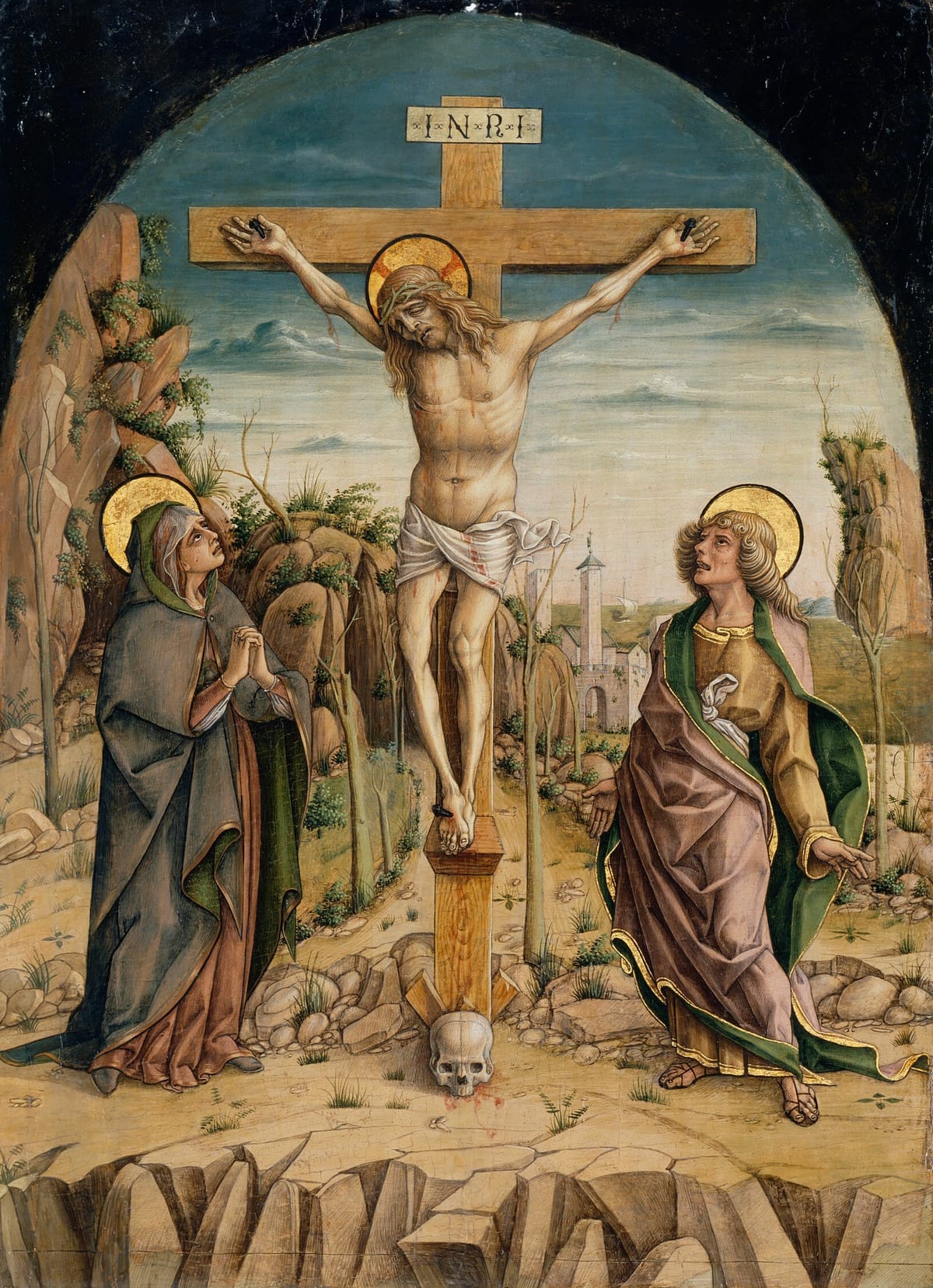
Carlo Crivelli’s vivid style married the beautiful with the grotesque. Here, the Virgin Mary and Saint John the Evangelist gaze in anguish at Jesus on the cross.
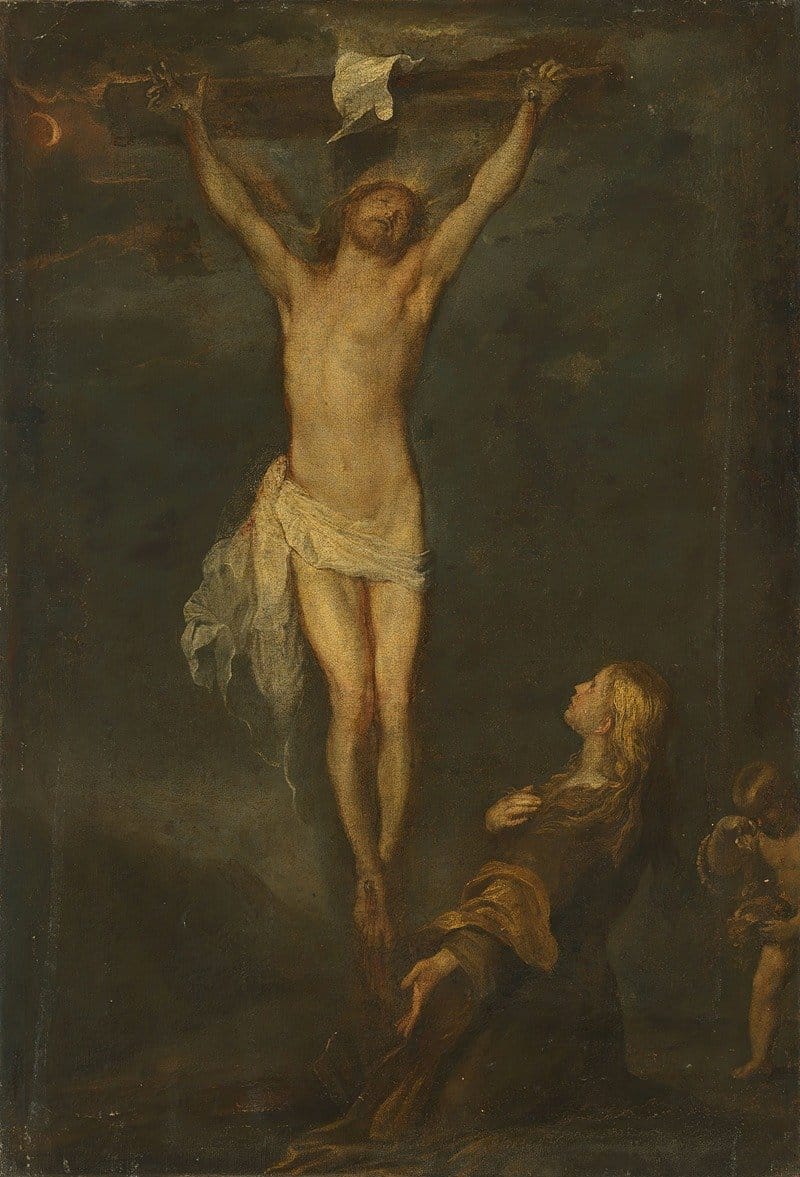
Paintings of the crucifixion in this style are often created as private devotional art for viewing and meditation on Christ's passion.
Hans Thoma was a German painter. He was born on 2 October 1839 in Bernau, Grand Duchy of Baden, in the Black Forest, Germany. He was the son of a miller and was trained in the basics of painting by a painter of clock faces.
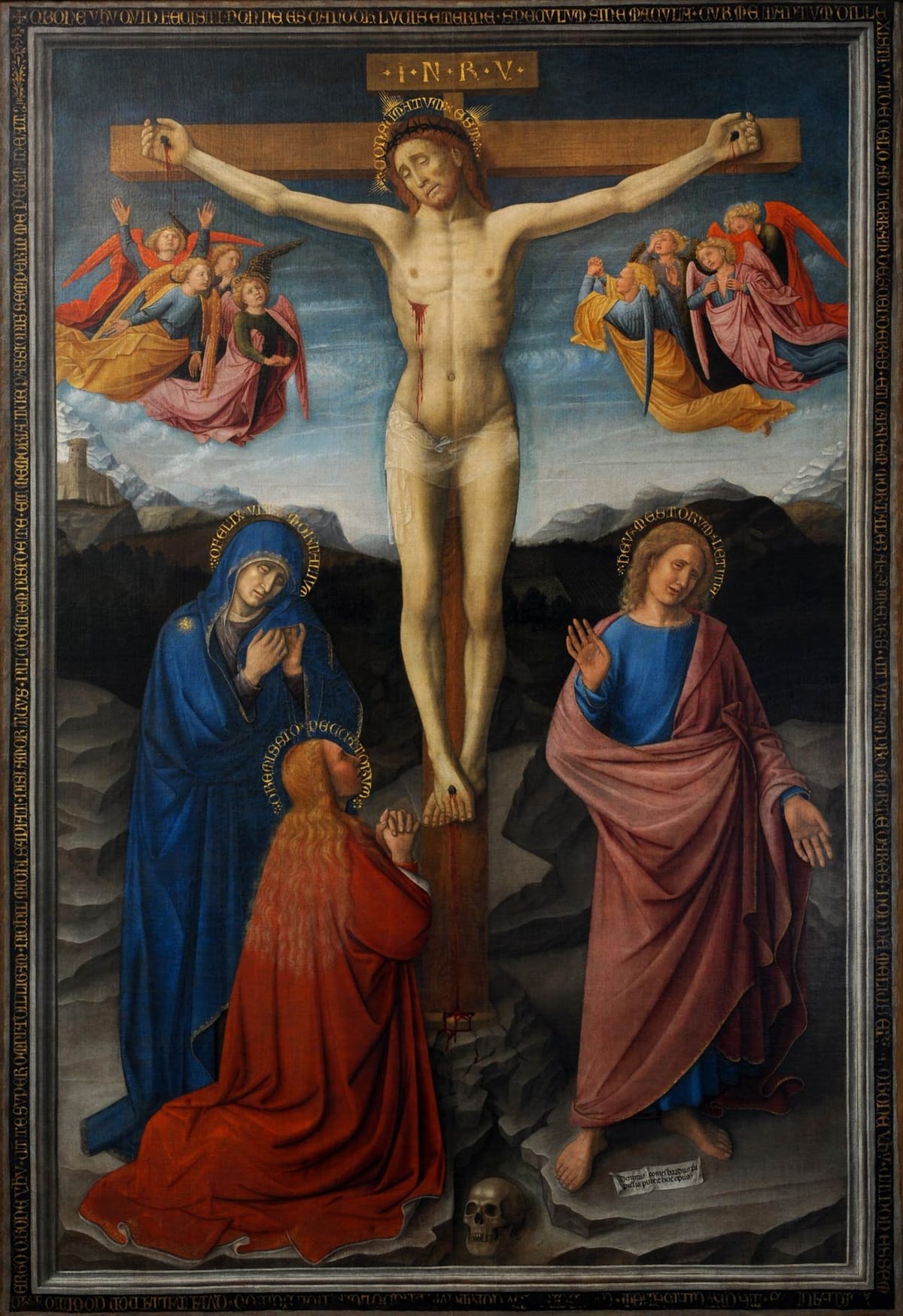
Donato de’ Bardi’s style blends Netherlandish and French influences, emphasizing refined detail and careful study of light. Free DownloadThis image is in the public domain.crucifixion.jpg376 KBdownload-circle Please SUBSCRIBE or DONATE to help keep this site free!...
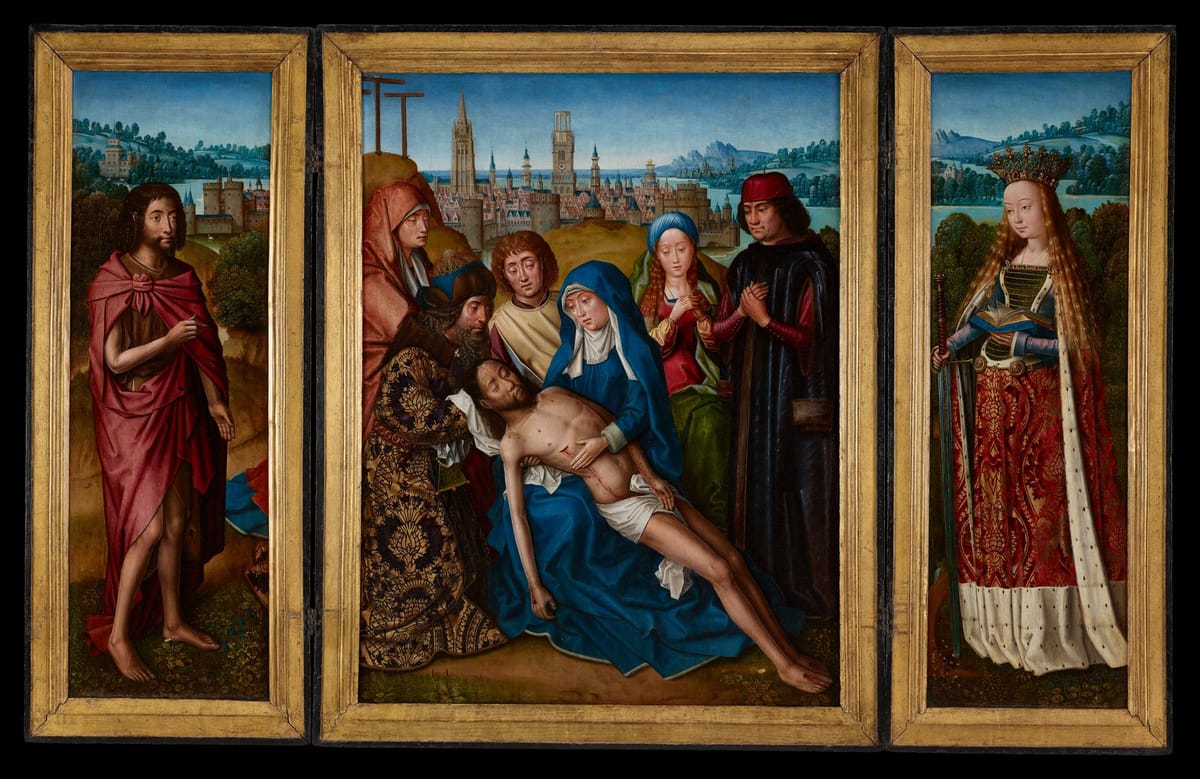
Triptychs (hinged three-paneled works) such as this were often placed on or behind the altars of medieval churches and private chapels. The central panel of this triptych shows people mourning the death of Jesus. The city in the background is Bruges, where the artist worked. Saint John the Baptist...
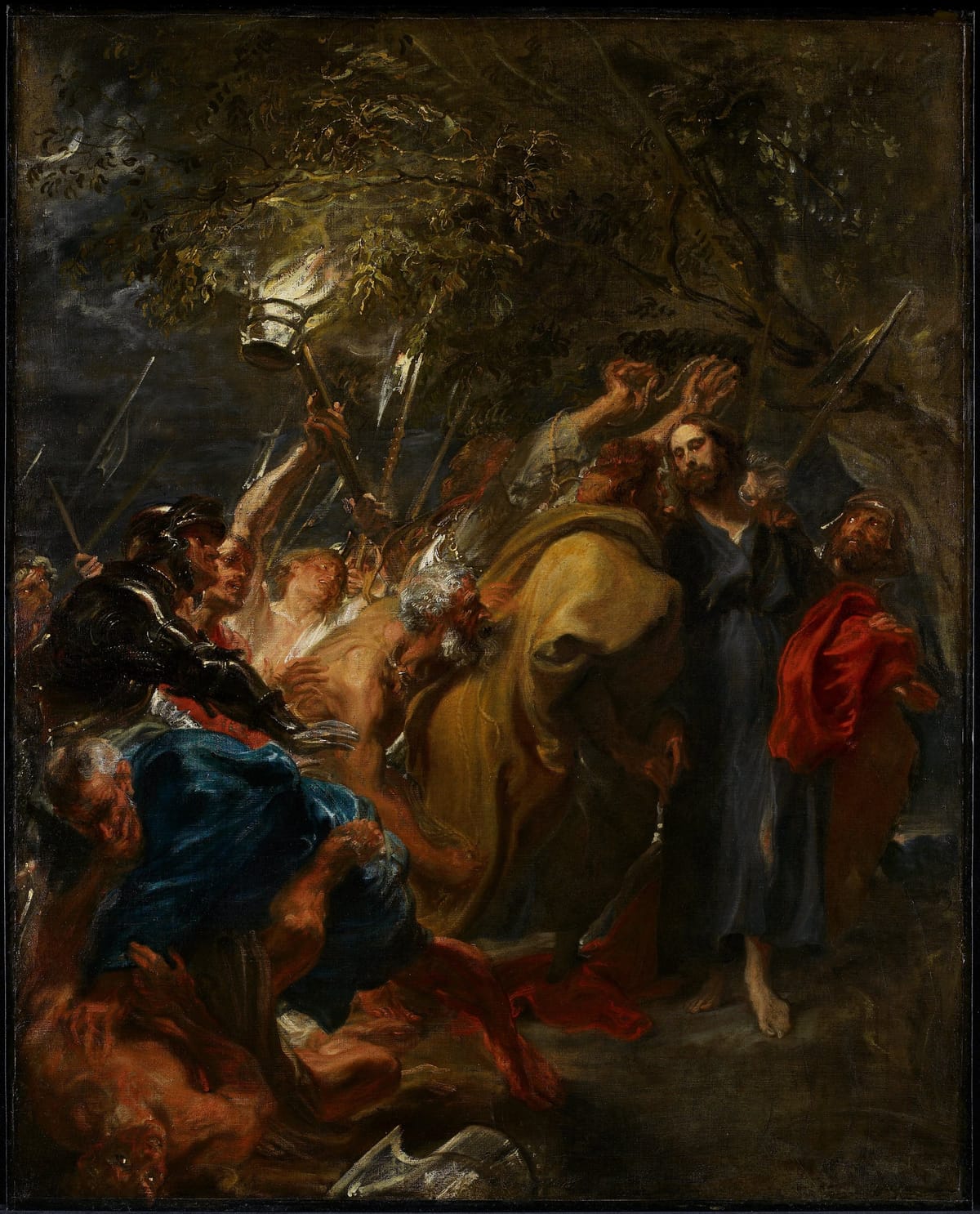
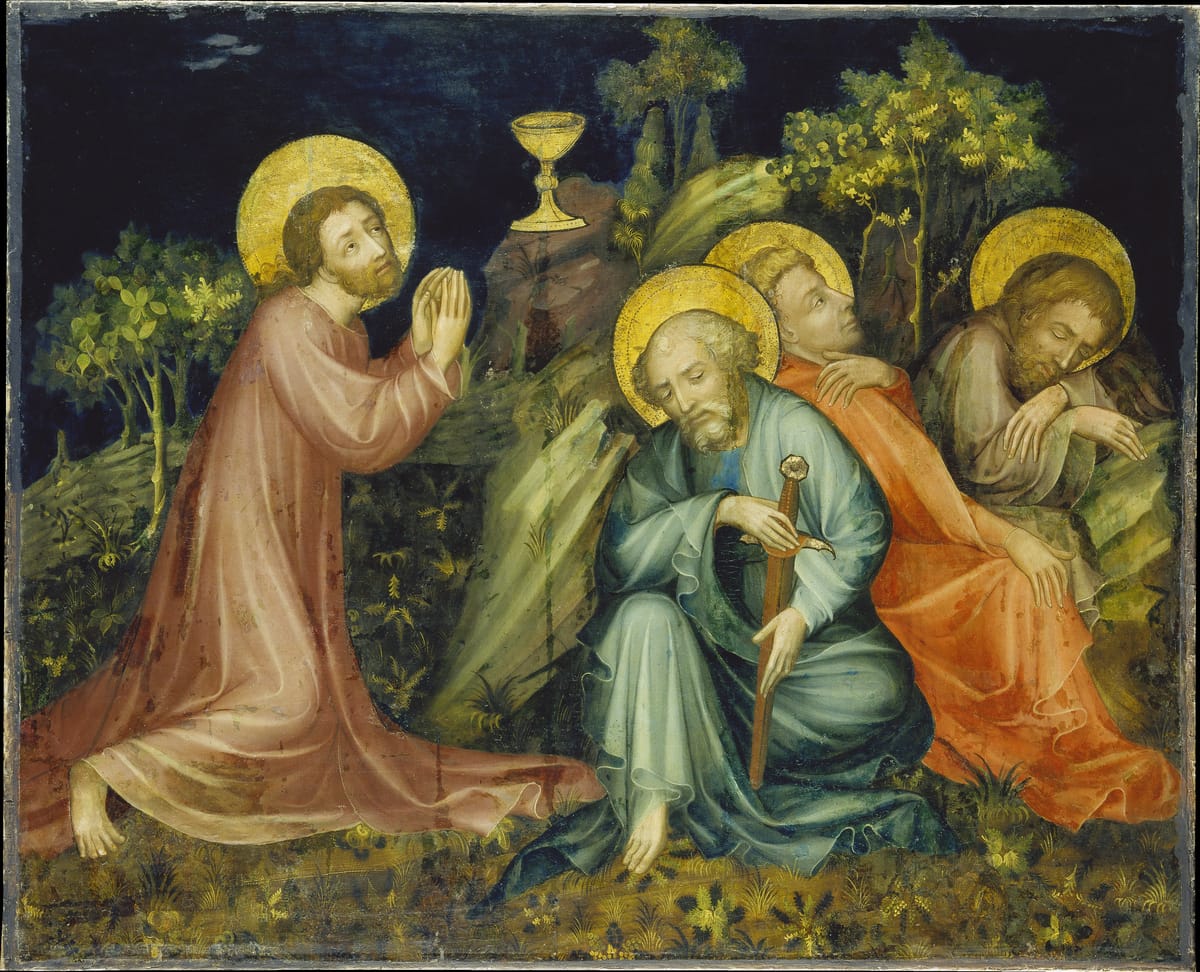
Looser and less formal than the portraits that made him famous, this work was completed shortly before Van Dyck began a six-year stint in Italy. It follows the biblical description of Jesus Christ’s betrayal in the Garden of Gethsemane. Judas, one of Jesus’ disciples, brings a band of...
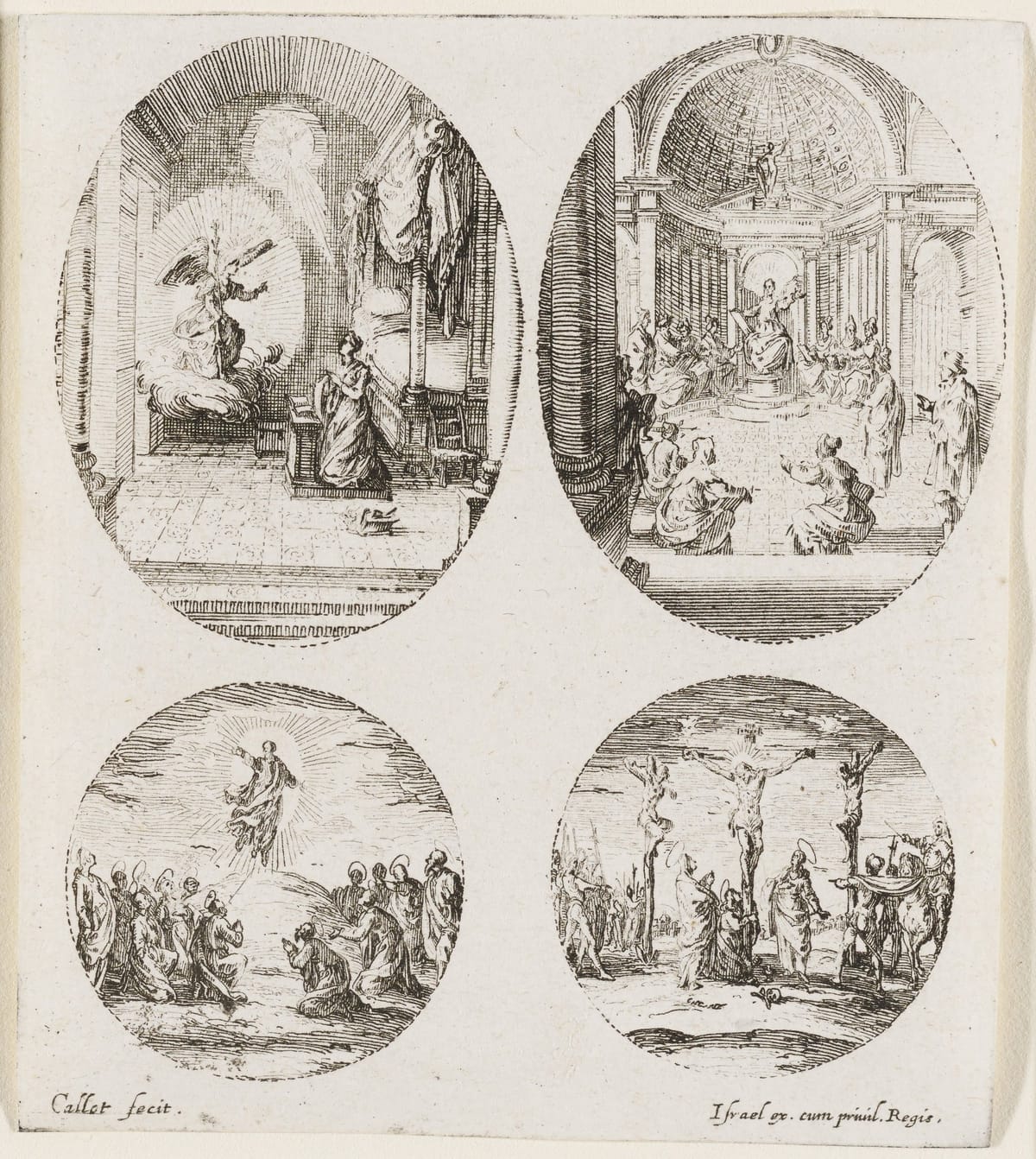
Ovals and Rondels from the Mysteries of the Passion: – Series of small etchings depicting the suffering of Jesus and the life of Mary (Gospels). Jacques Callot: 17th-century French printmaker and draftsman, known for technical innovations in etching and depicting crowded, highly detailed scenes. Free DownloadThis image is in the...
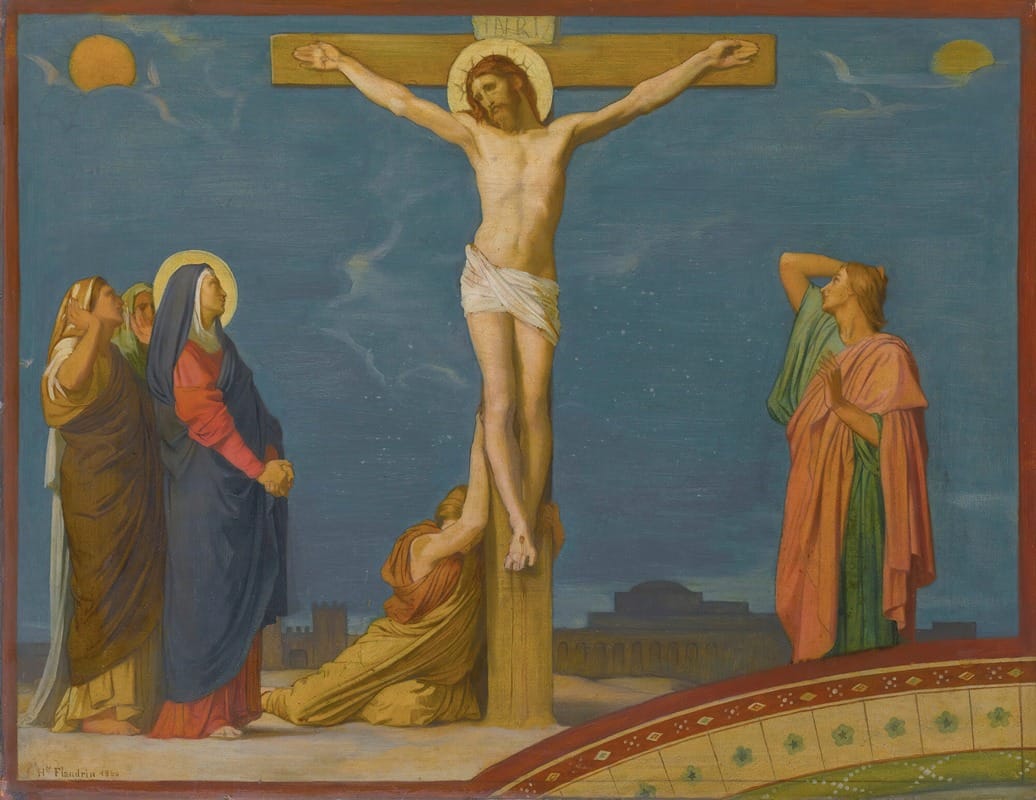
(Subject) La Mort De Jésus-Christ Sur Le Calvaire: Jesus dying on the cross at Calvary (Gospels: e.g., Matthew 27; Mark 15; Luke 23; John 19). The painter (Jean‑Hippolyte Flandrin): 19th‑century French painter, student of Ingres, noted for calm, classical religious scenes and portraits. Free DownloadThis image...
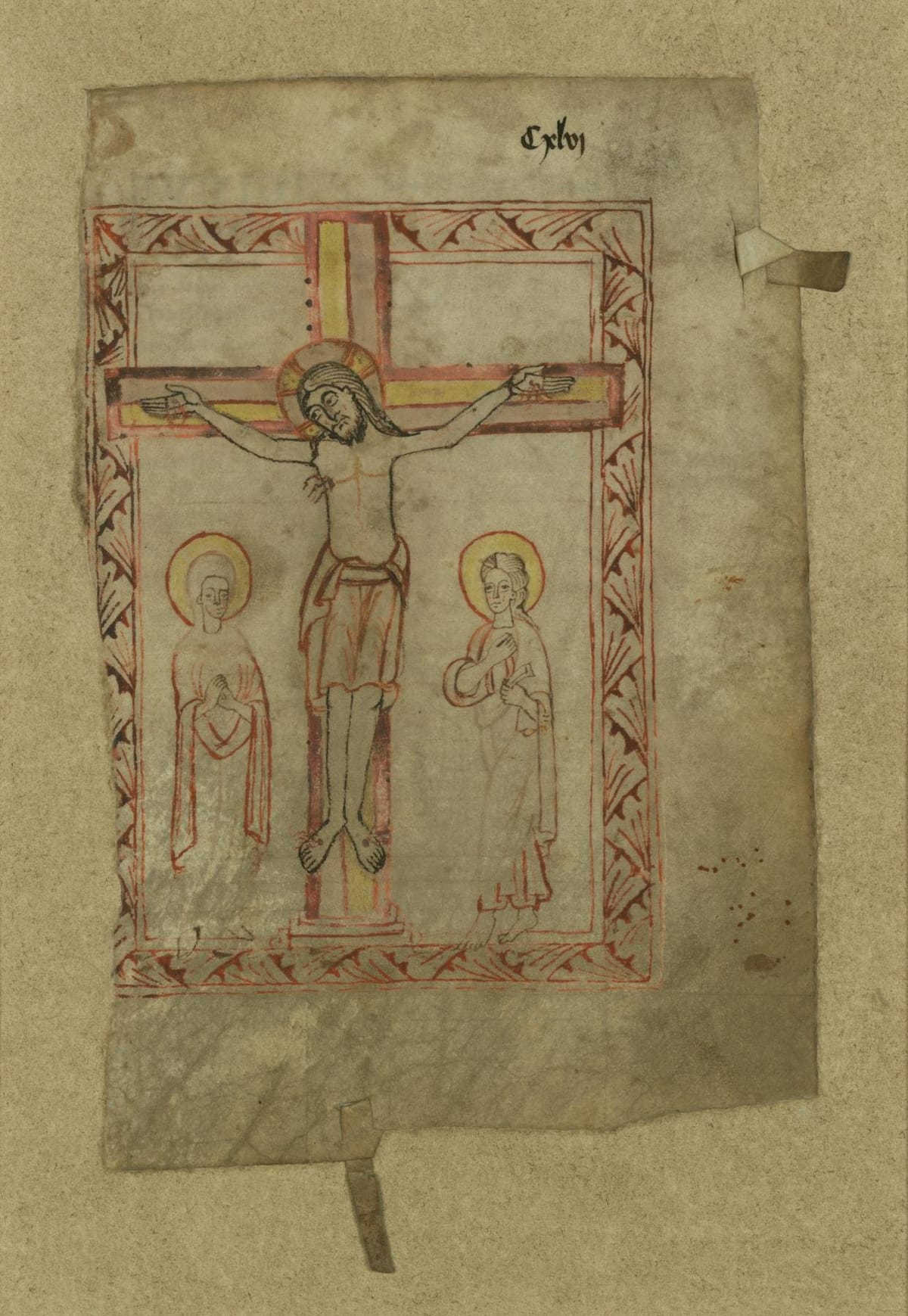
This leaf once belonged to a small missal and was created in the late eleventh or early twelfth century. The distinct style of its miniature suggests it was made in Southern Germany, or possibly in the Tyrol region of Austria, where line drawing in colored inks had developed into a...
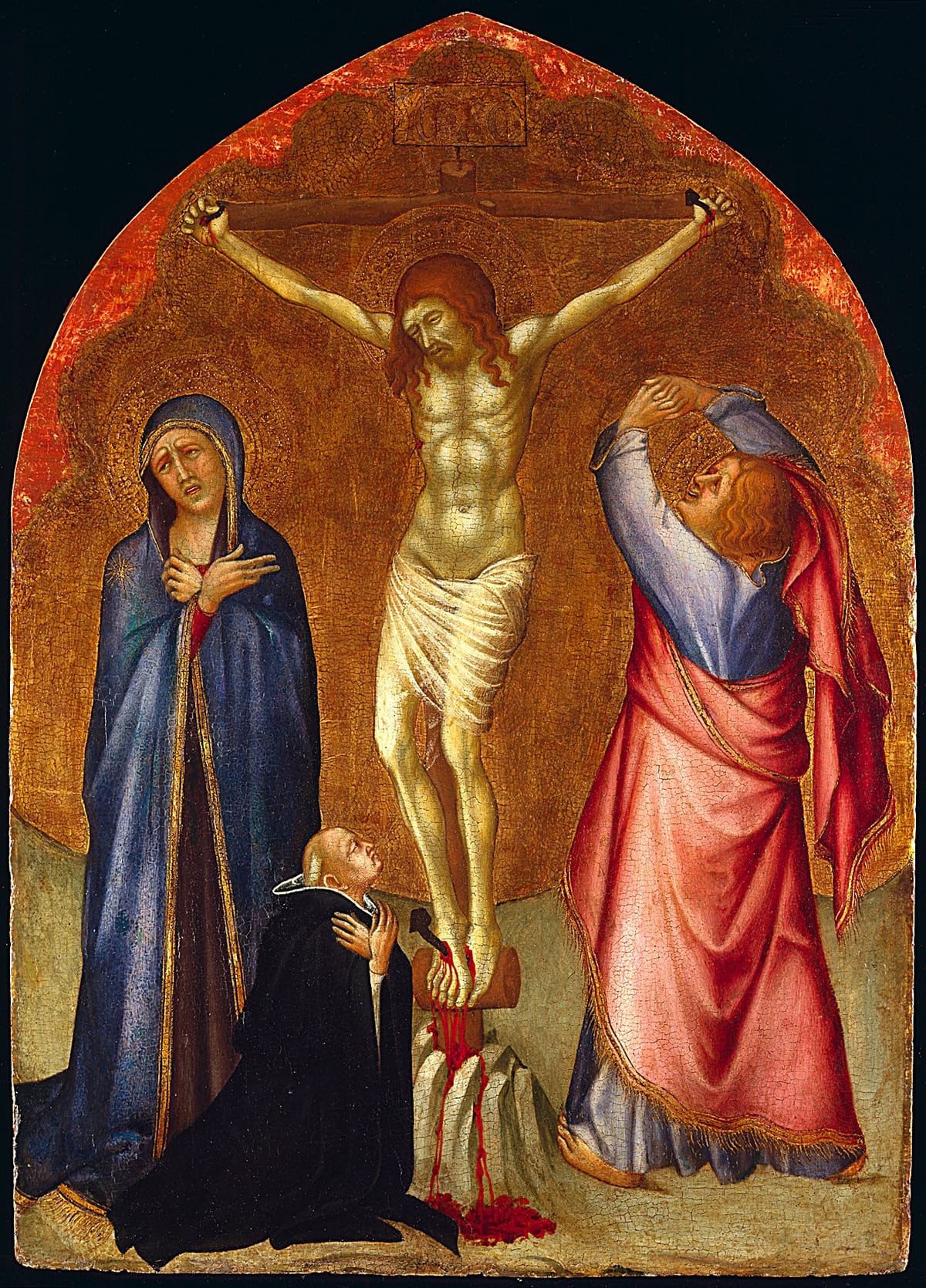
The work features the crucifixion scene with Mary, John, and a clerical figure. It is part of the European Art collection at the Minneapolis Institute of Art, where it has been since 1979. The painting has changed hands several times, most notably when it was sold in Paris in 1954...
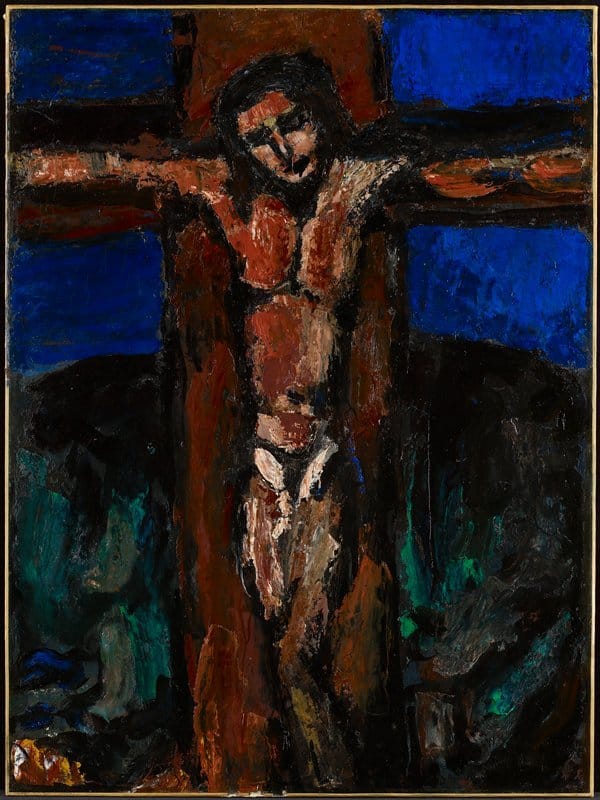
Many of Rouault’s works reveal his strong Catholic faith. The Crucifixion, representing Christ’s sacrifice for the salvation of humanity, is a prominent theme. The thick application of vibrant color here is characteristic of the Fauvist movement, with which Rouault was associated. While other Fauves tended to avoid social...
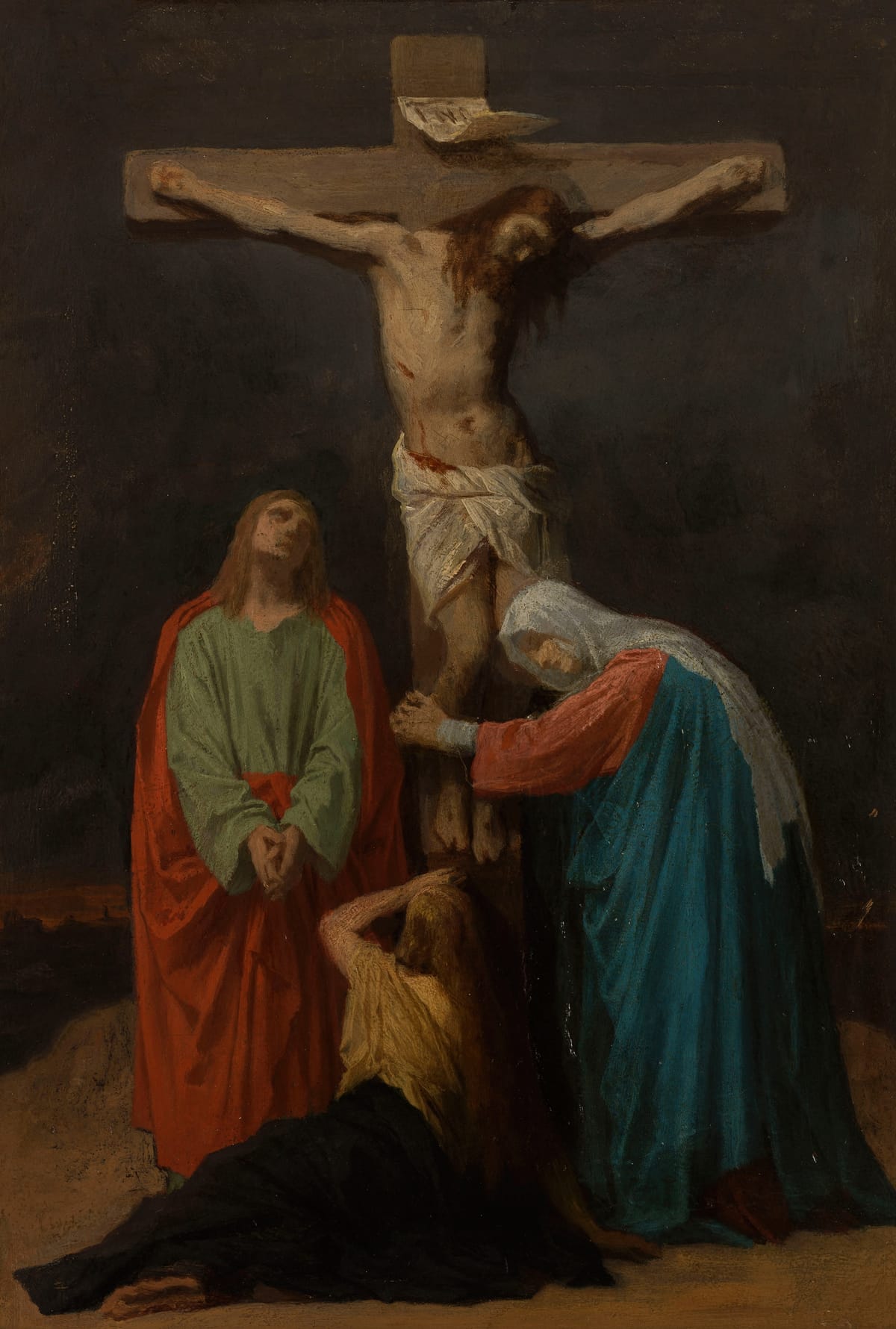
Émile Signol was a French artist who painted history paintings, portraits, and genre works. Although he lived during the Romantic period, he espoused an austere neoclassicism and was hostile to Romanticism. This neoclassic painting of the Crucifixion emphasizes dramatic realism and emotional intensity, departing from earlier, more stylized depictions. The...
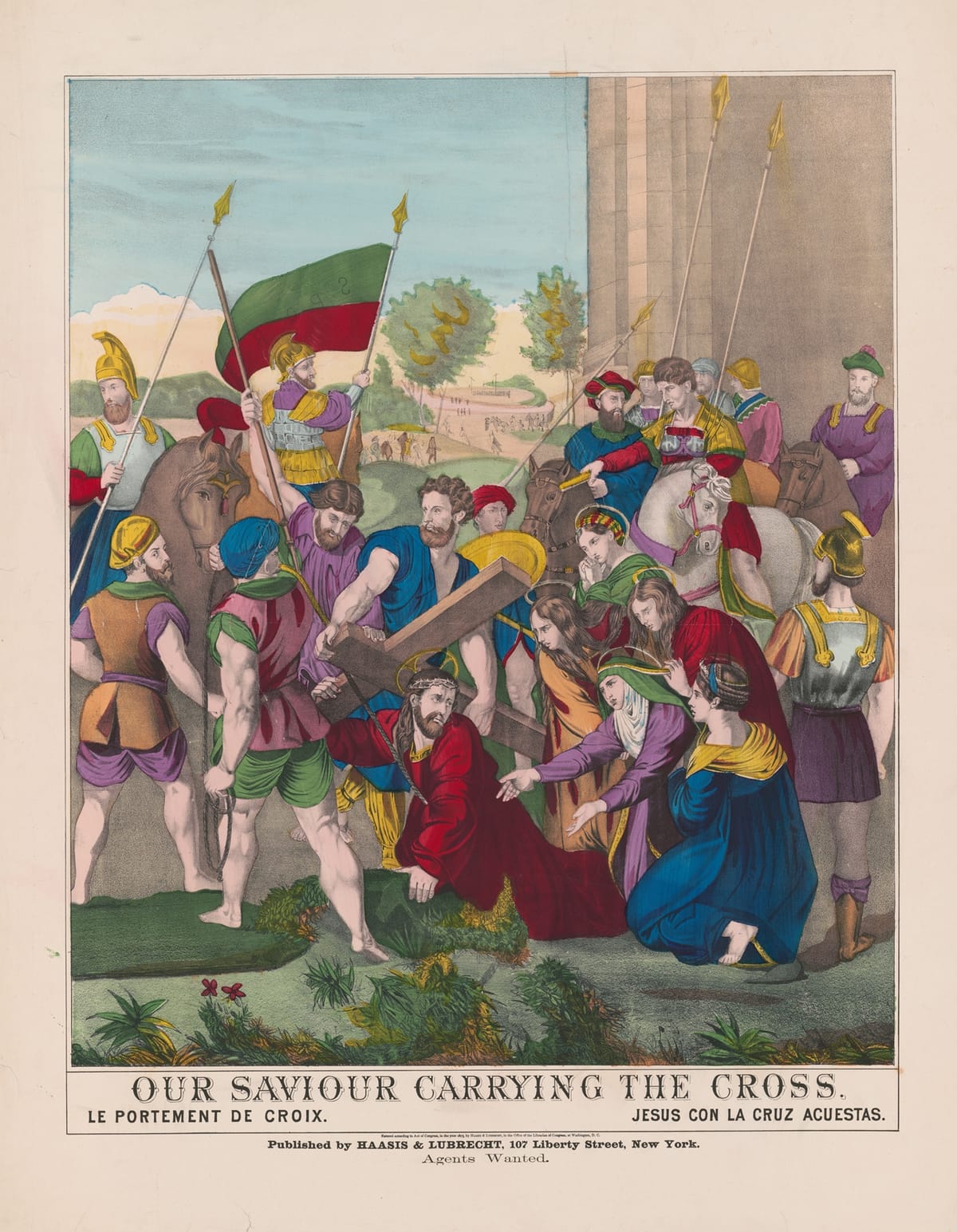
The painting captures a poignant moment in the Passion of Christ, depicting Jesus burdened with the cross as He makes His way to crucifixion. The emotional weight of the scene is conveyed through the expressions and postures of both Jesus and those around Him.
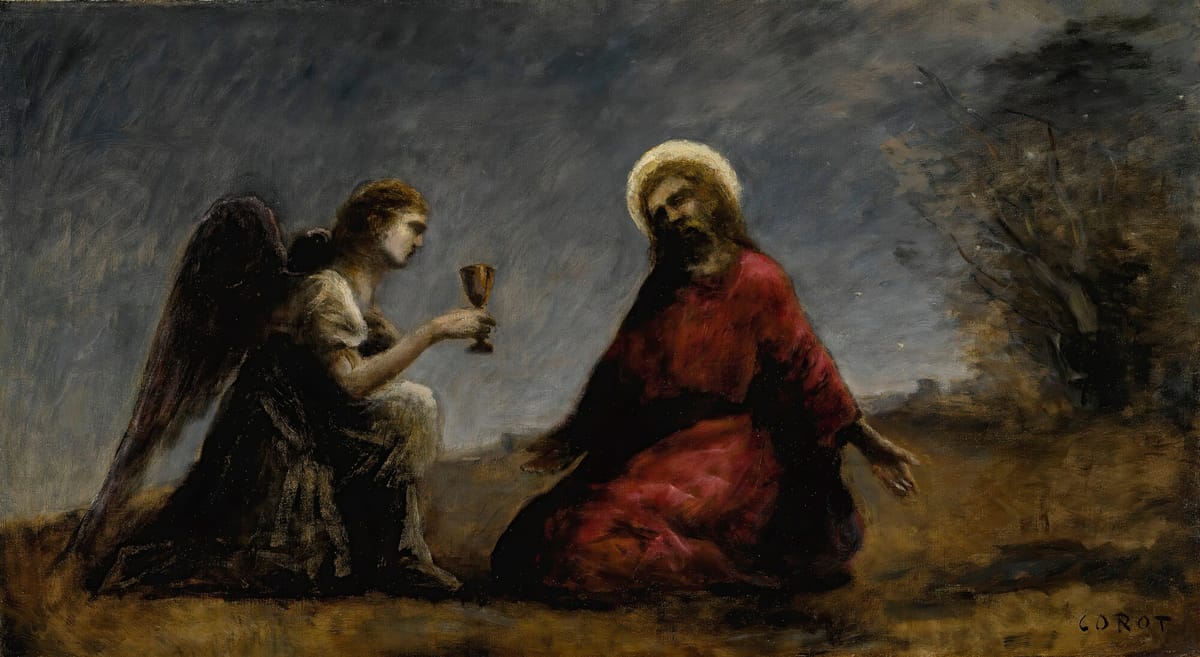
This painting by Corot depicts Jesus in the Garden of Gethsemane receiving divine support.
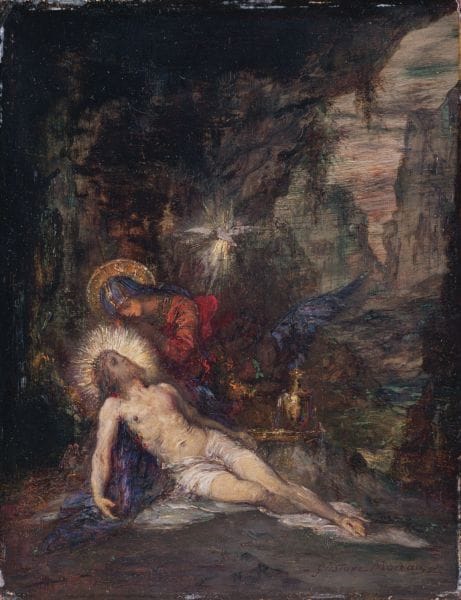
Gustave Moreau's "Pieta" (c. 1876) is a Symbolist religious painting depicting the Virgin Mary holding the body of Jesus Christ after his crucifixion.
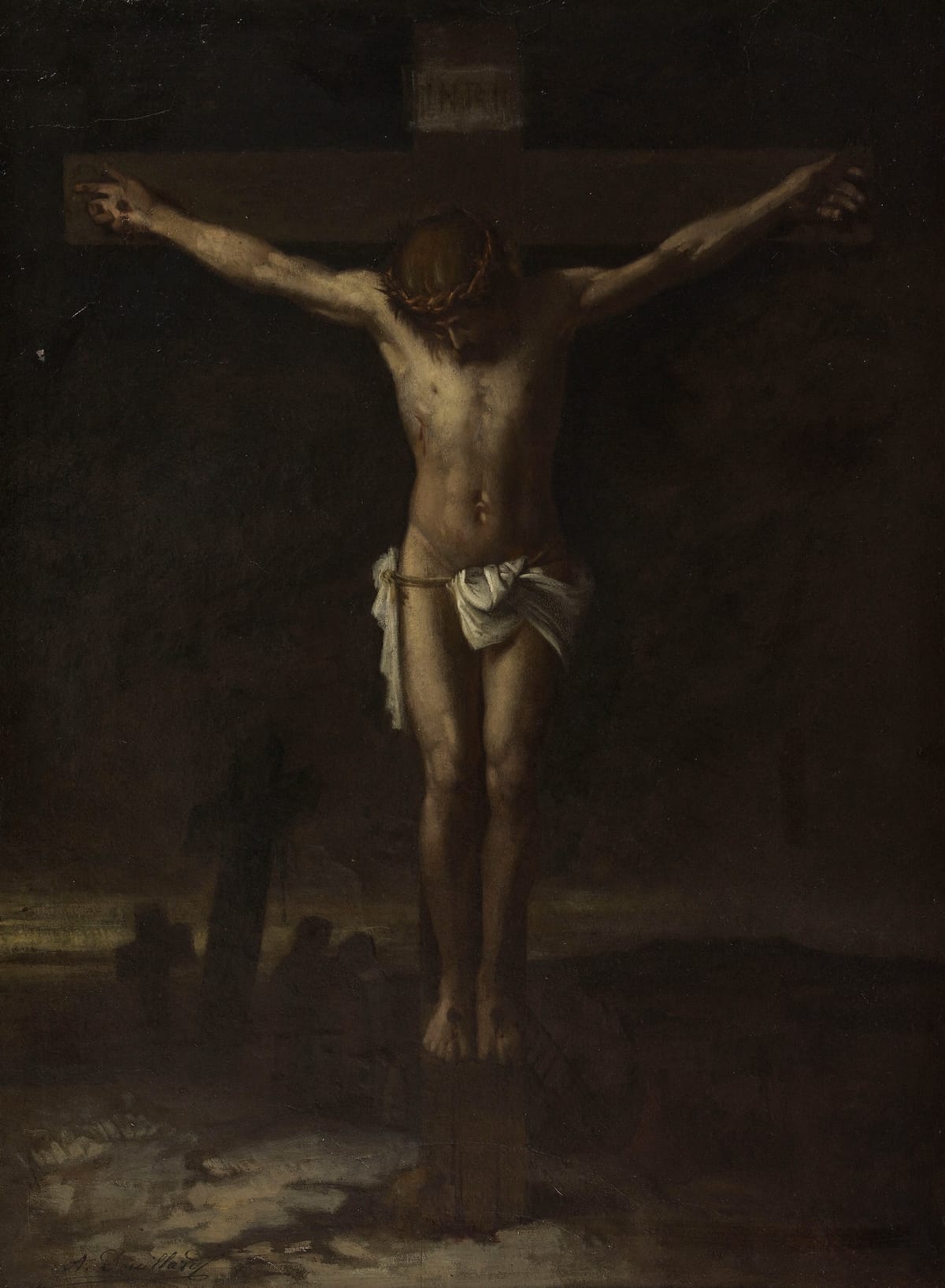
The artwork depicted in the image is "Le Christ en croix" (The Christ on the Cross), created in the year 1871 by Alexis Marie Louis Douillard, a French artist who lived from 1835 to 1905. The painting portrays the figure of Christ crucified, with a dark, subdued background...
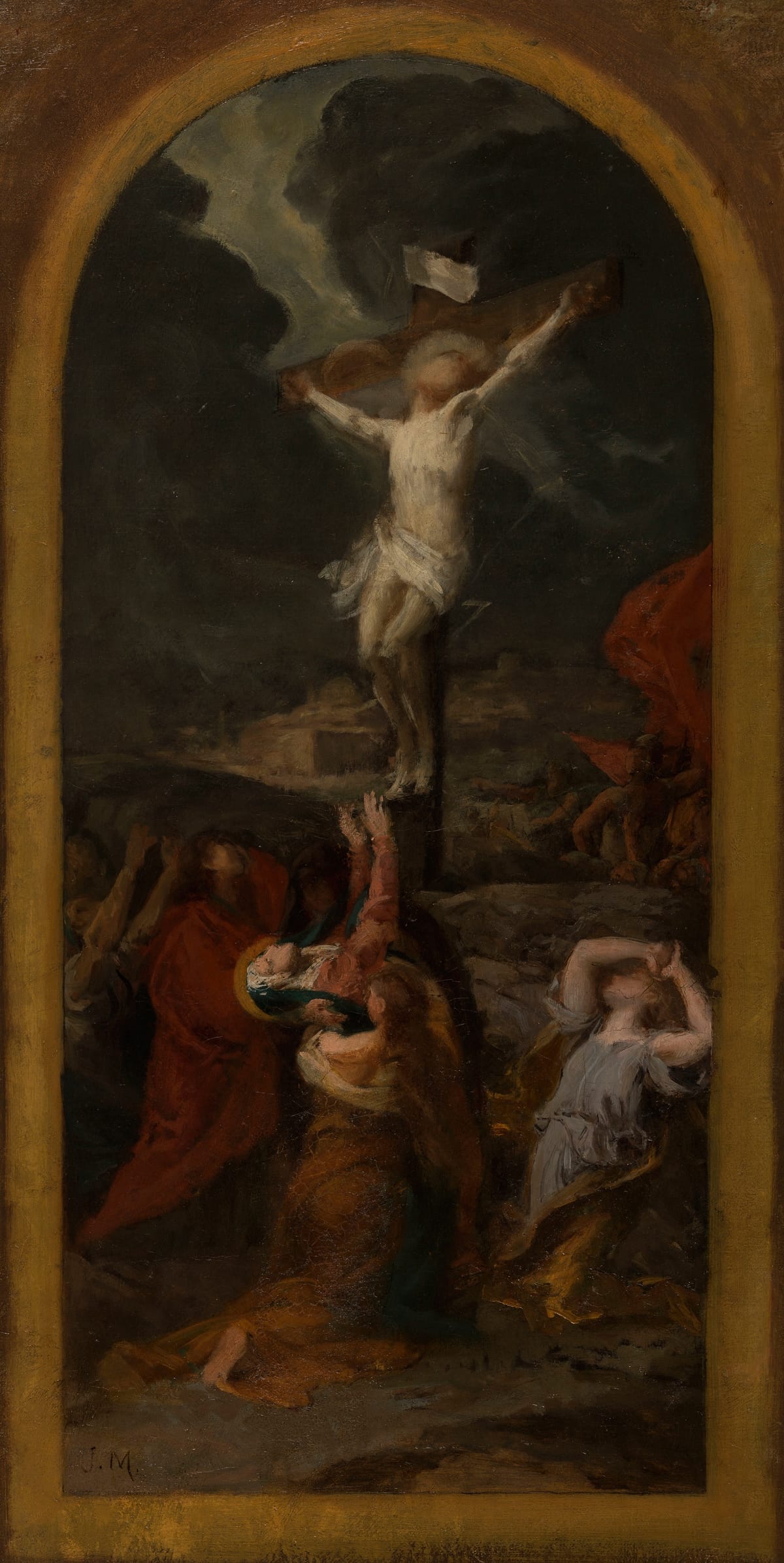
The artwork depicted is "Stabat Mater" from the year 1875, created by the French artist Jules-Louis Machard, who lived from 1839 to 1900. "Stabat Mater" refers to a 13th-century Christian hymn about the suffering of Mary, Jesus Christ's mother, during his crucifixion....
About the Image: The brothers Jacob H. and Philipp Schiff were members of one of the old Jewish families in Frankfurt. Jacob H. Schiff was eighteen when he emigrated to America, where he became a very successful banker. He contributed most of his considerable fortune - some 100 million dollars - to...
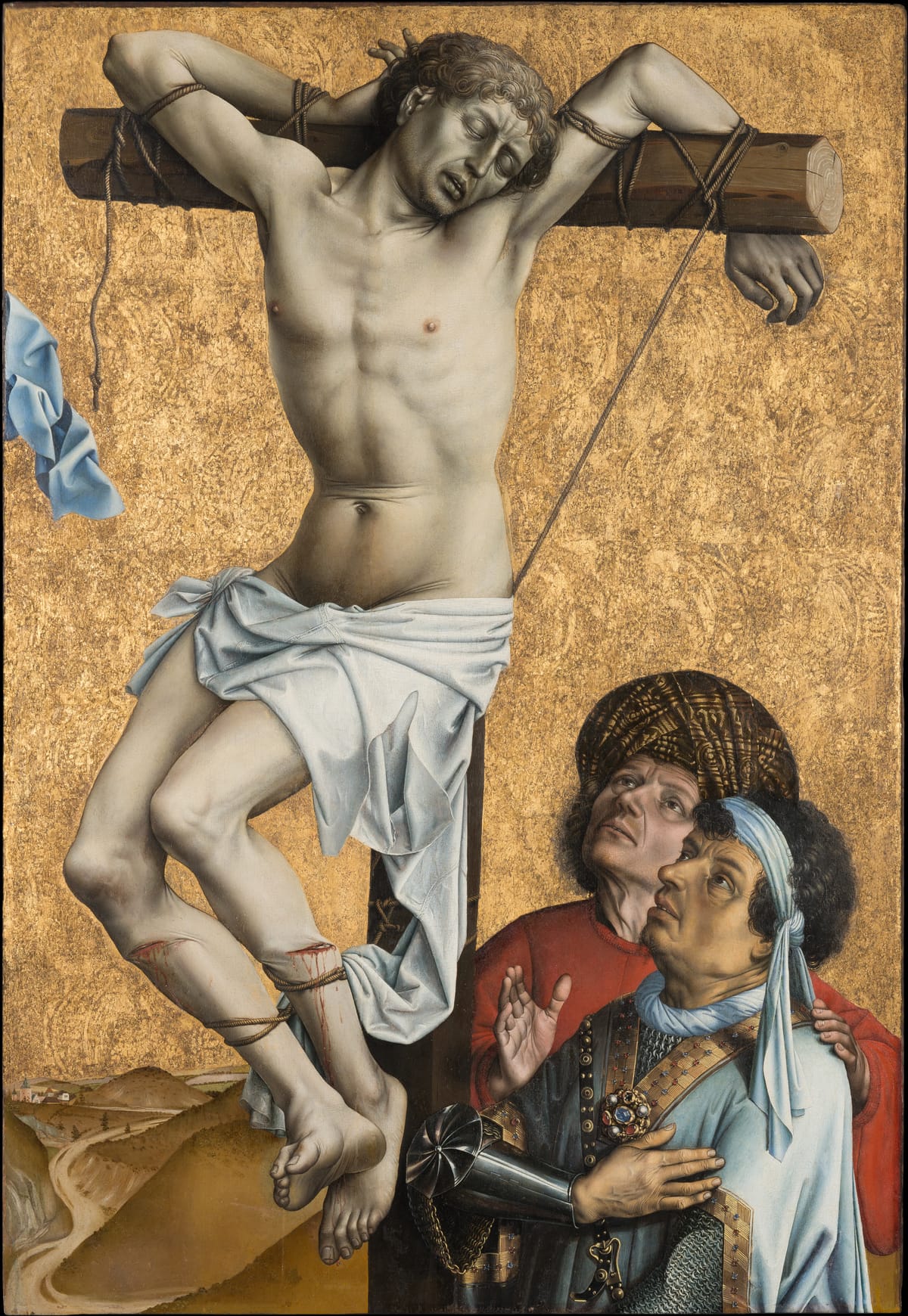
About the Image: This imposing, cruelly exact image depicts the corpse of one of the two criminals crucified with Jesus. Executed in the workshop of Robert Campin in Tournai around 1430 – at about the same time as the Van Eyck brothers’ Ghent Altarpiece – it is all that remains of one...
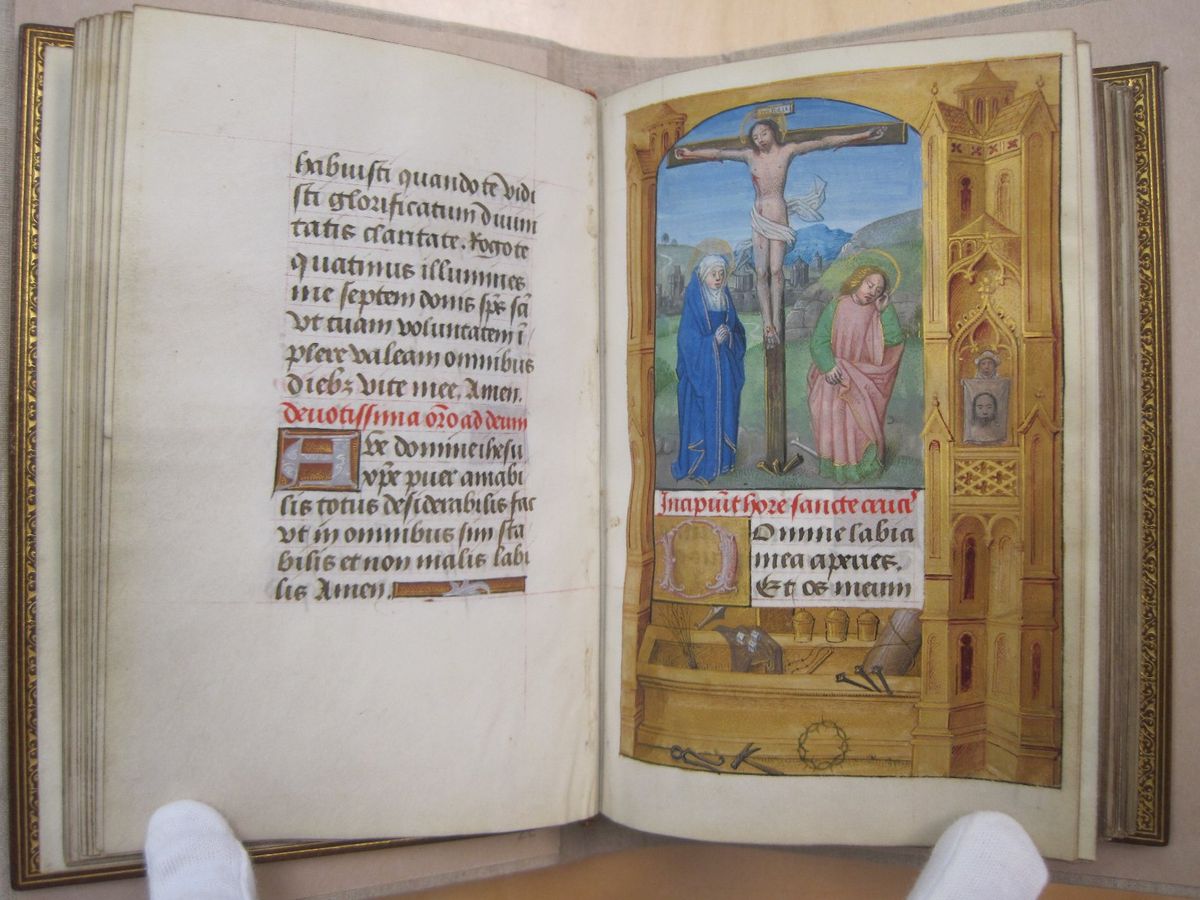
About the Image: This is a beautifully detailed page in a Book of Hours, specifically the "Horae Beatae Mariae Virginis." These books, predominantly used during the late Middle Ages into the Renaissance, were Christian devotional books primarily for laypeople. They typically contained prayers, Psalms, and Gospel lessons to...