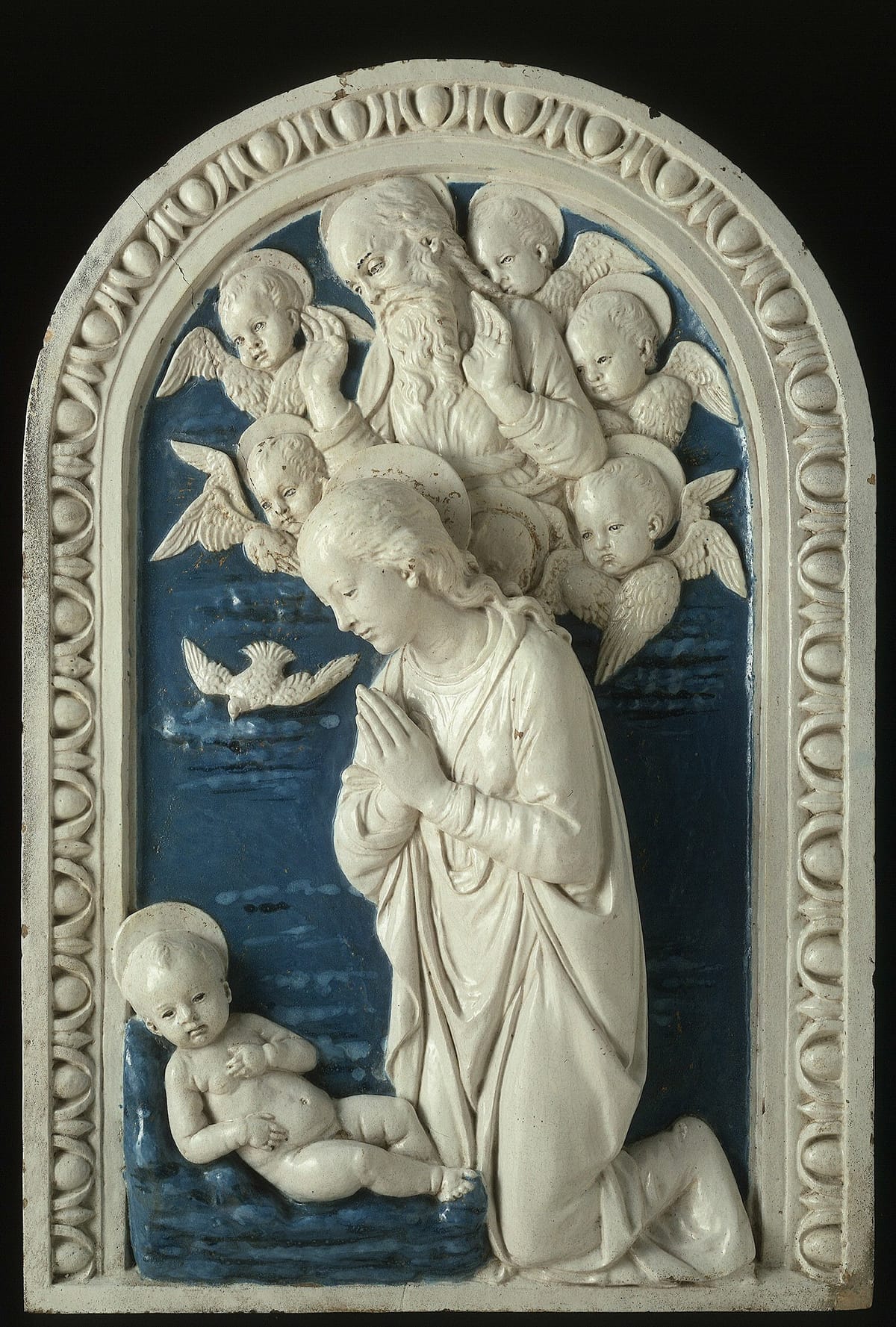
Adoration of the Christ Child (After 1479) by Workshop of Andrea della Robbia - Public Domain Catholic Stock Photo
Glazed terracotta. Dimensions: 67 × 44.5 cm (26 3/8 × 17 1/2 in.)
Glazed terracotta. Dimensions: 67 × 44.5 cm (26 3/8 × 17 1/2 in.)
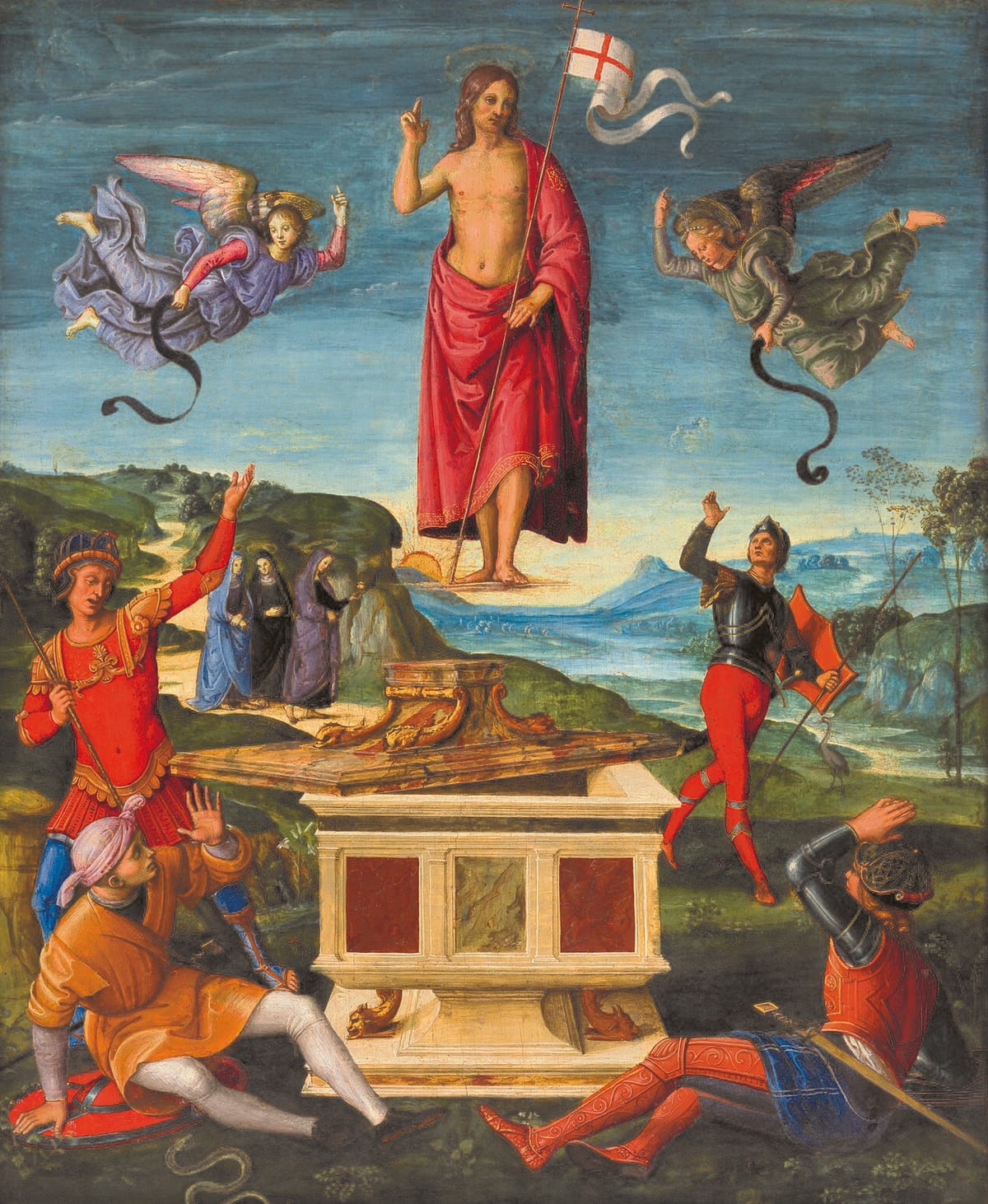
Jesus Christ rising from a marble tomb holding the cross of St. George, Christ is flanked by angels, and surrounded by frightened soldiers.
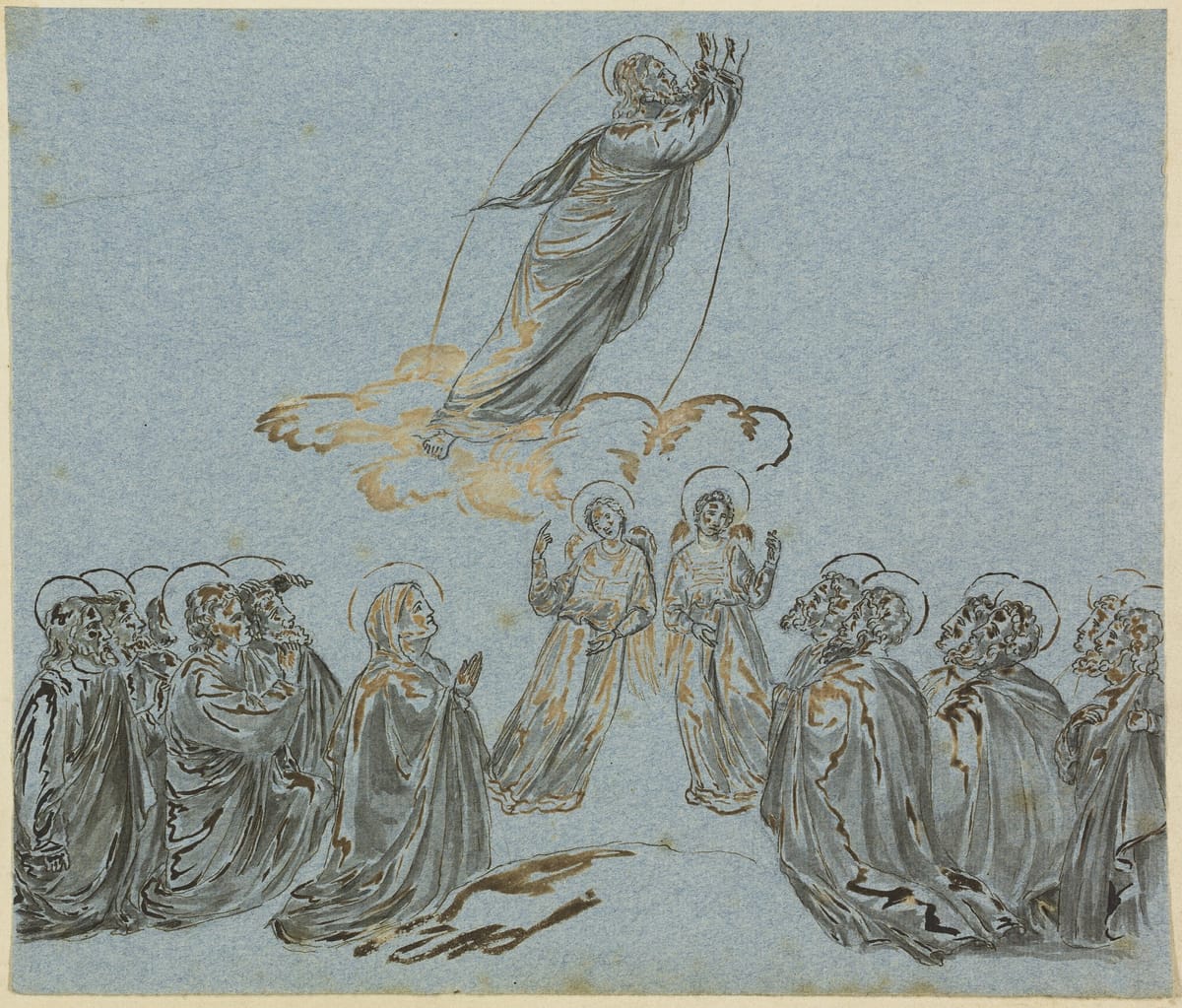
Pen and brown ink, with brush and gray wash, heightened with lead white (oxidized), on blue laid paper, tipped onto cream laid paper
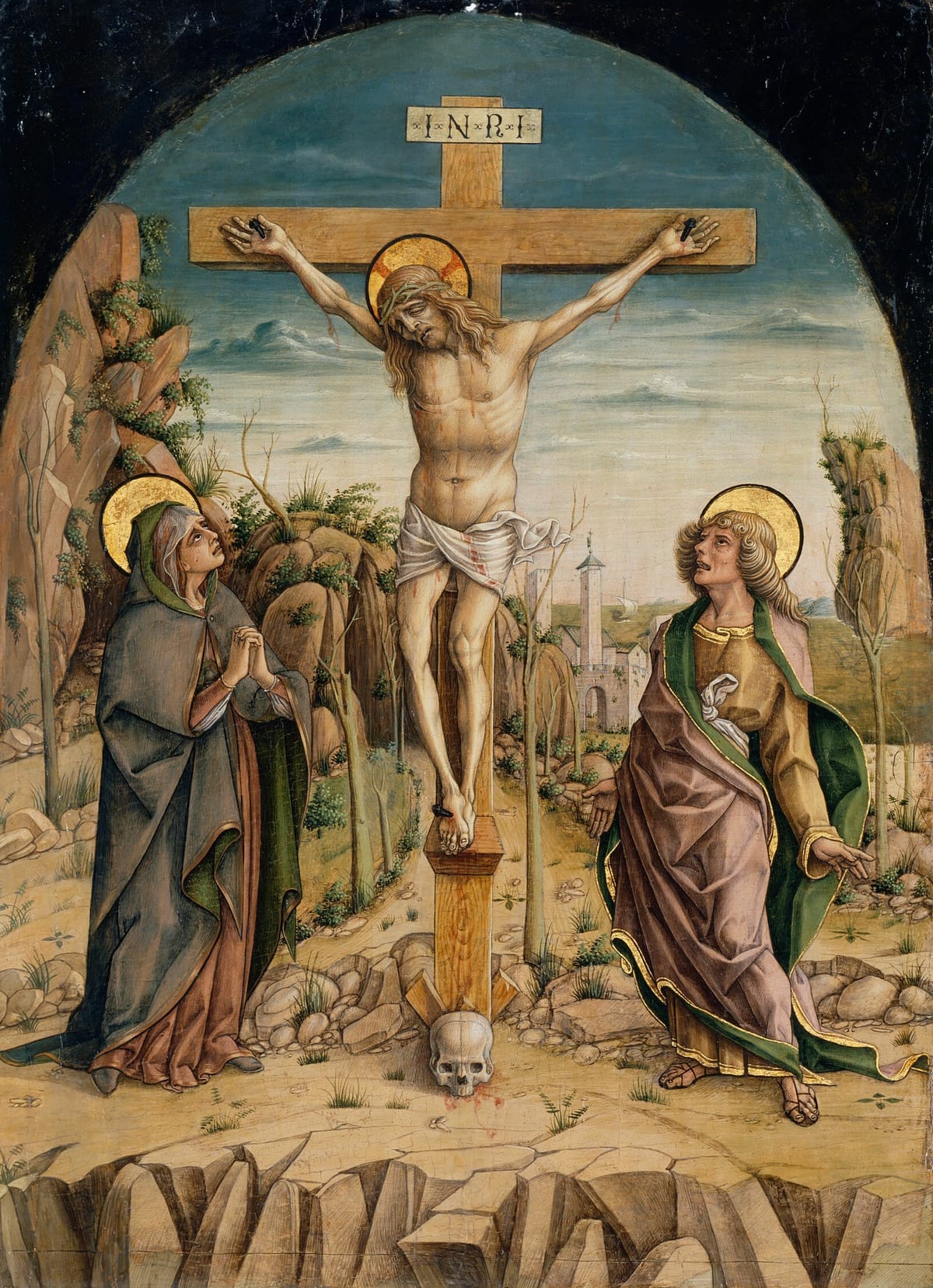
Carlo Crivelli’s vivid style married the beautiful with the grotesque. Here, the Virgin Mary and Saint John the Evangelist gaze in anguish at Jesus on the cross.
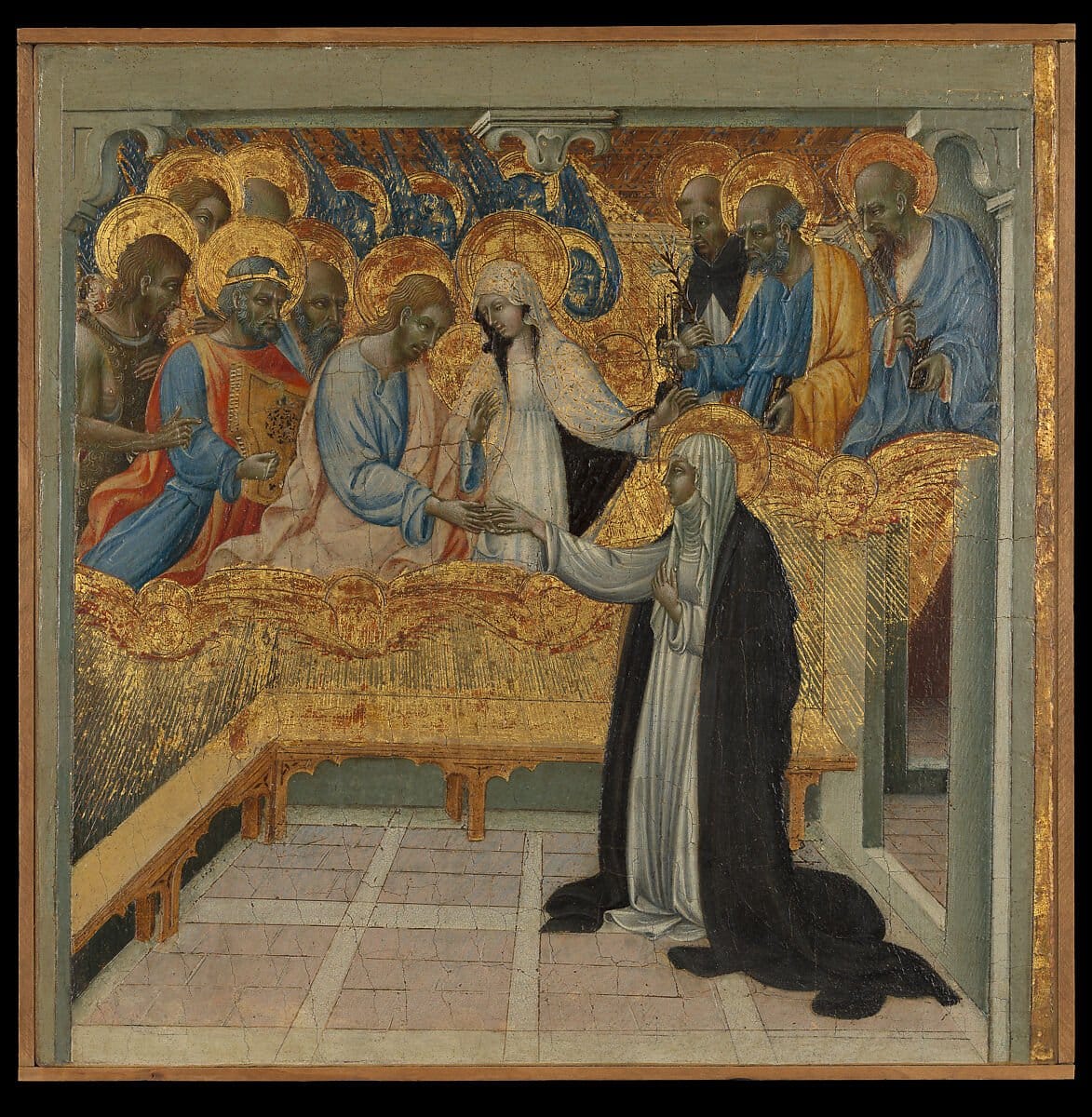
These three panels belong to a series from the base (predella) of a large altarpiece and constituted the first extensive narrative cycle of Catherine of Siena, a Sienese mystic as well as minister to the poor and plague-stricken.
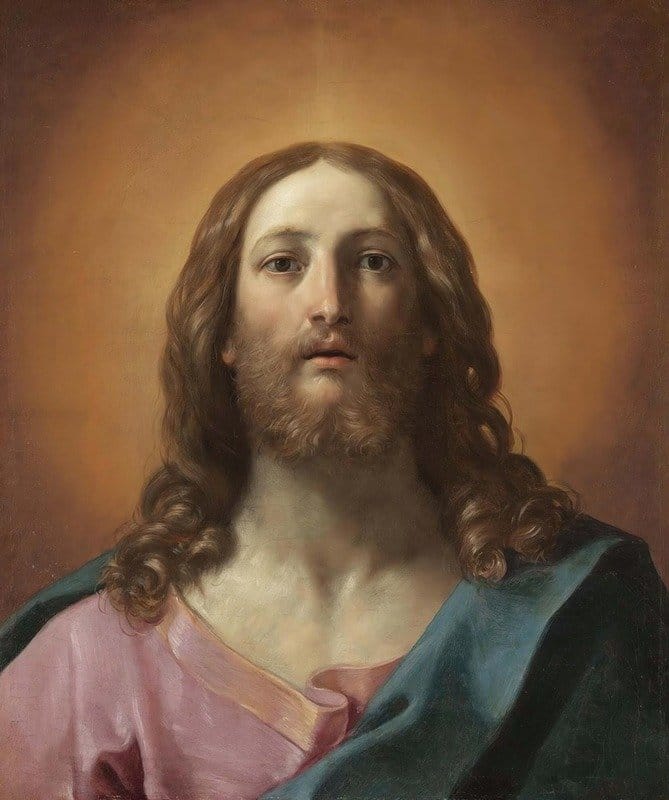
Guido Reni was an Italian painter of the Baroque period, although his works showed a classical manner, similar to Simon Vouet, Nicholas Poussin and Philippe de Champaigne. He painted primarily religious works, but also mythological and allegorical subjects.
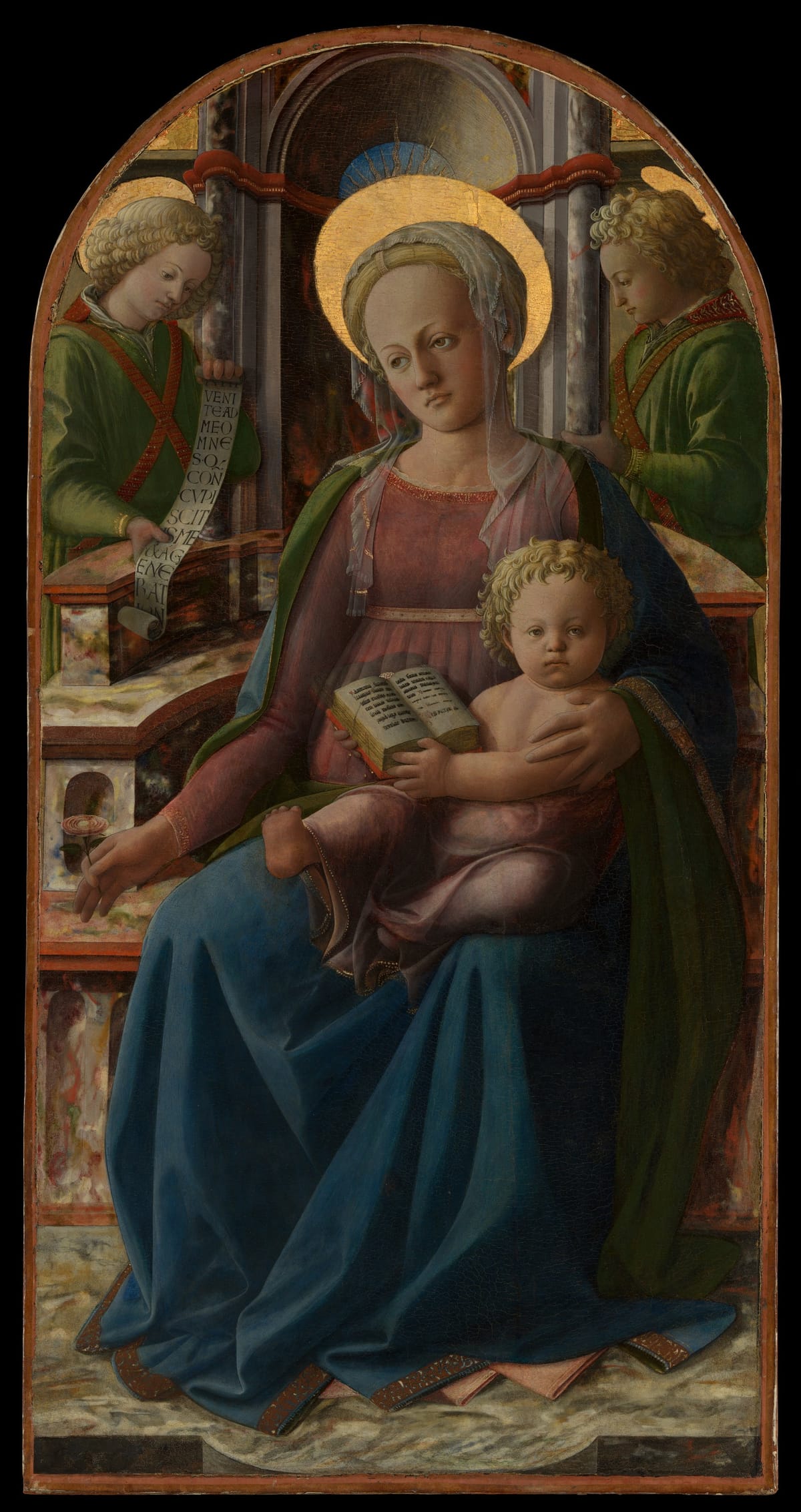
The Virgin Mary, known as "the rose without thorns" for having been born free of original sin, holds the symbolic flower while sitting upon the Throne of Wisdom. The scroll held by an angel reads: "Come over to me, all ye that desire me, and be filled...
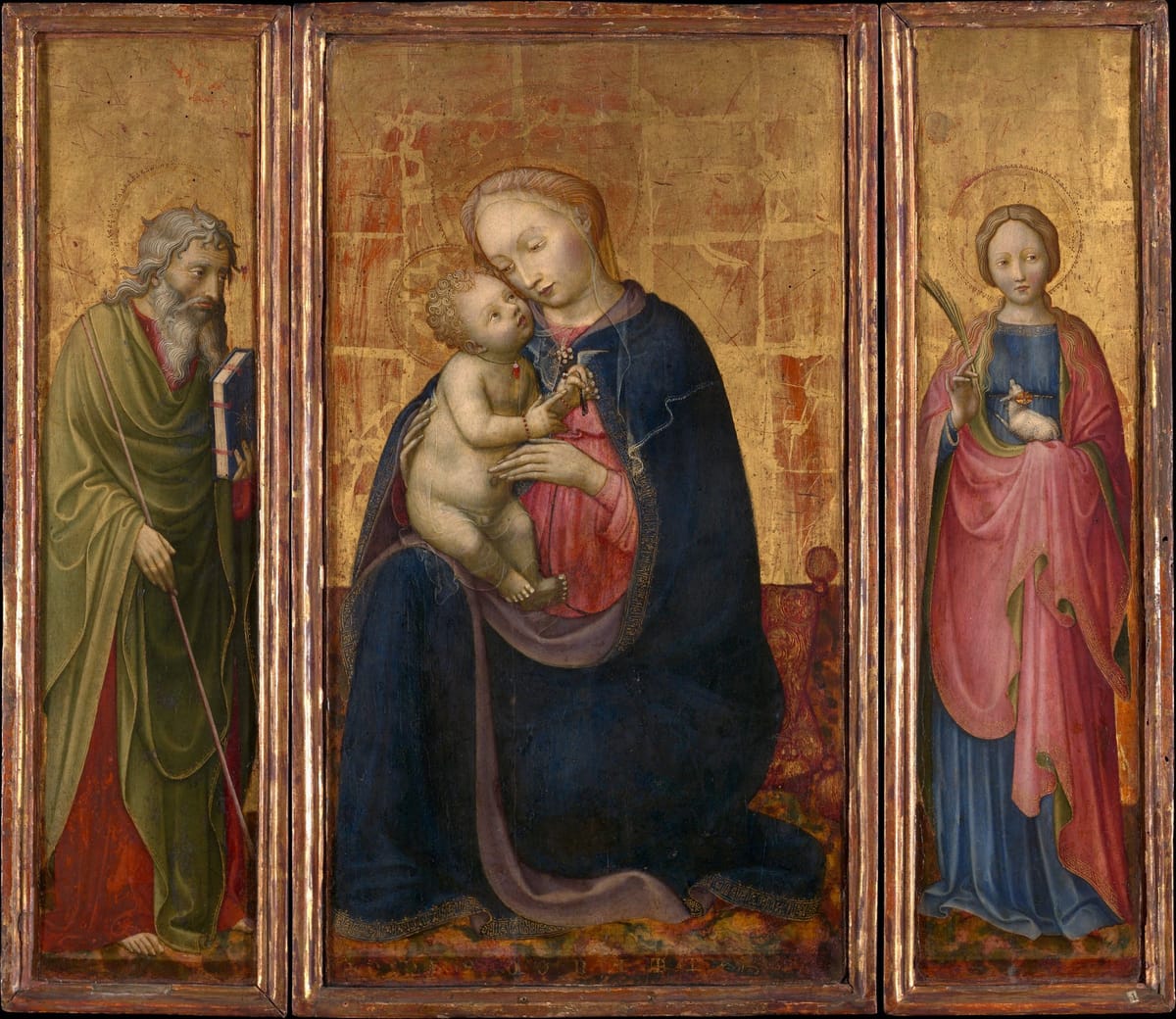
Donato de’ Bardi’s style brings together Netherlandish and French influences, focusing on refined detail and careful study of light. At the center of this painting, which is still in its original frame, Donato captures the sheltering affection between the infant Christ and Madonna. Gesturing to the goldfinch in his...
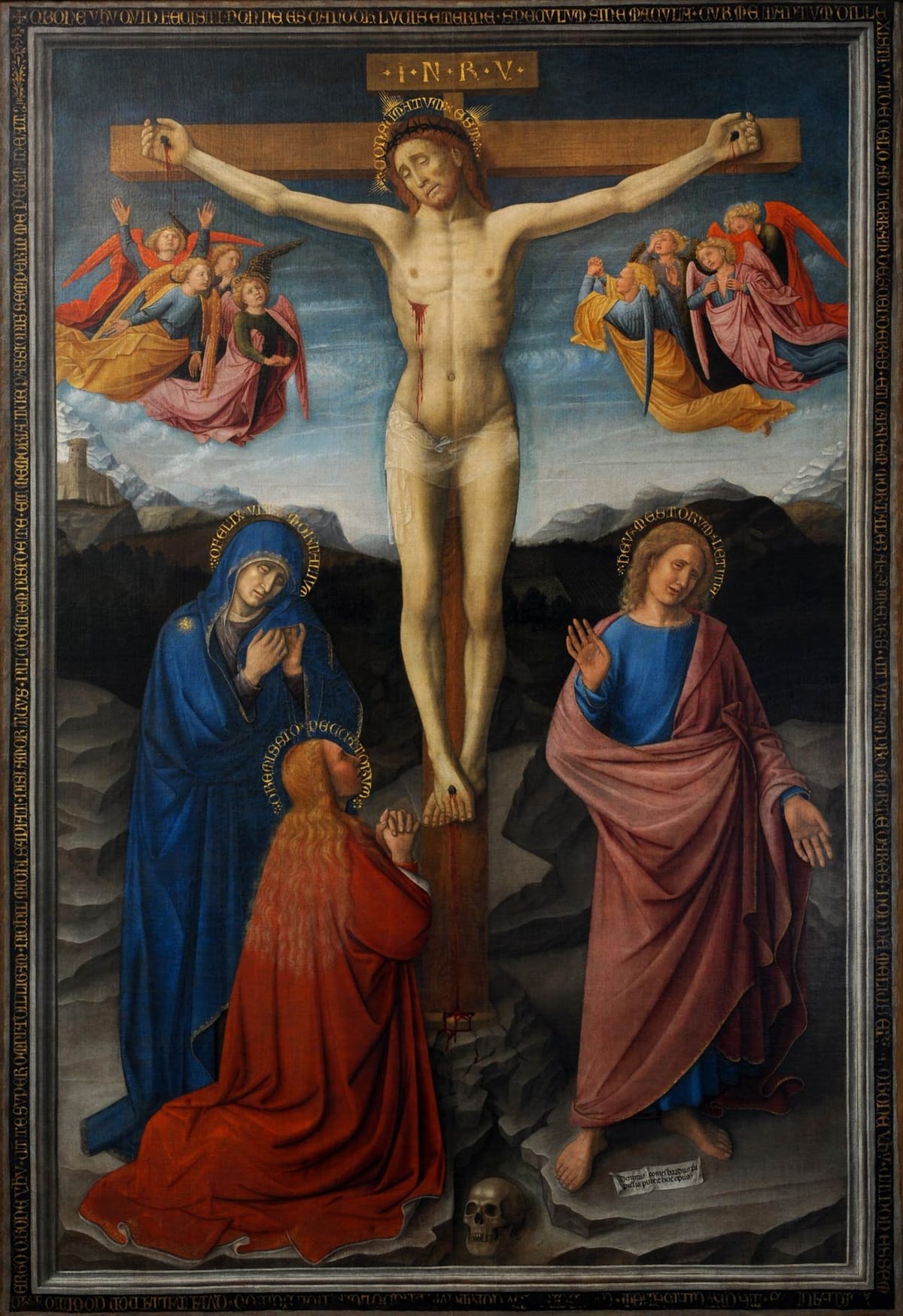
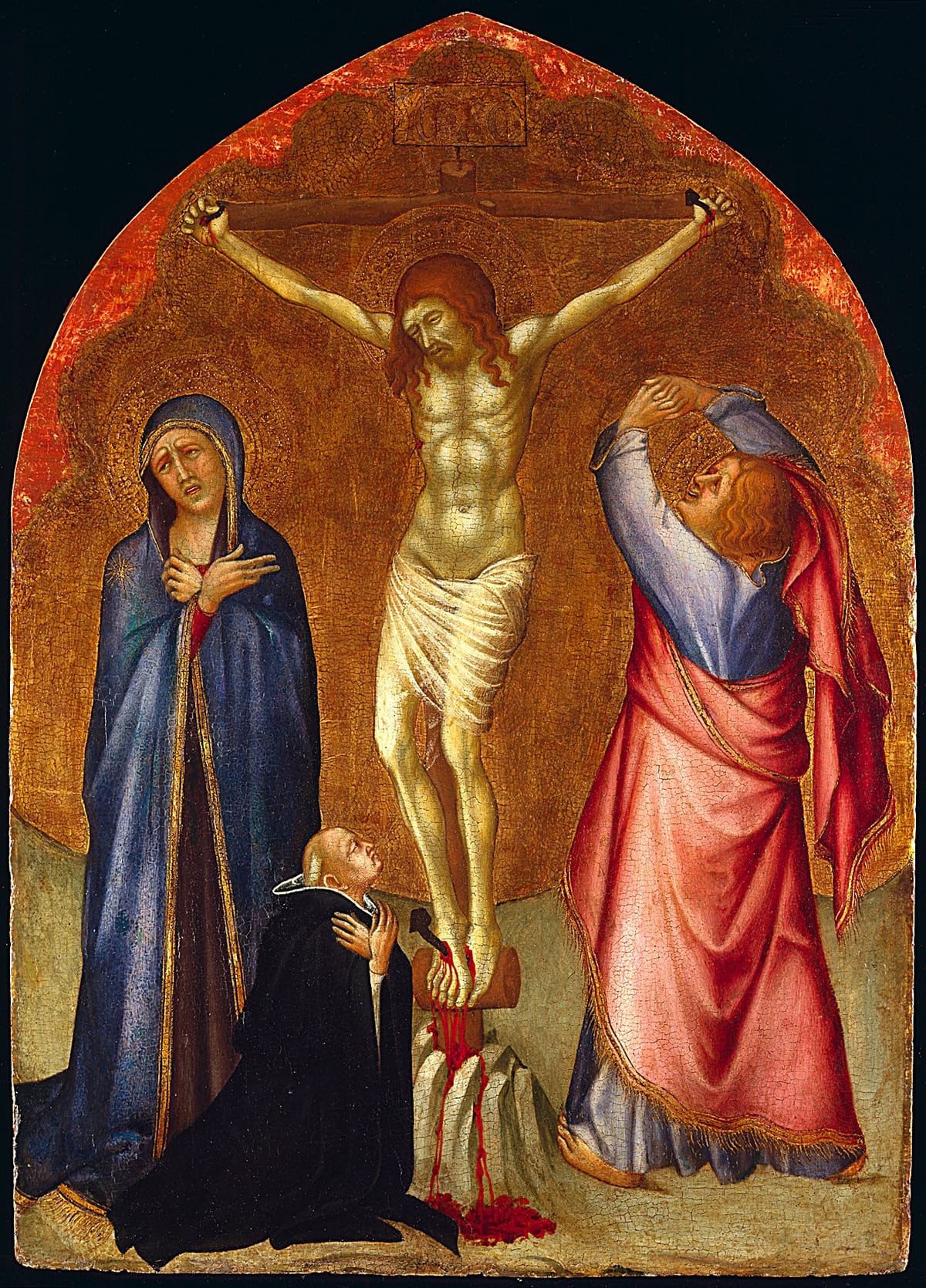
Donato de’ Bardi’s style blends Netherlandish and French influences, emphasizing refined detail and careful study of light. Free DownloadThis image is in the public domain.crucifixion.jpg376 KBdownload-circle Please SUBSCRIBE or DONATE to help keep this site free!...
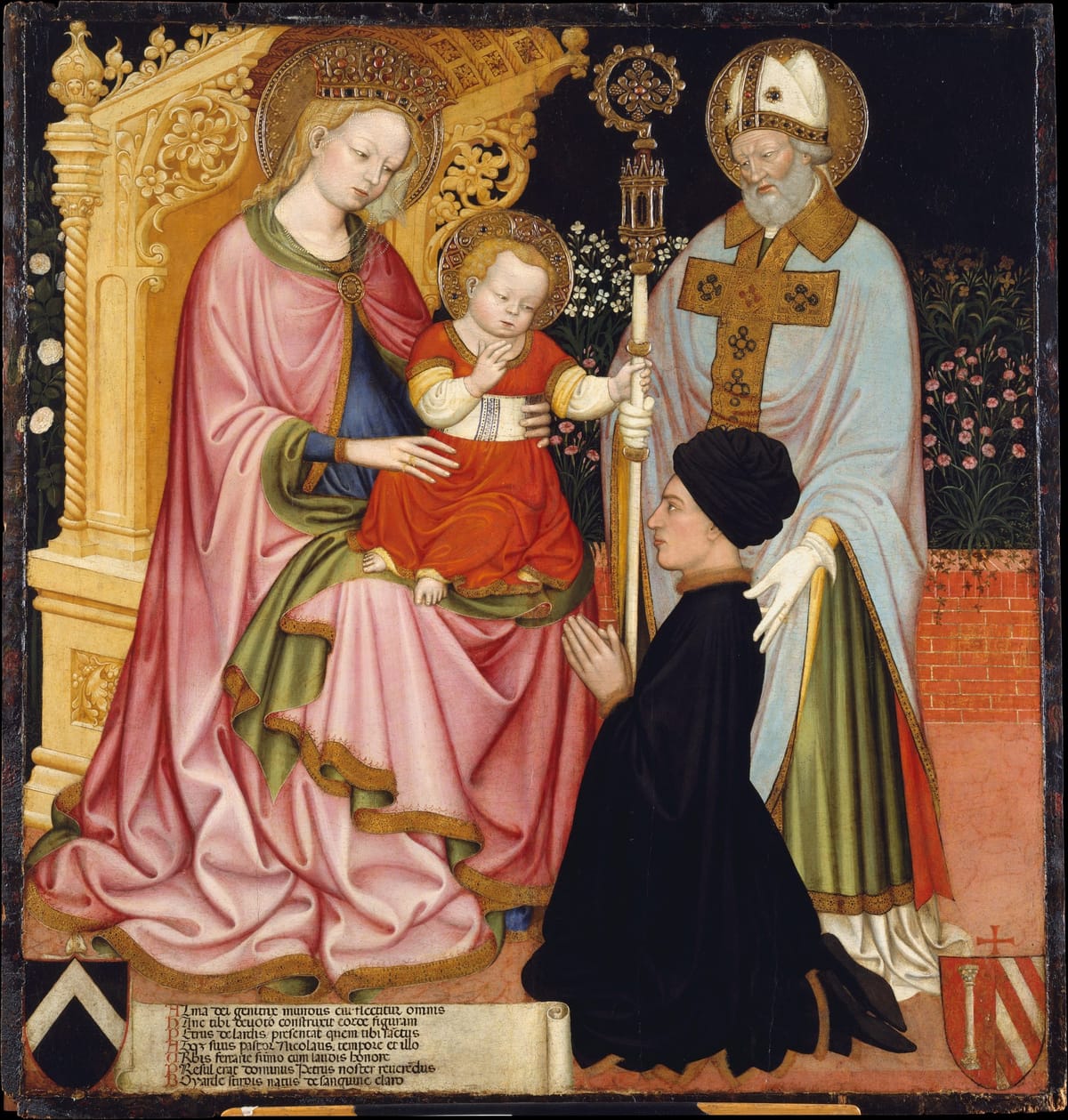
This work plays with our expectations of the flatness of the painted surface. Using a technique of gilded gesso, the artist gave Saint Nicholas’s miter and the crowns of the holy figures a raised surface. The Virgin’s robes and the intricate, angled throne also create a sense of...
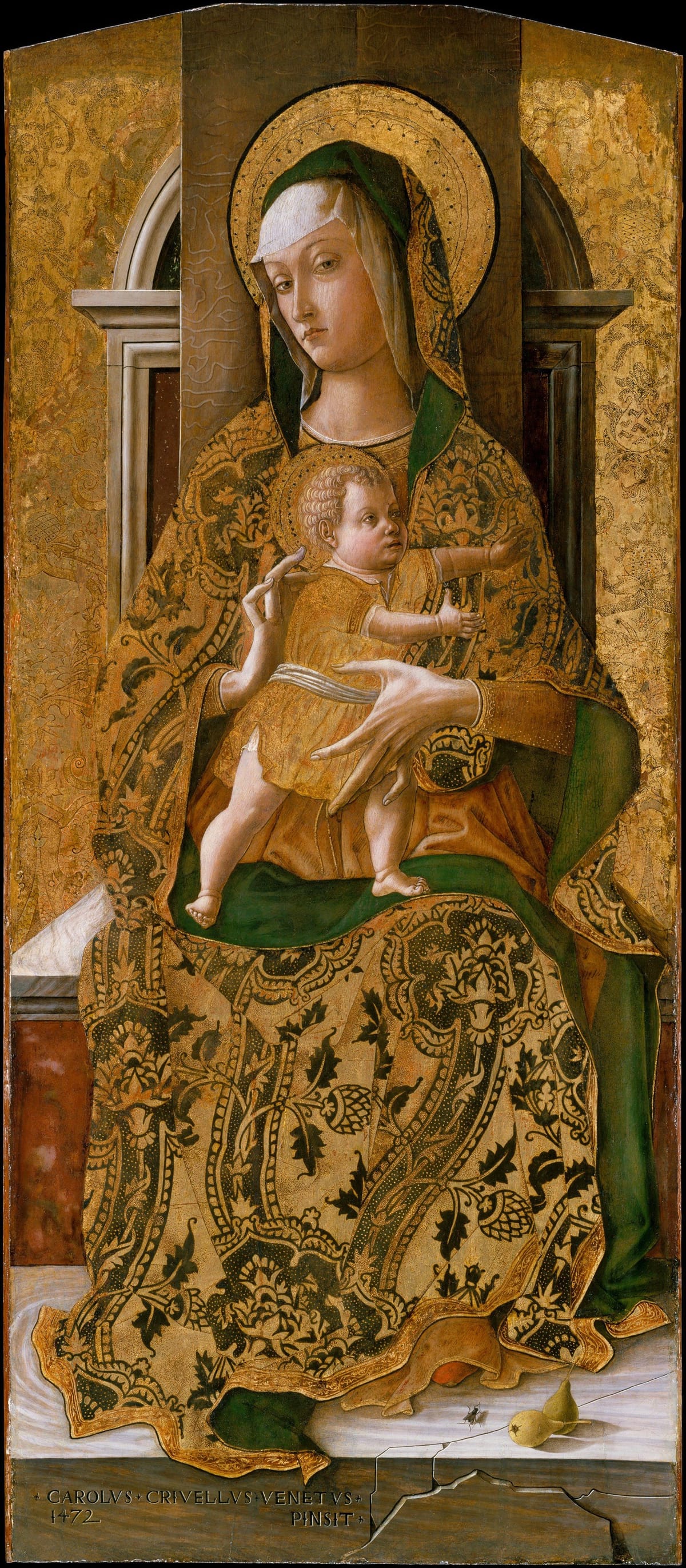
These three panels are from an altarpiece painted for a Dominican church in the Marchigian town of Ascoli Piceno. It is possible that the child was originally shown reaching for a flying bird, his frequent attribute. The cracked marble dais is a recurrent feature of Crivelli's work. On...
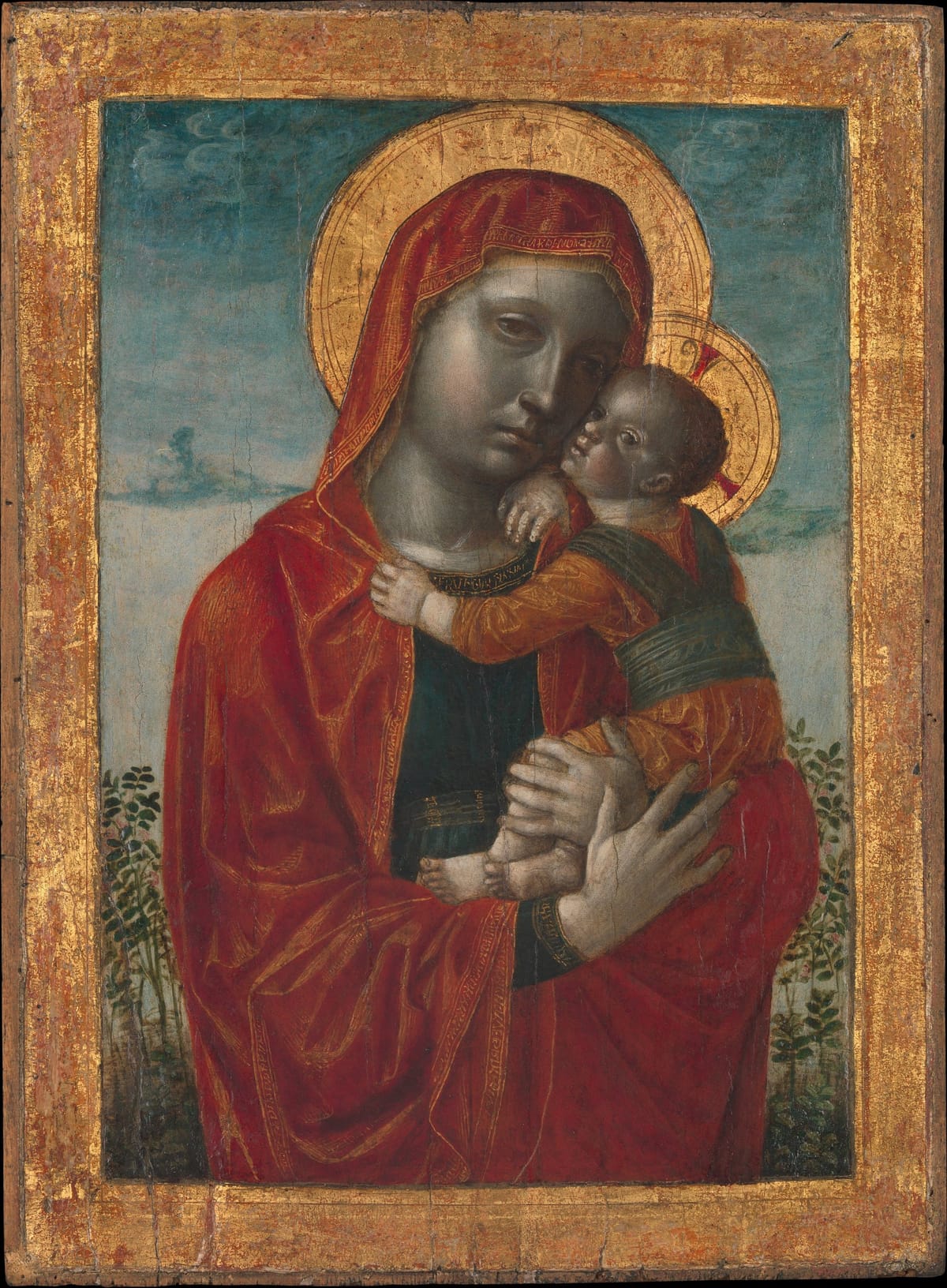
Foppa was the founder of Renaissance painting in Milan, where he worked for the dukes. In addition to major fresco cycles and altarpieces, he also painted touching images of the Madonna and Child for private devotion. This one dates to about 1480 and shows them before a rose hedge—the...
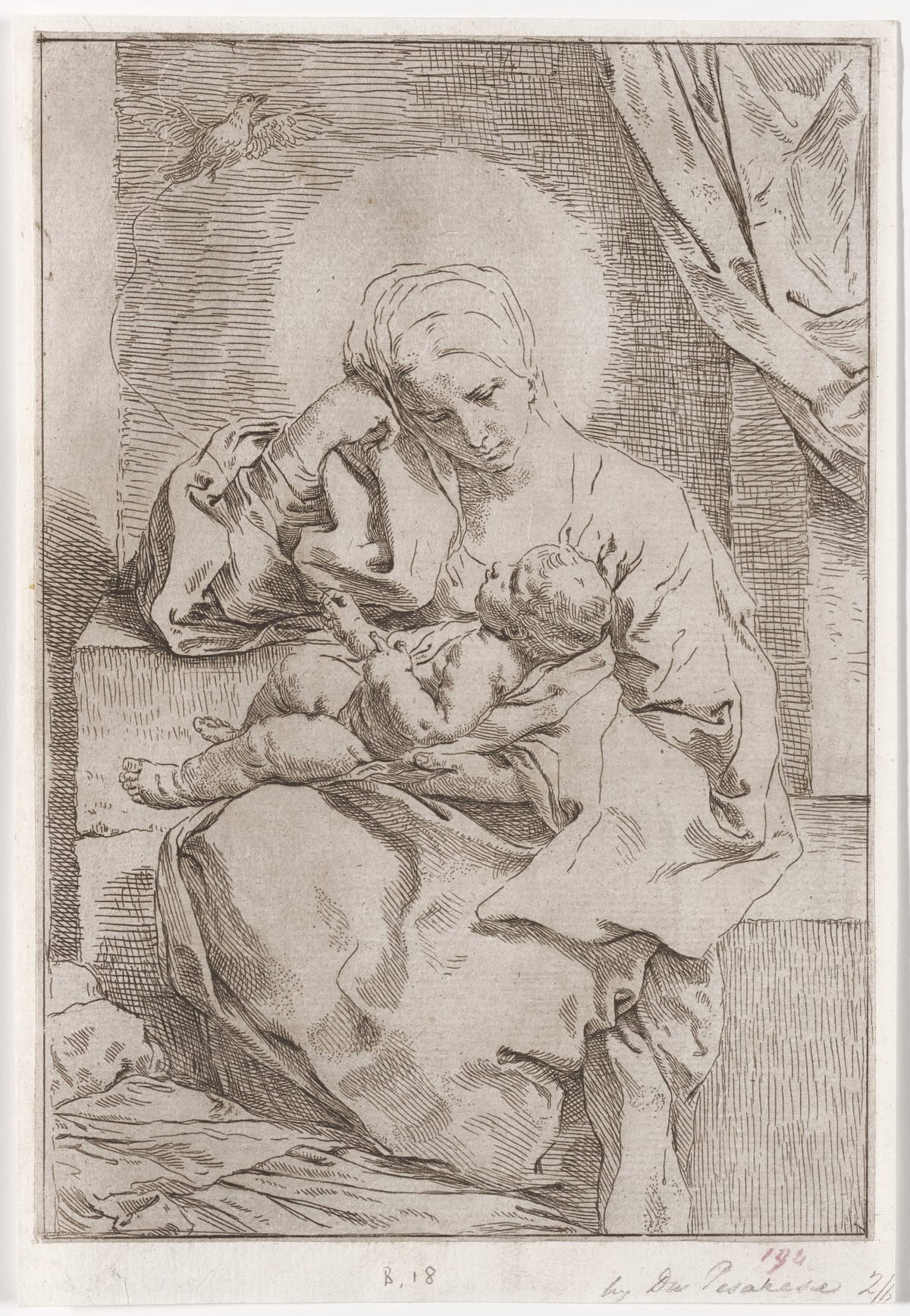
The Virgin Mary sits on a stone bench. A halo of light around her head cuts through the shadows of the space. She looks tired and pensive as she cradles the baby Jesus in her lap. Any new parents can recognize the exhaustion and the weight of responsibility. She rests...
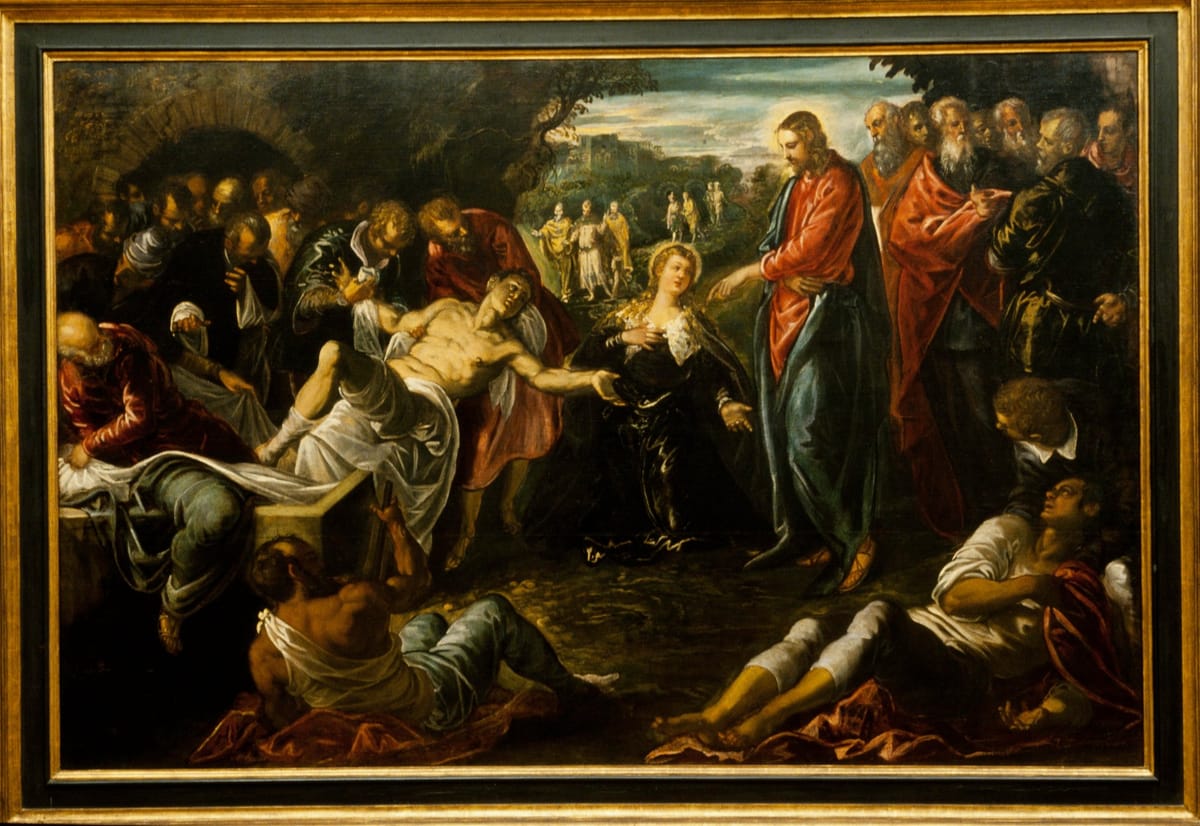
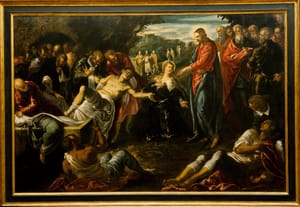
Jacopo Tintoretto ran a busy workshop in Venice, specializing in dramatic, complex religious paintings, which he produced at incredible speed. This crowded composition, with its daring foreshortening and elongated figures, is consistent with Tintoretto’s style. However, the overall quality of the execution suggests the work is by studio assistants...
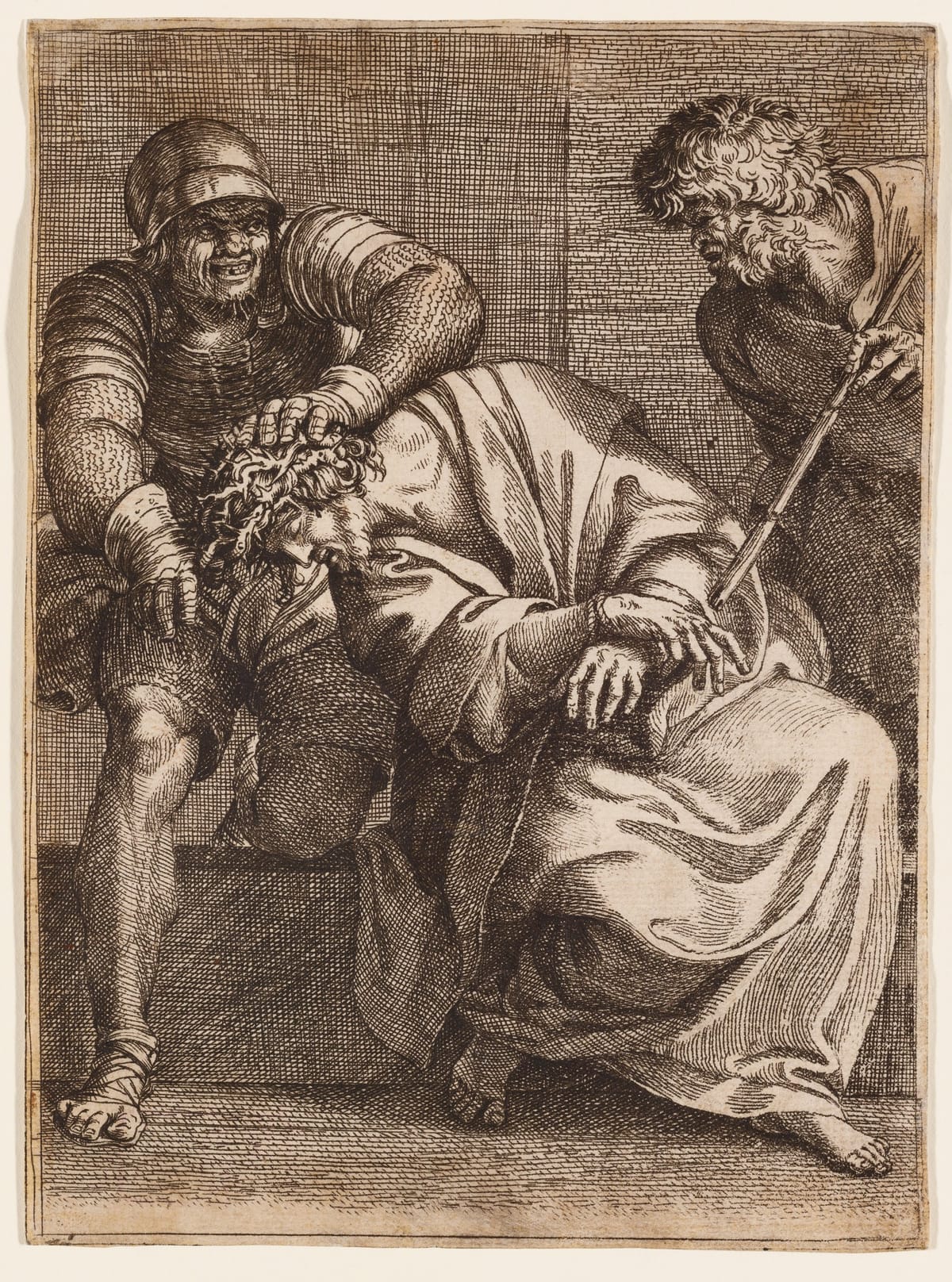
Annibale made this brutal depiction of Christ crowned with thorns shortly after suffering a catastrophic mental breakdown, from which he never fully recovered. No longer able to cope with large-scale painting commissions, he devoted himself almost exclusively to drawings and prints. In this period, his works are affecting and...
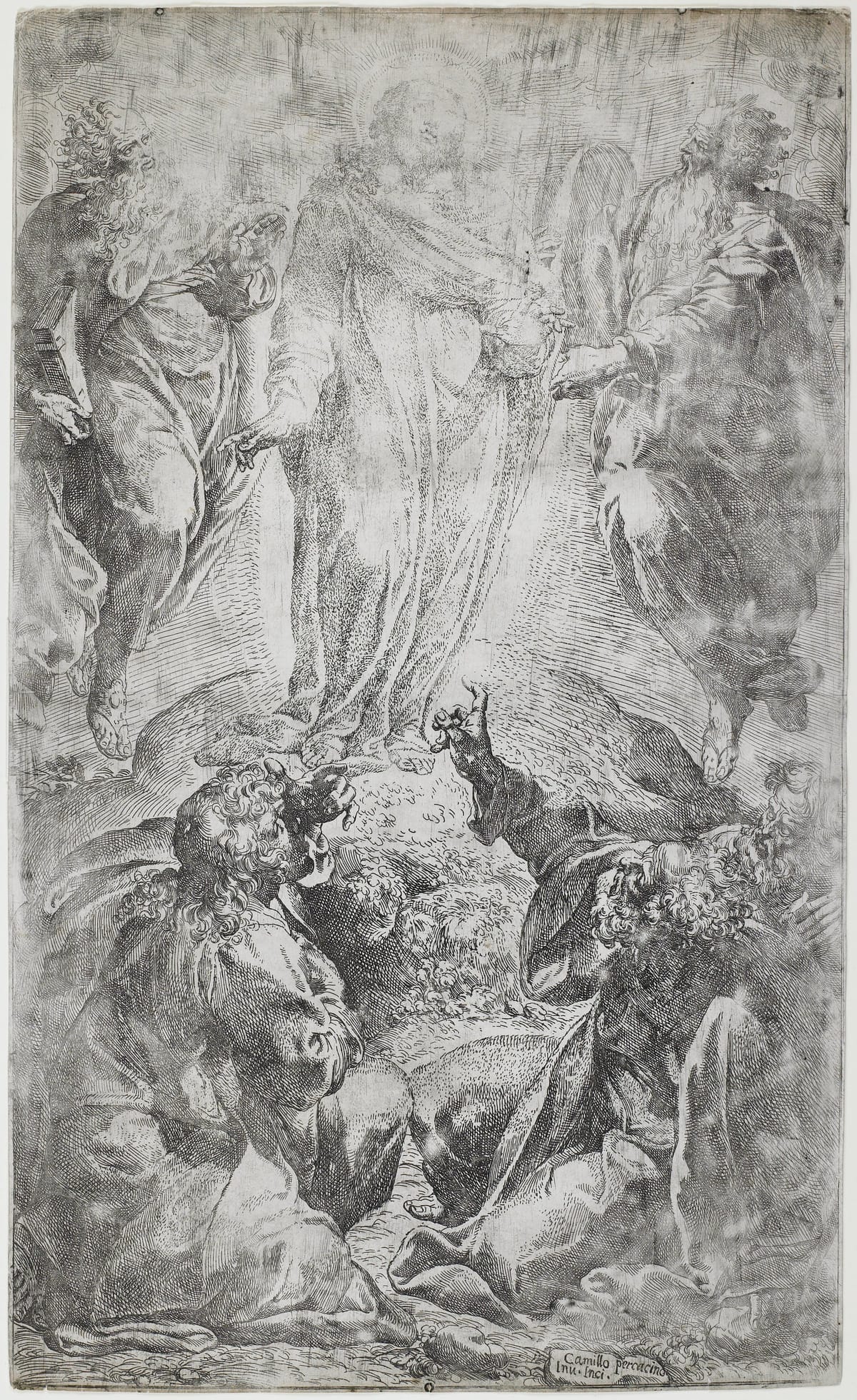
The book of Matthew relates the story of a miracle witnessed by three of Jesus’s disciples. They saw him “transfigured before them. His face shone like the sun, and his clothes became as white as the light.” Suddenly the prophets Moses and Elijah appeared and spoke with Jesus. Then,...
Mariotto was famous for painting crisp details and the kind of subtle color shifts seen in the angels’ feathered wings and draped robes. These small panels once crowned the upper corners of a large altarpiece made for a church on the outskirts of Florence, Italy (Santo Stefano in Pane). During...
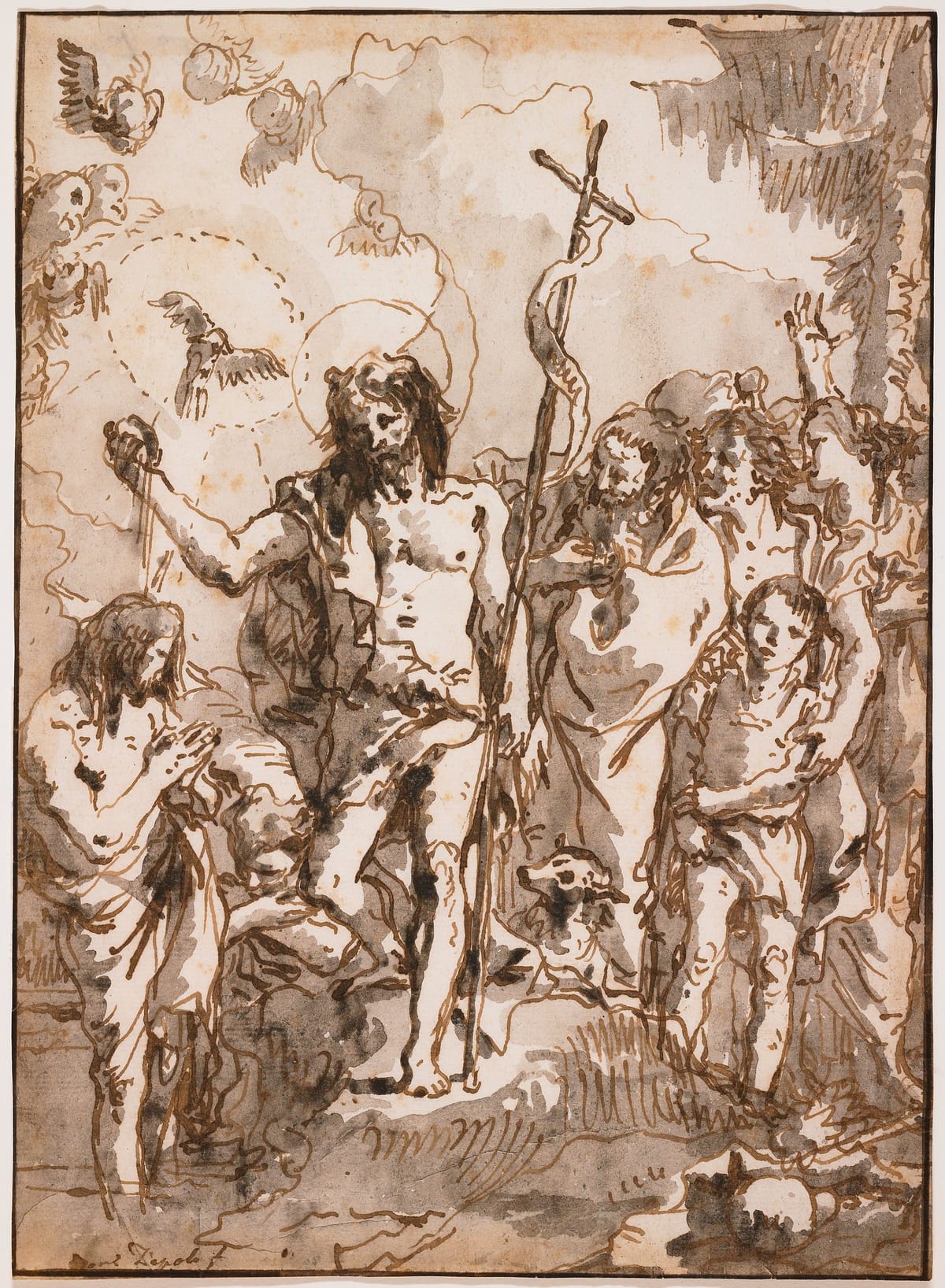
Some of Domenico Tiepolo’s drawings series dealt with specifically identifiable subjects, including the baptism of Jesus Christ. Though the story of John baptizing Jesus appears in three of the New Testament gospels, the details of the accounts are scant, leaving artists great latitude in depicting this event. Domenico responded...
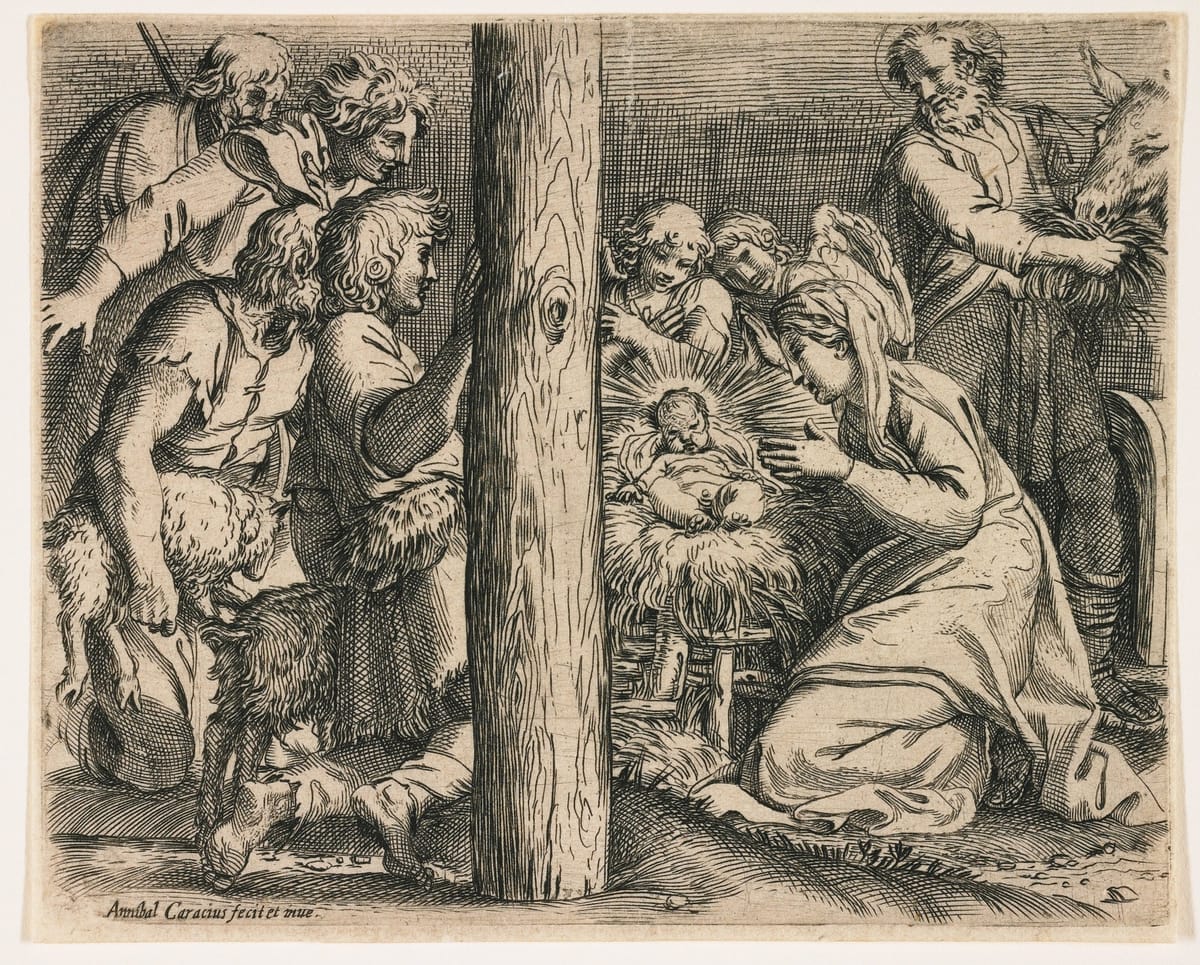
Shepherds have arrived in the stable in Bethlehem to see the newborn savior king, Jesus. Yet, Annibale has placed a massive wooden post in the foreground to emphasize the division between their earthly space and the miraculous space occupied by the radiant baby, his haloed parents and two angels. Though...
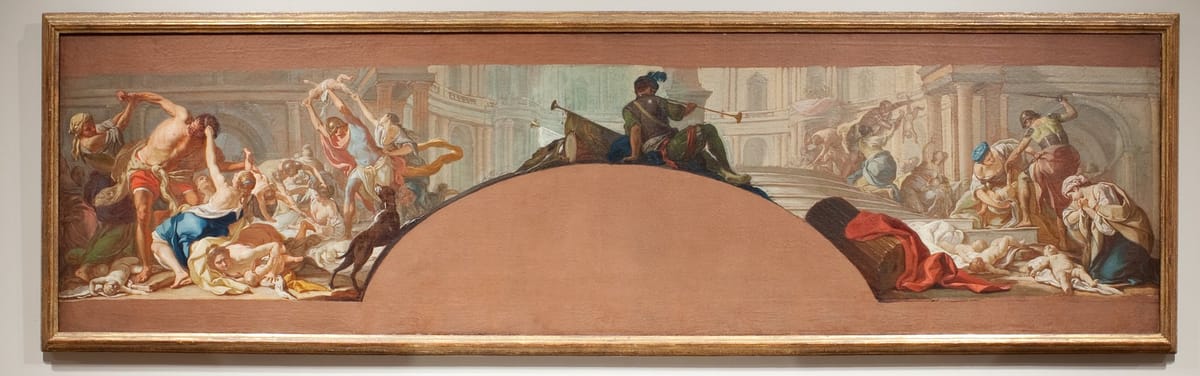
In the biblical story of the Massacre of the Innocents, King Herod orders the killing of all boys two and younger in Bethlehem, Jesus’ birthplace. Three magi (wise men) from the East had arrived in Jerusalem seeking the newborn king of the Jews, whose star they had seen. Taking this...
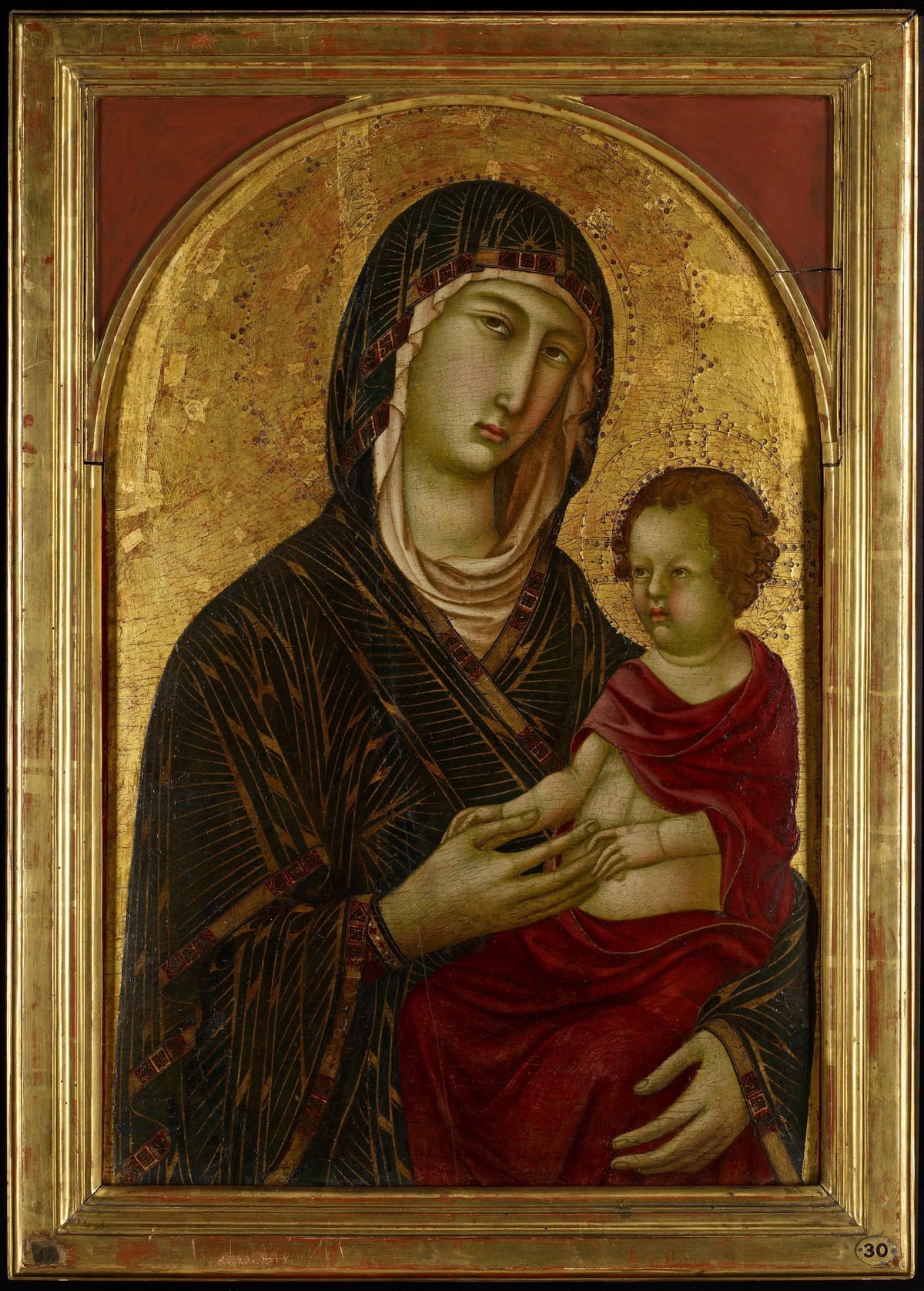
Mary, the mother of Jesus, insists you look her in the eye. She has long inspired intense devotion. Christians believed that a relationship with her would bring them closer to her son, and worshippers identified with her role as a mother. Segna portrays them both as very human and approachable—...
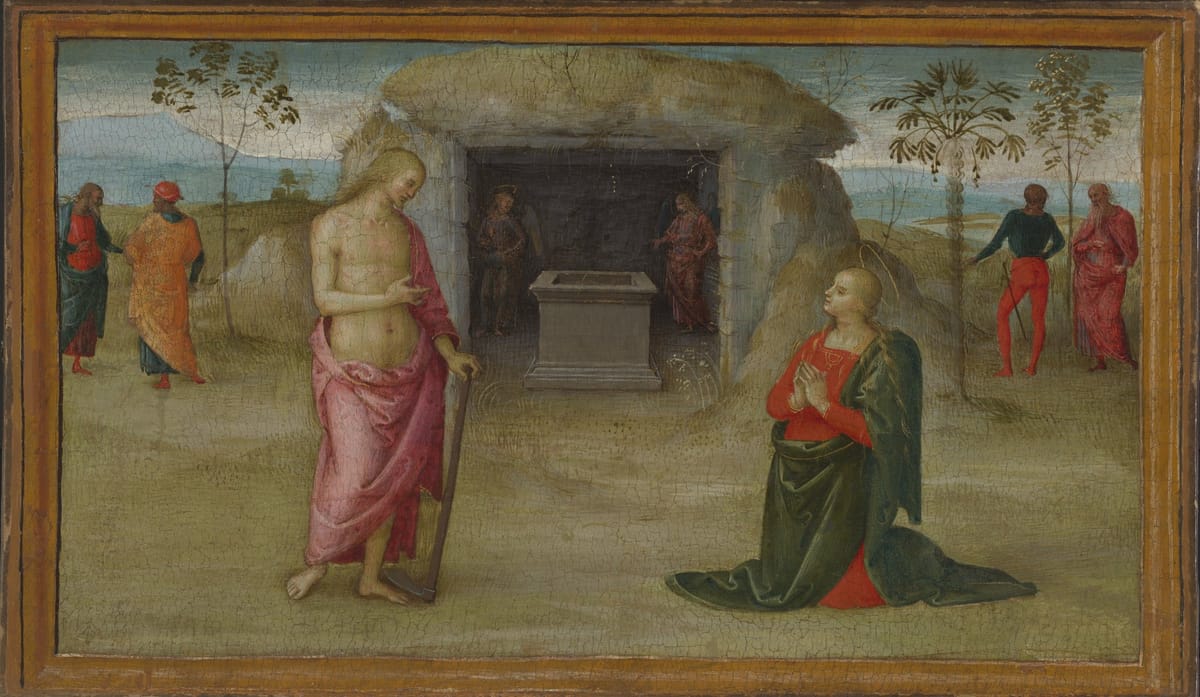
"Noli Me Tangere", originating from a predella created in medieval Italy, reflects the transition from Byzantine to early Romanesque artistic styles, characterized by stylized forms and spiritual symbolism over naturalistic representation. This scene, showing the resurrected Christ’s appearance to Mary Magdalene, was part of a narrative ensemble...
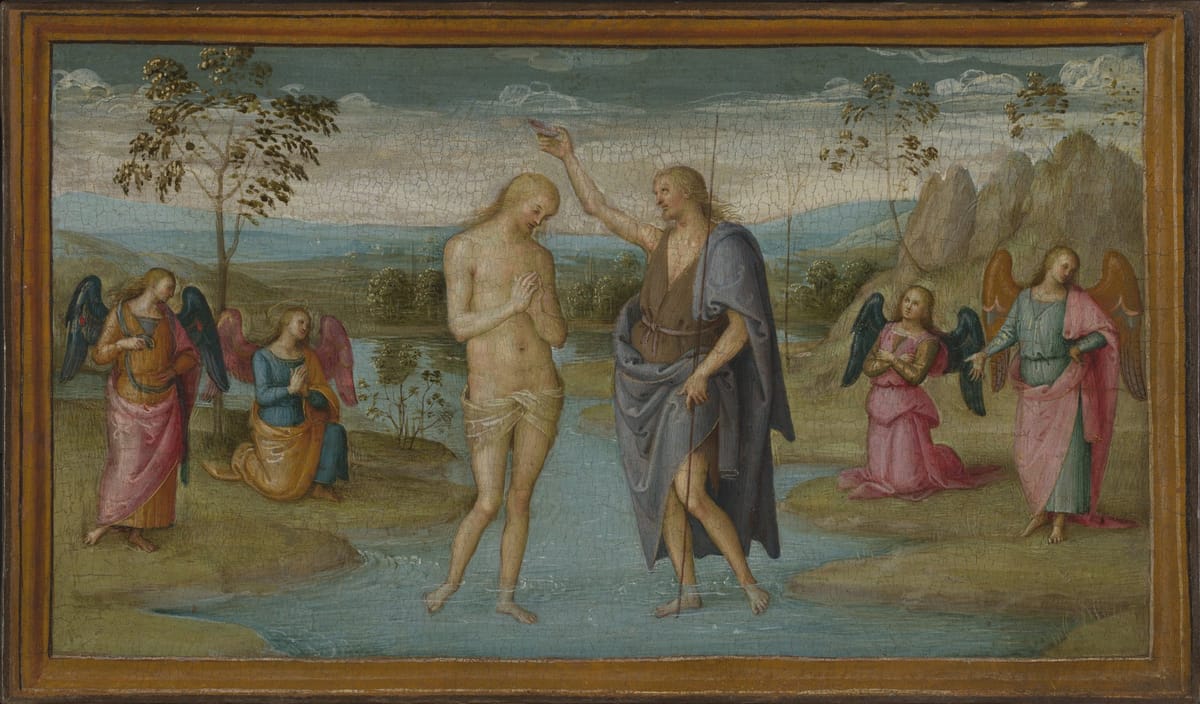
Created by Pietro Perugino during the height of the Italian Renaissance, "The Baptism of Christ" (1500–1505) reflects the period’s fascination with harmonious composition, balanced figures, and luminous color. Perugino, renowned as one of the leading artists of his generation and Raphael's teacher, masterfully incorporates...
The work features the crucifixion scene with Mary, John, and a clerical figure. It is part of the European Art collection at the Minneapolis Institute of Art, where it has been since 1979. The painting has changed hands several times, most notably when it was sold in Paris in 1954...