Ukrainian Icons: Masterpieces from Zhovkva, Sanok and Lviv
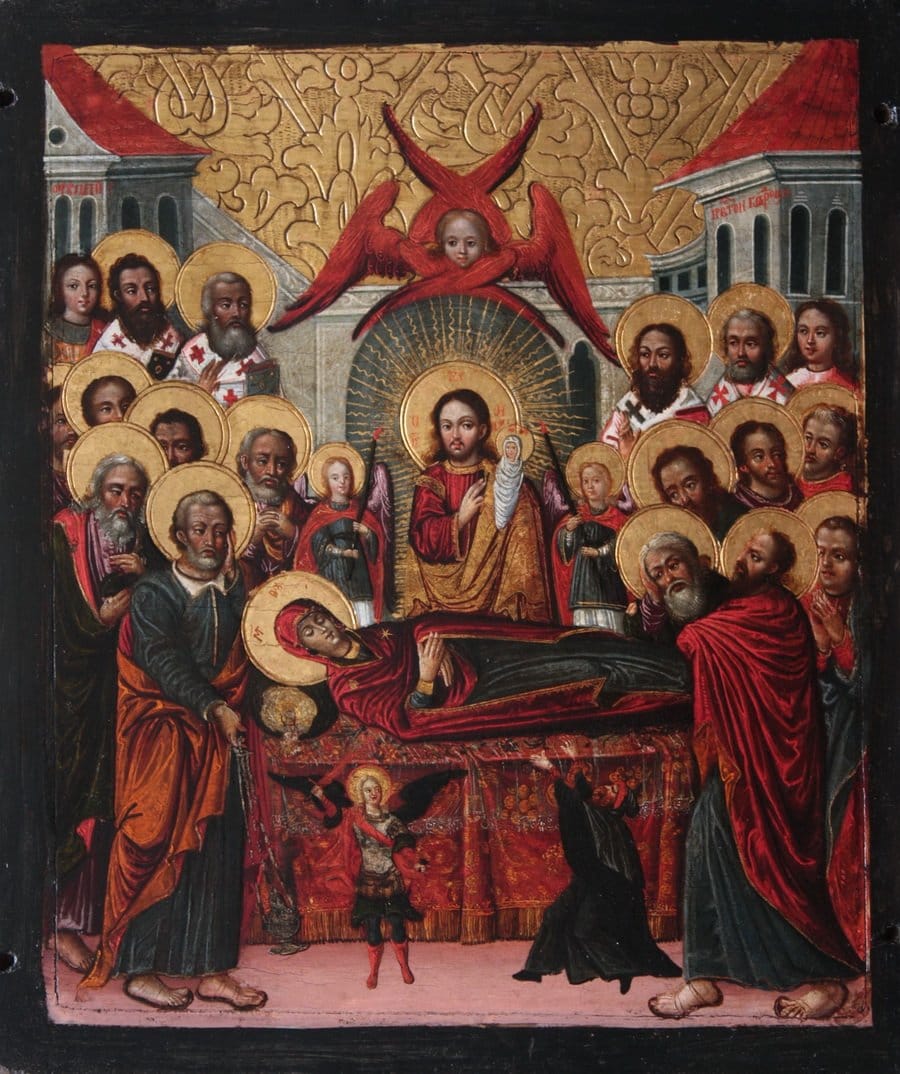
20 Ukrainian icons from the 15th to 18th centuries, including the Zhovkva iconostasis, free to download.

Explore the beauty of Byzantine art on our webpage showcasing a collection of images. Byzantine art, from 4th century to 1453, known for rich colors, intricate patterns and religious themes. Browse our collection to gain a deeper understanding of this fascinating historical period.
20 Ukrainian icons from the 15th to 18th centuries, including the Zhovkva iconostasis, free to download.
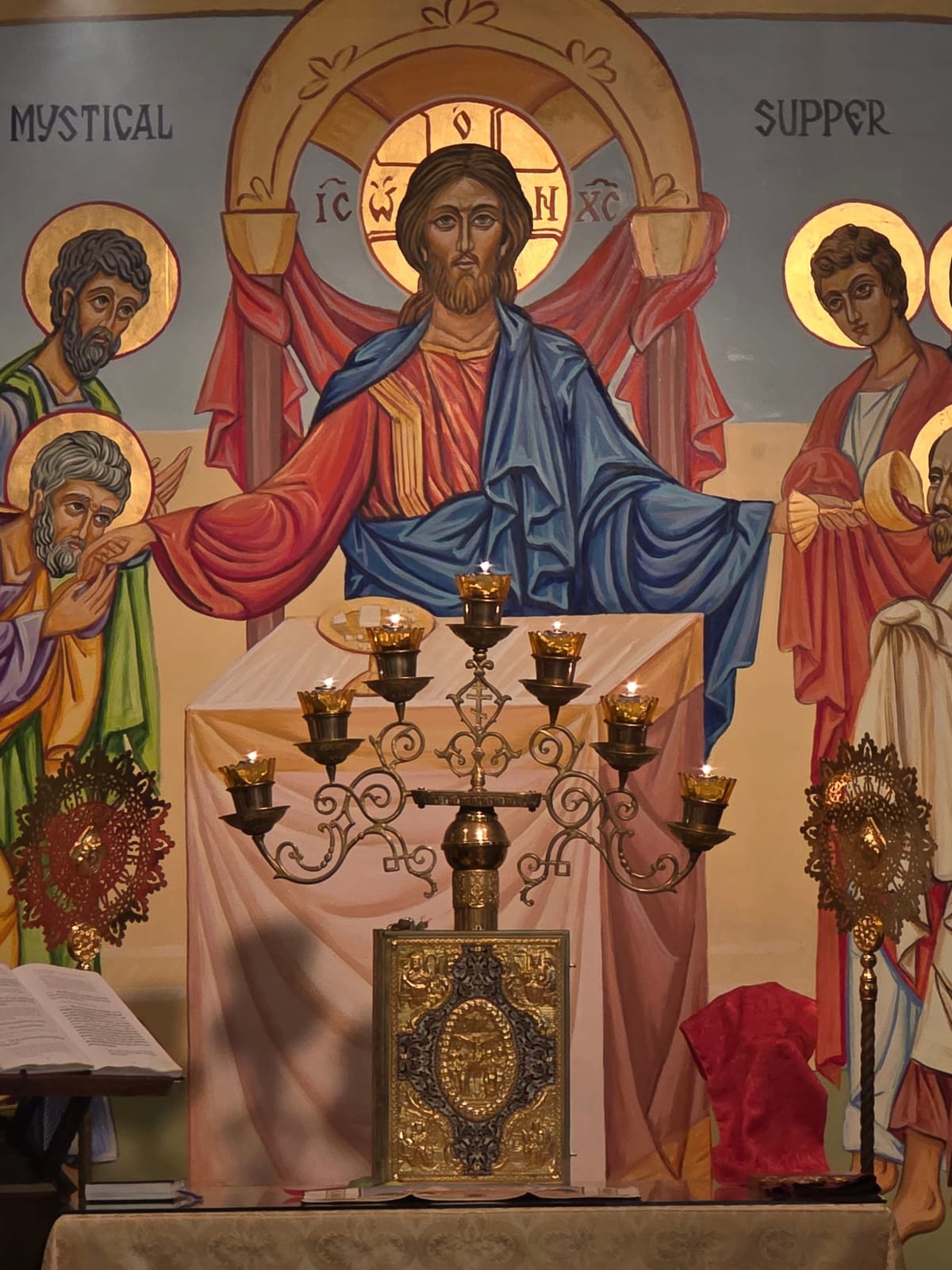
Taken at Our Lady of Perpetual Help Byzantine Catholic Church in Virginia Beach, Virginia, on February 2, 2025. The painted icon of the Mystical Supper (the Last Supper) hangs above the altar table with its candlestand, gospel book and tabernacle.
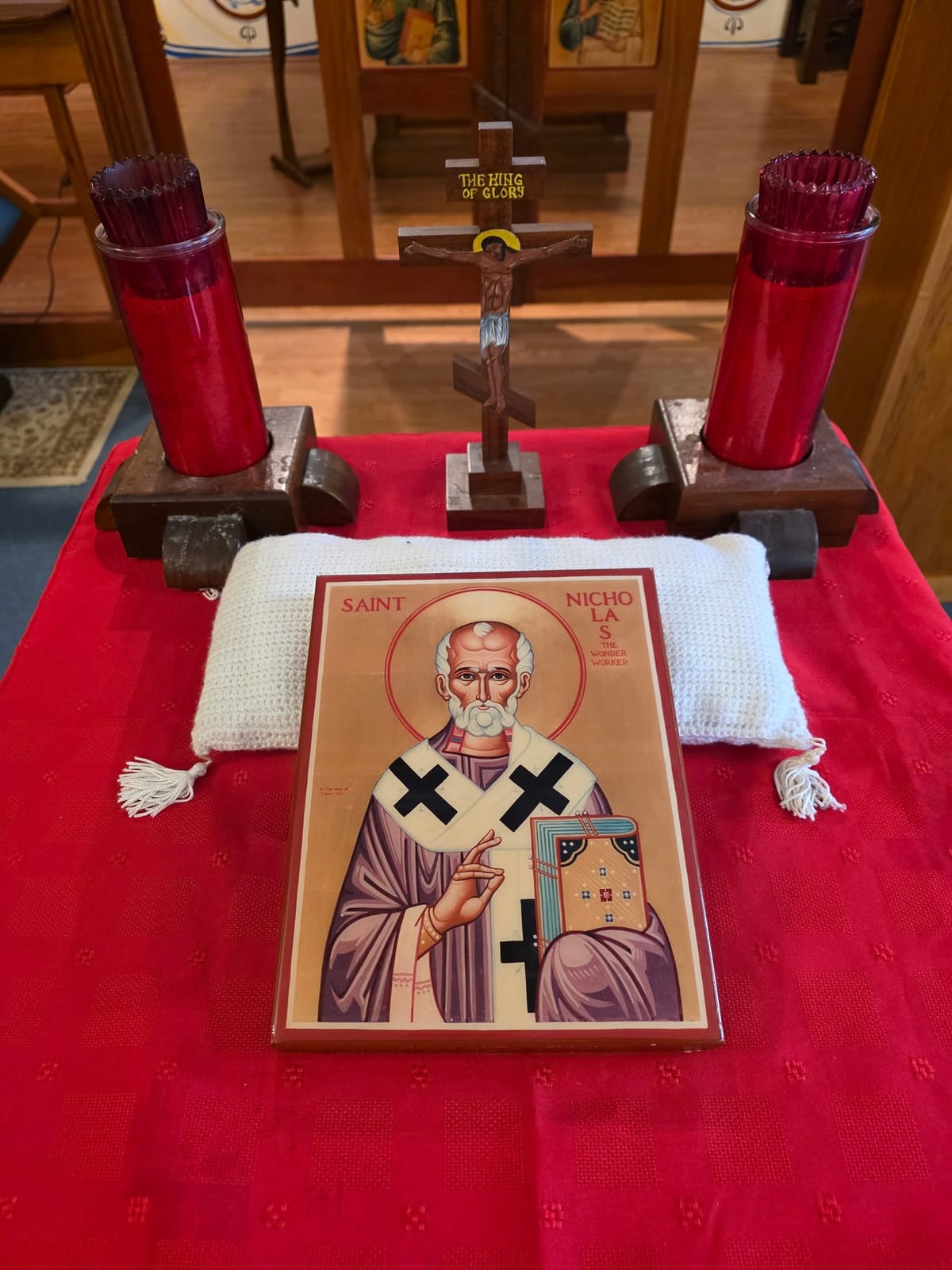
Taken at Our Lady of Perpetual Help Byzantine Catholic Church in Virginia Beach, Virginia, on December 7, 2025, the week of the feast of Saint Nicholas. An icon of the bishop and wonderworker Saint Nicholas rests on a cushion on a red cloth, between two red vigil lamps and a standing cross.
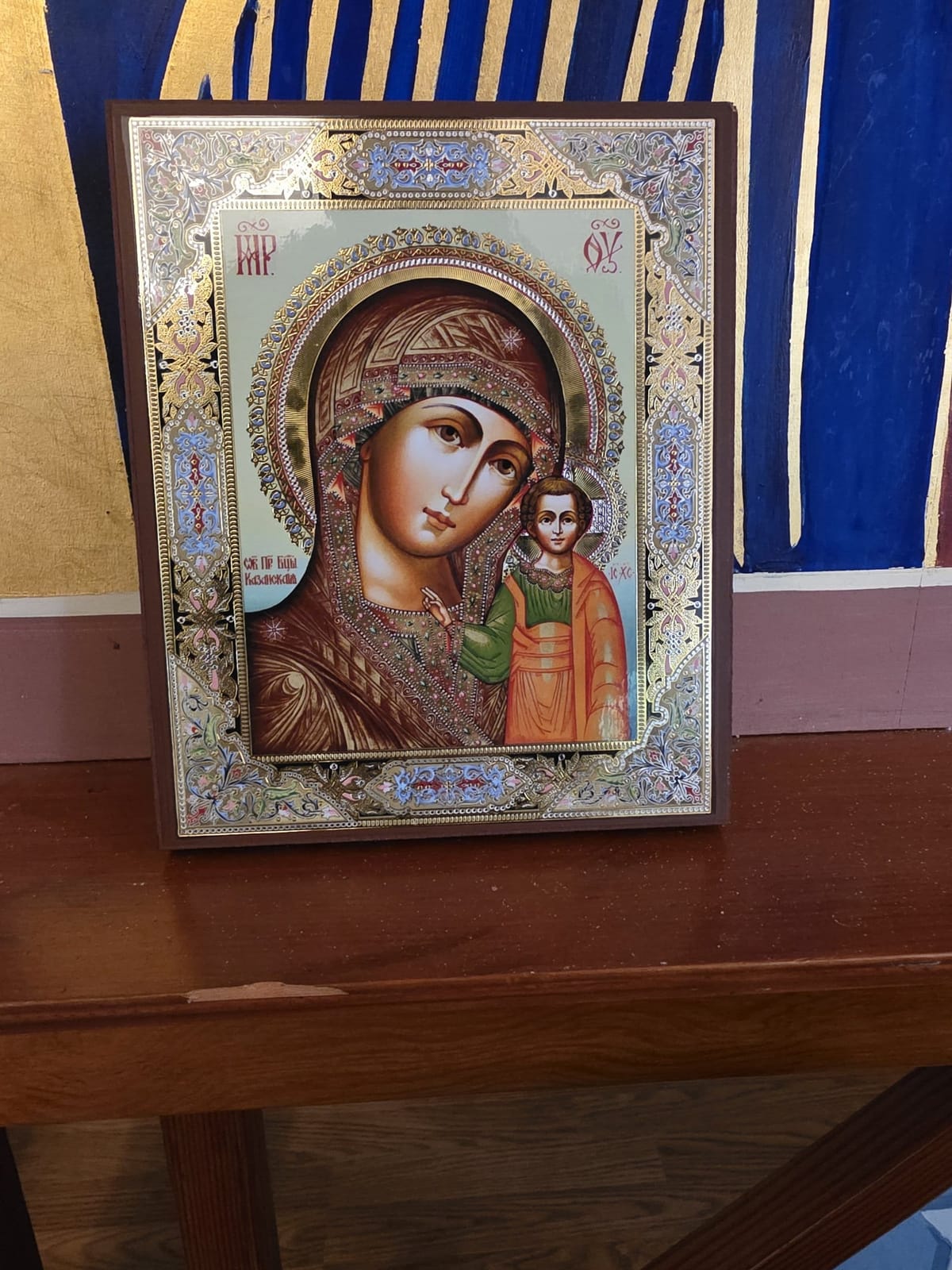
Taken at Our Lady of Perpetual Help Byzantine Catholic Church in Virginia Beach, Virginia, on December 7, 2025. A framed icon of the Theotokos of Kazan, in which Mary holds the Christ Child, sits on a wooden table.
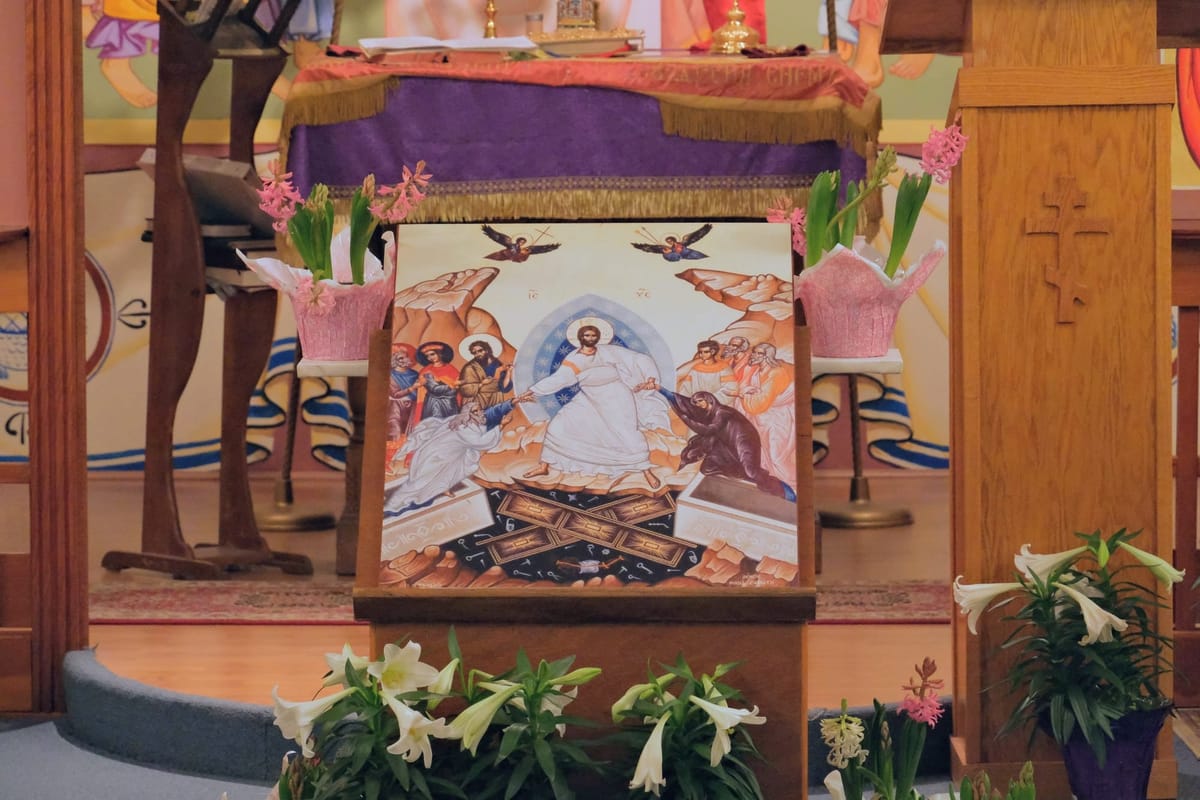
Taken at Our Lady of Perpetual Help Byzantine Catholic Church in Virginia Beach, Virginia, on Pascha, March 31, 2024. The icon of the Resurrection, which shows Christ raising Adam and Eve from the dead, stands on a stand in front of the iconostasis, surrounded by Easter lilies.
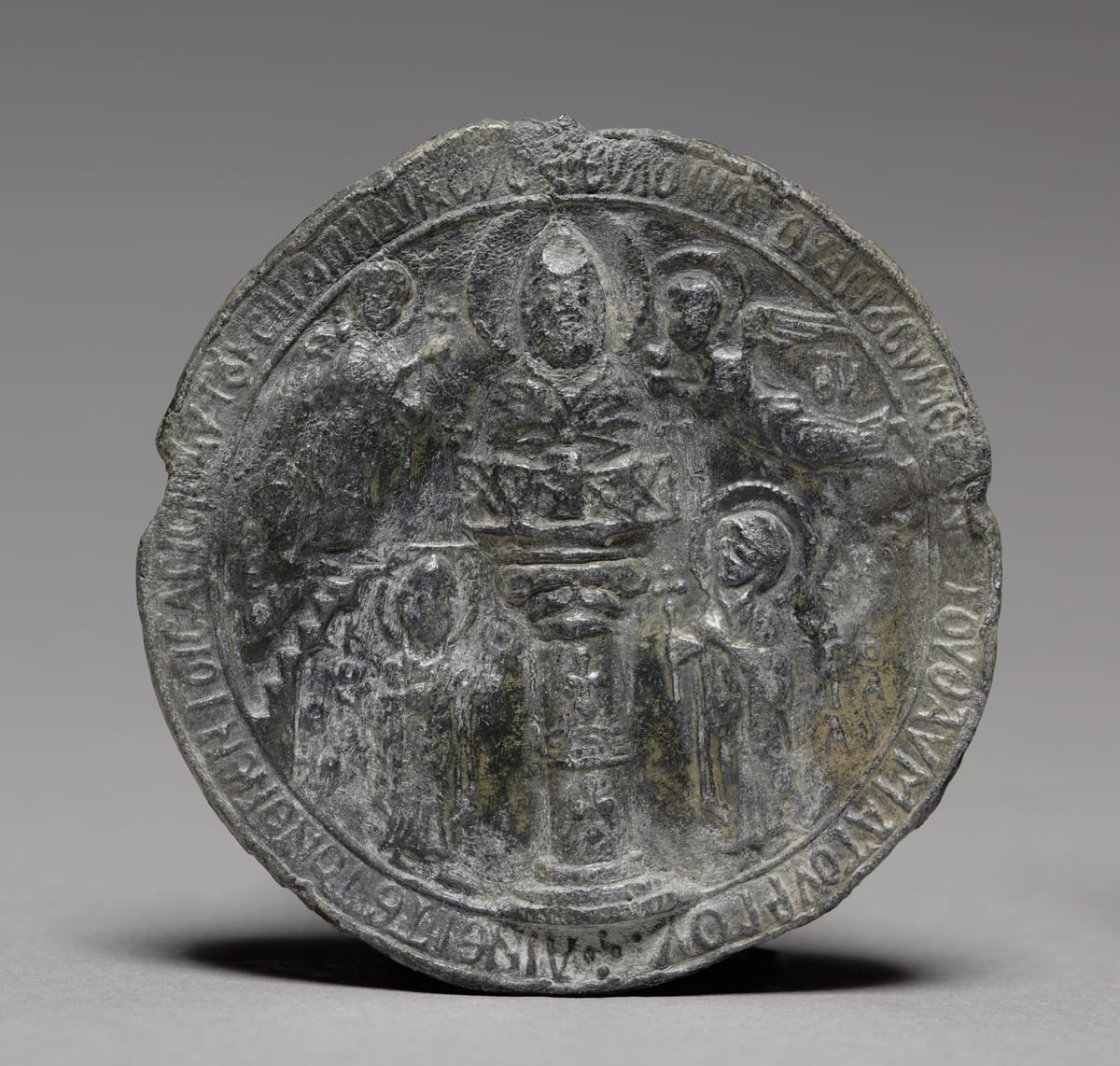
Saint Symeon the Younger was a stylite saint, an early Christian ascetic who fled the world for the desert and, perched on a column, spent his days fasting and praying. The site of Symeon’s column attracted many pilgrims during and after his lifetime. Medallions like this one, showing Symeon atop hi
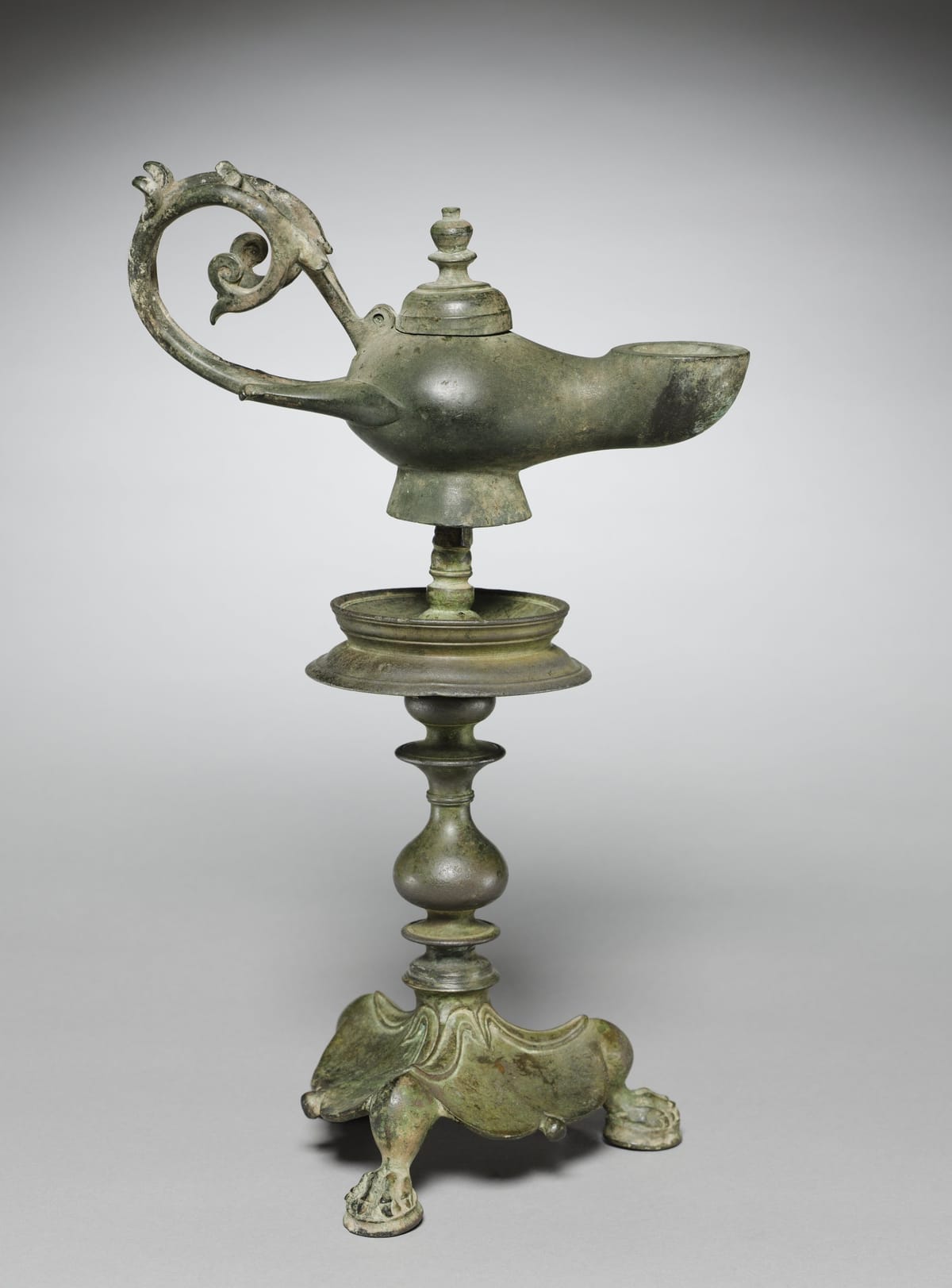
Bronze oil lamps were made either with stands, like the nearby example, or with chains for suspension on hooks within homes and churches. This lamp is cast in the form of a griffin, a guardian figure from antiquity frequently used in Byzantine churches, which contained much wealth. The Christian mon
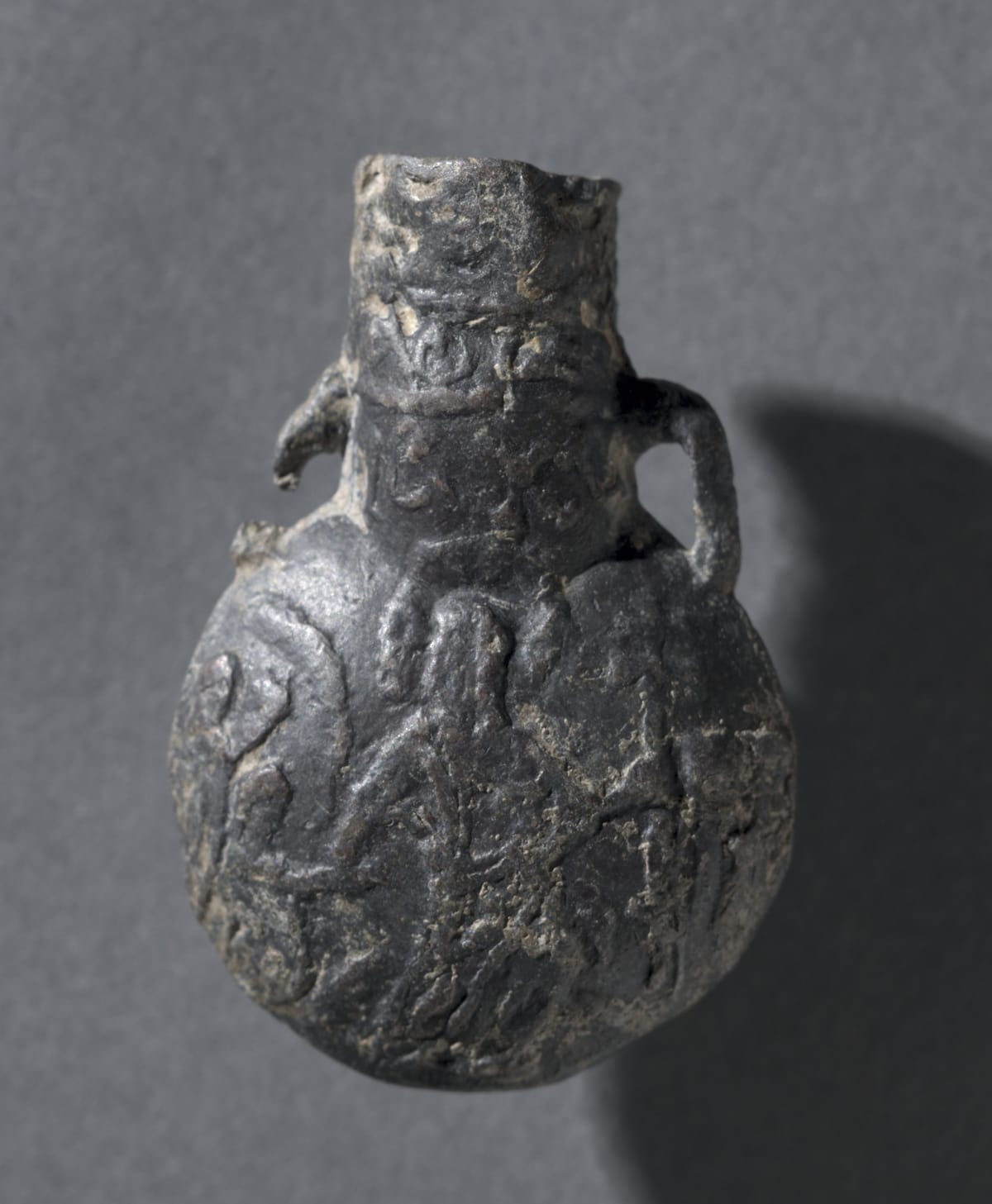
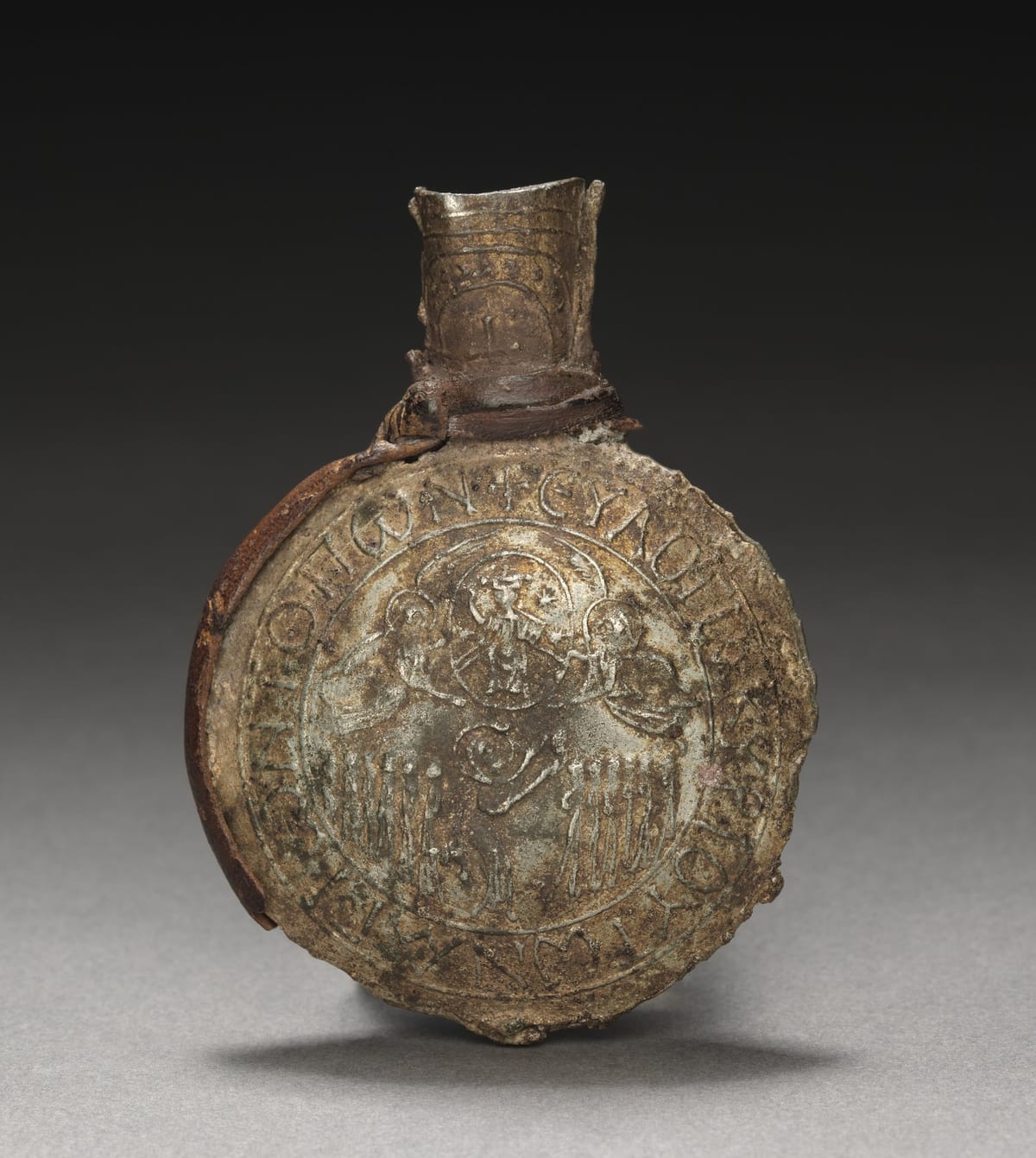
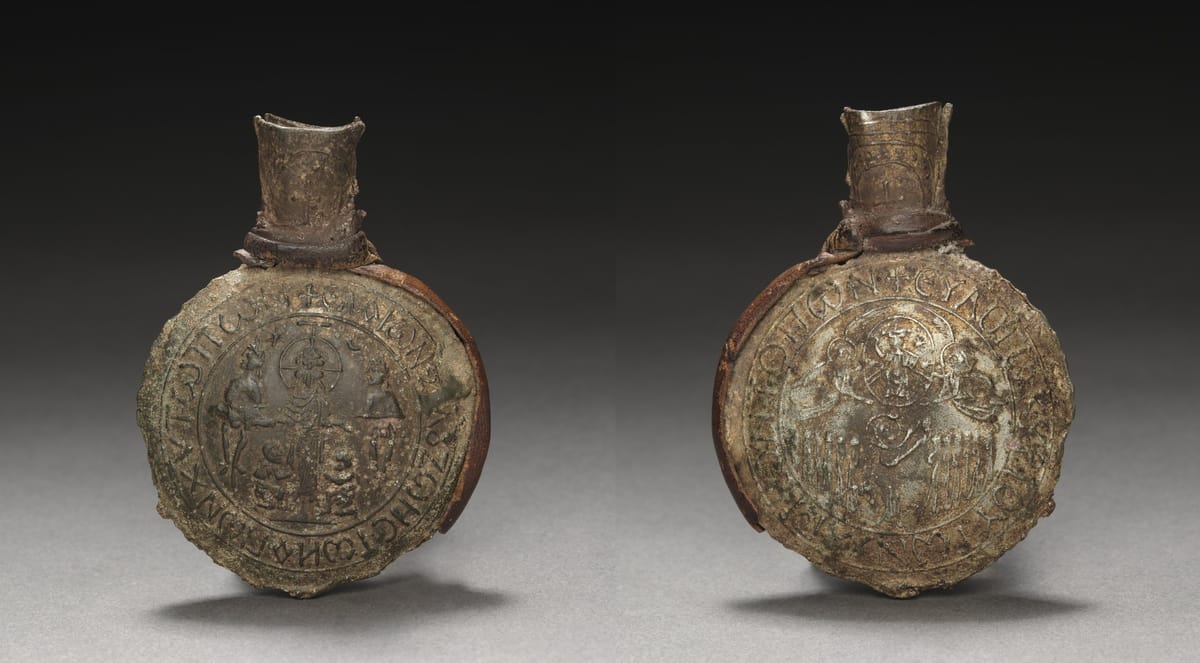
After the Crusader conquest of the Holy Land in 1099, Jerusalem experienced a revival of Christian pilgrimage. During the 12th century, the Church of the Holy Sepulcher was rebuilt, redecorated, and reconsecrated. With the influx of new pilgrims, especially from Western Europe, lead ampullae (small
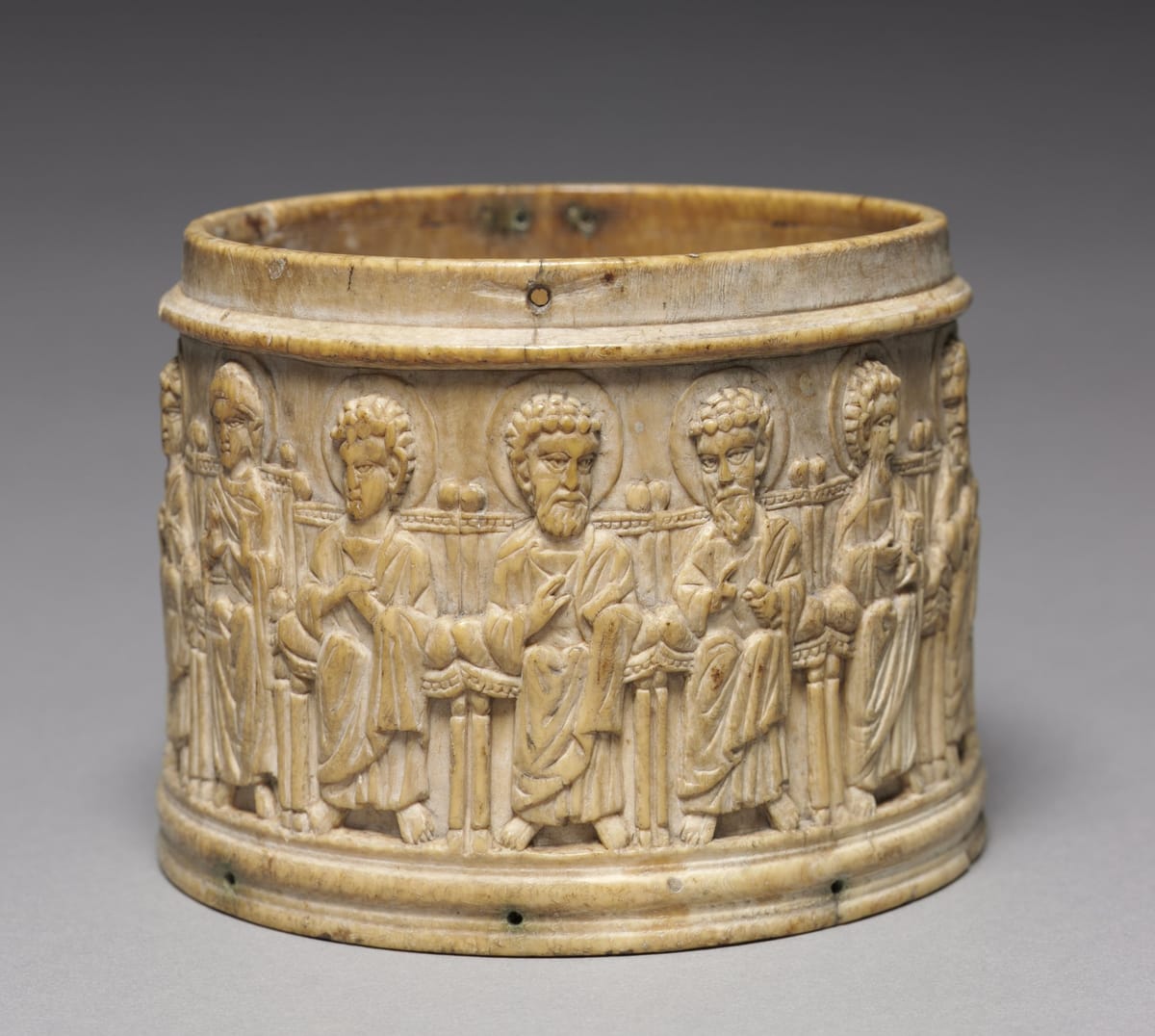
This pyx shows Christ as Pantokrator (Ruler of the World), the Apostles, and the Virgin as a continuous frieze of figures seated in high-backed chairs with cushions. The tapered lip of the body of the pyx was intended to dovetail into the missing lid. Because of its style, the box is thought to be f
The images found on the sides of surviving lead pilgrims' ampullae include scenes relating to the life of Christ, and by extension to the holy sites (loca sancta) where the events took place. Cast into the sides of this ampulla are scenes of Christ's Crucifixion on the front and the Ascension on the
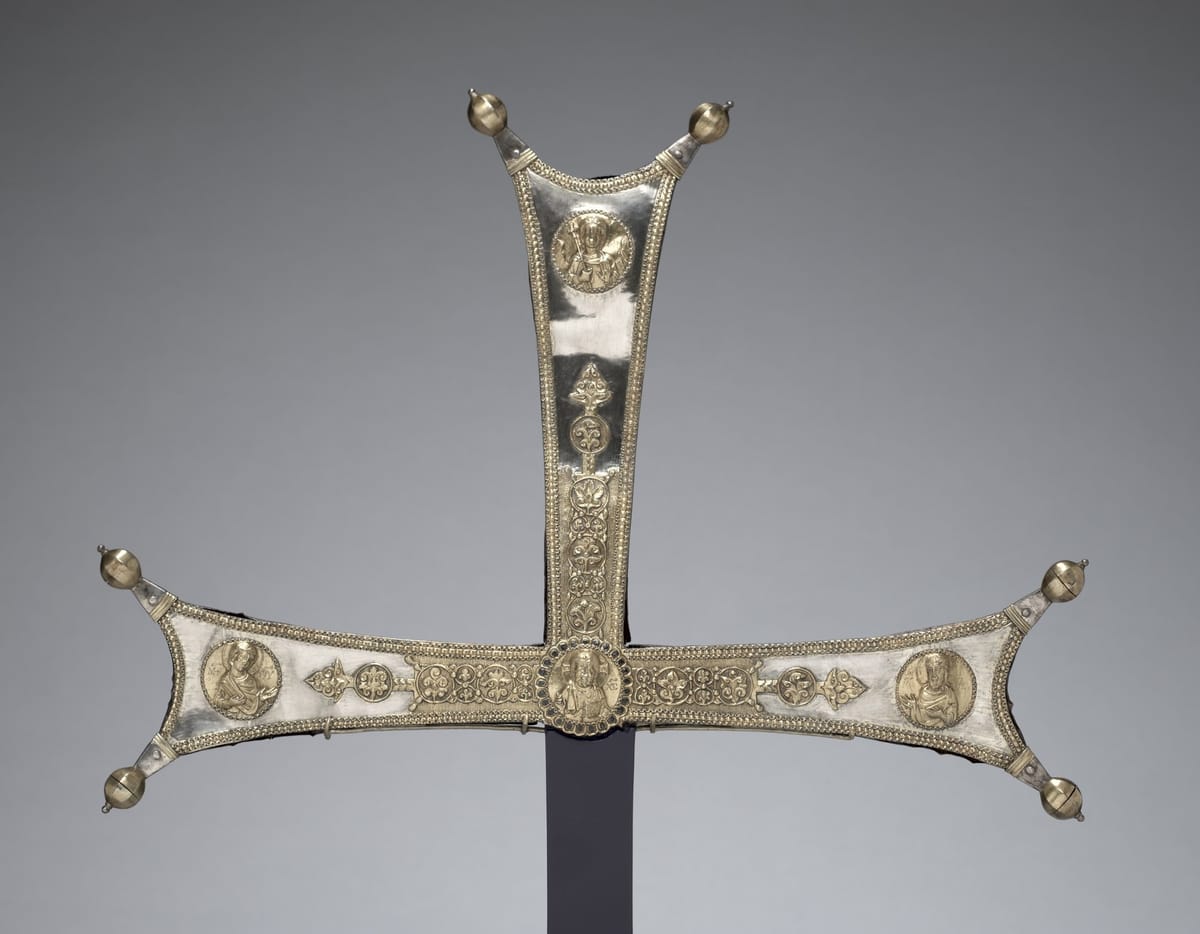
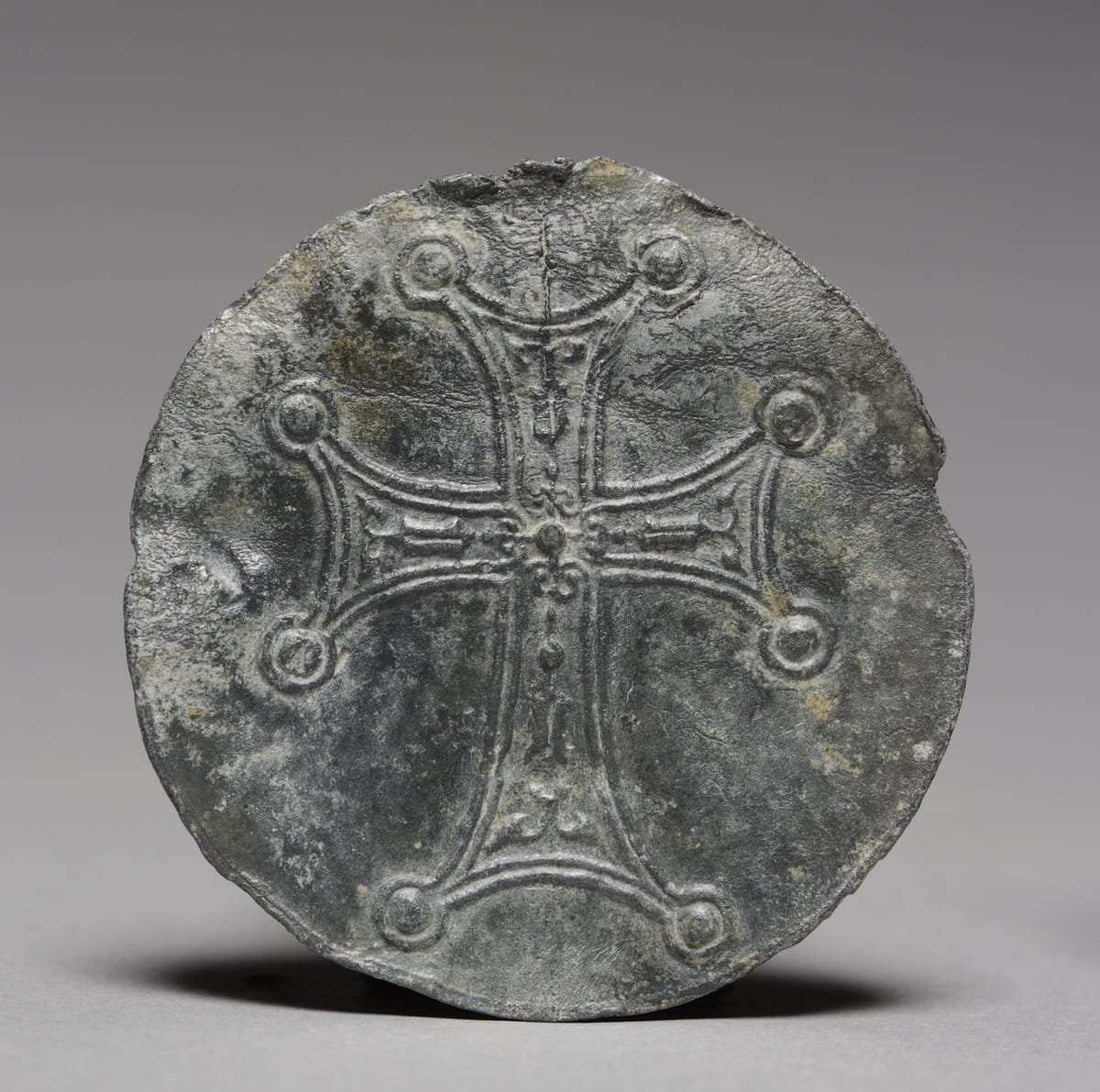
Impressively large and elaborately embellished, the cross to which this fragment belonged was likely carried in liturgical processions. The central medallion on its front depicts Christ, flanked by medallions showing the Virgin and Saint John the Baptist. Together they form the Deesis, a powerful By
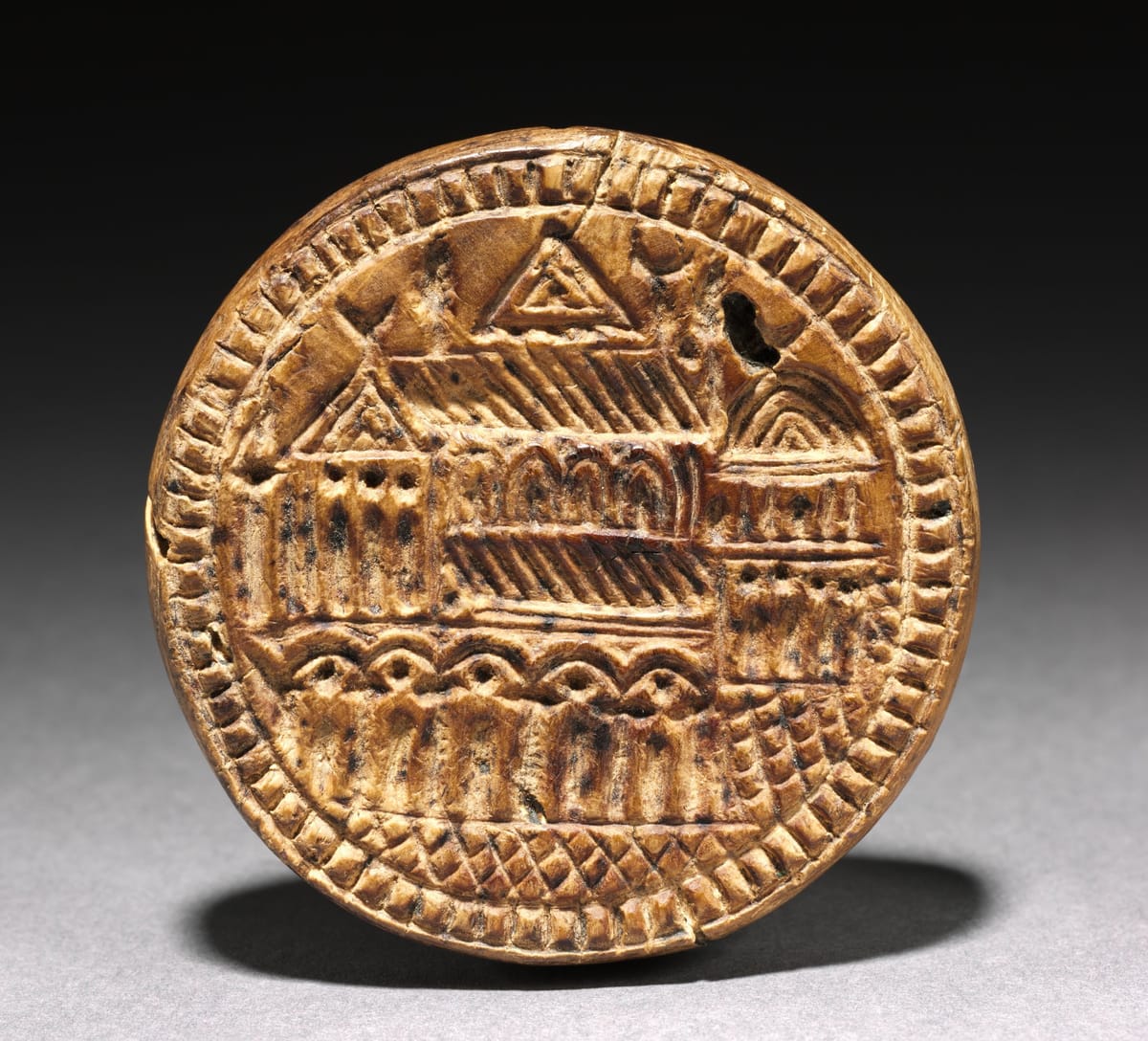
It was a common early Christian practice to stamp images and inscriptions into loaves of bread using special molds. Representing the Church of the Holy Sepulcher on Mount Golgotha--the hill outside Jerusalem on which Christ was crucified and entombed--this wooden mold was probably used to stamp loav
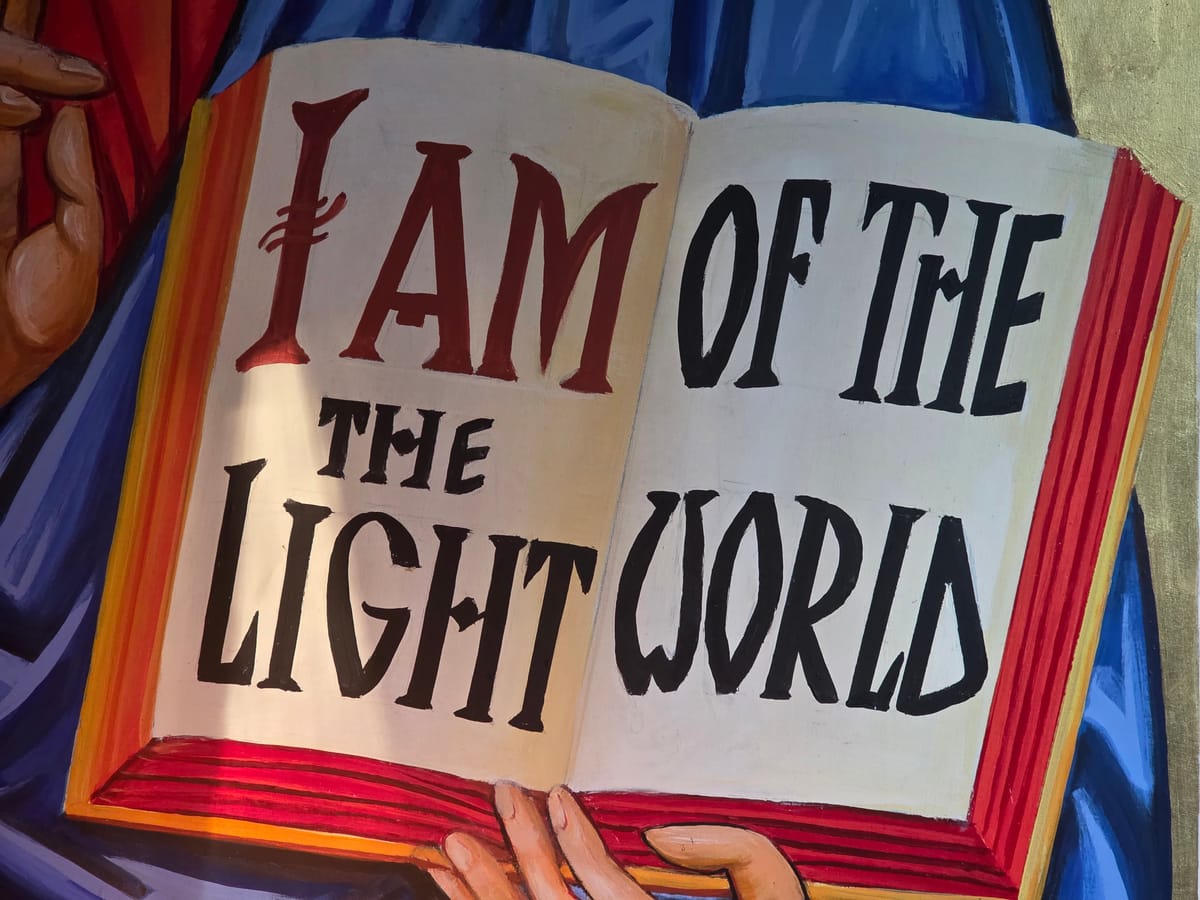
Christ Pantocrator in Byzantine mosaics, icons and church art, all free to download.
The images found on the sides of surviving lead pilgrims' ampullae include scenes relating to the life of Christ, and by extension to the holy sites (loca sancta) where the events took place. Cast into the sides of this ampulla are scenes of Christ's Crucifixion and Ascension. The use of such sacred
Saint Symeon the Younger was a stylite saint, an early Christian ascetic who fled the world for the desert and, perched on a column, spent his days fasting and praying. The site of Symeon’s column attracted many pilgrims during and after his lifetime. Medallions like this one, showing Symeon atop hi
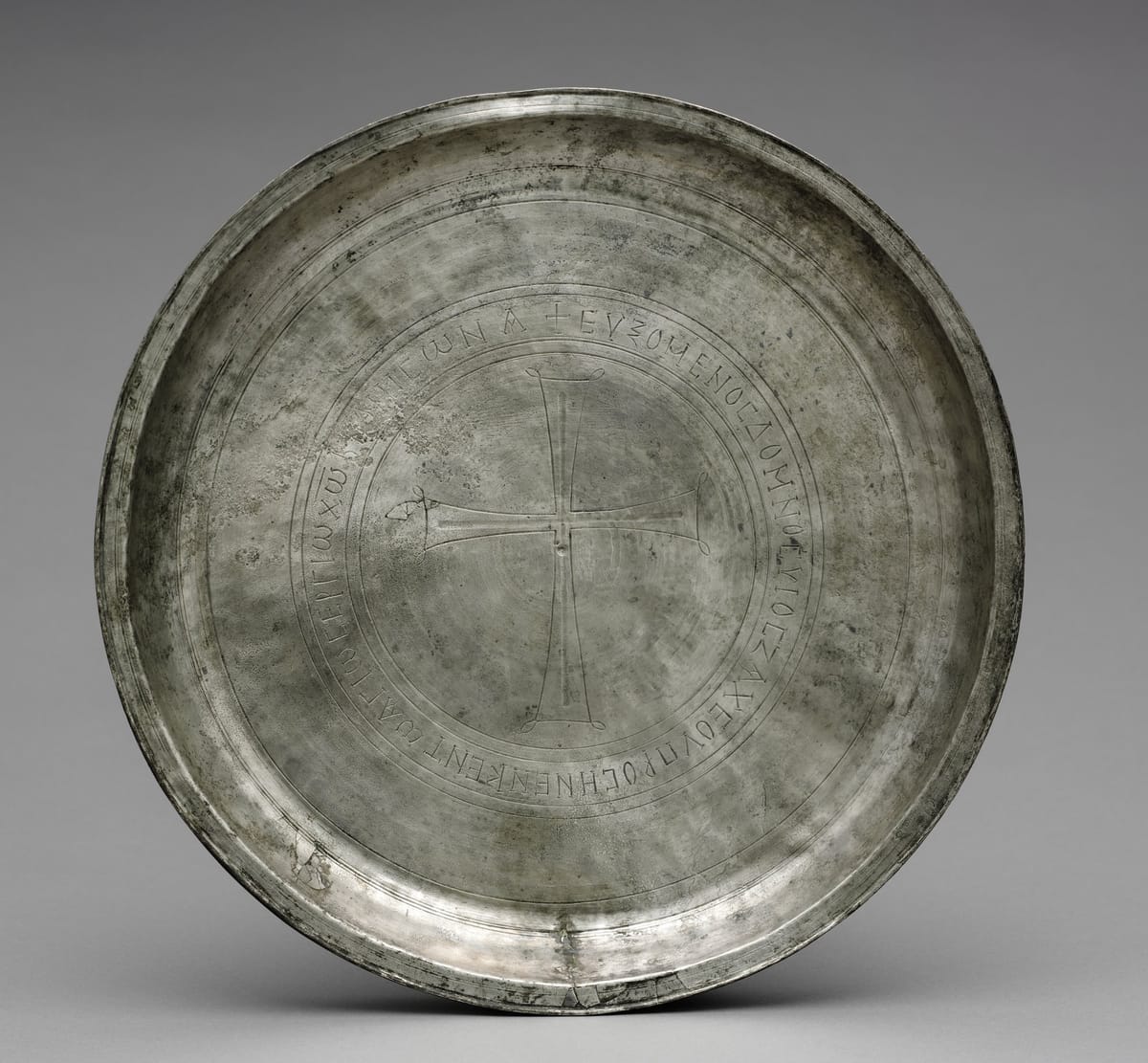
These four liturgical silver vessels—a paten and three chalices (1950.378–81)—form what is now called the Beth Misona Treasure, named for the village in northern Syria for which the objects were made. While nothing is known about the exact location and circumstances of the treasure's discovery, the
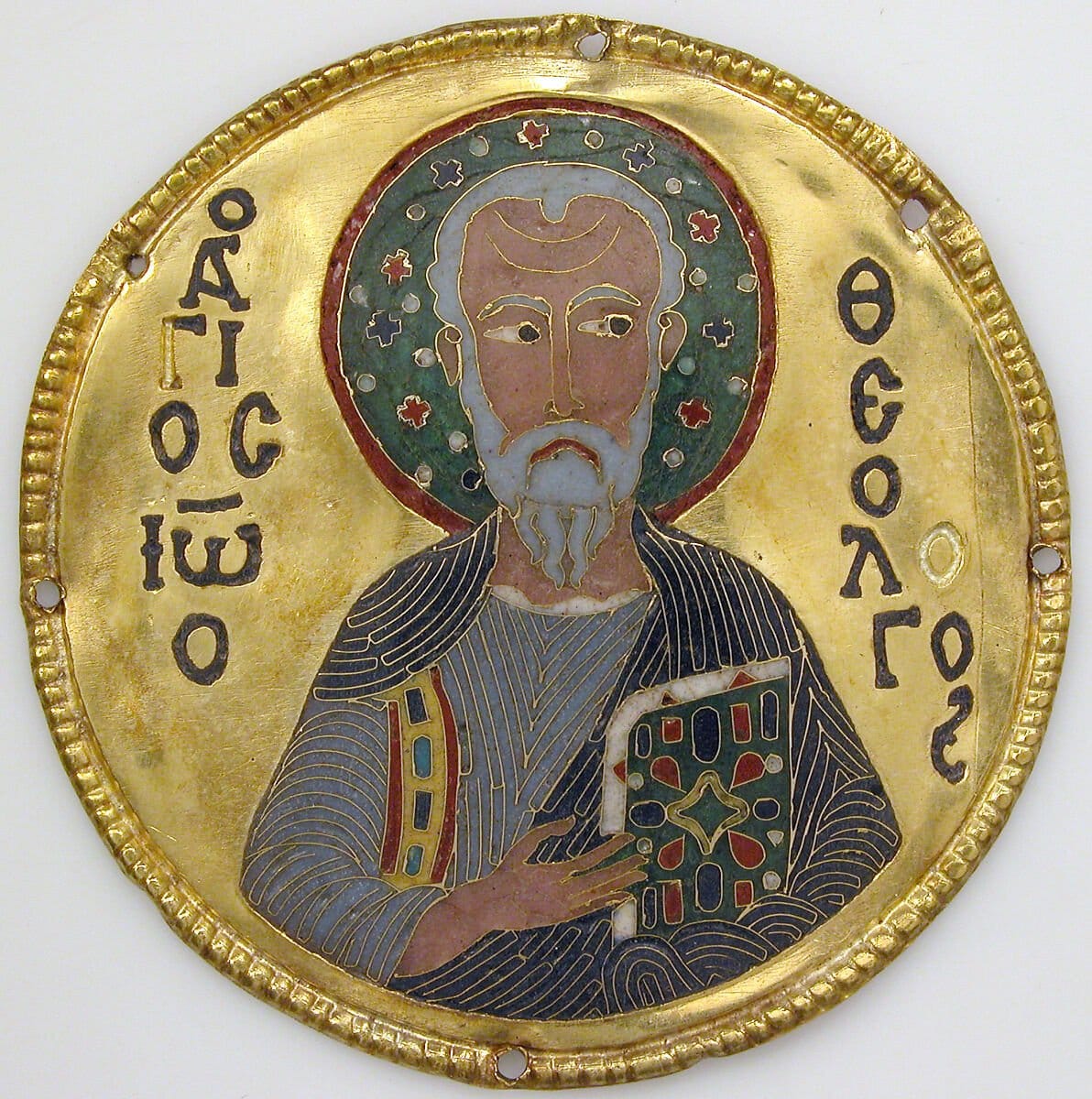
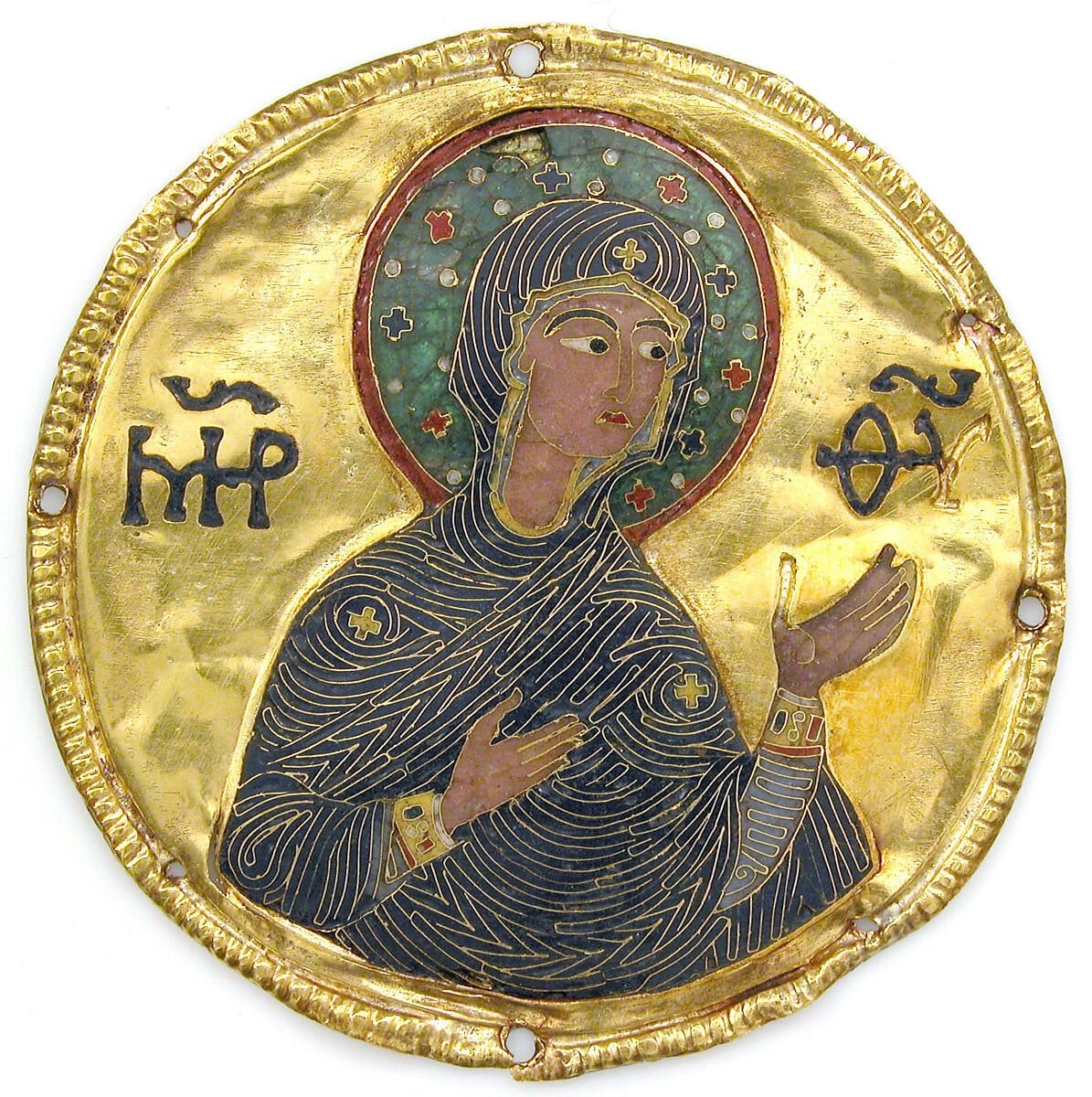
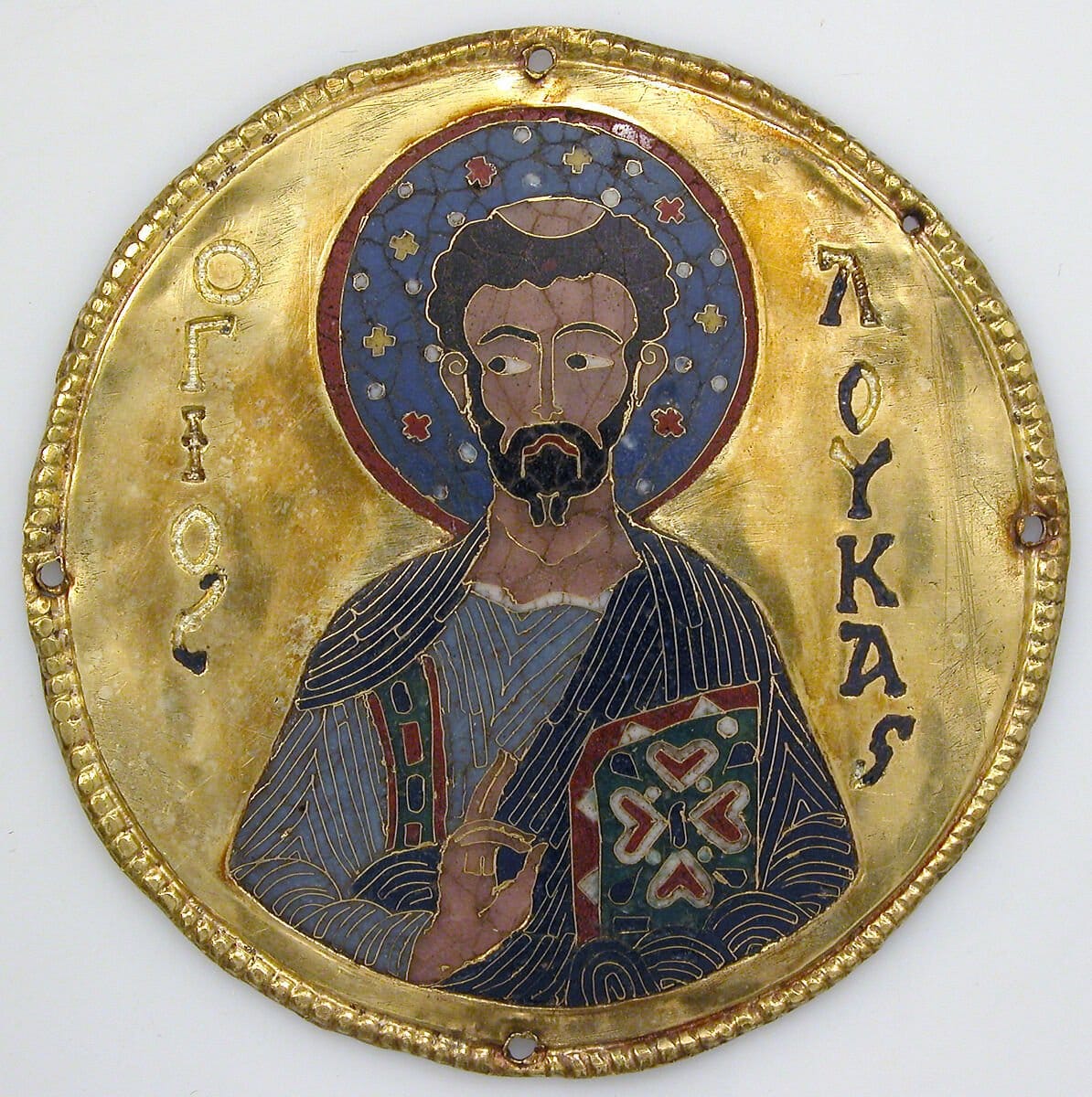
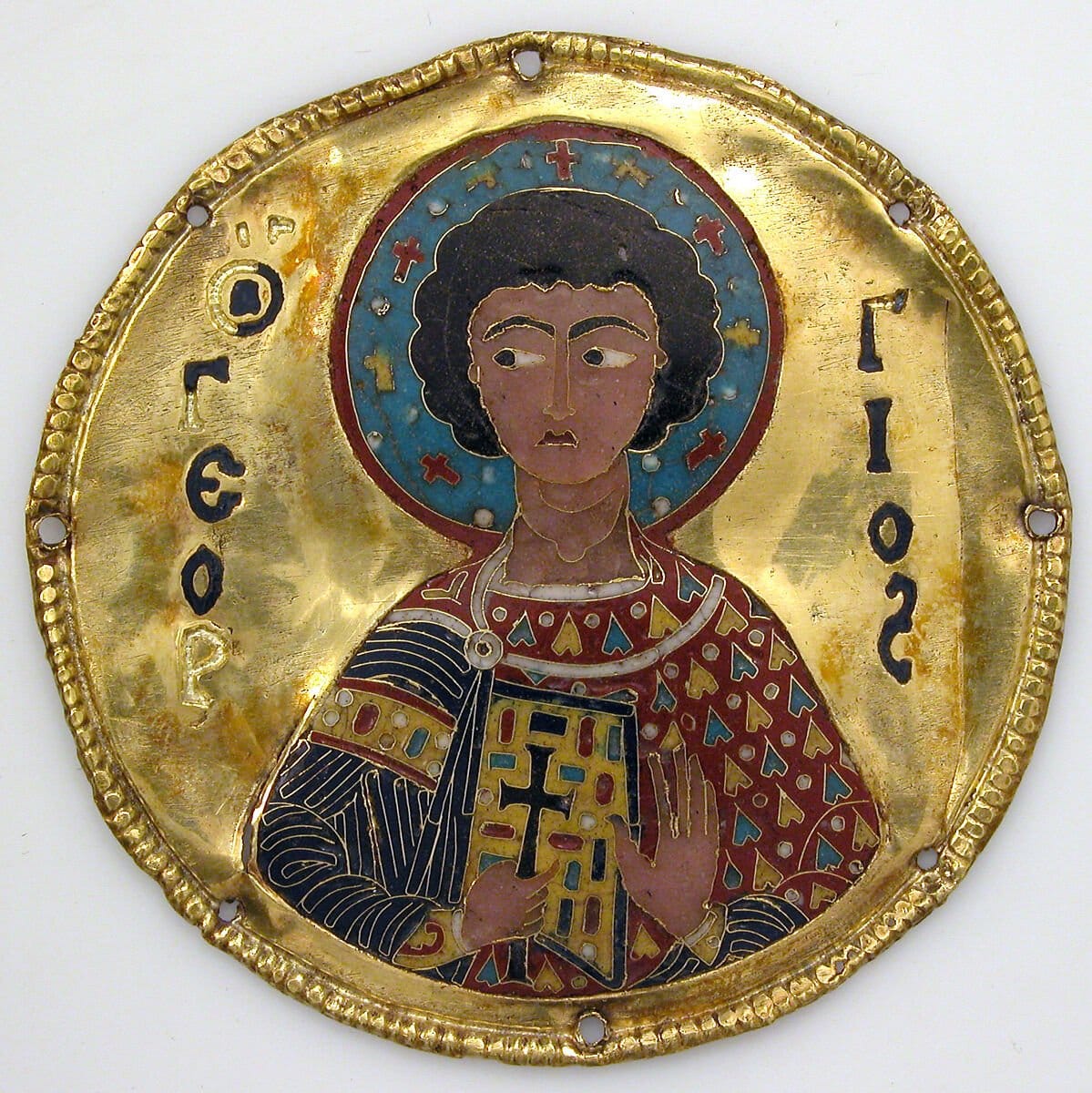
This medallion is one of a group of twelve that once surrounded an icon of the archangel Gabriel. The medallions may have been sent as a gift from the Byzantine court to the neighboring Christian state of Georgia. Byzantine gold, silver, and cloisonné enamel, made in Constantinople, diameter 8.3 cm.
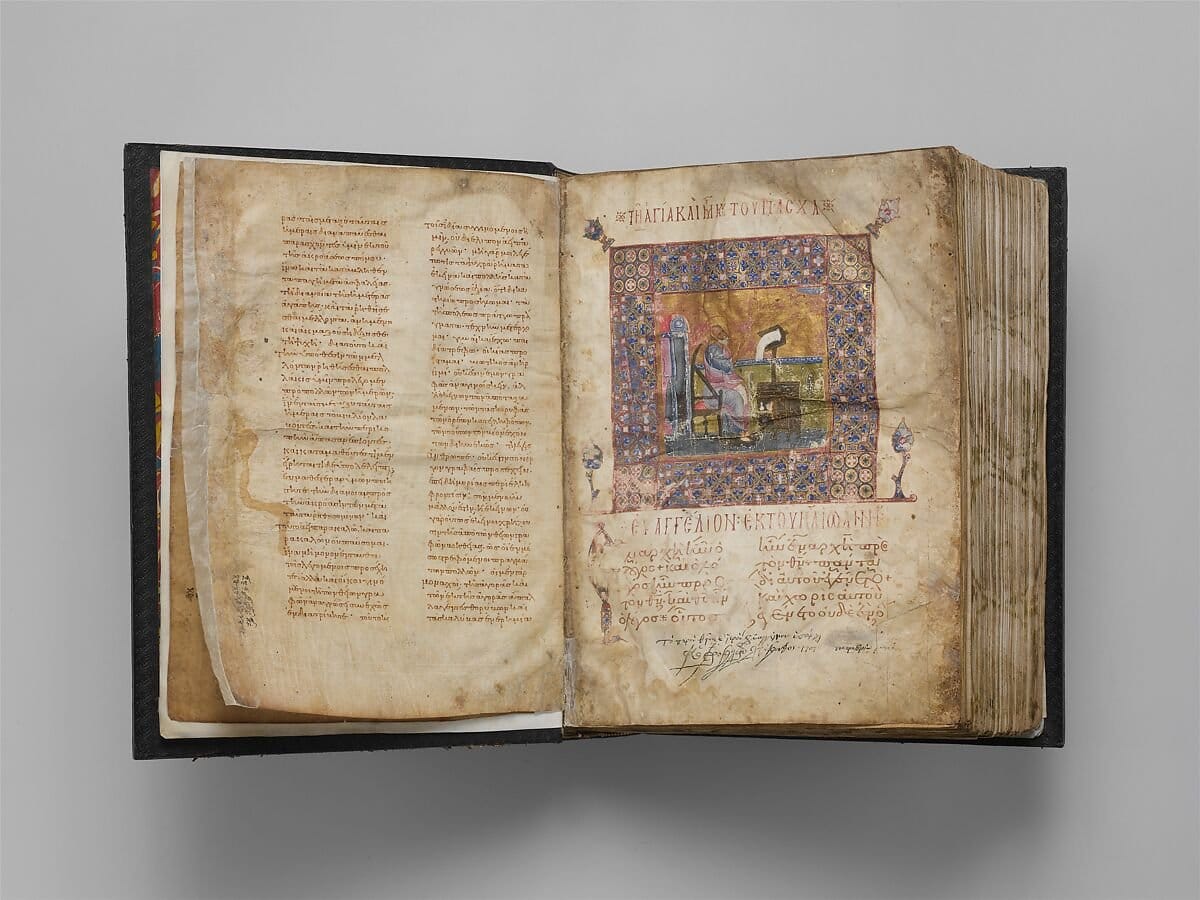
Illuminated manuscripts written in Greek were considered one of the greatest art forms by the highly literate and sophisticated clerical and secular elite of Byzantium. Over the centuries many works were commissioned for use in important churches. The calendar in this lectionary and the quality of t
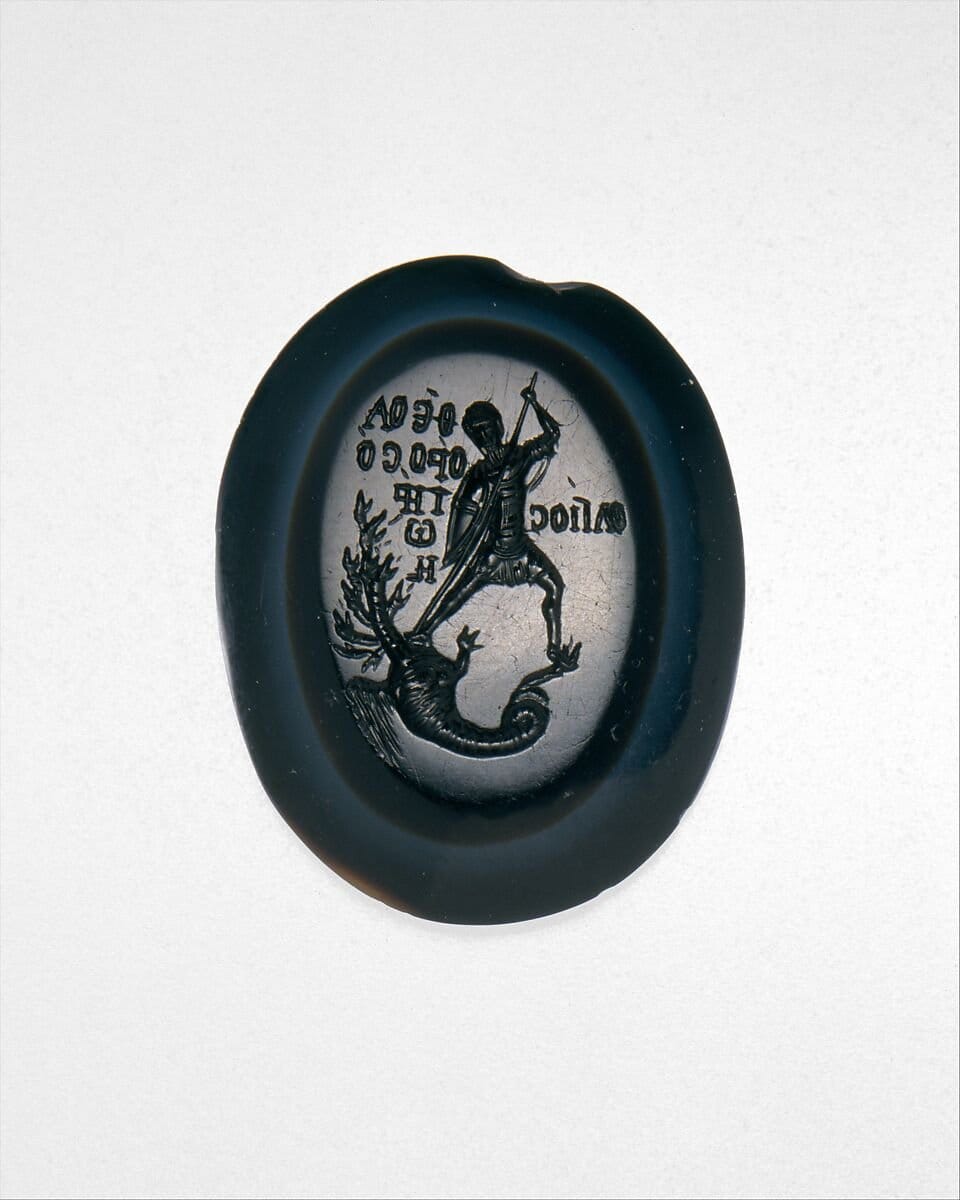
Theodore Teron (the recruit) was one of several soldier-martyrs whose cults were enormously popular in the later centuries of the Byzantine Empire. This intaglio illustrates Theodore’s miraculous slaying of a dragon. The image reflects the revival of classical culture that took place in Byzantium in
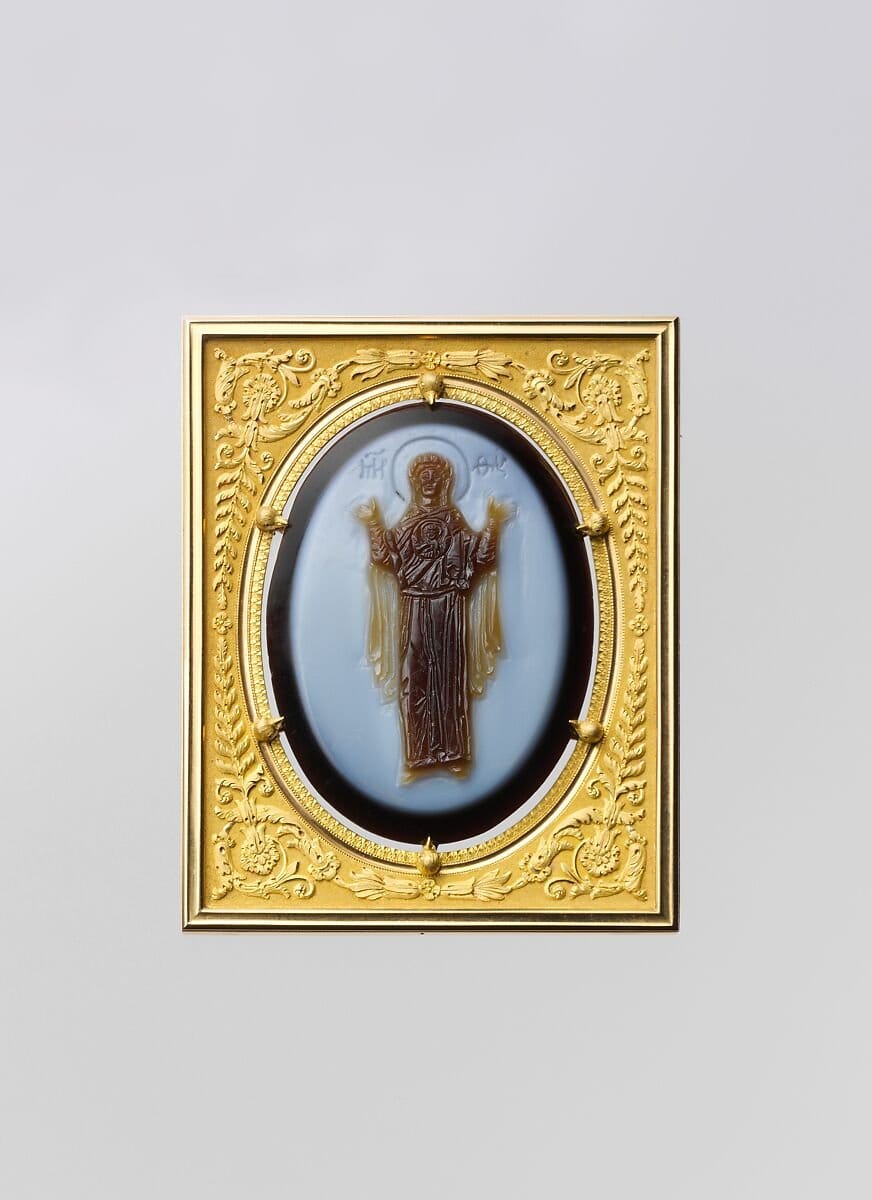
This delicately carved cameo shows the Virgin in an orant pose, with her arms upraised, and a medallion of the Christ Child over her chest. This icon type is often called the Blachernitissa after a famous icon at the Blachernai Monastery in Constantinople. Byzantine agate cameo, probably made in Con
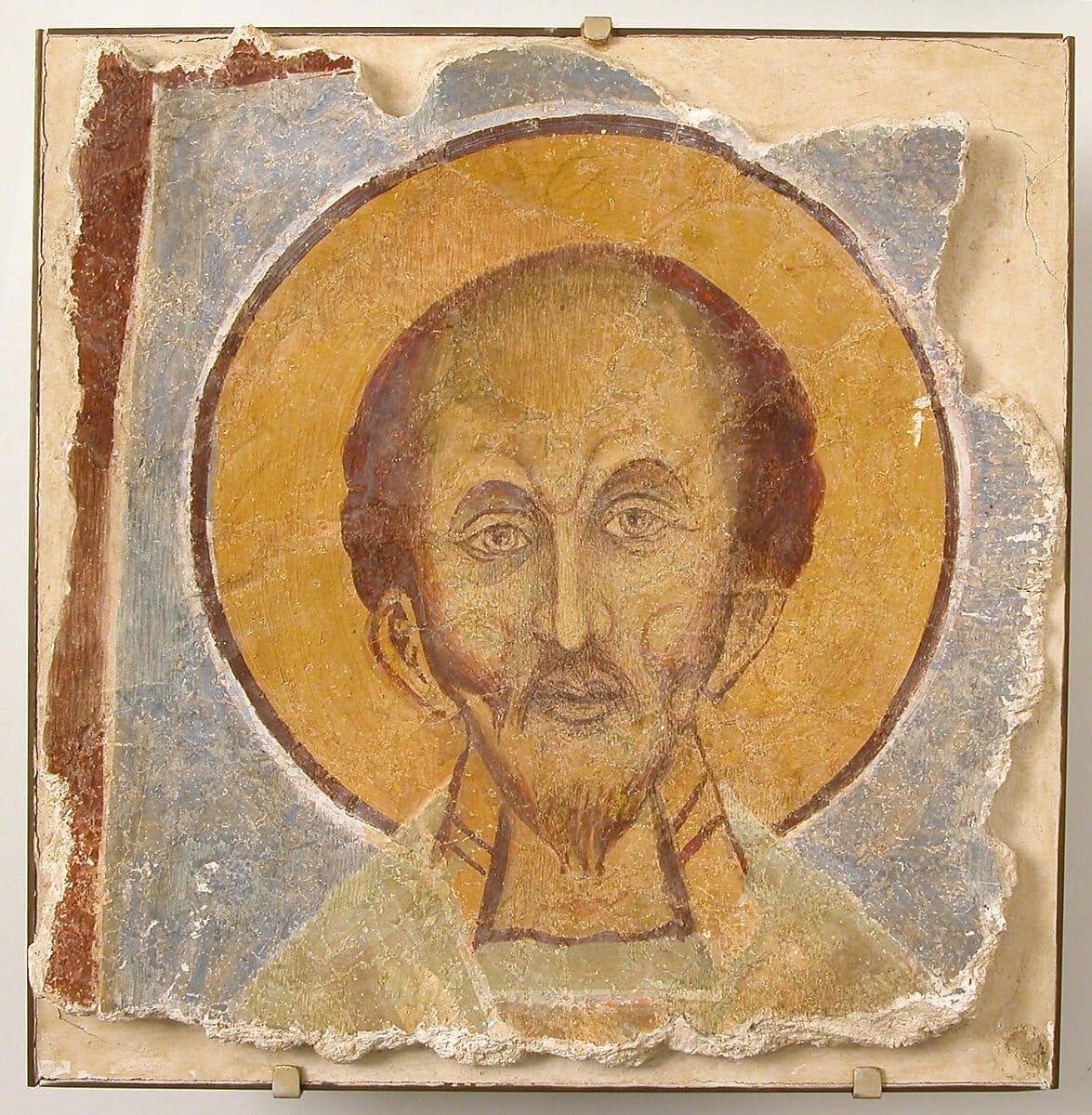
The largest of these fresco fragments may represent the late fourth-century saint John Chrysostom, who is usually depicted with a pointed beard, sunken cheeks, and a high forehead. Byzantine fresco with modern restoration, 24 x 23.7 cm.
This medallion is one of a group of twelve that once surrounded an icon of the archangel Gabriel. The medallions may have been sent as a gift from the Byzantine court to the neighboring Christian state of Georgia. Byzantine gold, silver, and cloisonné enamel, diameter 8.3 cm.
This medallion is one of a group of twelve that once surrounded an icon of the archangel Gabriel. The medallions may have been sent as a gift from the Byzantine court to the neighboring Christian state of Georgia. Byzantine gold, silver, and cloisonné enamel, diameter 8.3 cm.
This medallion is one of a group of twelve that once surrounded an icon of the archangel Gabriel. The medallions may have been sent as a gift from the Byzantine court to the neighboring Christian state of Georgia. Byzantine gold, silver, and cloisonné enamel, diameter 8.3 cm.