Saint Sebastian (1480) by Andrea Mantegna - Public Domain Catholic Painting
St. Sebastian is the subject of three paintings by the Italian Early Renaissance master Andrea Mantegna.

Free downloadable Renaissance Catholic paintings in the public domain.
St. Sebastian is the subject of three paintings by the Italian Early Renaissance master Andrea Mantegna.
In the Book of Genesis, the son of Isaac and Rebecca, Jacob, went to Haran, saw a well where shepherds were gathering their flocks to water them and met Laban's younger daughter, Rachel, his first cousin; she was working as a shepherdess. Jacob was 77 years old, and he loved Rachel immediately.
Salome’s dancing so pleased her stepfather Herod that he offered her anything she wanted. Her mother advised Salome to demand John the Baptist’s head, which Salome presented to her family in an elaborate dish. Despite its biblical
Laib was a German painter who spent most of his career in Austria. Proof that he came to Salzburg at an early age is suggested by the stylistic affinity of many of his works with Salzburg painting, including this one.
A saint, holding an abbot or bishop’s crozier, blesses a kneeling figure, probably the donor who commissioned the window. It forms a pair with another panel showing Saint Fiacre, also owned by the Museum.
This scene and that of King Solomon Receiving the Queen of Sheba are particularly fine examples of the decorative style practiced in Antwerp by a group of largely anonymous artists now dubbed Antwerp Mannerists.
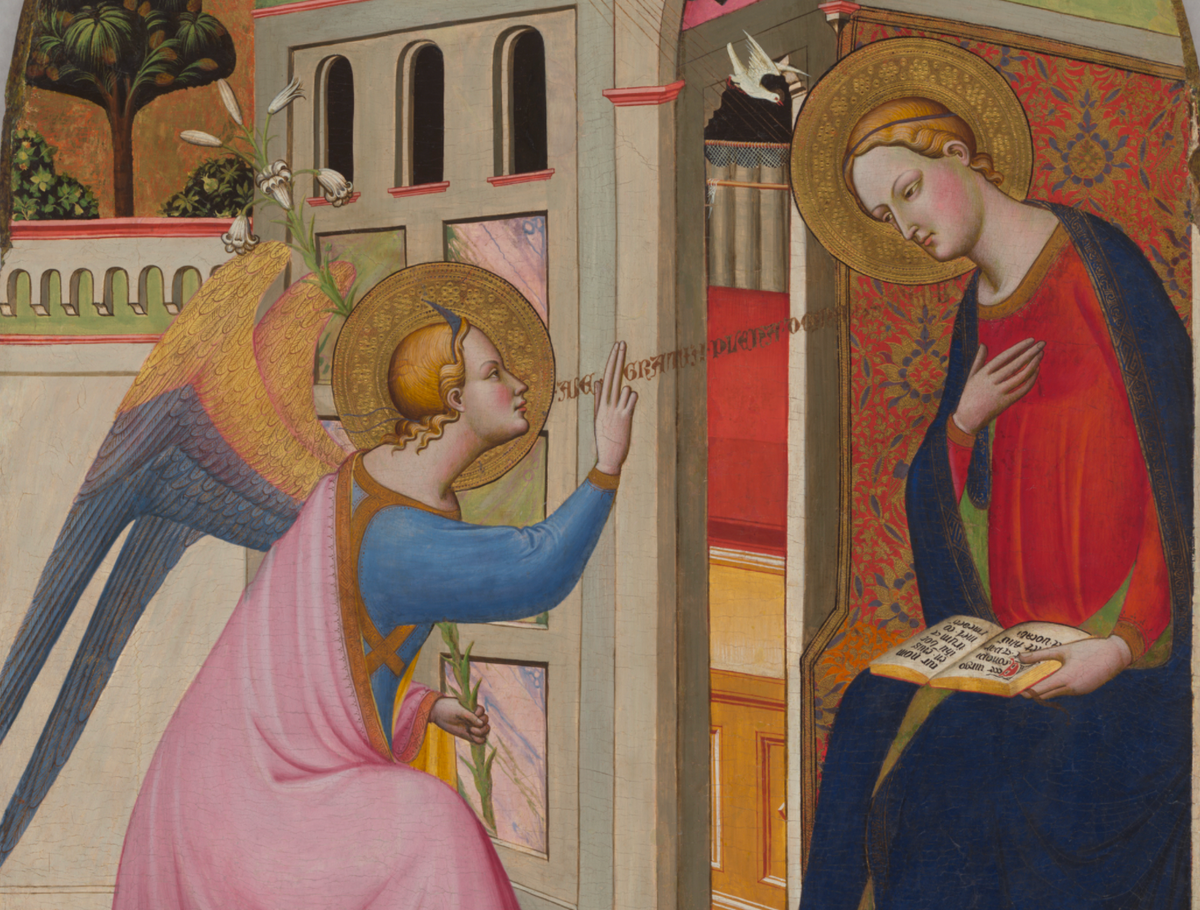
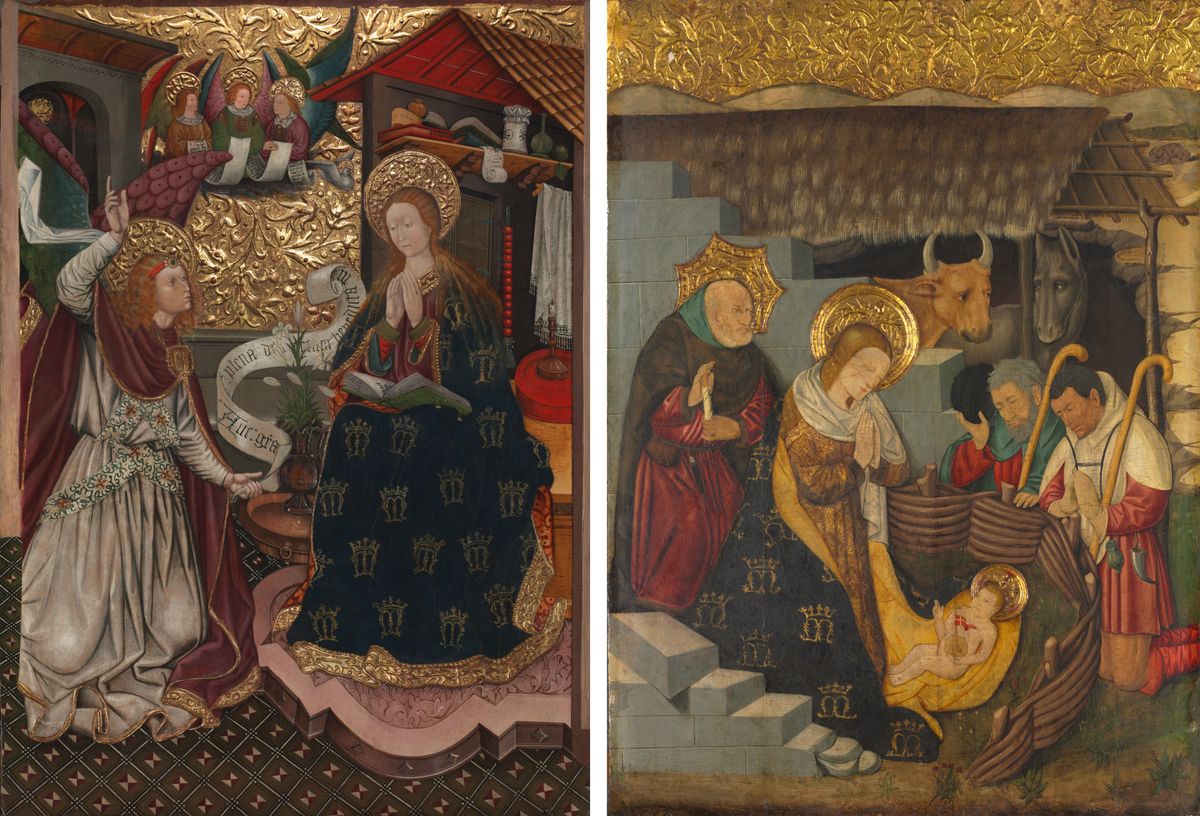
The words Ave gratia plena Dominus tecum (Greetings most favored one! The Lord is with you) from Saint Luke’s Gospel (1:8) emerge from the archangel Gabriel’s mouth as he announces the conception of Christ to the Virgin Mary.
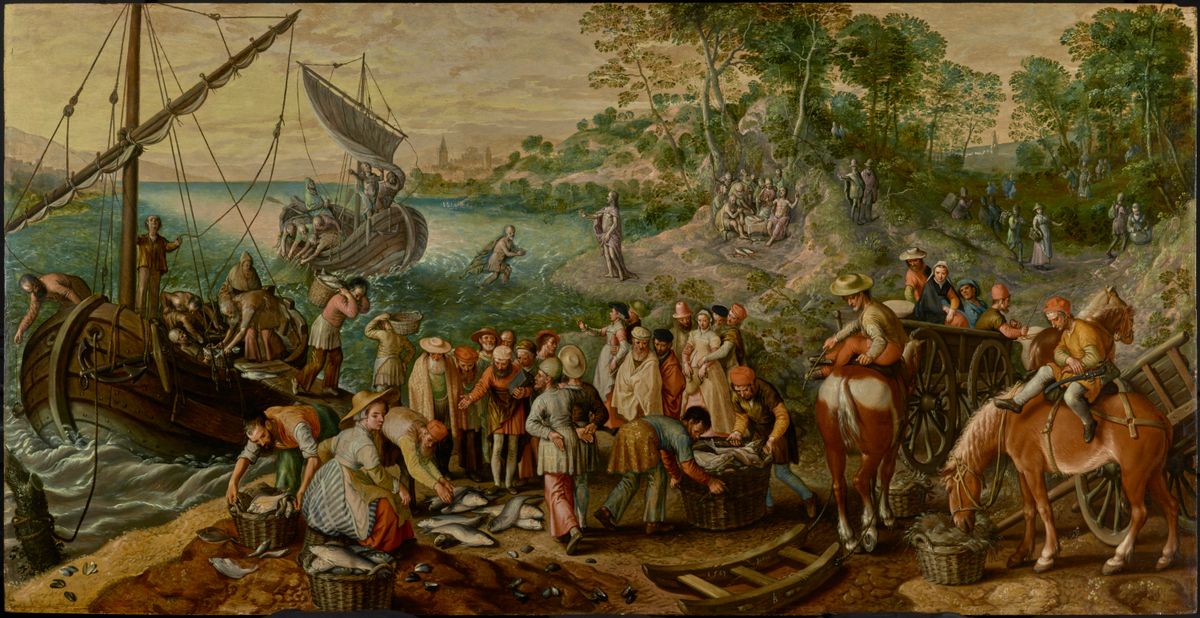
At the left, Saint Peter and other disciples of Christ pull their teeming nets of fish aboard a boat. After an unsuccessful night of fishing on the Sea of Tiberius, the tired and hungry disciples had seen a man standing on the shore and followed his advice to cast their nets over the boat's right…
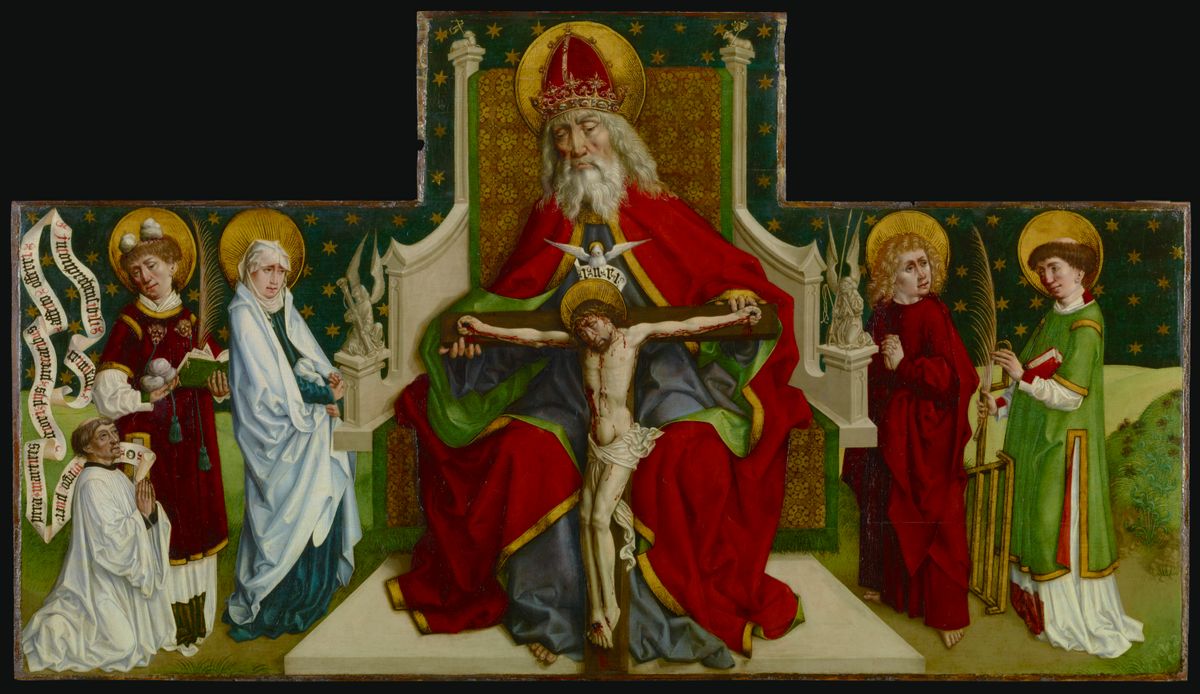
God the Father sits enthroned, holding the crucified Christ with the Holy Spirit between them, all three dominating the composition. Together they represent the Trinity, the central doctrine of the Christian faith, in which all three are united as one.
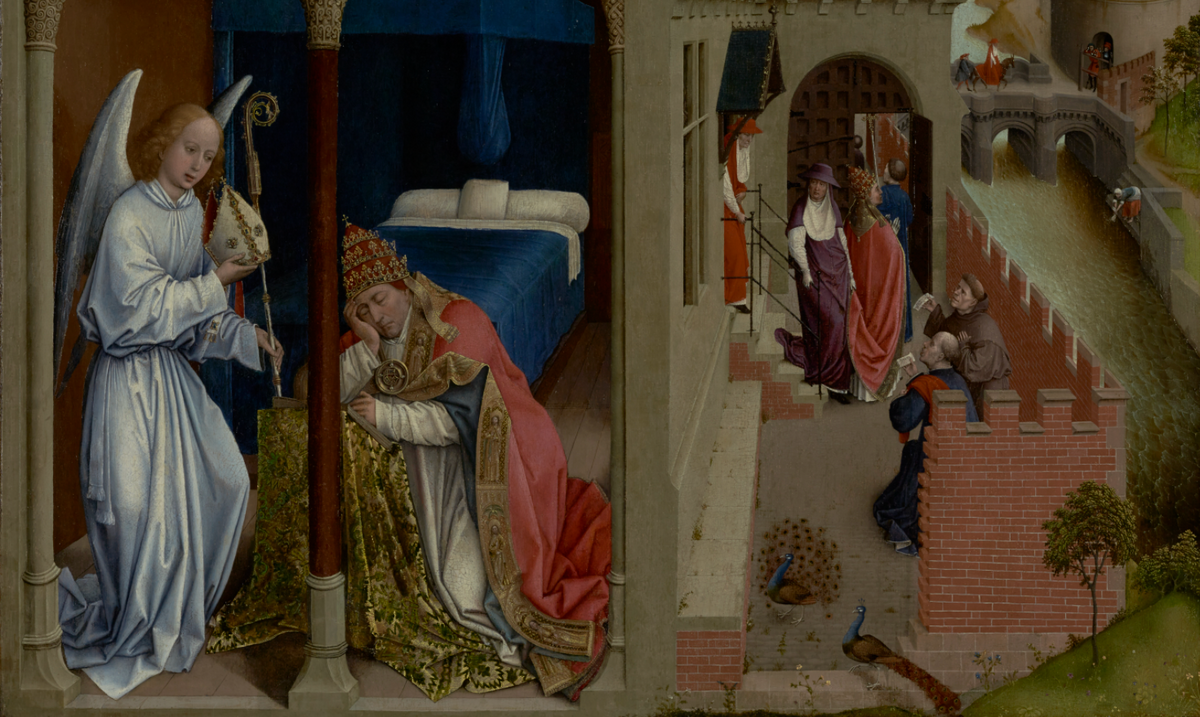
A cut-away wall reveals a small bedroom where an angel appears to Pope Sergius in his sleep. The angel tells Sergius that the bishop Saint Lambert has been assassinated and Sergius is to appoint a new bishop, Saint Hubert.
The Book of Judith is a deuterocanonical book, included in the Septuagint and the Catholic and Eastern Orthodox Christian Old Testament of the Bible, but excluded from the Hebrew canon and assigned by Protestants to the apocrypha.
This monumental panel probably once decorated a chapel. Both are from a large window in which the Crucifixion was in the center and the Saint Christopher at the right. The third panel, which would have been on the left, is lost.
“Commesso can best preserve antiquity and memory...and can resist all the battles of water and wind and other mishaps of fortune and of time.” Thus Giorgio Vasari wrote of commesso, a newly revived antique technique for making pictures with cut stone.
In this painting Gentile da Fabriano combined several different devotional and biblical subjects: the Madonna of Humility, the Nativity, and the Annunciation to the Shepherds. As the Madonna of Humility, the Virgin sits upon the ground, her hands folded as she worships the child in her lap.
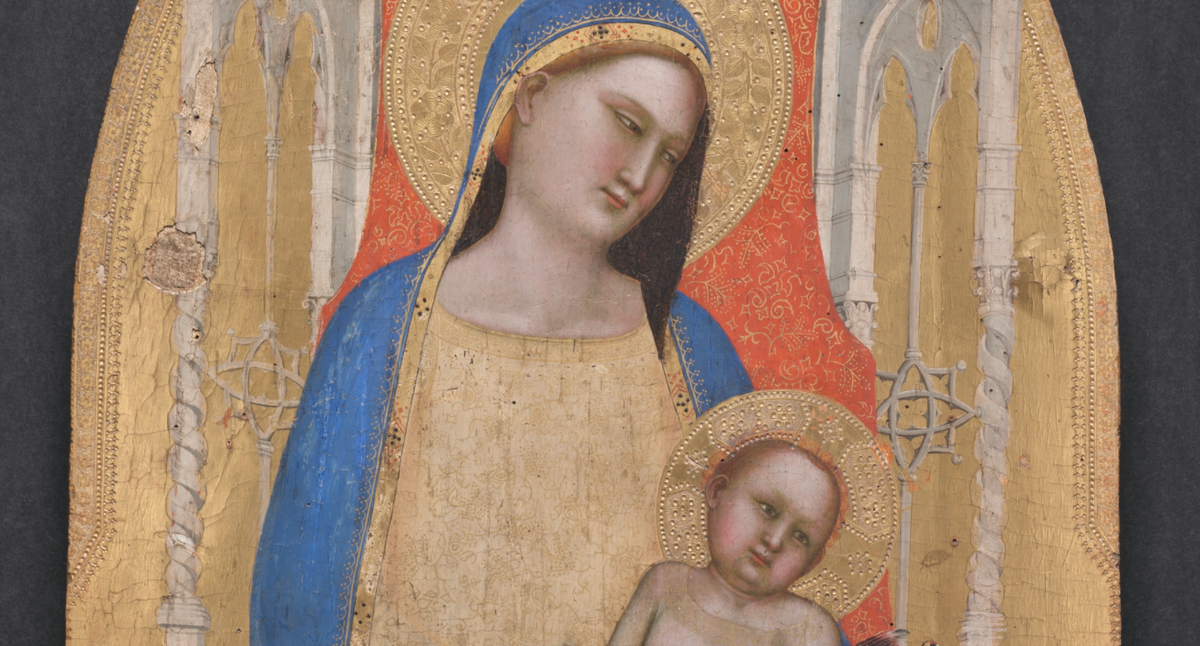
In his right hand, the Christ child grasps a stem of roses. The beauty and fragrance of roses symbolize heaven, while their thorny stems allude to the crown of thorns and Christ's suffering. The bird he holds in his left hand symbolizes the human soul.
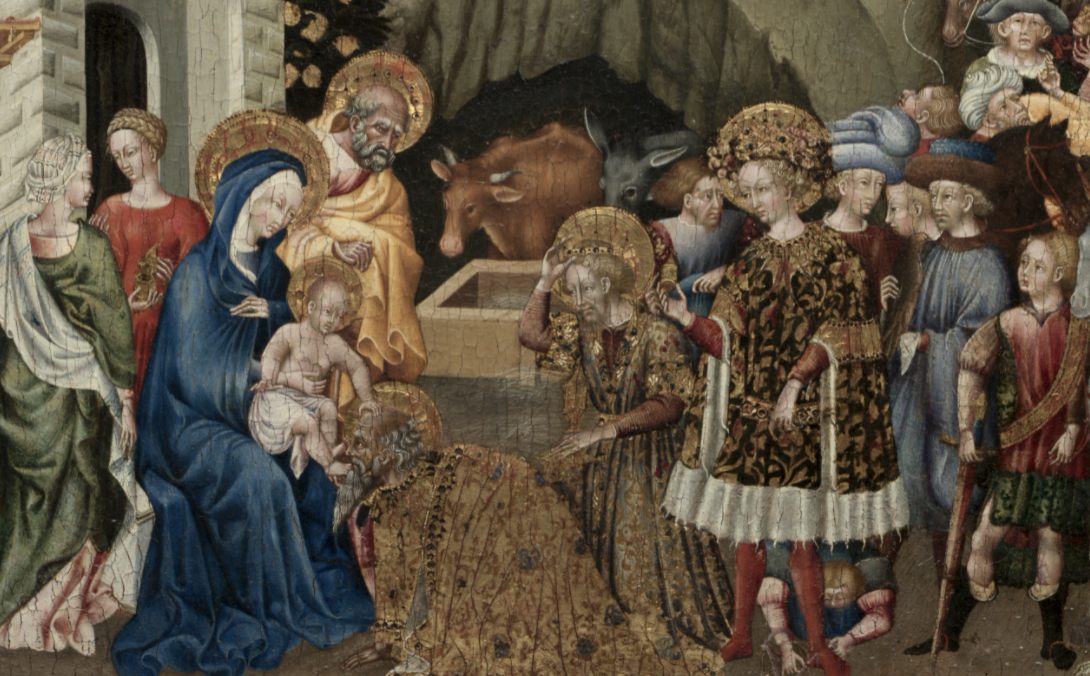
According to the Gospel of Matthew, three Magi, guided by a star, found the newborn Christ and laid gifts before him.
The Biblical parable of Lazarus and the Rich Man (Luke 16:19-21) tells of a man who feasted and celebrated every day, while a beggar named Lazarus sat starving nearby. Dogs came to lick the sores on the poor man's body.
Saint Catherine (1347–1380) was the daughter of a prosperous Sienese cloth dyer. At the age of six, she saw a vision of Christ and thereafter dedicated herself to chastity, penance, and good works.
Despite the religious subject, the scale and intricate detail indicate that this painting was not for a church setting. Instead, as an independent work of art, a collector would have admired its artistry and unusual combination of Italian and northern European traditions.
In this painting, the Archangel Gabriel proclaims the Virgin’s destiny as the mother of Christ. The setting is an ordinary house, but simple objects have symbolic meaning.
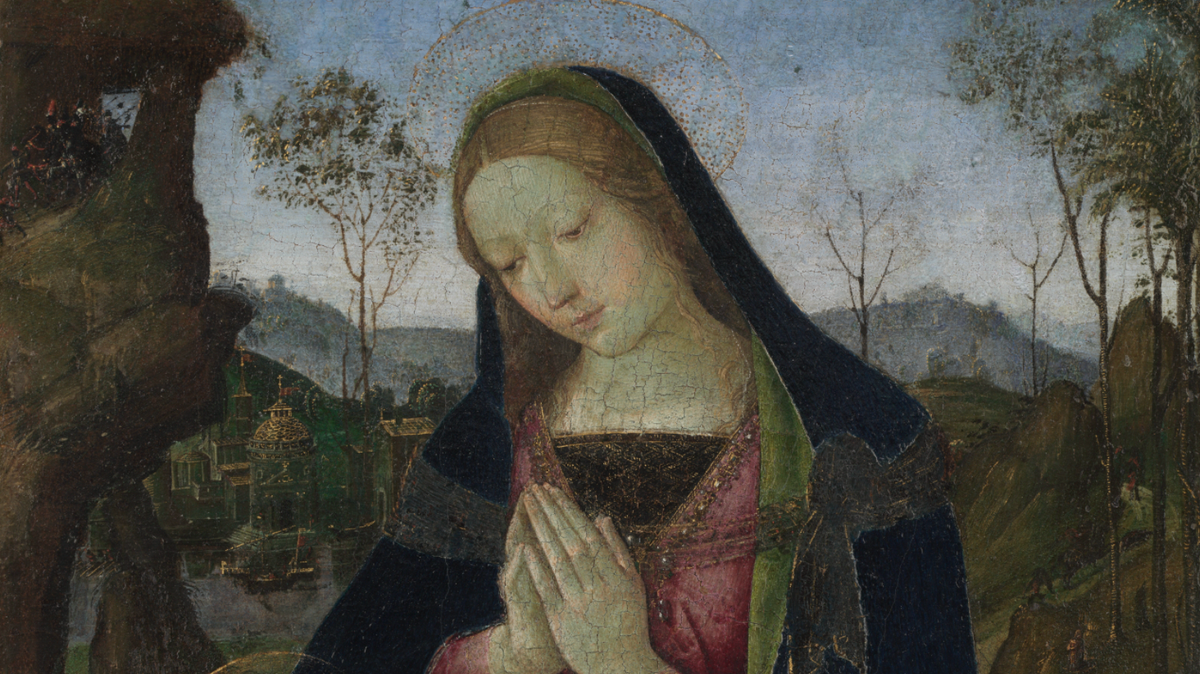
Bernardino di Betto, called Pinturicchio, is said to have acquired his nickname ("little painter") because of his small stature, and used it to sign some of his paintings.
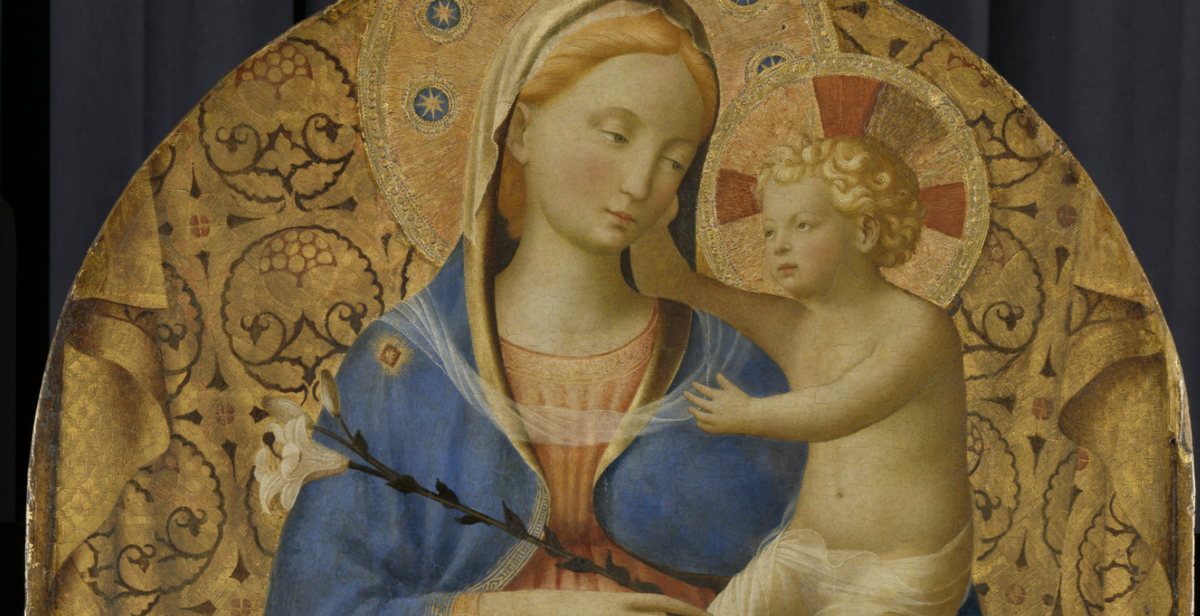
As a Dominican monk, Fra Angelico was not subject to the strict rules of the Florentine painters’ guild. He was thus free to develop a more personal style. This combined strong realism and solid forms with a certain sweetness partly derived from earlier Sienese and Florentine examples.
Bridget of Sweden (c. 1303 – 23 July 1373); born as Birgitta Birgersdotter, was a mystic and saint, and founder of the Bridgettines nuns and monks after the death of her husband of twenty years.
Seated on an elaborate throne, the Madonna’s weighty majesty emphasizes her role as the Queen of Heaven as she gazes at her infant son. The child, in turn, stares at the viewer.