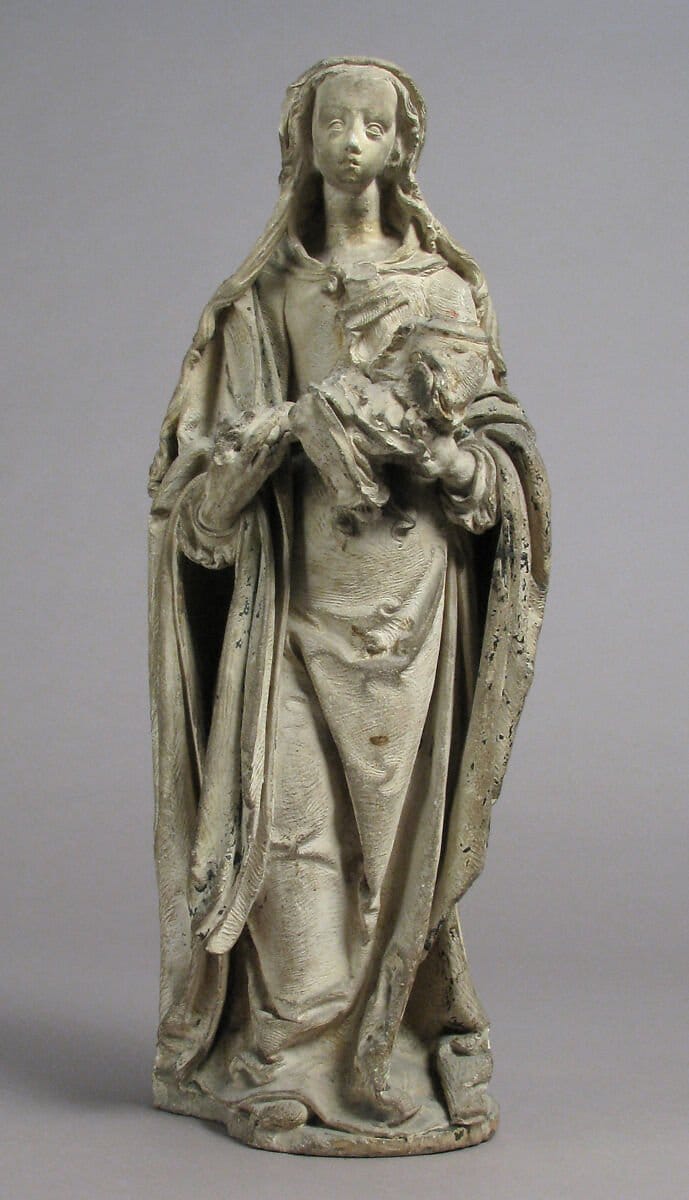

Virgin and Child (1550-1560) by Atelier of the Juliots - Public Domain Catholic Stock Photo
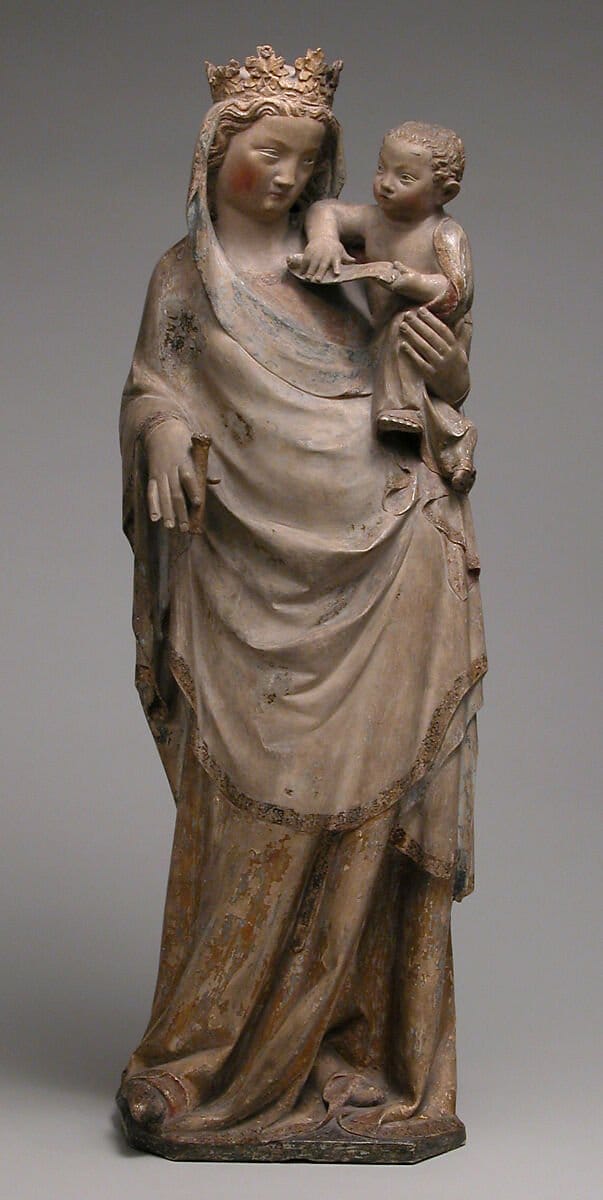
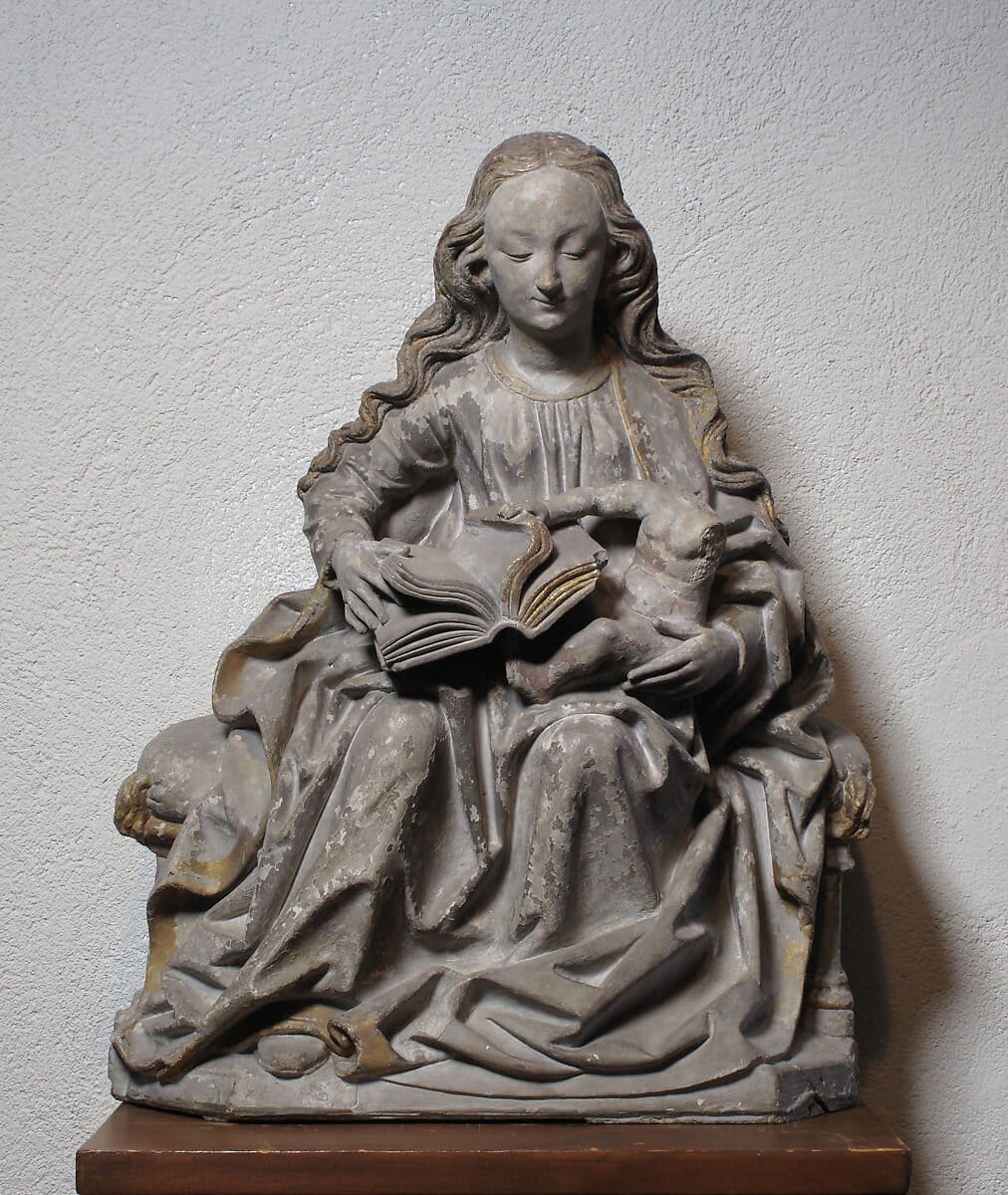
Limestone statue of the Virgin and Child with traces of polychromy, made in France by the Atelier of the Juliots. The sculpture is 39.2 cm high.

Limestone statue of the Virgin and Child with traces of polychromy, made in France by the Atelier of the Juliots. The sculpture is 39.2 cm high.
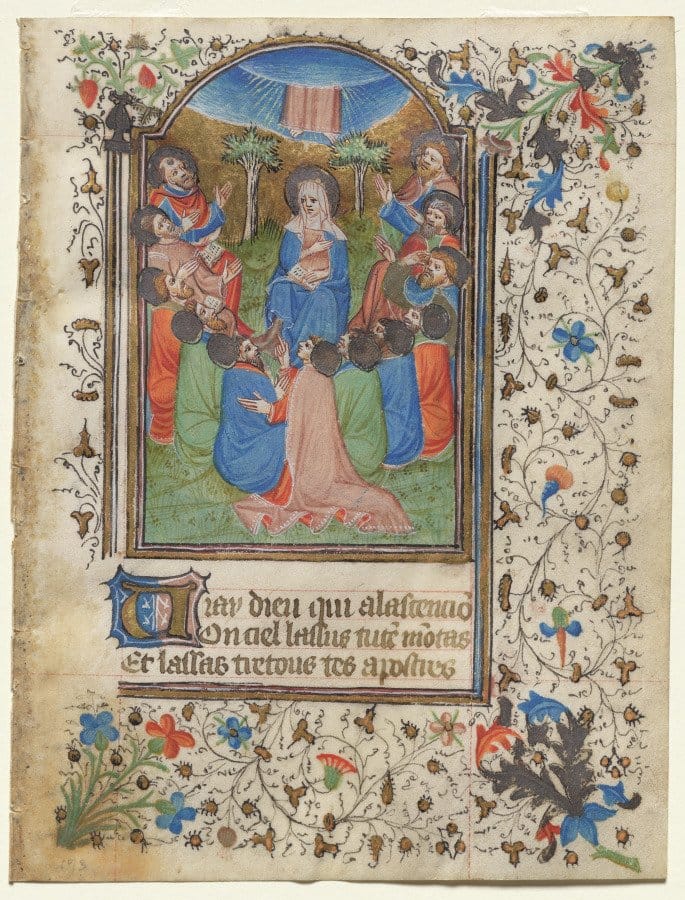
This leaf survives from what must have been an extraordinarily rich book of hours. Internal evidence within the original calendar and texts indicates that Metz was the probable place of production. Ink, tempera, silver, and gold on vellum, 15.9 x 11.6 cm.
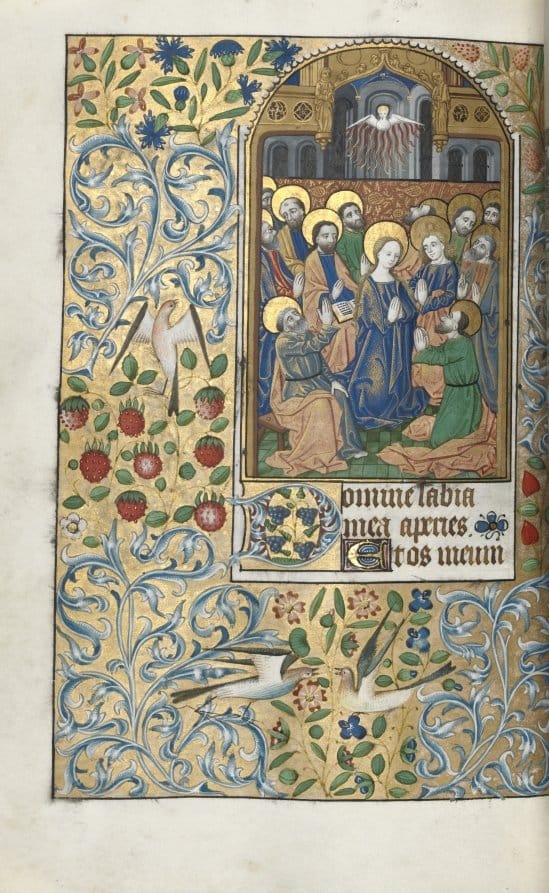
In the late 1400s and early 1500s Rouen was an established and important center of book production. This artist, named after a manuscript now in Geneva, was Rouen's principal illuminator during the second half of the 1400s. Ink, tempera, and gold on vellum, folio 99 verso, codex 19.5 x 13.1 cm.
This sculpture and another example of the same subject preserved in the church at Saint Die are among the finest representatives of the regional style found in Lorraine in the early fourteenth century. It is a statue in polychromed and gilded Paris limestone that measures about 87 x 30.2 x 21.9 cm.
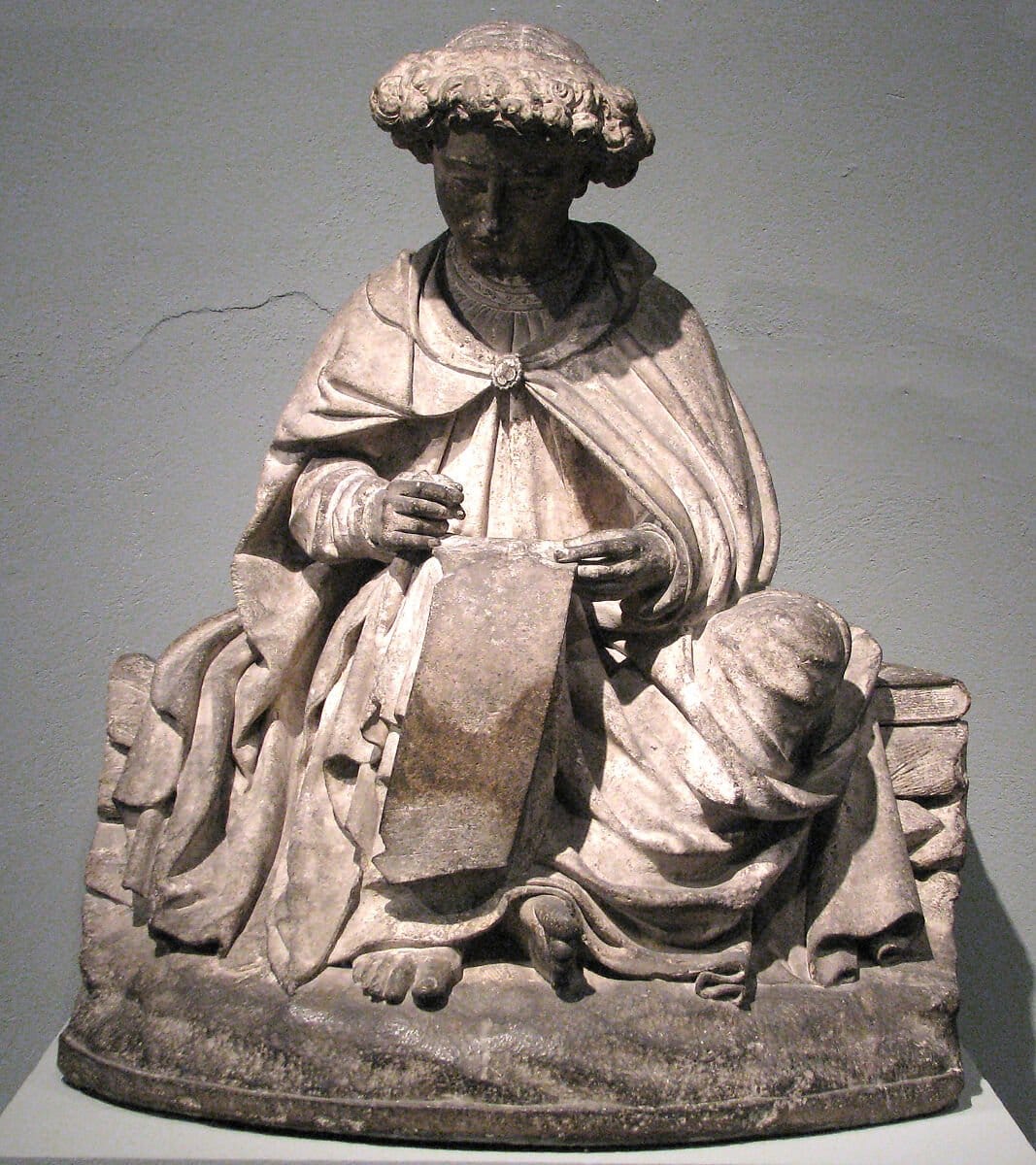
Writing on a long scroll, the youthful saint records divinely inspired revelations. Due to his youthfulness, he probably represents Saint John, who, in addition to his own Gospel, was believed to have written the Apocalypse (Book of Revelation) while living in exile on the Greek Island of Patmos.
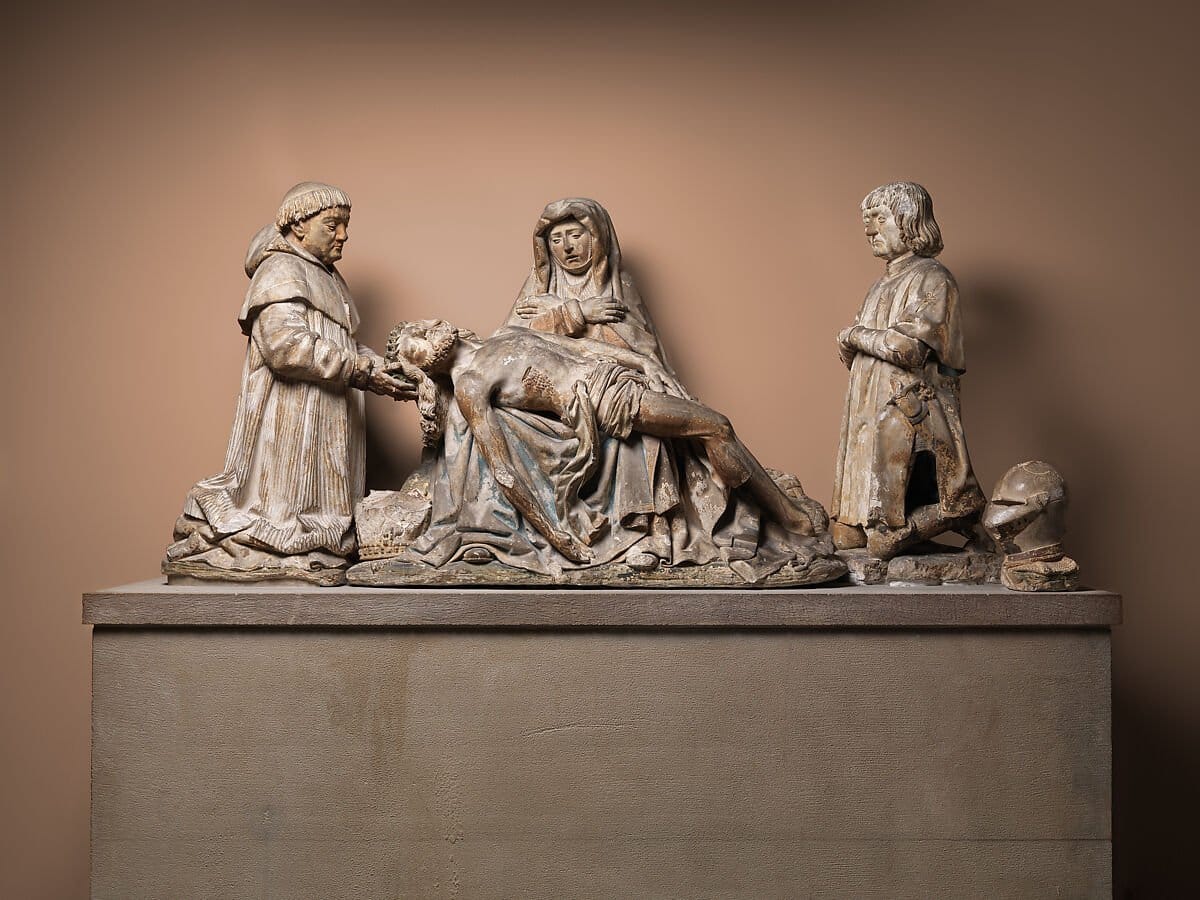
The donors are Pons de Gontaut and his brother Armand, Bishop of Sarlat, in whose family funerary chapel this sculpture and the Entombment originally stood. Their coats of arms were held by the angels in the Entombment scene.
Represented as Queen of Heaven, the Virgin holds a playful Christ Child who, in turn, has caught a bird in flight. The bird symbolizes the soul and its resurrection. The bird nourishes itself on the blood of Christ, an act that refers to the Eucharist.
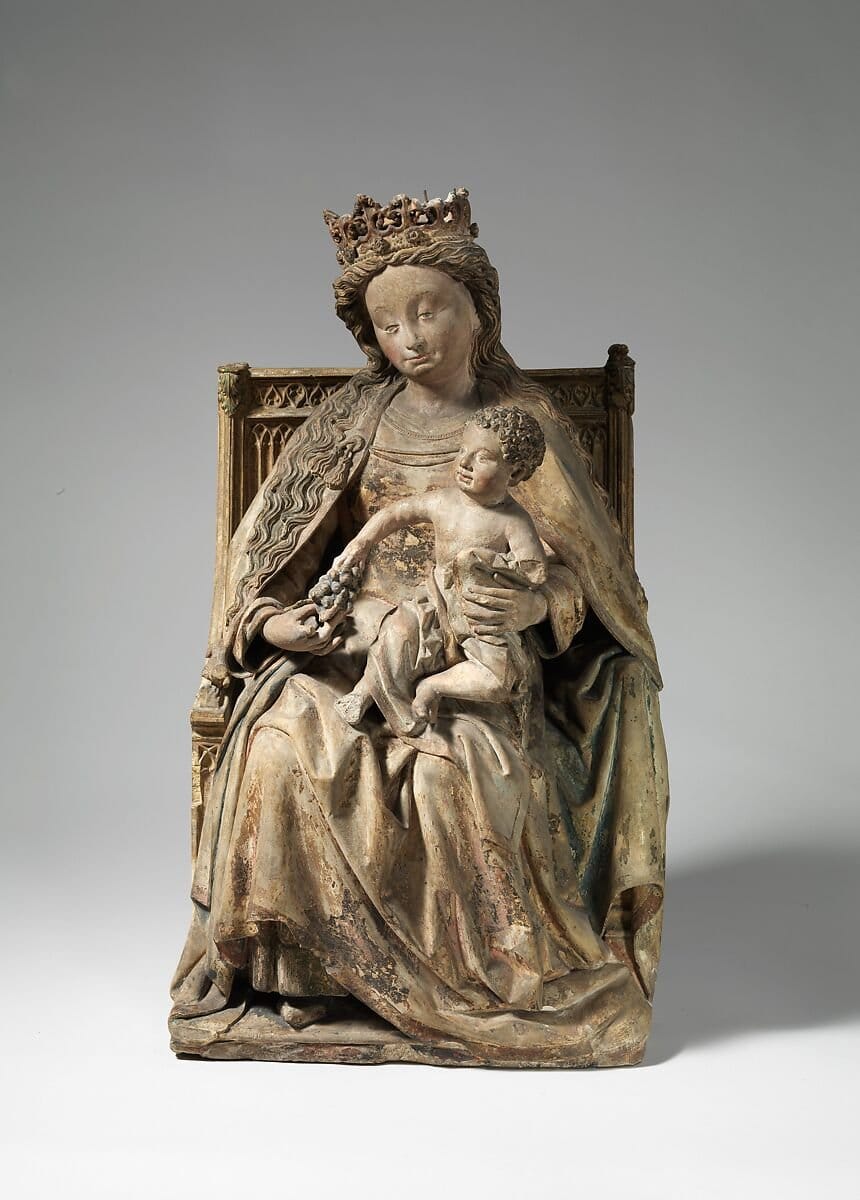
Limestone statue with traces of polychromy, made in Troyes, France. It measures 75.9 x 43.8 x 30.5 cm (29 7/8 x 17 1/4 x 12 in.).
Limestone relief statue with traces of polychromy and gilding, made in Lorraine, France. It measures 69.9 x 54.6 x 27.3 cm (27 1/2 x 21 1/2 x 10 3/4 in.).
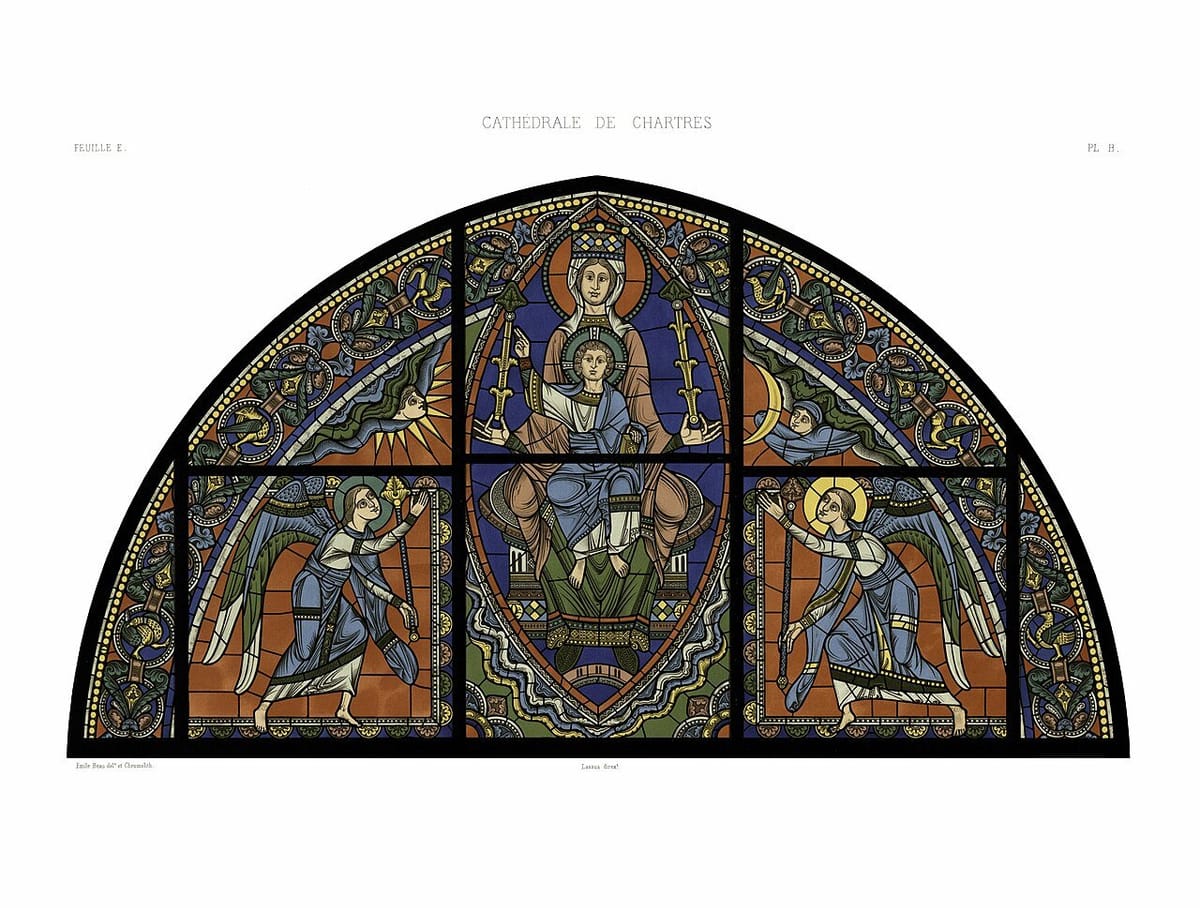
Chrome lithography of the stained glass window: The life of Jesus, Paris, Imprimerie impériale.
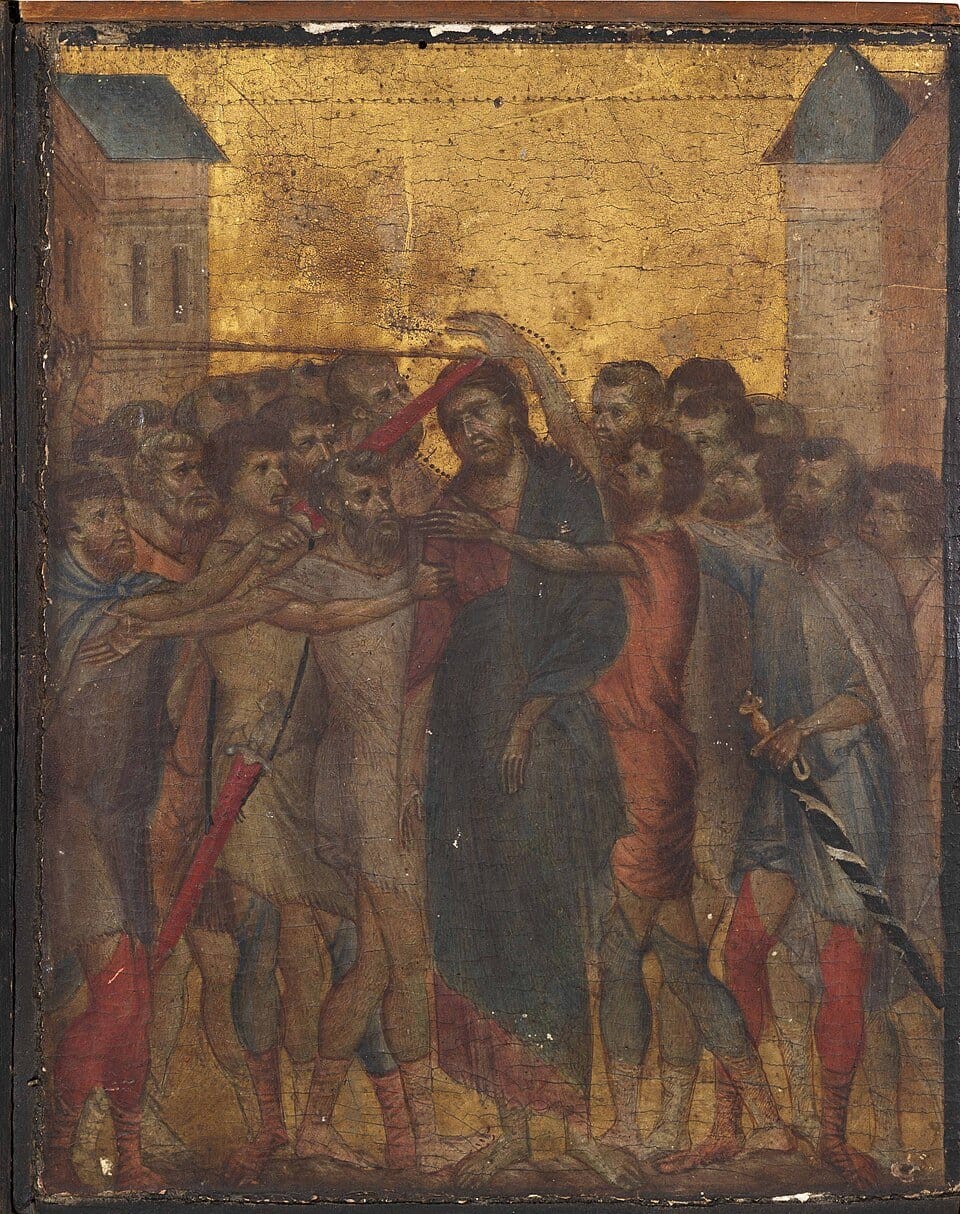
Medium: paint, gold and poplar wood. Dimensions: height: 25.8 cm (10.1 in); width: 20.3 cm (7.9 in).
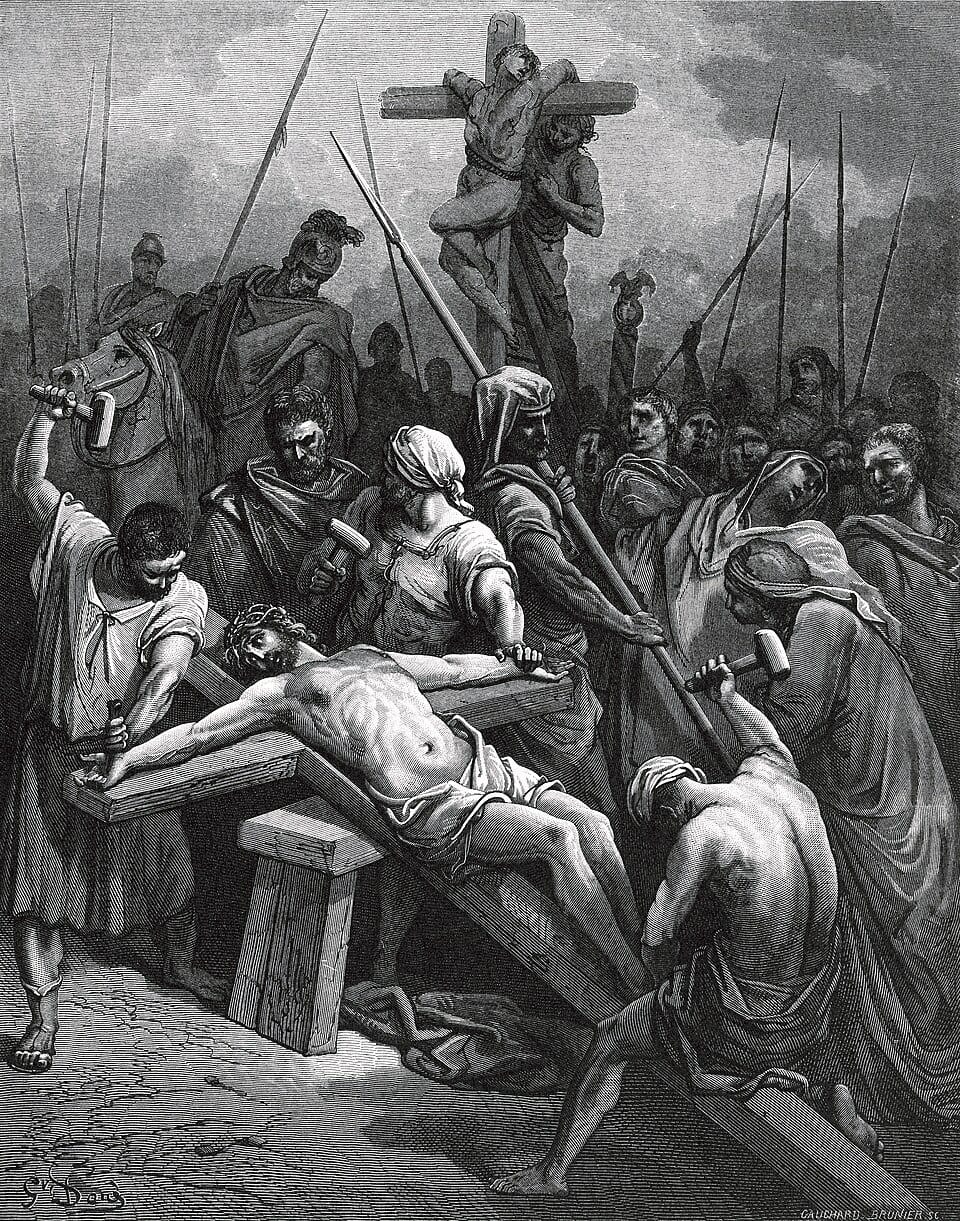
Wood engraving drawn by Gustave Doré, engraved by J. Gauchard Brunier. Printed in: Heilige Schrift 1867 by Stuttgarter Druck- und Verlagshaus Eduard Hallberger.
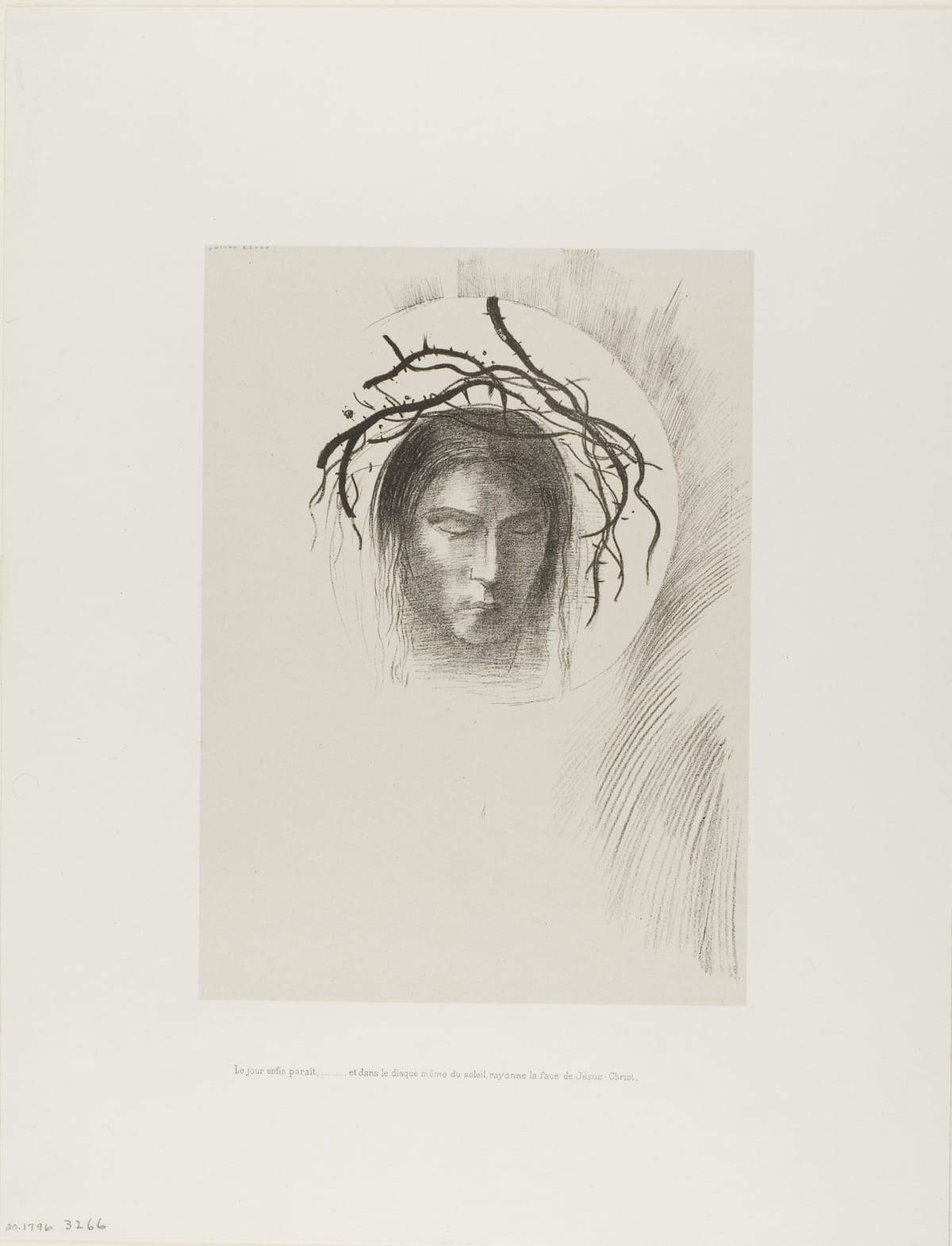
Lithograph in black on light gray China paper laid down on ivory wove paper.
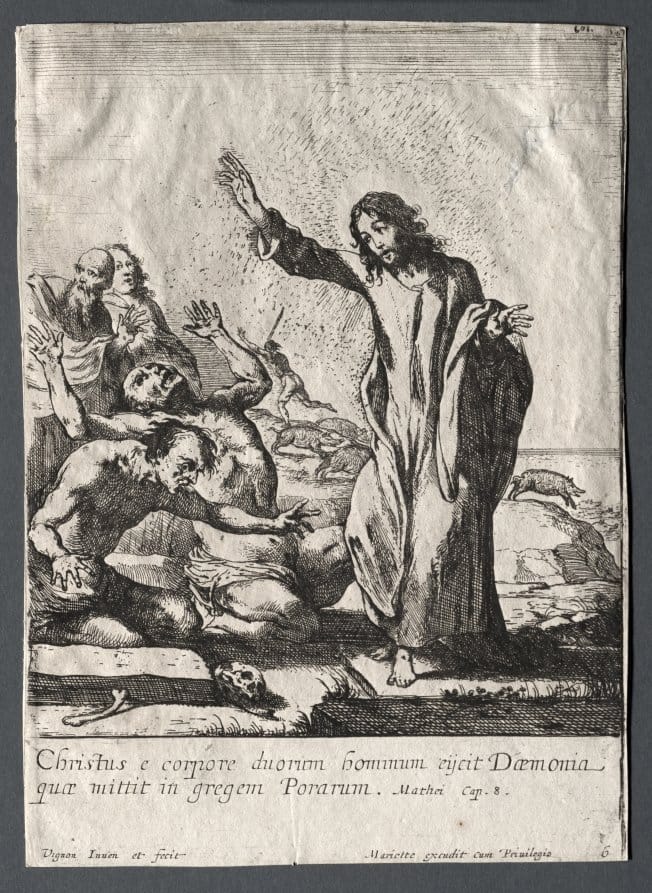
Etching by Claude Vignon from the series The Miracles of Jesus Christ, made in France about 1638-1643, showing Christ delivering the possessed.
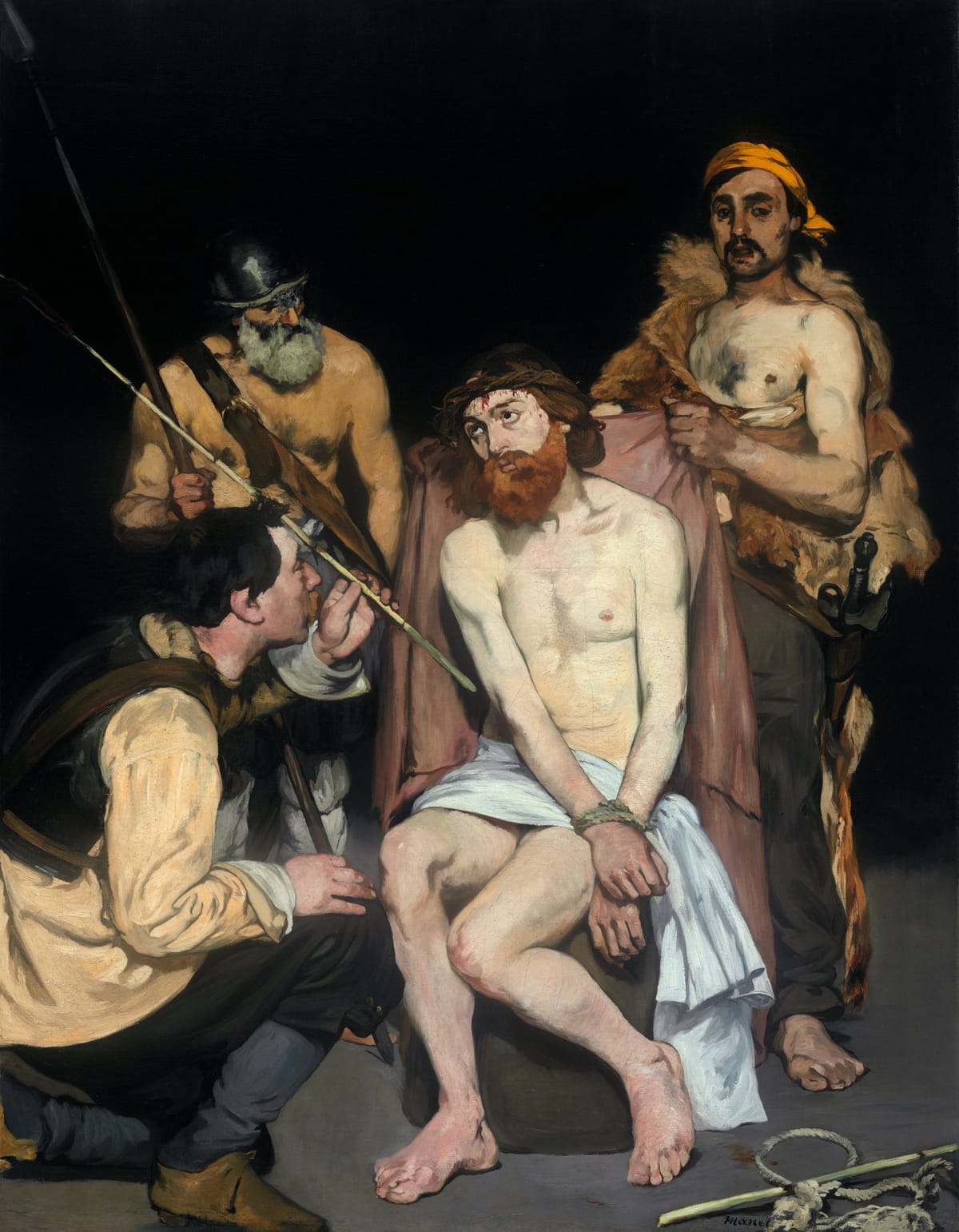
Throughout his career Édouard Manet managed to shock and confound the public with his bold technique and unorthodox approach to subject matter. The most startling feature of this painting is that he painted it at all.
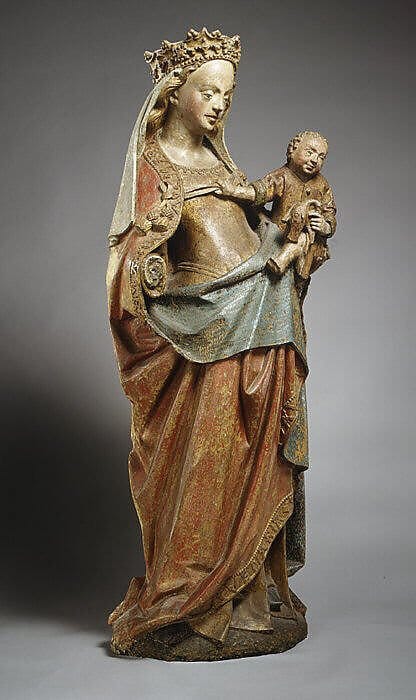
French stone statue of the Virgin and Child from the 15th century, about 141.6 cm (55 3/4 in.) tall.
Folio 58 recto, showing Pentecost, from a Book of Hours (Use of Rome) printed on parchment in Paris in 1510 by Guillaume Le Rouge.
Saint Ambrose, who lived in the fourth century, was an important Christian scholar and bishop. Here he is depicted among his books in a forceful pose emphasized by his massive hands. On the table’s edge, a scourge, or whip—the knotted rope attached to a wooden rod—symbolizes Ambrose’...
This angel carries symbols of the Passion—the events associated with Jesus Christ’s suffering and death. The pitcher, basin, and cloth represent those used by Pontius Pilate to wash his hands of responsibility for Christ’s crucifixion.The painting belongs to a series of twelve angels carrying symbols of...
This scene depicting the Virgin Mary, her infant son Jesus Christ, and various saints and prophets also includes the kneeling figure of Louise de Bourbon (1495–1545), a member of the French royal family (Note the inscription LOYSE DE BOURBON on the hem of her dark habit). She was the...
This angel holds a tablet inscribed “Jesus of Nazareth, King of the Jews” in Hebrew, Greek, and Latin was placed on the cross, above Jesus. The painting belongs to a series of twelve angels carrying symbols of Christ’s Passion—the events associated with Jesus Christ’s suffering and death-...
Jesus-Christ Donnant les Clefs a Saint Pierre: – Christ giving the keys of Heaven to Saint Peter, symbolizing his authority over the Church (Matthew 16). Robert de Seri: 18th‑century French etcher, known for reproductive prints after Renaissance masters like Raphael. Free Downloaddownload.jpg604 KBdownload-circle Please SUBSCRIBE or DONATE...
David, roi d’Israël: King David of Israel, biblical poet‑warrior and ancestor of Jesus (Old Testament: 1–2 Samuel; 1 Kings 1–2; Psalms). Nicolas Auguste Hesse: 19th‑century French painter known for religious, historical, and allegorical works and stained‑glass designs. Free DownloadThis image is in the public...
Sainte Elisabeth: Saint Elizabeth, mother of John the Baptist and kinswoman of Mary (Gospel of Luke 1). Nicolas Auguste Hesse: 19th‑century French painter known for religious, historical, and allegorical works and stained‑glass designs. Free DownloadThis image is in the public domain307371rg.jpg363 KBdownload-circle...