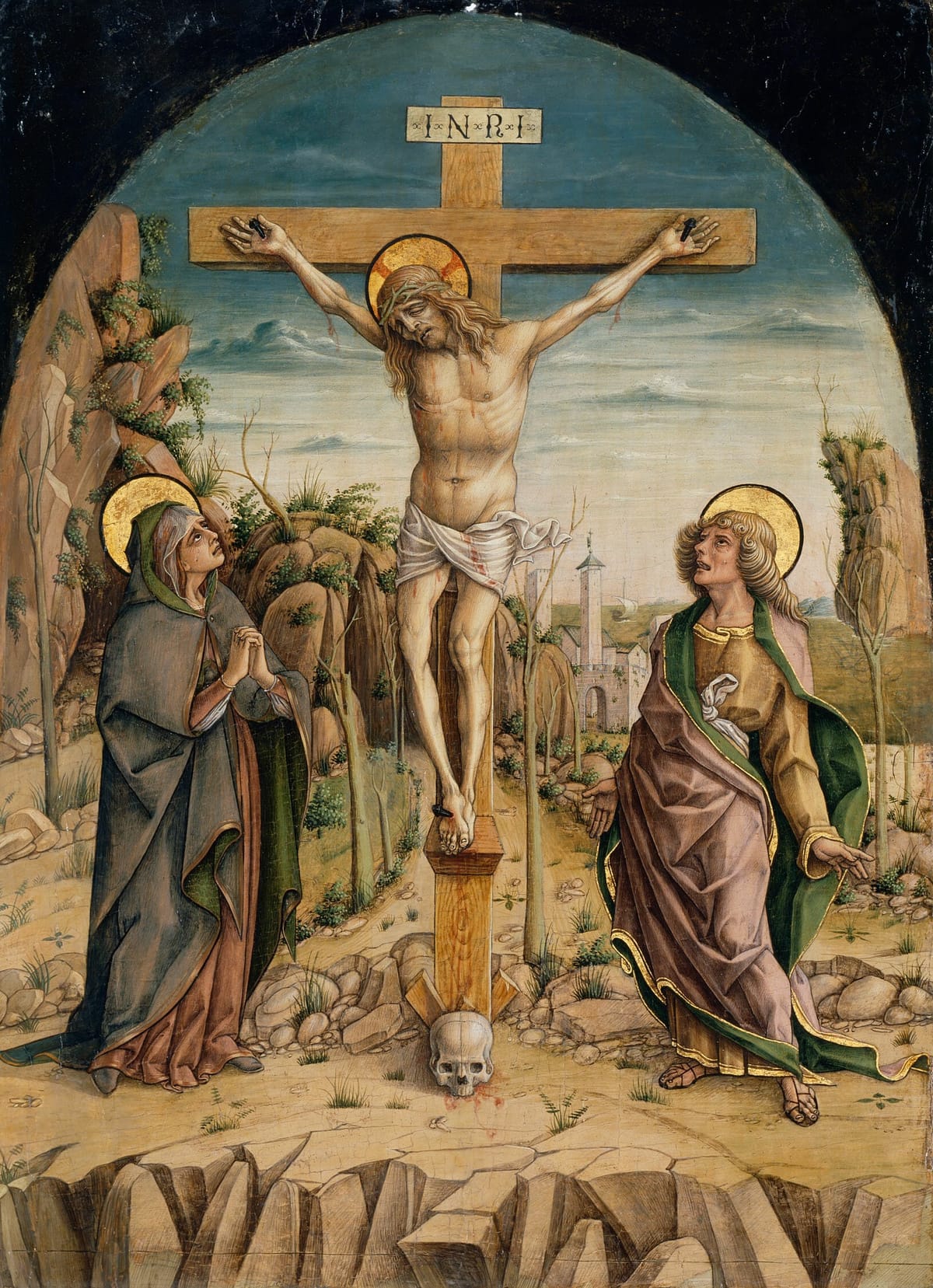
The Crucifixion (1487) by Carlo Crivelli - Public Domain Catholic Painting
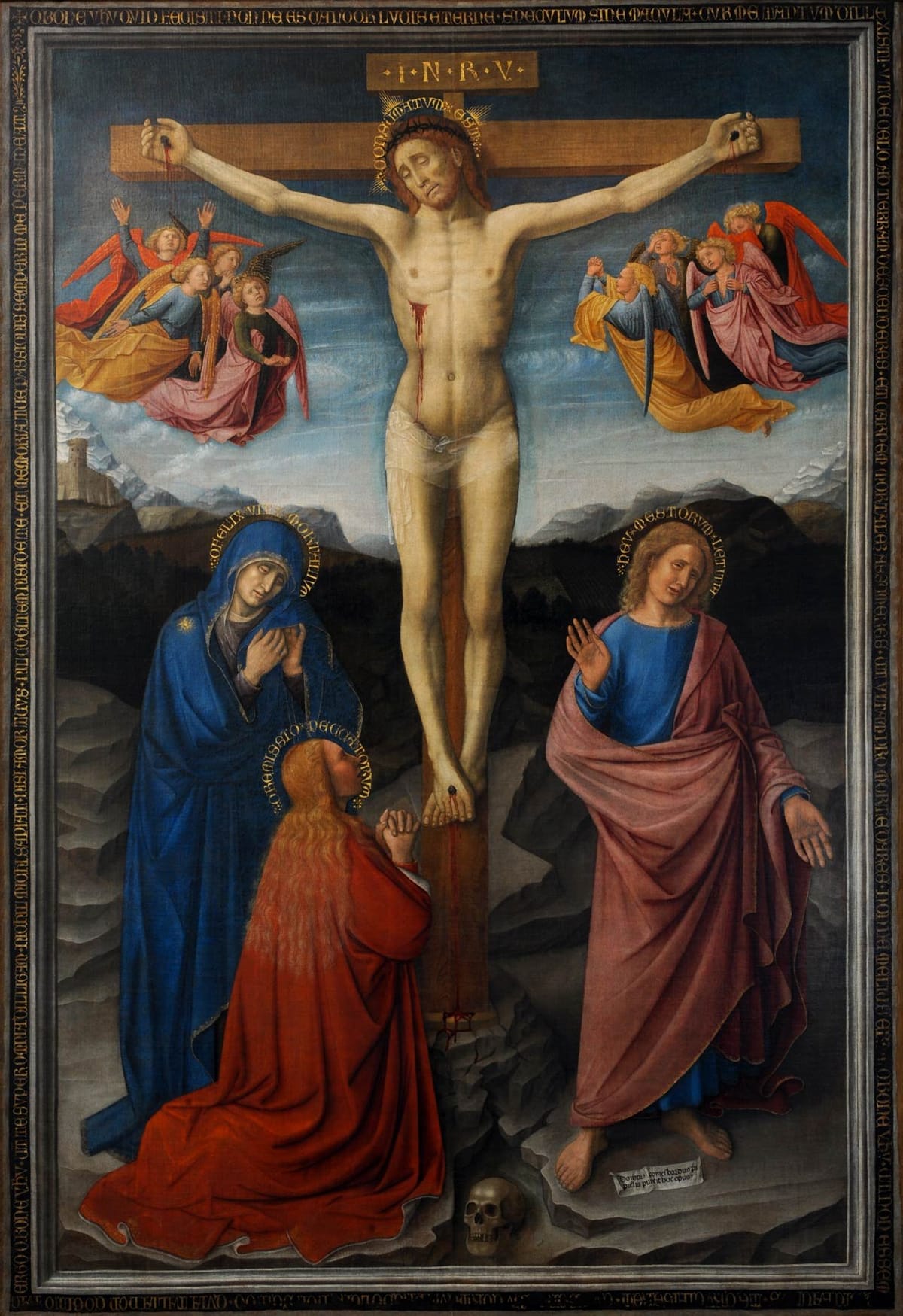
Carlo Crivelli’s vivid style married the beautiful with the grotesque. Here, the Virgin Mary and Saint John the Evangelist gaze in anguish at Jesus on the cross.

Free downloadable Catholic paintings which are in the public domain
Carlo Crivelli’s vivid style married the beautiful with the grotesque. Here, the Virgin Mary and Saint John the Evangelist gaze in anguish at Jesus on the cross.
An early Byzantine icon of Virgin Mary with the infant Jesus, 6th century AD in the collection of the Khanenko Museum, Kyiv, Ukraine.
Miniature of Christ in Majesty from the Godescalc Evangelistary, an illuminated Gospel book made in 781-783 and now in the Bibliothèque nationale de France.
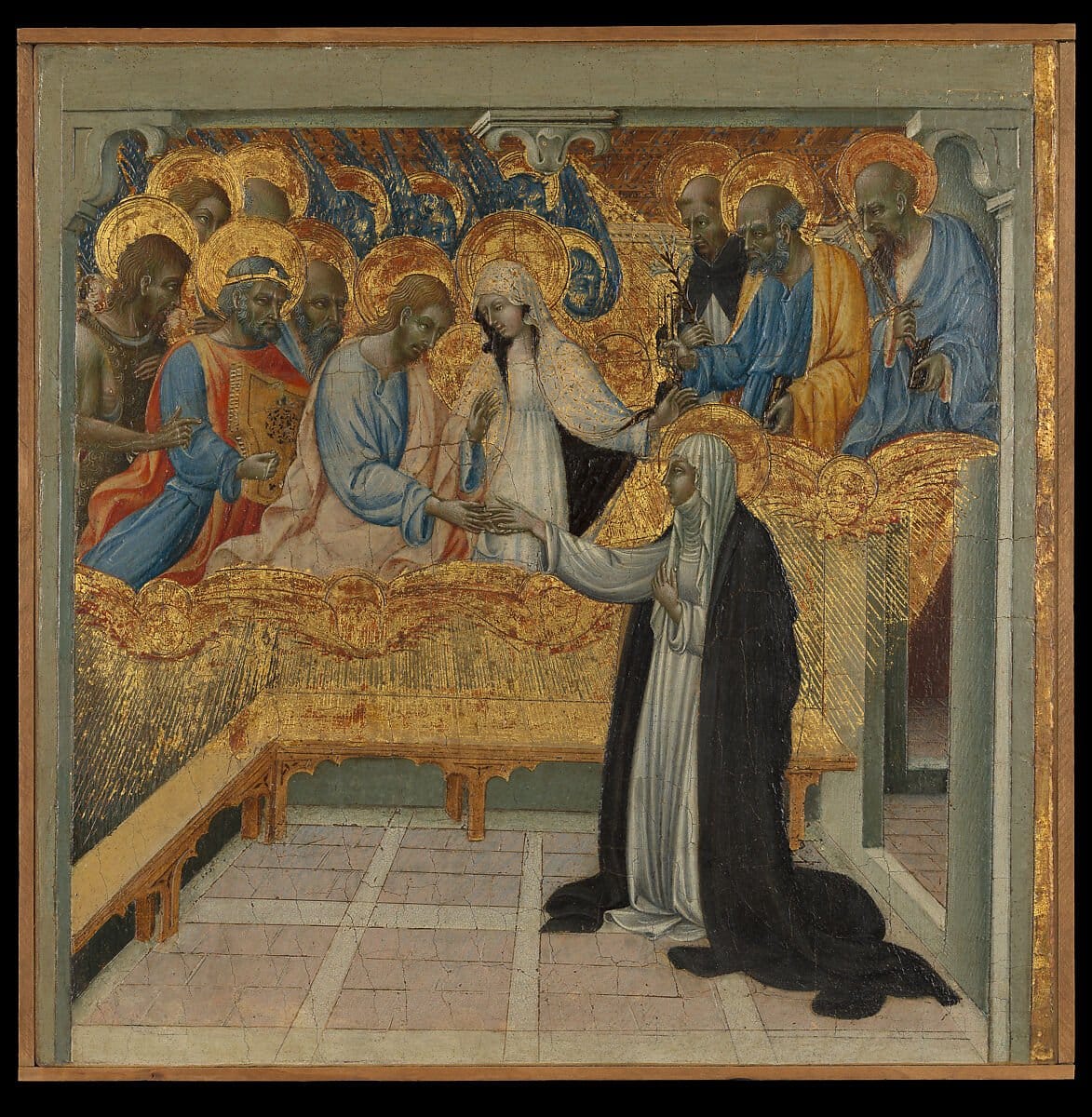
These three panels belong to a series from the base (predella) of a large altarpiece and constituted the first extensive narrative cycle of Catherine of Siena, a Sienese mystic as well as minister to the poor and plague-stricken.
Hans Thoma was a German painter. He was born on 2 October 1839 in Bernau, Grand Duchy of Baden, in the Black Forest, Germany. He was the son of a miller and was trained in the basics of painting by a painter of clock faces.
Hans Thoma was a German painter. He was born on 2 October 1839 in Bernau, Grand Duchy of Baden, in the Black Forest, Germany. He was the son of a miller and was trained in the basics of painting by a painter of clock faces.
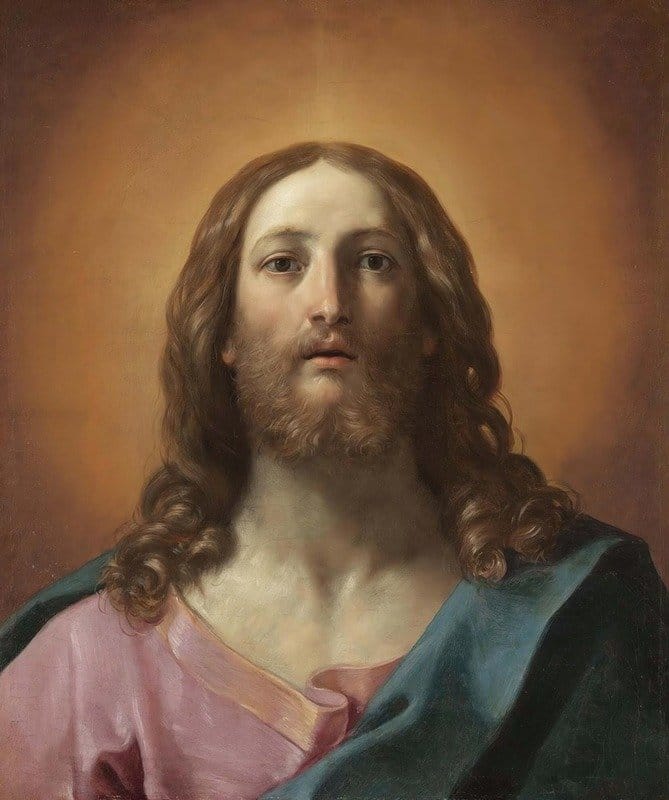
Guido Reni was an Italian painter of the Baroque period, although his works showed a classical manner, similar to Simon Vouet, Nicholas Poussin and Philippe de Champaigne. He painted primarily religious works, but also mythological and allegorical subjects.
Depiction of Christ's appearance to Mary Magdalene after the Resurrection, by Alexander Andreyev, 1835.
Illuminated manuscripts are among the finest works of Armenian art as the "Word" has been the primary focus of veneration in the Armenian Church since its founding in the early fourth century. In the fifteenth century under Mongol domination in the region of Khizan near Lake Van (now...
Exquisitely painted, these icons represent the height of icon painting during the last decades of Byzantine rule from Constantinople. Detailed representations of the Baptism of Christ and the Anastasis, the Easter image of the Orthodox Church, animate the major events with related narratives. Saint John dictates to his scribe, Prochoros,...
The Hypapante is one of the Great Feasts of the Orthodox church. According to the Gospel of Luke (2:22–38), when Joseph (far left) and the Virgin (center) presented Christ in the temple for the rite of purification forty days after his birth, his divinity was immediately recognized by...
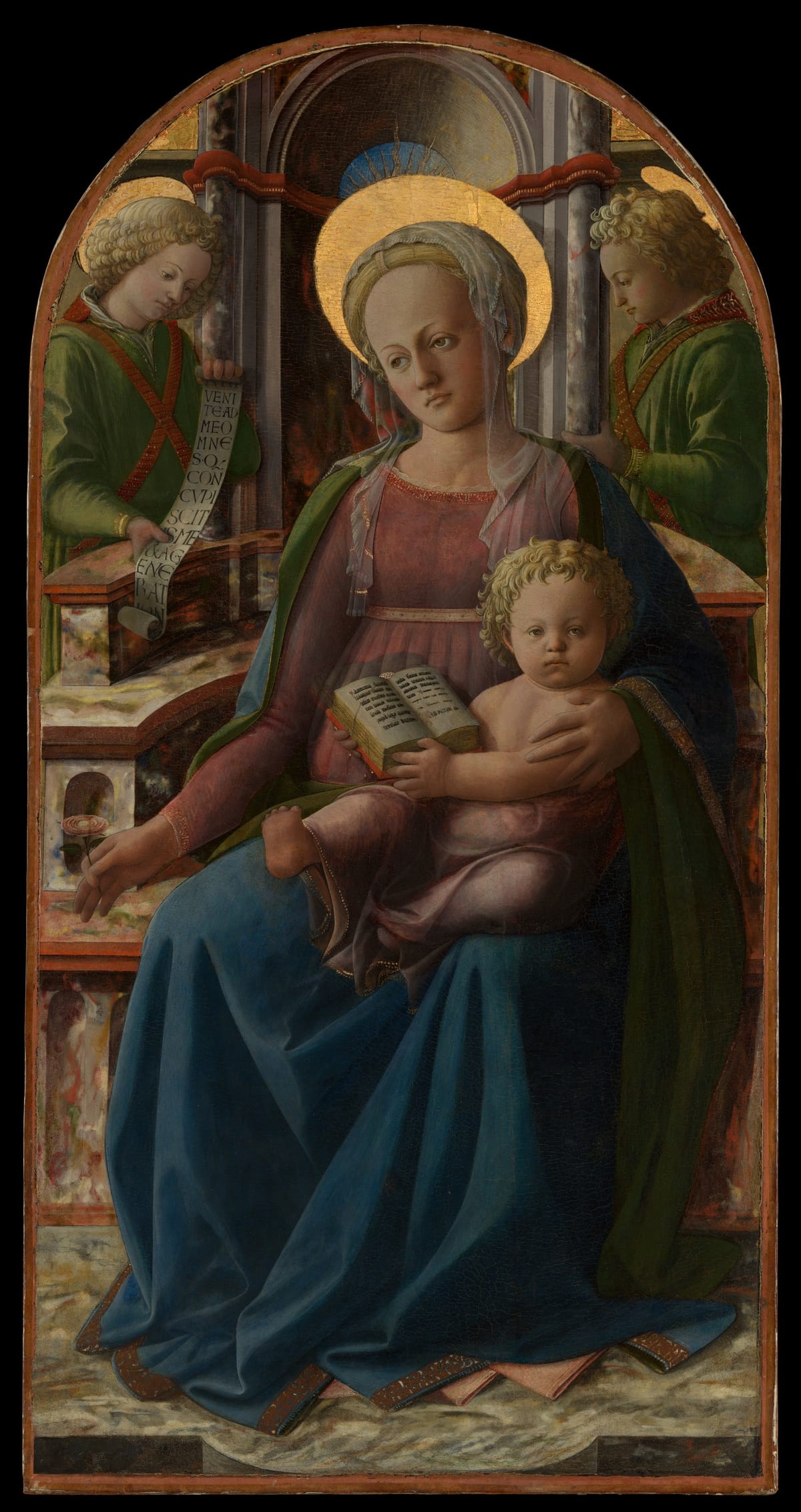
The Virgin Mary, known as "the rose without thorns" for having been born free of original sin, holds the symbolic flower while sitting upon the Throne of Wisdom. The scroll held by an angel reads: "Come over to me, all ye that desire me, and be filled...
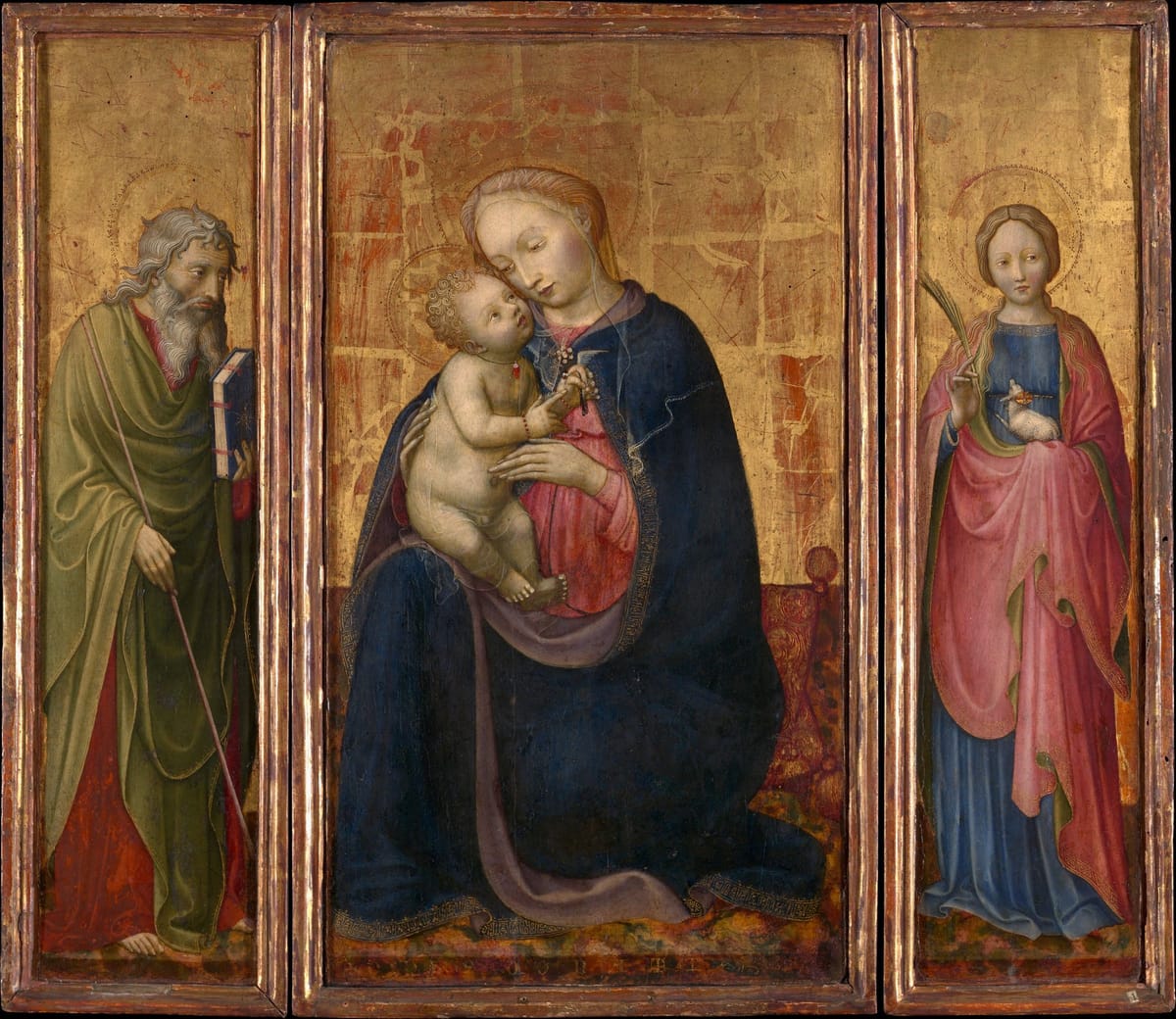
Donato de’ Bardi’s style brings together Netherlandish and French influences, focusing on refined detail and careful study of light. At the center of this painting, which is still in its original frame, Donato captures the sheltering affection between the infant Christ and Madonna. Gesturing to the goldfinch in his...
Donato de’ Bardi’s style blends Netherlandish and French influences, emphasizing refined detail and careful study of light. Free DownloadThis image is in the public domain.crucifixion.jpg376 KBdownload-circle Please SUBSCRIBE or DONATE to help keep this site free!...
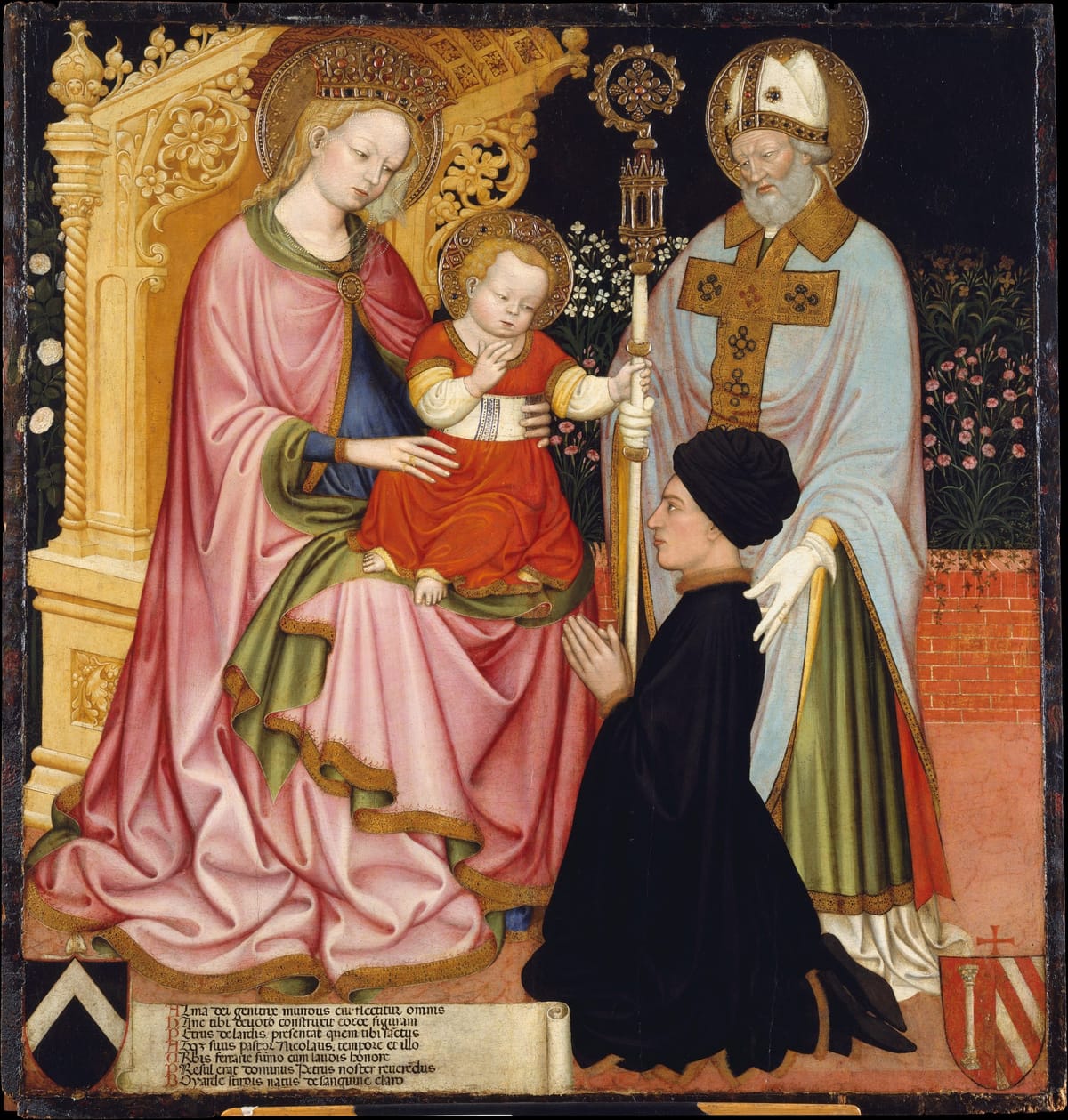
This work plays with our expectations of the flatness of the painted surface. Using a technique of gilded gesso, the artist gave Saint Nicholas’s miter and the crowns of the holy figures a raised surface. The Virgin’s robes and the intricate, angled throne also create a sense of...
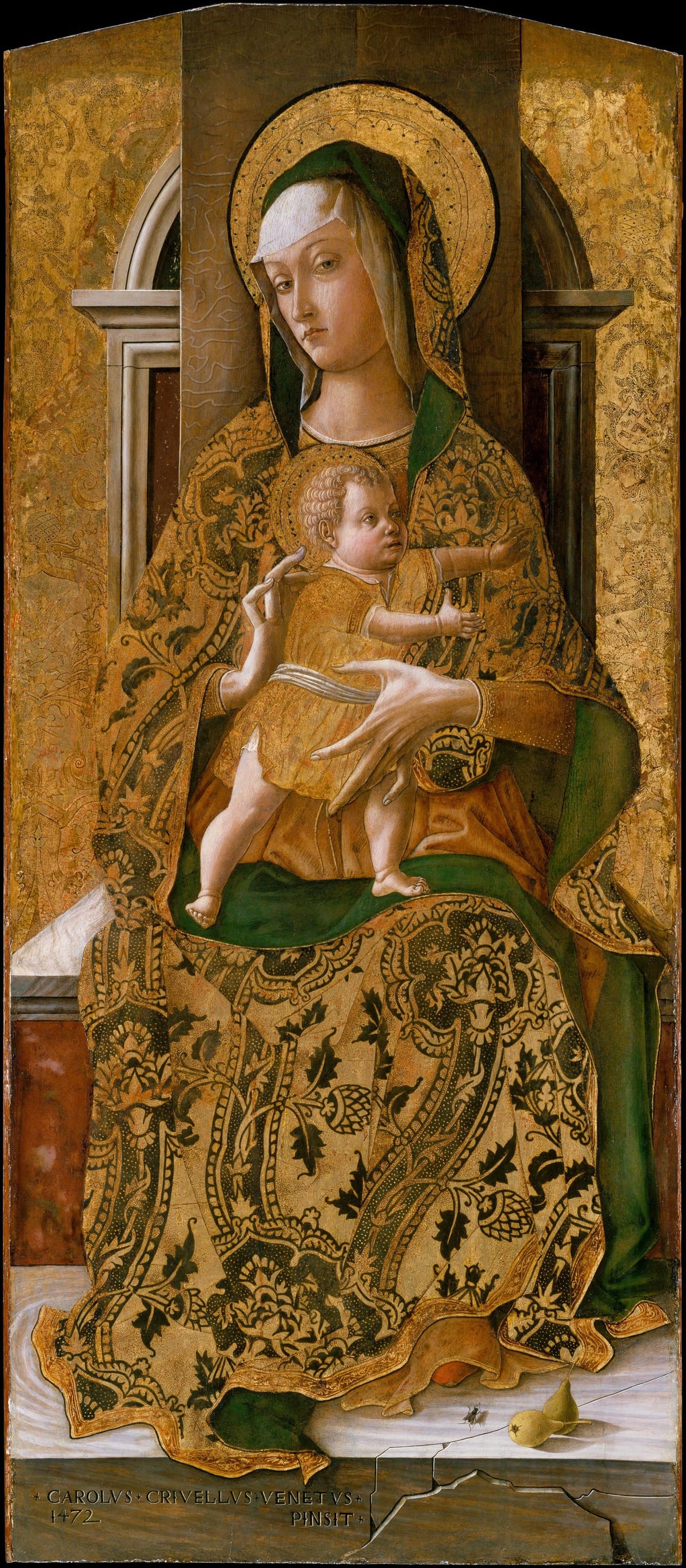
These three panels are from an altarpiece painted for a Dominican church in the Marchigian town of Ascoli Piceno. It is possible that the child was originally shown reaching for a flying bird, his frequent attribute. The cracked marble dais is a recurrent feature of Crivelli's work. On...
Foppa was the founder of Renaissance painting in Milan, where he worked for the dukes. In addition to major fresco cycles and altarpieces, he also painted touching images of the Madonna and Child for private devotion. This one dates to about 1480 and shows them before a rose hedge—the...
The Hypapante is one of the Great Feasts of the Orthodox church. According to the Gospel of Luke (2:22–38), when Joseph (far left) and the Virgin (center) presented Christ in the temple for the rite of purification forty days after his birth, his divinity was immediately recognized by...
Images of the Virgin Eleousa, the Virgin of Compassion, developed in the later Byzantine centuries and profoundly influenced the art of the Latin West. Here, the intimate poses of the heads and hands display the warm emotional attachment of the Virgin and Child. The fifteenth-century Latin inscription on the...
This early 19th-century Orthodox icon depicts Thomas the Apostle, who is traditionally shown holding a scroll representing his apostolic preaching. Free DownloadThis image is in the public domain.apostle-thomas-icon.jpg56 KBdownload-circle Please SUBSCRIBE or DONATE to help keep this site free!...
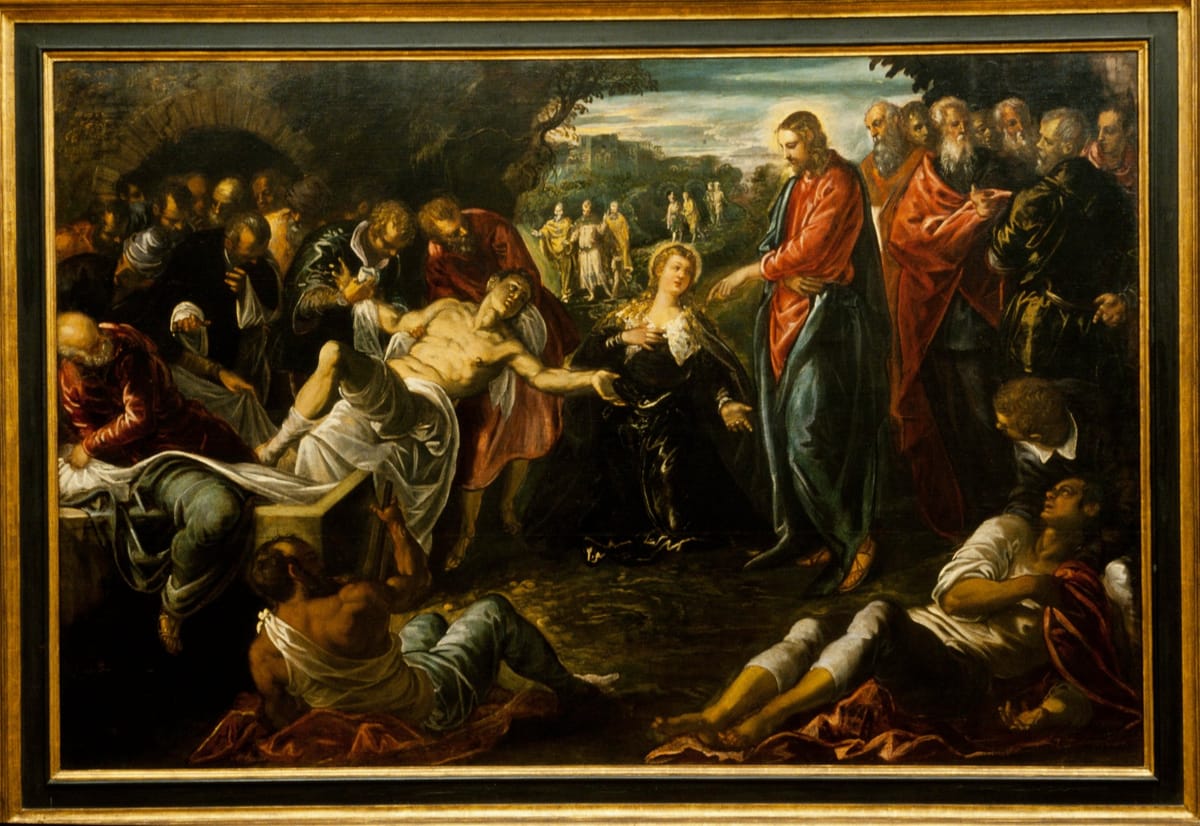
Jacopo Tintoretto ran a busy workshop in Venice, specializing in dramatic, complex religious paintings, which he produced at incredible speed. This crowded composition, with its daring foreshortening and elongated figures, is consistent with Tintoretto’s style. However, the overall quality of the execution suggests the work is by studio assistants...
This small tapestry depicts the infant Jesus pressing grapes into a chalice. The imagery was widely understood at the time of its creation to reference the physical sacrifice Jesus would later make in his crucifixion. In the Christian ritual of the Eucharist, followers drink holy wine to remember Jesus’s...
Mariotto was famous for painting crisp details and the kind of subtle color shifts seen in the angels’ feathered wings and draped robes. These small panels once crowned the upper corners of a large altarpiece made for a church on the outskirts of Florence, Italy (Santo Stefano in Pane). During...
Saint Ambrose, who lived in the fourth century, was an important Christian scholar and bishop. Here he is depicted among his books in a forceful pose emphasized by his massive hands. On the table’s edge, a scourge, or whip—the knotted rope attached to a wooden rod—symbolizes Ambrose’...