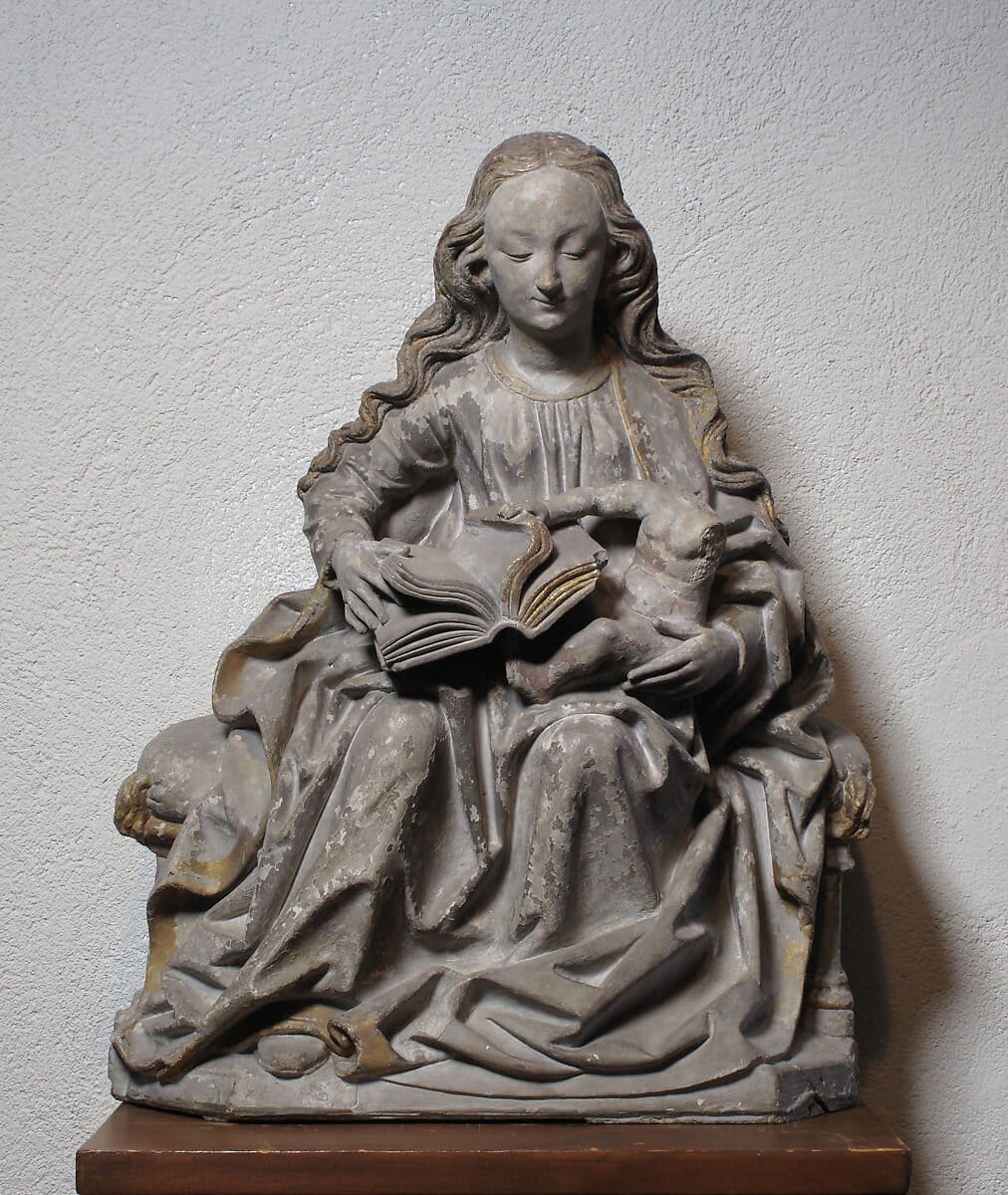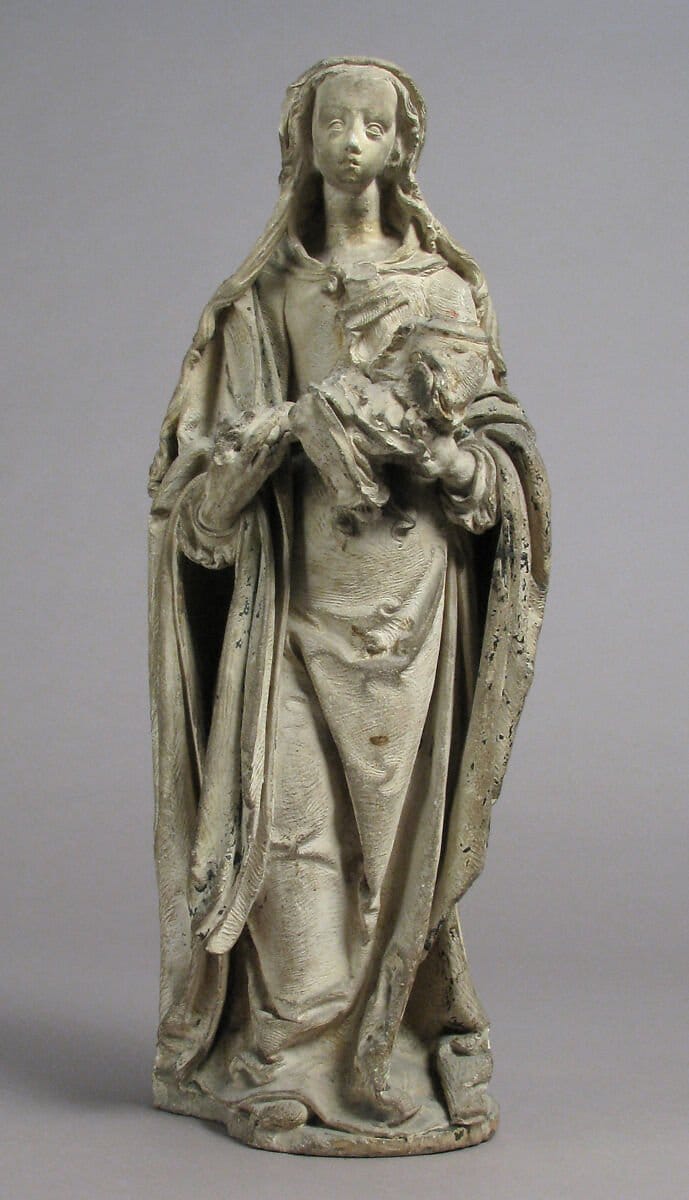

Virgin and Child (1550-1560) by Atelier of the Juliots - Public Domain Catholic Stock Photo
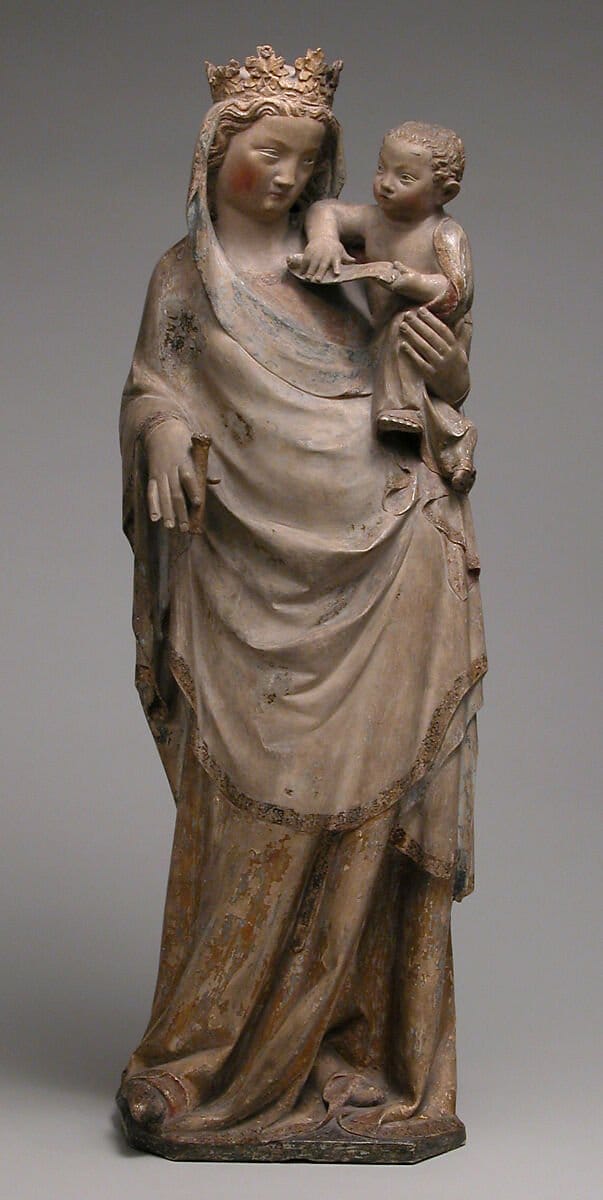
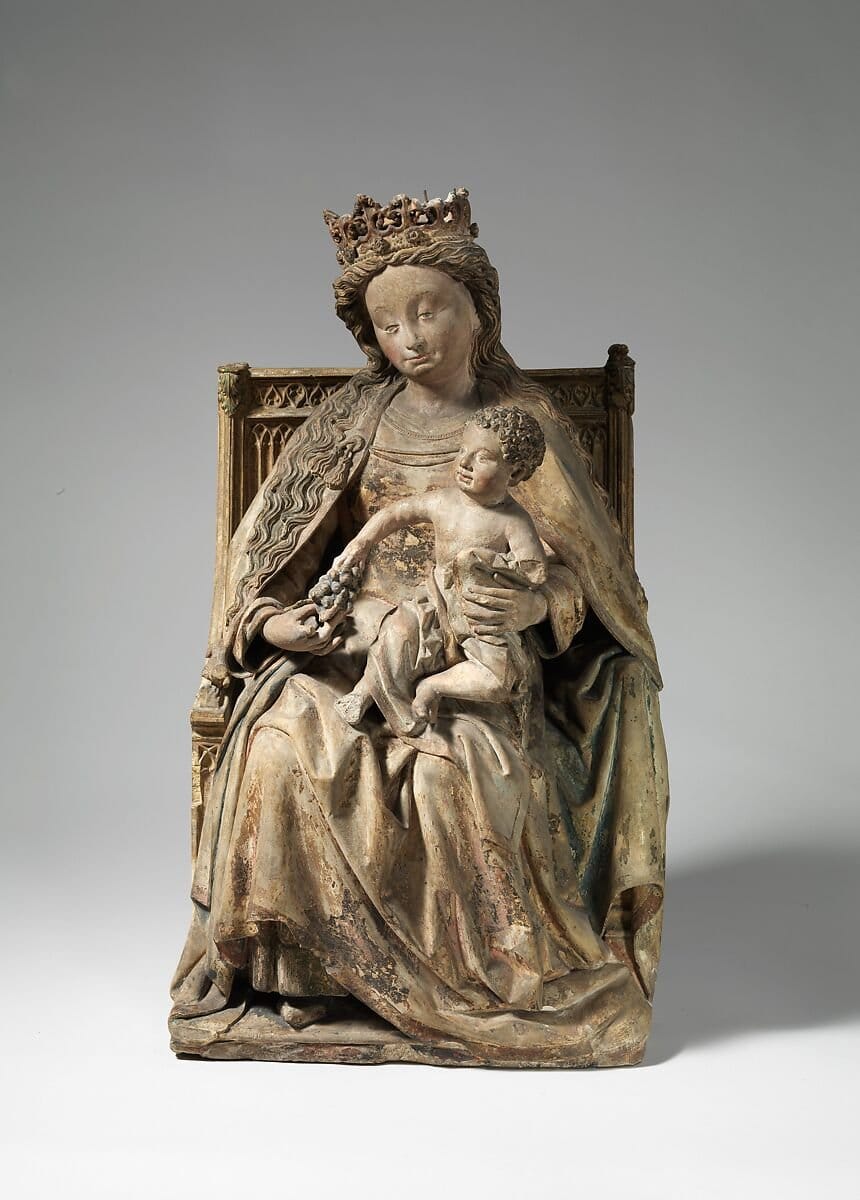
Limestone statue of the Virgin and Child with traces of polychromy, made in France by the Atelier of the Juliots. The sculpture is 39.2 cm high.

Free downloadable Catholic stock photos of the Virgin Mary.
Limestone statue of the Virgin and Child with traces of polychromy, made in France by the Atelier of the Juliots. The sculpture is 39.2 cm high.
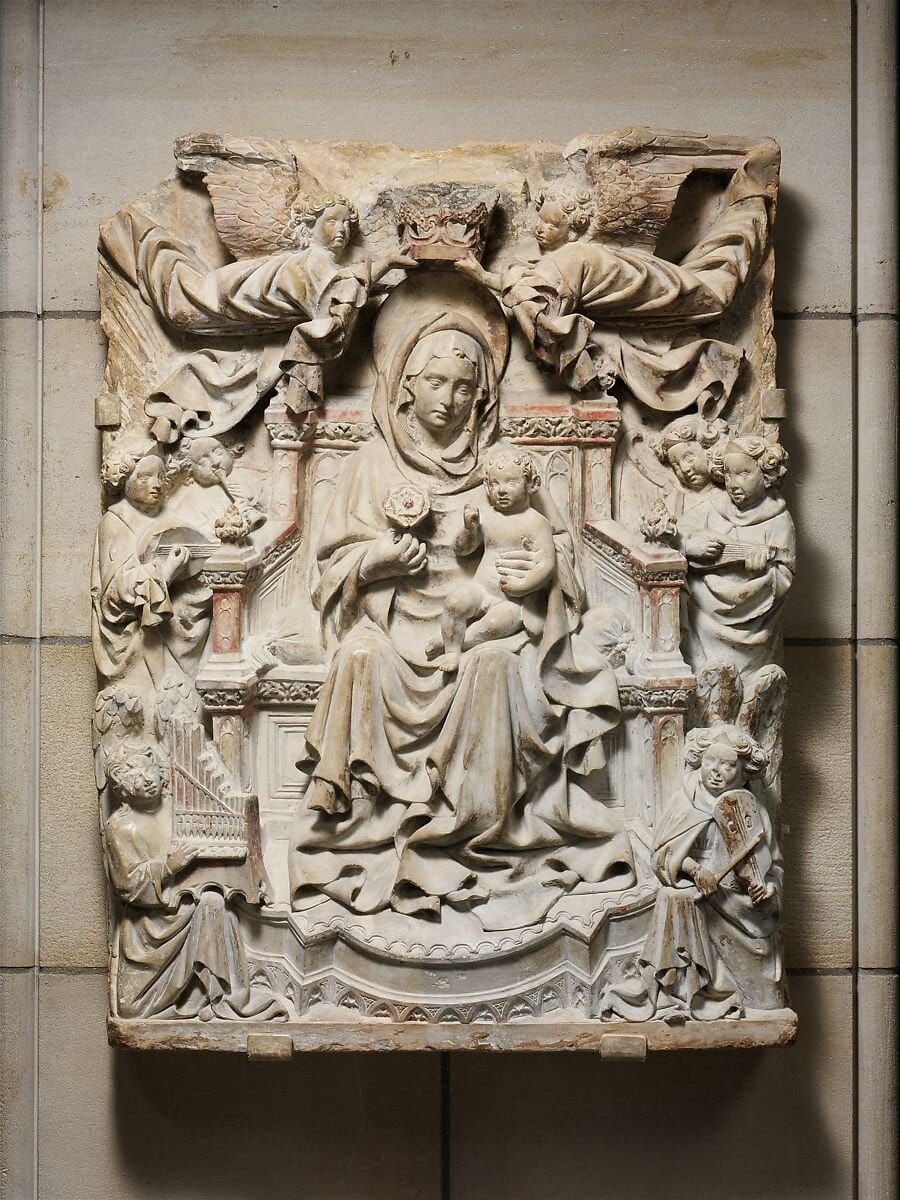
Musical angels herald the heavenly coronation of the Virgin in this elegant and refined carving. Its original context is uncertain, but it was possibly made as an independent devotional image or as part of an altar decoration.
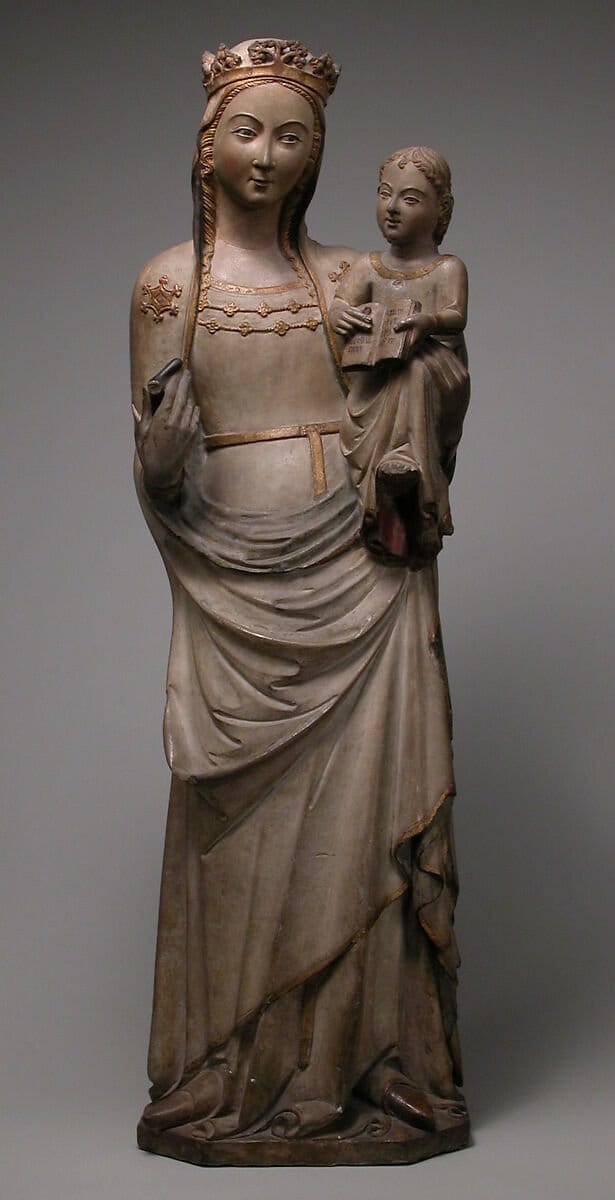
This sculpture and another example of the same subject preserved in the church at Saint Die are among the finest representatives of the regional style found in Lorraine in the early fourteenth century. It is a statue in polychromed and gilded Paris limestone that measures about 87 x 30.2 x 21.9 cm.
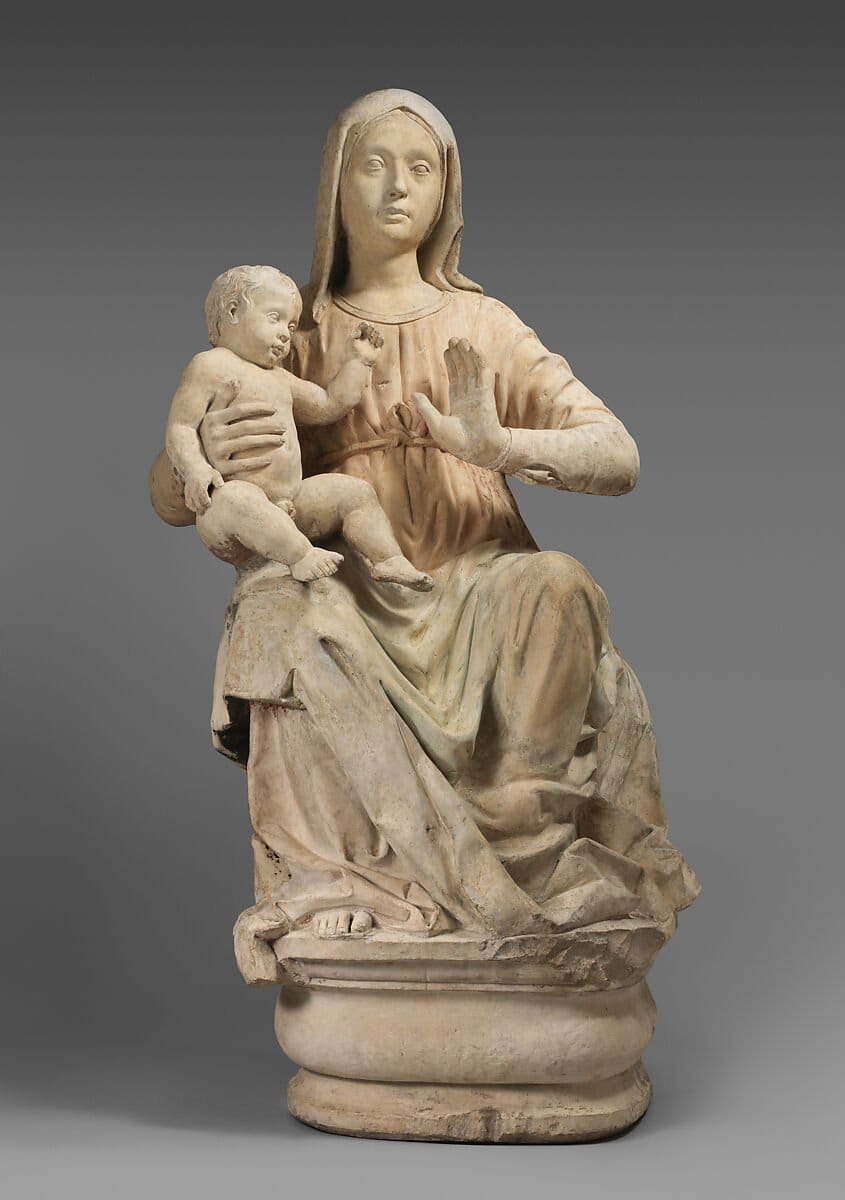
This sculpture reflects the influence of Bon and may have been carved by a follower of his in the third quarter of the century. It is a fine example of Italian Renaissance sculpture that would have held a commanding position in an architectural context.
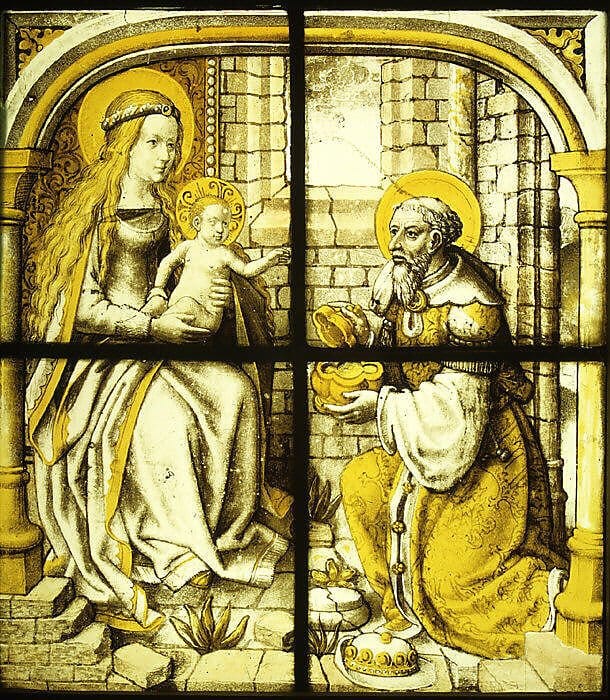
Stained glass panel of colorless glass with vitreous paint and silver stain, made in Cologne, Germany. It measures 39.1 x 34.6 cm (15 3/8 x 13 5/8 in.).
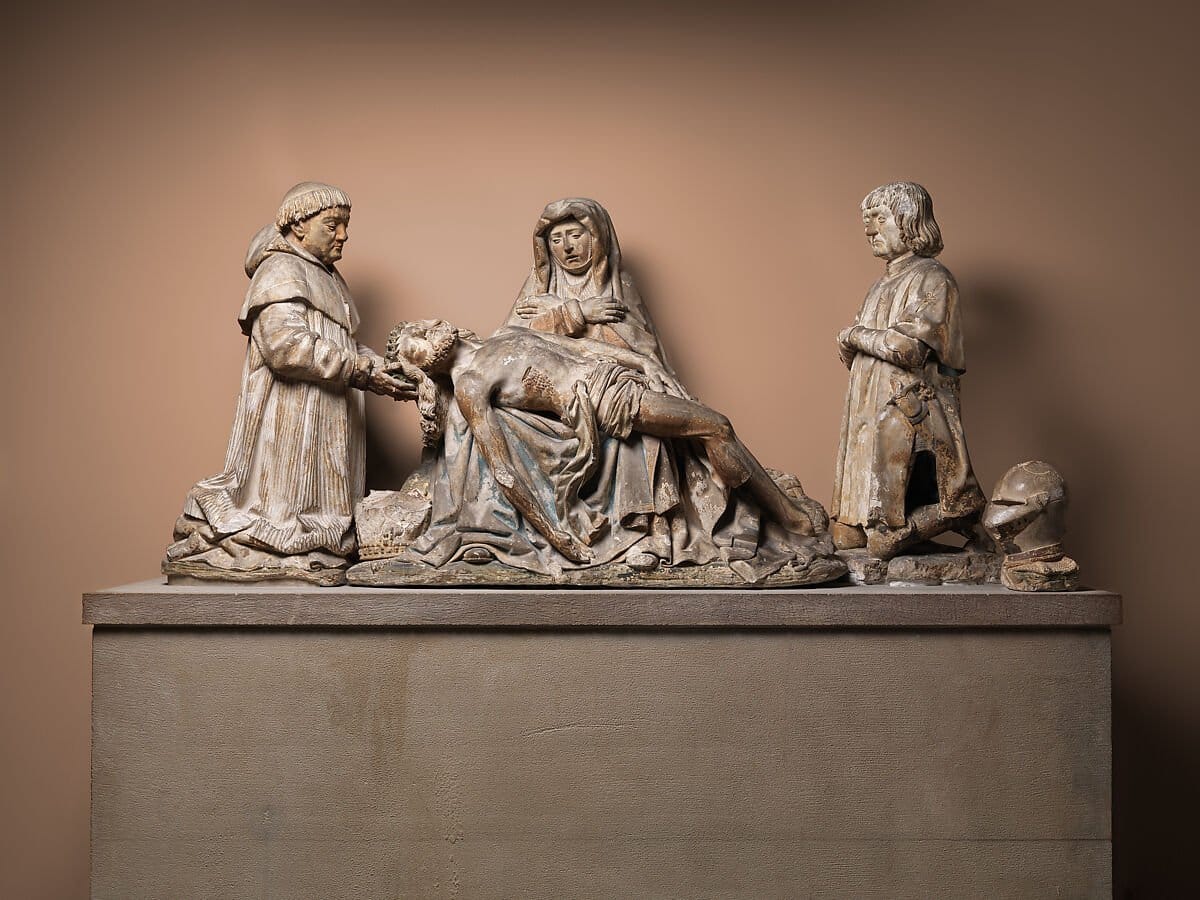
The donors are Pons de Gontaut and his brother Armand, Bishop of Sarlat, in whose family funerary chapel this sculpture and the Entombment originally stood. Their coats of arms were held by the angels in the Entombment scene.
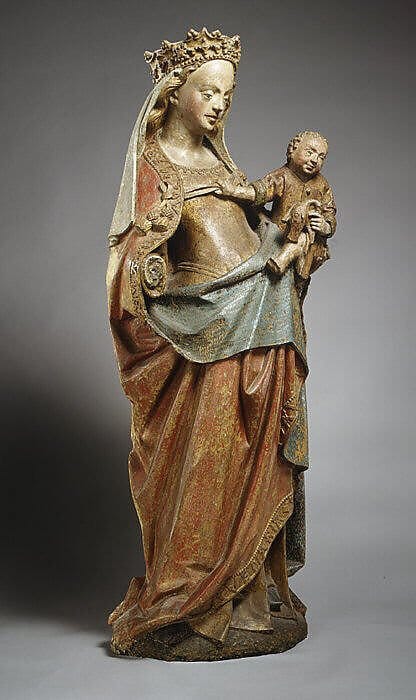
Represented as Queen of Heaven, the Virgin holds a playful Christ Child who, in turn, has caught a bird in flight. The bird symbolizes the soul and its resurrection. The bird nourishes itself on the blood of Christ, an act that refers to the Eucharist.
The Catalan sculptor, architect, and painter Guillem Seguer was active in the diocese of Lleida and elsewhere in the mid-1300s. This limestone statue with polychromy and gilding measures 132.7 x 41.6 x 32.1 cm (52 1/4 x 16 3/8 x 12 5/8 in.).
Limestone statue with traces of polychromy, made in Troyes, France. It measures 75.9 x 43.8 x 30.5 cm (29 7/8 x 17 1/4 x 12 in.).
Limestone relief statue with traces of polychromy and gilding, made in Lorraine, France. It measures 69.9 x 54.6 x 27.3 cm (27 1/2 x 21 1/2 x 10 3/4 in.).
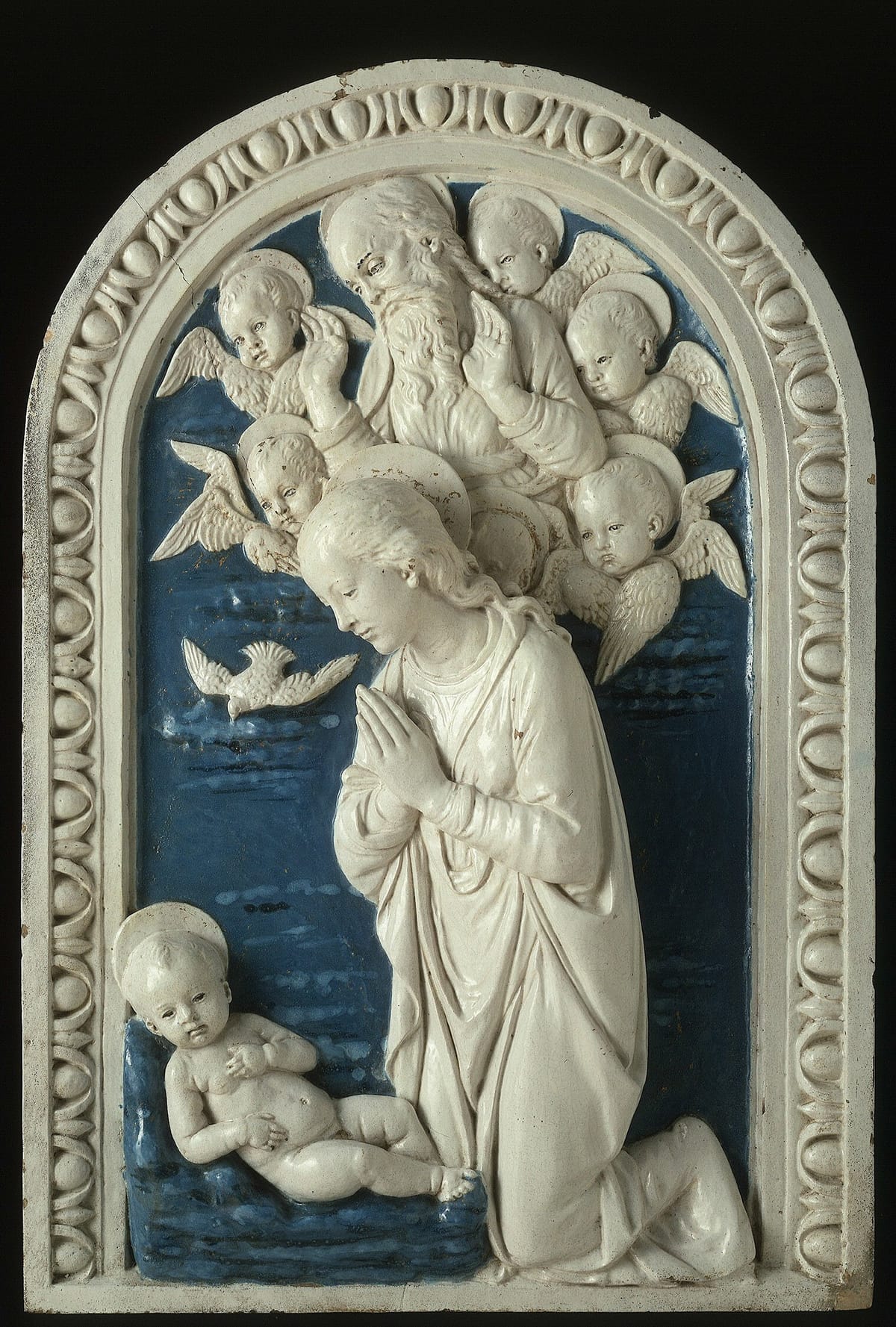
Glazed terracotta. Dimensions: 67 × 44.5 cm (26 3/8 × 17 1/2 in.)
French stone statue of the Virgin and Child from the 15th century, about 141.6 cm (55 3/4 in.) tall.
English alabaster carving of the Coronation of the Virgin with polychromy and gilding, made in England in the 15th century. It measures 40 x 27.3 cm.
In the 1400s and 1500s, southern Germany, Austria, and Switzerland were centers of innovation in stained glass. From the 1480s on, roundels were popular and often incorporated into larger glass windows. This and four other large roundels were likely made for the family chapel in a castle or palace. Their...
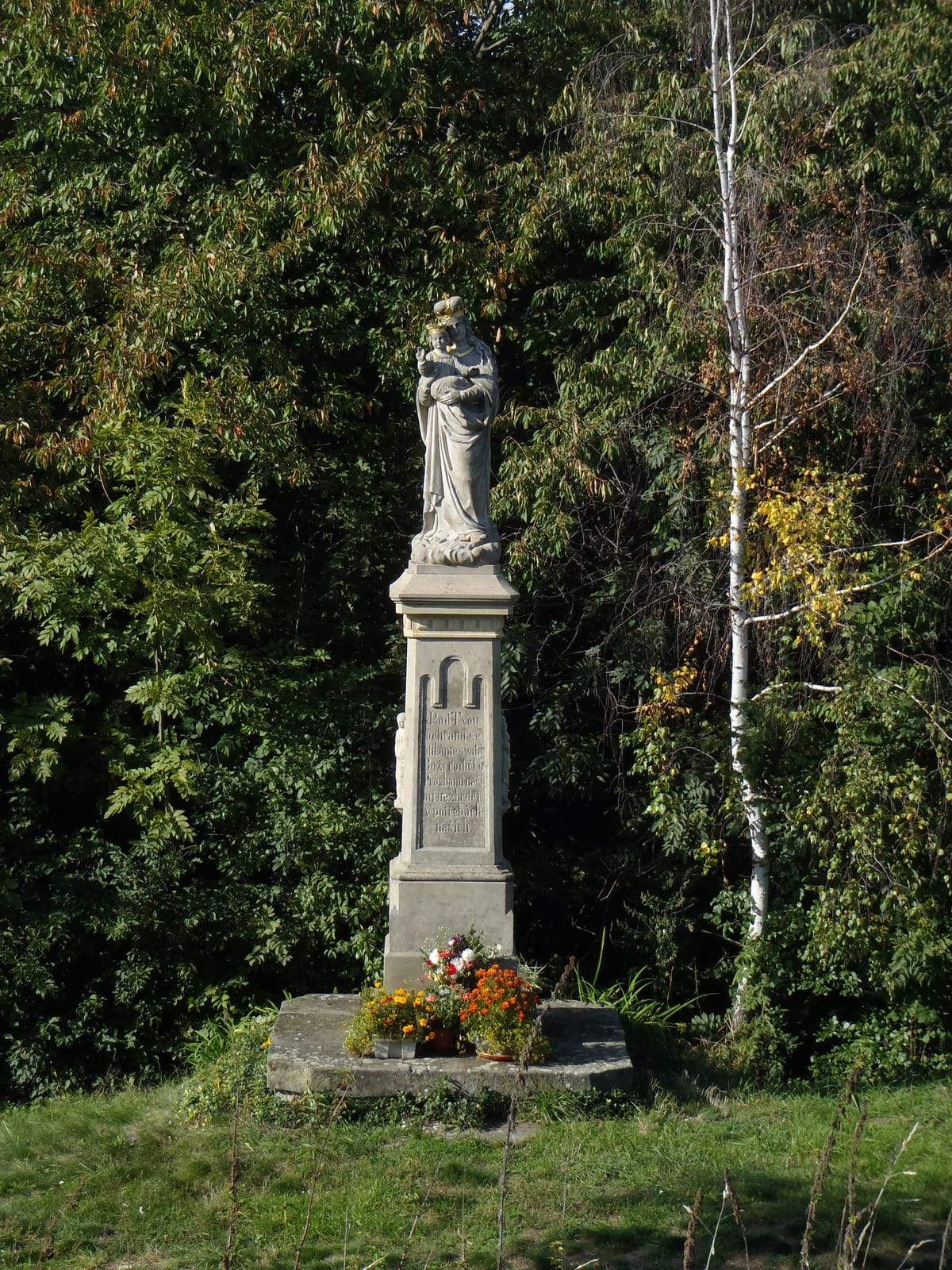
This outdoor devotional statue presents the Madonna and Child atop an inscribed plinth, typical of Marian columns or roadside shrines found throughout Central Europe.
The Virgin is supported by cherubim and stylized clouds and supports the Christ Child in her arms. The painted decoration of the Virgin and Christ Child is original and would contribute to an impression of the royal status of the mother and child.
The Virgin Mary in this icon asks her son to forgive humanity's sins at the Last Judgement, flanked by four saints shown in intercessory prayer.
The mosaic set is 6 meters in height and required approximately 2 million tesserae ( small pieces of tile, glass, or other material used in creating mosaics). It is a significant example of Old Rus art and is considered one of the largest monumental pieces. In Greek, "Orans" translates...
About the Images: This exceptional pendant consists of a reliquary cross inside a hinged case with six small adjacent compartments for relics. The impressive amethyst cameo depicting the Virgin and Child on the lid is surrounded by cabochon rubies and emeralds alternating with pearls. The cross and the outer edge...
About the Image: This stained glass window is a vivid representation of the Virgin Mary, which is commonly found in Catholic churches. The technique of stained glass artistry dates back to the early medieval period, with significant developments during the Gothic period, and remains a staple in ecclesiastical decoration. The...
About the Image: The artwork depicts two figures, Mary and John, captured in a timeless embrace of shared grief and understanding. Hailing from the medieval era, the artwork is distinctive for its rich textures and muted, earthy colors. Mary is portrayed with an aura of gentleness, her face cast downward...
About the Image: This ivory plaque depicts Mary, Joseph, and one of his sons from a previous wife on their way to Bethlehem. The scene is set within an architectural frame that combines Byzantine decorative elements (such as the acanthus leaf column capitals) with Islamic architectural motifs (most notably, the...
About the Image: The sculpture depicts a seated figure of the Virgin Mary holding the Christ Child on her lap. The figure is wearing a crown and a long robe, while the child is looking up at her. The sculpture is carved from wood and has a dark patina. The...
Details: Joachim and Anna had long been childless until one day Anna’s prayers were answered and she miraculously became pregnant with the Virgin Mary. Overjoyed by this news, the couple embraces each other tenderly. This intimate, almost timeless statue was once part of a large altar dedicated to the...