Paintings by Gebhard Fugel
Public-domain Bible paintings by the German artist Gebhard Fugel, free to download.
This site's editor-in-chief is a Catholic husband, father, and author. He loves sharing the Catholic faith through art and graphic design. Check out his prayer books and coloring books on Amazon.com
Public-domain Bible paintings by the German artist Gebhard Fugel, free to download.
Public-domain paintings of the birth of Jesus and the adoration of the shepherds, free to download.
Christ Pantocrator in Byzantine mosaics, icons and church art, all free to download.
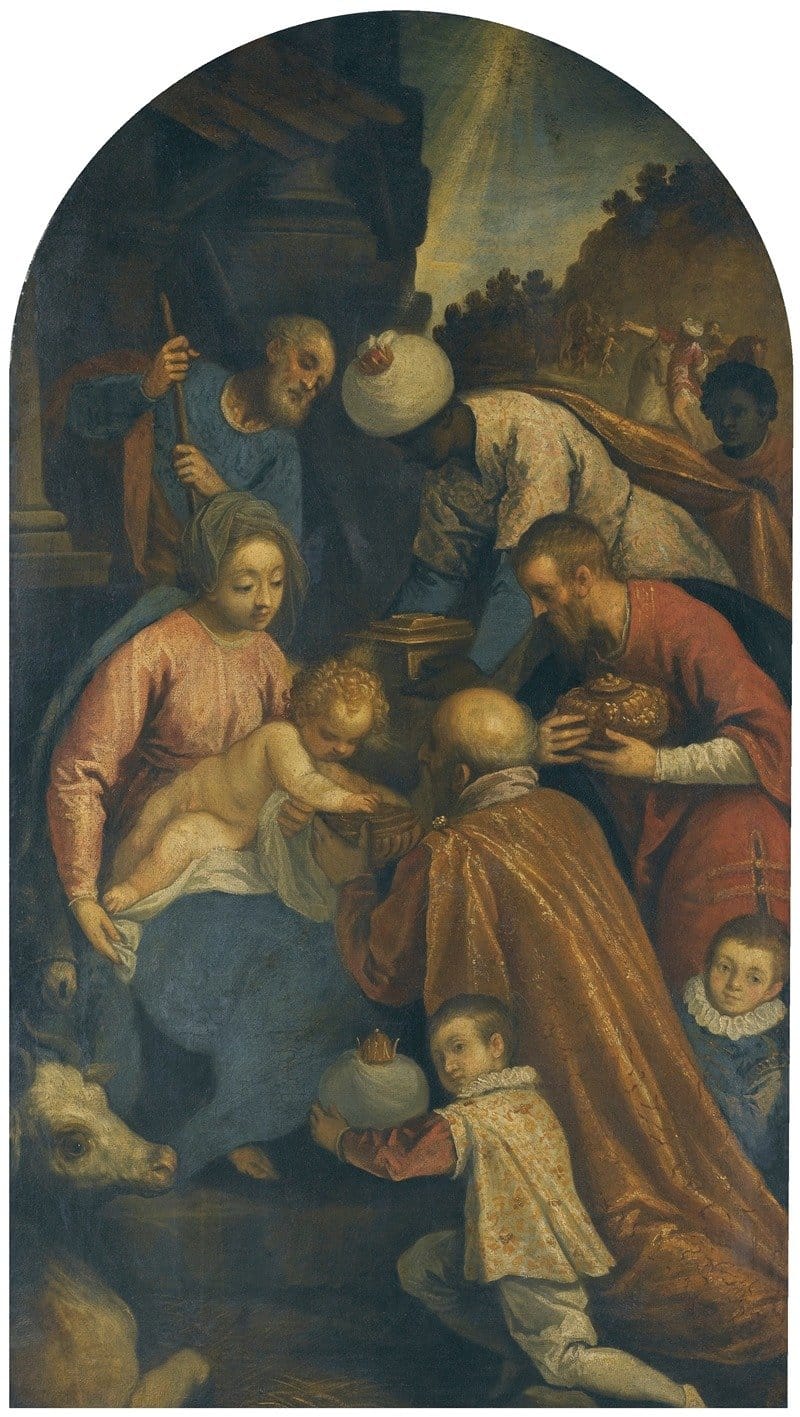
Public-domain paintings of the Adoration of the Magi, from Mantegna and Rubens to Ukrainian icons, free to download.
Twelve public-domain paintings of the Crucifixion, from Gothic panels to Baroque masterpieces, all free to download.
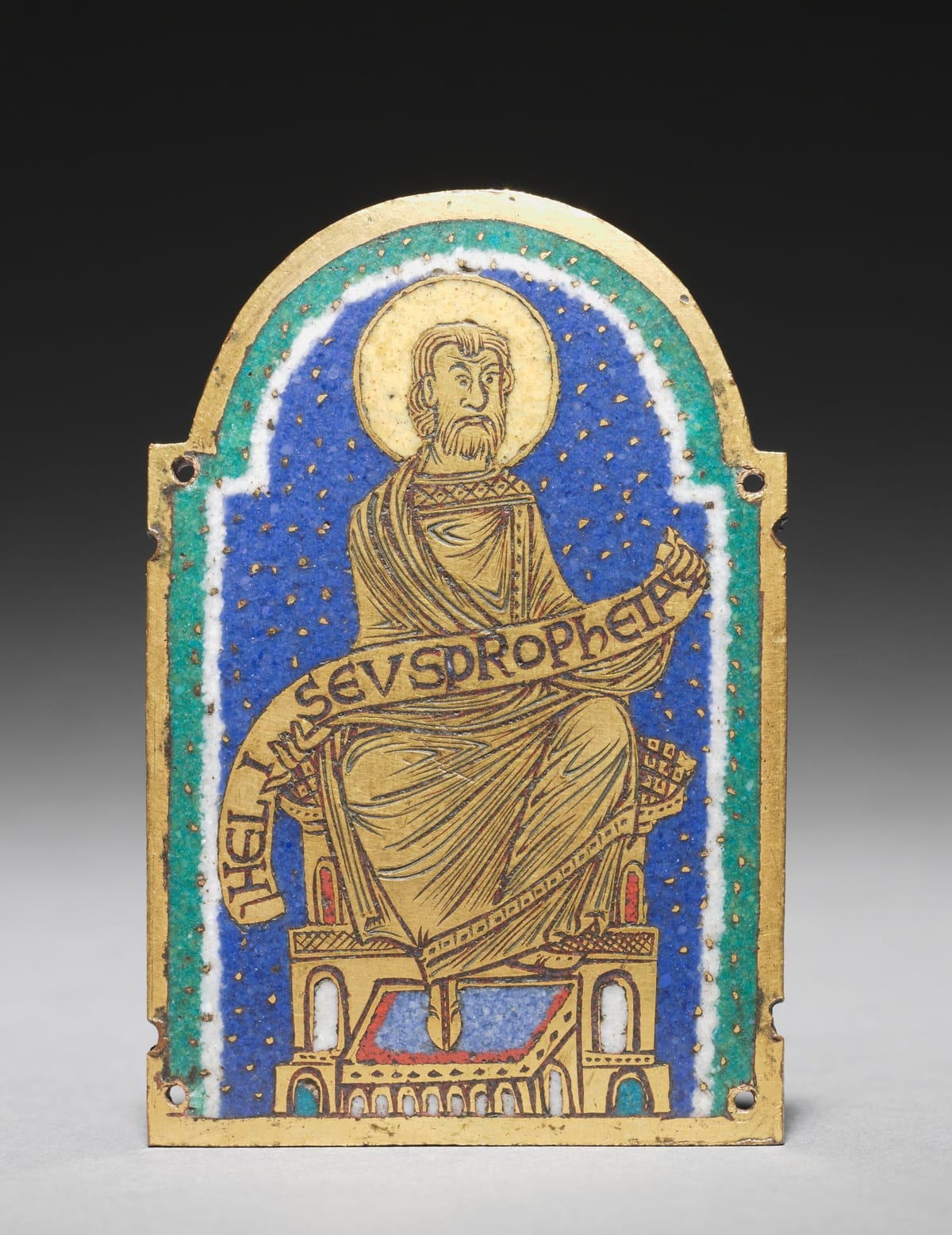
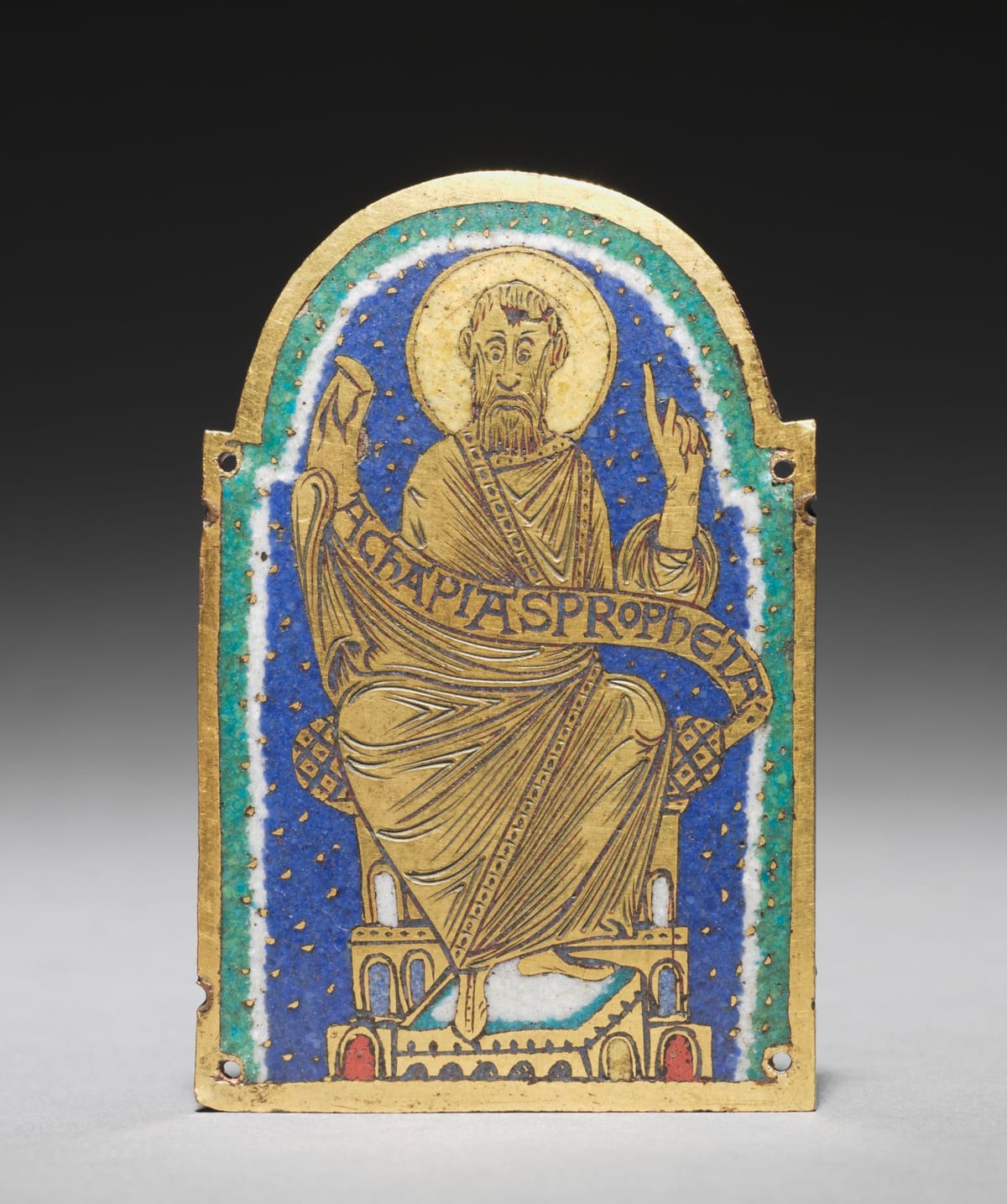
Once used as decorations for a reliquary shrine, each enamel plaque represents a biblical prophet: Isaiah, Obadiah, Elisha, and Hosea. Fine gold dots punctuate dark blue backgrounds. Typical of Hildesheim enamels, this detailing creates the illusion that the prophets sit against star-studded twiligh
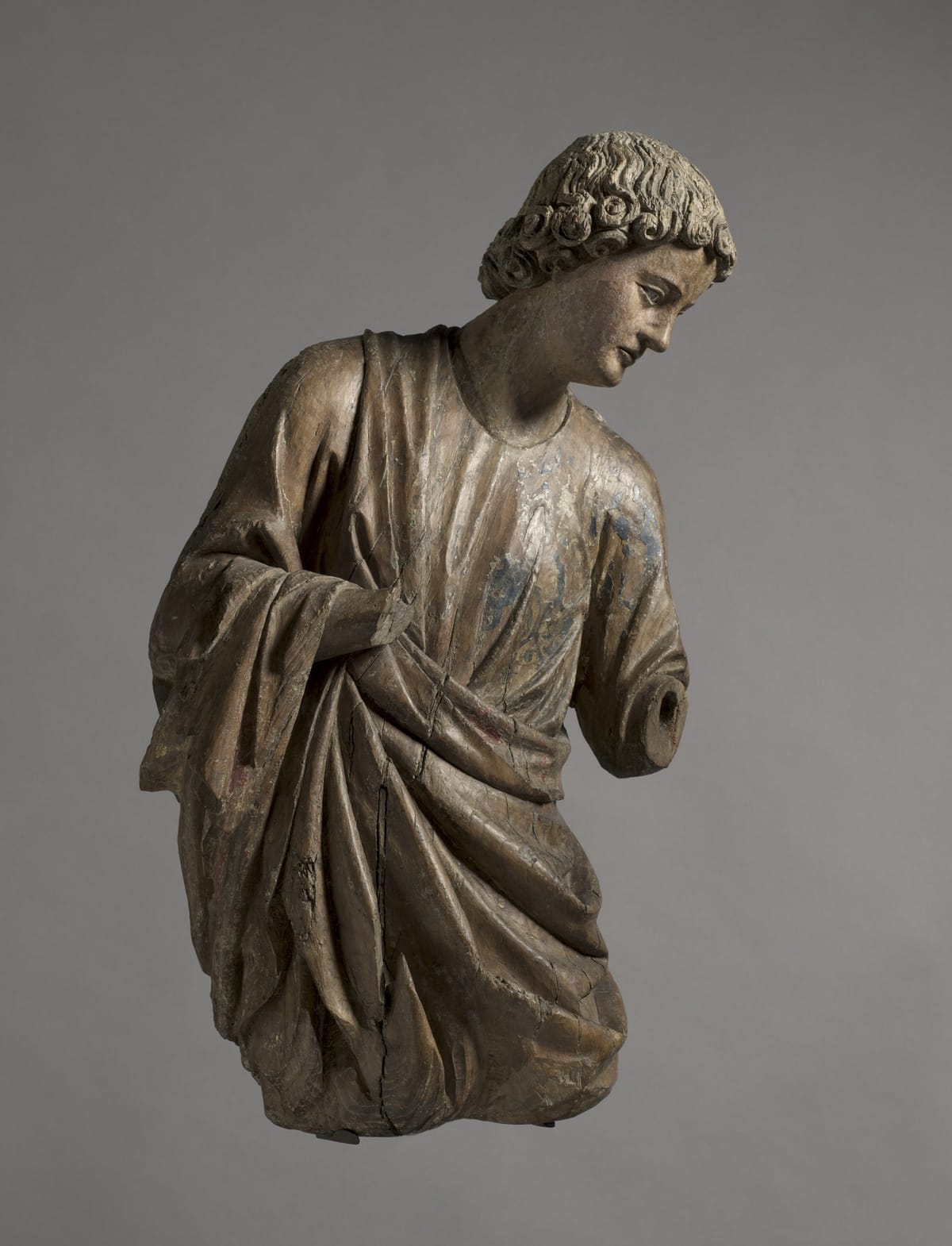
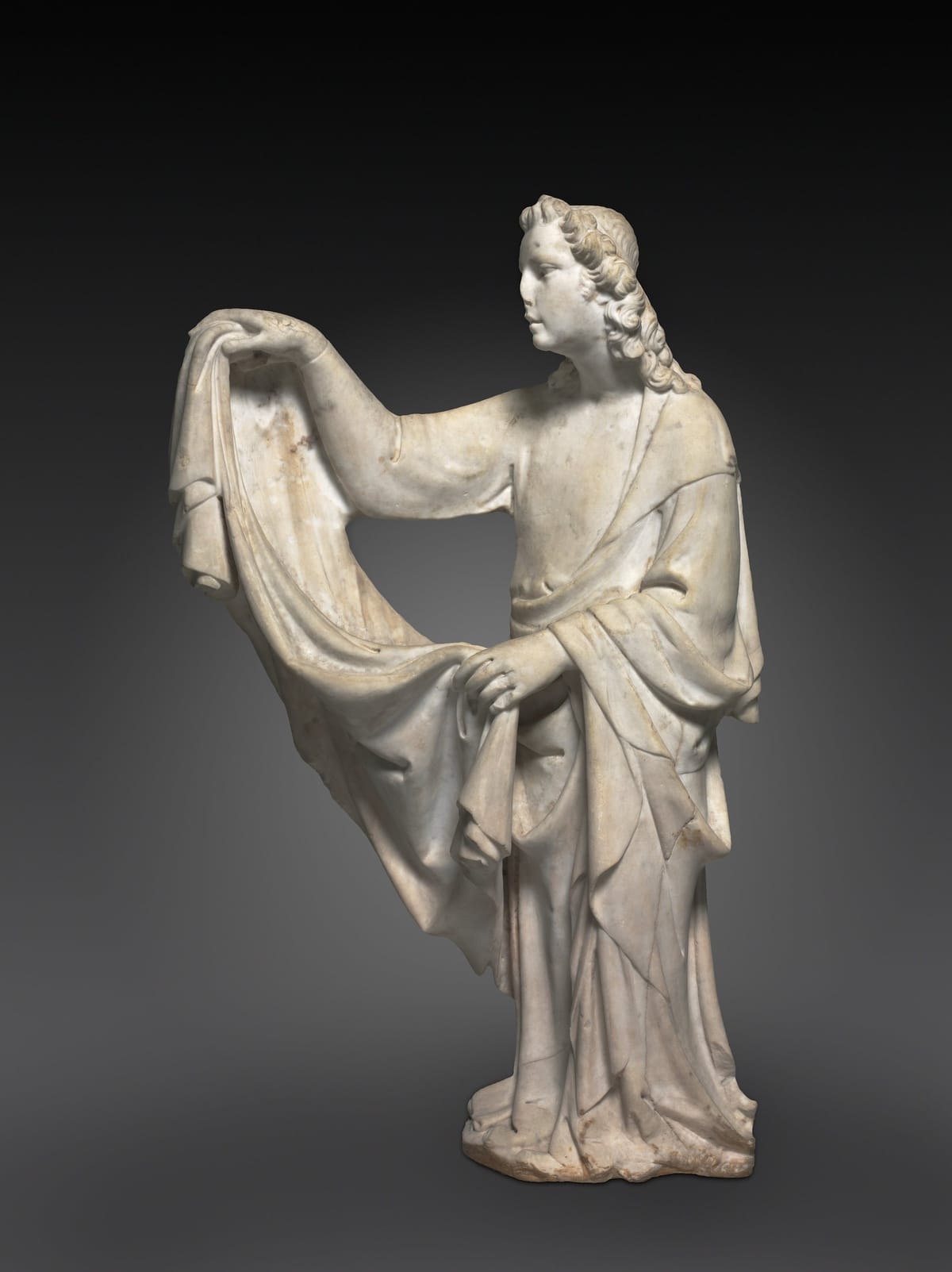
Surviving in fragmentary condition, this pair of angels lacks lower arms, hands, wings, and attributes. Their original paint and gilding, now almost entirely lost, once rendered their garments a rich brocade and their hair a luxuriant gold. Nonetheless, in their graceful poses and sublime faces—whic
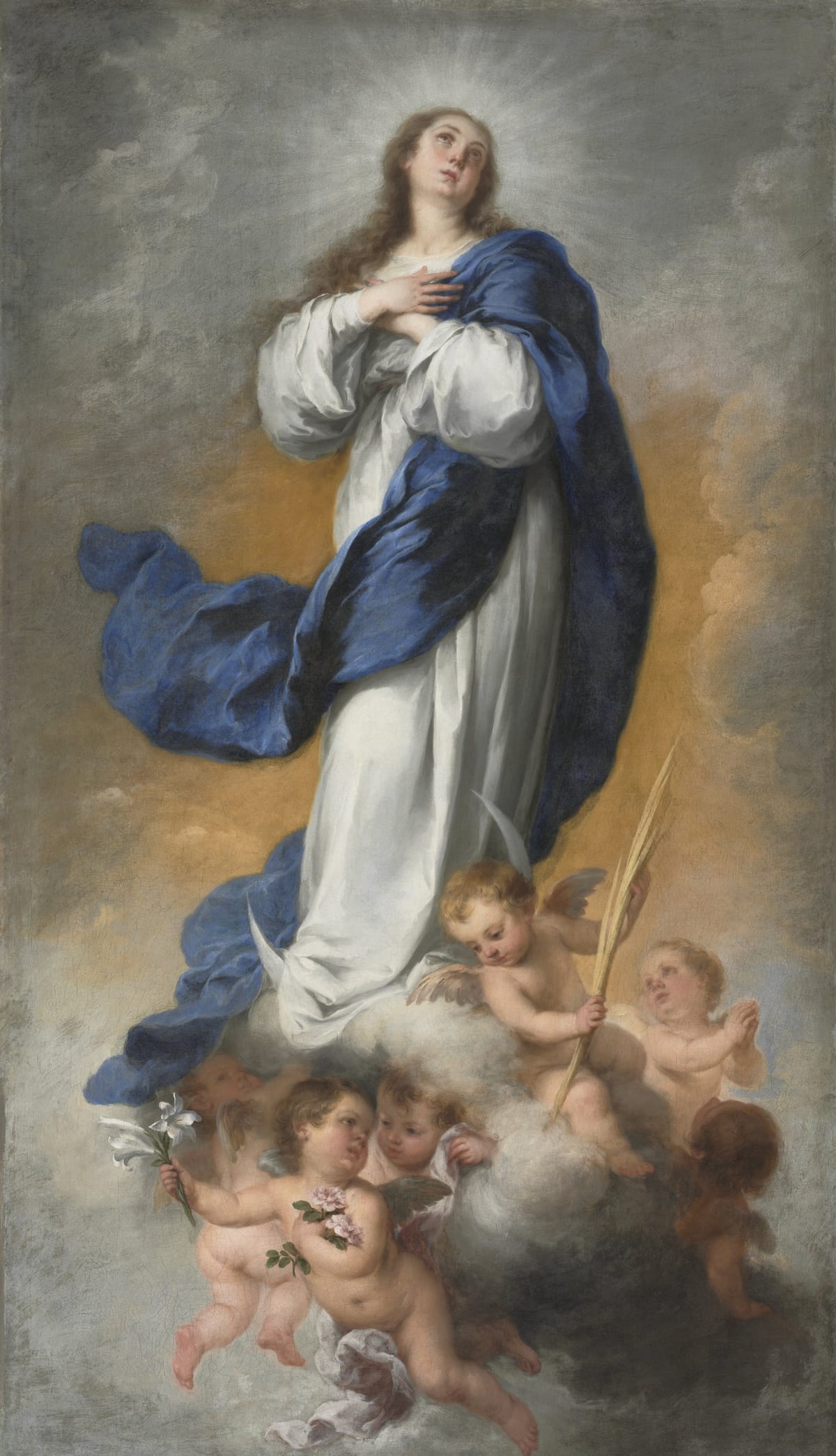
The doctrine of the Immaculate Conception maintains that the Virgin Mary was conceived free from sin, therefore ready to be the pure vessel for Christ’s birth. The Immaculate Conception enjoyed intense devotion in Spain during the 1600s, although it was only accepted as official doctrine in 1854. Th
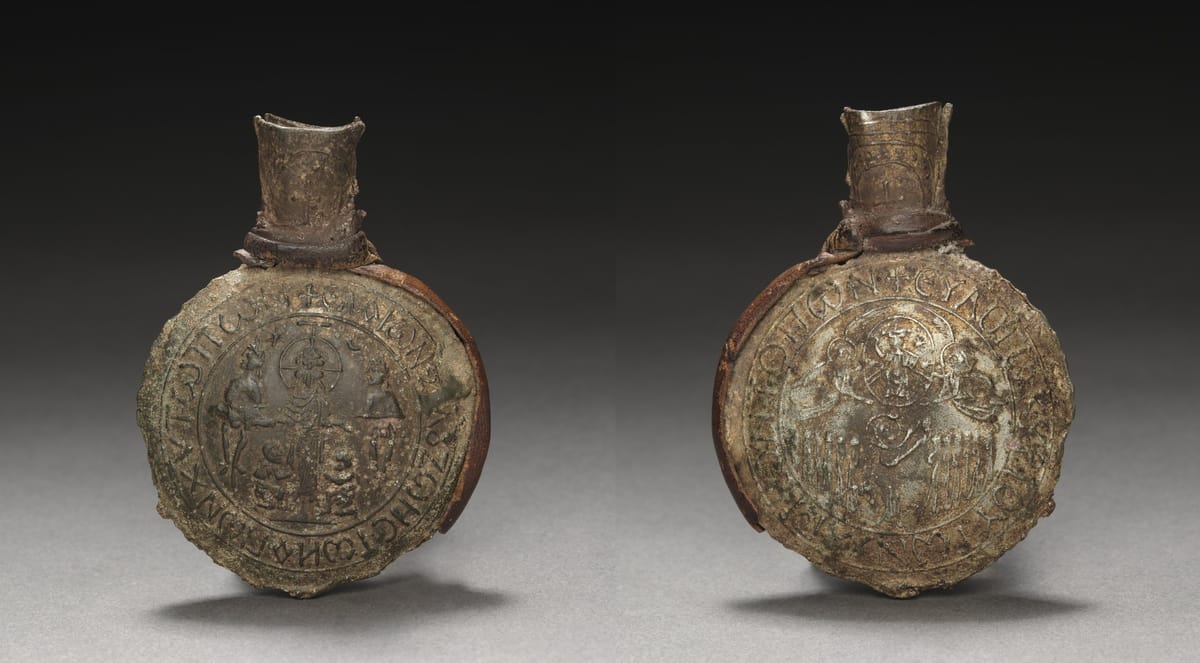
The images found on the sides of surviving lead pilgrims' ampullae include scenes relating to the life of Christ, and by extension to the holy sites (loca sancta) where the events took place. Cast into the sides of this ampulla are scenes of Christ's Crucifixion and Ascension. The use of such sacred
Once used as decorations for a reliquary shrine, each enamel plaque represents a biblical prophet: Isaiah, Obadiah, Elisha, and Hosea. Fine gold dots punctuate dark blue backgrounds. Typical of Hildesheim enamels, this detailing creates the illusion that the prophets sit against star-studded twiligh
Tino da Camaino was active in Siena, Pisa, and Florence after 1311 where he established his reputation as an important and gifted sculptor. In 1323 he was summoned to the Angevin court at Naples, probably by King Robert of Anjou to work on the sepulchral monument of the king's daughter-in-law, Cathe
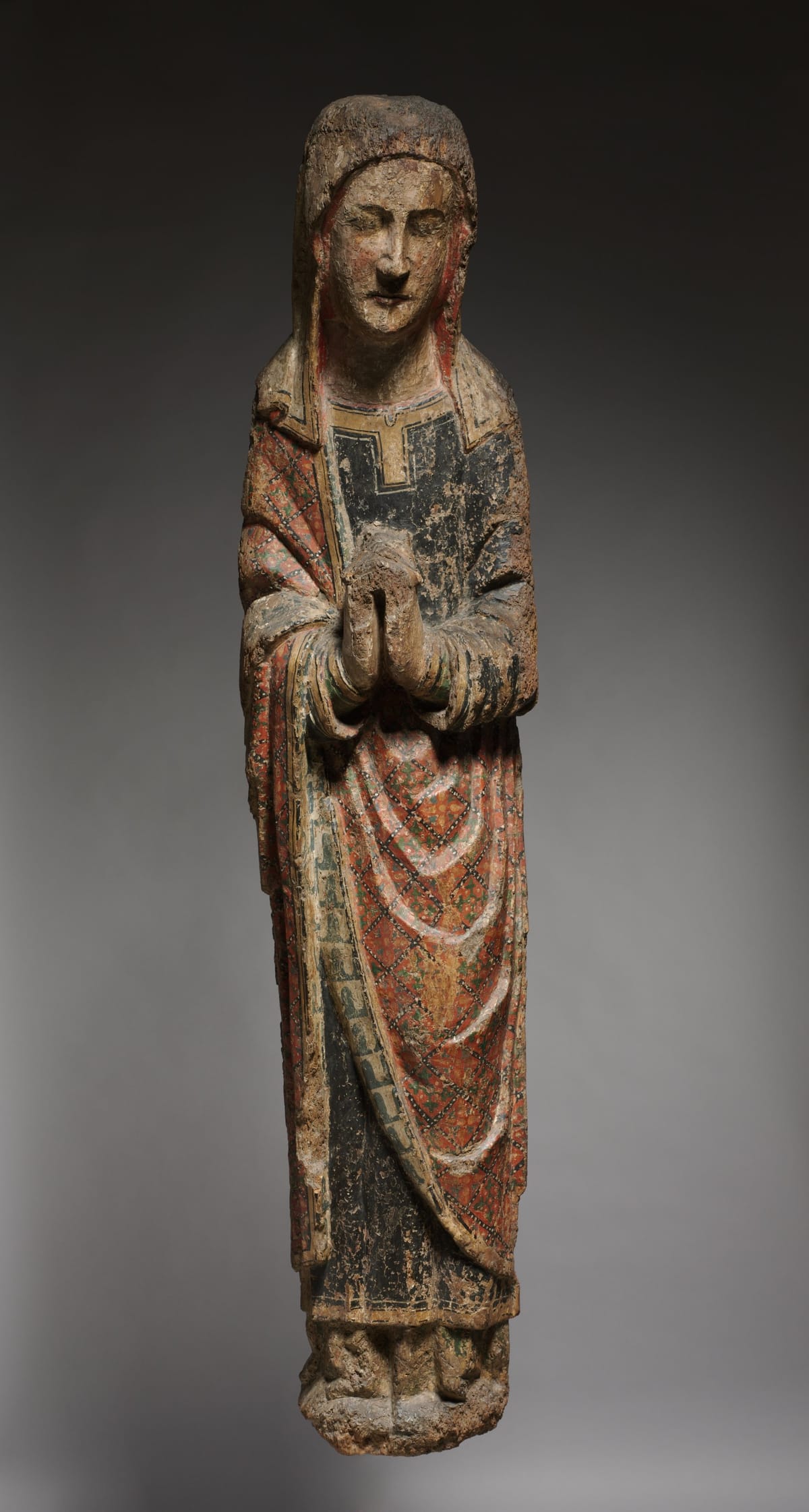
These figures of the Virgin and Saint John once formed part of a Crucifixion group that would have originally included a figure of Christ on the cross shown at center. Fortunately the original polychromy of the two figures has been preserved, affording the viewer a rare opportunity to appreciate a r
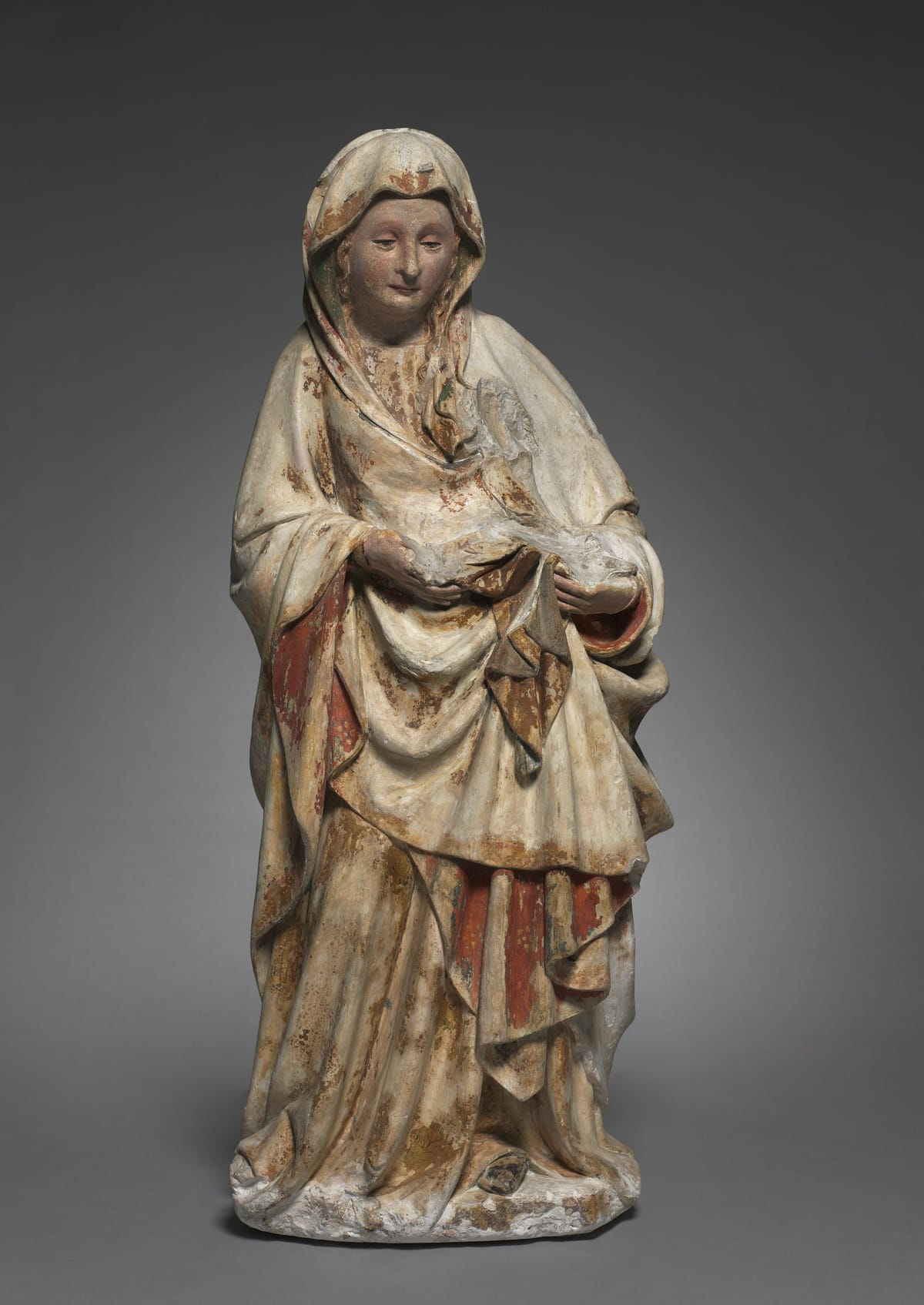
This standing Virgin now lacks the child she once cradled in her left arm. The sculpture may have been damaged in the French Revolution by falling onto its face. It was carved from soft white limestone of a type known to be quarried at Asnières-lès-Dijon, near Champmol. The figure recalls many of th
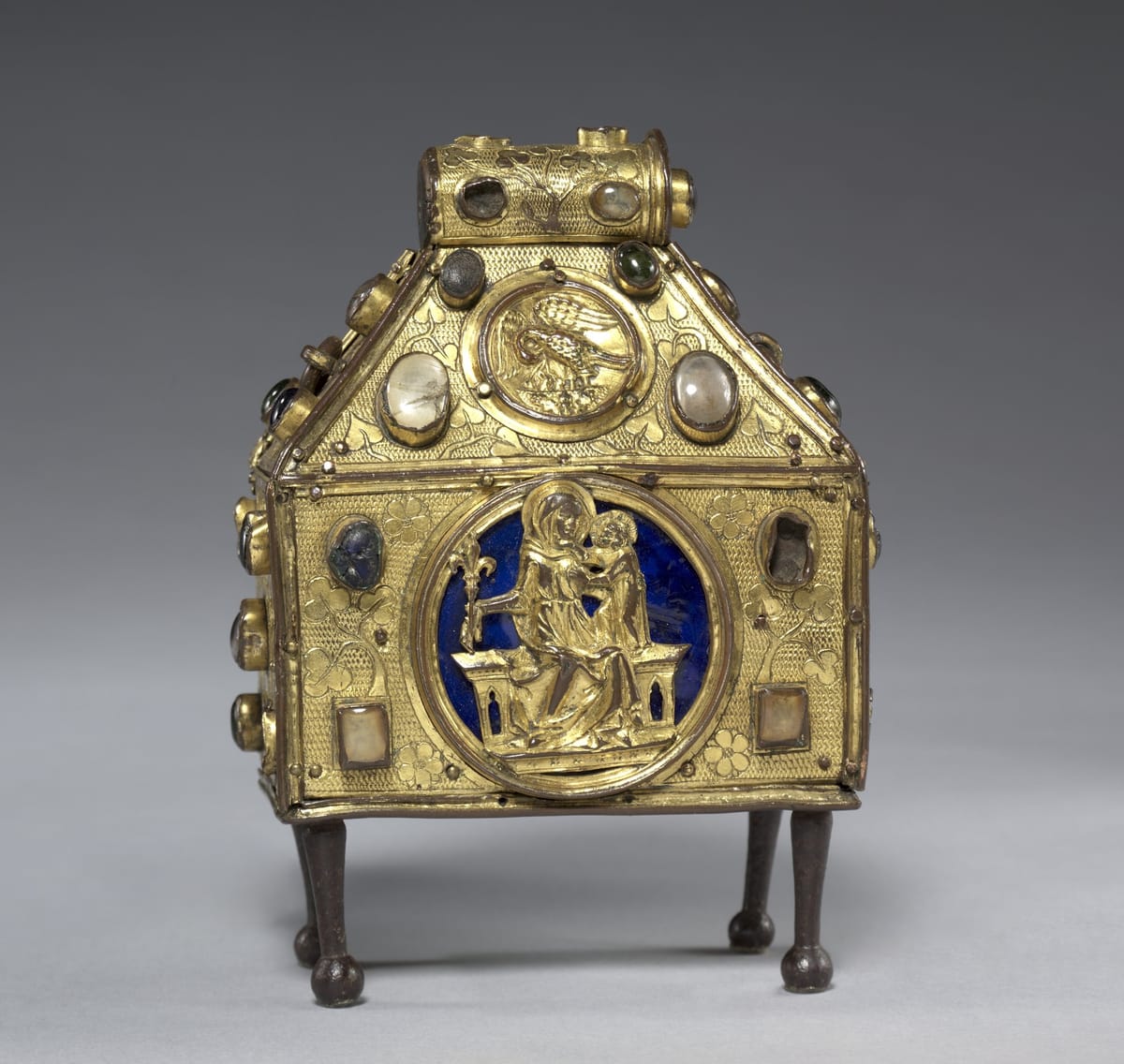
This precious reliquary, adorned on its front and sides with colored glass, precious stones, and two medallions featuring the enthroned Virgin and Child and an eagle, forms part of a group of closely related objects manufactured in the Upper Rhine region shortly after 1300. The purse shape, with its
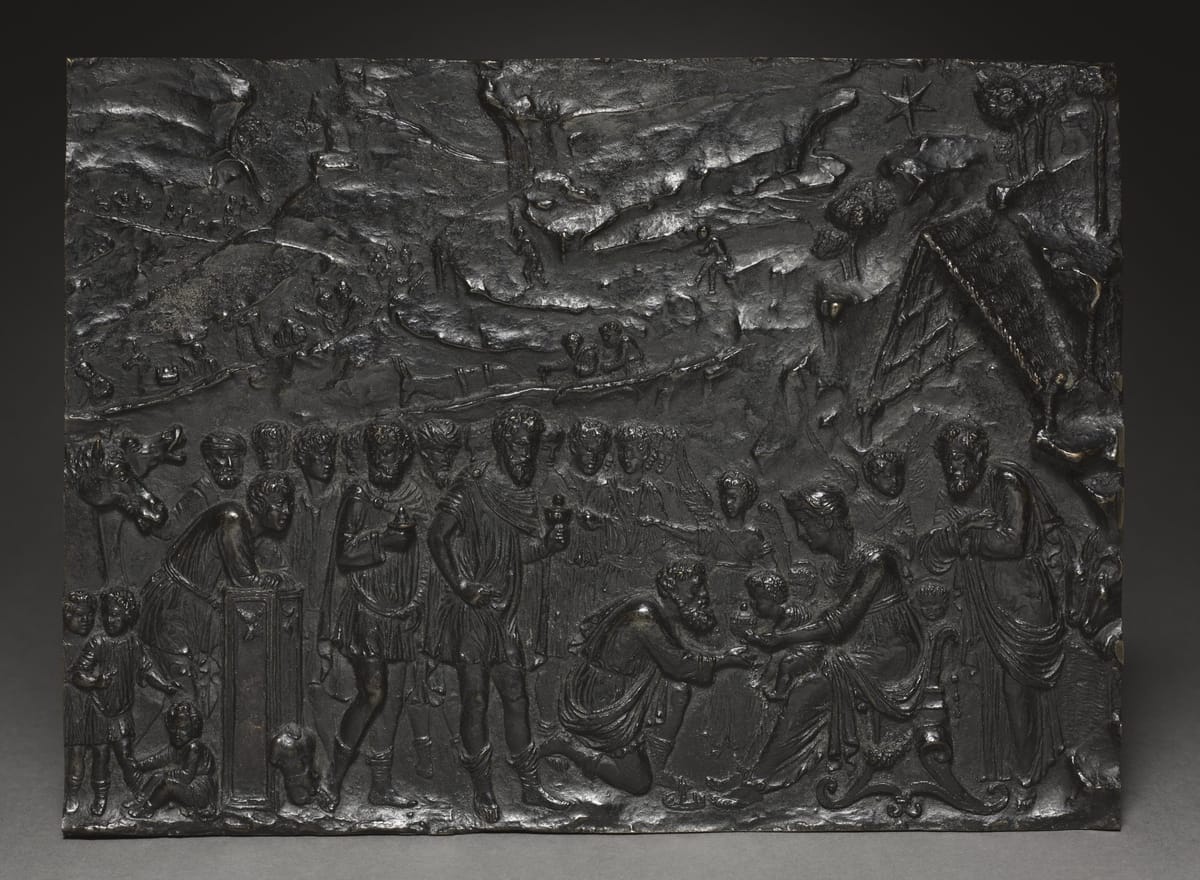
Figures leading livestock descend the winding rocky landscape in the background while in the foreground, a crowd gathers before the Holy Family. The traveling figures compose the majority of this plaque, communicating the haste and urgency on their journey to see Christ. Above the Holy Family, a rus
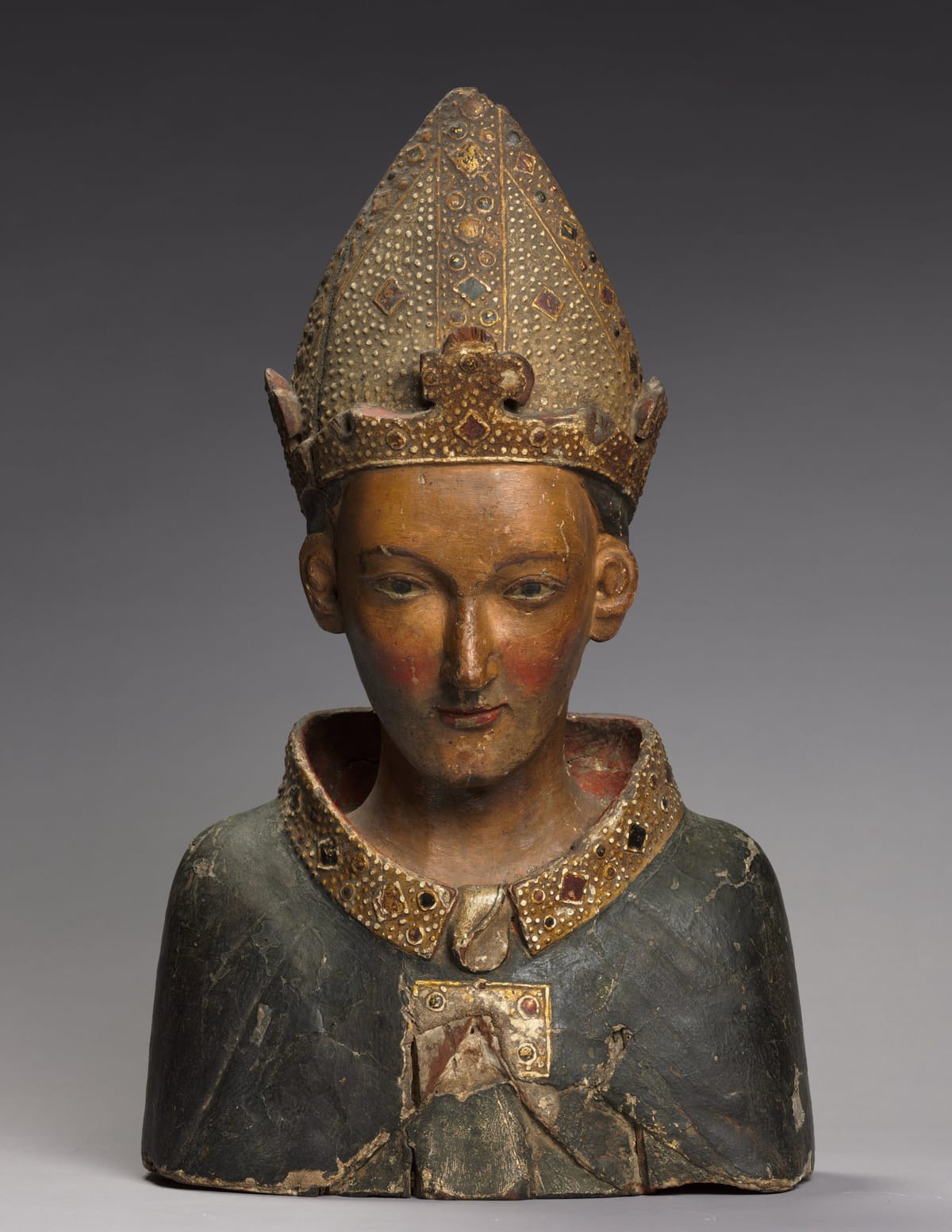
This reliquary bust was probably made to house a relic of Saint Louis, Bishop of Toulouse (1274–97), second son of Charles II of Anjou, King of Naples (1288–1309). Renowned for his works of charity, he was made bishop in 1297 and died shortly after at the age of 23. He was canonized in 1317, and his
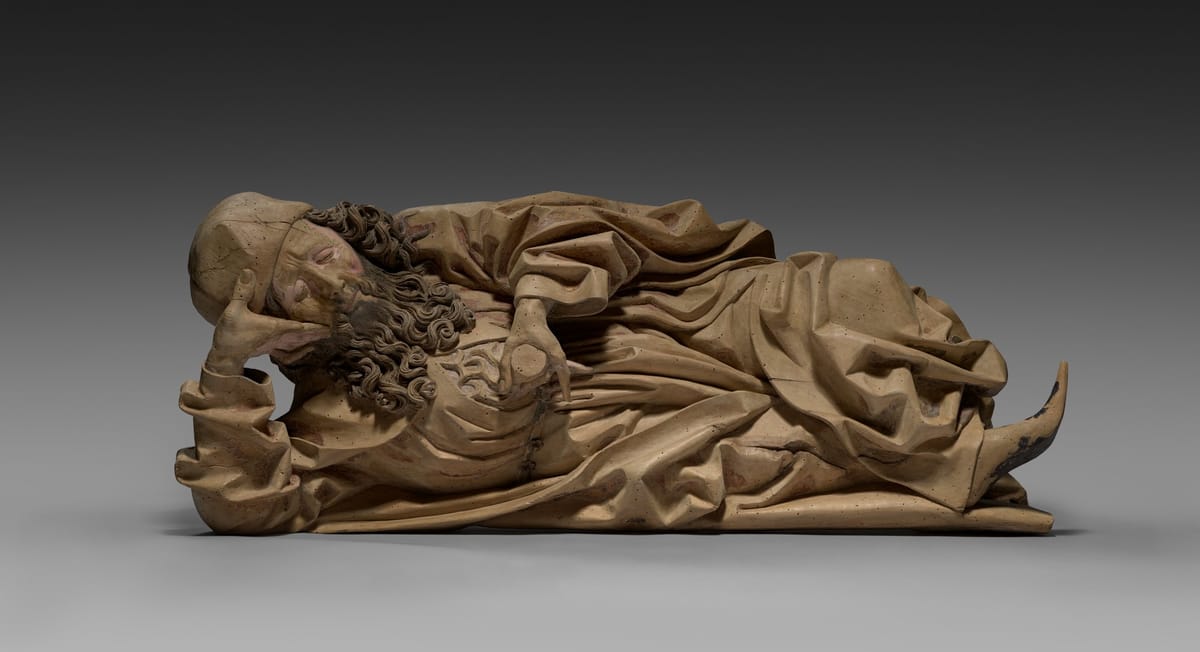
The figure shows the sleeping Jesse, the father of David from the Old Testament. As the ancestor of the family tree of Christ, he was depicted in the Middle Ages sleeping as the starting point of the tree, on whose branches the ancestors of Christ are depicted. Mary with the Christ child is always s
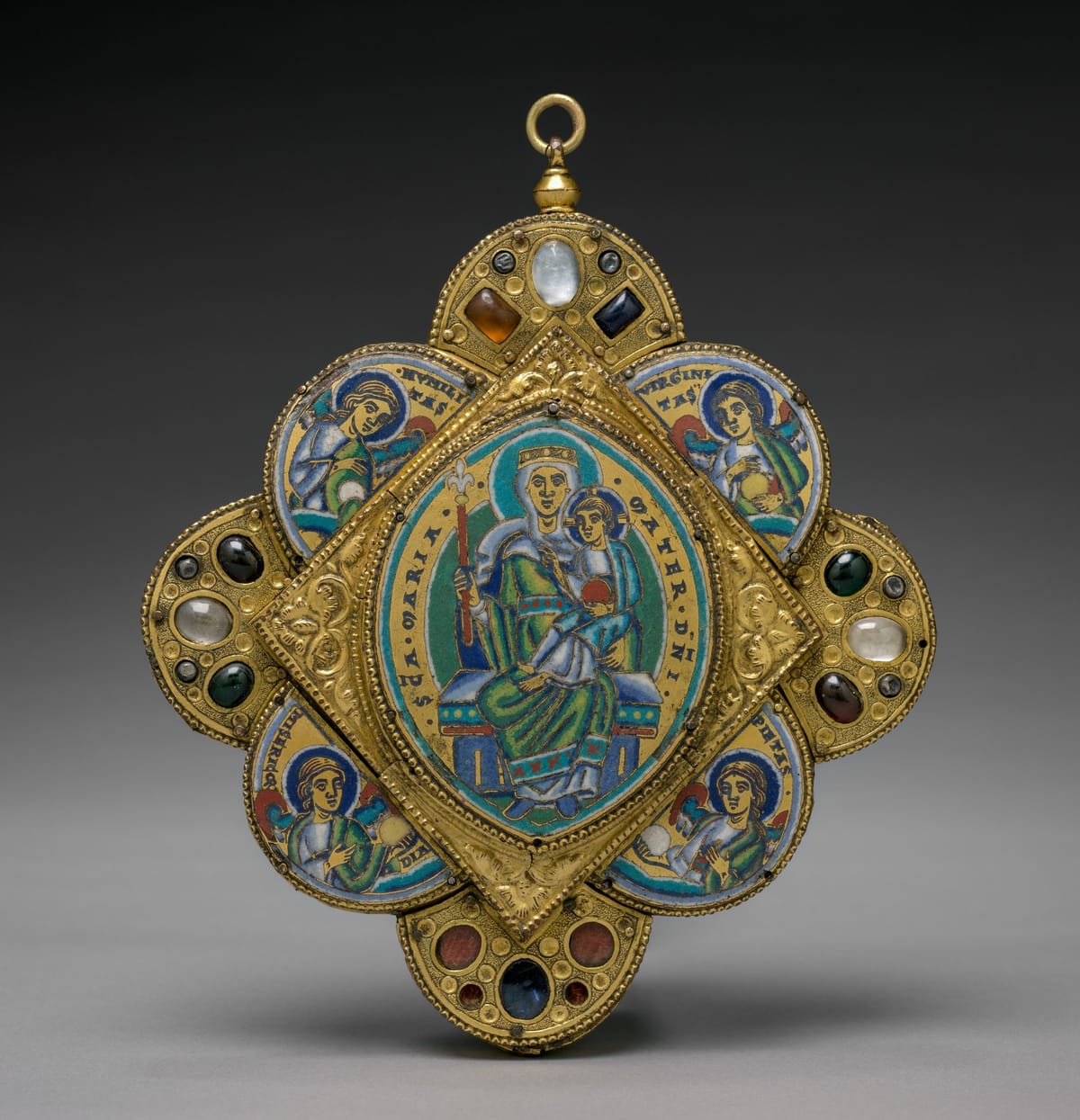
This pendant was made in the Rhine-Meuse region—now in modern Belgium—renowned for the production of fine metalwork objects, especially enamels. An enamel plaque depicting the enthroned Virgin and Christ child dominates the pendant. Four peripheral enamels depict angelic figures representing virtues
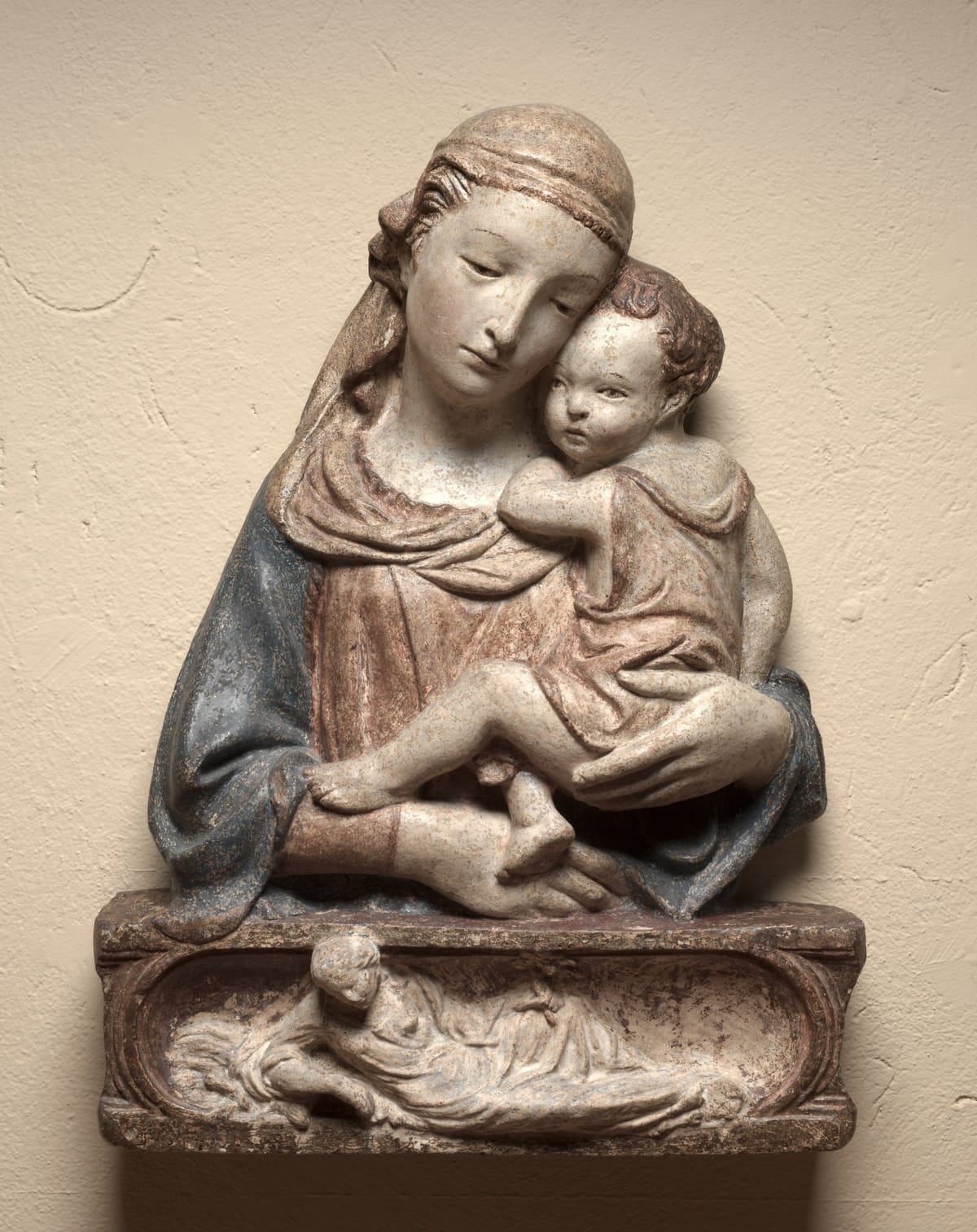
This half-length Madonna represents one of the finest of about 40 surviving variants, all of which display many characteristics of the Florentine bronze sculptor Lorenzo Ghiberti. These features include serene facial types with narrow eyes and thin eyebrows, the careful arrangement of the Madonna an
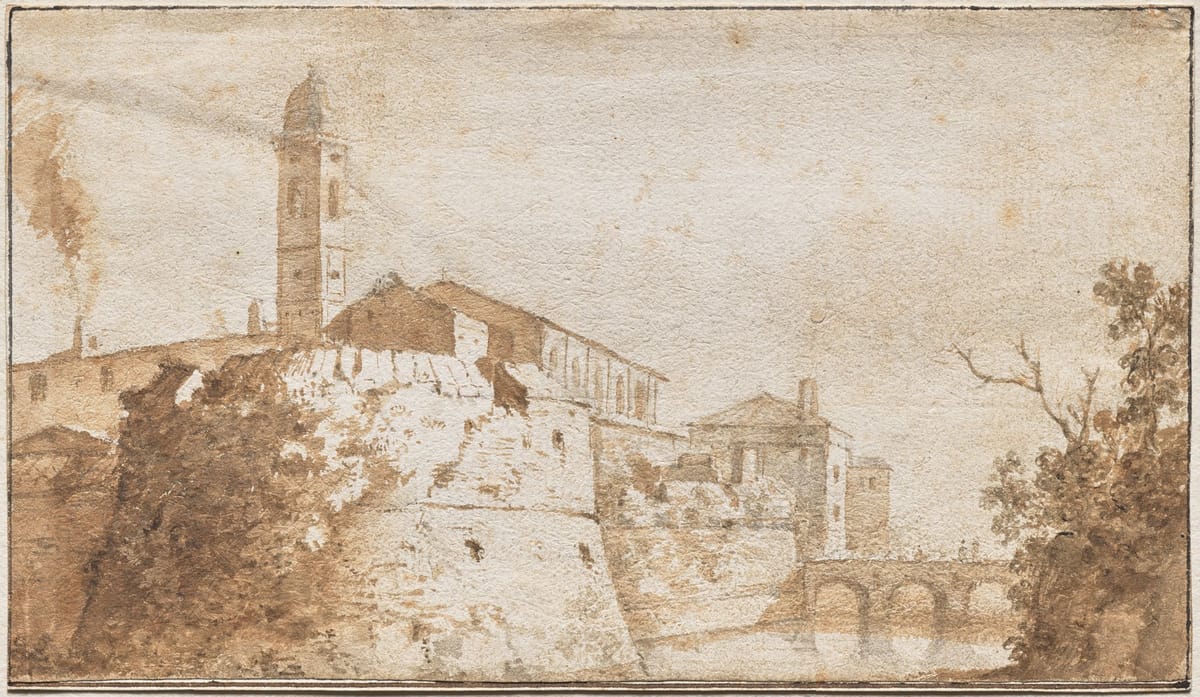
In the early 1600s, artists from Northern Europe began to take long trips to Italy as part of their artistic training. Bartholomeus Breenberg traveled to Italy around 1620 and probably stayed for at least 12 years. While there, he sketched ancient ruins and the countryside, features he would use in
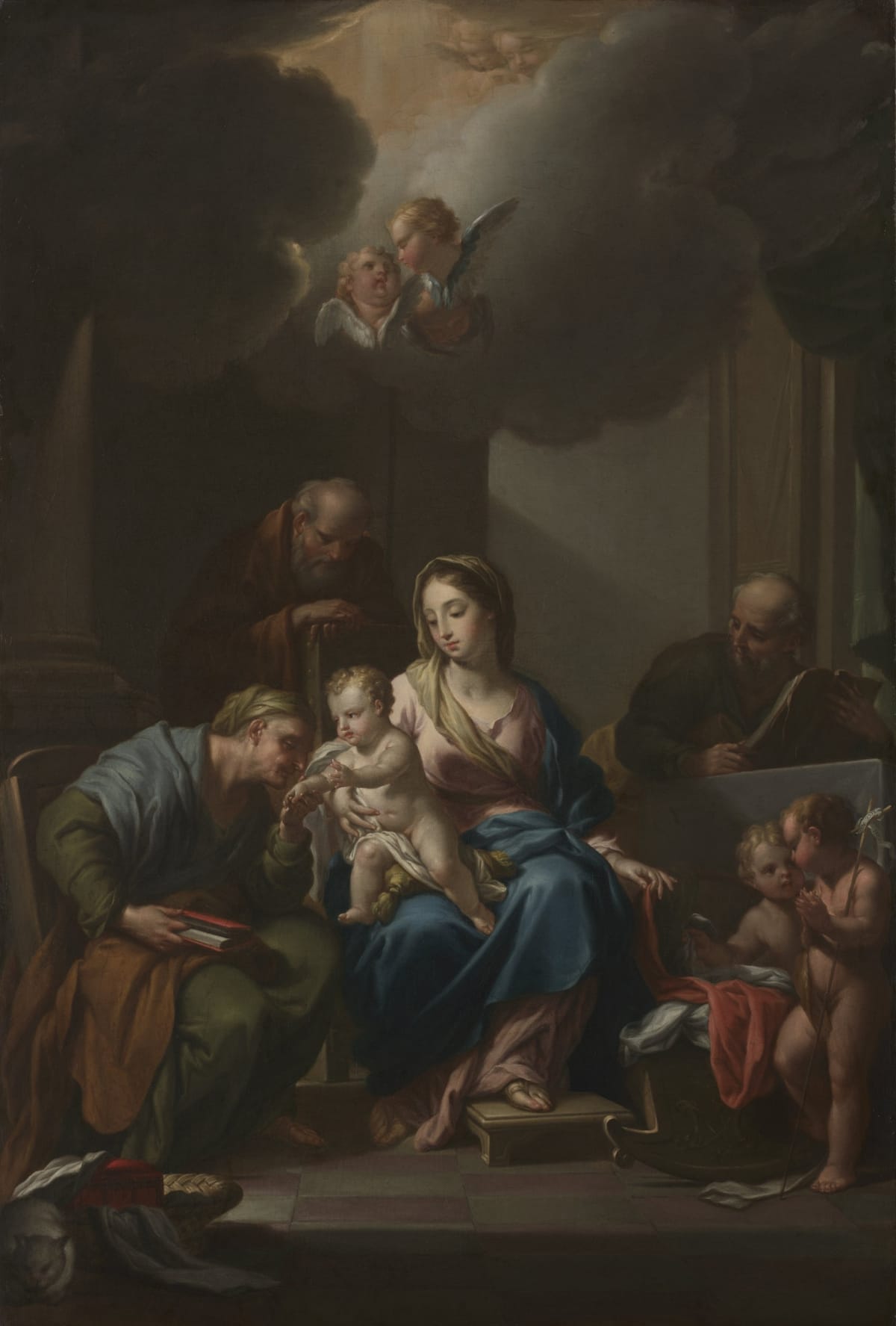
During the early 1700s, Roman artists returned to fundamental Christian subjects, especially those focused on the Christ child. This work presents the Holy Family with Christ’s maternal grandparents and baby cousin, John the Baptist, stressing the importance of family relationships. Saints Anne and
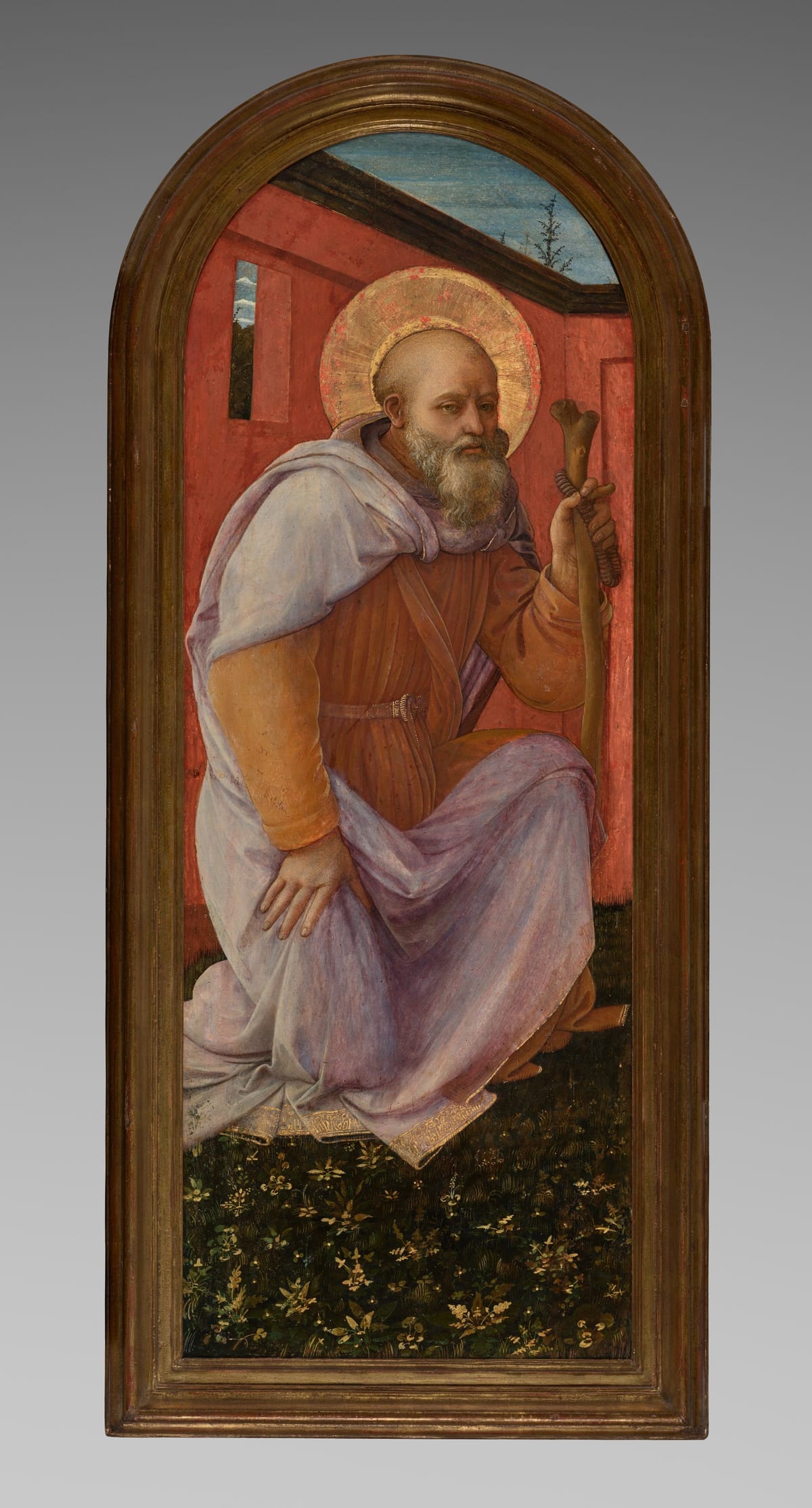
These panels depicting Saints Anthony the Abbot and Michael originally flanked a central scene of the Madonna and Child with Angels, now lost, to form a triptych. Giovanni di Cosimo de’Medici of Florence commissioned the ensemble in 1457 as a gift to Alfonso V of Aragon. Fra Filippo Lippi, a Carmeli
Among the first northern European artists to study in Rome, Gossaert returned north to serve in various German and Flemish courts, incorporating Italian Renaissance ideas. Gossaert also painted the frame, including the Latin inscription: "Mother, may your contemplation be our reconciliation." The pa
The dramatic contrasts of light and dark reveal the long aftereffects of Caravaggio in Naples. Yet, the elegant forms, rich colors, and perfected body of Christ have far more affinities with the idealizing strand of Italian art in the 1600s and 1700s. Solimena sought to improve on nature, based on t