Orthodox Cross (2009) by unknown
Orthodox Christian cross with the inscription Iesus Hristos is victor. Free DownloadThis image is in the public domain.orthodox-cross.jpg34 KBdownload-circle Please SUBSCRIBE or DONATE to help keep this site free!...
This angel carries symbols of the Passion—the events associated with Jesus Christ’s suffering and death. The pitcher, basin, and cloth represent those used by Pontius Pilate to wash his hands of responsibility for Christ’s crucifixion.The painting belongs to a series of twelve angels carrying symbols of...
This Gospel Lectionary from the eleventh century was written in clear Carolingian minuscule in Regensburg, Germany. Its original treasure binding is very fragile because the spine is made from delicate Byzantine or Islamic silk, so it is not possible to photograph the whole manuscript. Only the cover has been photographed,...
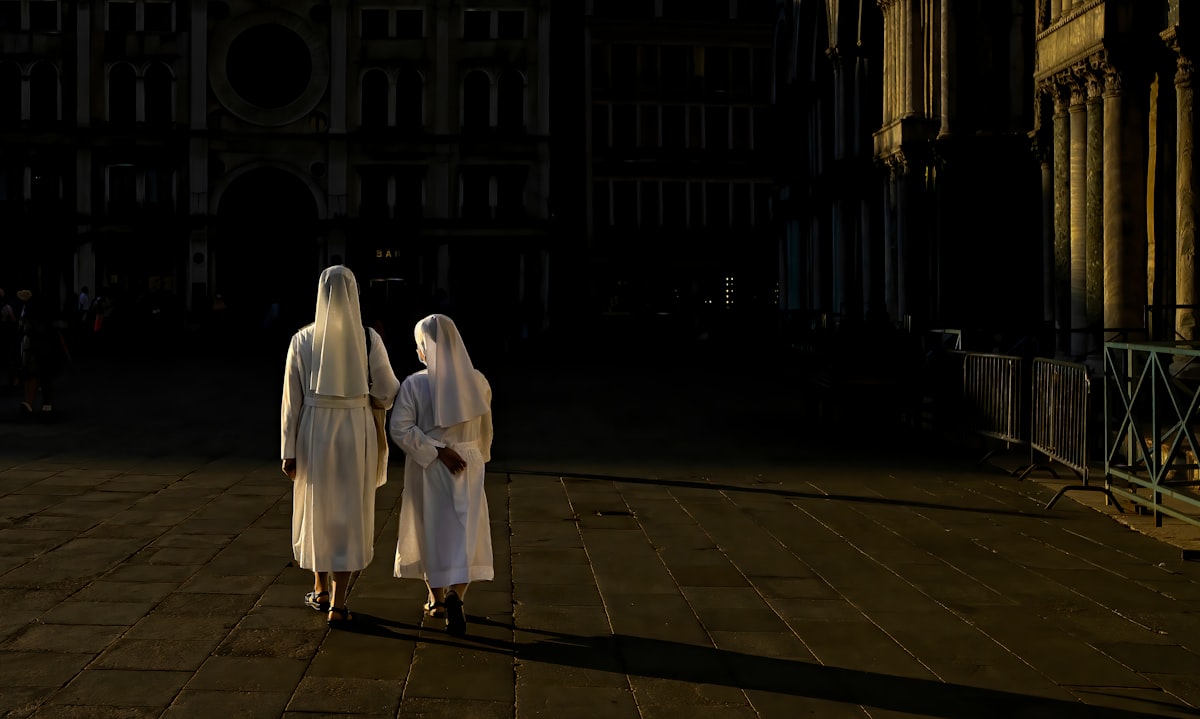
This is a list of my favorite 12 orders of Catholic nuns and sisters in no particular order. This list includes their history, and images of their habits. What is a Catholic Nun or Sister? In the Roman Catholic tradition, there are many religious institutes of nuns and sisters (the...
Learn the purpose of sdcason.com with this short blog.
Top selling books published by Shalone Cason.
"Noli Me Tangere", originating from a predella created in medieval Italy, reflects the transition from Byzantine to early Romanesque artistic styles, characterized by stylized forms and spiritual symbolism over naturalistic representation. This scene, showing the resurrected Christ’s appearance to Mary Magdalene, was part of a narrative ensemble...
"Birth in Bethlehem" by Gebhard Fugel exemplifies the revival of religious painting in late 19th- and early 20th-century Germany, a period marked by a search for spiritual depth and clarity amidst rapid societal change. Fugel, celebrated for his devout Christian motifs, drew on the traditions of German...
Created by Pietro Perugino during the height of the Italian Renaissance, "The Baptism of Christ" (1500–1505) reflects the period’s fascination with harmonious composition, balanced figures, and luminous color. Perugino, renowned as one of the leading artists of his generation and Raphael's teacher, masterfully incorporates...
The "meeting of Anthony and Paul" refers to a famous story from early Christian monasticism. Saint Anthony the Great and Saint Paul of Thebes are considered two of the very first Christian monks (also called Desert Fathers), living in the Egyptian desert in the 3rd and 4th centuries...
Saint Onophrios, also known as Onuphrius or Onofrio, is a Christian saint and hermit who lived in the Egyptian desert, probably in the 4th or 5th century. He is revered in both Eastern Orthodox and Catholic traditions, especially among Coptic Christians. Free DownloadThis image is in the public domainSaint_Onophrios....
Coptic icons often present the Crucifixion with characteristic stylistic elements—flattened perspective, strong lines, and deeply expressive faces—focusing on spiritual, rather than physical, suffering. These images invite viewers to contemplate the mystery and meaning of Christ's sacrifice. Free DownloadThis image is in the public domainCoptic_Crucifixion_Icon....
The intricate decorative elements, likely executed by a skilled 12th-century artist, reflect the characteristic fusion of Christian symbolism and indigenous Egyptian motifs unique to Coptic art, such as interlacing geometric patterns and stylized floral designs framing the text. The manuscript’s preservation and vivid ornamentation not only testify to...
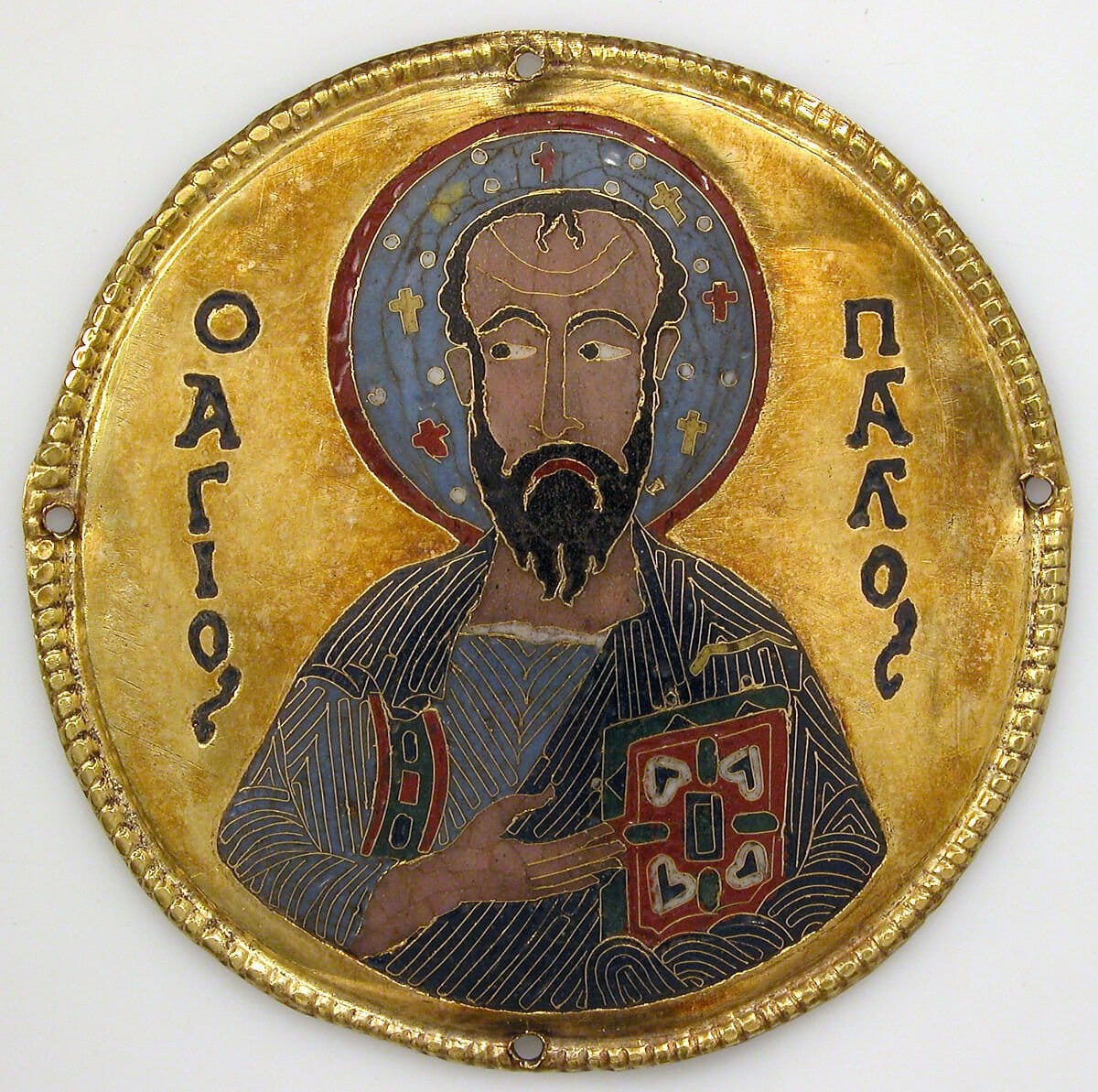
The icon exemplifies the stylized spirituality characteristic of Coptic art during this period, with its elongated figure, ascetic features, and symbolic simplicity reflecting Saint Paul's revered status as the first Christian hermit. Free DownloadThis image is in the public domainCoptic_paul.jpg40 KBdownload-circle Please SUBSCRIBE or DONATE...
The artwork titled "Madonna and Child" is a wall painting from the 12th century, attributed to an anonymous artist from Faras, a region renowned for its Christian art in medieval Nubia (located in modern-day Sudan). It is badly damaged, but one could image the beauty and wonder...
John the Baptist is a vital figure in Christian theology—the forerunner of Jesus Christ, known for baptizing people in the Jordan River and for his ascetic lifestyle. Icons usually depict him with long hair and beard, often holding a cross or a scroll, sometimes accompanied by a lamb, signifying...
Saint Anthony the Great is honored in the Coptic Orthodox Church as “the Father of Monasticism” and a primary model of holiness, asceticism, and spiritual warfare. Free DownloadThis image is in the public domainAnthony_the_Great_%28coptic_icon%2C_19-20_c.%2C_priv._coll%29.jpg133 KBdownload-circle Please...
Tradition holds that Saint Mary Magdalene, a close follower of Jesus Christ, retreated to a cave in penitence during the final years of her life. Here, she clutches her purple robes and looks up at the bright divine light that falls upon her. Two attributes, or identifying symbols, of the...
With legs crossed and chin cupped in hand, Luis de Morales’s Jesus is both regal and melancholic. He sits among the instruments of his torture and death: the column to which he was tied during the Flagellation and the cross that he carried and to which he was nailed....
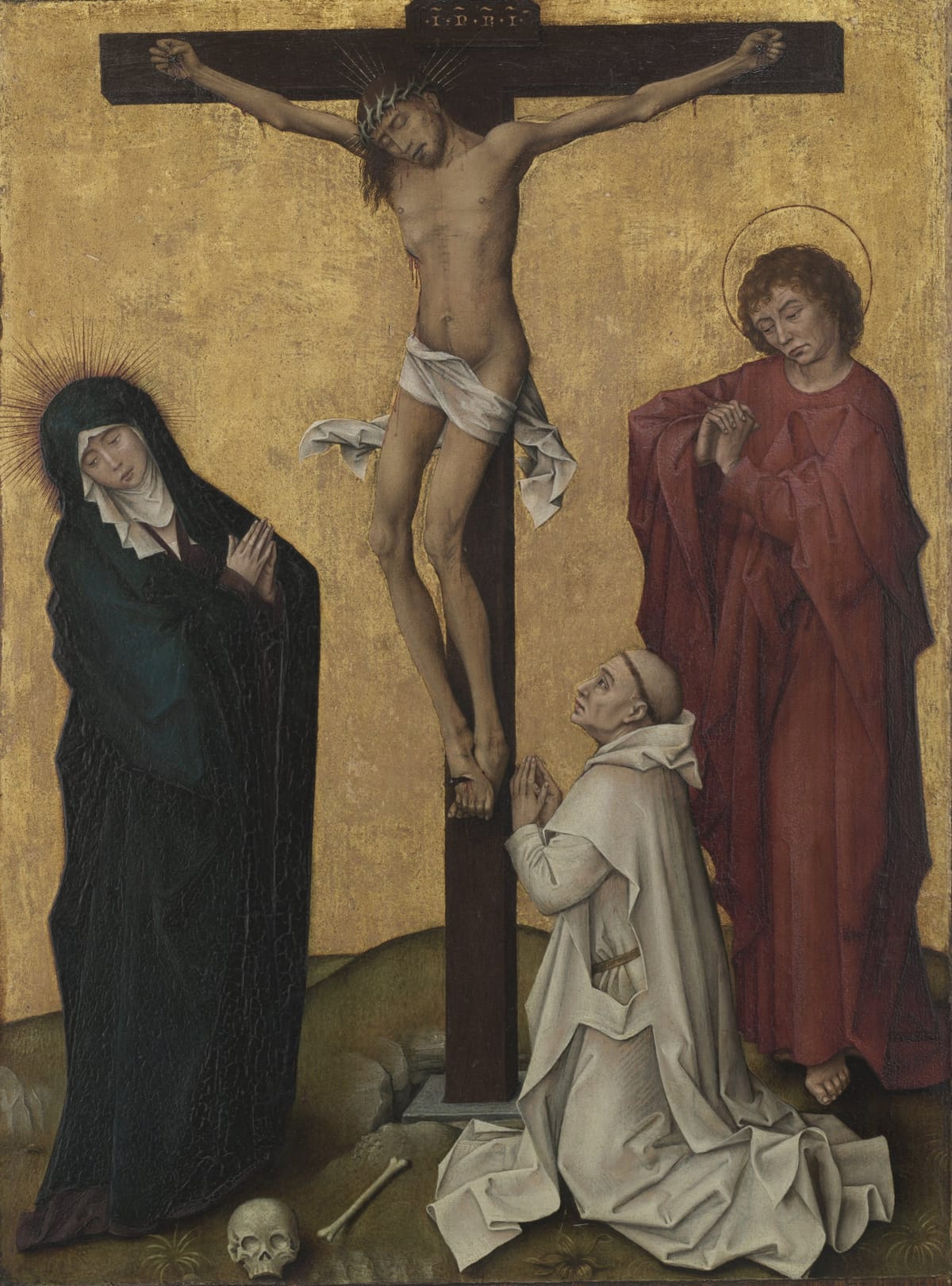
The work features the crucifixion scene with Mary, John, and a clerical figure. It is part of the European Art collection at the Minneapolis Institute of Art, where it has been since 1979. The painting has changed hands several times, most notably when it was sold in Paris in 1954...
Many of Rouault’s works reveal his strong Catholic faith. The Crucifixion, representing Christ’s sacrifice for the salvation of humanity, is a prominent theme. The thick application of vibrant color here is characteristic of the Fauvist movement, with which Rouault was associated. While other Fauves tended to avoid social...
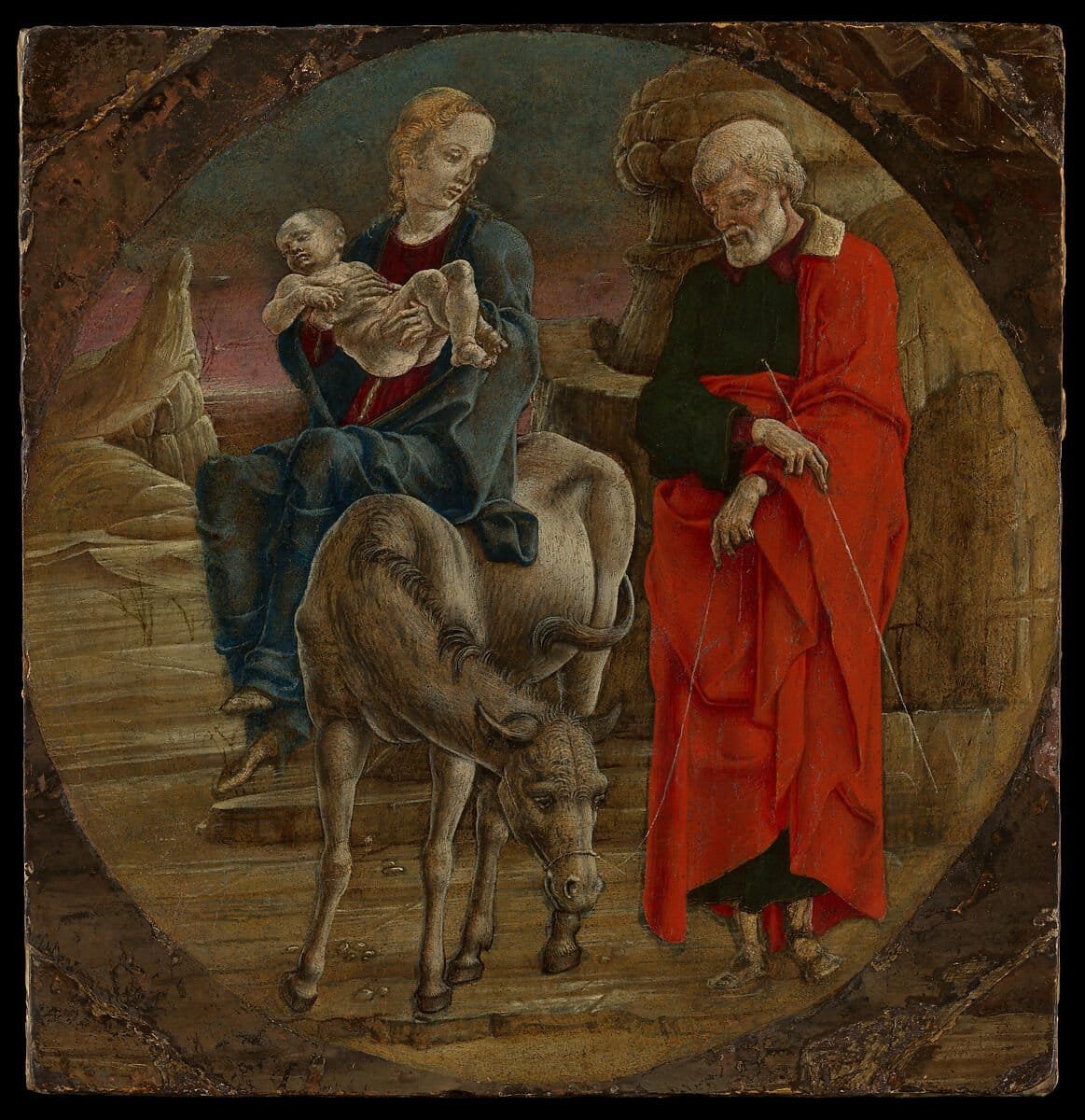
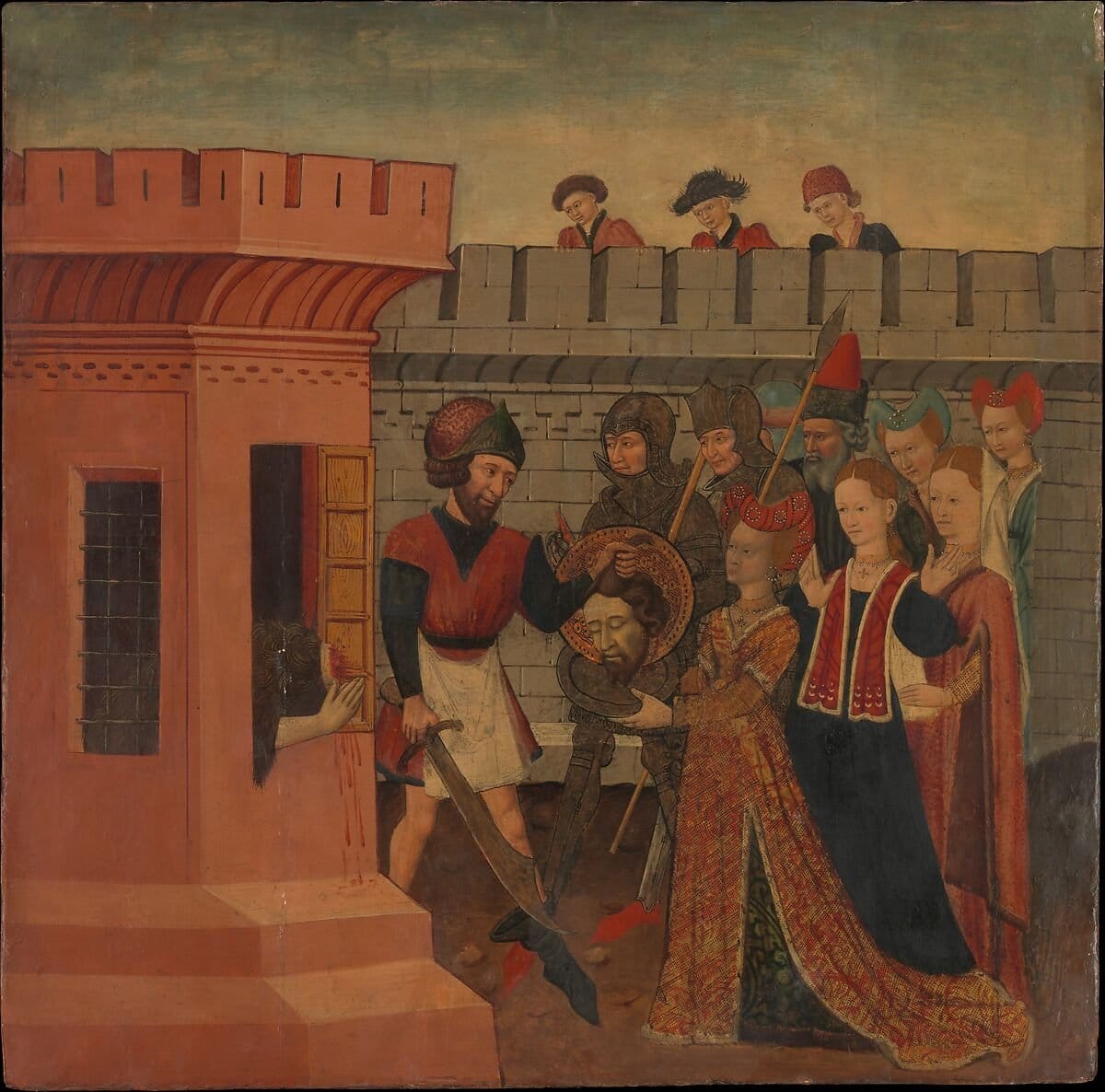
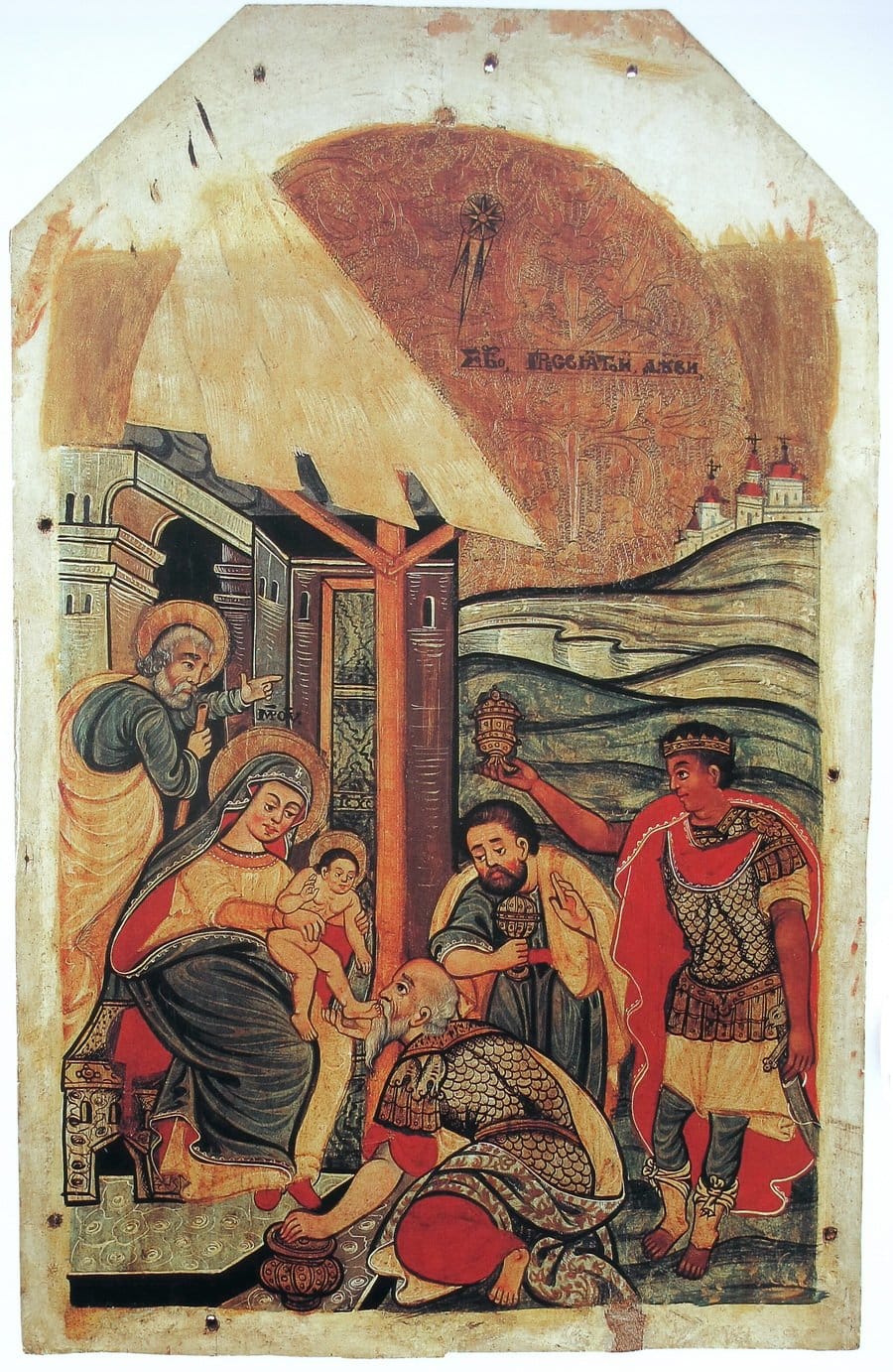
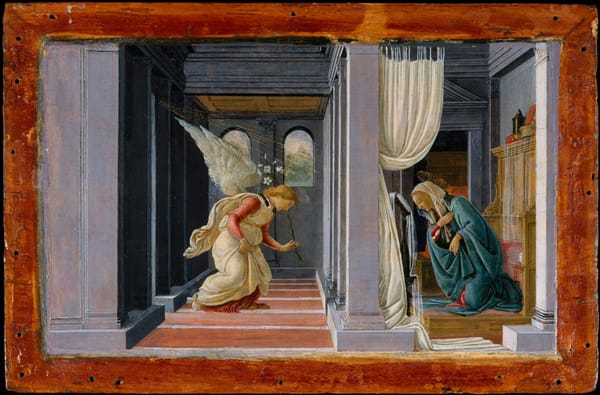
These four panels, together with another one depicting the Resurrection (Metropolitan Museum of Art, New York), once constituted a predella—a series of small pictures, often narrative scenes, forming the base of an altarpiece. These predella scenes depict moments when Jesus’s divine nature was revealed: at his birth, at...
The term "Effata," meaning "Be opened" in Aramaic, relates to the biblical story of Jesus healing a deaf and mute man. In Gebhard Fugel's painting "Effata," this theme symbolizes spiritual awakening and communication. The artwork captures the transformative power of faith, inviting...
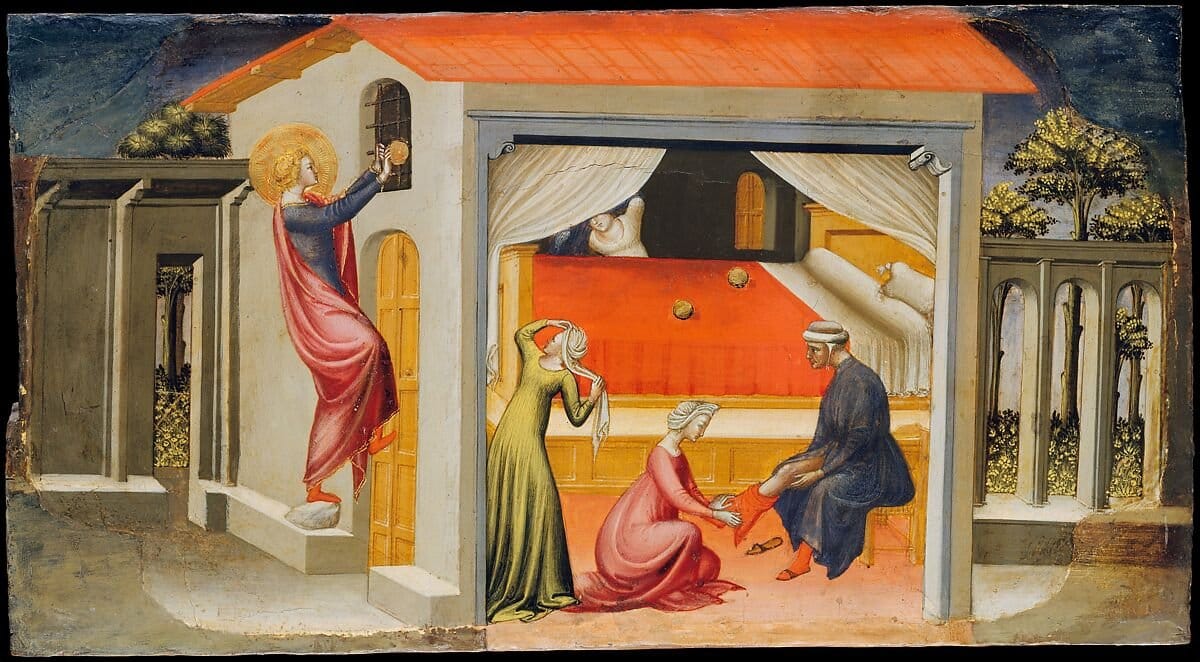
These four panels, together with another one depicting the Resurrection (Metropolitan Museum of Art, New York), once constituted a predella—a series of small pictures, often narrative scenes, forming the base of an altarpiece. These predella scenes depict moments when Jesus’s divine nature was revealed: at his birth, at...
Gebhard Fugel was a German painter specializing in Christian themes, and the story of Moses striking the rock for water is a significant biblical event depicted in various artworks, particularly during the Renaissance and Baroque periods. Artists like Michelangelo and Caravaggio captured the dramatic moment, employing techniques such as chiaroscuro...
The concept of the Good Samaritan has a rich history in art, often symbolizing compassion, charity, and moral duty. Originating from the biblical parable found in the Gospel of Luke, the story tells of a Samaritan who helps a traveler who has been beaten and left for dead. In contrast,...
In this powerful image, Christ elevates the chosen, assisted by angels, while demons drag the damned toward hell. Jean Chapuis’s 14th-century poem The Seven Articles of Faith explores the moral implications of Christ’s birth, baptism, death, descent into hell, resurrection, ascension, and second coming. Treated like a...
Gebhard Fugel's The Cliff in Nazareth (1939) depicts the dramatic biblical scene from Luke 4, where the enraged residents of Jesus's hometown lead him to the brow of a hill intending to throw him down. The painting captures the moment of intense rejection and immediate danger,...
The Coptic Orthodox Church celebrates the Feast of the Transfiguration on the 13th of Mesri in the Coptic calendar, which is August 19 on the Gregorian calendar. This feast always takes place during the Fast of St. Mary. Even though it is celebrated with joyful music, it remains a fasting...
David Dalhoff Neal (1838–1915) was an American artist known for his portraits and history paintings who achieved international fame, particularly during his years working in Munich, Germany. Born in Lowell, Massachusetts, he started his artistic journey at an early age and eventually studied at the Royal Academy in Munich,...