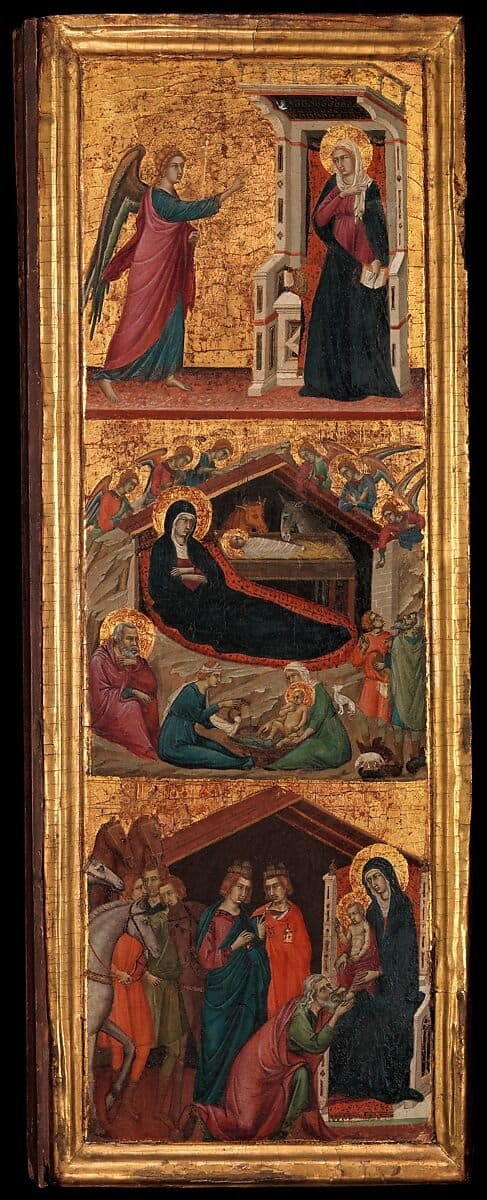
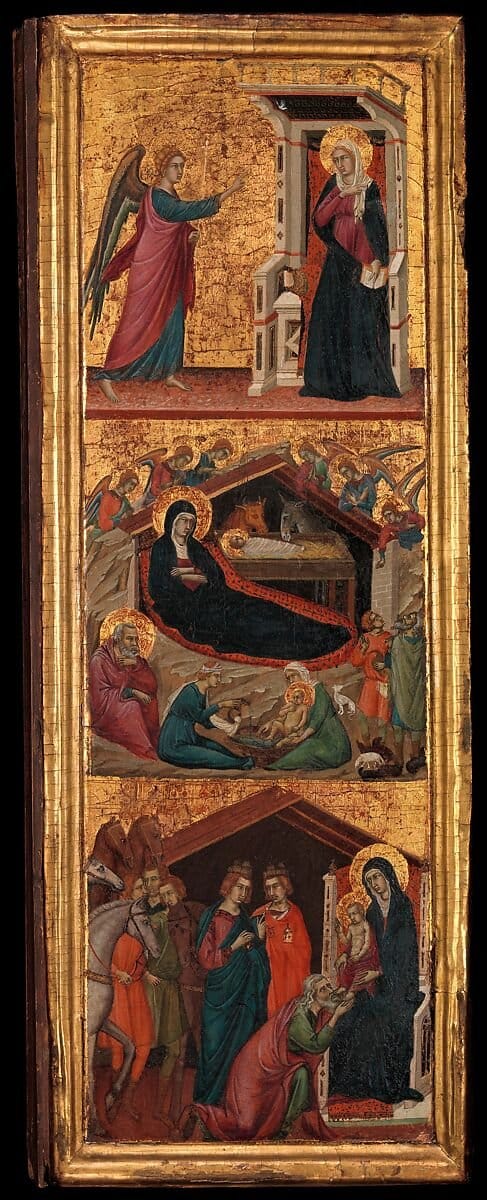
These wood panels were once wings for a portable triptych that could close, hiding the now-missing center panel. Rather than flat wooden supports that were then framed, these panels are examples of "engaged frames," in which the same piece of wood has been carved to create both the pictorial surface and its frame, a technique particularly useful when paintings were integrated into complex, architecturally inspired altarpieces. The anonymous artist of these panels based his compositions on a famous altarpiece by Duccio di Buoninsegna found in the Cathedral of Siena.
Source: metmuseum.org
Please SUBSCRIBE or DONATE to help keep this site free!