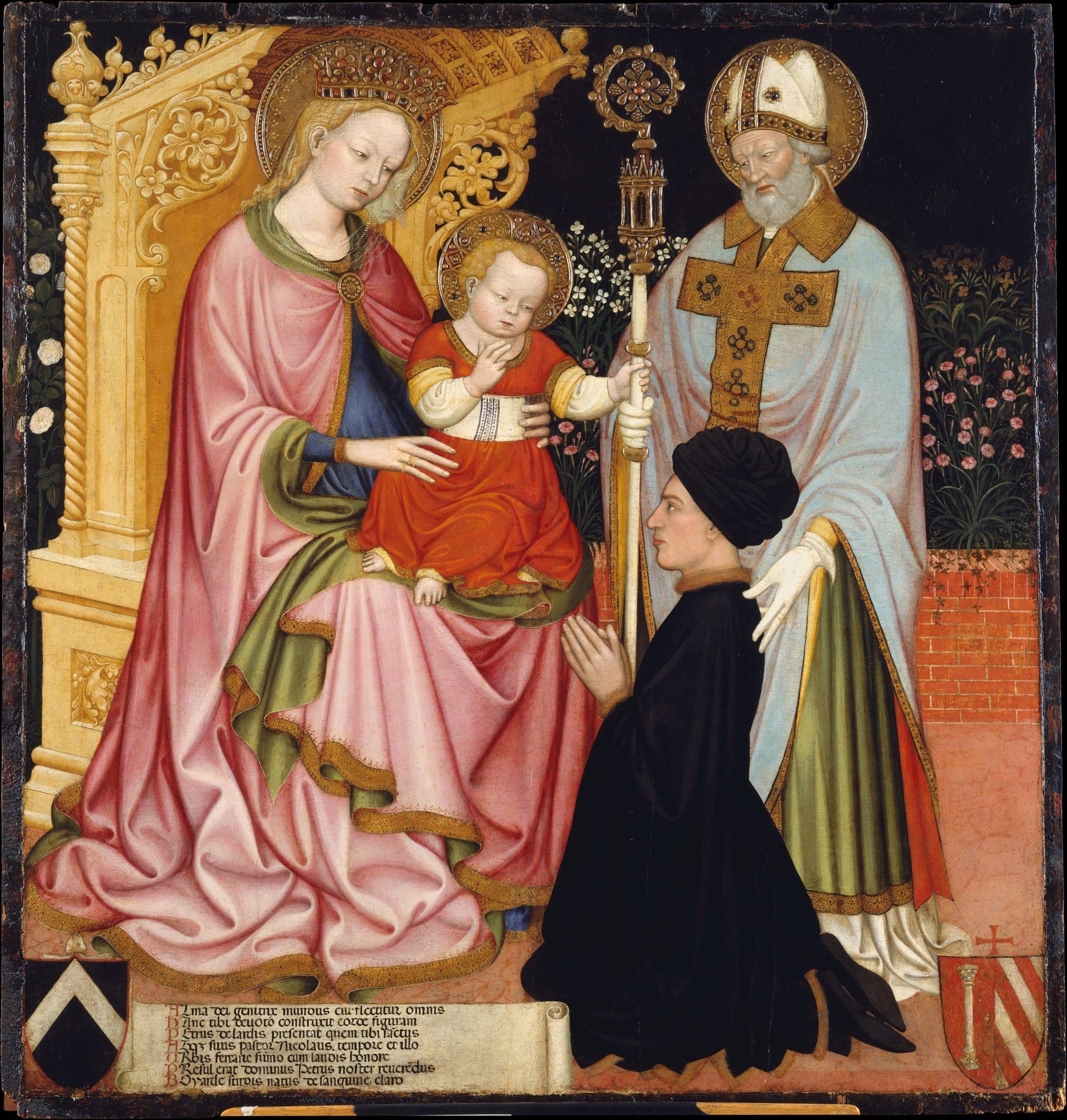
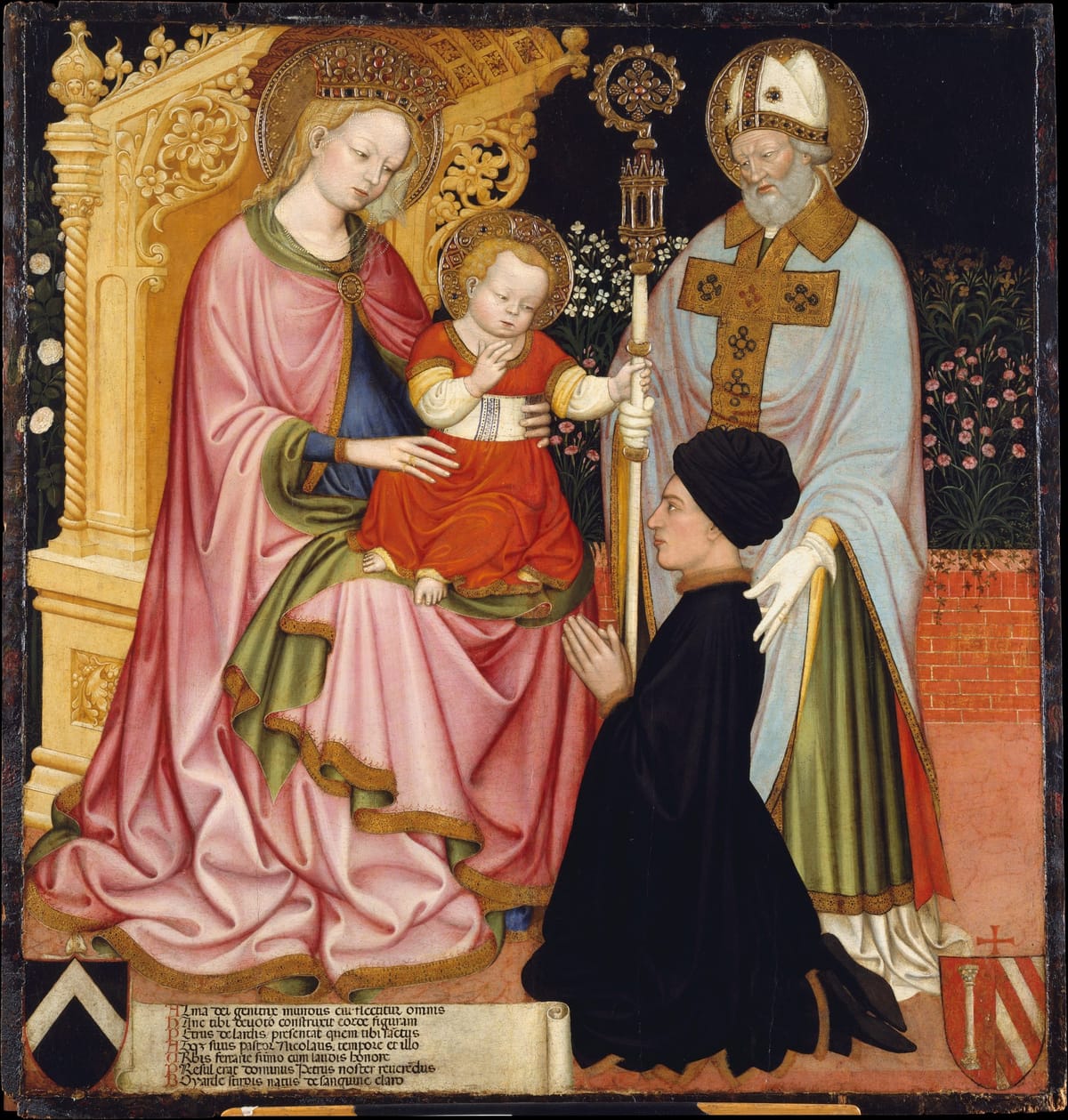
This work plays with our expectations of the flatness of the painted surface. Using a technique of gilded gesso, the artist gave Saint Nicholas’s miter and the crowns of the holy figures a raised surface. The Virgin’s robes and the intricate, angled throne also create a sense of three-dimensionality. As if to emphasize the skill it took to achieve these illusions of depth, the artist reminds us of the surface’s flatness in the representation of two coats of arms and an inscription that appear as though tacked onto the panel. Pietro de’ Lardi, who commissioned this work and is seen kneeling here, became deputy general to Borso d’Este, duke of Ferrara, in 1452. According to the inscription, it was painted sometime between 1400 and 1431. source: metmuseum.org
Please SUBSCRIBE or DONATE to help keep this site free!