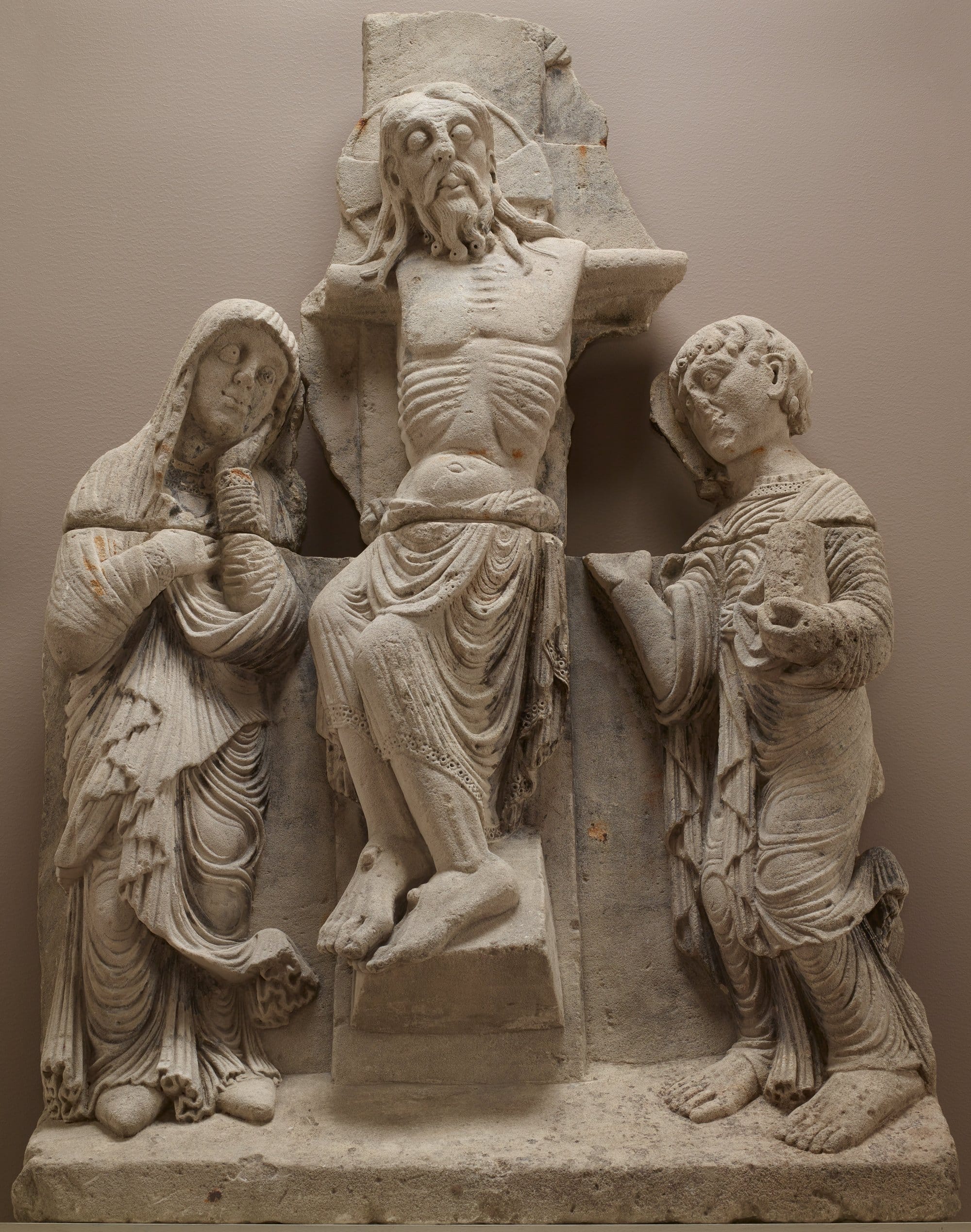
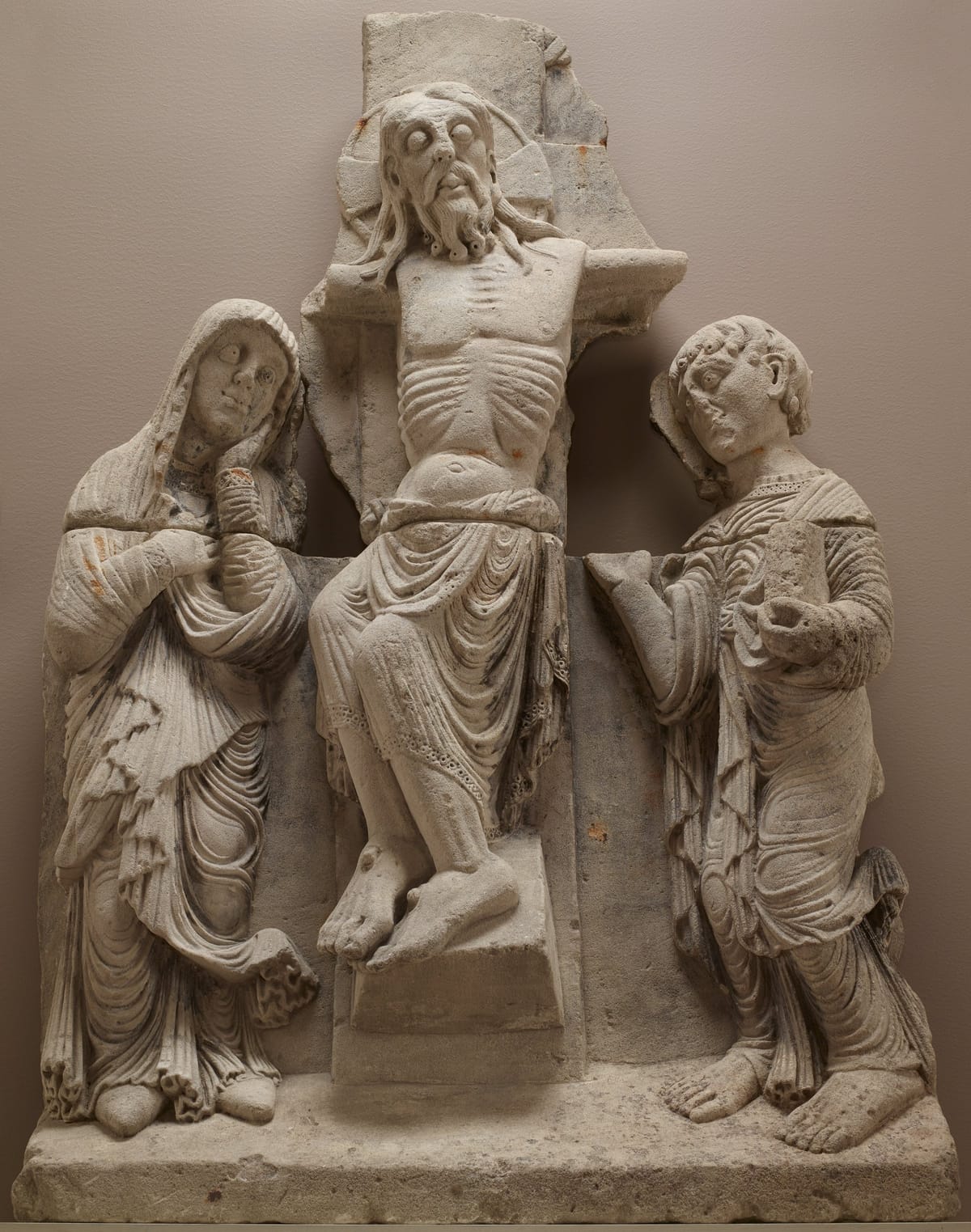
Jesus is seen dead on the cross while his mother, Mary, and his favorite disciple, the Evangelist Saint John, mourn below. This large-scale work embodies the characteristics of Romanesque sculpture in the medieval period, with its heavy stylized bodies, calligraphic depiction of hair, and linear, energetic approach to rendering the folds of the fabric. A new interest in monumental stone sculptures, particularly those with an architectural purpose, arose in the 1100's in Europe. This relief would likely have been used as the centerpiece of a tympanum—an arched area above a church entrance that was covered with sculpted decoration. It is not known where the relief comes from, but it bears a resemblance to the sculpture of northern Spain, particularly to works in churches on the still-active pilgrimage route leading to Santiago de Compostela. source: artsmia.org
Please SUBSCRIBE or DONATE to help keep this site free!