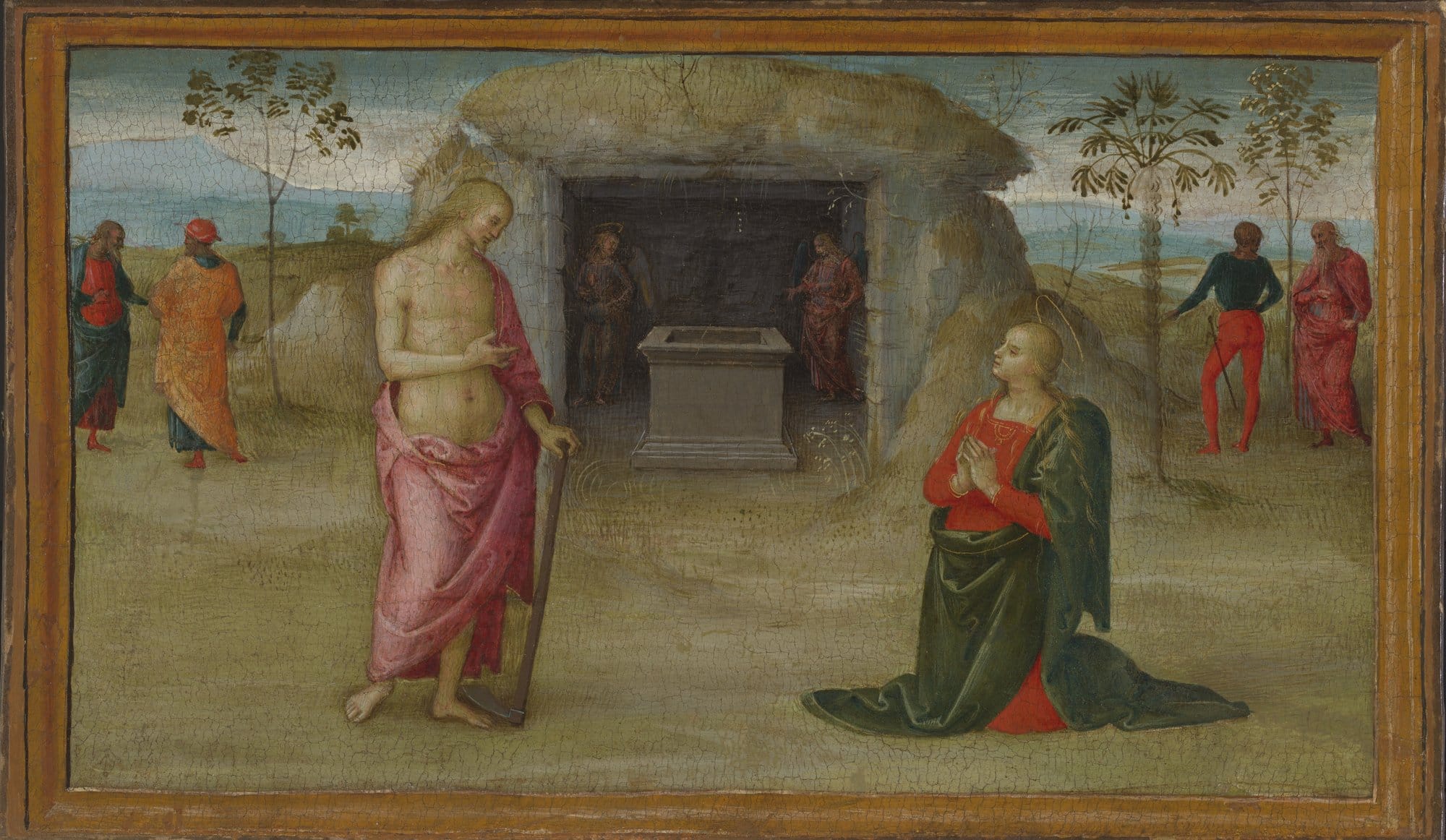
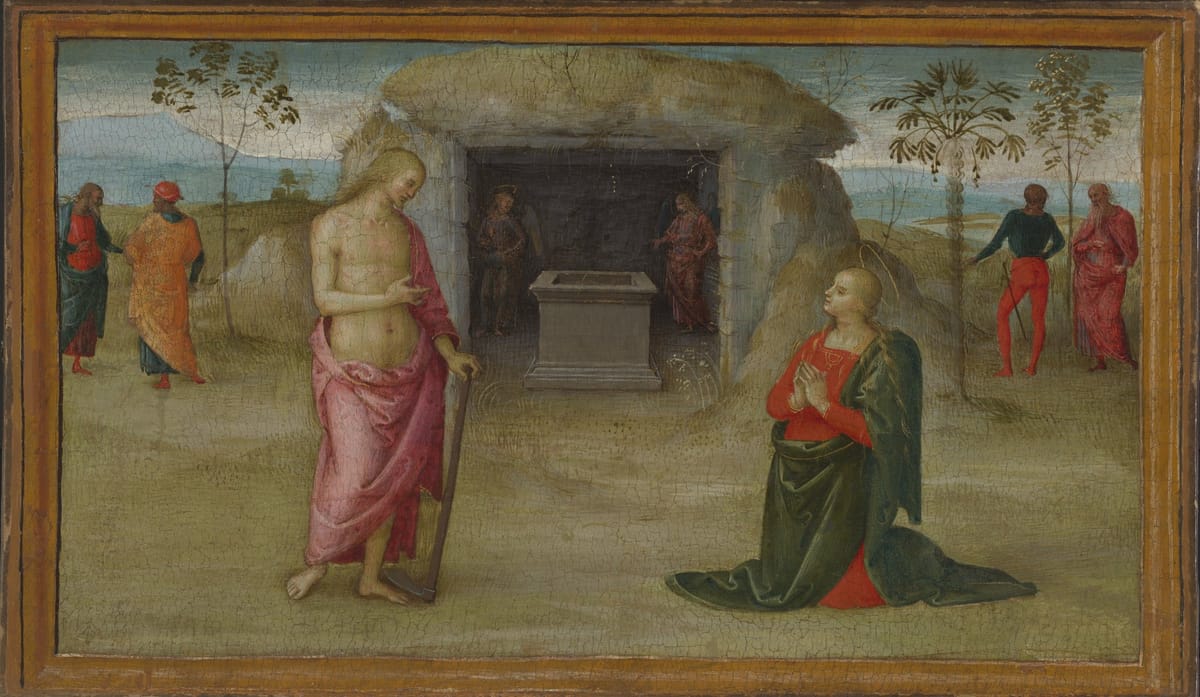
"Noli Me Tangere", originating from a predella created in medieval Italy, reflects the transition from Byzantine to early Romanesque artistic styles, characterized by stylized forms and spiritual symbolism over naturalistic representation. This scene, showing the resurrected Christ’s appearance to Mary Magdalene, was part of a narrative ensemble beneath a larger, now-lost altarpiece. Such predella panels were important in guiding congregants through key moments of Christ’s divinity, serving as visual scripture for largely illiterate medieval audiences. The focus on the revelation of Christ’s divine nature—including at Resurrection and in encounters like this—echoed the period’s emphasis on the mysteries of faith and the centrality of tangible sacred moments in Christian worship and teaching.
Please SUBSCRIBE or DONATE to help keep this site free!